Weapon Type
Sabers & Cutlasses
Curved single-edged cavalry and naval blades.
Edged Weapons → Swords — Subcategory
Overview
Sabers and cutlasses are curved, single-edged swords designed to deliver powerful slashing cuts. The curve concentrates the cutting force at the point of contact and allows the blade to follow through in a draw-cut motion rather than stopping at impact. These swords were optimized for cavalry use (where the momentum of a galloping horse augments the cut) and for close-quarters naval fighting aboard ships.
The Saber Family
Islamic Origins: Kilij, Saif, Shamshir, Tulwar
Curved swords appear early in the Islamic world, brought by Central Asian Turkic and Mongol horsemen:
- Kilij — Ottoman curved saber; wider toward the point (yelman); used by Janissaries and cavalry
- Shamshir — Persian; very deep curve; almost entirely a slashing weapon; poor at thrusting
- Tulwar — Indian disk-hilted saber; used by Mughal cavalry; often with a slightly recurved blade
- Saif — Arabic term for sword; the broad curved saif was the Arab cavalry weapon
European Military Sabers
- Polish saber (szabla) — The template for European cavalry sabers; slightly curved; effective thrust and cut; adopted by Hungarian hussars and spread across Europe
- Hussars — Light cavalry across Europe adopted the saber as their primary weapon from the 17th century onward
- British Pattern 1796 Light Cavalry Saber — Deeply curved; excellent cutting weapon; criticized for poor thrusting ability; used at Waterloo
- French An XI and An XIII sabers — Used by Napoleonic cavalry; moderate curve
- US Model 1840 "Old Wristbreaker" — Heavy curved cavalry saber; used in the Mexican-American War and Civil War
- US Model 1860 Light Cavalry Saber — Lighter; the standard Civil War cavalry saber
The Last Cavalry Saber
The cavalry saber remained in use through WWI — the British Pattern 1908 was a highly refined thrusting saber — though cavalry charges became suicidal against machine guns. The US Army officially retired the saber from cavalry use in 1934.
The Cutlass
The cutlass was the naval version — a short, broad, single-edged sword for shipboard fighting:
- Length — Typically 60–75 cm; short enough to swing in confined spaces between decks and rigging
- Blade — Broad, slightly curved; heavy; designed for chopping as much as cutting
- Guard — Simple iron cup or bar guard
- Used by naval boarding parties, marines, and pirates from the 17th century through the late 19th century
- The US Navy Cutlass Model 1860 was the definitive American naval cutlass; remained in limited use into WWI
The Machete Connection
The heavy agricultural machete is functionally identical to the cutlass in geometry and use — a tool-weapon boundary that was exploited in colonial and guerrilla contexts across Latin America, Africa, and the Caribbean.
This article is a stub. Contributions covering specific saber patterns, battles, and cavalry traditions are welcome.
-
1796 Light Cavalry Sabre
The Pattern 1796 Light Cavalry Sabre was the sword of Britain's light dragoons and hussars through the Napoleonic Wars, designed by John… Continued…
-
An XI Light Cavalry Sabre
The An XI light cavalry saber was the regulation sword of Napoleon's hussars and chasseurs à cheval. Adopted in Year XI of the French… Continued…
-
Boarding Cutlass
The cutlass was the sailor's sword of the Age of Sail: short, broad-bladed, and basket-guarded, built for the crowded chaos of a boarding… Continued…
-
Chinese Dao
The dao — the single-edged Chinese saber — was the standard sidearm of Chinese soldiers for the better part of two thousand years, honored… Continued…
-
Cossack Shashka
The shashka is the guardless saber of the Caucasus and the Cossacks — a slightly curved, single-edged blade carried edge-up in the scabbard… Continued…
-
Indian Talwar
The talwar is the classic curved saber of the Indian subcontinent, the weapon of Mughal, Rajput, Maratha, and Sikh horsemen from the… Continued…
-
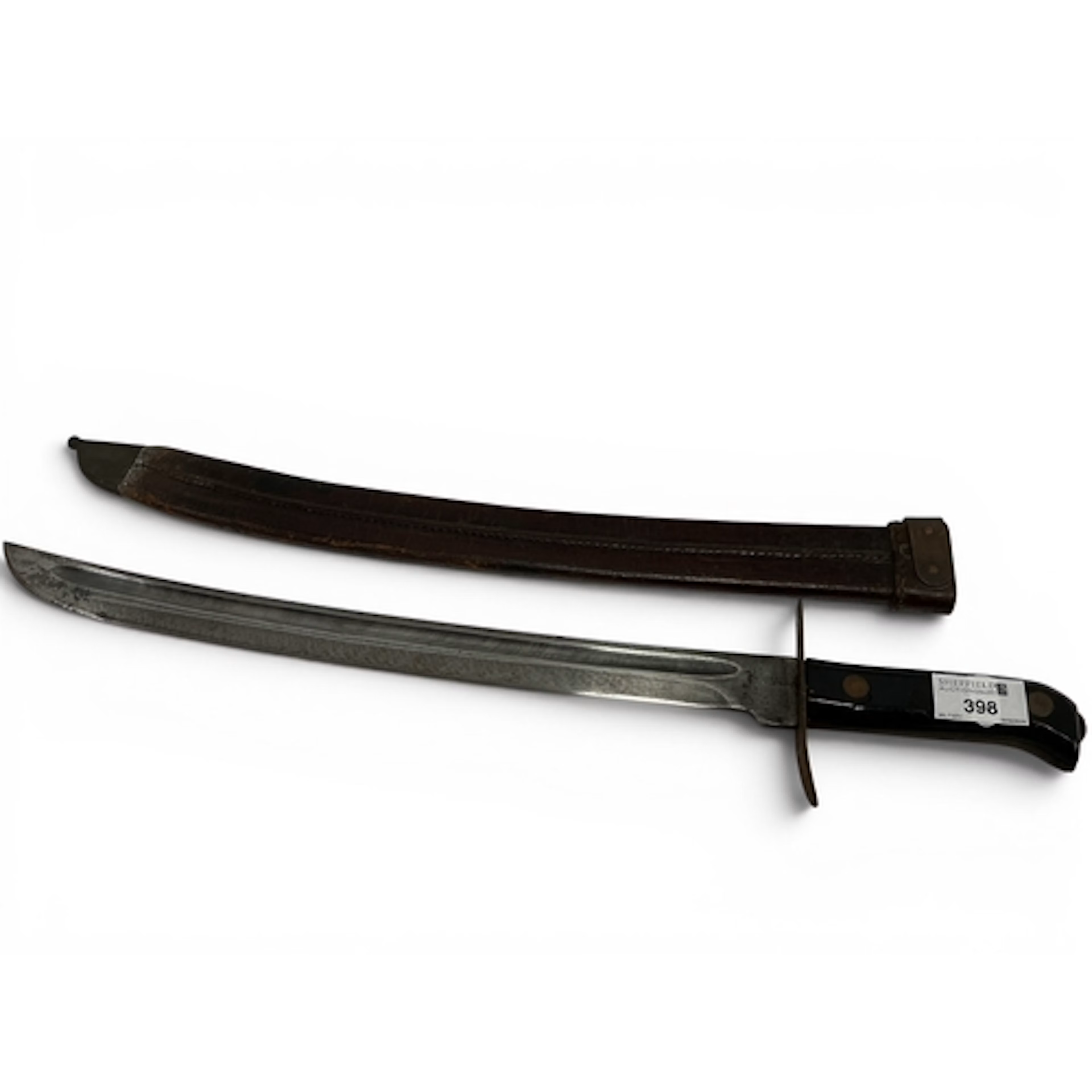
Klewang
The klewang is a single-edged short sword from the Indonesian archipelago, and the name of the Dutch military weapon developed from it.… Continued…
-
Model 1860 Light Cavalry Saber
The Model 1860 Light Cavalry Saber was the standard edged weapon of the Union horseman: a curved, single-edged blade of about 35 inches in… Continued…
-
Ottoman Kilij
The kilij is the curved saber of the Ottoman Turks, and the name — simply 'sword' in Turkish — covers a family of blades carried from the… Continued…
-
Persian Shamshir
The shamshir is Persia's deeply curved saber — the blade whose silhouette gave Europe the word 'scimitar.' Perfected under the Safavids, it… Continued…
-
Polish Szabla
The szabla is the curved saber of the Polish-Lithuanian Commonwealth, carried by the Polish nobility and cavalry from the sixteenth to the… Continued…