Force
Fallschirmjäger
Germany's WWII paratroopers — the first large-scale airborne force, and the reason the FG 42 exists.
Origins
Germany watched Soviet experiments with parachute troops in the early 1930s and began building its own in 1936. The Luftwaffe, under Hermann Göring, insisted the new force belong to the air force, and in 1938 General Kurt Student was put in charge. An Army parachute battalion was folded into the Luftwaffe force soon after. By the start of World War II Student commanded the 7th Air Division, the core of the world's first airborne force built to take part in a major offensive.
Organization & Training
Volunteers trained at parachute schools such as Stendal, where six jumps earned the parachutist's badge. The German RZ parachute had its lines attached at a single point on the jumper's back. He could not steer it, and he had to leave the aircraft in a spread, head-first dive and land on his hands and knees, which caused many injuries. Most weapons were dropped separately in canisters, so a paratrooper often landed with only a pistol, a knife and grenades until he reached a canister. Transport came from Junkers Ju 52 aircraft and DFS 230 gliders. Later the force grew into a whole parachute army, but most of its divisions were never trained to jump.
Weapons & Equipment
Once they had their canisters, Fallschirmjäger used the Karabiner 98k, the MP40 and the MG 34 and MG 42 machine guns. Pistols such as the Luger P08 and the Walther P38 were carried in the jump. They wore a rimless steel helmet with a padded liner and a strong chinstrap, a long jump smock over their equipment, and side-lacing boots. Because the standard rifle and machine gun were too heavy to jump with, the Luftwaffe ordered the FG 42, an automatic rifle firing full-power rifle ammunition, built for its paratroopers and made in small numbers from 1943.
Notable Actions
The 1940 descents took airfields in Denmark and Norway in April, and in May bridges and airfields in the Netherlands. On 10 May, in a stroke that stunned military opinion, a small assault group of about 80 glider troops landed on the roof of the Belgian fortress of Eben-Emael and used hollow-charge explosives to knock out its guns. The strongest fort in Europe surrendered the next day. Crete in May 1941 was the concept's Pyrrhic masterpiece: the island was taken by parachute and glider assault, with reinforcements flown in, but German casualties were very heavy, often put at around a quarter of the troops committed. Hitler is reported to have told Student that the day of the parachute troops was over, and there were no more large German airborne invasions.
The jumpers became elite ground infantry instead, and their defensive record created the second legend. In 1943 paratroopers helped rescue Mussolini from the Gran Sasso. At Monte Cassino in 1944 the 1st Parachute Division held the ruined town and monastery against repeated Allied attacks until Polish troops took the monastery in May, and the Allies are said to have called them the "Green Devils." In Normandy, Fallschirmjäger fought American paratroopers at Carentan after the Normandy Landings, and in December 1944 the last German combat drop was made during the Ardennes offensive.
Legacy
Student's force wrote much of the airborne doctrine every later force studied. Its opponents, the 101st Airborne included, were its most attentive readers. The heavy losses on Crete taught every army the risks of dropping lightly armed troops onto a defended target.
Battles & Operations
Weapons
-
Bangalore Torpedo
The Bangalore torpedo is a long explosive charge made of steel tubes that can be joined end to end, pushed under barbed wire or across a… Continued…
-
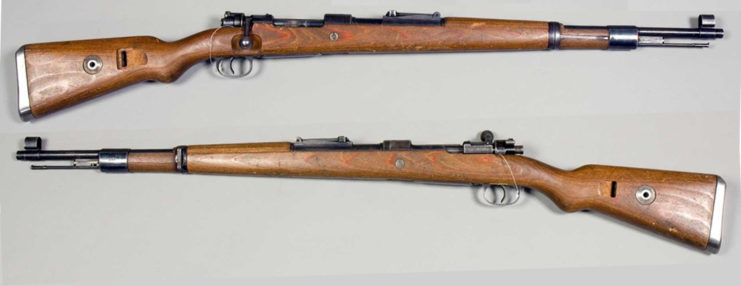
Karabiner 98k
The Karabiner 98k was the standard rifle of the German armed forces in the Second World War. Adopted in 1935, it was a shortened version of… Continued…
-
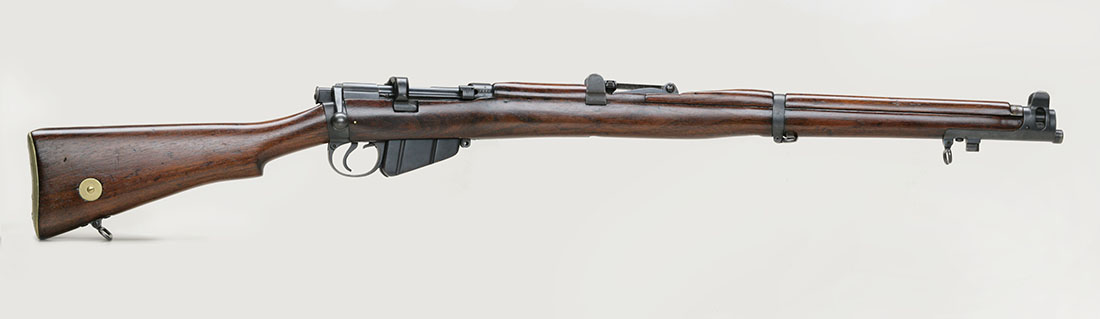
Lee-Enfield Rifle
The Lee-Enfield was the British Empire's rifle for over half a century: a bolt-action .303 whose rear-locking action and ten-round magazine… Continued…
-
Luger P08
The Luger P08 is the toggle-locked semi-automatic pistol of the German military through both World Wars, and for many the most recognizable… Continued…
-
M1 Carbine
The M1 Carbine was the most-produced American small arm of the Second World War: a five-pound, semi-automatic .30-caliber carbine designed… Continued…
-
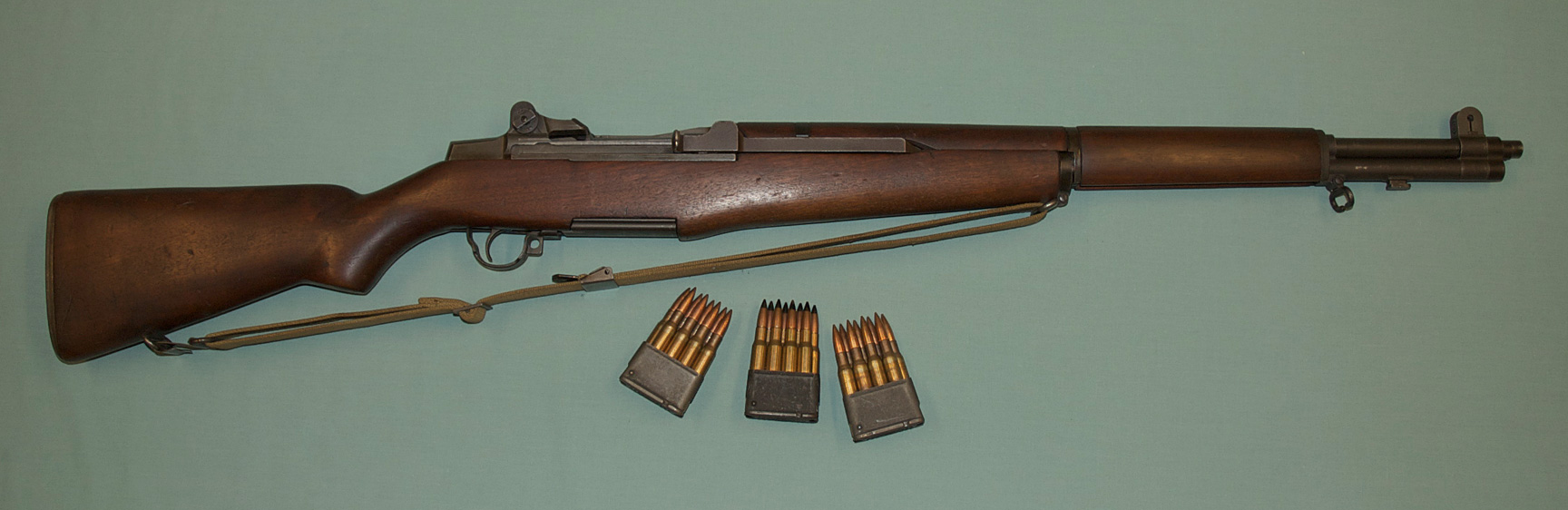
M1 Garand
The M1 Garand was the first semi-automatic rifle adopted as the standard arm of any major power, giving the American infantryman of the… Continued…
-
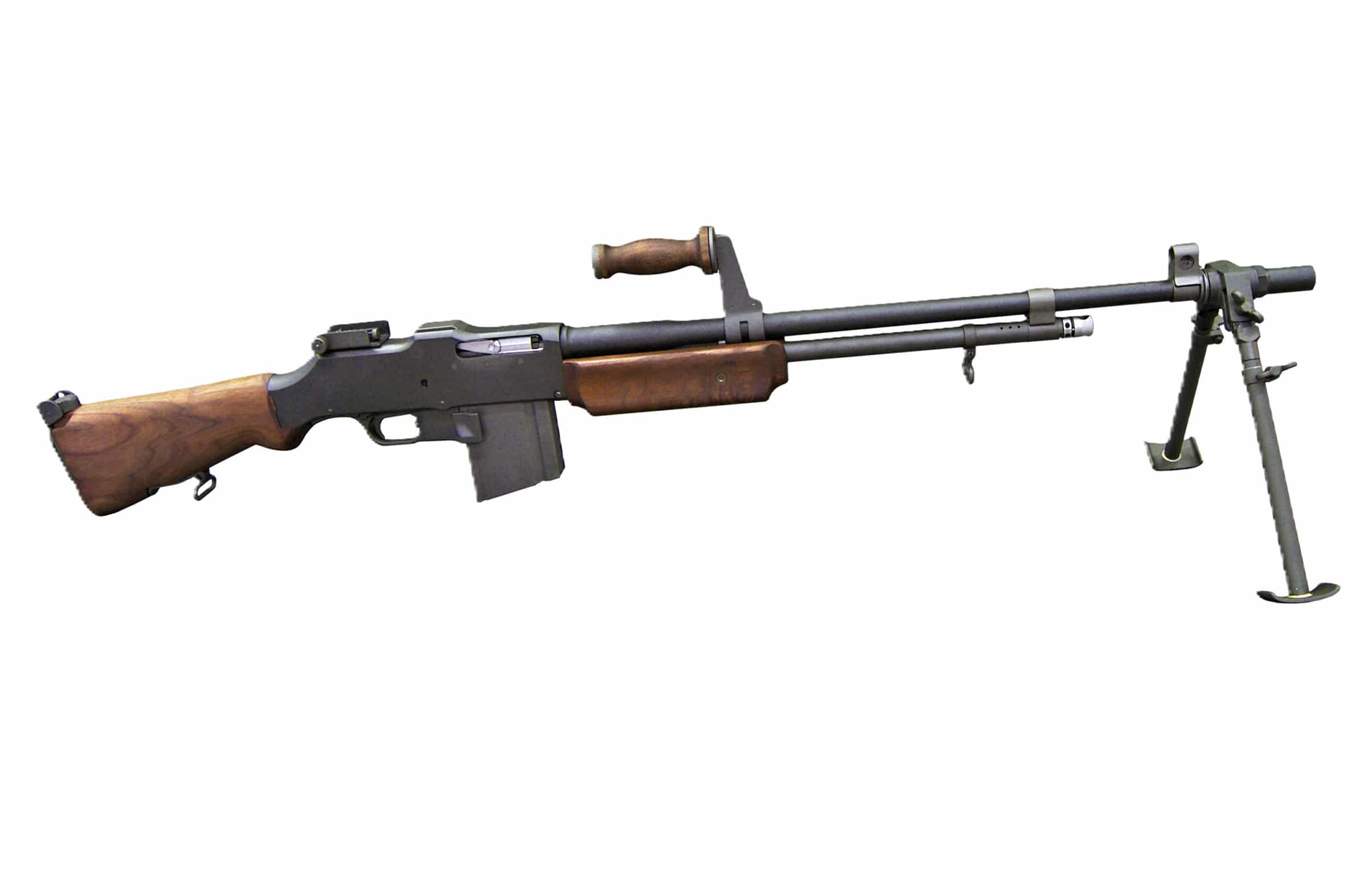
M1918 BAR
The Browning Automatic Rifle was John Moses Browning's shoulder-fired automatic weapon, adopted by the United States Army in 1918 and the… Continued…
-
MG 42
The MG 42 was the German general-purpose machine gun of the Second World War and the most influential machine gun of the twentieth century.… Continued…
-
MP40
The MP40 was Germany's war-production submachine gun: 9mm Parabellum from an open bolt, a plain tube receiver of stampings and welds, no… Continued…
-
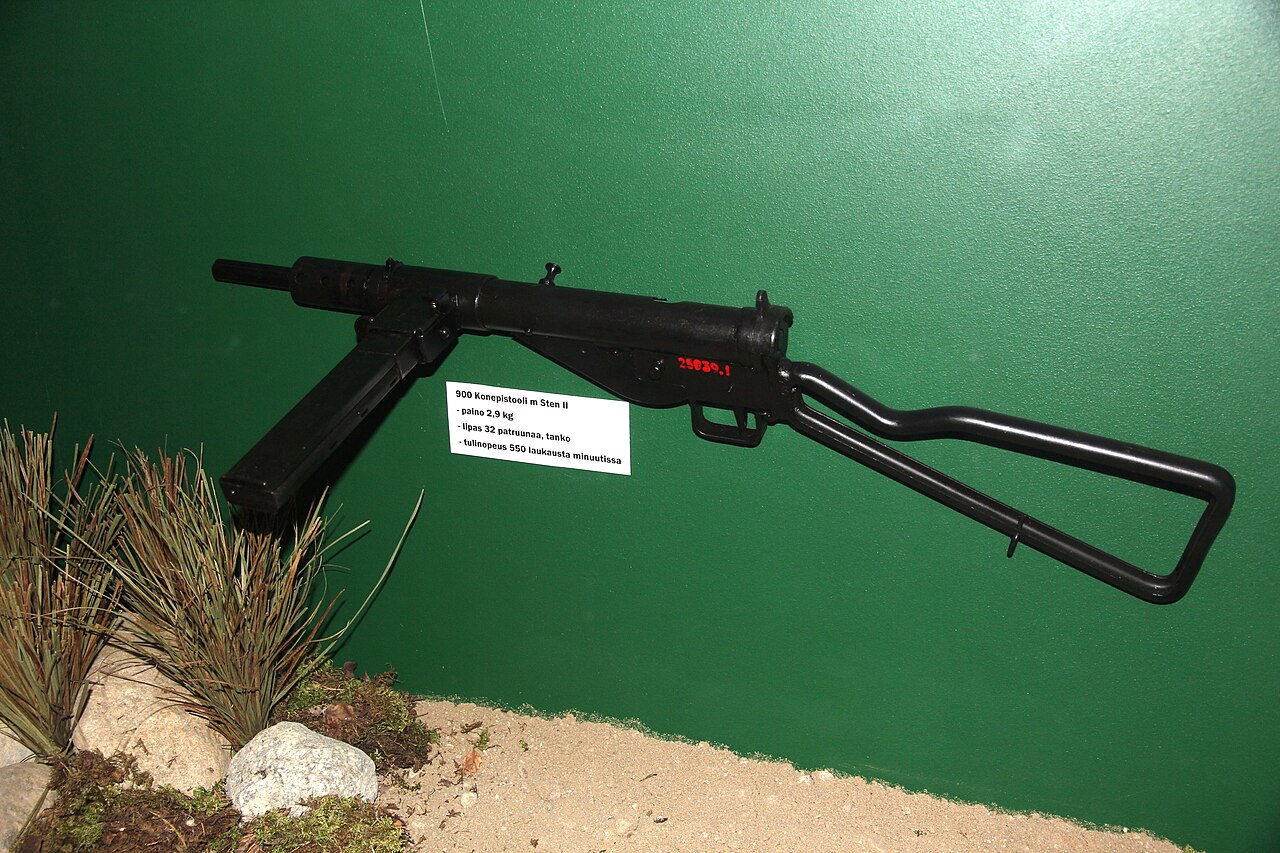
Sten Gun
The Sten was Britain's emergency submachine gun: a 9mm open-bolt weapon of stampings, tube, and spot welds that cost a few pounds and a few… Continued…
-
Thompson Submachine Gun
The Thompson was America's first submachine gun: a .45 ACP automatic designed as a trench broom for a war that ended before it shipped.… Continued…