Weapon Type
Pole Weapons
Bladed or impact weapons mounted on a long shaft.
Category Overview
Overview
Pole weapons are weapons consisting of a blade, point, or weighted head mounted on a long shaft (the haft or pole). The defining advantage of a pole weapon is reach — the ability to attack opponents and cavalry before they can close to sword range. Pole weapons dominated infantry warfare from the Bronze Age through the 17th century, when firearms made massed pike formations obsolete.
Why Pole Weapons Dominated
On a pre-firearm battlefield:
- A man with a 2-meter spear can strike a swordsman before the swordsman can close
- A man with a 6-meter pike can strike a cavalryman before the horse can close
- A formation of pikemen presents an impenetrable wall of points to charging cavalry
- Pole weapons required less individual training than swords — a key factor for mass armies
Major Subcategories
Spears & Lances
The universal infantry and cavalry weapon from prehistoric times through the Renaissance. See: Spears & Lances.
Pikes
Extra-long spears (4–7+ meters) used in massed infantry formations; the Swiss and Macedonian pike. See: Pikes.
Halberds & Poleaxes
Combined axe, spike, and hook or hammer on a 5–6 foot shaft; the weapon of choice against armored knights. See: Halberds & Poleaxes.
Staves & Quarterstaffs
Unbladed pole weapons; the staff of common soldiers and martial arts traditions. See: Staves & Quarterstaffs.
Other Notable Types
- Glaive — Single-edged curved blade on a pole; similar to a naginata
- Voulge — Cleaver-blade on a pole; French and Swiss infantry weapon
- Bill — English billhook on a pole; derived from agricultural tool
- Fauchard — Curved blade with back-spike; French infantry weapon
- Ranseur — Spear with lateral projections to trap weapons
Decline
Pole weapons became obsolete when:
- The arquebus and musket replaced pike-and-shot formations (1550–1700)
- The socket bayonet (1680s) converted every musketeer into a pikeman
- By 1700, pikes were disappearing from European armies
This article is a stub. Contributions covering specific pole weapons, tactics, and cultural traditions are welcome.
Battles & Operations
-
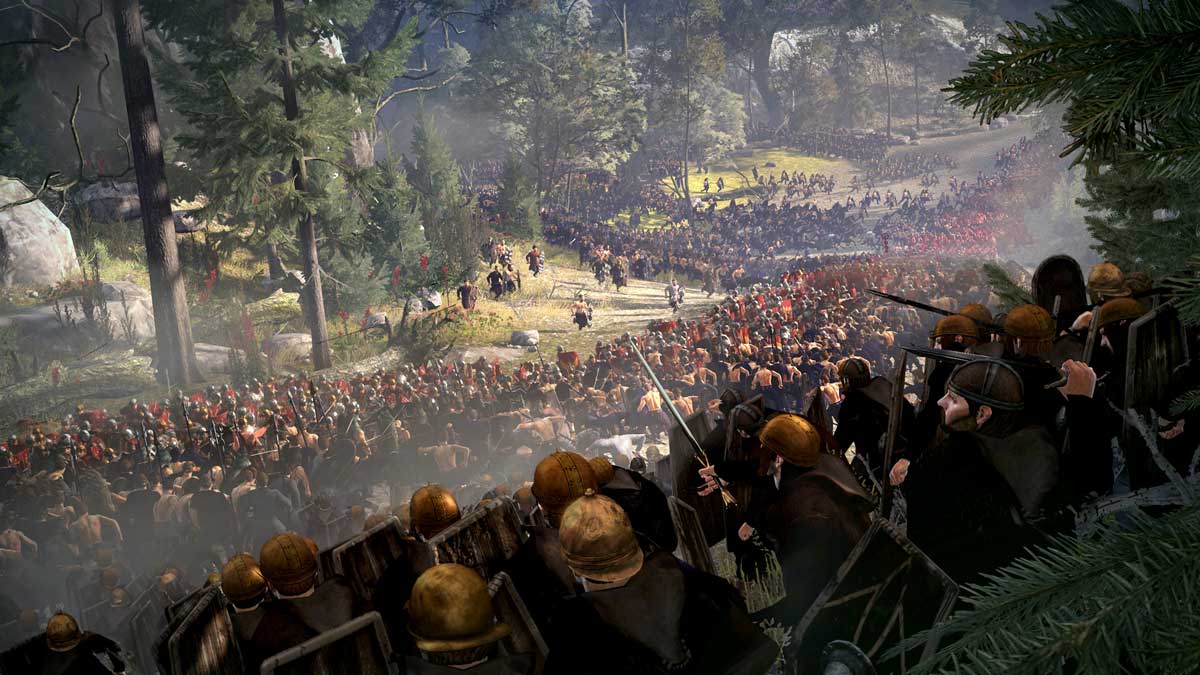
Battle of Teutoburg Forest (September 9 AD)
The Battle of the Teutoburg Forest was the destruction of three Roman legions — the XVII, XVIII and XIX — with their auxiliaries by an… Continued…
-
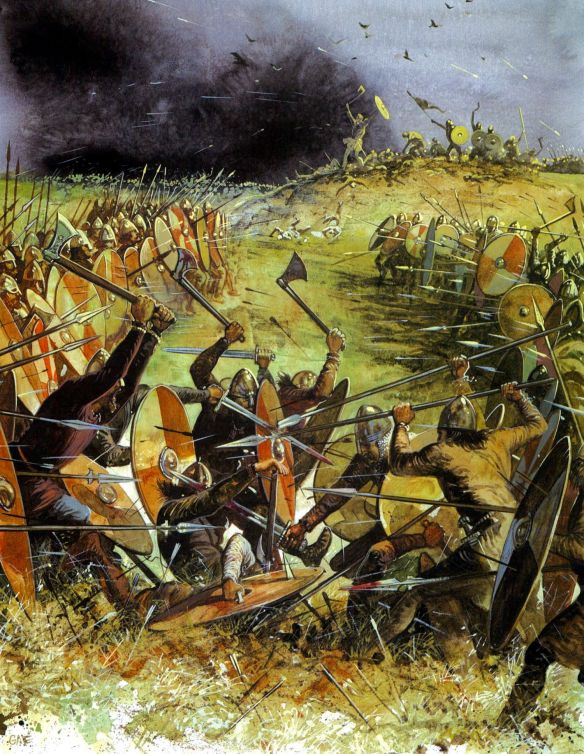
Battle of Maldon (10 August 991)
The Battle of Maldon, fought in August 991 on the Blackwater estuary near Maldon in Essex, pitted Byrhtnoth, ealdorman of Essex, and the… Continued…
Weapons
-
Boarding Pike
The boarding pike was a short spear carried on sailing warships to defend the ship against boarders and to arm boarding parties. It was… Continued…
-
Bone Harpoon
The bone harpoon is a barbed point of bone or antler, made to be hafted on a spear or dart and to hold fast in its prey. Barbed bone points… Continued…
-
Bō Staff
The bō is the Japanese and Okinawan fighting staff, most often the rokushakubō, a straight pole of hardwood six shaku (about 180 cm) long.… Continued…
-
Chinese Ji
The ji is the Chinese halberd: a spear point combined with a side blade on a long shaft, able to thrust, hook and cut. It grew out of the… Continued…
-
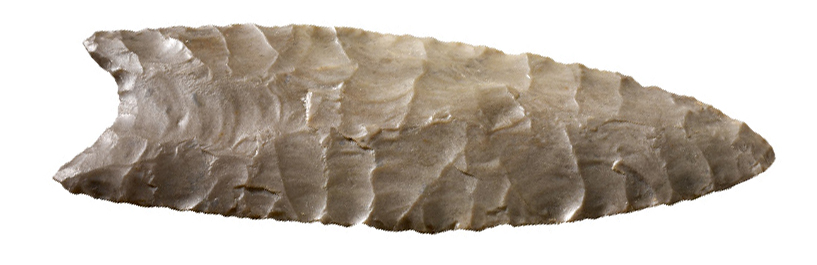
Clovis Point
The Clovis point is the signature stone weapon of the first widespread culture in North America, produced for a few centuries around 13,000… Continued…
-
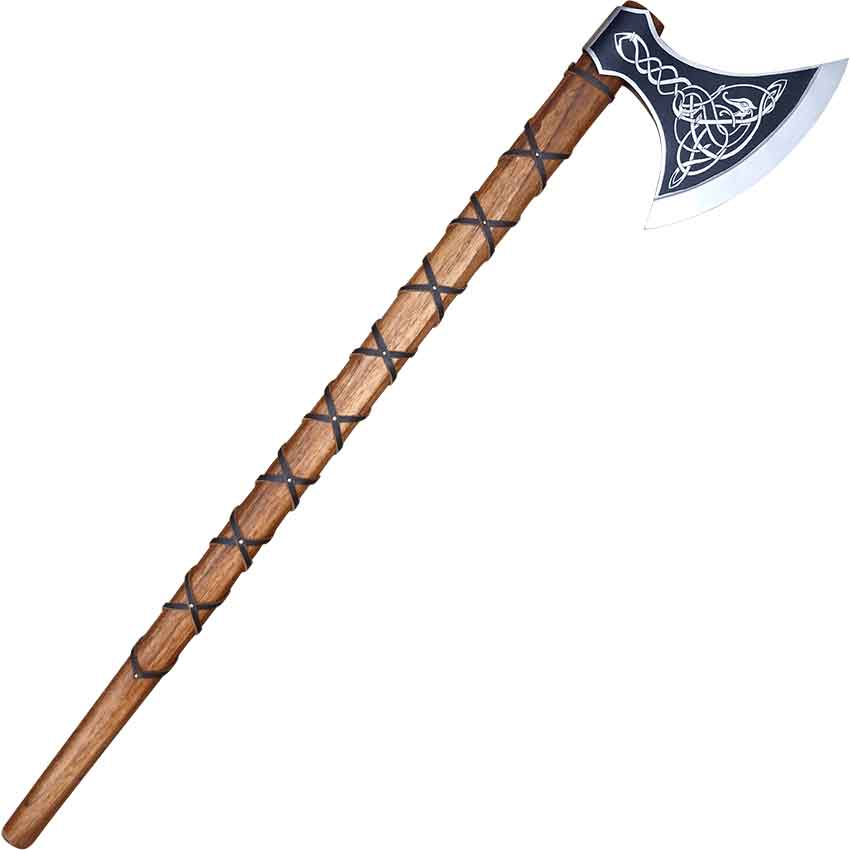
Dane Axe
The Dane axe is the great two-handed axe of the Viking Age and its aftermath: a thin, broad, crescent-edged head on a haft about a meter… Continued…
-
English Bill
The English bill was the characteristic pole arm of the English foot soldier from the fourteenth century to the late sixteenth: a hooked… Continued…
-
Frankish Winged Spear
The Frankish winged spear was a spear whose iron head carried two small projections, called wings or lugs, on the socket just below the… Continued…
-
Glaive
The glaive is a European pole arm made of a single-edged blade, shaped like a large knife or cleaver, mounted on a shaft of about six to… Continued…
-
Halberd
The halberd combined axe blade, thrusting spike, and back hook on a two-meter haft — a complete toolkit for infantry facing armored… Continued…
-
Hoplite Dory
The dory was the thrusting spear of the Greek hoplite, the main weapon of the citizen soldiers who fought in the phalanx from the seventh… Continued…
-
Knight's Lance
The knight's lance was the defining weapon of medieval European heavy cavalry: a long wooden shaft with an iron head, held tight under the… Continued…
-
Lochaber Axe
The Lochaber axe is a Scottish polearm with a long, narrow, cleaver-like blade fixed to a wooden shaft, often with a hook at the top of the… Continued…
-
Macedonian Sarissa
The sarissa was the great two-handed pike of the Macedonian phalanx, introduced by Philip II around 359 BC and carried by the infantry of… Continued…
-
Naginata
The naginata is a Japanese pole arm with a long, curved, single-edged blade on a wooden shaft, used from the Heian period onward. The… Continued…
-
Pike
The pike is the longest infantry weapon ever carried in formation: an ash shaft of 16 to 22 feet tipped with a small steel head, used by… Continued…
-
Poleaxe
The poleaxe was the knight's weapon for fighting on foot in full plate armor during the fifteenth century. About five to six feet long, it… Continued…
-
Quarterstaff
The quarterstaff was the English fighting staff: a straight pole of hardwood, usually between six and nine feet long, sometimes tipped with… Continued…
-
Roman Hasta
The hasta was the thrusting spear of the early Roman army. In the manipular legion of the Punic Wars it was the weapon of the triarii, the… Continued…
-
Roman Pilum
The pilum was the Roman legionary's heavy javelin: a barbed iron head on a long, thin iron shank socketed into a wooden shaft, thrown in a… Continued…
-
Schiltron Spear
The schiltron spear was the long infantry spear carried by Scottish foot soldiers in the Wars of Scottish Independence. Held in both hands… Continued…
-
Schöningen Spear
The Schöningen spears are the oldest complete hunting weapons ever found: about ten wooden spears, most of spruce, excavated between 1994… Continued…
-
Spontoon
The spontoon, or espontoon, was a short pike of about six to seven feet carried by infantry officers, and later by sergeants, in European… Continued…
-
Tepoztopilli
The tepoztopilli was the thrusting spear of the Aztec warrior: a wooden spear whose broad, flat head was edged on both sides with… Continued…
-
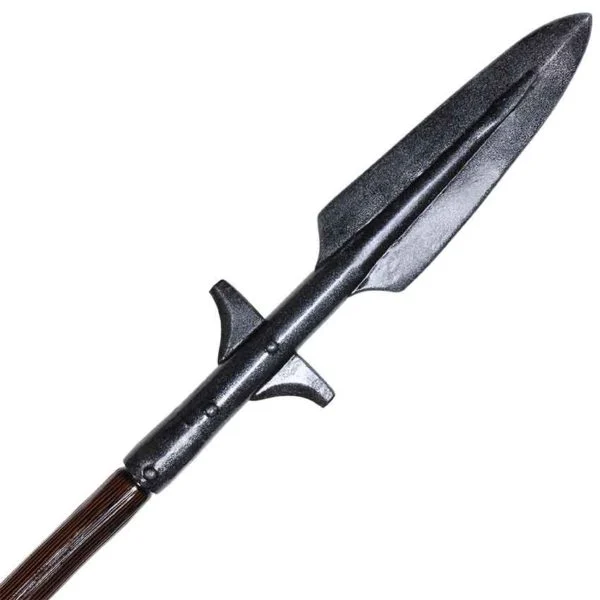
Viking Spear
The spear was the most common weapon of the Viking Age, carried by farmers and kings alike. It had an iron head, socketed onto an ash shaft… Continued…
-
Winged Hussar Lance
The kopia was the lance of the Polish-Lithuanian winged hussars, the heavy cavalry that dominated Eastern European battlefields for more… Continued…
-
Yari
The yari is the Japanese straight-bladed spear. It came into wide use in the fourteenth century and by the Sengoku period of the sixteenth… Continued…
-
Zulu Iklwa
The iklwa was the short stabbing spear of the Zulu warrior — a broad blade up to 45 centimeters on a stout haft under a meter long… Continued…