Era
Renaissance
Transition period; early firearms emerge alongside edged weapons.
c. 1400 – 1600 CE
Overview
The Renaissance was a transitional period in weapons history — early firearms coexisted with, and gradually displaced, the arms of the medieval knight. It was the era of the arquebus and the rapier, of cannon that could batter down castle walls that had stood for centuries, and of new infantry tactics that mixed ranged firepower with pike formations.
It was also the peak of European fencing culture, with Italian and German masters producing systematic fighting manuals (Fechtbücher) that documented sophisticated techniques for sword, dagger, polearm, and unarmed combat.
The Firearms Revolution
Early Firearms
- Hand cannon — The earliest personal firearm; essentially a small cannon held by one person; unreliable and slow to load
- Arquebus (hackbut) — A matchlock firearm resting on a forked support; the first practical infantry firearm, dominant from roughly 1450–1600
- Matchlock mechanism — A slow-burning match cord held in a clamp (serpentine) was lowered onto the priming pan to ignite the charge; weather-dependent and requiring constant maintenance of the lit match
Artillery
Renaissance artillery transformed siege warfare almost overnight. Cannon could reduce medieval stone walls in days that might have taken months or years for traditional siege methods. Charles VIII's Italian campaign of 1494, featuring bronze cannon on wheeled carriages, demonstrated this conclusively.
Edged Weapons
The Rapier
The rapier emerged in Spain and Italy in the early 16th century and became the dominant civilian sword of the Renaissance. Optimized for thrusting in personal duels rather than battlefield cutting, it featured:
- A long, narrow, stiff blade
- Complex hand guards protecting the fingers (rings, quillons, pas d'ane)
- A grip suited to finger-over-crossguard techniques described in fencing manuals
Transitional Swords
- Zweihänder (two-hander) — Great two-handed swords up to 6 feet long, used by elite German Landsknecht mercenaries called Doppelsöldner to break enemy pike formations
- Side-sword (espada ropera) — A cut-and-thrust sword; the immediate predecessor to the rapier
- Basket-hilted broadsword — Developing in this period, with protective cage guards around the hand
Daggers
- Main gauche (left-hand dagger) — Paired with the rapier in civilian dueling; used to catch or deflect an opponent's blade
- Stiletto — A narrow, stiff thrusting dagger for piercing armor gaps
Infantry Tactics: Pike and Shot
The defining infantry formation of the Renaissance was pike and shot — a combination of:
- Pikemen carrying 16–18 foot pikes to protect against cavalry and opposing infantry
- Shot (arquebusiers or later musketeers) providing ranged firepower
This formation replaced the medieval dominance of heavy cavalry and the longbow-armed infantry of the late medieval period.
Armor
Plate armor reached its artistic pinnacle in the Renaissance — elaborately etched and gilded parade armors survive in museum collections worldwide. Functionally, however, the spread of firearms began making full plate impractical. Armor retreated from full-body coverage to protecting vital areas: the helmet, breastplate, backplate, and gorget, with buff coats (thick leather) covering the limbs.
Fencing Culture
Renaissance Italy and Germany produced the first systematic schools of swordsmanship. Masters such as Fiore dei Liberi (Flos Duellatorum, 1409), Hans Talhoffer, and later Giacomo di Grassi and Salvator Fabris documented comprehensive fighting systems. These manuscripts are primary sources for the modern Historical European Martial Arts (HEMA) community.
This article is a stub. Contributions covering specific weapons, masters, battles, and national traditions are welcome.
Battles & Operations
-
Fall of Constantinople (6 April - 29 May 1453)
The Fall of Constantinople was the capture of the Byzantine capital by the Ottoman sultan Mehmed II on 29 May 1453, after a siege of about… Continued…
-
Fall of Tenochtitlan (26 May - 13 August 1521)
The Fall of Tenochtitlan was the siege and capture of the Mexica capital by Hernán Cortés between May and August 1521. Fewer than a… Continued…
-
Battle of Lepanto (7 October 1571)
The Battle of Lepanto, fought on 7 October 1571 off western Greece, was the largest galley battle of the age. The fleet of the Holy League… Continued…
-
Spanish Armada (29 July - 8 August 1588)
The Spanish Armada was the fleet of about 130 ships that Philip II of Spain sent against England in 1588. It was meant to sail up the… Continued…
-
Battle of Sekigahara (21 October 1600 (15th day of the 9th month of Keichō 5))
The Battle of Sekigahara, fought on 21 October 1600 in central Japan, was the decisive battle for power after the death of Toyotomi… Continued…
Weapons
-
Arbalest
The arbalest was the heavy crossbow of the late Middle Ages, with a bow of steel or thick composite so powerful it had to be drawn with a… Continued…
-
Arquebus
The arquebus was the first practical infantry firearm, a matchlock long gun light enough to be fired from the shoulder or chest without a… Continued…
-
Aztec Macuahuitl
The macuahuitl was the standard close-combat weapon of the Aztec warrior: a flat hardwood club edged on both sides with rows of prismatic… Continued…
-
Bombard
A bombard was a large, short-ranged cannon of the fourteenth to sixteenth centuries that fired heavy stone balls against castle and town… Continued…
-
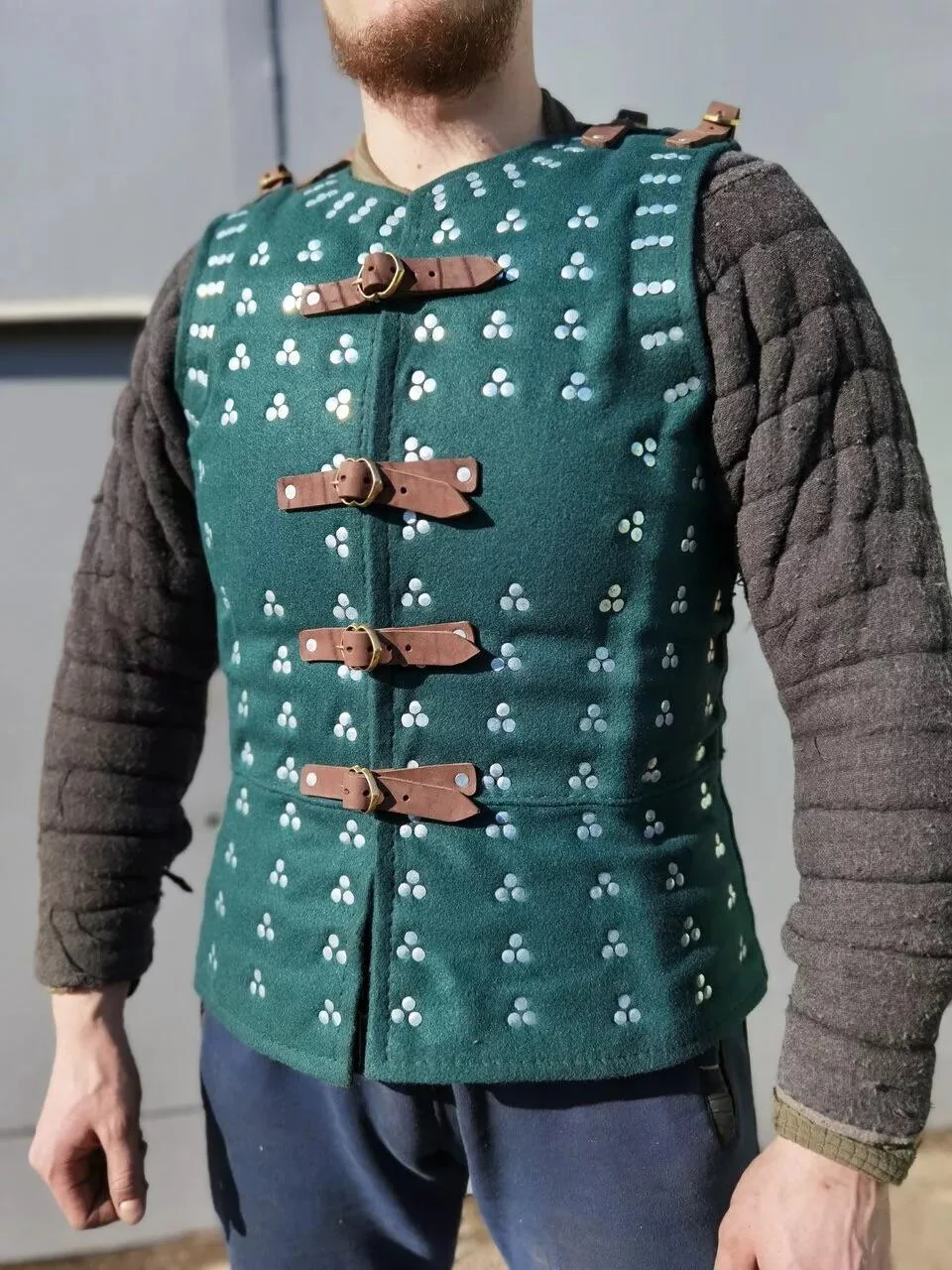
Brigandine
The brigandine was a body armor made of many small iron or steel plates riveted to the inside of a fabric or leather covering, so that only… Continued…
-
Bō Staff
The bō is the Japanese and Okinawan fighting staff, most often the rokushakubō, a straight pole of hardwood six shaku (about 180 cm) long.… Continued…
-
Chimalli
The chimalli was the round shield of Aztec warriors and other peoples of central Mexico. War shields were usually made of woven cane or… Continued…
-
Chu-ko-nu
The chu-ko-nu, or zhuge nu, is the Chinese repeating crossbow. A box magazine on top of the stock held a stack of bolts, and a single lever… Continued…
-
Crossbow
The crossbow put a bow on a stock, held its own draw, and released on a trigger — trading the archer's lifetime of training for a weapon… Continued…
-
Cuirassier Armor
Cuirassier armor was the three-quarter plate armor worn by heavy cavalry in Europe from the late sixteenth century to the middle of the… Continued…
-
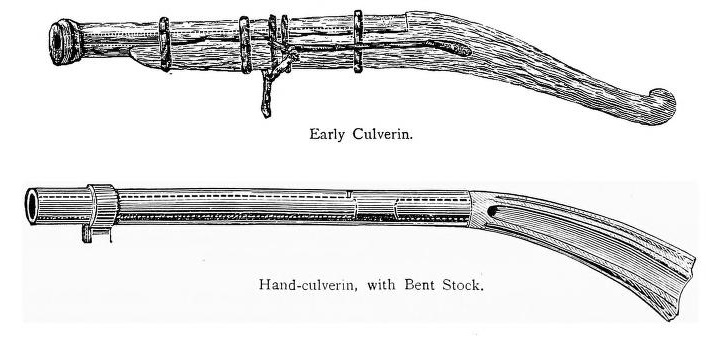
Culverin
The culverin was a long-barreled muzzle-loading gun of the sixteenth and seventeenth centuries. Compared with the heavier 'cannon' class it… Continued…
-
English Bill
The English bill was the characteristic pole arm of the English foot soldier from the fourteenth century to the late sixteenth: a hooked… Continued…
-
Estoc
The estoc was a sword made to defeat plate armor: a long, stiff blade with no real cutting edge, triangular, square or diamond in section… Continued…
-
Falchion
The falchion was a single-edged medieval sword with a broad blade, heavier toward the point, that combined the chopping power of an axe… Continued…
-
Fire Ship
A fire ship was a vessel filled with flammable material, set alight and sent drifting or sailing into an enemy fleet. Wooden ships with… Continued…
-
Galleon
The galleon was the large ocean-going sailing ship of the sixteenth and early seventeenth centuries, used both as a warship and as an armed… Continued…
-
Glaive
The glaive is a European pole arm made of a single-edged blade, shaped like a large knife or cleaver, mounted on a shaft of about six to… Continued…
-
Halberd
The halberd combined axe blade, thrusting spike, and back hook on a two-meter haft — a complete toolkit for infantry facing armored… Continued…
-
Ichcahuipilli
The ichcahuipilli was the quilted cotton armor of the Aztecs and other peoples of central Mexico. Made of layers of cotton packed between… Continued…
-
Inca Star Mace
The star-headed mace was one of the main close-combat weapons of the Inca Empire: a heavy head of cast bronze or carved stone, shaped like… Continued…
-
Jambiya
The jambiya is the curved, double-edged dagger of Arabia, worn at the front of the belt in a sheath with a sharply upturned tip. It is most… Continued…
-
Janissary Tüfek
The tüfek, the Turkish word for a gun, was the long-barreled musket carried by the Janissaries, the elite infantry of the Ottoman Empire.… Continued…
-
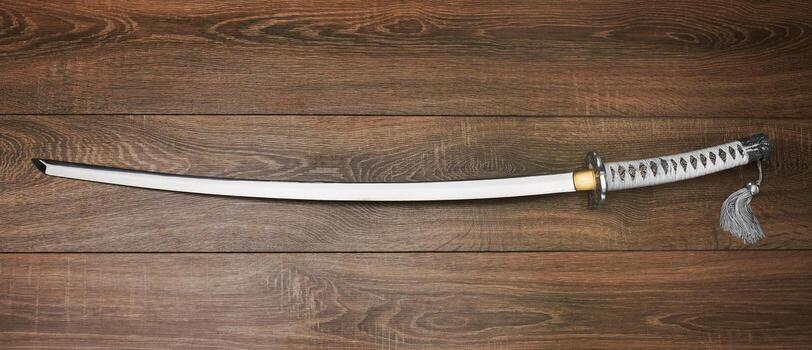
Katana
The katana is the curved, single-edged long sword of the samurai, worn edge-up through the sash and drawn in the same motion that cuts. Its… Continued…
-
Katar
The katar is the Indian push dagger: a short, broad, often triangular blade set at right angles to an H-shaped grip, so that the fighter… Continued…
-
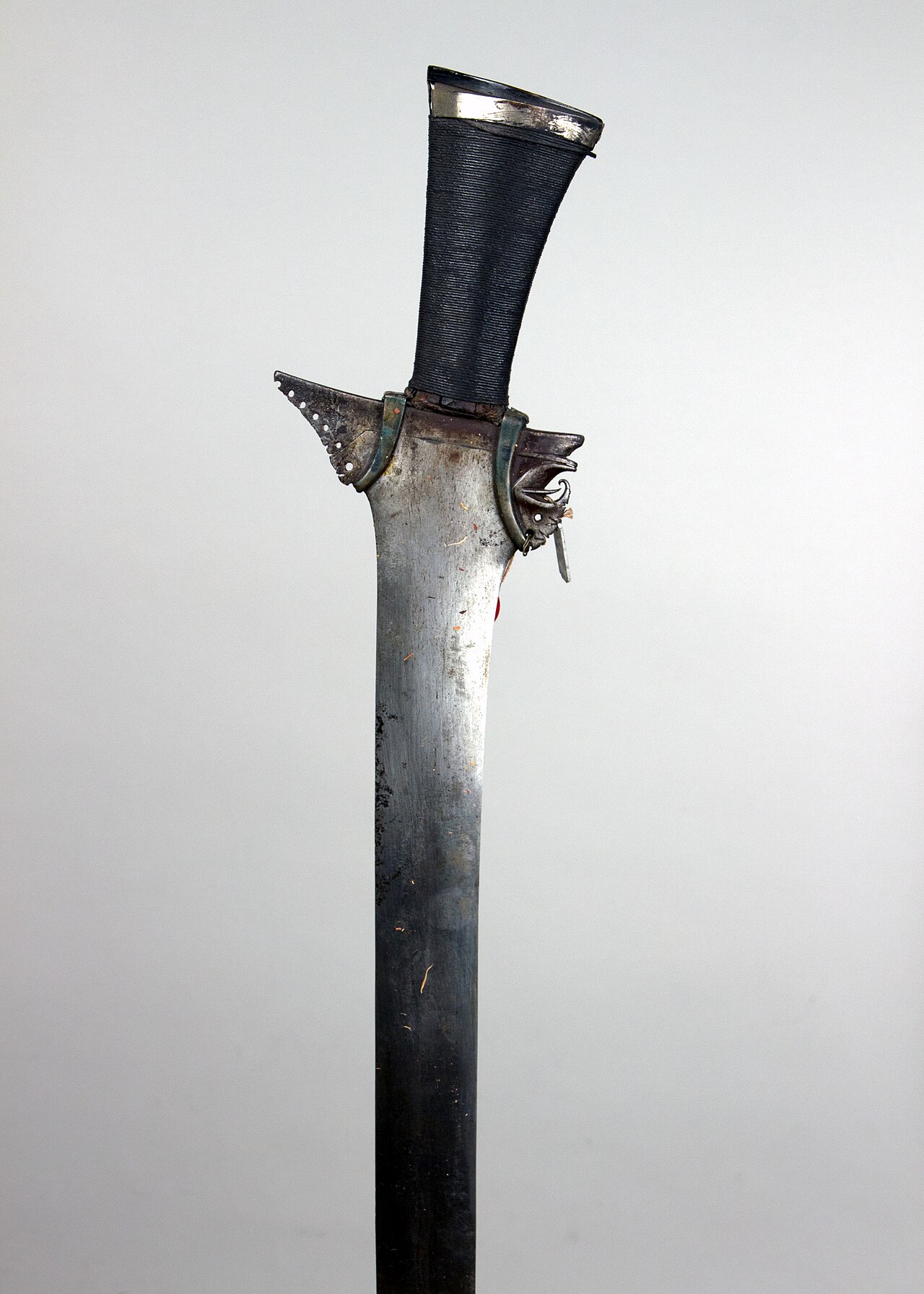
Keris
The keris is the asymmetrical dagger of the Malay world, at once a fighting weapon, a badge of rank, and a sacred heirloom. Recognizable by… Continued…
-
Korean Hwacha
The hwacha, or 'fire cart,' was a Korean multiple-rocket launcher of the Joseon dynasty: a two-wheeled wooden cart carrying a rack that… Continued…
-
Landsknecht Zweihänder
The zweihänder was the great two-handed sword of the German Landsknecht mercenaries: up to 1.8 meters of steel with side rings, parrying… Continued…
-
Langes Messer
The Langes Messer, German for long knife, was a single-edged sword used in the German lands and Central Europe from the fourteenth to the… Continued…
-
Lochaber Axe
The Lochaber axe is a Scottish polearm with a long, narrow, cleaver-like blade fixed to a wooden shaft, often with a hook at the top of the… Continued…
-
Longsword
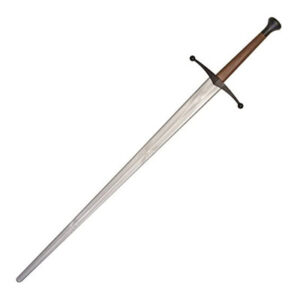
The longsword is the two-handed knightly sword of the late Middle Ages and Renaissance: a straight, double-edged blade of roughly 33 to 43… Continued…
-
Matchlock Musket
The matchlock was the first firearm a soldier could aim and fire without taking his eyes off the enemy: a serpentine lever lowered a… Continued…
-
Military Flail
The military flail was a two-handed weapon made from the farmer's threshing flail: a long wooden haft joined by a hinge or short chain to a… Continued…
-
Morion Helmet
The morion is the open steel helmet with a tall comb and a brim swept up to points at front and back that armed pikemen and arquebusiers… Continued…
-
Morning Star
The morning star is a spiked club: a wooden or iron shaft topped with a heavy ball or cylinder studded with steel spikes, used across… Continued…
-
Naginata
The naginata is a Japanese pole arm with a long, curved, single-edged blade on a wooden shaft, used from the Heian period onward. The… Continued…
-
Nodachi
The nodachi, or ōdachi, is an extra-long Japanese sword with a blade of three shaku (about 36 inches) or more, and often much longer. It… Continued…
-
Ottoman Composite Bow
The Ottoman composite bow was the short, strongly recurved bow of horn, wood and sinew used by Ottoman Turkish armies from the fourteenth… Continued…
-
Ottoman Kilij
The kilij is the curved saber of the Ottoman Turks, and the name — simply 'sword' in Turkish — covers a family of blades carried from the… Continued…
-
Persian Tabar
The tabar is the war axe of Persia and the wider Islamic world, from the Middle East to Mughal India. The name is Persian for axe, and the… Continued…
-
Pike
The pike is the longest infantry weapon ever carried in formation: an ash shaft of 16 to 22 feet tipped with a small steel head, used by… Continued…
-
Poleaxe
The poleaxe was the knight's weapon for fighting on foot in full plate armor during the fifteenth century. About five to six feet long, it… Continued…
-
Polish Nadziak
The nadziak was the war hammer of the Polish-Lithuanian cavalry from the sixteenth to the eighteenth century. Its head combined a long… Continued…
-
Polish Szabla
The szabla is the curved saber of the Polish-Lithuanian Commonwealth, carried by the Polish nobility and cavalry from the sixteenth to the… Continued…
-
Pyeonjeon
The pyeonjeon is a short Korean arrow, often called aegisal, or baby arrow, shot from an ordinary bow through a split wooden guide called a… Continued…
-
Quarterstaff
The quarterstaff was the English fighting staff: a straight pole of hardwood, usually between six and nine feet long, sometimes tipped with… Continued…
-
Rondel Dagger
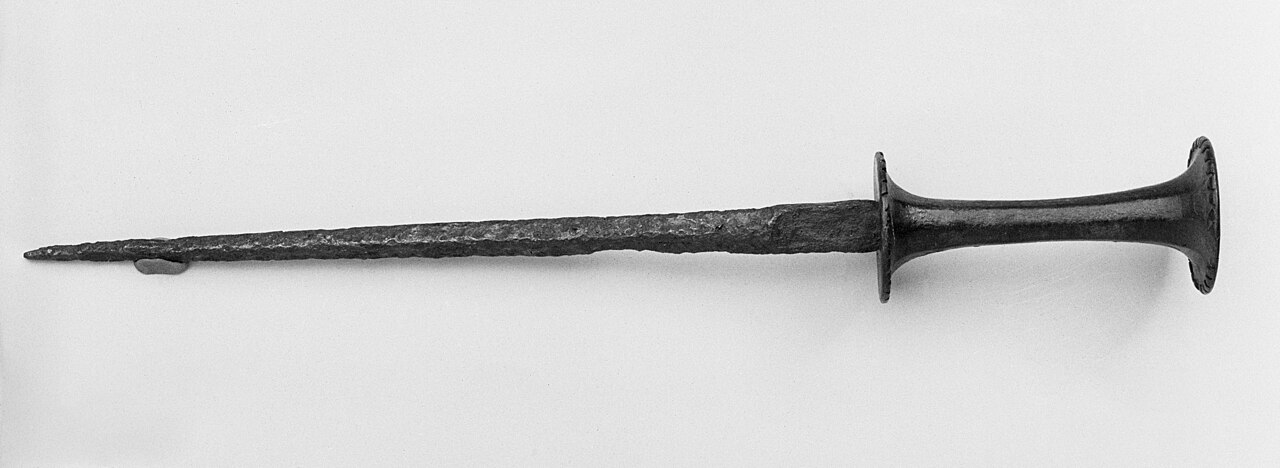
The rondel dagger was the stiff, needle-pointed dagger of the late medieval knight, named for the disc-shaped guard and pommel that framed… Continued…
-
Scottish Claymore
Claymore — Gaelic claidheamh-mòr, 'great sword' — names the two-handed sword of the Highland clans of the fifteenth to seventeenth… Continued…
-
Siege Mortar
A siege mortar was a short, wide-mouthed cannon that fired at a high angle, so that its projectile rose over walls and earthworks and fell… Continued…
-
Swept-Hilt Rapier
The swept-hilt rapier was the civilian sword of the late Renaissance: a long, narrow thrusting blade defended by a basket of gracefully… Continued…
-
Swivel Gun
The swivel gun was a small cannon mounted on a forked iron yoke that pivoted in a socket on a ship's rail, fighting top or boat bow, so… Continued…
-
Tanegashima
Tanegashima is the Japanese name for the matchlock arquebus, taken from the island of Tanegashima where, by the traditional account… Continued…
-
Tanto
The tanto is the dagger of the samurai: a single- or double-edged Japanese blade under thirty centimeters, forged, hardened, and polished… Continued…
-
Targe
The targe is the round shield of the Scottish Highlands, used from the late Middle Ages until the Jacobite Rising of 1745. Made of two… Continued…
-
Tepoztopilli
The tepoztopilli was the thrusting spear of the Aztec warrior: a wooden spear whose broad, flat head was edged on both sides with… Continued…
-
Venetian Galleass
The galleass was a large, heavily gunned warship of the sixteenth-century Mediterranean, built by Venice from its great merchant galleys.… Continued…
-
War Hammer
The war hammer is the late medieval answer to plate armor: a steel head with a blunt, often toothed hammer face on one side and a stout… Continued…
-
Wheellock Pistol
The wheellock was the first self-igniting firearm: a spring-driven steel wheel spun against pyrite to shower sparks into the pan, no… Continued…
-
Winged Hussar Lance
The kopia was the lance of the Polish-Lithuanian winged hussars, the heavy cavalry that dominated Eastern European battlefields for more… Continued…
-
Yari
The yari is the Japanese straight-bladed spear. It came into wide use in the fourteenth century and by the Sengoku period of the sixteenth… Continued…
-
Yumi
The yumi is the Japanese longbow, more than seven feet long and unusual among the world's bows because it is gripped well below the middle… Continued…