Battle of Sekigahara
The Battle of Sekigahara, fought on 21 October 1600 in central Japan, was the decisive battle for power after the death of Toyotomi Hideyoshi. Tokugawa Ieyasu's Eastern Army defeated the Western Army raised by Ishida Mitsunari, helped by the defection of several Western commanders in the middle of the fighting. With perhaps 150,000 or more men involved, it was one of the largest battles in Japanese history. It led to the Tokugawa shogunate, which ruled Japan until 1868.
Also known as Sekigahara, Sekigahara no Tatakai, Battle of Sekigahara 1600, Sekigahara campaign, Keichō 5 battle
Background
Toyotomi Hideyoshi had unified Japan by 1590 after more than a century of civil war. When he died in 1598 his heir, Hideyori, was five years old. Hideyoshi left the government to a council of five senior lords, the Five Elders, and five commissioners. The most powerful of the elders was Tokugawa Ieyasu, whose lands in the Kantō region made him the greatest lord in the country. Ieyasu began to act as the real ruler, arranging marriages and alliances without the council's approval. His chief opponent was the commissioner Ishida Mitsunari, a capable administrator who was unpopular with many of Hideyoshi's generals. In the summer of 1600 Ieyasu marched north against another elder, Uesugi Kagekatsu. Mitsunari used his absence to raise an army in Hideyori's name, with the elder Mōri Terumoto as its nominal leader at Osaka Castle. The Western Army took Fushimi Castle after a long siege in which its commander, Torii Mototada, died fighting. Ieyasu turned back west. His allies captured Gifu Castle, and by mid-October the two armies faced each other near Ōgaki in Mino province.
The Battle
On the night of 20 October, in heavy rain, the Western Army moved from Ōgaki to a strong position at Sekigahara, a narrow valley where main roads met. Its units occupied the hills on the western side and on Mount Matsuo to the south, where Kobayakawa Hideaki's large contingent was posted. Mōri troops held Mount Nangū, behind the Eastern Army's line. Ieyasu followed and deployed in the valley. The numbers are uncertain, and estimates for each side run from about 75,000 to more than 100,000. Fighting began around eight in the morning as the fog lifted, when Ii Naomasa's men opened fire on the troops of Ukita Hideie. For several hours the Western units under Ukita, Ishida, Konishi Yukinaga and Ōtani Yoshitsugu held their ground against heavy attacks. But much of the Western Army never fought. Kikkawa Hiroie, who had secretly reached terms with Ieyasu, kept the Mōri forces on Mount Nangū from moving. Kobayakawa, who had also been in contact with Ieyasu, waited on Mount Matsuo. The traditional story is that around noon Ieyasu ordered his gunners to fire at Kobayakawa's position to force him to decide, and that he then attacked Ōtani's troops. Some recent Japanese scholarship questions this, arguing from earlier letters and records that Kobayakawa turned against the Western Army at or near the start of the battle, and that the gunfire story is a later embellishment. Either way, his attack was followed by the defection of Wakisaka Yasuharu and other commanders. Ōtani's force was destroyed and he took his own life, and the rest of the Western line broke. The Shimazu contingent cut its way out through the Eastern Army in a famous fighting retreat, during which Ii Naomasa was wounded.
Weapons
The armies of 1600 were built around foot soldiers. Ashigaru with the long Yari formed the core of each unit, while others carried the matchlock Tanegashima, which had spread across Japan since the 1540s, and the longbow Yumi. The opening shots of the battle came from arquebusiers, and firearms were used heavily on both sides. Samurai fought on horseback or on foot with spears, and carried the Katana as their sidearm. The Naginata was still seen, but was far less common than in earlier centuries. Nearly all combatants wore armor of lacquered iron and leather plates, and the victors collected the heads of slain enemies as proof of their deeds.
Aftermath
Ishida Mitsunari fled but was captured, and he was executed in Kyoto with Konishi Yukinaga and the monk Ankokuji Ekei in November 1600. Mōri Terumoto gave up Osaka Castle. Ieyasu confiscated or reduced the lands of the defeated lords and rewarded his allies, placing trusted vassals in key positions. In 1603 the emperor appointed him shogun. The Toyotomi family survived at Osaka until Ieyasu destroyed it in the sieges of 1614 and 1615. The Tokugawa shogunate then ruled for more than 250 years. The Mōri and Shimazu domains, humbled at Sekigahara, later led the movement that overthrew it in 1868, one of the closing chapters of Feudal Japan.
Weapons used
-
Yari
The spear was the main close-combat weapon of both armies, from the long nagae yari of the ashigaru to the personal spears of mounted… Continued…
-
Tanegashima
Tens of thousands of matchlock arquebuses were carried on both sides, fifty-seven years after firearms reached Japan. Continued…
-
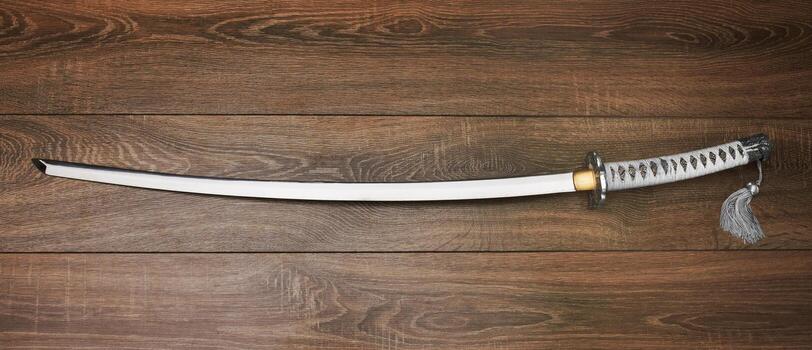
Katana
Samurai carried the katana as their sidearm and used it in the close fighting and in taking heads. Continued…
-
Yumi
Archers with the longbow still served alongside the gunners, shooting faster though with less penetration. Continued…
-
Naginata
The naginata was less common by 1600 than in earlier centuries, but was still carried by some warriors. Continued…
Sources
Bryant, Anthony J. Sekigahara 1600: The Final Struggle for Power. Osprey, 1995.
Sadler, A. L. The Maker of Modern Japan: The Life of Tokugawa Ieyasu. George Allen & Unwin, 1937.
Sansom, George. A History of Japan, 1334-1615. Stanford University Press, 1961.
Turnbull, Stephen. The Samurai Sourcebook. Cassell, 1998.
Suggest an edit · account required · reviewed before publishing · how it works