Origin
Japan
Japan's weapon tradition is among the most distinctive in the world. Swordsmiths developed multi-layer folded steel techniques producing the katana, considered the finest edged weapon ever made. The samurai class defined Japanese military culture until the Meiji Restoration introduced Western arms.
Overview
Japan's weapon tradition is among the most studied, admired, and imitated in the world. The katana is routinely cited as the pinnacle of pre-industrial sword making. Japanese swordsmiths developed unique multi-layer folded and differentially hardened steel techniques that produced blades combining a hard cutting edge with a tough, flexible spine — a combination no other tradition achieved in quite the same way.
The samurai class, which dominated Japanese society from the Kamakura period (1185) through the Meiji Restoration (1868), defined Japanese military culture. Their weapons, ethos, and aesthetics remain globally influential.
Japanese Swords
Katana
The iconic Japanese sword — a curved, single-edged blade typically 60–73 cm, worn edge-up in a wooden scabbard (saya). Key features:
- Differential hardening (hamon) — The cutting edge (hagane) is hardened by quenching while the spine (shingane) remains tougher and more flexible; the visible hamon (temper line) is a marker of quality
- Folded steel (tamahagane) — Raw iron sand smelted in a tatara furnace, then repeatedly folded and worked to even out carbon content and remove impurities
- Curvature (sori) — The curve develops during differential quenching; optimizes the blade for drawing cuts
Other Blade Forms
- Tachi — Earlier, longer, more curved sword worn edge-down; predecessor to the katana
- Wakizashi — Shorter companion sword (30–60 cm); the katana and wakizashi together formed the daisho (paired swords) that symbolized samurai status
- Tanto — Short blade/dagger; also used in formal suicide (seppuku)
- Naginata — A curved blade on a long pole; the signature weapon of female warriors (onna-bugeisha) and warrior monks (sohei)
- Nodachi / Odachi — Extremely long two-handed field sword; some exceeded 150 cm
Other Weapons
- Yumi (bow) — The Japanese asymmetric longbow; grip positioned below center; one of the most powerful bows in the world; highly ritualized use (kyudo still practiced)
- Yari (spear) — Straight-bladed spear; primary battlefield weapon for ashigaru (foot soldiers)
- Naginata — Curved blade on a pole; swept enemies and horses
- Tanegashima — Portuguese matchlock muskets obtained in 1543; Japanese smiths copied and produced them in large numbers; used decisively in the Sengoku period battles
Firearms and Modernization
Japan adopted Western firearms technology rapidly after the 1543 introduction of the tanegashima. By the Battle of Nagashino (1575), Oda Nobunaga deployed massed arquebusiers in rotating volleys — arguably predating European volley fire doctrine. The Meiji Restoration (1868) abolished the samurai class and rapidly equipped Japan with Western arms, leading to the Meiji-era Murata rifles and eventually the Arisaka series.
This article is a stub. Contributions covering specific swordsmiths, battles, and weapons are welcome.
Battles & Operations
-
Battle of Sekigahara (21 October 1600 (15th day of the 9th month of Keichō 5))
The Battle of Sekigahara, fought on 21 October 1600 in central Japan, was the decisive battle for power after the death of Toyotomi… Continued…
-
Battle of Shiroyama (24 September 1877)
The Battle of Shiroyama, fought at Kagoshima on 24 September 1877, was the last action of the Satsuma Rebellion. Saigō Takamori and a few… Continued…
-
Battle of Midway (4-7 June 1942)
The Battle of Midway, fought from 4 to 7 June 1942 around Midway Atoll in the central Pacific, was the turning point of the naval war… Continued…
-
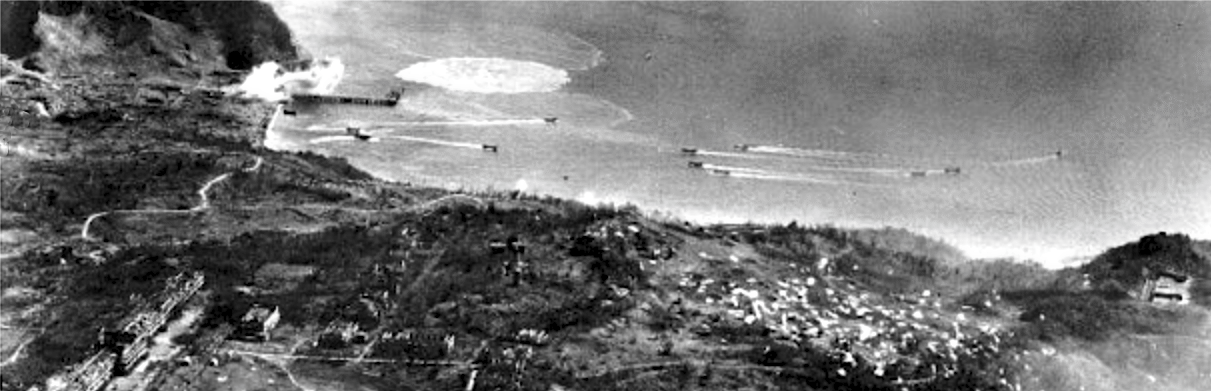
Battle of Corregidor (16-26 February 1945)
The Battle of Corregidor, 16 to 26 February 1945, recaptured the island fortress at the mouth of Manila Bay that American and Filipino… Continued…
-
Battle of Iwo Jima (19 February - 26 March 1945)
The Battle of Iwo Jima, fought from 19 February to 26 March 1945 on a small volcanic island south of Japan, was one of the hardest battles… Continued…
-
Battle of Okinawa (1 April - 22 June 1945)
The Battle of Okinawa, fought from 1 April to 22 June 1945, was the last major battle of the Pacific War and one of its largest. The US… Continued…
Weapons
-
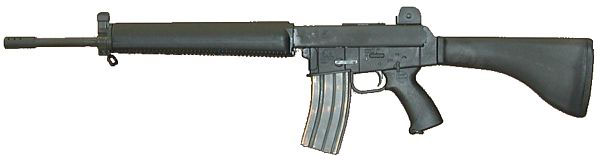
Armalite AR-18
The Armalite AR-18 is a 5.56mm select-fire rifle designed in 1963 by Arthur Miller and George Sullivan at Armalite in Costa Mesa… Continued…
-
Bō Staff
The bō is the Japanese and Okinawan fighting staff, most often the rokushakubō, a straight pole of hardwood six shaku (about 180 cm) long.… Continued…
-
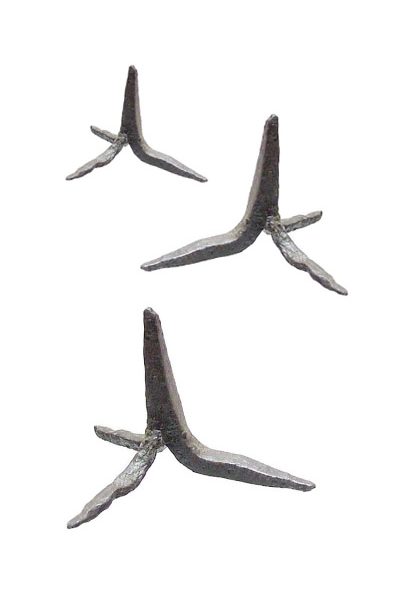
Caltrops
A caltrop is a small iron device of four spikes joined at the center so that however it lands, one spike always points up. Scattered on the… Continued…
-
Kai Gunto
The kai gunto, 'navy military sword', was the sword of officers of the Imperial Japanese Navy from the late 1930s through the Second World… Continued…
-
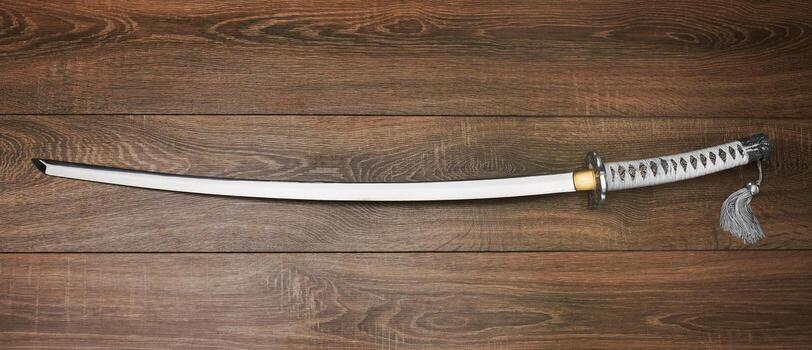
Katana
The katana is the curved, single-edged long sword of the samurai, worn edge-up through the sash and drawn in the same motion that cuts. Its… Continued…
-
Naginata
The naginata is a Japanese pole arm with a long, curved, single-edged blade on a wooden shaft, used from the Heian period onward. The… Continued…
-
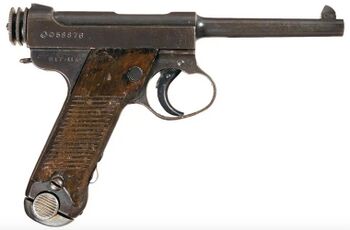
Nambu Type 14
The Nambu Type 14 was the standard service pistol of Japan in the Second World War. Designed by Kijirō Nambu's team and adopted in 1925… Continued…
-
Nodachi
The nodachi, or ōdachi, is an extra-long Japanese sword with a blade of three shaku (about 36 inches) or more, and often much longer. It… Continued…
-
Snider-Enfield
The Snider-Enfield was the British Army's first general-issue breech-loading rifle, adopted in 1866. It was made by fitting a side-hinged… Continued…
-
Tanegashima
Tanegashima is the Japanese name for the matchlock arquebus, taken from the island of Tanegashima where, by the traditional account… Continued…
-
Tanto
The tanto is the dagger of the samurai: a single- or double-edged Japanese blade under thirty centimeters, forged, hardened, and polished… Continued…
-
Type 89 Grenade Discharger
The Type 89 grenade discharger was a light 50mm mortar used by the Imperial Japanese Army from 1929 through the Second World War. It could… Continued…
-
Type 91 Torpedo
The Type 91 was the aerial torpedo of the Imperial Japanese Navy in the Second World War. Adopted in 1931, it was smaller and faster than… Continued…
-
Type 92 Heavy Machine Gun
The Type 92 was the standard heavy machine gun of the Imperial Japanese Army from the early 1930s to 1945. An air-cooled, gas-operated gun… Continued…
-
Type 96 Light Machine Gun
The Type 96 was the standard light machine gun of the Imperial Japanese Army in the early years of the Second World War. Designed by Kijirō… Continued…
-
Type 97 Hand Grenade
The Type 97 was the standard hand grenade of the Imperial Japanese Army and Navy in the Second World War. Adopted in 1937, it had a grooved… Continued…
-
Type 99 Rifle
The Type 99 was the last bolt-action rifle of the Imperial Japanese Army: a 7.7mm development of the 6.5mm Type 38 Arisaka adopted in 1939… Continued…
-
Yari
The yari is the Japanese straight-bladed spear. It came into wide use in the fourteenth century and by the Sengoku period of the sixteenth… Continued…
-
Yumi
The yumi is the Japanese longbow, more than seven feet long and unusual among the world's bows because it is gripped well below the middle… Continued…