Battle of Iwo Jima
The Battle of Iwo Jima, fought from 19 February to 26 March 1945 on a small volcanic island south of Japan, was one of the hardest battles in the history of the US Marine Corps. About 21,000 Japanese troops under General Tadamichi Kuribayashi defended the island from a network of tunnels, caves and bunkers. Three Marine divisions took five weeks to capture it. Almost the entire garrison died, and the Marines and Navy suffered about 26,000 casualties, nearly 7,000 of them killed. The flag raising on Mount Suribachi became a symbol of the war.
Also known as Iwo Jima, Operation Detachment, Iwo To, Battle for Mount Suribachi
Background
Iwo Jima is a small island of volcanic rock and ash, about eight square miles, roughly halfway between the American bomber bases in the Mariana Islands and Tokyo. In 1945 the Japanese used its airfields to warn of and attack the B-29 bombers raiding Japan. The Americans wanted it as a base for fighter escorts and as an emergency landing field for damaged bombers. General Tadamichi Kuribayashi, who took command in 1944, decided not to fight on the beaches, where naval guns would destroy his men, and not to waste them in mass charges. Instead his roughly 21,000 troops dug a system of tunnels, caves and concrete bunkers across the island and waited underground, with orders to kill as many Americans as possible before they died.
The Battle
After three days of naval bombardment, which the Marines thought too short, the 4th and 5th Marine Divisions landed on the south-east beaches on 19 February 1945, with the 3rd Division following later. The men sank into loose black ash that made digging foxholes and moving vehicles hard. The Japanese held their fire until the beaches were crowded, then opened up with artillery, mortars and machine guns from positions all over the island. By nightfall some 30,000 Marines were ashore, and about 2,400 had been killed or wounded. The 28th Marines cut across the narrow neck of the island and took Mount Suribachi, the volcano at the southern tip, on 23 February. Associated Press photographer Joe Rosenthal photographed the raising of a second, larger flag on the summit that day, and his picture became one of the most famous images of the war. The fighting in the north was worse. The Marines had to take ridges, gorges and hills such as Hill 382, the Amphitheater and Turkey Knob, in an area they named the Meat Grinder, by attacking one bunker at a time. The island was declared secure on 16 March, but fighting went on in the north, and a final attack by several hundred Japanese on 26 March hit Army and Marine camps near the airfields.
Weapons
The Marines fought with the M1 Garand, the M1918 BAR and the M1919 Browning Machine Gun, supported by tanks, artillery and naval guns. The weapons that cleared the bunkers were the M2 Flamethrower, the Satchel Charge and the Mk 2 Fragmentation Grenade, and flame-throwing tanks were used as well. The Japanese defended with the Type 99 Rifle, the Type 96 Light Machine Gun, the Type 89 Grenade Discharger, the Type 97 Hand Grenade, heavy mortars, rockets and artillery hidden in caves.
Aftermath
Nearly all the Japanese garrison died; only a few hundred were taken prisoner. American casualties were about 26,000, including nearly 7,000 dead, making Iwo Jima the only major Marine battle of the Pacific in which total American casualties outnumbered the Japanese. Twenty-seven Medals of Honor were awarded. Admiral Nimitz said of the men who fought there that "uncommon valor was a common virtue." More than 2,000 B-29 landings were made on the island's airfields before the end of World War II, and the US Marine Corps War Memorial in Arlington, Virginia, is modeled on Rosenthal's photograph.
Weapons used
-
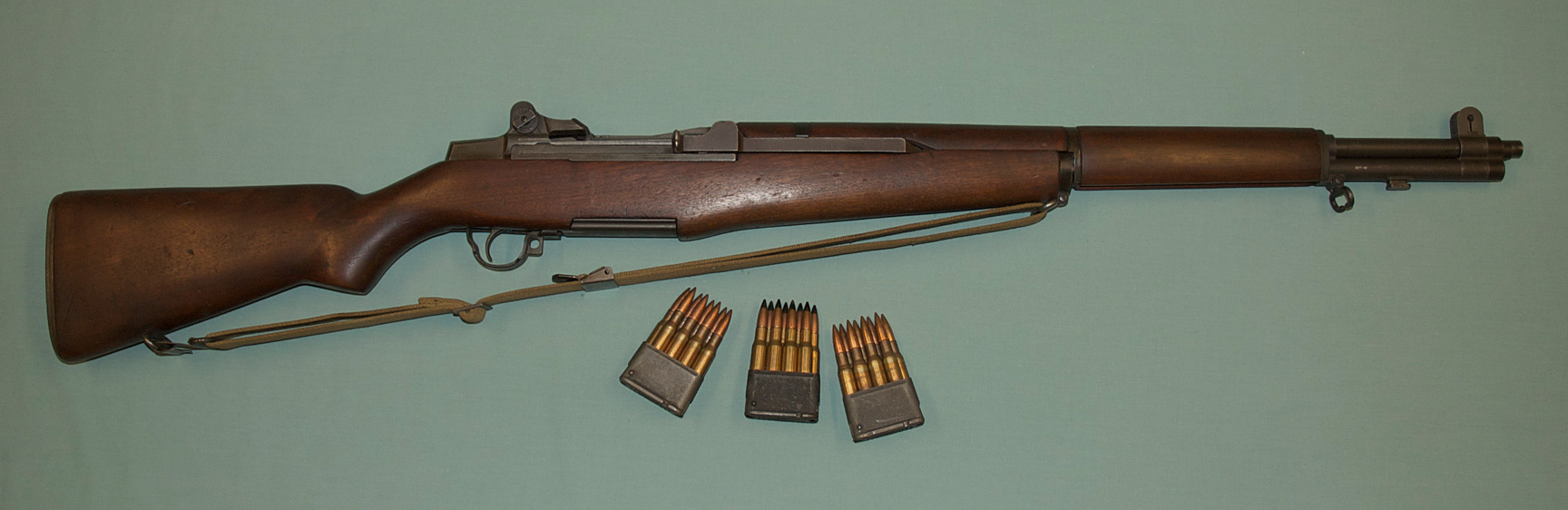
M1 Garand
The semi-automatic rifle of the Marine riflemen who fought across the island. Continued…
-
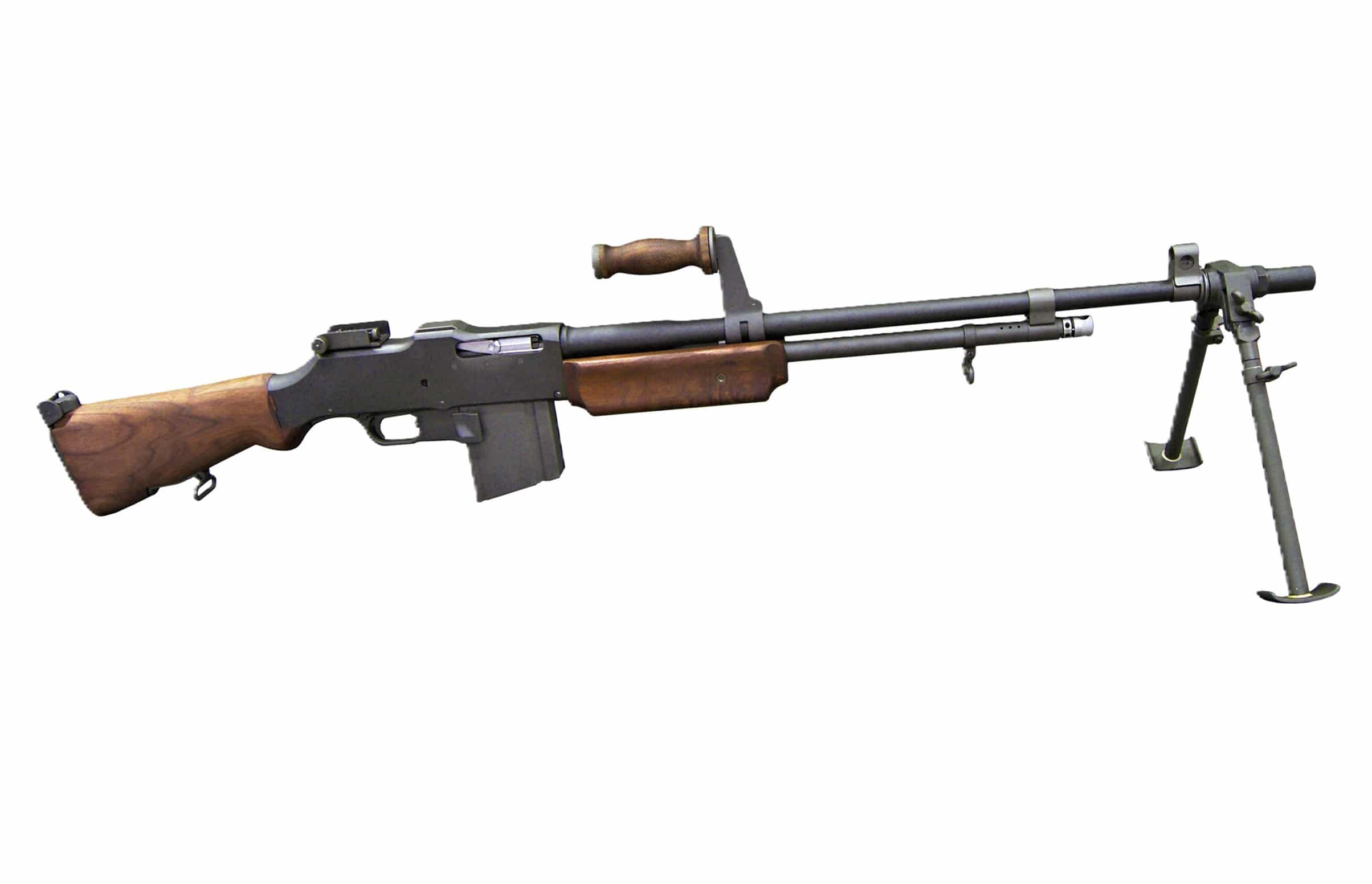
M1918 BAR
Each Marine fire team was built around a Browning Automatic Rifle, which gave it covering fire against Japanese positions. Continued…
-
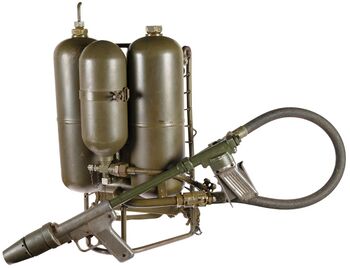
M2 Flamethrower
Flamethrower operators, covered by riflemen, burned out bunkers, pillboxes and cave mouths that artillery could not destroy. Continued…
-
Satchel Charge
Demolition men followed the flamethrowers and sealed or destroyed Japanese caves and bunkers with explosive charges. Continued…
-
Mk 2 Fragmentation Grenade
Marines used grenades in vast numbers against the entrances and firing slits of Japanese positions. Continued…
-
M1919 Browning Machine Gun
The air-cooled .30-caliber gun gave Marine companies sustained fire from the landing beaches to the northern ridges. Continued…
-
Type 99 Rifle
The standard rifle of the Japanese garrison, fired from concealed positions throughout the island. Continued…
-
Type 96 Light Machine Gun
Japanese light machine guns, sited in camouflaged bunkers, covered the beaches and the approaches to every ridge. Continued…
-
Type 89 Grenade Discharger
The Japanese light mortar was fired from caves and trenches against Marines at close range. Continued…
Sources
Bartley, Whitman S. Iwo Jima: Amphibious Epic. Historical Branch, Headquarters US Marine Corps, 1954.
Garand, George W., and Truman R. Strobridge. History of U.S. Marine Corps Operations in World War II, Volume IV: Western Pacific Operations. Historical Division, Headquarters US Marine Corps, 1971.
Alexander, Joseph H. Closing In: Marines in the Seizure of Iwo Jima. Marine Corps Historical Center, 1994.
Burrell, Robert S. The Ghosts of Iwo Jima. Texas A&M University Press, 2006.
Suggest an edit · account required · reviewed before publishing · how it works