Era
20th Century
The World Wars and the Cold War: bolt-action rifles and machine guns to assault rifles, guided weapons, and the nuclear age.
Overview
No century changed weapons faster. In 1900 the standard infantry arm was a bolt-action rifle with a five-round magazine, artillery was aimed by eye, and cavalry still carried lances. By 1991 a rifleman carried a selective-fire assault rifle, a squad had guided anti-tank missiles, and the two superpowers held enough thermonuclear weapons to end civilization. WarPast splits this century into one era because the weapons form a single line of descent; the wars themselves are covered as historical contexts, from World War I and World War II to the Cold War, Korean War and Vietnam War.
Industrialized war, 1900–1918
The First World War exposed the mismatch between weapons and tactics. Armies expecting mobile campaigns met the combined power of the bolt-action rifle, barbed wire, the water-cooled machine gun and quick-firing artillery, and the Western Front froze into trenches. Artillery caused most of the deaths, by most estimates well over half. The response was a burst of invention: the hand grenade and trench mortar became standard infantry weapons, poison gas appeared in 1915, tanks crossed the trench lines in 1916, aircraft went from scouting to fighting within two years, and in 1918 the German MP 18 introduced the submachine gun.
Rifles and pistols
Every major army fought with a bolt-action rifle. The German Mauser Gewehr 98 had a five-round internal magazine and the strongest action of the war; the British Lee-Enfield Rifle held ten rounds and cycled so fast that trained regulars fired fifteen aimed rounds a minute, the "mad minute" of 1914; the French Lebel Model 1886 carried eight rounds in a tube under the barrel and was obsolescent but sound; the Russian Mosin-Nagant M1891 and the American M1903 Springfield, a Mauser derivative, each held five. Officers and specialists carried the toggle-locked Luger P08, the Mauser C96 bought by Germany as a substitute standard, the .455 Webley Revolver and the .45 M1911 Pistol, which stayed in American service past the next war.
Machine guns
The machine gun made the frontal assault across open ground ruinous. The German MG 08, a water-cooled Maxim on a sled mount firing 400 rounds a minute, was the dominant defensive weapon of the Western Front; the British Vickers Machine Gun, another Maxim derivative, could fire for hours on end. The air-cooled Lewis Gun with its 47-round pan was the first practical light machine gun, the French Chauchat was issued by the hundred thousand despite its unreliability, and the water-cooled Browning M1917 arrived with the Americans in the last months.
Trench weapons
The trenches bred their own close-quarters arms. Hand grenades were essential for clearing them, above all the British Mills Bomb and the German Model 24 Stielhandgranate; the British Stokes mortar gave infantry plunging fire of their own; the German Flammenwerfer cleared bunkers at short range. Raiding parties went out at night with trench clubs, lead-weighted or spiked, with the Mark I Trench Knife and its knuckle-duster guard, and with the sharpened Entrenching Tool. Steel helmets returned to war after three centuries: the British Brodie Helmet, the French Adrian and the German Stahlhelm all appeared in 1915 and 1916.
Artillery, gas, tanks and aircraft
The field guns of 1914 were quick-firers on recoil carriages, led by the French 75 mm, which fired fifteen rounds a minute without relaying, the German 77 mm and the British 18-pounder, and behind them stood heavy pieces up to the German 42 cm "Big Bertha" howitzers that broke the Belgian forts and the Paris Gun that shelled the French capital from eighty miles. Poison gas began with chlorine at Ypres in April 1915; phosgene caused most of the gas deaths, and mustard gas, a blistering agent, was the most feared. Britain's lozenge-shaped Mark I to Mark V tanks, armed with 6-pounder guns or machine guns, crossed the trench lines from the Somme onward, France's two-man Renault FT introduced the rotating turret that every later tank copied, and Germany built only a handful of its clumsy A7V. In the air the Fokker Eindecker, the first fighter with a gun synchronized to fire through the propeller, gave way to the Sopwith Camel and the SPAD XIII, and both sides were bombing cities by 1917.
Between the wars, 1918–1939
The twenty-one years of peace were a period of intense development rather than stagnation. The lesson of the trenches was firepower per soldier, and it drove the self-loading rifle, led by the American M1 Garand of 1936, the first standard-issue semi-automatic rifle of any major army. Submachine guns such as the Thompson Submachine Gun matured into military weapons, the M1918 BAR and the Bren gave squads a light automatic, and the German MG 34 created the general-purpose machine gun. Tank doctrine split between infantry support and independent armored formations; Germany chose the latter and proved it in 1939 and 1940. Pistol design produced the Browning Hi-Power and the Walther P38, both still influential.
Self-loading rifles and submachine guns
The bolt-action's flaw was that the shooter had to leave the sight to work the bolt, and the answer was the self-loader: the gas-operated, eight-round Garand, the Soviet SVT-40 Rifle, reliable but costly to make, and the German Gewehr 41 and 43, the second a capable rifle that came too late in numbers. Submachine guns became standard for vehicle crews, paratroops and close-quarters fighting: the Thompson in .45 with its drum and box magazines, the German MP 28 and Bergmann MP 35 that grew out of the MP 18, the Finnish Suomi KP/-31 with its 71-round drum, and the Soviet PPD that copied it.
Light machine guns and pistols
The BAR in .30-06 served as the American squad automatic, the British Bren in .303 with its curved top magazine became the Commonwealth standard, and the belt- or drum-fed MG 34, usable as a light or a heavy gun at 900 rounds a minute, set the pattern for every general-purpose machine gun since. The Browning Hi-Power, John Browning's design completed by Dieudonné Saive at FN, carried thirteen rounds of 9 mm; the Walther PP and PPK introduced the double-action automatic, and the P38 brought it to a service pistol meant to replace the Luger.
Tanks, aircraft and artillery
Two schools of armor came out of 1918: tanks parceled out to support infantry, the French and British orthodoxy, or concentrated with motorized infantry and aircraft in independent formations, the doctrine of Guderian in Germany and of Fuller and Liddell Hart in Britain. Germany chose the second. Its Panzer I and II were training and light tanks, inadequate for battle, but they were the vehicles the Panzer divisions learned on; the Renault FT served on in many armies, Britain's Vickers Medium was the standard tank of the 1920s, and the Soviet T-26 and the fast BT series led toward the T-34. Air forces converted from biplanes to all-metal monoplanes, the Junkers Ju 87 and the Douglas Dauntless proved dive bombing, Douhet's theory of strategic bombing shaped the RAF's Bomber Command and the US Air Corps, and the American and Japanese navies worked out carrier doctrine. The German 8.8 cm Flak, built as an anti-aircraft gun, became the most versatile artillery piece of the age; anti-tank rifles were effective until armor outgrew them around 1942; and the Soviet Katyusha Rocket Launcher and the German Nebelwerfer brought back rocket artillery.
The Second World War, 1939–1945
World War II was a war of production as much as of tactics, and the side that could build and replace weapons fastest prevailed. Every category advanced at once. The MG 42 fired 1,200 rounds a minute; cheap submachine guns such as the Soviet PPSh-41, the German MP40 and the British Sten Gun were made by the million; shaped-charge weapons like the bazooka, the Panzerfaust and the PIAT gave infantry a real answer to tanks. The most consequential small arm was the German StG 44, the first practical assault rifle, which fired an intermediate cartridge from a thirty-round magazine and set the pattern for everything that followed. The war ended with jet fighters in service and two atomic bombs dropped on Japan.
Rifles and the assault rifle
The Garand was arguably the best standard rifle of the war, and the only semi-automatic issued to every infantryman. Germany fought with the Karabiner 98k, Russia with the Mosin-Nagant M91/30, which Soviet snipers used with a 4x scope to deadly effect (see the Mosin Nagant 1891/30 Sniper Rifle), Britain with the Lee-Enfield No. 4 and Japan with the 7.7 mm Type 99 Rifle. The StG 44 fired the 7.92x33 mm Kurz cartridge, less powerful than a rifle round but controllable in automatic fire, from a selective-fire rifle with a thirty-round magazine, and it directly inspired the AK-47.
Submachine guns and machine guns
The PPSh-41 with its 71-round drum was made in millions and fired 900 rounds a minute; the MP40 with its folding stock was the German standard; the Sten cost a few dollars and armed the Commonwealth and the resistance movements; the American M3 Grease Gun replaced the Thompson; and the Italian Beretta Model 38 was among the best made. The MG 42, air-cooled with a quick-change barrel and the "buzz saw" sound of its rate of fire, was the war's outstanding machine gun. The M1919 Browning Machine Gun served as infantry, vehicle and aircraft gun, the Bren remained the Commonwealth light machine gun, and the pan-fed Degtyaryov DP-27 was the Soviet one.
Anti-tank weapons
As armor thickened, infantry got weapons that could kill a tank. The American Bazooka fired a 60 mm shaped-charge rocket from the shoulder; the German Panzerfaust, a disposable single-shot launcher made in millions, could stop any Allied tank at close range, and the reusable Panzerschreck was an enlarged copy of the bazooka; the British PIAT threw its bomb from a spring-driven spigot with no backblast, so it could be fired from a room.
Tanks, aircraft and the bomb
The tank war was fought by the German Panzer IV with its long 75 mm gun, the Tiger I with its 88 mm and near-impenetrable front, and the Panther with sloped armor; by the Soviet T-34, whose sloped armor, reliability and numbers outweighed German quality, and the IS-2 with a 122 mm gun that could kill a Tiger at long range; and by the American M4 Sherman, reliable, numerous and under-gunned against the late German tanks until the 90 mm M26 Pershing arrived in 1945. In the air the Bf 109 and the Fw 190 faced the Spitfire and the Merlin-engined P-51 Mustang, whose range let American bombers reach deep into Germany; the Japanese Zero ruled the Pacific until its lack of protection told against it; and the Me 262, the first operational jet fighter, came too late and in too few numbers. The B-17 carried the daylight bombing campaign over Europe, and the B-29 carried the atomic bombs, Little Boy to Hiroshima on 6 August 1945 and Fat Man to Nagasaki three days later, that ended the war and opened the nuclear age.
The Cold War, 1945–1991
Two superpowers able to destroy each other competed instead through proxy wars, arms races and technology, and the confrontation that never came shaped every weapon of the period. The assault rifle became universal: the AK-47 and its descendants armed most of the world's armies and insurgencies, while the West moved from the FN FAL and M14 to the M16 Rifle and the small-caliber, high-velocity cartridge. Infantry gained guided and rocket weapons, from the RPG-7 and the M72 LAW to wire-guided anti-tank missiles and shoulder-fired anti-aircraft missiles. Dedicated marksman rifles such as the SVD Rifle returned to the squad. Above all of it sat intercontinental missiles, nuclear submarines and the doctrine of mutually assured destruction. The collapse of the Soviet Union in 1991 closes the era; the conflicts since are covered under Modern.
Assault rifles and machine guns
Mikhail Kalashnikov's AK-47 in 7.62x39 mm, gas-operated with a rotating bolt and a thirty-round magazine, is perhaps the most influential weapon design in history, with something over a hundred million made with its descendants: the stamped-receiver AKM of 1959, the 5.45 mm AK-74 of 1974, and the PK Machine Gun and RPK that fed the squad. The American M14 Rifle in 7.62 mm NATO lasted only a few years before Eugene Stoner's 5.56 mm M16, adopted in 1964 and troubled in Vietnam until it was refined, and its shortened M4 Carbine; the M249 Squad Automatic Weapon and the M60 Machine Gun gave the squad its automatic fire. Europe's answers were the FN FAL and the G3 Rifle.
Handguns and sniper rifles
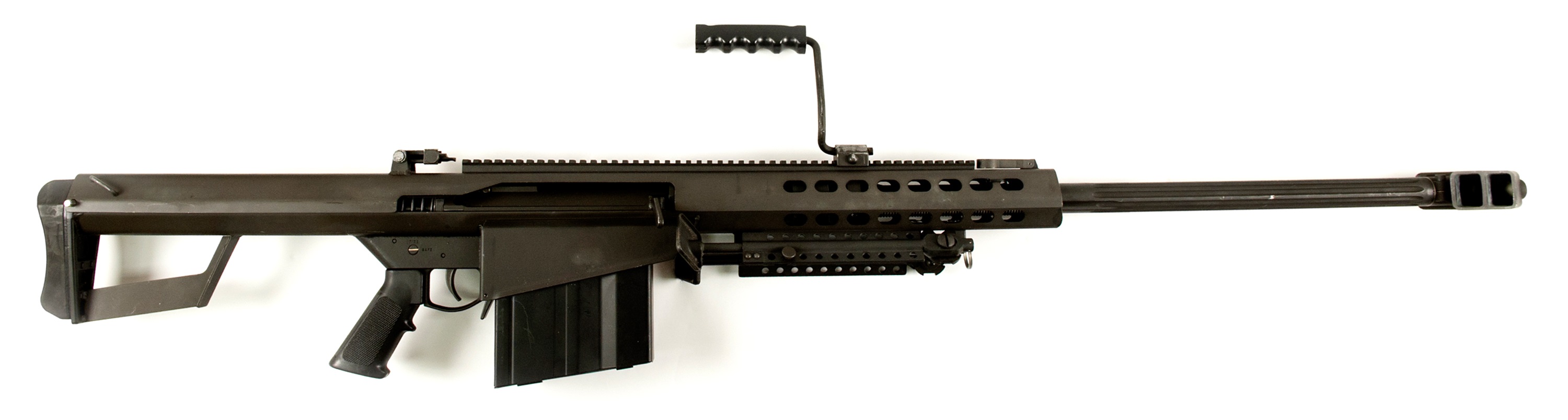
The Soviet Makarov in 9x18 mm was the Warsaw Pact sidearm; the American M1911A1 served until 1985, when the fifteen-shot Beretta M9 replaced it; and the Austrian Glock 17, polymer-framed and striker-fired, changed the whole design of the handgun. Marksman and sniper rifles came back: the Dragunov SVD with its ten-round magazine, the M24 Sniper Weapon System on a Remington 700 action, and the Barrett M82, a .50 caliber semi-automatic that reaches vehicles and equipment beyond a kilometer.
Anti-tank, air defense and precision weapons
Wire-guided missiles gave infantry a reach against armor that no gun could match: the Soviet Sagger, which cut down Israeli armor in 1973, the American TOW on vehicles and helicopters, and the man-portable Dragon, followed after the era by the fire-and-forget Javelin. The RPG-7, introduced in 1961, became the most widely used anti-tank weapon in history, and the disposable M72 LAW replaced the bazooka. The shoulder-fired SA-7 was the first practical man-portable anti-aircraft missile, and the American Stinger in Afghan hands drove Soviet helicopters from the sky. Thermonuclear warheads rode intercontinental missiles that could reach any point on earth in thirty minutes, submarine-launched missiles that could not be found, and the B-52 and Tu-95 bombers, under the doctrine of mutually assured destruction. Vietnam introduced the laser-guided bomb, and by the end of the era the Maverick missile and the Tomahawk cruise missile, accurate to meters over a thousand miles, pointed at the precision warfare of the century's last decade.
Collecting from this century
Twentieth-century military arms are the most widely collected of any era, from Great War bolt-actions and trench knives to Cold War surplus. Many are still in service somewhere, and many are regulated: in the United States, select-fire weapons and destructive devices fall under the National Firearms Act, and WarPast does not sell firearms. Edged weapons, helmets, field gear, bayonets and deactivated or inert pieces remain open to collectors.
Battles & Operations
-
Siege of Mafeking (13 October 1899 – 17 May 1900)
The Siege of Mafeking lasted 217 days, from 13 October 1899 to 17 May 1900, the longest siege of the Second Boer War. Colonel Robert… Continued…
-
Battle of Paardeberg (18 – 27 February 1900)
The Battle of Paardeberg was fought on the Modder River in the Orange Free State from 18 to 27 February 1900, Britain's first great victory… Continued…
-
Battle of Spion Kop (23 – 24 January 1900)
The Battle of Spion Kop was fought on 23-24 January 1900 on the Tugela Heights in Natal, during Buller's second attempt to relieve… Continued…
-
First Battle of the Marne (5-12 September 1914)
The First Battle of the Marne was fought east of Paris from 5 to 12 September 1914. After a month of German advances through Belgium and… Continued…
-
Battle of the Somme (1 July - 18 November 1916)
The Battle of the Somme was a joint British and French offensive against the German lines in northern France, fought from 1 July to 18… Continued…
-
Meuse-Argonne Offensive (26 September - 11 November 1918)
The Meuse-Argonne Offensive, fought from 26 September to 11 November 1918, was the main American battle of the First World War and part of… Continued…
-
Winter War (30 November 1939 - 13 March 1940)
The Winter War was a conflict between Finland and the Soviet Union that began with a Soviet invasion on 30 November 1939 and ended on 13… Continued…
-
Battle of Britain (10 July - 31 October 1940)
The Battle of Britain, fought over southern England and the Channel from July to October 1940, was the first major campaign fought entirely… Continued…
-
Battle of Midway (4-7 June 1942)
The Battle of Midway, fought from 4 to 7 June 1942 around Midway Atoll in the central Pacific, was the turning point of the naval war… Continued…
-
Battle of Stalingrad (23 August 1942 - 2 February 1943)
The Battle of Stalingrad, fought from the late summer of 1942 to February 1943 in and around the Soviet city on the Volga, was the turning… Continued…
-
Battle of Kursk (5 July - 23 August 1943)
The Battle of Kursk, fought from 5 July to 23 August 1943 in western Russia and eastern Ukraine, was the last major German offensive on the… Continued…
-
Battle of Arnhem (17-26 September 1944)
The Battle of Arnhem, fought from 17 to 26 September 1944, was the final and failed stage of Operation Market Garden, the Allied attempt to… Continued…
-
Normandy Landings (6 June 1944)
The Normandy Landings of 6 June 1944, D-Day, were the largest seaborne invasion in history and the start of the Allied liberation of… Continued…
-
Siege of Bastogne (20-27 December 1944)
The Siege of Bastogne, from 20 to 27 December 1944, was the best-known episode of the Battle of the Bulge. The US 101st Airborne Division… Continued…
-
Battle of Corregidor (16-26 February 1945)
The Battle of Corregidor, 16 to 26 February 1945, recaptured the island fortress at the mouth of Manila Bay that American and Filipino… Continued…
-
Battle of Iwo Jima (19 February - 26 March 1945)
The Battle of Iwo Jima, fought from 19 February to 26 March 1945 on a small volcanic island south of Japan, was one of the hardest battles… Continued…
-
Battle of Okinawa (1 April - 22 June 1945)
The Battle of Okinawa, fought from 1 April to 22 June 1945, was the last major battle of the Pacific War and one of its largest. The US… Continued…
-
Battle of Chosin Reservoir (27 November - 13 December 1950)
The Battle of Chosin Reservoir was fought in the mountains of northeast Korea from late November to mid-December 1950. Chinese armies… Continued…
-
Rhodesian Bush War (4 July 1964 - 21 December 1979)
The Rhodesian Bush War was fought from 1964 to 1979 between the government of Rhodesia, which had declared independence from Britain in… Continued…
-
Battle of Ia Drang (14-18 November 1965)
The Battle of Ia Drang, fought from 14 to 18 November 1965 in the Central Highlands of South Vietnam, was the first major battle between… Continued…
-
Battle of Huế (31 January - 2 March 1968)
The Battle of Huế, fought from 31 January to 2 March 1968, was the longest and bloodiest battle of the Tet Offensive. North Vietnamese and… Continued…
-
Battle of Khe Sanh (21 January - 9 July 1968)
The Battle of Khe Sanh was a 77-day North Vietnamese siege of a US Marine Corps combat base near the Laotian border and the Demilitarized… Continued…
-
The Troubles (October 1968 - 10 April 1998)
The Troubles was a thirty-year conflict in Northern Ireland between republican paramilitaries seeking a united Ireland, chiefly the… Continued…
-
Battle of Mogadishu (3-4 October 1993)
The Battle of Mogadishu was fought on 3 and 4 October 1993 in the Somali capital between the American special operations force Task Force… Continued…
Weapons
-
8.8 cm Flak
The 8.8 cm Flak was the German family of heavy anti-aircraft guns known to Allied soldiers simply as the 88. The Flak 18 of 1933 and the… Continued…
-
AK-47
The AK-47 is the most produced firearm in human history: Mikhail Kalashnikov's gas-operated assault rifle in 7.62x39mm, built around loose… Continued…
-
APS Underwater Assault Rifle
The APS (Avtomat Podvodnyy Spetsialnyy, "special underwater assault rifle") is the Soviet answer to a problem no ordinary rifle could… Continued…
-
Armalite AR-18
The Armalite AR-18 is a 5.56mm select-fire rifle designed in 1963 by Arthur Miller and George Sullivan at Armalite in Costa Mesa… Continued…
-
Bangalore Torpedo
The Bangalore torpedo is a long explosive charge made of steel tubes that can be joined end to end, pushed under barbed wire or across a… Continued…
-
Barrett M82
The Barrett M82 is a semi-automatic rifle chambered for the .50 BMG machine-gun cartridge, designed by Ronnie Barrett in Tennessee in the… Continued…
-
Bazooka
The bazooka was the American 2.36-inch shoulder-fired rocket launcher of the Second World War, built as the M1, M1A1 and M9. Introduced in… Continued…
-
Beretta BM59 Rifle
The Beretta BM59 is the Italian answer to the same question the M14 answered in America: how to turn the M1 Garand into a select-fire… Continued…
-
Beretta M9
The Beretta M9 is the 9 mm semi-automatic pistol adopted by the United States armed forces in 1985 to replace the .45 caliber M1911A1. It… Continued…
-
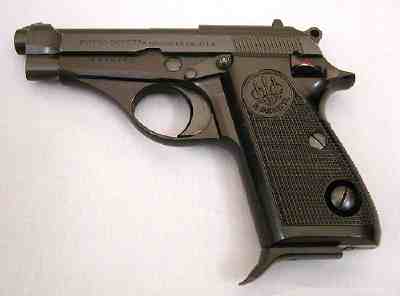
Beretta Model 70 (and Variants)
The Beretta Model 70 (also known as the Puma, among several other, less common, marketing names) and variants are a series of classic 20th… Continued…
-
Bofors 40 mm Gun
The Bofors 40 mm gun is a light anti-aircraft gun designed by the Swedish firm AB Bofors in the early 1930s. It fired a two-pound explosive… Continued…
-
Bolo KnifeFor sale
The bolo is the broad-bladed working knife of the Philippines — wider toward the tip, weighted for the chop, the universal tool of field… Continued…
-
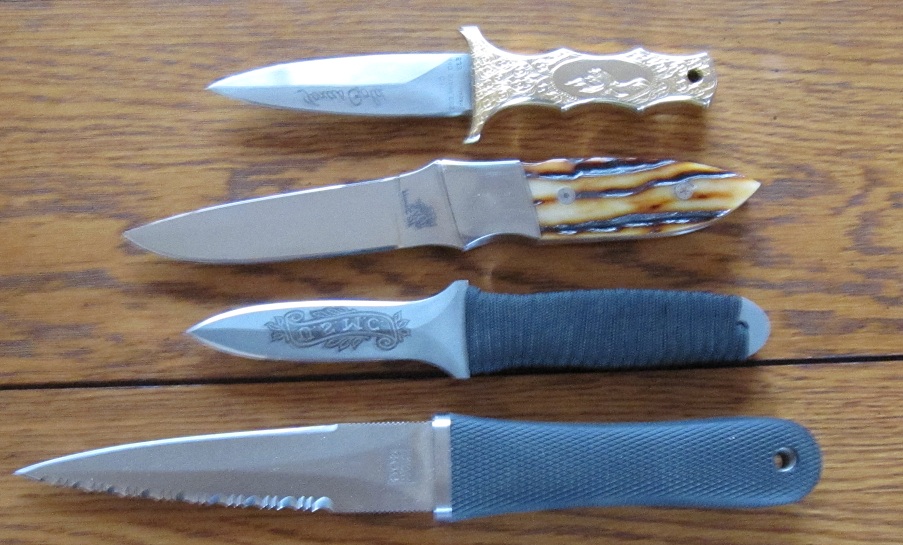
Boot Knife
A boot knife is a small, usually double-edged fighting knife made to ride hidden in a boot top or along the calf, where a hand could reach… Continued…
-
Bren
The Bren was the light machine gun of the British and Commonwealth armies from 1938 until the 1990s: a Czech design from Brno… Continued…
-
Brodie Helmet
The Brodie helmet is the shallow, wide-brimmed steel helmet designed by John Leopold Brodie in 1915 and worn by British and Commonwealth… Continued…
-
Browning Hi-Power
The Browning Hi-Power is a 9x19mm semi-automatic pistol begun by John Browning in the 1920s and completed after his death by Dieudonne… Continued…
-
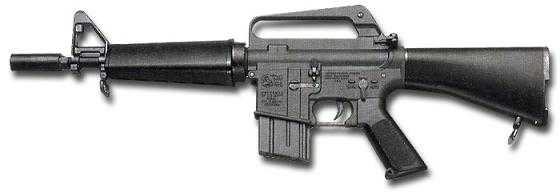
CAR-15
CAR-15 was Colt's name, from the mid-1960s, for a family of weapons built on the AR-15 and M16 rifle, and soldiers came to use it for the… Continued…
-
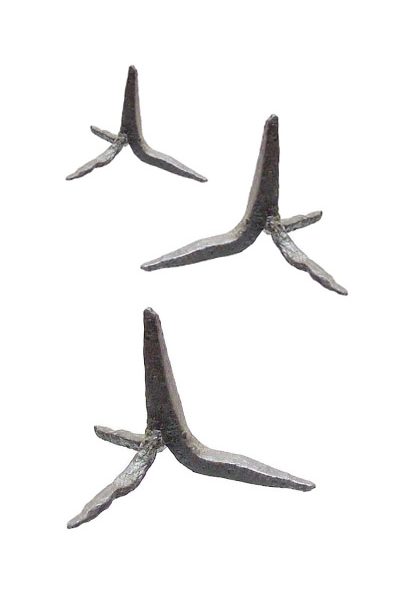
Caltrops
A caltrop is a small iron device of four spikes joined at the center so that however it lands, one spike always points up. Scattered on the… Continued…
-
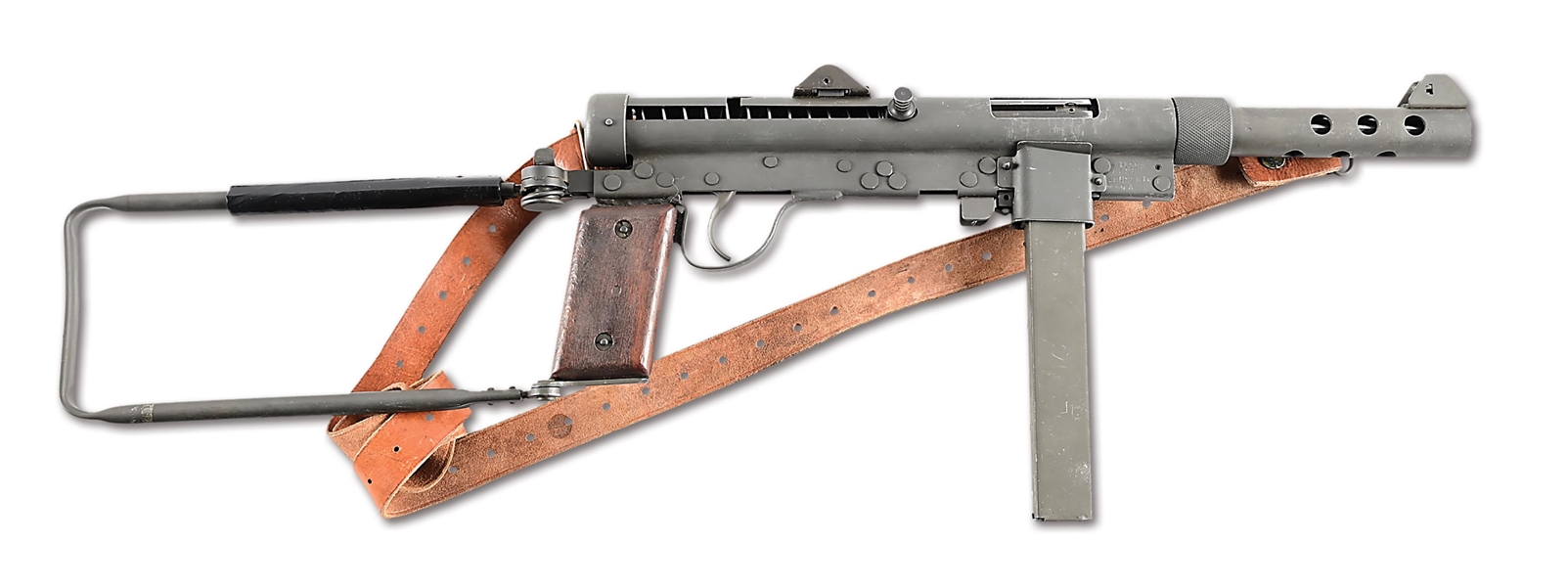
Carl Gustaf m/45
The Carl Gustaf m/45 is a Swedish 9mm submachine gun adopted in 1945 and made at the Carl Gustafs Stads Gevärsfaktori in Eskilstuna.… Continued…
-
Chauchat
The Chauchat, officially the Fusil Mitrailleur Modèle 1915 CSRG, was the French army's light automatic weapon of the First World War. It… Continued…
-
Cossack Shashka
The shashka is the guardless saber of the Caucasus and the Cossacks — a slightly curved, single-edged blade carried edge-up in the scabbard… Continued…
-
Creusot 155 mm Long Tom
The Long Tom was the British name for the four 155 mm Creusot siege guns that the Transvaal bought from France in 1897 for the forts around… Continued…
-
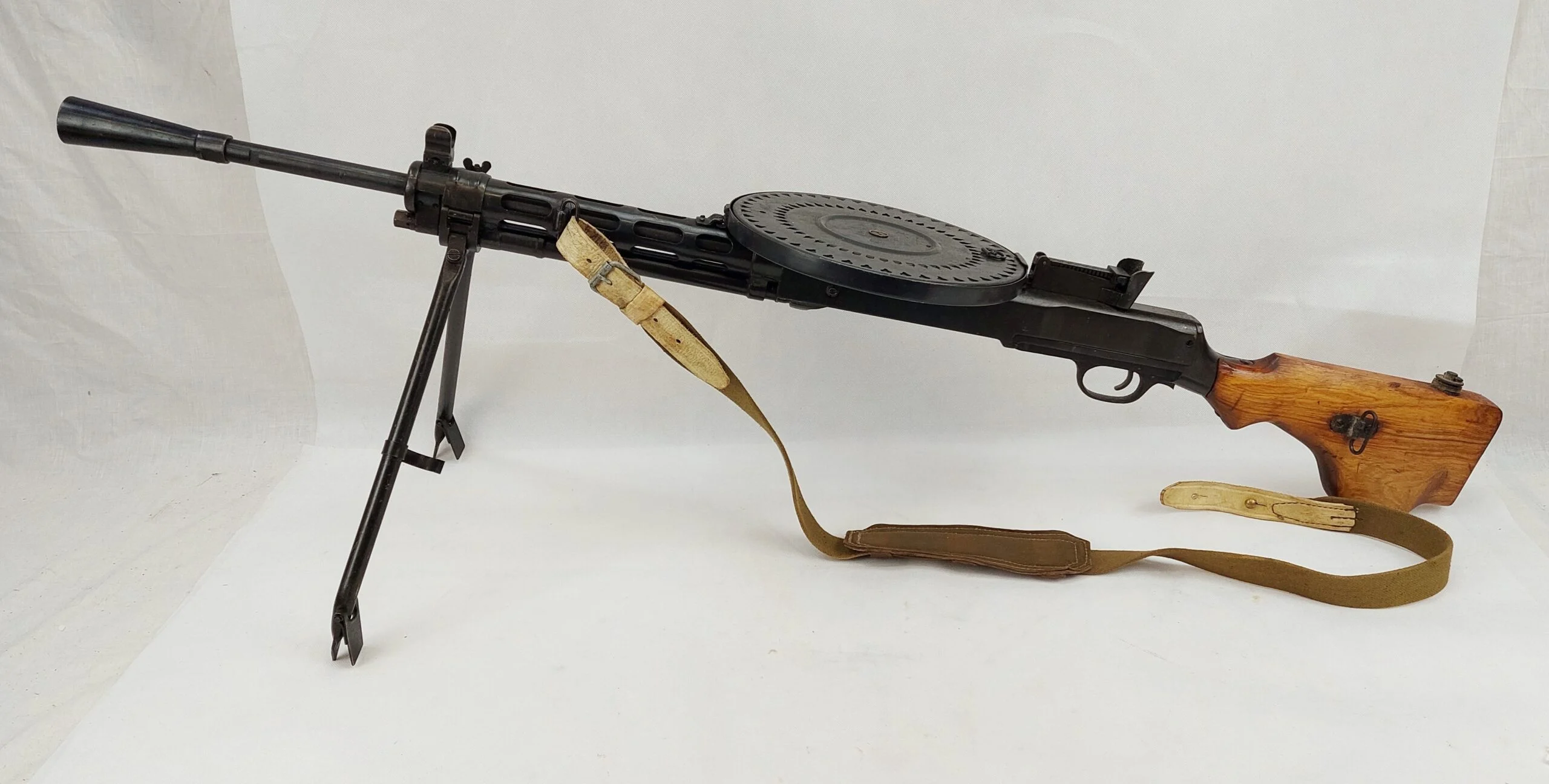
Degtyaryov DP-27
The DP-27 was the standard light machine gun of the Soviet Army from the late 1920s through the Second World War. Designed by Vasily… Continued…
-
Ek Commando KnifeFor sale
The Ek Commando knife is the private-purchase fighting knife of World War II America: hand-ground daggers and fighters from John Ek's… Continued…
-
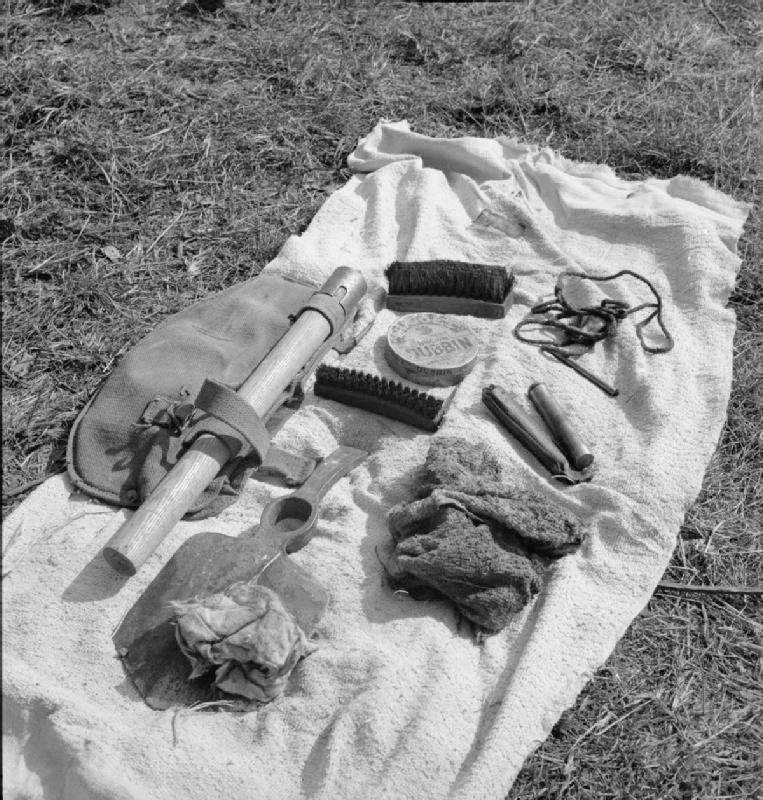
Entrenching Tool
The entrenching tool is the soldier's personal shovel, a compact spade or pick carried on the belt or pack so that an infantryman can dig… Continued…
-
FAMAS
The FAMAS is the French army's bullpup assault rifle, adopted in 1978 and in service for four decades. Made at the Saint-Étienne arms… Continued…
-
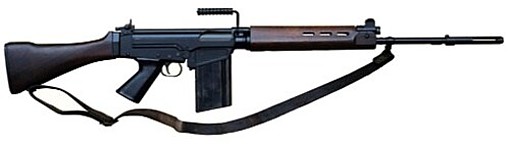
FN FAL
The FN FAL — Fusil Automatique Léger, or light automatic rifle — was the most widely adopted battle rifle of the Cold War. Designed by… Continued…
-
FN MAG
The FN MAG is a Belgian general-purpose machine gun designed by Ernest Vervier at Fabrique Nationale and introduced in 1958. It fires… Continued…
-
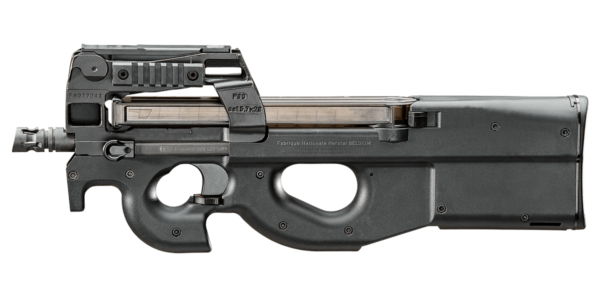
FN P90
The FN P90 is a Belgian personal defense weapon designed by FN Herstal in the late 1980s to give drivers, gunners and other rear-echelon… Continued…
-
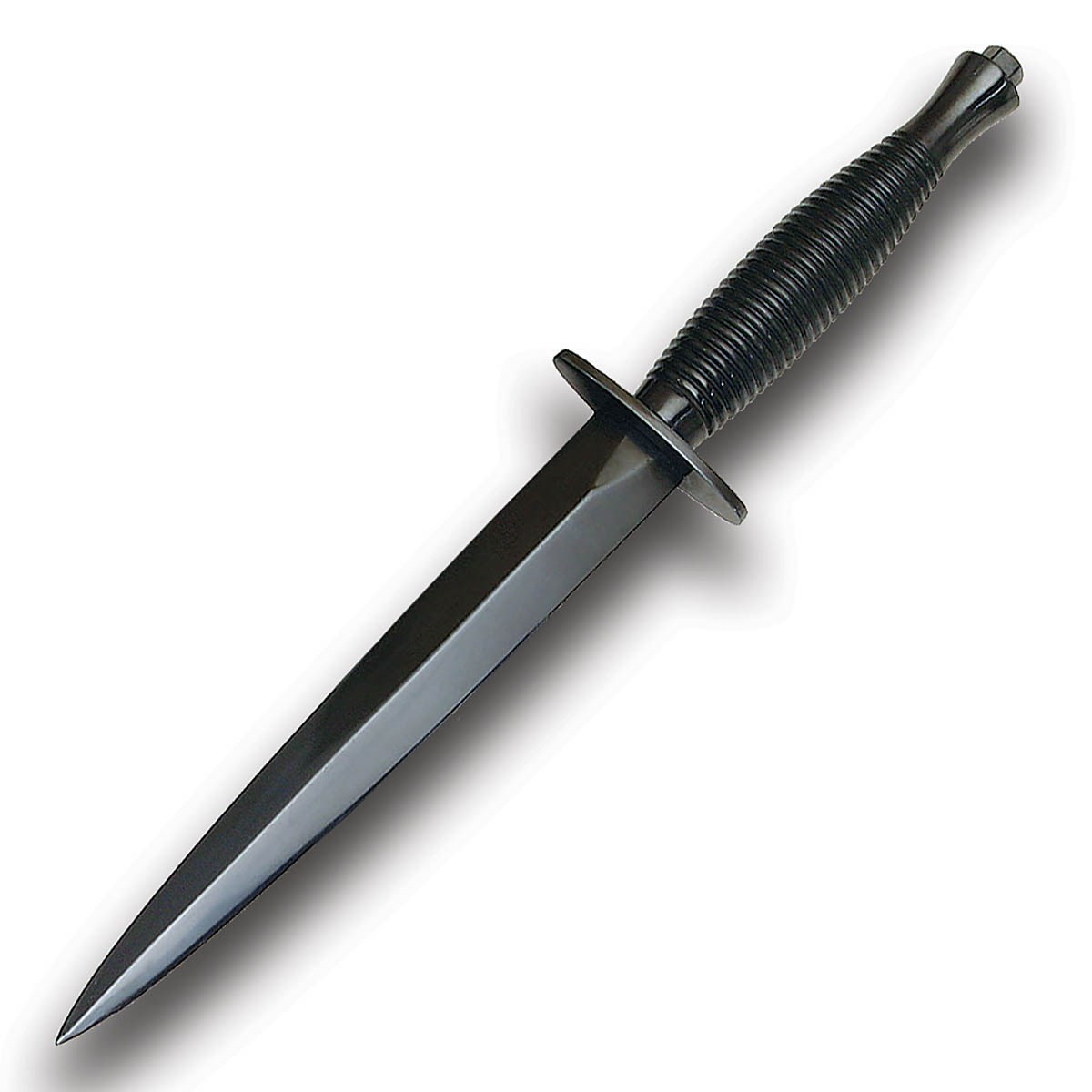
Fairbairn–Sykes Fighting Knife
The Fairbairn–Sykes Fighting Knife was a slim, double-edged dagger designed in 1940 by William Fairbairn and Eric Sykes, two former… Continued…
-
Flak Jacket
The flak jacket is the fragmentation-protective vest of the mid-twentieth century: first the steel-plated flak suits of American bomber… Continued…
-
Franchi SPAS-12
The Franchi SPAS-12 is a dual-mode Italian combat shotgun produced from 1979 to 2000 that can be switched between gas-operated… Continued…
-
French 75
The French 75, the Canon de 75 modèle 1897, was the first modern quick-firing field gun. A hydraulic and air recoil system let the barrel… Continued…
-
G3 Rifle
The Heckler & Koch G3 is a select-fire 7.62x51 mm NATO battle rifle adopted by West Germany in 1959 and kept as its standard rifle until… Continued…
-
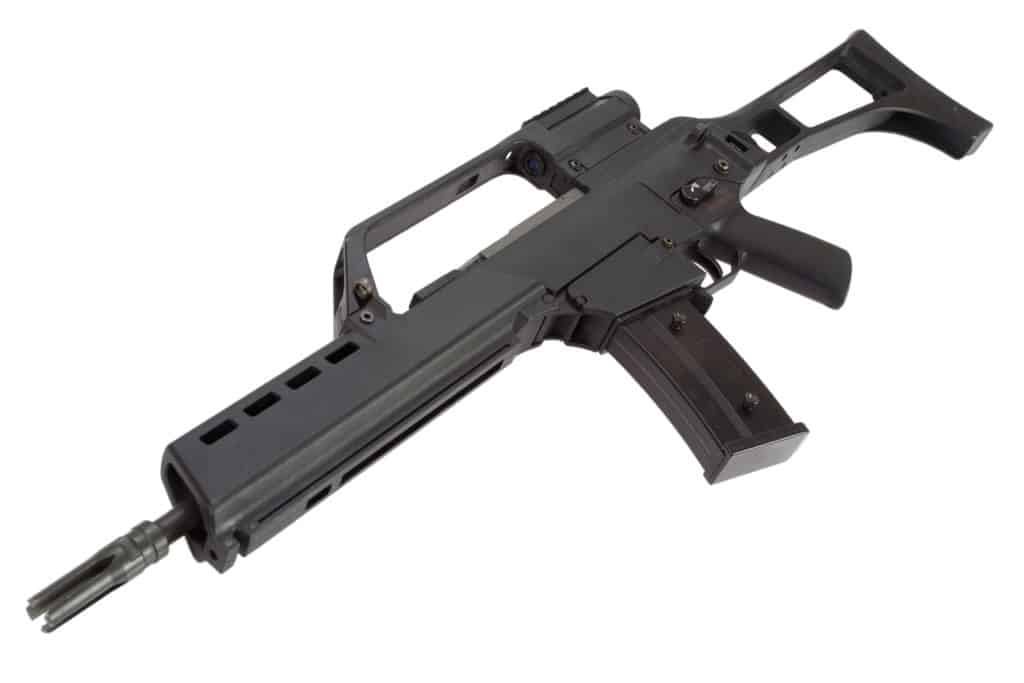
G36 Rifle
The Heckler & Koch G36 is a 5.56x45 mm NATO assault rifle adopted by the German Bundeswehr in 1997 to replace the G3. It uses a… Continued…
-
HK MP5
The Heckler & Koch MP5 is the submachine gun by which every other has been judged since the 1970s. It shrank the roller-delayed blowback… Continued…
-
HK MP7
The Heckler & Koch MP7 is a personal defense weapon: a machine pistol the size of a large handgun that fires a small, very fast 4.6x30mm… Continued…
-
Hotchkiss M1914
The Hotchkiss M1914 was the standard heavy machine gun of the French army in the First World War. Made by the Hotchkiss company near Paris… Continued…
-
IWI Galil
The Galil is an Israeli assault rifle developed in the late 1960s by Yisrael Galili and Yaacov Lior of Israel Military Industries. It is… Continued…
-
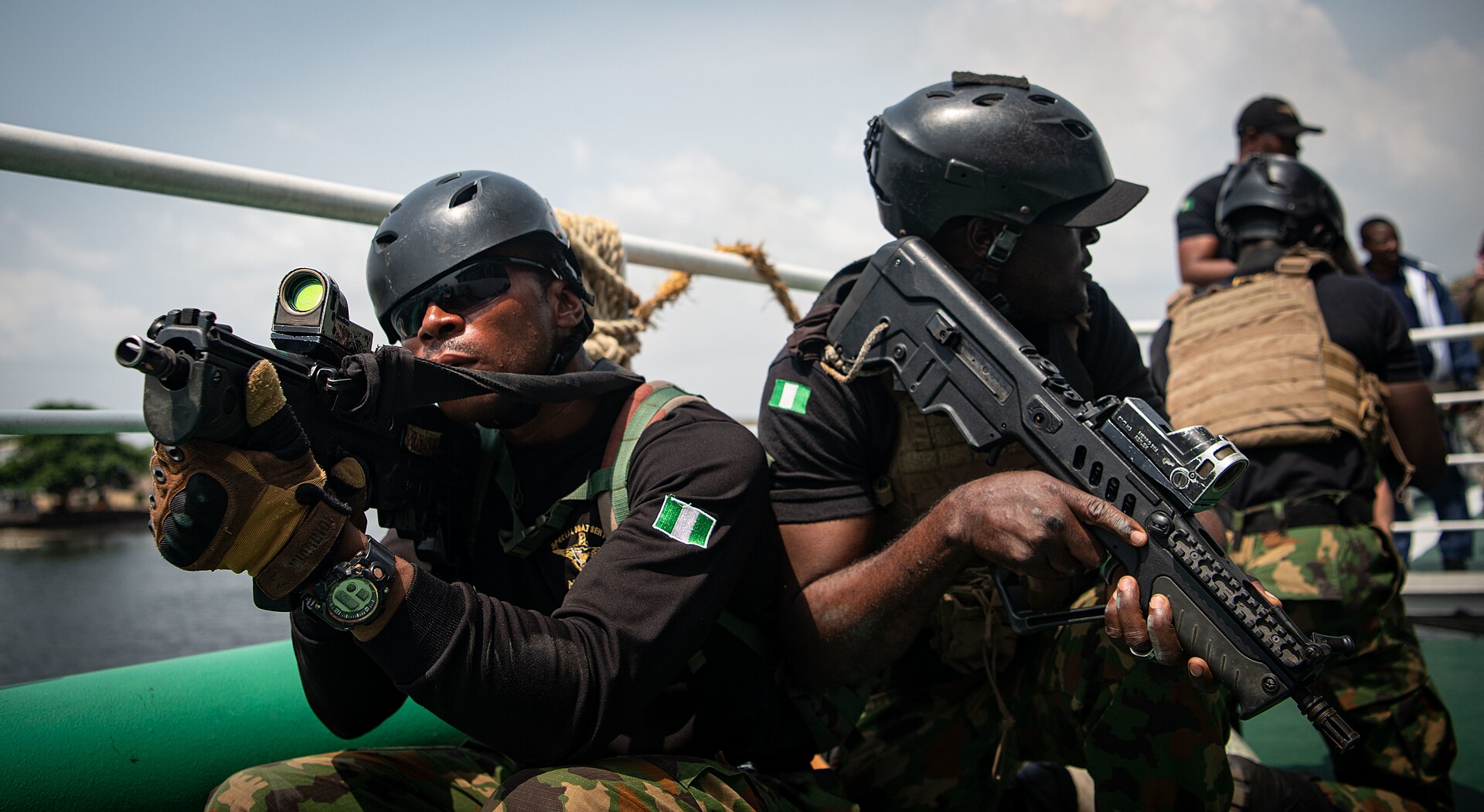
IWI Tavor
The Tavor is an Israeli bullpup assault rifle, with its action set behind the trigger in the stock so that a full-length barrel fits in a… Continued…
-
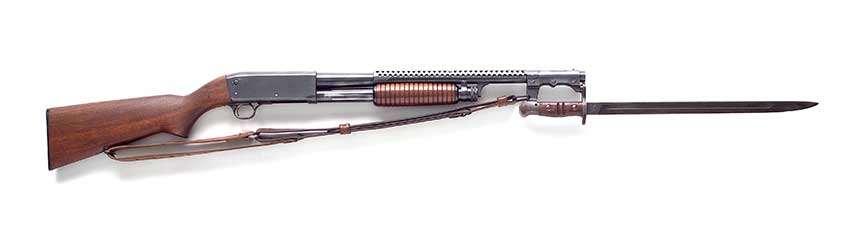
Ithaca 37
The Ithaca 37 is an American pump-action shotgun made by the Ithaca Gun Company of Ithaca, New York, from 1937. Based on a John Browning… Continued…
-
Jambiya
The jambiya is the curved, double-edged dagger of Arabia, worn at the front of the belt in a sheath with a sharply upturned tip. It is most… Continued…
-
K-50M
The K-50M is a North Vietnamese submachine gun of the late 1950s and 1960s: a rebuilt Chinese Type 50, itself a copy of the Soviet PPSh-41.… Continued…
-
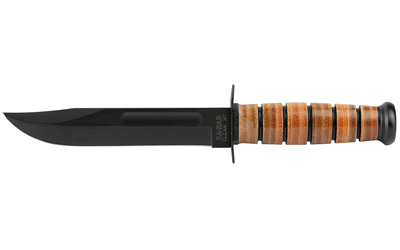
KA-BAR KnifeFor sale
The KA-BAR is the fighting and utility knife of the United States Marine Corps: a seven-inch clip-point blade of carbon steel with a blood… Continued…
-
Kai Gunto
The kai gunto, 'navy military sword', was the sword of officers of the Imperial Japanese Navy from the late 1930s through the Second World… Continued…
-
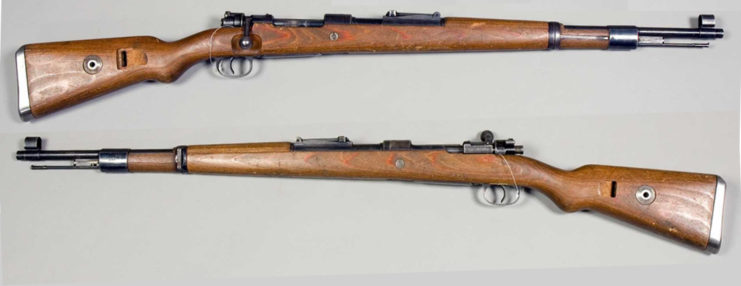
Karabiner 98k
The Karabiner 98k was the standard rifle of the German armed forces in the Second World War. Adopted in 1935, it was a shortened version of… Continued…
-
Katyusha Rocket Launcher
The Katyusha was a Soviet multiple rocket launcher of the Second World War. Its best-known form, the BM-13, carried rails for sixteen 132mm… Continued…
-
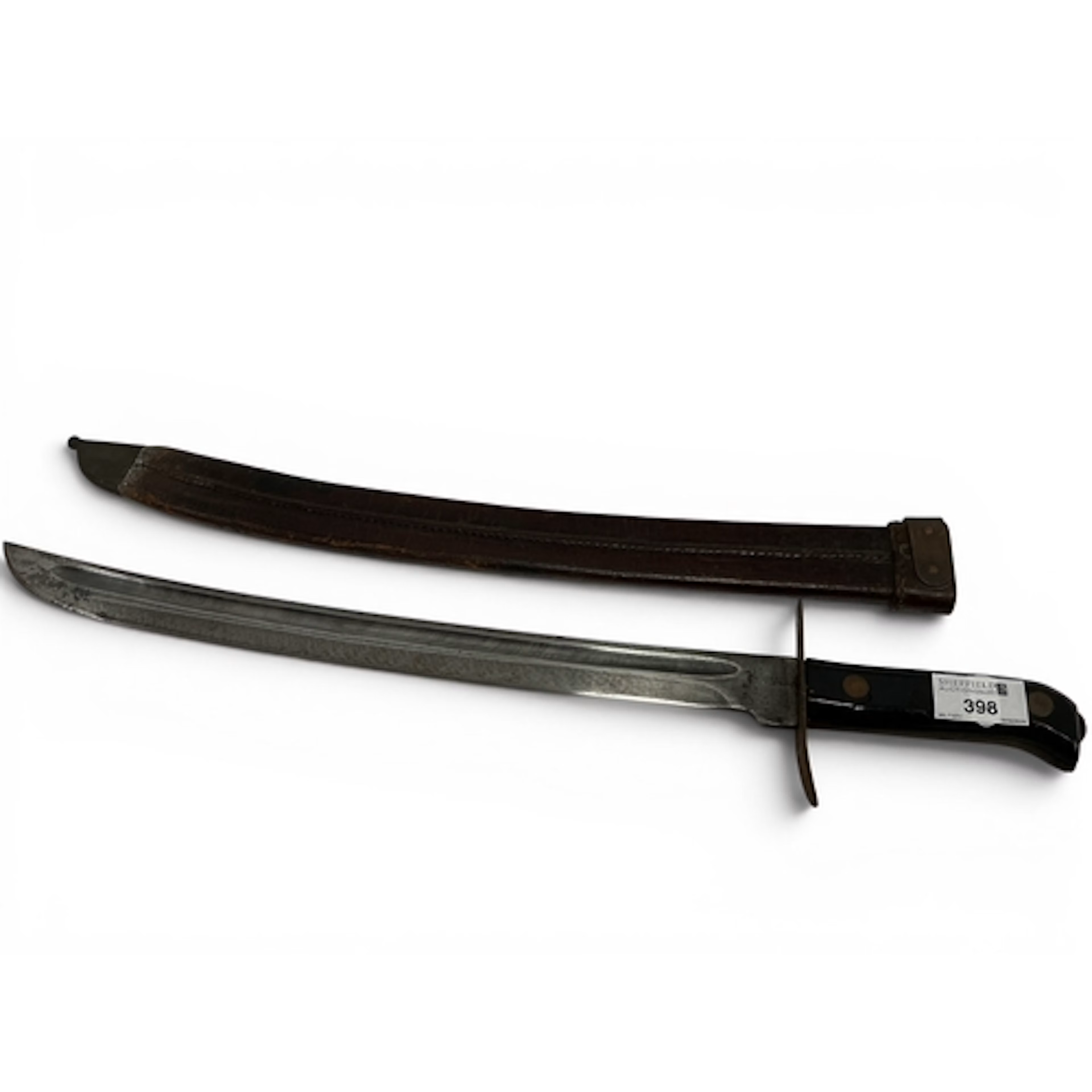
Klewang
The klewang is a single-edged short sword from the Indonesian archipelago, and the name of the Dutch military weapon developed from it.… Continued…
-
Krag-Jørgensen
The Krag-Jørgensen is a bolt-action rifle designed in Norway by Ole Krag and Erik Jørgensen and adopted by Denmark in 1889, the United… Continued…
-
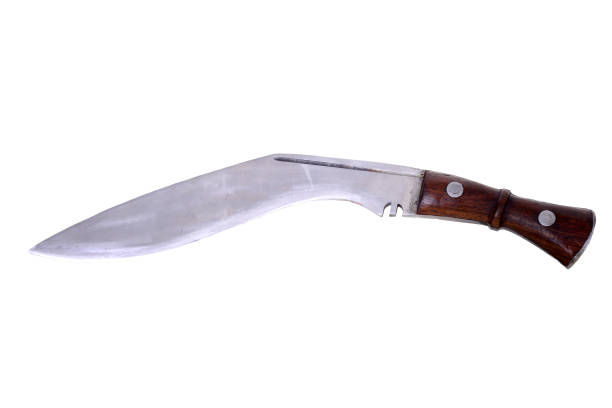
KukriFor sale
The kukri is the forward-curved knife of Nepal: a broad, downward-angled blade that concentrates a blow like a hatchet while handling like… Continued…
-
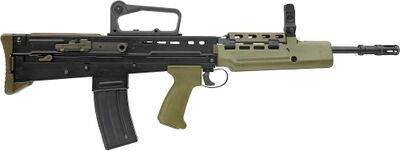
L85A1
The L85A1 is the British Army's 5.56mm bullpup rifle, the individual weapon of the SA80 family. Adopted in 1985 to replace the L1A1… Continued…
-
Lahti L-39
The Lahti L-39 is a Finnish 20mm anti-tank rifle designed by Aimo Lahti and used during the Second World War. Firing the powerful 20x138mmB… Continued…
-
Lebel Model 1886
The Lebel Model 1886 was the first military rifle to fire smokeless powder, and it made every other army's rifle obsolete overnight. Its… Continued…
-
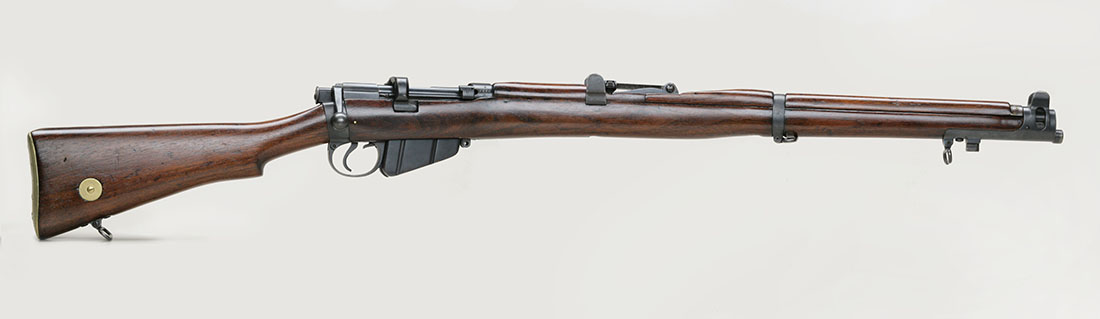
Lee-Enfield Rifle
The Lee-Enfield was the British Empire's rifle for over half a century: a bolt-action .303 whose rear-locking action and ten-round magazine… Continued…
-
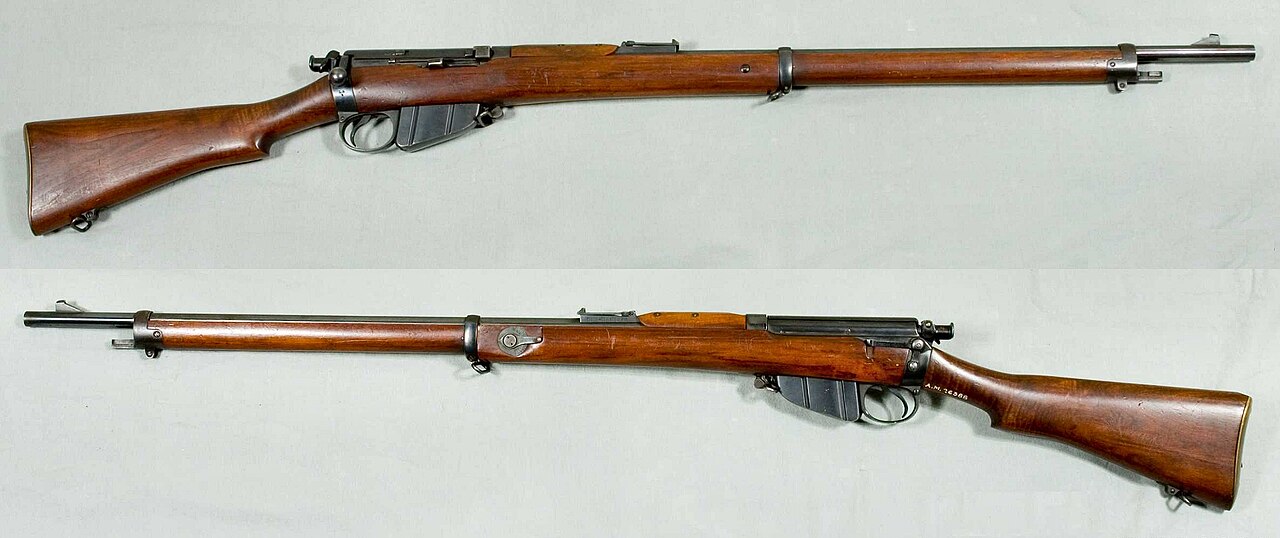
Lee-Metford
The Lee-Metford was the first bolt-action, magazine-fed rifle adopted by the British Army. Approved in December 1888 to replace the… Continued…
-
Lee-Metford Rifle
The Lee-Metford was the British Army's first magazine rifle and the parent of the Lee-Enfield. Adopted in 1888, it joined James Paris Lee's… Continued…
-
Lewis Gun
The Lewis gun was the British Empire's light machine gun of the First World War: an air-cooled, gas-operated gun with a distinctive fat… Continued…
-
Luger P08
The Luger P08 is the toggle-locked semi-automatic pistol of the German military through both World Wars, and for many the most recognizable… Continued…
-
M1 Carbine
The M1 Carbine was the most-produced American small arm of the Second World War: a five-pound, semi-automatic .30-caliber carbine designed… Continued…
-
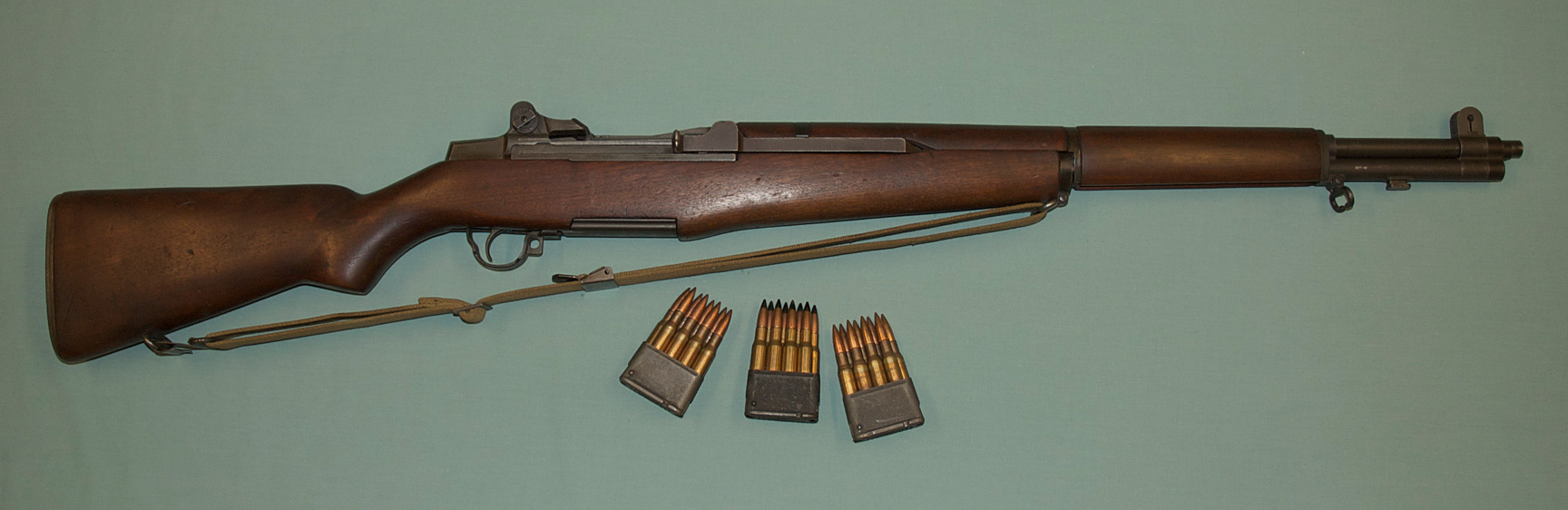
M1 Garand
The M1 Garand was the first semi-automatic rifle adopted as the standard arm of any major power, giving the American infantryman of the… Continued…
-
M1 Helmet
The M1 helmet was the steel combat helmet of the United States armed forces from 1941 until the mid 1980s, worn through the Second World… Continued…
-
M14 Rifle
The M14 was the United States' last wooden-stocked battle rifle: a select-fire development of the M1 Garand chambered for the new 7.62mm… Continued…
-
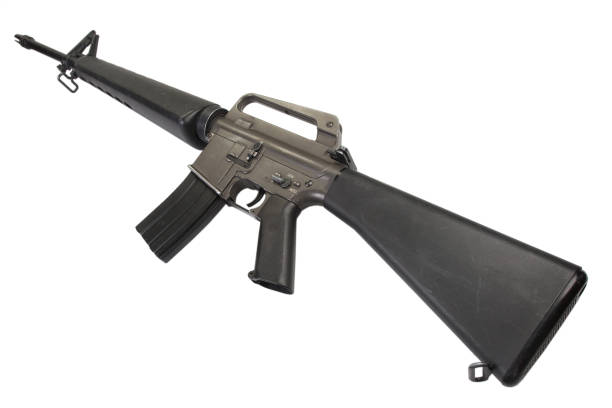
M16 RifleFor sale
The M16 brought the assault rifle to the West: Eugene Stoner's AR-15 design in 5.56mm, built of aluminum forgings and polymer around a… Continued…
-
M18 Claymore Mine
The M18A1 Claymore is an American directional anti-personnel mine. Its curved plastic case holds a layer of C-4 explosive behind about 700… Continued…
-
M1903 Springfield
The M1903 Springfield was the United States' service rifle from 1903 until the M1 Garand replaced it in the late 1930s, and a sniper's and… Continued…
-
M1911 PistolFor sale
The M1911 is John Browning's masterpiece: a short-recoil, single-action semi-automatic in .45 ACP that served as the standard American… Continued…
-
M1917 Enfield
The M1917 Enfield, officially the United States Rifle, cal .30, Model of 1917, was the bolt-action rifle carried by most American soldiers… Continued…
-
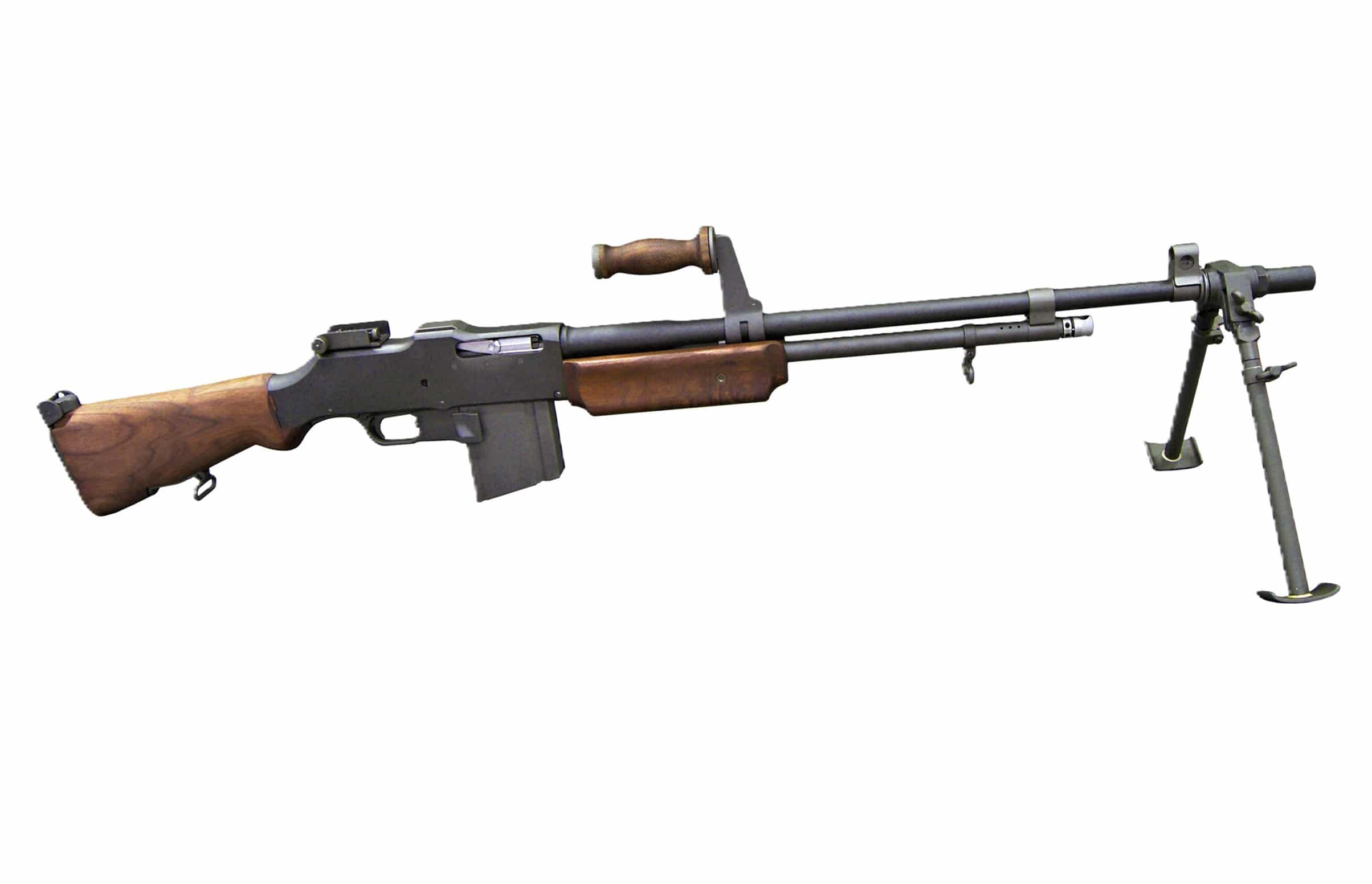
M1918 BAR
The Browning Automatic Rifle was John Moses Browning's shoulder-fired automatic weapon, adopted by the United States Army in 1918 and the… Continued…
-
M1919 Browning Machine Gun
The M1919 Browning is John Browning's water-cooled M1917 machine gun made air-cooled: a short-recoil, belt-fed .30-06 weapon that armed… Continued…
-
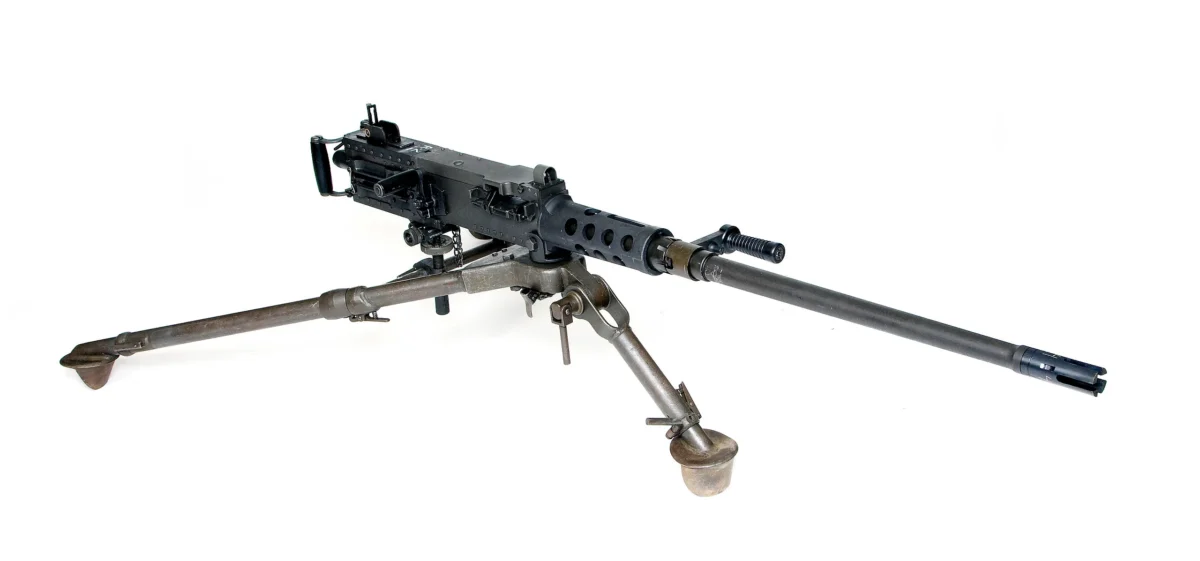
M2 Browning Machine Gun
The M2 is the American heavy machine gun of .50 caliber, designed by John Browning at the end of the First World War and adopted in its… Continued…
-
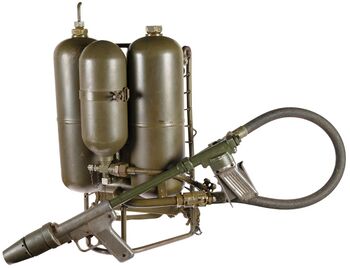
M2 Flamethrower
The M2 was the American portable flamethrower of the late Second World War and the Korean War. It was a backpack with two fuel tanks and a… Continued…
-
M203 Grenade Launcher
The M203 is a single-shot 40 mm grenade launcher that clips under the barrel of an M16 rifle or M4 carbine. Developed by the AAI… Continued…
-
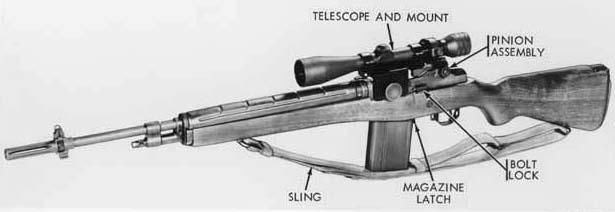
M21 Sniper Weapon System
The M21 Sniper Weapon System was the United States Army's sniper rifle from 1969 to 1988: a National Match M14 selected for accuracy… Continued…
-
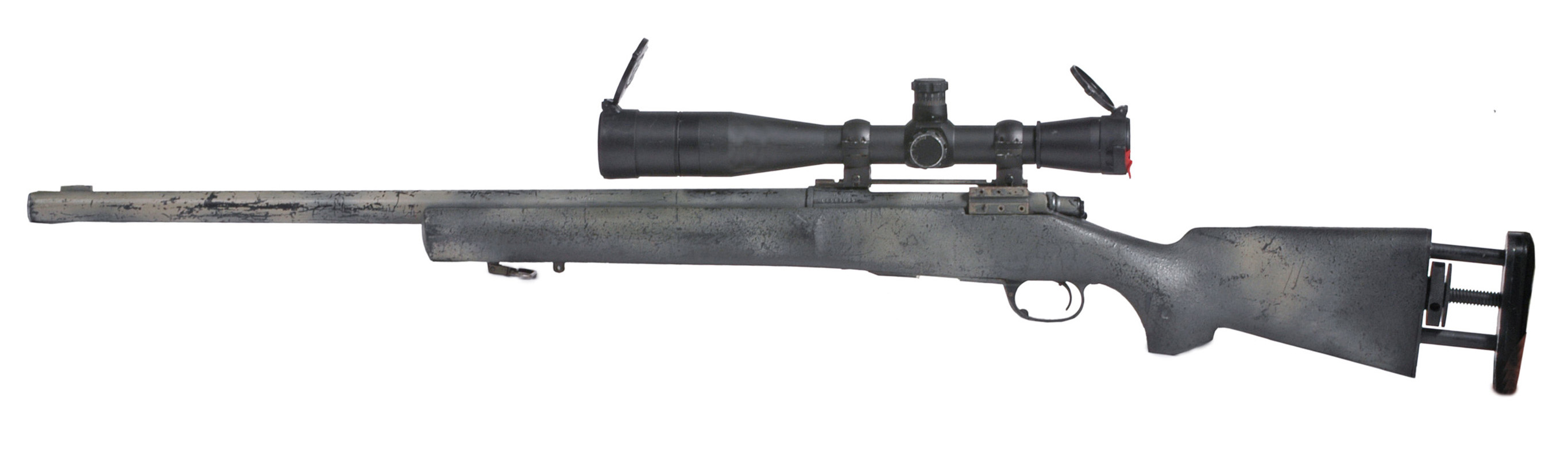
M24 Sniper Weapon System
The M24 Sniper Weapon System was the United States Army's standard sniper rifle from 1988 until the 2010s: a Remington Model 700 long… Continued…
-
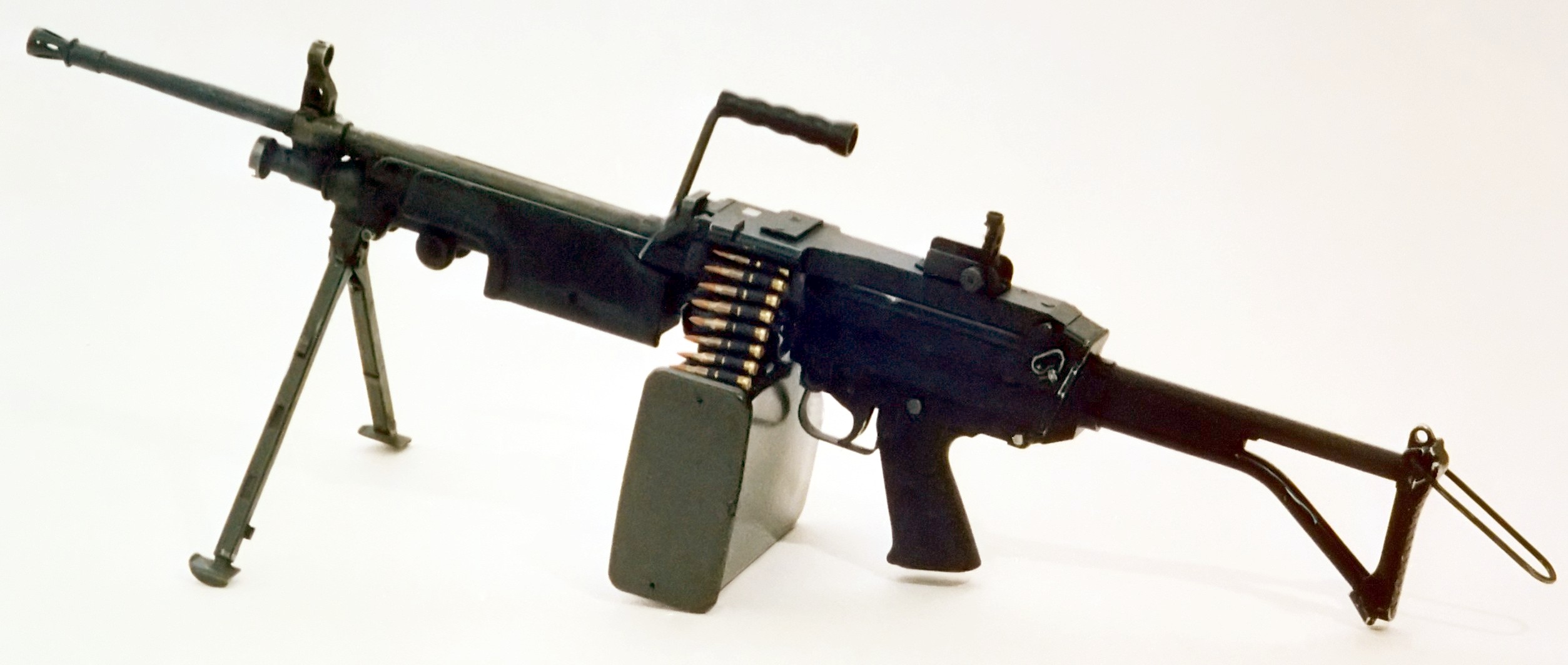
M249 Squad Automatic Weapon
The M249 Squad Automatic Weapon is the American version of the Belgian FN Minimi: a gas-operated, belt-fed 5.56mm light machine gun light… Continued…
-
M26 Grenade
The M26 was the standard American fragmentation hand grenade of the Vietnam War. Adopted in the early 1950s to replace the cast-iron Mk 2… Continued…
-
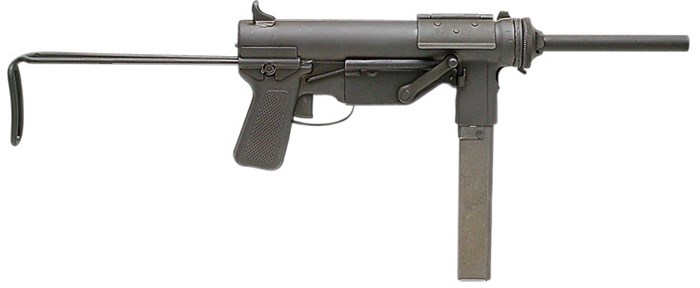
M3 Grease GunFor sale
The M3 'Grease Gun' was America's Sten: a .45 caliber submachine gun of stamped steel and welded seams, designed in 1942 to replace the… Continued…
-
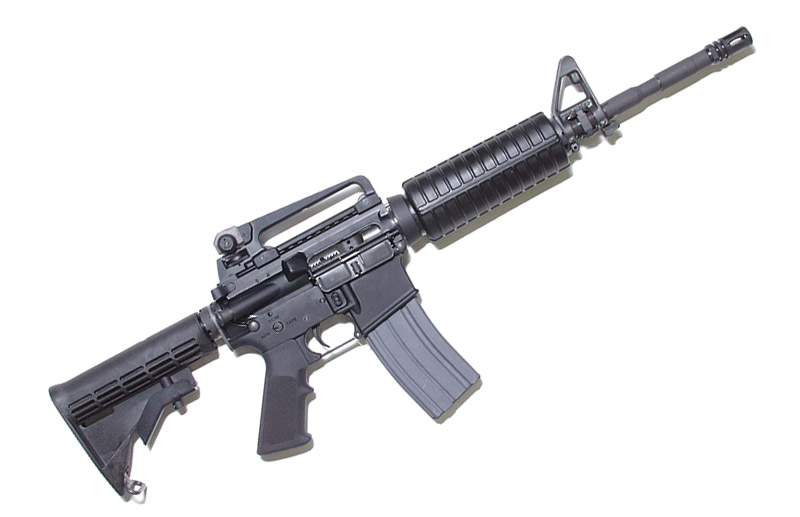
M4 Carbine
The M4 carbine is a shortened, lighter version of the M16 rifle, made by Colt and adopted by the US Army in 1994. It has a 14.5-inch… Continued…
-
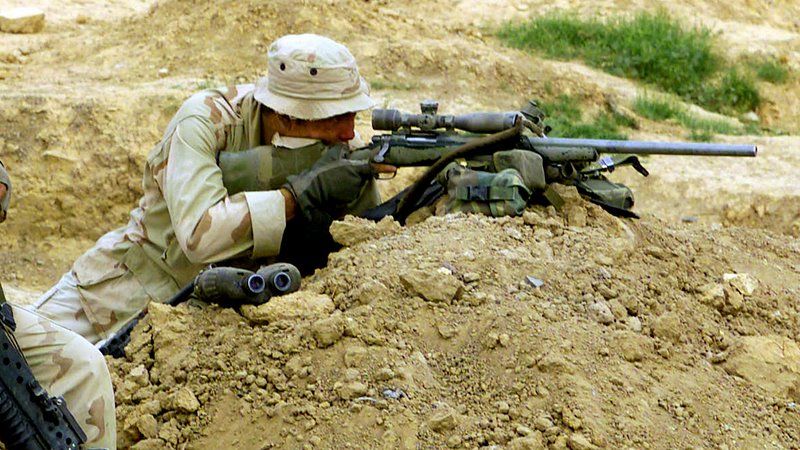
M40 Rifle
The M40 is the bolt-action sniper rifle of the US Marine Corps, adopted in 1966 and in service in successive versions until the 2010s. The… Continued…
-
M60 Machine Gun
The M60 was the United States' first general-purpose machine gun: a belt-fed 7.62mm weapon light enough for one soldier to carry on the… Continued…
-
M67 Grenade
The M67 is the standard fragmentation hand grenade of the United States armed forces. Adopted in the late 1960s, it is a smooth steel… Continued…
-
M72 LAW
The M72 LAW is an American 66 mm anti-tank rocket in a disposable, telescoping launch tube. Adopted by the US Army and Marine Corps in… Continued…
-
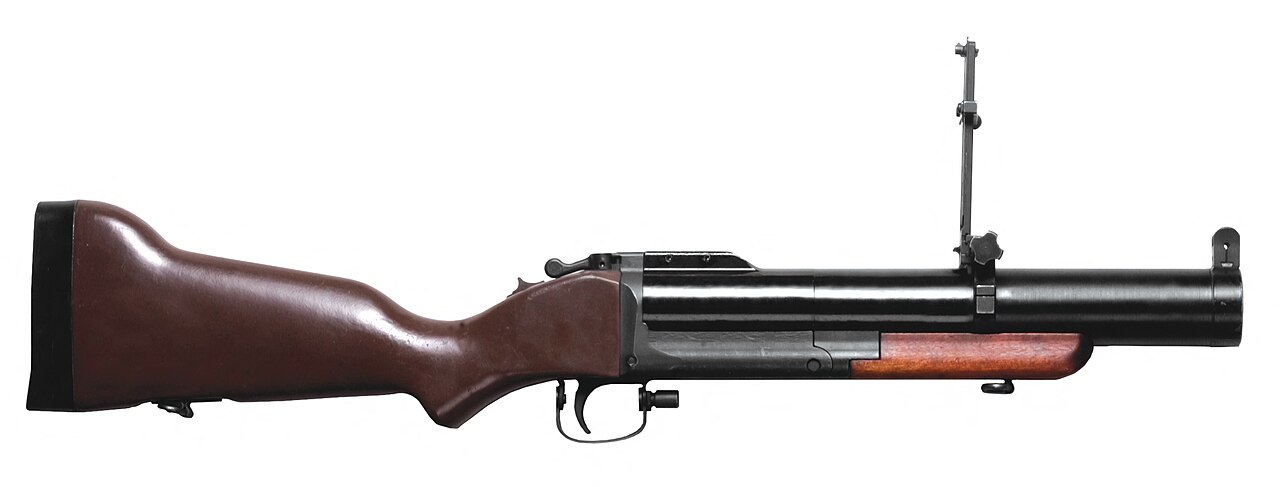
M79 Grenade Launcher
The M79 is a single-shot, break-open, shoulder-fired grenade launcher that fires a 40x46mm low-velocity grenade to about 400 meters… Continued…
-
MAC-10
The MAC-10, properly the Ingram M10, is a very compact submachine gun designed by the American engineer Gordon Ingram in the 1960s and made… Continued…
-
MG 42
The MG 42 was the German general-purpose machine gun of the Second World War and the most influential machine gun of the twentieth century.… Continued…
-
MG FF Cannon
The MG FF was a 20 mm aircraft cannon used by the German Luftwaffe from the late 1930s. It was a licensed version of the Swiss Oerlikon FF… Continued…
-
MP 18
The MP 18 was the first practical submachine gun to go into service: a light automatic weapon firing pistol cartridges, designed by Hugo… Continued…
-
MP40
The MP40 was Germany's war-production submachine gun: 9mm Parabellum from an open bolt, a plain tube receiver of stampings and welds, no… Continued…
-
Madsen Machine Gun
The Madsen was a Danish light machine gun and the first weapon of its kind to be mass-produced, entering service in 1902. Light enough for… Continued…
-
Marine Raider StilettoFor sale
The Marine Raider stiletto is the U.S. Marine Corps' copy of the British Fairbairn-Sykes fighting knife: a slim double-edged dagger… Continued…
-
Mark 13 Torpedo
The Mark 13 was the standard aerial torpedo of the United States Navy in the Second World War, carried by the TBD Devastator and TBF… Continued…
-
Mark I Trench KnifeFor sale
The Mark I trench knife of 1918 is the most recognizable close-combat weapon of the Great War: a double-edged dagger blade beneath a cast… Continued…
-
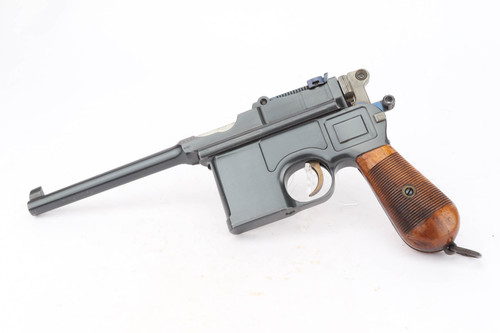
Mauser C96
The Mauser C96 is a German semi-automatic pistol that entered service in 1896, designed by the Feederle brothers at Mauser's Oberndorf… Continued…
-
Mauser Gewehr 98
The Gewehr 98 is the definitive Mauser: the 1898 pattern bolt-action whose controlled-round feed, dual front locking lugs, and massive claw… Continued…
-
Mauser Model 1895
The Mauser Model 1895 was the rifle of the Boer commandos in the Second Boer War. A German-made 7 mm bolt-action with a five-round magazine… Continued…
-
Maxim Gun
The Maxim gun was the first true machine gun: a weapon that used the energy of each shot to load and fire the next, and would keep firing… Continued…
-
Mills Bomb
The Mills bomb was the British Army's standard hand grenade from 1915 until the 1970s. Designed by the Birmingham engineer William Mills… Continued…
-
Mk 2 Fragmentation Grenade
The Mk 2 was the standard American fragmentation hand grenade from the end of the First World War into the Vietnam War. Its cast-iron body… Continued…
-
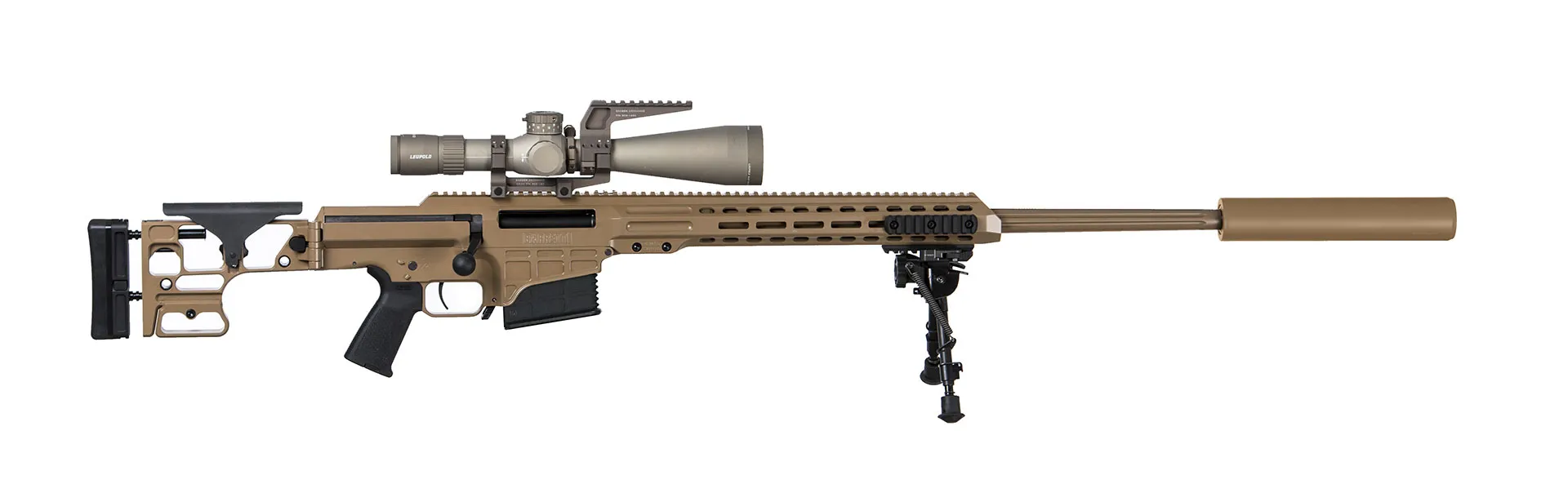
Mk 22 Advanced Sniper Rifle
The Mk22 Advanced Sniper Rifle is a multi-caliber bolt-action sniper rifle based on the Barrett MRAD, chosen by US Special Operations… Continued…
-
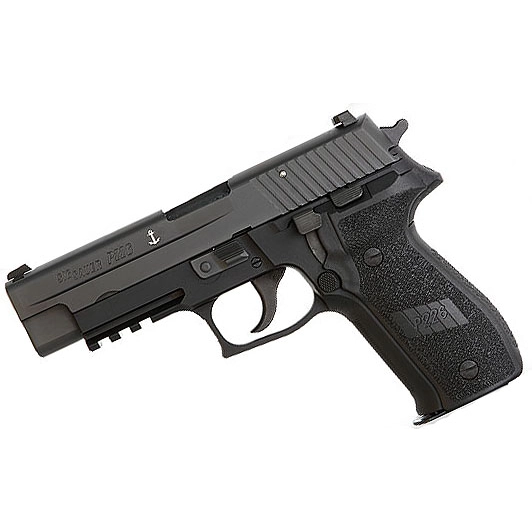
Mk 25
The Mk 25 is the United States Navy's designation for the SIG Sauer P226 as carried by the Navy SEALs: a standard P226 in 9mm with a… Continued…
-
Model 24 Stielhandgranate
The Model 24 Stielhandgranate was the standard German hand grenade of the Second World War, the 'potato masher' of Allied soldiers. It had… Continued…
-
Molotov Cocktail
A Molotov cocktail is a glass bottle filled with gasoline or another flammable liquid, lit by a burning rag or a chemical igniter and… Continued…
-
Mondragón Rifle
The Mondragón rifle was the first semi-automatic rifle adopted as the standard service arm of any army. Designed by the Mexican general… Continued…
-
Mosin Nagant 1891/30 Sniper Rifle
The Mosin-Nagant 1891/30 Sniper Rifle is the sniper version of the standard Soviet infantry rifle of the Second World War. Rifles chosen… Continued…
-

Mosin-Nagant M/28-30
The Mosin-Nagant M/28-30 was a Finnish rifle made in the 1930s for the Suojeluskunta, the Civil Guard, a volunteer home-defense force. It… Continued…
-
Mosin-Nagant M1891
The Mosin-Nagant was Russia's service rifle for over sixty years: a five-shot bolt action in the powerful rimmed 7.62x54R cartridge… Continued…
-
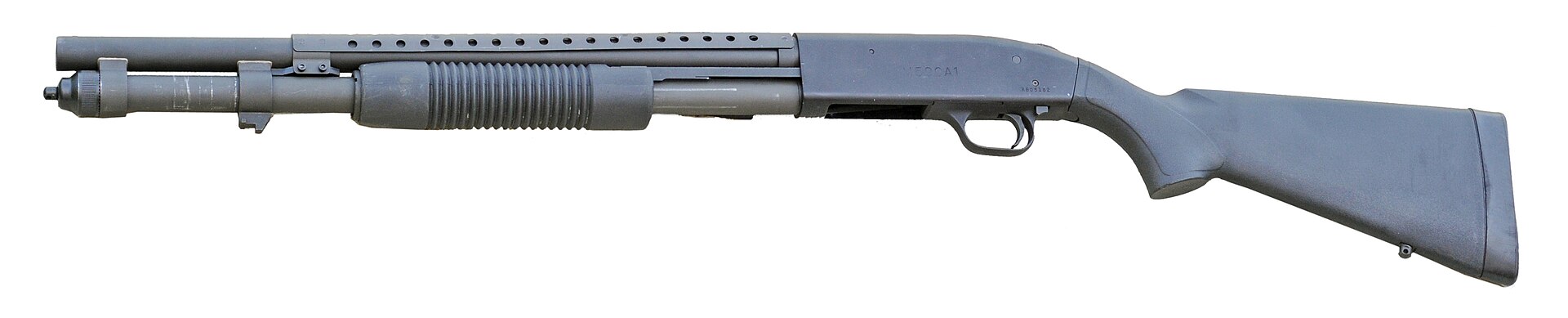
Mossberg 590
The Mossberg 590 is a pump-action 12-gauge combat shotgun derived from the commercial Mossberg 500. The heavy-duty 590A1 version was built… Continued…
-
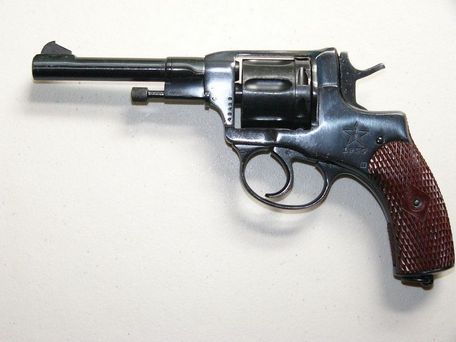
Nagant M1895 Pistol
The Nagant M1895 is the seven-shot Belgian-designed service revolver of Imperial Russia and the Soviet Union, unique among military… Continued…
-
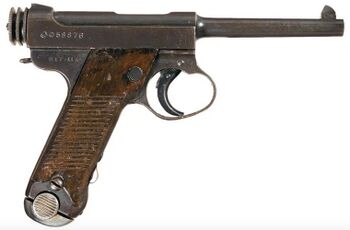
Nambu Type 14
The Nambu Type 14 was the standard service pistol of Japan in the Second World War. Designed by Kijirō Nambu's team and adopted in 1925… Continued…
-
Ordnance BL 15-pounder
The BL 15-pounder was the field gun of the Royal Field Artillery in the Second Boer War. A 3-inch breech-loader firing a fourteen-pound… Continued…
-
PASGT Helmet
The PASGT helmet was the standard combat helmet of the United States armed forces from the early 1980s until the mid-2000s. Its name stands… Continued…
-
PIAT
The PIAT (Projector, Infantry, Anti-Tank) was the British and Commonwealth infantry's hand-held anti-tank weapon from 1943 to the early… Continued…
-
PK Machine Gun
The PK is a Soviet belt-fed general-purpose machine gun designed by Mikhail Kalashnikov's team and adopted in 1961. It fires the old rimmed… Continued…
-
PPS-43
The PPS-43 is a Soviet submachine gun introduced in 1942, designed by Alexei Sudayev and first built in besieged Leningrad. Made almost… Continued…
-
PPSh-41
The PPSh-41 was the Soviet Union's war-winning submachine gun: a stamped-steel design by Georgy Shpagin firing the 7.62x25 Tokarev… Continued…
-
PTRD-41
The PTRD-41 was a Soviet single-shot anti-tank rifle designed by Vasily Degtyaryov in a few weeks in the summer of 1941 and adopted that… Continued…
-
Panzerfaust
The Panzerfaust was a German single-shot, disposable anti-tank weapon of the Second World War. A simple steel tube launched a large… Continued…
-
Pattern 1907 Bayonet
The Pattern 1907 was the British Army's sword bayonet for the Short Magazine Lee-Enfield rifle through both world wars. Its 17-inch blade… Continued…
-
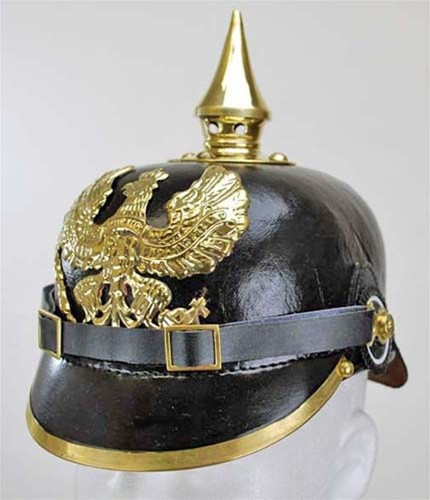
Pickelhaube
The Pickelhaube is the spiked leather helmet of the Prussian and Imperial German armies, adopted by King Frederick William IV in 1842 and… Continued…
-
Plate Carrier
A plate carrier is a piece of body armor equipment: a load-bearing vest built to hold hard ballistic plates over the chest and back, the… Continued…
-
Puukko
The puukko is the traditional Finnish belt knife: a short, single-edged blade with a straight back, a plain handle usually made of birch… Continued…
-
QF 1-pounder Pom-Pom
The pom-pom was a Maxim machine gun enlarged to fire a one-pound 37 mm explosive shell, the first automatic cannon to see war. Named by… Continued…
-
RPD Machine Gun
The RPD was the Soviet Union's first light machine gun for the 7.62x39 mm intermediate cartridge. Designed by Vasily Degtyaryov in 1944 and… Continued…
-
RPG-2
The RPG-2 was the first Soviet shoulder-fired anti-tank grenade launcher to be issued in large numbers. Adopted in 1949, it was a plain 40… Continued…
-
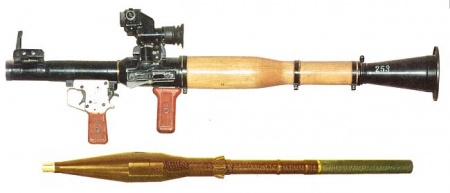
RPG-7
The RPG-7 is a Soviet shoulder-fired, reusable anti-tank grenade launcher adopted in 1961 and the most widely used weapon of its kind in… Continued…
-
Raufoss Mk 211
The Raufoss Mk 211 is a .50 caliber (12.7x99mm) multipurpose cartridge developed in Norway by Raufoss, now part of the Nammo group. Its… Continued…
-
Remington 870
The Remington 870 is a pump-action shotgun made by Remington Arms since 1950. With a steel receiver machined from a solid block and twin… Continued…
-
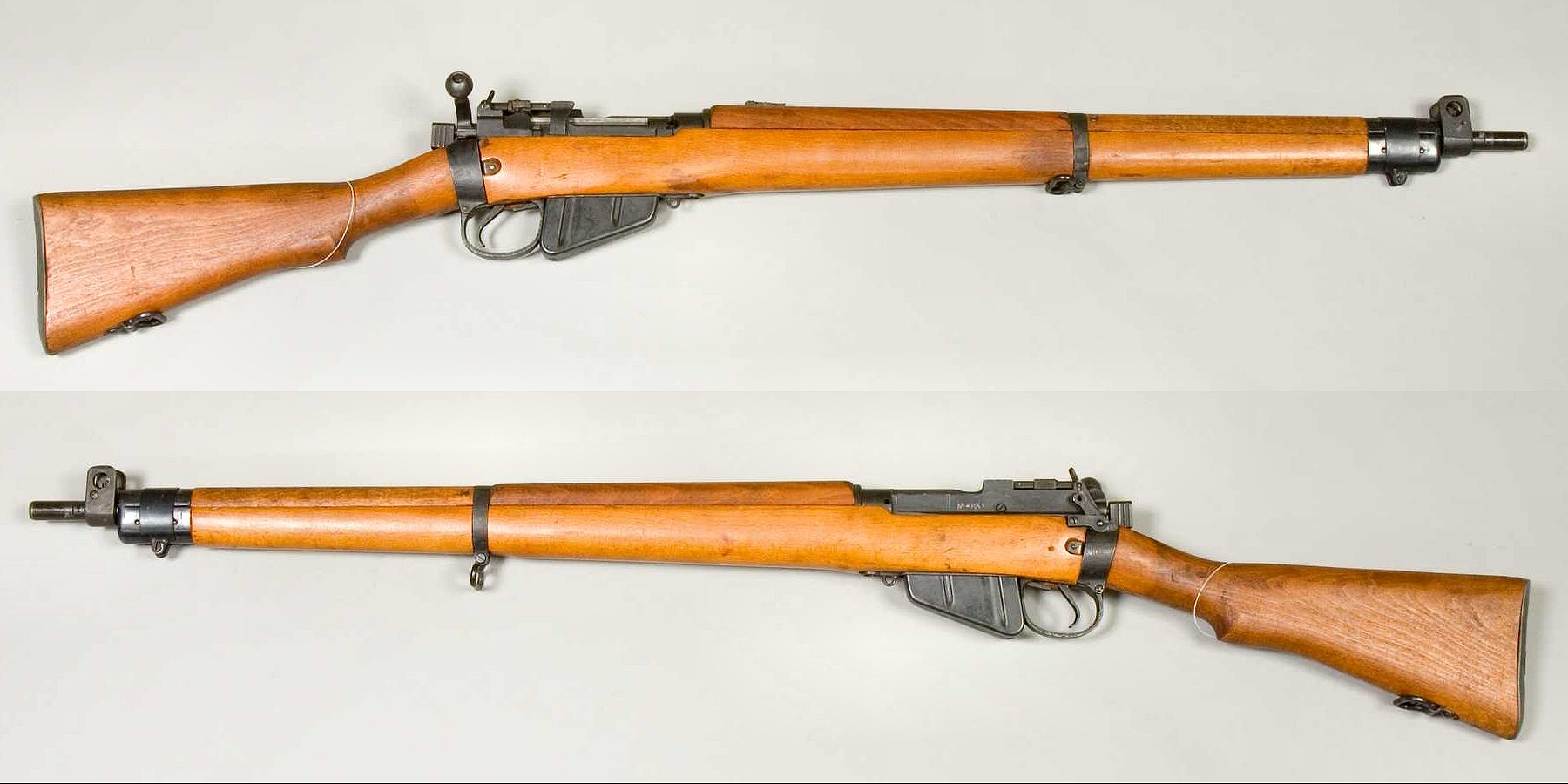
Rifle No. 4 Mk I
The Rifle No. 4 Mk I was the British Army's main bolt-action service rifle of the Second World War. Approved on 15 November 1939 and put… Continued…
-
SC 250 Bomb
The SC 250 was the standard German 250 kg general-purpose bomb of the Second World War. The letters stood for Sprengbombe Cylindrisch… Continued…
-
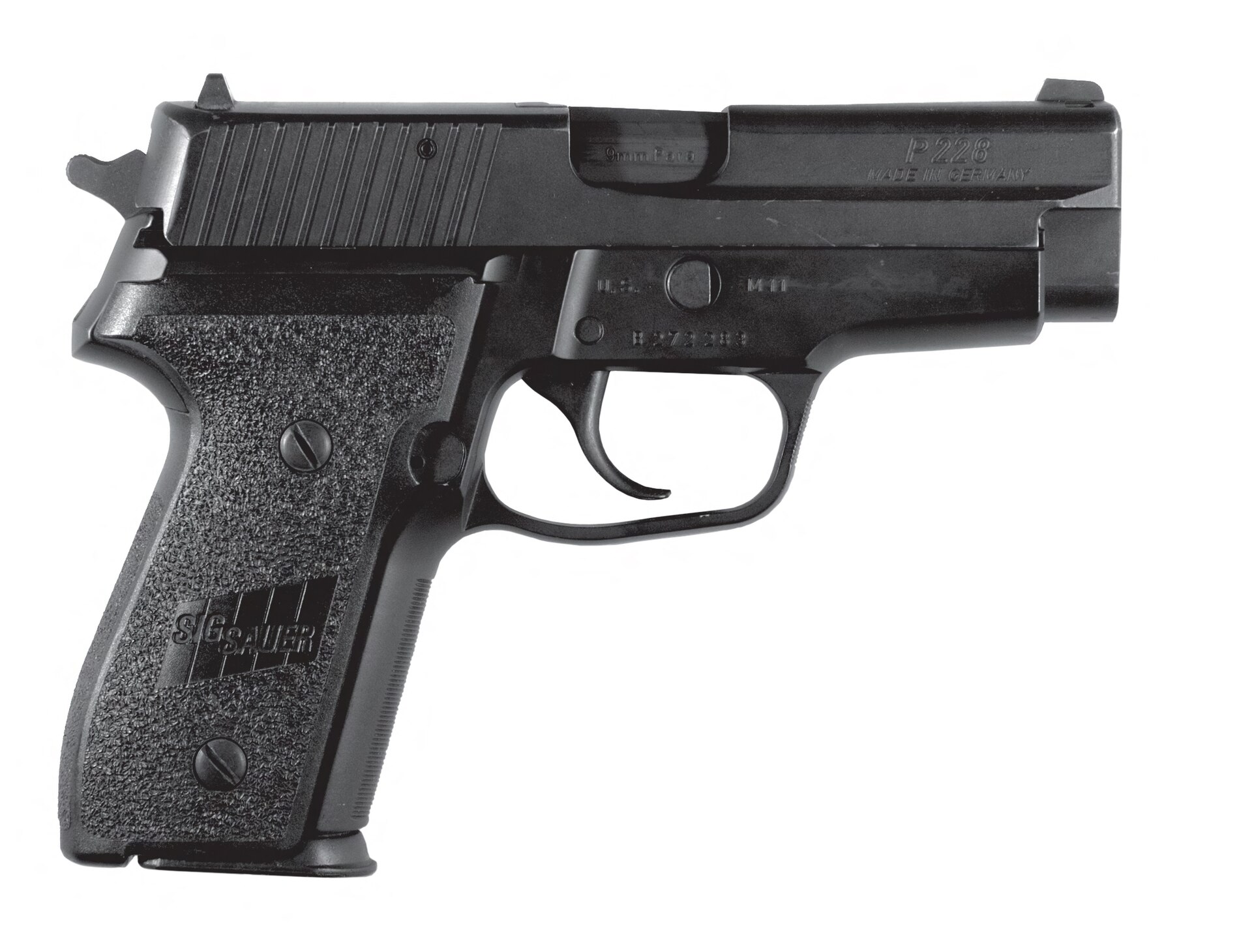
SIG Sauer P228
The SIG Sauer P228 is a compact 9 mm double-action pistol introduced in 1989 as a shorter, carry-sized version of the P226. The U.S. armed… Continued…
-
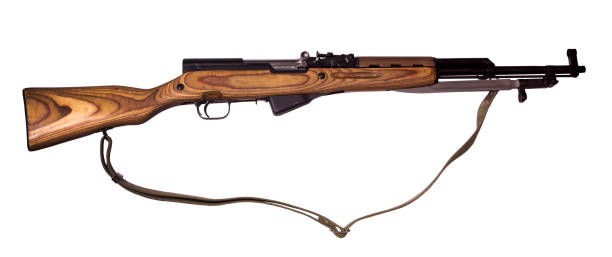
SKS
The SKS is Sergei Simonov's semi-automatic carbine for the Soviet 7.62x39mm intermediate cartridge, adopted in 1949 and made obsolete in… Continued…
-
SVD Rifle
The SVD Rifle, or Dragunov, is a Soviet semi-automatic sniper rifle designed by Yevgeny Dragunov and adopted in 1963. It fires the old… Continued…
-
SVT-40 Rifle
The SVT-40 was the Soviet Union's semi-automatic infantry rifle of the Second World War: Fedor Tokarev's gas-operated, tilting-bolt design… Continued…
-
Satchel Charge
A satchel charge is a bag of explosive blocks, with a carrying strap and a fuse, that a soldier throws or places against a bunker, pillbox… Continued…
-
Schwarzlose Machine Gun
The Schwarzlose was the standard heavy machine gun of the Austro-Hungarian army in the First World War. Designed by the German engineer… Continued…
-
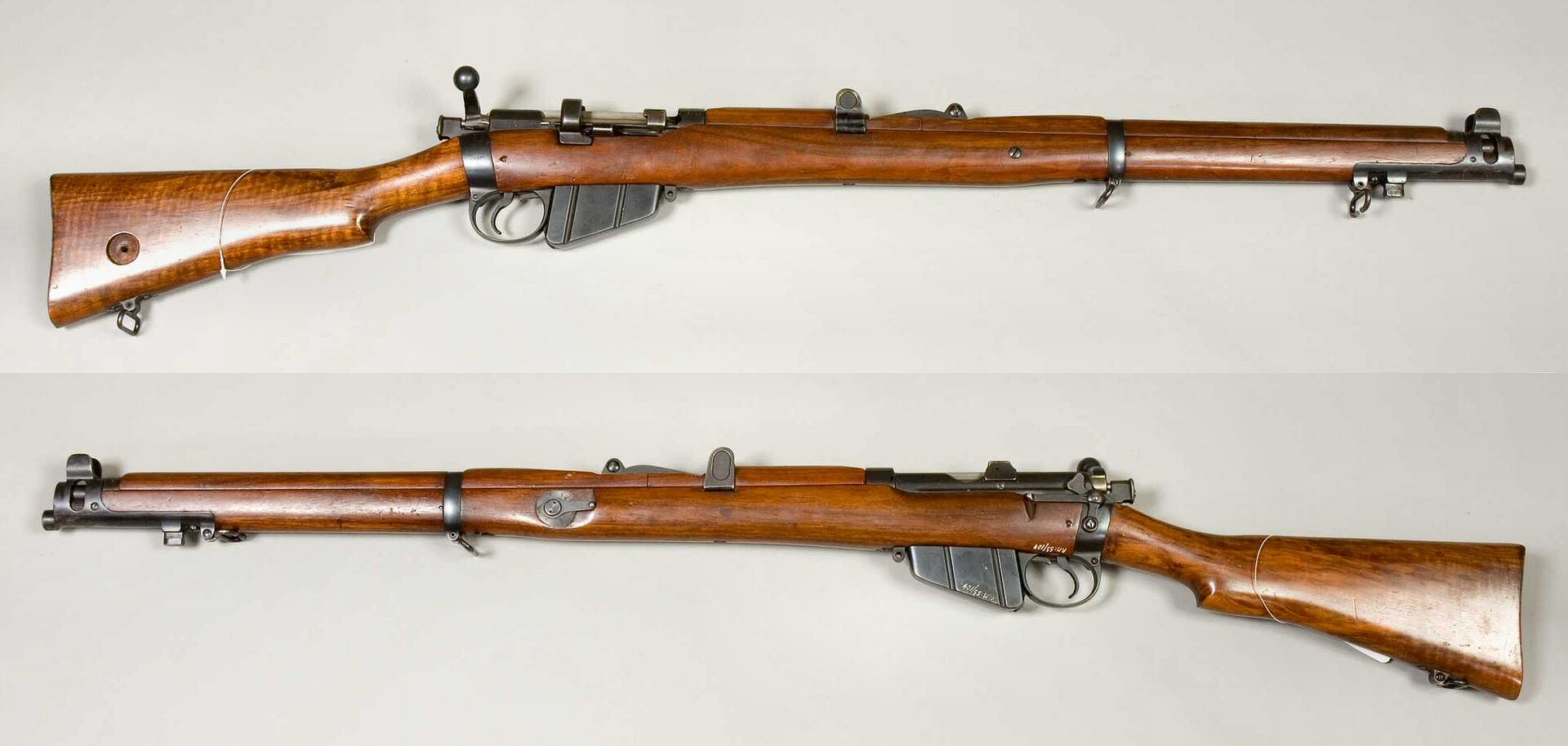
Short Magazine Lee-Enfield Mk III
The Short Magazine Lee-Enfield Mk III, or SMLE Mk III, was the rifle the British Empire carried through the First World War. Approved on 26… Continued…
-
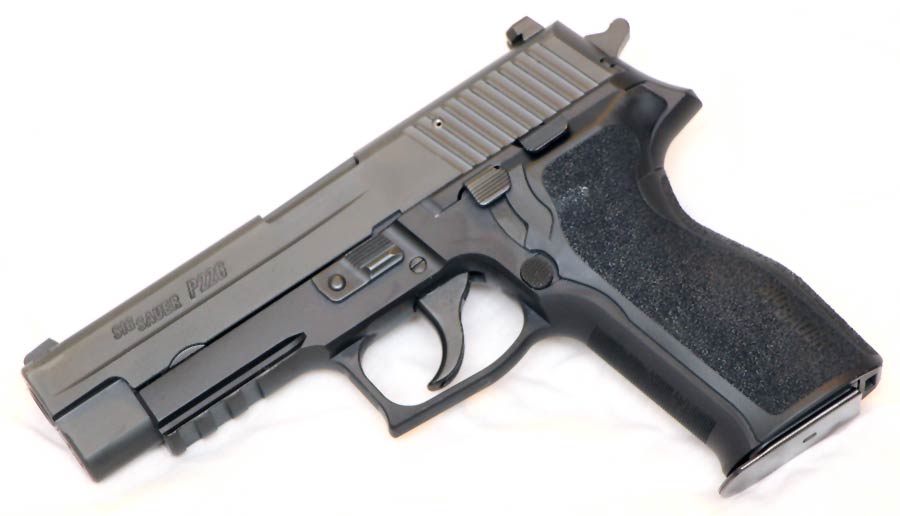
Sig Sauer P226For sale
The SIG Sauer P226 is a full-size double-action service pistol introduced in 1984 for the United States Army's XM9 trials, which it lost to… Continued…
-
Spetsnaz Trench ShovelFor sale
The Russian small infantry spade, the MPL-50, is a short, all-steel-bladed entrenching tool of nineteenth-century design that became a… Continued…
-
StG 44
The StG 44 — Sturmgewehr, 'storm rifle' — was the first true assault rifle: select-fire, stamped-steel, and chambered for the intermediate… Continued…
-
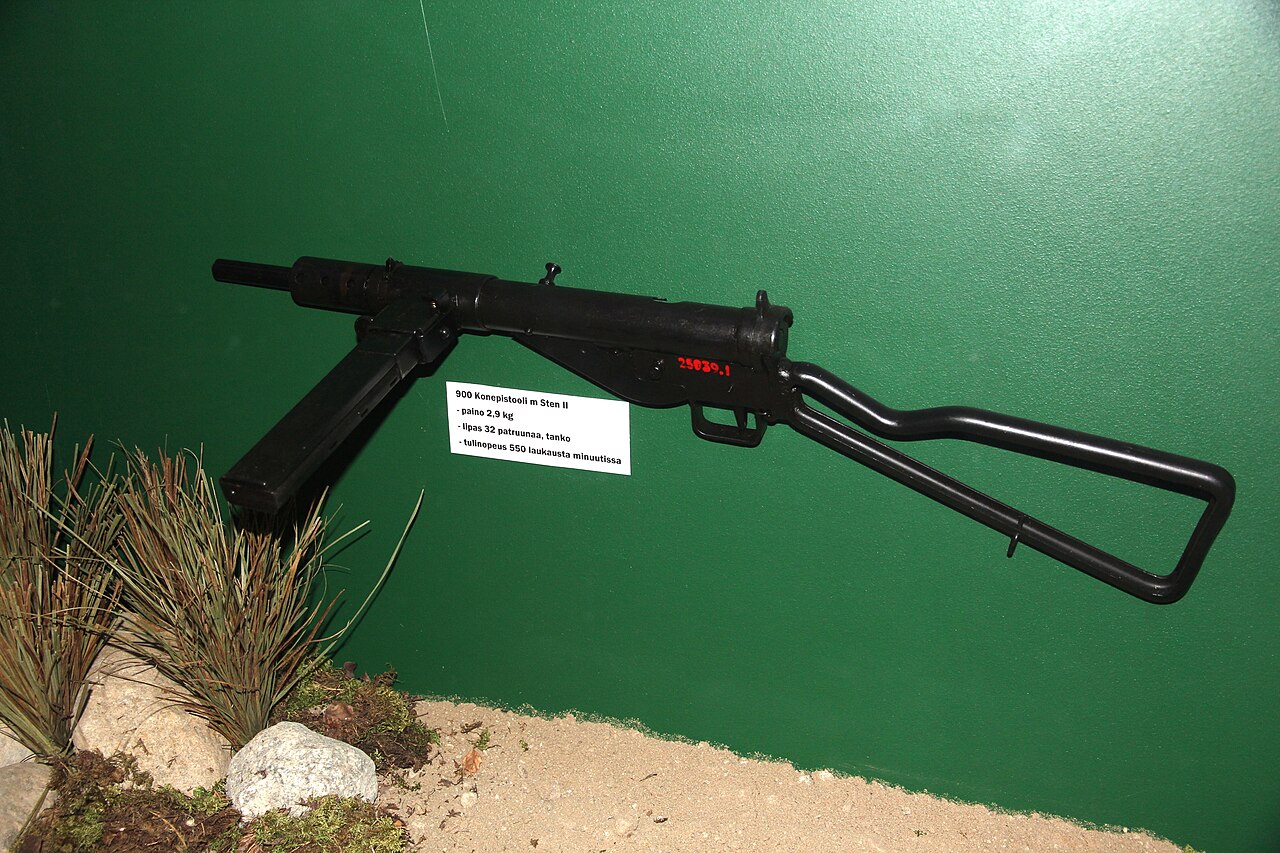
Sten Gun
The Sten was Britain's emergency submachine gun: a 9mm open-bolt weapon of stampings, tube, and spot welds that cost a few pounds and a few… Continued…
-
Sterling Submachine Gun
The Sterling is the 9mm submachine gun that replaced the Sten in British service. George Patchett designed it at Sterling Armaments in… Continued…
-
Steyr-Mannlicher M1895
The Steyr-Mannlicher M1895 was the service rifle of the Austro-Hungarian army through the First World War. Designed by Ferdinand… Continued…
-
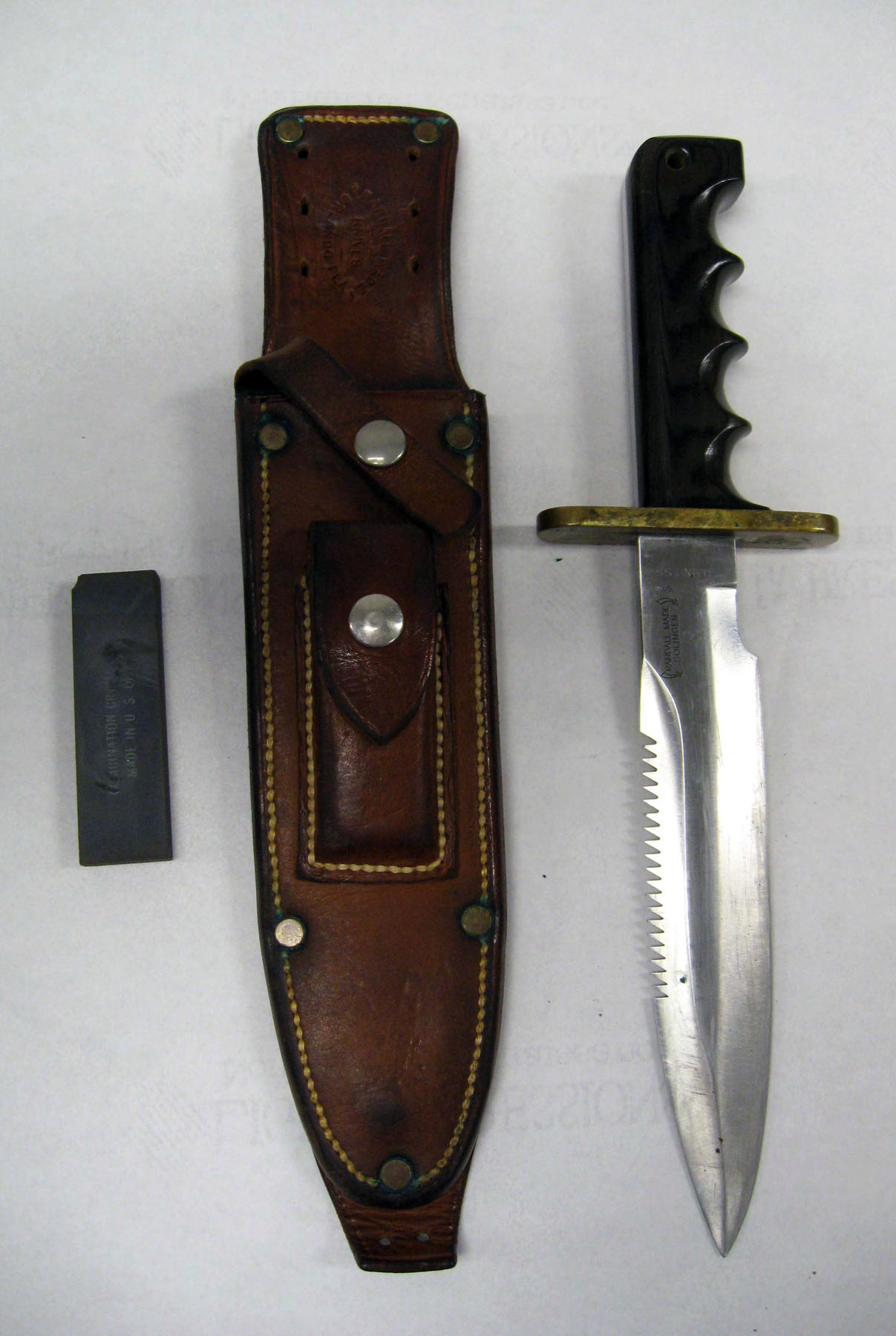
Sub-Hilt Fighting Knife
The sub-hilt fighting knife is a large American combat knife with a second, smaller guard set partway down the handle, so the grip locks… Continued…
-
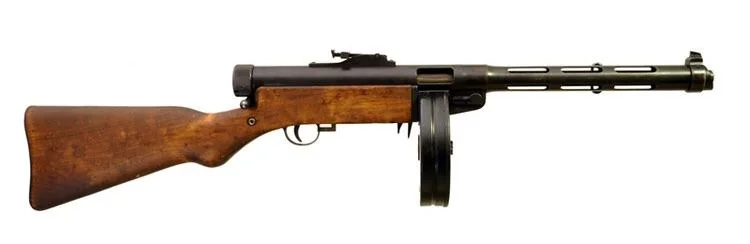
Suomi KP/-31
The Suomi KP/-31 was the Finnish Army's submachine gun in the Second World War. Designed by Aimo Lahti and made by the Tikkakoski company… Continued…
-
Swedish Military Mora Knife
The Mora knife is the plain Swedish sheath knife made in and around Mora, in the province of Dalarna, and it was the everyday knife of the… Continued…
-
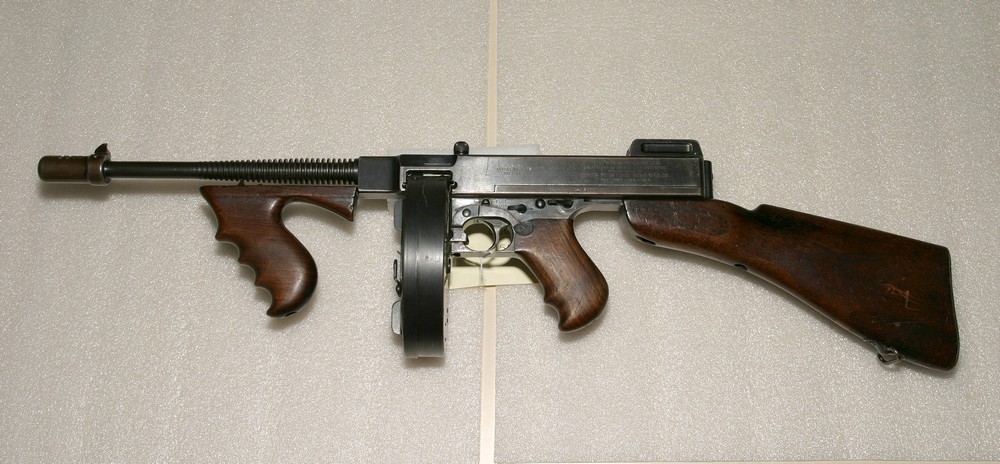
Thompson Submachine GunFor sale
The Thompson was America's first submachine gun: a .45 ACP automatic designed as a trench broom for a war that ended before it shipped.… Continued…
-
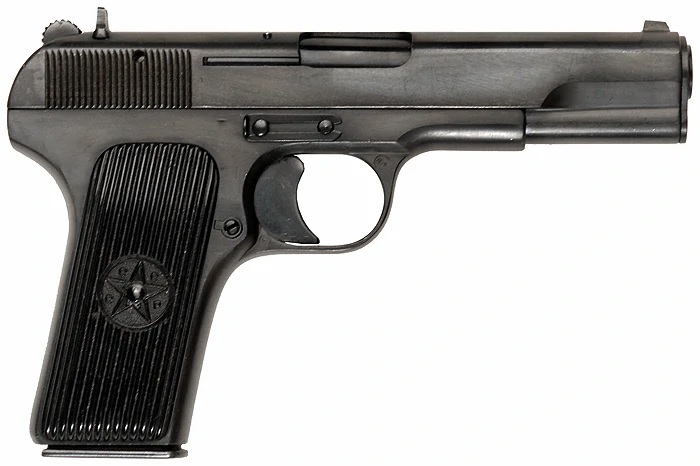
Tokarev TT-33 Pistol
The Tokarev TT-33 was the service pistol of the Red Army from the 1930s until the Makarov replaced it in the 1950s: Fedor Tokarev's… Continued…
-
Type 89 Grenade Discharger
The Type 89 grenade discharger was a light 50mm mortar used by the Imperial Japanese Army from 1929 through the Second World War. It could… Continued…
-
Type 91 Torpedo
The Type 91 was the aerial torpedo of the Imperial Japanese Navy in the Second World War. Adopted in 1931, it was smaller and faster than… Continued…
-
Type 92 Heavy Machine Gun
The Type 92 was the standard heavy machine gun of the Imperial Japanese Army from the early 1930s to 1945. An air-cooled, gas-operated gun… Continued…
-
Type 96 Light Machine Gun
The Type 96 was the standard light machine gun of the Imperial Japanese Army in the early years of the Second World War. Designed by Kijirō… Continued…
-
Type 97 Hand Grenade
The Type 97 was the standard hand grenade of the Imperial Japanese Army and Navy in the Second World War. Adopted in 1937, it had a grooved… Continued…
-
Type 99 Rifle
The Type 99 was the last bolt-action rifle of the Imperial Japanese Army: a 7.7mm development of the 6.5mm Type 38 Arisaka adopted in 1939… Continued…
-
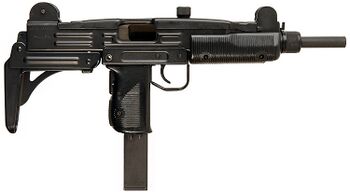
Uzi
The Uzi is a submachine gun designed in Israel by Major Uziel Gal around 1950 and made by Israel Military Industries. By placing the… Continued…
-
Vetterli Rifle
The Vetterli rifle was the Italian army's first bolt-action rifle for metallic cartridges, adopted in 1870 and based on a design by the… Continued…
-
Vickers Machine Gun
The Vickers was the British Army's medium machine gun for more than fifty years. Adopted in 1912, it was a lighter, improved version of the… Continued…
-
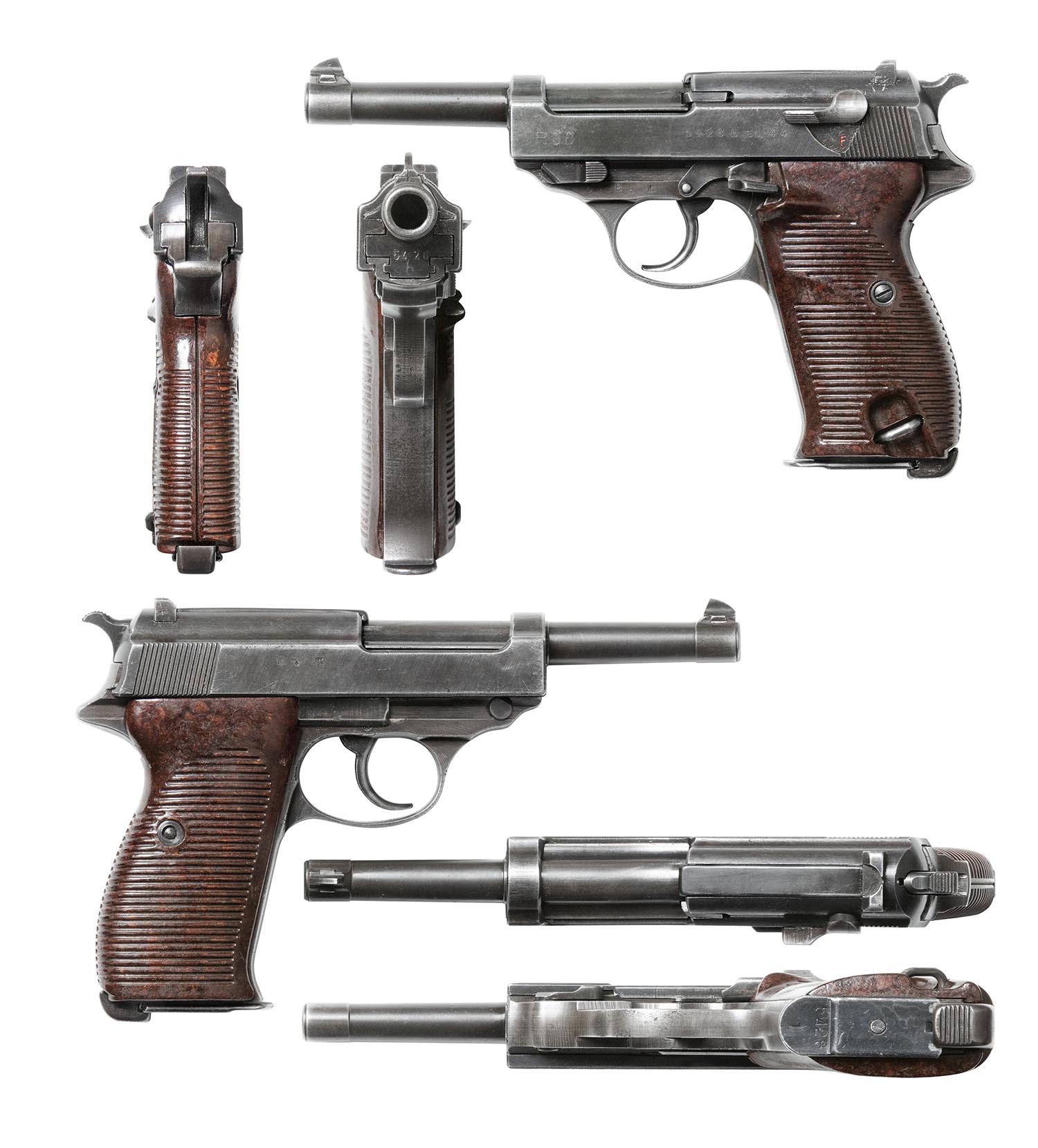
Walther P38
The Walther P38 was the standard German service pistol of World War II, adopted in 1938 to replace the Luger P08, which was slow and costly… Continued…
-
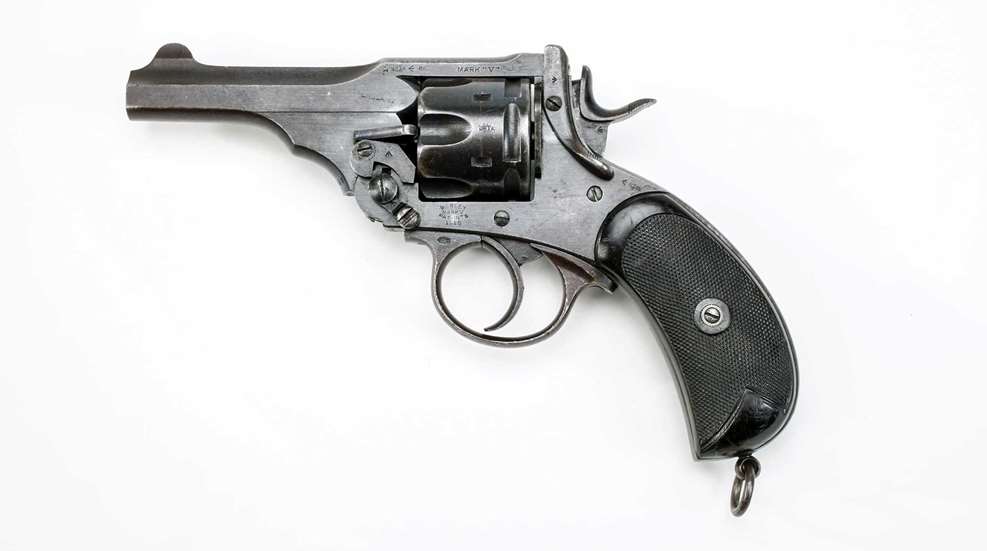
Webley Revolver
The Webley revolver was the British service sidearm from 1887 until after the Second World War. A top-break revolver made by Webley & Scott… Continued…
-
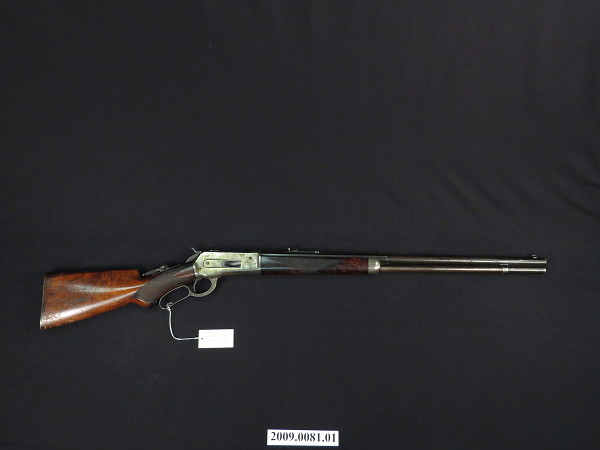
Winchester Model 1886
The Winchester Model 1886 was John Moses Browning's first lever action for Winchester. It was strong enough to handle the big black-powder… Continued…
-
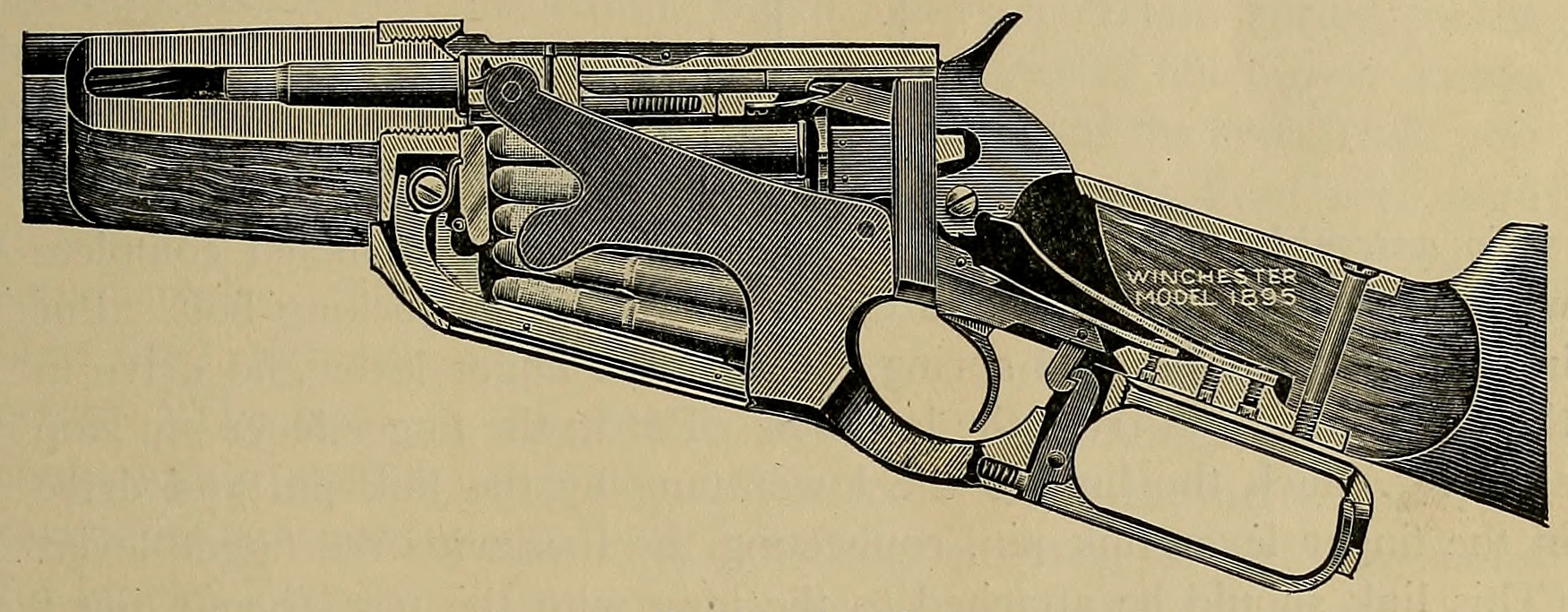
Winchester Model 1895
The Winchester Model 1895 was the first lever-action rifle built around a box magazine instead of a tube. That let it safely fire the… Continued…
-
Winchester Model 1897
The Winchester Model 1897 is a pump-action shotgun designed by John Moses Browning and made by Winchester from 1897 to 1957. An improved… Continued…
-
ZiS-3
The ZiS-3 was the standard Soviet 76.2mm divisional gun of the Second World War, officially the 76 mm divisional gun model 1942. Designed… Continued…