Rhodesian Bush War
The Rhodesian Bush War was fought from 1964 to 1979 between the government of Rhodesia, which had declared independence from Britain in 1965 under white minority rule, and the guerrilla armies of two African nationalist movements, ZANU's ZANLA and ZAPU's ZIPRA. It began with small incursions and grew after 1972 into a country-wide counter-insurgency fought with helicopter-borne Fireforce units, pseudo-operations and cross-border raids into Mozambique and Zambia. It ended with the Lancaster House Agreement in December 1979 and the independence of Zimbabwe in April 1980. More than 20,000 people died, most of them guerrillas and civilians.
Also known as Zimbabwe War of Liberation, Second Chimurenga, Rhodesian War, Zimbabwe War of Independence, Bush War, Chimurenga War, Rhodesian Civil War, Zimbabwe Liberation Struggle
Background
Southern Rhodesia was a self-governing British colony in which a white settler population of about 250,000 ruled some five million Africans. When Britain refused to grant independence without progress toward majority rule, the government of Ian Smith issued a Unilateral Declaration of Independence on 11 November 1965. Britain and the United Nations answered with economic sanctions. The two main African nationalist parties, Robert Mugabe's ZANU and Joshua Nkomo's ZAPU, were banned and each built an armed wing in exile: ZANLA for ZANU and ZIPRA for ZAPU. ZANLA, backed by China, operated from Zambia and after 1975 from Mozambique; ZIPRA, backed by the Soviet Union, was based in Zambia. The war was a local struggle over political power that also became a front in the Cold War, with South Africa supporting Rhodesia.
The War
The first recognized action came on 28 April 1966 at Sinoia, where police with air support killed a seven-man ZANLA group. For six years incursions stayed small. The turning point came in December 1972, when ZANLA guerrillas attacked farms in the north-east. The insurgency spread across the country after Mozambique became independent in 1975 and gave ZANLA a long open border.
Fireforce was the central Rhodesian tactic: Alouette III helicopters carrying troops of the Rhodesian Light Infantry or Rhodesian African Rifles, later joined by paratroops from a Dakota, were flown to any guerrilla group reported by observation posts or informers. The Selous Scouts ran pseudo-operations, in which mixed teams of soldiers and turned guerrillas posed as insurgents to locate real ones. The Rhodesian SAS, RLI and Selous Scouts also raided guerrilla bases across the borders, most notably Operation Dingo against the ZANLA camps at Chimoio and Tembue in Mozambique in November 1977, which killed more than a thousand people. ZIPRA shot down two Air Rhodesia Viscount airliners with SA-7 missiles in September 1978 and February 1979.
Neither side could win outright. An internal settlement in 1978-79 produced a government under Bishop Abel Muzorewa, but it won no international recognition and the war went on. Negotiations at Lancaster House in London ended with an agreement signed on 21 December 1979. Rhodesia returned briefly to British rule and a ceasefire took effect. Elections in February 1980 were won by ZANU, and Zimbabwe became independent on 18 April 1980.
Weapons
The standard Rhodesian rifle was the FN FAL, supplied from Belgium, Britain and South Africa. After 1974 the G3 Rifle arrived in numbers from Portugal and was issued mainly to police and territorial units. Section firepower came from the FN MAG. The Browning Hi-Power was the service pistol, and the Uzi was carried by aircrew, police and farmers. Landmine casualties led Rhodesia to develop a family of mine-protected vehicles, including the Pookie detector and the Leopard and Puma troop carriers. The Alouette III served both as the G-car, carrying four troops and armed with twin machine guns, and as the K-car, whose 20 mm cannon gave the Fireforce commander a gunship overhead.
The guerrillas carried the AK-47 and AKM, the SKS carbine and the RPG-7, with Chinese Type 50 copies of the PPSh submachine gun in the early years. Soviet TM-46 and similar landmines laid on rural roads caused a large share of security force and civilian casualties. ZIPRA later added SA-7 missiles, heavy mortars and recoilless guns.
Aftermath
The war cost more than 20,000 lives, the great majority of them guerrillas and African civilians; about 1,300 members of the security forces died. Zimbabwe's new government merged the three armies into one, though tension between former ZANLA and ZIPRA fighters broke into violence in Matabeleland in the early 1980s. Rhodesian methods, above all Fireforce and pseudo-operations, were studied closely by South Africa and by later counter-insurgency planners. The mine-protected vehicles developed during the war are the ancestors of the MRAP types fielded in Iraq and Afghanistan.
Weapons used
-
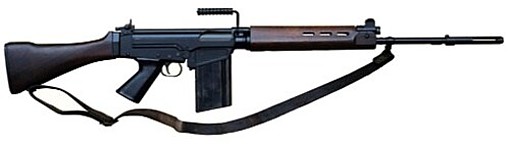
FN FAL
The standard rifle of the Rhodesian security forces throughout the war, supplied from Belgium, Britain and South Africa and carried by the… Continued…
-
AK-47
The main rifle of ZANLA and ZIPRA guerrillas, in Soviet, Chinese and Eastern bloc AK-47 and AKM forms, and the weapon most often captured… Continued…
-
FN MAG
The section machine gun of the Rhodesian Army and the twin door gun on Fireforce G-car helicopters. Continued…
-
G3 Rifle
Acquired in quantity from Portugal after 1974 and issued mainly to police and territorial units to relieve the shortage of FALs. Continued…
-
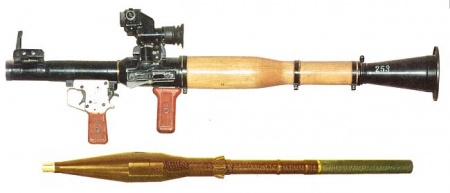
RPG-7
The guerrillas' standard anti-vehicle and anti-position weapon, used in ambushes on road convoys and attacks on farms and camps. Continued…
-
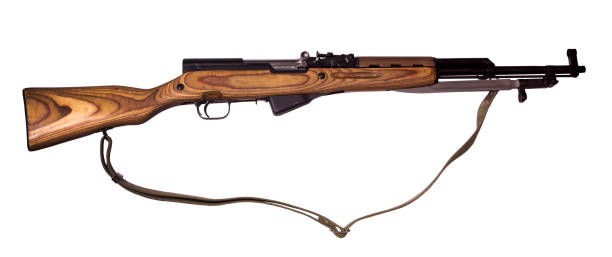
SKS
Carried by many guerrillas in the early and middle years of the war before AK-pattern rifles became universal. Continued…
-
Browning Hi-Power
The Rhodesian service pistol, carried by officers, aircrew and police. Continued…
-
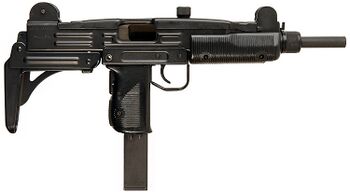
Uzi
South African-made Uzis were carried by aircrew, police reservists and farmers as a compact weapon for vehicles and homesteads. Continued…
-
M18 Claymore Mine
Claymore-type mines, including locally made copies, were used by the security forces in ambushes and for the protection of farms and bases. Continued…
Sources
Paul L. Moorcraft and Peter McLaughlin. The Rhodesian War: A Military History. Pen & Sword, 2008.
J.R.T. Wood. Counter-Strike from the Sky: The Rhodesian All-Arms Fireforce in the War in the Bush 1974-1980. 30 Degrees South, 2009.
Peter Baxter. Bush War Rhodesia 1966-1980. Helion, 2014.
J.K. Cilliers. Counter-Insurgency in Rhodesia. Croom Helm, 1985.
Suggest an edit · account required · reviewed before publishing · how it works