Origin
Britain / United Kingdom
Britain built the largest empire in history and armed it accordingly. The Brown Bess musket, Martini-Henry rifle, Lee-Enfield, and Webley revolver defined successive eras of British military power. British arms manufacturing influenced global weapon design for centuries.
Overview
Britain's weapons history spans from the medieval longbow to nuclear-armed submarines. As the center of an empire covering a quarter of the world's land surface, Britain required weapons that could be produced in industrial quantities, shipped globally, and maintained in diverse environments. British arms designs were widely exported and licensed, and the British military's experiences in colonial warfare, the World Wars, and post-war conflicts have driven continuous innovation.
Medieval and Early Modern
- English longbow — The signature British weapon of the medieval era; a 6-foot yew bow; effective to 200+ yards against mail; devastated French knights at Crécy (1346), Poitiers (1356), and Agincourt (1415)
- Bill — English pole weapon derived from the agricultural billhook; used by English infantry alongside billmen and archers
- Brown Bess (Land Pattern Musket) — Flintlock musket; .75 caliber; the British standard from roughly 1722 to 1838; used across the British Empire and by both sides in the American Revolution; one of the most produced firearms of the era
- Baker Rifle — Flintlock rifle issued to specialist rifle units; accurate to 200+ yards; used in the Peninsular War and at Waterloo
Victorian Era
- Pattern 1853 Enfield — .577 caliber percussion rifle musket; used in the Crimea, Indian Mutiny, and American Civil War (both sides)
- Martini-Henry — .45 caliber breech-loading single-shot rifle; used across the Empire; famous for performance at Rorke's Drift
- Lee-Metford / Lee-Enfield — .303 British; 10-round magazine; the SMLE (Short Magazine Lee-Enfield) became one of the finest bolt-action service rifles ever made
WWI and WWII
- SMLE Mk III — Fastest-firing bolt-action in WWI; the "Mad Minute" (15 rounds/minute) was standard training
- Vickers Mk I — Water-cooled machine gun; could fire continuously for hours; the definitive British heavy MG
- Lewis gun — Air-cooled LMG; used extensively in WWI on infantry, aircraft, and vehicles
- Bren gun — WWII LMG; .303; 30-round magazine; accurate and reliable; the Commonwealth standard
- Sten gun — Cheap, simple 9mm SMG; produced in millions; used by British forces and resistance movements across Europe
- No. 4 Lee-Enfield — Simplified WWII variant; excellent rifle
Post-War
- L1A1 SLR (FN FAL) — 7.62mm NATO semi-automatic; British service rifle 1954–1994
- L85A1 / L85A2 (SA80) — 5.56mm bullpup; current British standard; troubled development but improved variants are reliable
- Webley revolver — .455 British service revolver through WWI and WWII
This article is a stub. Contributions covering specific weapons, battles, and British military history are welcome.
Battles & Operations
-
Battle of Culloden (16 April 1746)
The Battle of Culloden, fought on Drummossie Moor near Inverness on 16 April 1746, ended the last Jacobite rising. A British government… Continued…
-
Battle of Fort Necessity (3 July 1754)
The Battle of Fort Necessity was fought on 3 July 1754 at the Great Meadows in south-western Pennsylvania. A French and Native force under… Continued…
-
Battle of the Monongahela (9 July 1755)
The Battle of the Monongahela, often called Braddock's Defeat, was fought on 9 July 1755 about ten miles from Fort Duquesne, near modern… Continued…
-
Siege of Fort William Henry (3-9 August 1757)
The Siege of Fort William Henry took place from 3 to 9 August 1757 at the southern end of Lake George in New York. A French army of about… Continued…
-
Battles of Saratoga (19 September and 7 October 1777)
The Battles of Saratoga were two battles fought in upstate New York in the autumn of 1777. A British army under General John Burgoyne had… Continued…
-
Battle of Camden (16 August 1780)
The Battle of Camden, fought on 16 August 1780 a few miles north of Camden, South Carolina, was one of the worst American defeats of the… Continued…
-
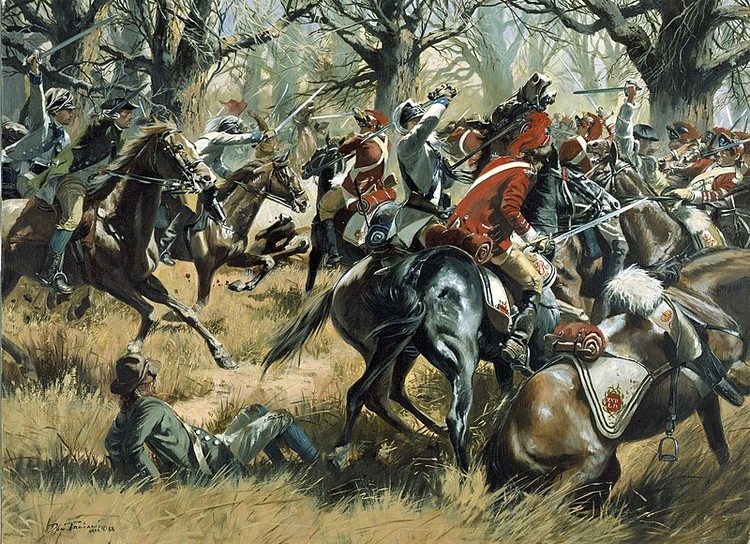
Battle of Cowpens (17 January 1781)
The Battle of Cowpens, fought on 17 January 1781 at a frontier pasture near the North Carolina border of South Carolina, was one of the… Continued…
-
Battle of Guilford Court House (15 March 1781)
The Battle of Guilford Court House was fought on 15 March 1781 in what is now Greensboro, North Carolina. About 1,900 British and German… Continued…
-
Siege of Yorktown (28 September - 19 October 1781)
The Siege of Yorktown, from 28 September to 19 October 1781, was the last major battle of the American Revolution. A combined American and… Continued…
-
Battle of Trafalgar (21 October 1805)
The Battle of Trafalgar was fought on 21 October 1805 off Cape Trafalgar in southern Spain. A British fleet of 27 ships of the line under… Continued…
-
Battle of Waterloo (18 June 1815)
The Battle of Waterloo, fought on Sunday 18 June 1815 near the village of Waterloo in present-day Belgium, ended the Napoleonic Wars.… Continued…
-
Battle of Isandlwana (22 January 1879)
The Battle of Isandlwana was fought on 22 January 1879, at the start of the Anglo-Zulu War, below the rocky hill of Isandlwana in Zululand… Continued…
-
Battle of Rorke's Drift (22-23 January 1879)
The Battle of Rorke's Drift was fought on 22 and 23 January 1879 at a mission station on the Natal bank of the Buffalo River, hours after a… Continued…
-
First Battle of the Marne (5-12 September 1914)
The First Battle of the Marne was fought east of Paris from 5 to 12 September 1914. After a month of German advances through Belgium and… Continued…
-
Battle of the Somme (1 July - 18 November 1916)
The Battle of the Somme was a joint British and French offensive against the German lines in northern France, fought from 1 July to 18… Continued…
-
Battle of Britain (10 July - 31 October 1940)
The Battle of Britain, fought over southern England and the Channel from July to October 1940, was the first major campaign fought entirely… Continued…
-
Battle of Arnhem (17-26 September 1944)
The Battle of Arnhem, fought from 17 to 26 September 1944, was the final and failed stage of Operation Market Garden, the Allied attempt to… Continued…
-
Normandy Landings (6 June 1944)
The Normandy Landings of 6 June 1944, D-Day, were the largest seaborne invasion in history and the start of the Allied liberation of… Continued…
-
Rhodesian Bush War (4 July 1964 - 21 December 1979)
The Rhodesian Bush War was fought from 1964 to 1979 between the government of Rhodesia, which had declared independence from Britain in… Continued…
-
The Troubles (October 1968 - 10 April 1998)
The Troubles was a thirty-year conflict in Northern Ireland between republican paramilitaries seeking a united Ireland, chiefly the… Continued…
Weapons
-
1796 Heavy Cavalry Sword
The Pattern 1796 Heavy Cavalry Sword was the regulation sword of the British heavy cavalry from 1796 until 1821, including at Waterloo.… Continued…
-
1796 Light Cavalry Sabre
The Pattern 1796 Light Cavalry Sabre was the sword of Britain's light dragoons and hussars through the Napoleonic Wars, designed by John… Continued…
-
32-Pounder Naval Long Gun
The 32-pounder long gun was the heaviest standard cannon of the Royal Navy's ships of the line in the age of sail: a cast-iron… Continued…
-
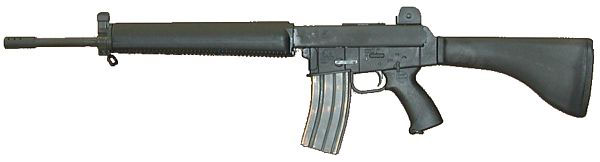
Armalite AR-18
The Armalite AR-18 is a 5.56mm select-fire rifle designed in 1963 by Arthur Miller and George Sullivan at Armalite in Costa Mesa… Continued…
-
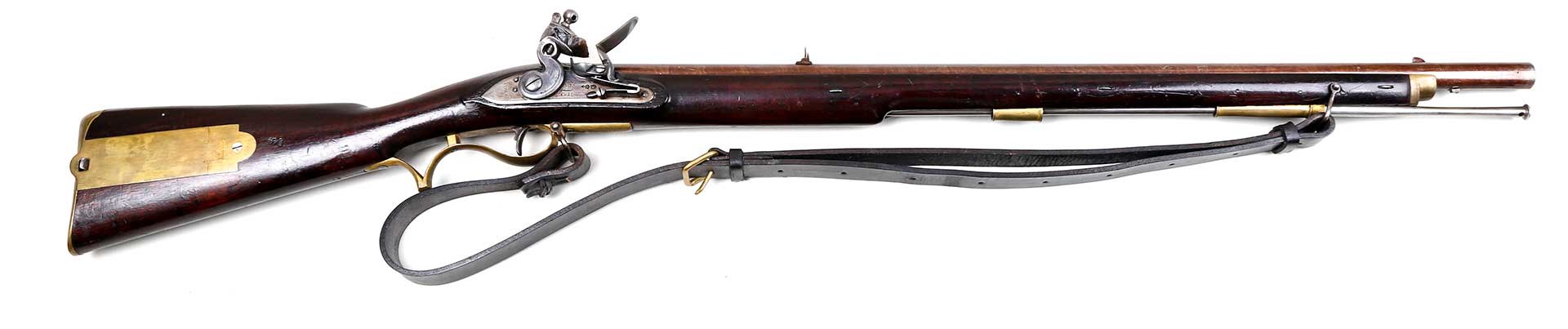
Baker Rifle
The Baker rifle was the first rifle officially adopted by the British Army, the weapon of the green-jacketed 95th Rifles and the rifle… Continued…
-
Bangalore Torpedo
The Bangalore torpedo is a long explosive charge made of steel tubes that can be joined end to end, pushed under barbed wire or across a… Continued…
-
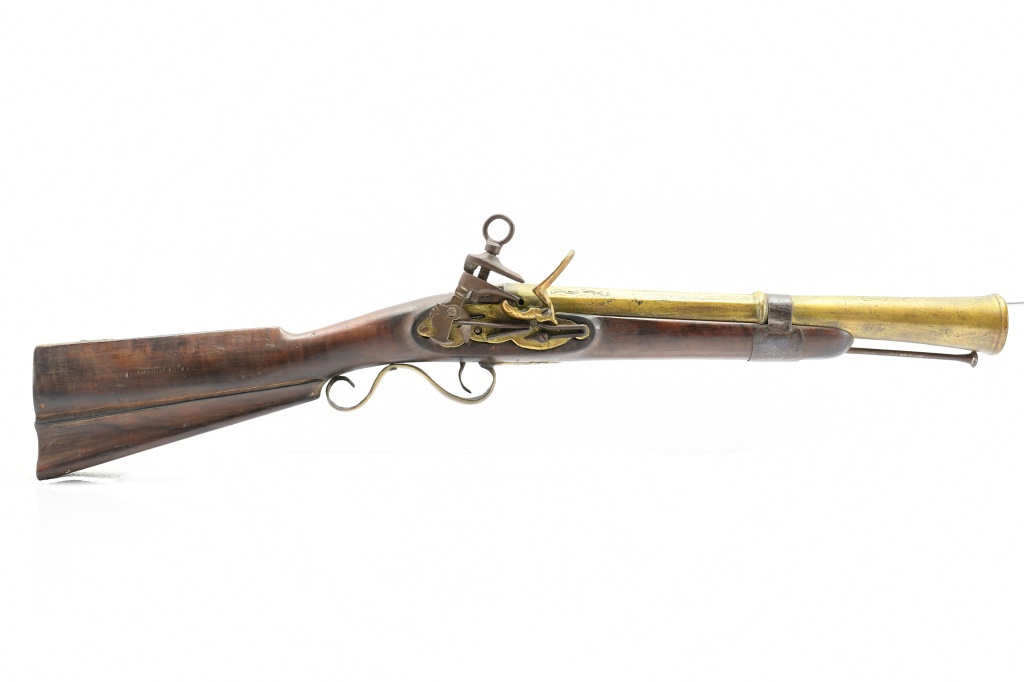
Blunderbuss
The blunderbuss was a short, large-bore, muzzle-loading gun with a flared muzzle, built to fire a handful of shot at very close range. From… Continued…
-
Boarding Axe
The boarding axe was the short-handled naval axe of the age of sail, with a cutting blade on one side and a spike on the other. It was a… Continued…
-
Boarding Pike
The boarding pike was a short spear carried on sailing warships to defend the ship against boarders and to arm boarding parties. It was… Continued…
-
Bofors 40 mm Gun
The Bofors 40 mm gun is a light anti-aircraft gun designed by the Swedish firm AB Bofors in the early 1930s. It fired a two-pound explosive… Continued…
-
Bren
The Bren was the light machine gun of the British and Commonwealth armies from 1938 until the 1990s: a Czech design from Brno… Continued…
-
Brodie Helmet
The Brodie helmet is the shallow, wide-brimmed steel helmet designed by John Leopold Brodie in 1915 and worn by British and Commonwealth… Continued…
-
Brown Bess Musket
Brown Bess is the affectionate name for the British Land Pattern flintlock musket, the longest-serving firearm in British history. A .75… Continued…
-
Browning Hi-Power
The Browning Hi-Power is a 9x19mm semi-automatic pistol begun by John Browning in the 1920s and completed after his death by Dieudonne… Continued…
-
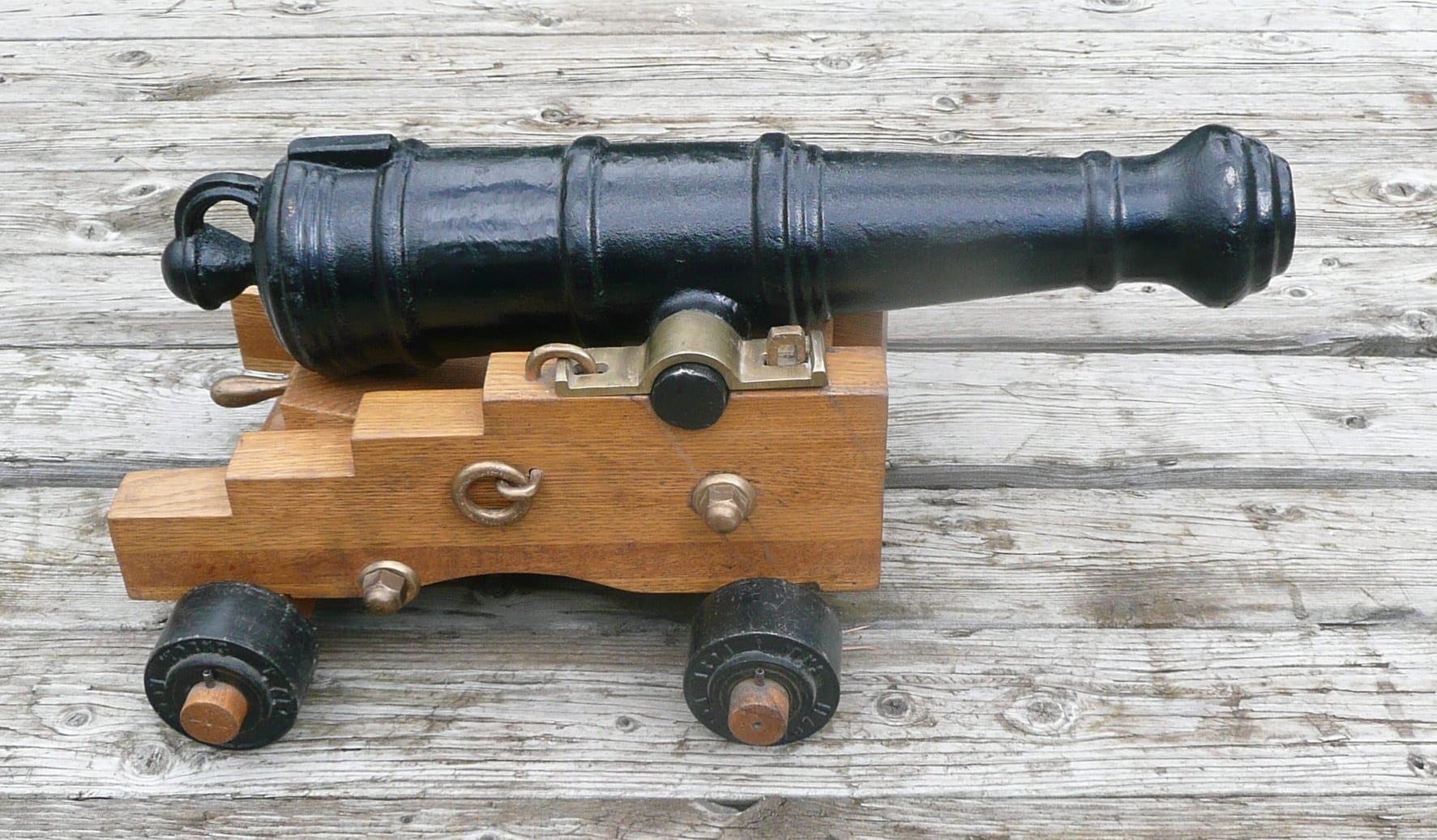
Carronade
The carronade was a short, light, large-bore naval gun first cast by the Carron Company of Falkirk, Scotland, in 1778. It fired a heavy… Continued…
-
Colt 1851 Navy Revolver
The Colt 1851 Navy is the revolver that made Samuel Colt's fortune and the revolver of the American frontier and Civil War: a .36-caliber… Continued…
-
Congreve Rocket
The Congreve rocket was a British military rocket developed by William Congreve at the Royal Arsenal, Woolwich, from 1804, based on the… Continued…
-
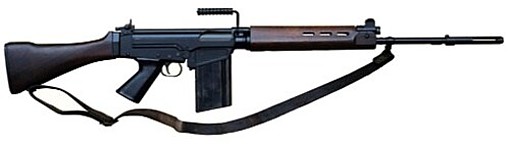
FN FAL
The FN FAL — Fusil Automatique Léger, or light automatic rifle — was the most widely adopted battle rifle of the Cold War. Designed by… Continued…
-
FN MAG
The FN MAG is a Belgian general-purpose machine gun designed by Ernest Vervier at Fabrique Nationale and introduced in 1958. It fires… Continued…
-
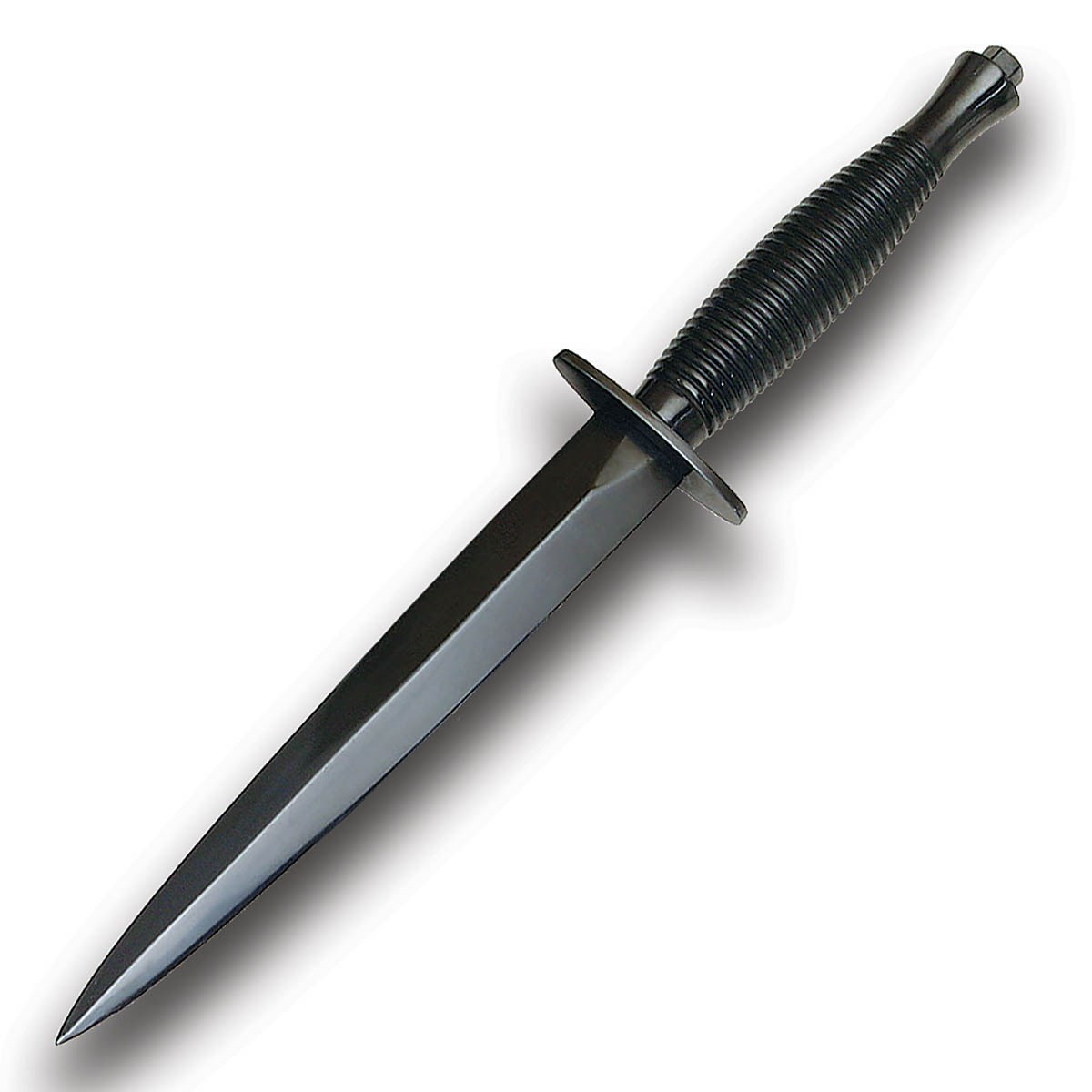
Fairbairn–Sykes Fighting Knife
The Fairbairn–Sykes Fighting Knife was a slim, double-edged dagger designed in 1940 by William Fairbairn and Eric Sykes, two former… Continued…
-
Ferguson Rifle
The Ferguson rifle was a breech-loading flintlock rifle designed by Captain Patrick Ferguson of the British Army and patented in 1776. A… Continued…
-
Gatling gun
The Gatling gun was the first practical machine gun, a hand-cranked weapon with six to ten barrels rotating around a central shaft, each… Continued…
-
Grasshopper Cannon
The grasshopper was a light British 3-pounder field gun of the later eighteenth century, a short bronze barrel on a small carriage that… Continued…
-
Infantry Hanger
The infantry hanger was the short, slightly curved sword carried by private soldiers and grenadiers of the British foot for much of the… Continued…
-
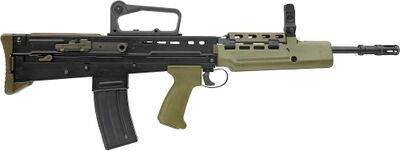
L85A1
The L85A1 is the British Army's 5.56mm bullpup rifle, the individual weapon of the SA80 family. Adopted in 1985 to replace the L1A1… Continued…
-
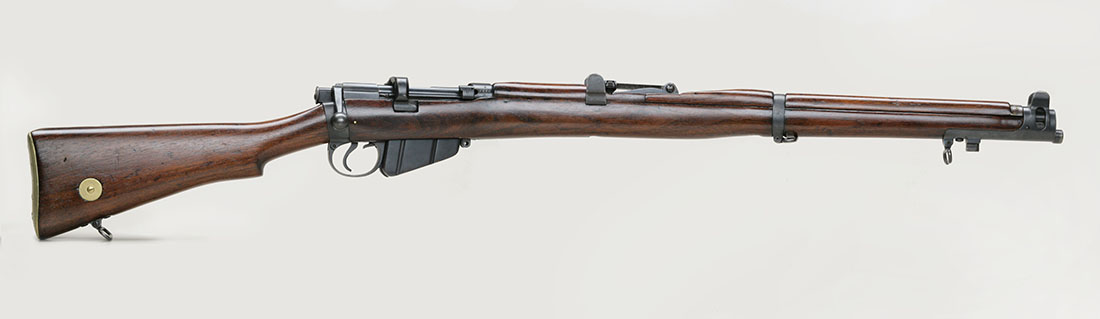
Lee-Enfield Rifle
The Lee-Enfield was the British Empire's rifle for over half a century: a bolt-action .303 whose rear-locking action and ten-round magazine… Continued…
-
Lewis Gun
The Lewis gun was the British Empire's light machine gun of the First World War: an air-cooled, gas-operated gun with a distinctive fat… Continued…
-
Light Dragoon Pistol
The Light Dragoon pistol was the British Army's flintlock cavalry pistol of the later eighteenth century. Introduced around 1759 for the… Continued…
-
Martini-Henry Rifle
The Martini-Henry was Britain's first purpose-built breechloading service rifle: a falling-block single-shot in .577/450, dropping its… Continued…
-
Maxim Gun
The Maxim gun was the first true machine gun: a weapon that used the energy of each shot to load and fire the next, and would keep firing… Continued…
-
Mills Bomb
The Mills bomb was the British Army's standard hand grenade from 1915 until the 1970s. Designed by the Birmingham engineer William Mills… Continued…
-
Minié Ball
The Minié ball is the conical, hollow-based lead bullet that made the rifled musket a practical infantry weapon. Developed by the French… Continued…
-
Molotov Cocktail
A Molotov cocktail is a glass bottle filled with gasoline or another flammable liquid, lit by a burning rag or a chemical igniter and… Continued…
-
PIAT
The PIAT (Projector, Infantry, Anti-Tank) was the British and Commonwealth infantry's hand-held anti-tank weapon from 1943 to the early… Continued…
-
Pattern 1853 Enfield
The Pattern 1853 Enfield was the British Army's .577 caliber percussion rifle-musket, adopted in 1853 and made at the Royal Small Arms… Continued…
-
Pattern 1907 Bayonet
The Pattern 1907 was the British Army's sword bayonet for the Short Magazine Lee-Enfield rifle through both world wars. Its 17-inch blade… Continued…
-
Sea Service Pistol
The Sea Service pistol was the Royal Navy's standard sidearm through the age of sail: a heavy, plain, single-shot flintlock with a brass… Continued…
-
Ship of the Line
The ship of the line was the main battleship of the age of sail, a large wooden warship with two or three decks of heavy guns along its… Continued…
-
Siege Mortar
A siege mortar was a short, wide-mouthed cannon that fired at a high angle, so that its projectile rose over walls and earthworks and fell… Continued…
-
Smallsword
The smallsword was the gentleman's sword of the late seventeenth and eighteenth centuries: a light, short thrusting sword, usually with a… Continued…
-
Snider-Enfield
The Snider-Enfield was the British Army's first general-issue breech-loading rifle, adopted in 1866. It was made by fitting a side-hinged… Continued…
-
Socket Bayonet
The socket bayonet is a blade fixed to the side of a metal tube that slides over the muzzle of a musket and locks in place. Unlike the… Continued…
-
Spontoon
The spontoon, or espontoon, was a short pike of about six to seven feet carried by infantry officers, and later by sergeants, in European… Continued…
-
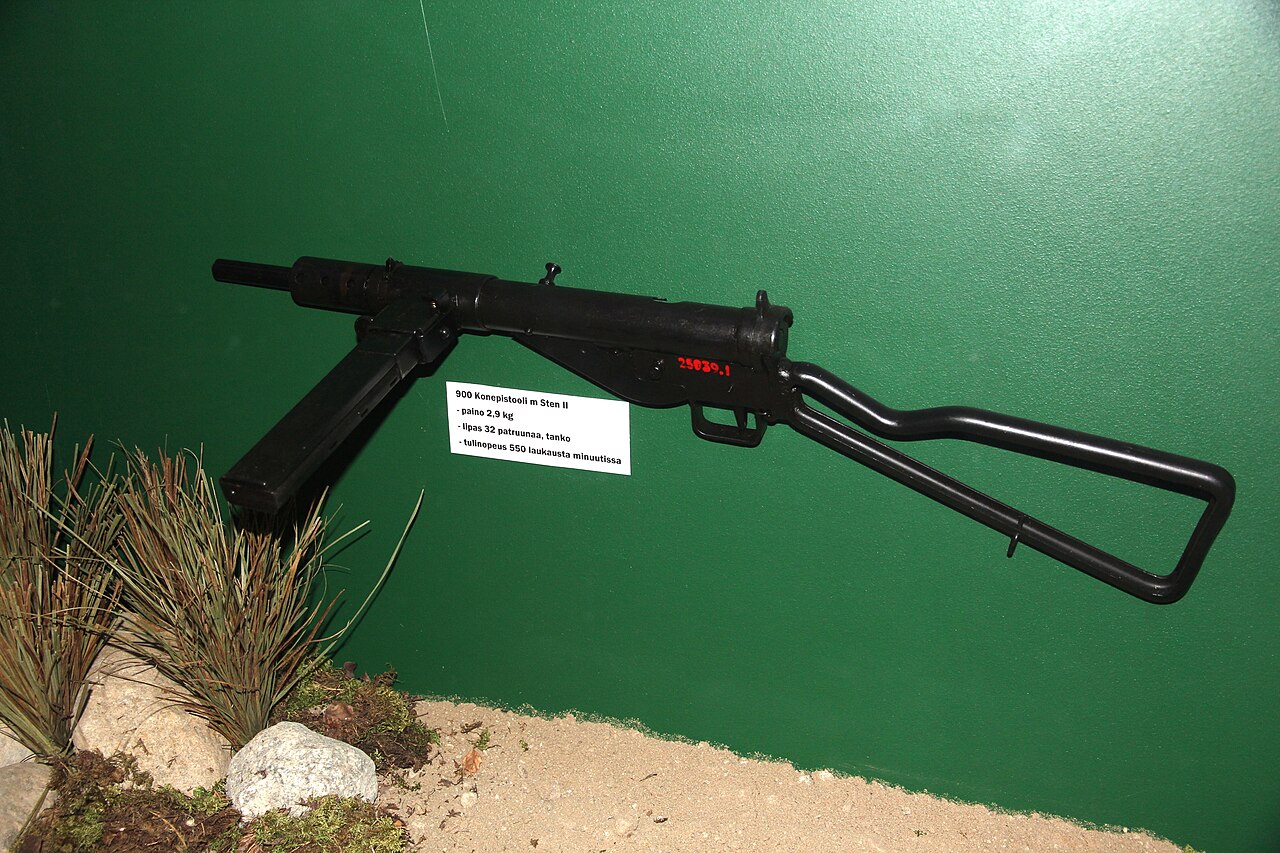
Sten Gun
The Sten was Britain's emergency submachine gun: a 9mm open-bolt weapon of stampings, tube, and spot welds that cost a few pounds and a few… Continued…
-
Sterling Submachine Gun
The Sterling is the 9mm submachine gun that replaced the Sten in British service. George Patchett designed it at Sterling Armaments in… Continued…
-
Swivel Gun
The swivel gun was a small cannon mounted on a forked iron yoke that pivoted in a socket on a ship's rail, fighting top or boat bow, so… Continued…
-
Vickers Machine Gun
The Vickers was the British Army's medium machine gun for more than fifty years. Adopted in 1912, it was a lighter, improved version of the… Continued…
-
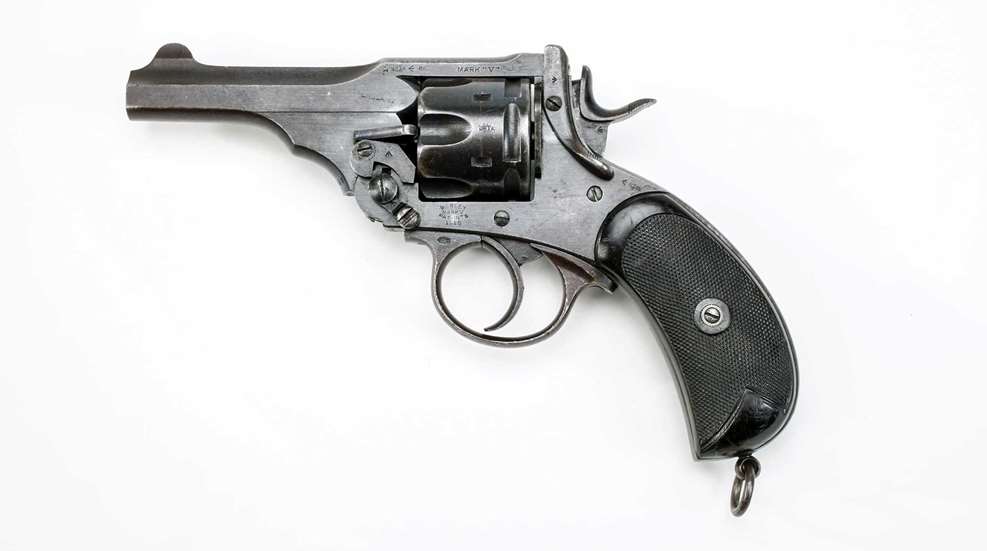
Webley Revolver
The Webley revolver was the British service sidearm from 1887 until after the Second World War. A top-break revolver made by Webley & Scott… Continued…