Battle of Huế
The Battle of Huế, fought from 31 January to 2 March 1968, was the longest and bloodiest battle of the Tet Offensive. North Vietnamese and Viet Cong forces seized most of the old imperial capital of Vietnam in a night attack. US Marines, US Army troops and South Vietnamese soldiers retook it in nearly a month of house-to-house fighting that left much of the city in ruins. Thousands of civilians died, many of them executed by the occupiers. The battle deepened American doubts about the war.
Also known as Battle of Hue, Hue 1968, Siege of Huế, Siege of Hue, Battle for Hue City, Hue City, Operation Hue City, Tet Offensive Hue, Huế Citadel, Trận Mậu Thân tại Huế, Full Metal Jacket
Background
Huế, on the Perfume River in the north of South Vietnam, was the capital of the Nguyễn emperors and a city of about 140,000 people in 1968. North of the river stood the Citadel, a walled and moated fortress about two kilometers square, with the Imperial Palace inside it. South of the river lay the newer city, with the university, the hospital, the provincial offices and the compound of the American military advisers. The city was lightly defended.
At the end of January 1968, during the truce for Tet, the lunar new year, North Vietnamese and Viet Cong forces attacked cities and bases across South Vietnam. Huế was one of the main targets. The attention of the American command was fixed on the siege that had just begun to the north-west, the Battle of Khe Sanh.
The Battle
In the early hours of 31 January, several thousand troops of the People's Army of Vietnam's 4th and 6th Regiments, with Viet Cong battalions and sappers, entered Huế. By daylight they held almost all of it. Two places held out: the headquarters of the South Vietnamese 1st Division, under Brigadier General Ngô Quang Trưởng, in the north-east corner of the Citadel, and the American advisers' compound south of the river. A large Viet Cong flag was raised on the flag tower in front of the palace.
US Marine companies were sent up Highway 1 from Phu Bai that day, with little idea of the enemy's strength. They reached the advisers' compound, and an attempt to cross the river to the Citadel was driven back. Over the next days, battalions of the 1st and 5th Marines, under Colonel Stanley Hughes, fought to clear the southern city. Few of them had been trained for street fighting. They learned to avoid the open streets, to blow holes in walls and to take one building at a time, among them the treasury, the university, the hospital and the provincial headquarters. The south bank was largely secure by about 10 February.
Inside the Citadel, Trưởng's troops, reinforced by South Vietnamese airborne and marine battalions, held their ground but could not retake the fortress alone. The 1st Battalion, 5th Marines, entered the Citadel and began attacking along its eastern wall on 13 February. The defenders fought from houses, gardens and the thick walls themselves, and low cloud and rain limited air support for much of the battle. Early restrictions on heavy weapons, meant to protect the historic city, were eased as losses rose. West of the city, a brigade of the US Army's 1st Cavalry Division fought its way toward the walls and cut the routes by which the defenders were supplied. On 24 February South Vietnamese troops pulled down the Viet Cong flag and retook the Imperial Palace. The battle was declared over on 2 March.
Weapons
The Marines carried the M16 Rifle, the M60 Machine Gun, the M79 Grenade Launcher and the M26 Grenade, and wore the M1 Helmet and the Flak Jacket. To break into buildings they used the M72 LAW, the older 3.5-inch rocket launcher, 106 mm recoilless rifles, tear gas and the guns of M48 tanks. The Ontos, a small tracked vehicle carrying six recoilless rifles, proved very useful for knocking down walls. The defenders had the AK-47, the SKS, the RPD Machine Gun, mortars and anti-tank launchers, both the RPG-2, known as the B40, and the newer RPG-7. Fired from windows at a few dozen meters, these launchers hit the American tanks many times.
Aftermath
About 216 Americans were killed and more than 1,500 wounded, most of them Marines. South Vietnamese forces lost roughly 400 or more killed. North Vietnamese and Viet Cong losses are uncertain; allied estimates ran to several thousand killed. Much of the city was damaged or destroyed, and most of its people were left homeless. Civilian deaths are usually put at several thousand. After the battle, mass graves were found in and around the city holding the bodies of people killed during the occupation, among them officials, soldiers, teachers, priests and foreigners. The usual estimate is about 2,800 or more, though the figures and circumstances have been debated.
The attackers failed to hold Huế and no popular uprising took place. Even so, the length and cost of the battle, shown nightly on American television, strengthened the view in the United States that the war could not be won at an acceptable price.
On Screen
Full Metal Jacket (1987), directed by Stanley Kubrick, sets its second half in and around Huế during the Tet Offensive. It is based on Gustav Hasford's novel The Short-Timers; Hasford served in Vietnam as a Marine combat correspondent. Matthew Modine plays Joker, a correspondent who joins a Marine rifle squad in the city. All the characters are fictional, and no real commander or unit action is depicted. The film was shot entirely in England, and its Huế is a disused gasworks at Beckton in east London, dressed with imported palm trees. The result is a landscape of concrete industrial ruins that does not resemble the real city or its Citadel. The closing sniper episode is invented drama, not a recorded incident. The film does convey the general character of the fighting: small groups of Marines, with tanks, working through wrecked streets against hidden defenders. The South Vietnamese troops who did much of the fighting are largely absent.
Weapons used
-
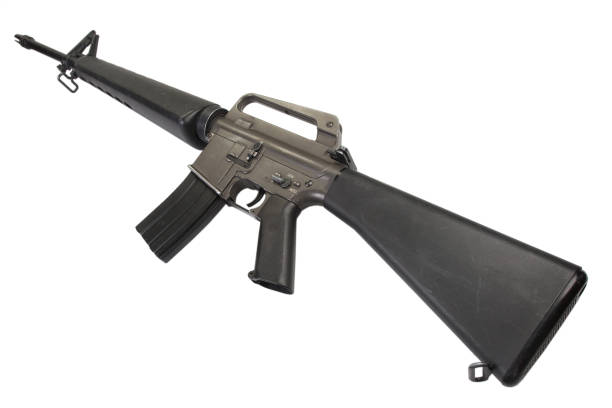
M16 RifleFor sale
The M16 was the rifle of the US Marines and soldiers who cleared the city block by block. Continued…
-
AK-47
North Vietnamese and Viet Cong infantry defended buildings and the Citadel walls with the AK-47. Continued…
-
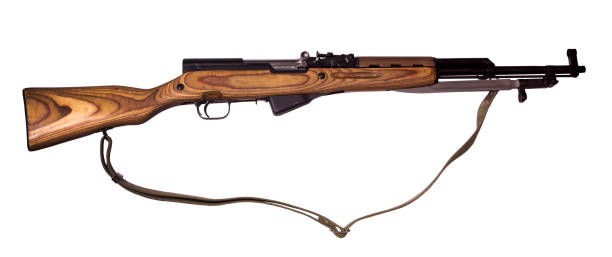
SKS
The SKS carbine armed many of the attackers, including Viet Cong local force units. Continued…
-
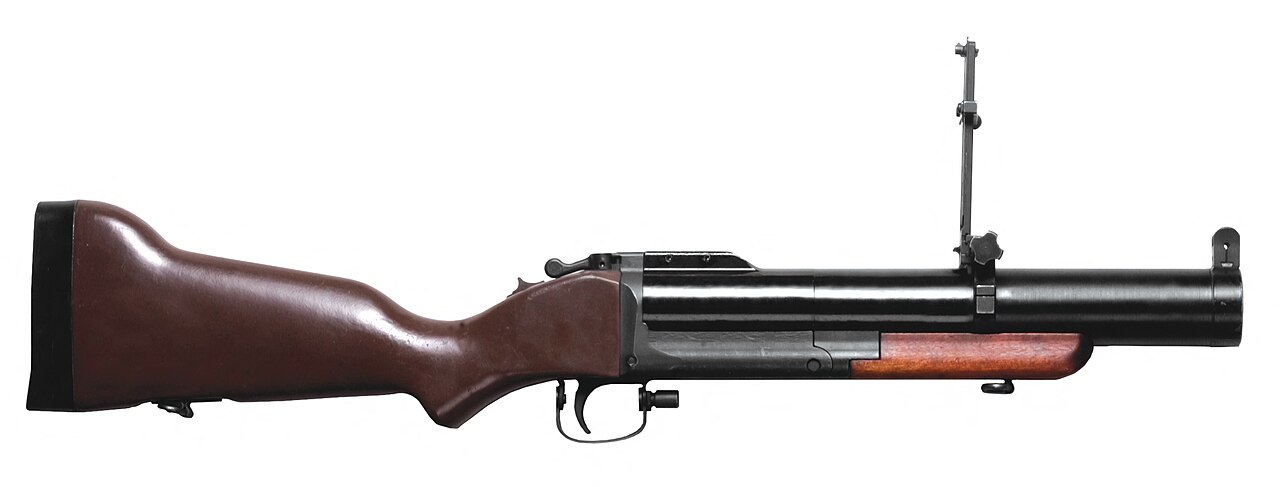
M79 Grenade Launcher
Marine grenadiers fired 40 mm rounds through windows and into firing positions across the street. Continued…
-
M72 LAW
Marines used the LAW, with the older 3.5-inch rocket launcher, to blast holes in walls and silence strongpoints. Continued…
-
RPG-2
B40 teams firing from windows and rooftops at short range repeatedly hit Marine tanks and Ontos vehicles. Continued…
-
M60 Machine Gun
M60 teams covered streets and courtyards while riflemen crossed them. Continued…
-
RPD Machine Gun
RPD light machine guns were sited to sweep the streets and the approaches to the Citadel walls. Continued…
Sources
Shulimson, Jack, Leonard A. Blasiol, Charles R. Smith, and David A. Dawson. U.S. Marines in Vietnam: The Defining Year, 1968. History and Museums Division, Headquarters, U.S. Marine Corps, 1997.
Bowden, Mark. Huế 1968: A Turning Point of the American War in Vietnam. Atlantic Monthly Press, 2017.
Nolan, Keith William. Battle for Hue: Tet 1968. Presidio Press, 1983.
Willbanks, James H. The Tet Offensive: A Concise History. Columbia University Press, 2007.
Suggest an edit · account required · reviewed before publishing · how it works