Battle of Khe Sanh
The Battle of Khe Sanh was a 77-day North Vietnamese siege of a US Marine Corps combat base near the Laotian border and the Demilitarized Zone that began on 21 January 1968; the base was abandoned in July. About 6,000 Marines of the 26th Marine Regiment and South Vietnamese Rangers held the base and its hill outposts against two to three NVA divisions, supplied entirely by air and supported by one of the heaviest bombing campaigns in history. The siege was lifted in April by Operation Pegasus; whether Hanoi meant to take the base or to distract from the Tet Offensive is still debated.
Also known as Siege of Khe Sanh, Khe Sanh Combat Base, Operation Scotland, Operation Niagara, Operation Pegasus
Background
The Battle of Khe Sanh during the Vietnam War was fought from Jan 21, 1968 until July 9, 1968. Khe Sanh Combat Base sat on a plateau in the far northwest of Quang Tri Province, a few miles from Laos and fourteen from the Demilitarized Zone, astride Route 9 and close to the Ho Chi Minh Trail. The US Marine Corps had held it since 1966, and in the spring of 1967 fought the bloody Hill Fights for the surrounding heights — Hills 861, 881 South and 881 North. By late 1967 intelligence showed the North Vietnamese 325C and 304th Divisions massing around the plateau, and General William Westmoreland, who wanted the base as an anchor for operations into Laos, chose to reinforce and hold it. The press and the White House alike saw a parallel with Dien Bien Phu, where the French had been besieged and destroyed in 1954.
The Siege
On 21 January 1968 North Vietnamese artillery, rockets and mortars opened on the base, and an early round detonated the main ammunition dump. For the next eleven weeks the 26th Marine Regiment under Colonel David Lownds, with the 37th ARVN Ranger Battalion — about 6,000 men — held the base and its hill outposts under daily bombardment. On 7 February NVA infantry with PT-76 tanks overran the Special Forces camp at Lang Vei nearby, the first use of North Vietnamese armor in the war. The NVA dug trench lines toward the perimeter in the manner of Dien Bien Phu, but the assault on the main base never came. Everything the garrison used arrived by air — C-130s landing under fire, parachute drops, low-altitude extraction, and Marine helicopters flying the "Super Gaggle" to the hill outposts — while Operation Niagara put B-52 strikes and tactical aircraft on the surrounding hills in unprecedented tonnage. Operation Pegasus, led by the 1st Cavalry Division, reached the base in early April and lifted the siege.
Weapons
The Marines fought with the M16 Rifle, whose early reliability problems had first become a scandal after the 1967 Hill Fights here, though some Marines still carried the M14 Rifle. The M60 Machine Gun and M79 Grenade Launcher held the perimeter, scout-snipers used the new M40 Rifle, and the M1 Helmet was the Marine's headgear. The North Vietnamese infantry carried the AK-47 and SKS, supported by 130mm and 152mm artillery firing from Laos and from behind the DMZ, out of range of the Marines' own guns.
Aftermath
Official figures put Marine deaths at the base during the siege at about 205, though counts that include the hill outposts, Lang Vei and the relief operations run several times higher. North Vietnamese losses, mostly to air power, were estimated in the thousands to over ten thousand. In June 1968, under a new commander, the Americans decided that the base was no longer needed; it was razed and abandoned, the last Marines leaving in early July. Whether Hanoi meant to take Khe Sanh or to draw American strength away from the cities before the Tet Offensive remains one of the war's lasting arguments.
Weapons used
-
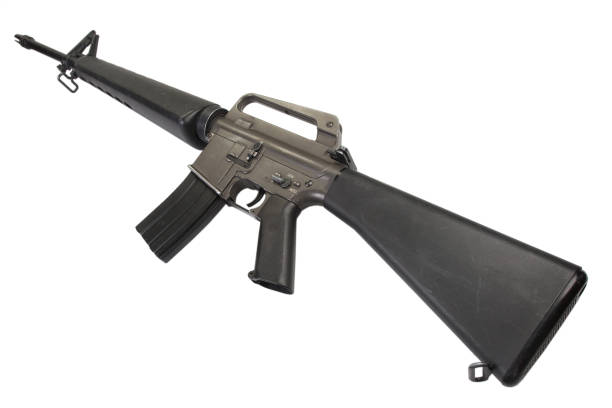
M16 RifleFor sale
US Marine Corps: the standard Marine rifle by 1968; the M16's jamming problems had first come to light in the Khe Sanh Hill Fights of… Continued…
-
M14 Rifle
US Marine Corps: largely replaced by the M16 during 1967, but still carried by some Marines at the base. Continued…
-
M60 Machine Gun
The Marines' general-purpose machine gun, sited in the bunkers of the base perimeter and the hill outposts. Continued…
-
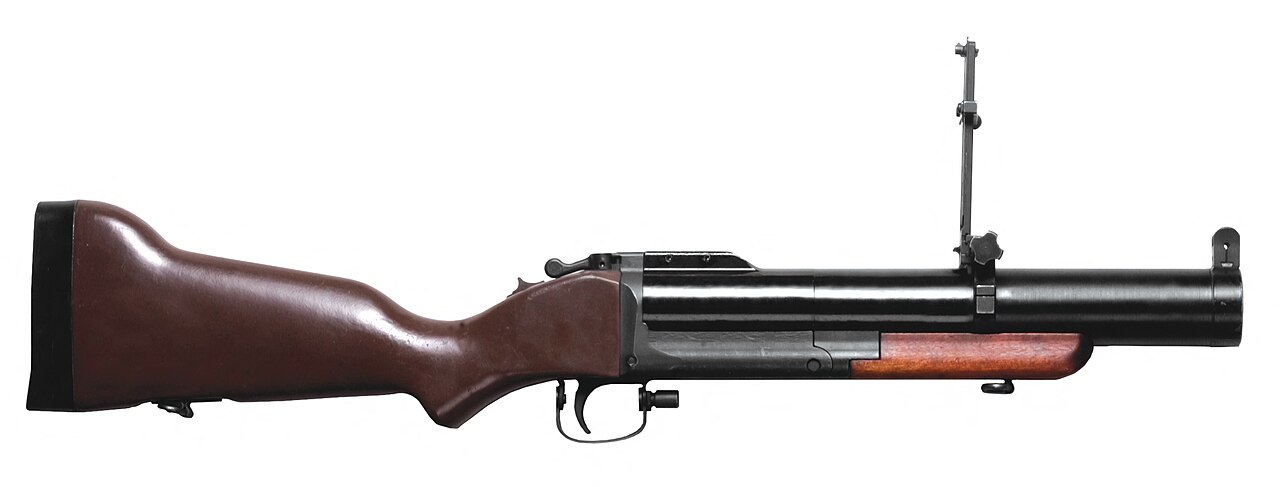
M79 Grenade Launcher
The Marine grenadier's weapon, used against probes of the perimeter wire and trench lines. Continued…
-
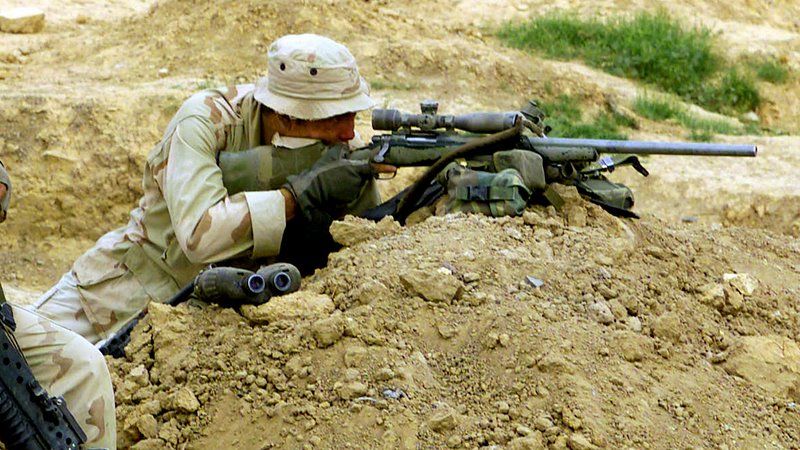
M40 Rifle
Marine scout-snipers at Khe Sanh used the new M40 and the Winchester Model 70 against North Vietnamese troops digging siege trenches. Continued…
-
AK-47
North Vietnamese Army infantry, mostly Chinese Type 56 and Soviet-bloc copies. Continued…
-
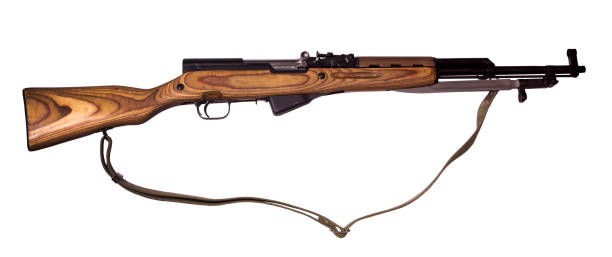
SKS
Carried by NVA infantry and support troops alongside the AK. Continued…
Sources
Prados, John, and Ray W. Stubbe. Valley of Decision: The Siege of Khe Sanh. Houghton Mifflin, 1991.
Shulimson, Jack, et al. U.S. Marines in Vietnam: The Defining Year, 1968. USMC History and Museums Division, 1997.
Pisor, Robert. The End of the Line: The Siege of Khe Sanh. W. W. Norton, 1982.
Rottman, Gordon L. Khe Sanh 1967-68: Marines Battle for Vietnam's Vital Hilltop Base. Osprey Publishing, 2005.
Suggest an edit · account required · reviewed before publishing · how it works