Force
US Marine Corps
America's expeditionary force-in-readiness, from the Barbary Coast to Belleau Wood, Iwo Jima, and beyond.
Origins
The Continental Congress created two battalions of Marines on 10 November 1775, a date the Corps still celebrates as its birthday. Marines were shipboard soldiers: they fought from the rigging in sea battles, led boarding and landing parties, and kept order among sailors. The Corps has reinvented itself more often, and more successfully, than any other American service, from ships' guards to colonial infantry to the world's leading amphibious force. "First to fight" has been recruiting fact as often as slogan.
Organization & Training
The Marine Corps sits within the Department of the Navy but is a separate service. Recruits go through boot camp at Parris Island, South Carolina, or San Diego, California, and officers train at Quantico, Virginia. Marine culture is its real weapon system. Every Marine, whatever his or her job, is trained first as a rifleman, and the Rifleman's Creed, written in the Second World War, begins "This is my rifle." In the 1920s and 1930s, planners led by Major Earl Ellis foresaw a Pacific war against Japan. The Corps formed the Fleet Marine Force in 1933 and wrote its Tentative Manual for Landing Operations in 1934, the doctrine that took Marines across the Pacific. Today the Corps fights as Marine Air-Ground Task Forces that combine infantry, armor, artillery, aircraft and supply under one commander.
Weapons & Equipment
The Corps' equipment story runs through this wiki. In the "Banana Wars" of the early twentieth century Marines carried the M1903 Springfield and the Thompson Submachine Gun. The island war was fought with the M1 Garand, the M1918 BAR, the M1911 Pistol, the KA-BAR Knife and the Marine Raider Stiletto, with grenades such as the Mk 2 Fragmentation Grenade and the M2 Flamethrower for Japanese bunkers. Vietnam brought the M16 Rifle and the M40 Rifle for scout-snipers. The Barrett M82 was used in the Gulf War, and a version of the HK416 was adopted as the M27 Infantry Automatic Rifle.
Notable Actions
Marines landed at Derna in 1805 against the Barbary states and stormed Chapultepec in 1847, "the shores of Tripoli" and "the halls of Montezuma" in the Marines' Hymn. At Belleau Wood in June 1918 they stopped a German advance and cleared the wood in weeks of fighting. The nickname "Teufelshunde", devil dogs, supposedly given by the Germans, is probably legend, but the Corps proudly keeps it. The Pacific war made the modern Corps: Guadalcanal, Tarawa, Peleliu, the Battle of Iwo Jima and Okinawa. On Iwo Jima some 6,800 Americans were killed, most of them Marines, and Joe Rosenthal's photograph of the flag-raising on Mount Suribachi became the American war photograph. In Korea the 1st Marine Division fought its way out of the Chosin Reservoir in 1950. In Vietnam Marines held the Battle of Khe Sanh and retook Hue in 1968, and in Iraq they fought the battles of Fallujah in 2004.
Legacy
The Marine Corps is the smallest of the Department of Defense's fighting services and probably the proudest of its history. Its institutional memory hoards that history, from the Marines' Hymn to the Iwo Jima memorial in Arlington, Virginia. Its amphibious doctrine was copied by allies, and its claim that every Marine is a rifleman remains the core of its identity.
Battles & Operations
-
Battle of Midway (4-7 June 1942)
The Battle of Midway, fought from 4 to 7 June 1942 around Midway Atoll in the central Pacific, was the turning point of the naval war… Continued…
-
Battle of Iwo Jima (19 February - 26 March 1945)
The Battle of Iwo Jima, fought from 19 February to 26 March 1945 on a small volcanic island south of Japan, was one of the hardest battles… Continued…
-
Battle of Okinawa (1 April - 22 June 1945)
The Battle of Okinawa, fought from 1 April to 22 June 1945, was the last major battle of the Pacific War and one of its largest. The US… Continued…
-
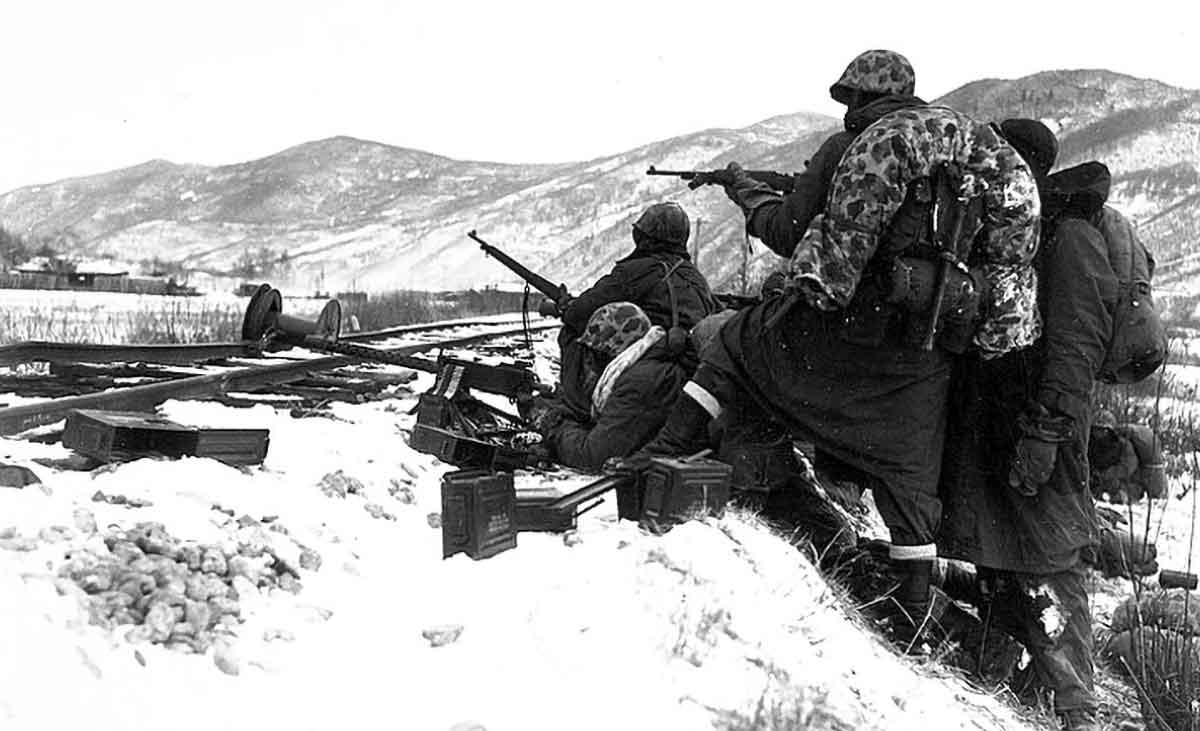
Battle of Chosin Reservoir (27 November - 13 December 1950)
The Battle of Chosin Reservoir was fought in the mountains of northeast Korea from late November to mid-December 1950. Chinese armies… Continued…
-
Battle of Huế (31 January - 2 March 1968)
The Battle of Huế, fought from 31 January to 2 March 1968, was the longest and bloodiest battle of the Tet Offensive. North Vietnamese and… Continued…
-
Battle of Khe Sanh (21 January - 9 July 1968)
The Battle of Khe Sanh was a 77-day North Vietnamese siege of a US Marine Corps combat base near the Laotian border and the Demilitarized… Continued…
Weapons
-
AK-47
The AK-47 is the most produced firearm in human history: Mikhail Kalashnikov's gas-operated assault rifle in 7.62x39mm, built around loose… Continued…
-
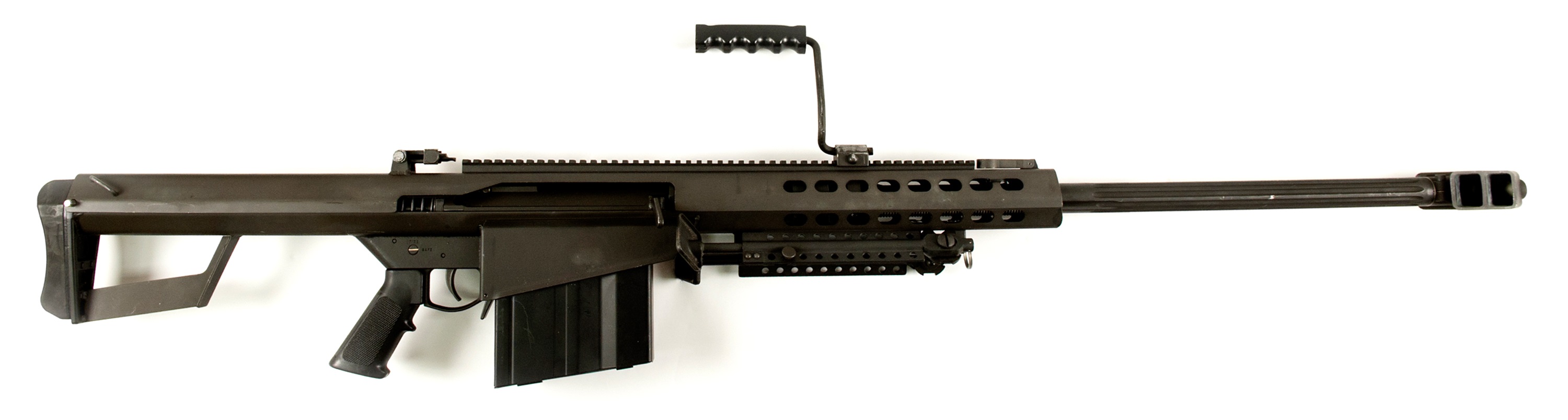
Barrett M82
The Barrett M82 is a semi-automatic rifle chambered for the .50 BMG machine-gun cartridge, designed by Ronnie Barrett in Tennessee in the… Continued…
-
Beretta M9
The Beretta M9 is the 9 mm semi-automatic pistol adopted by the United States armed forces in 1985 to replace the .45 caliber M1911A1. It… Continued…
-
FN MAG
The FN MAG is a Belgian general-purpose machine gun designed by Ernest Vervier at Fabrique Nationale and introduced in 1958. It fires… Continued…
-
Flak Jacket
The flak jacket is the fragmentation-protective vest of the mid-twentieth century: first the steel-plated flak suits of American bomber… Continued…
-
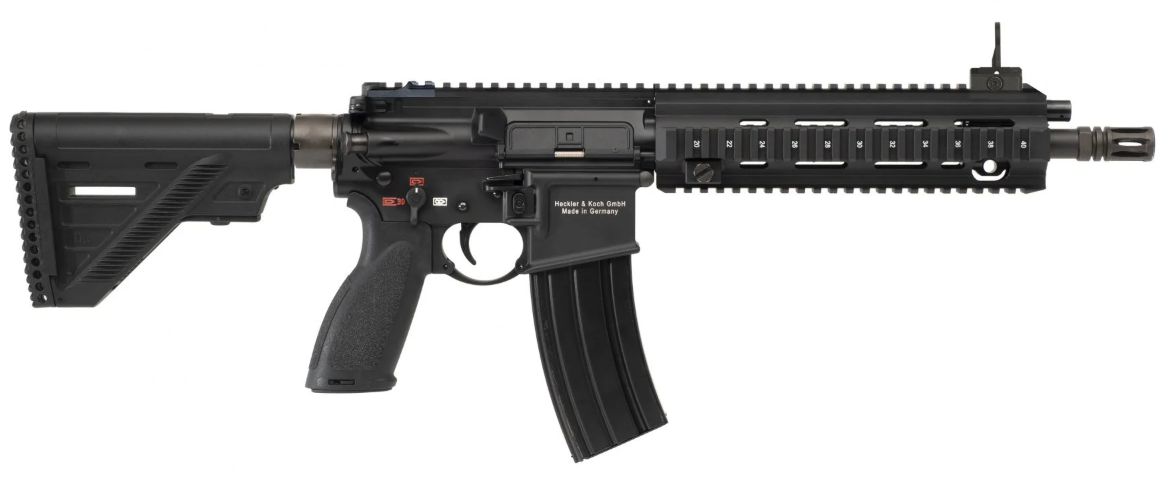
HK416
The Heckler & Koch HK416 is a 5.56mm assault rifle and carbine that keeps the ergonomics, magazines and accessories of the American M4 but… Continued…
-
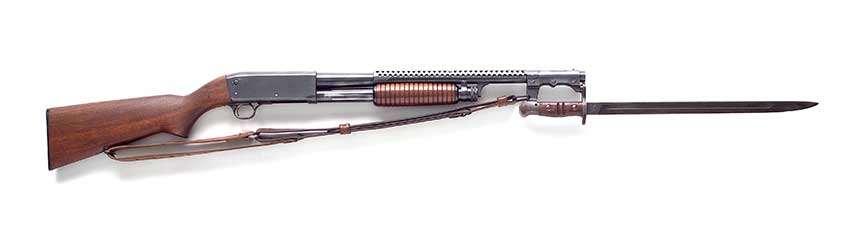
Ithaca 37
The Ithaca 37 is an American pump-action shotgun made by the Ithaca Gun Company of Ithaca, New York, from 1937. Based on a John Browning… Continued…
-
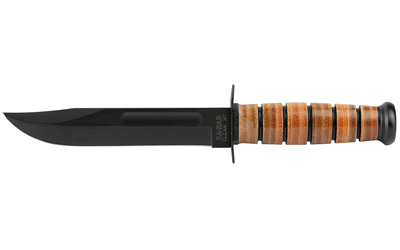
KA-BAR Knife
The KA-BAR is the fighting and utility knife of the United States Marine Corps: a seven-inch clip-point blade of carbon steel with a blood… Continued…
-
Kai Gunto
The kai gunto, 'navy military sword', was the sword of officers of the Imperial Japanese Navy from the late 1930s through the Second World… Continued…
-
M1 Carbine
The M1 Carbine was the most-produced American small arm of the Second World War: a five-pound, semi-automatic .30-caliber carbine designed… Continued…
-
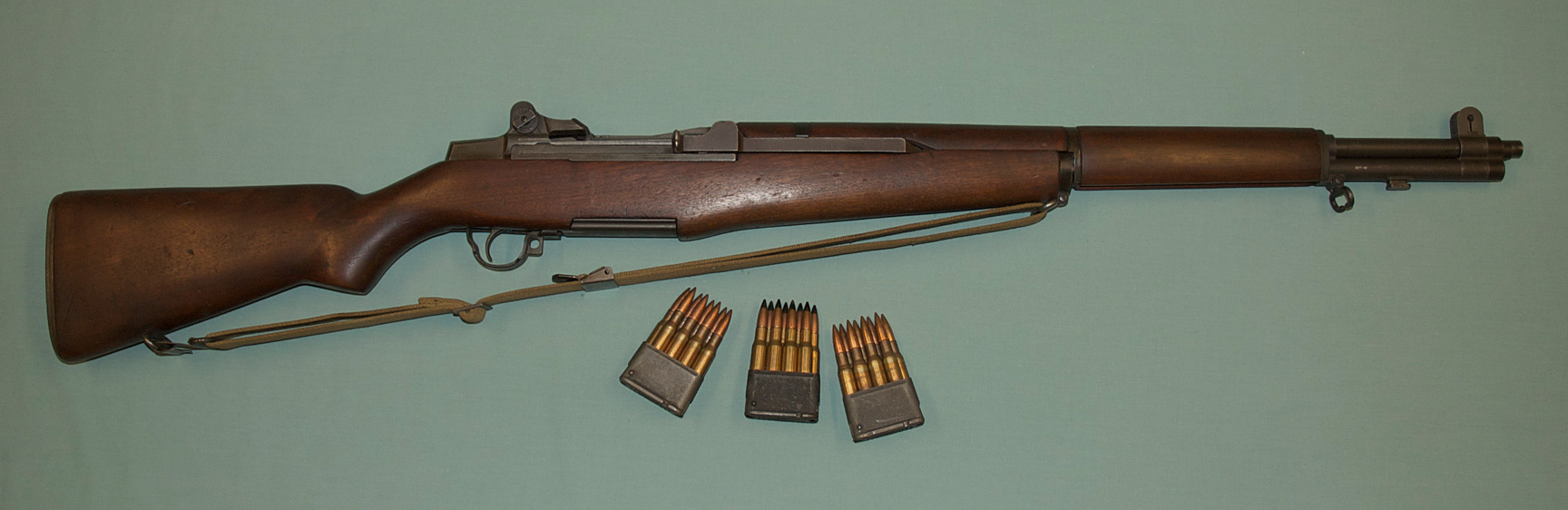
M1 Garand
The M1 Garand was the first semi-automatic rifle adopted as the standard arm of any major power, giving the American infantryman of the… Continued…
-
M1 Helmet
The M1 helmet was the steel combat helmet of the United States armed forces from 1941 until the mid 1980s, worn through the Second World… Continued…
-
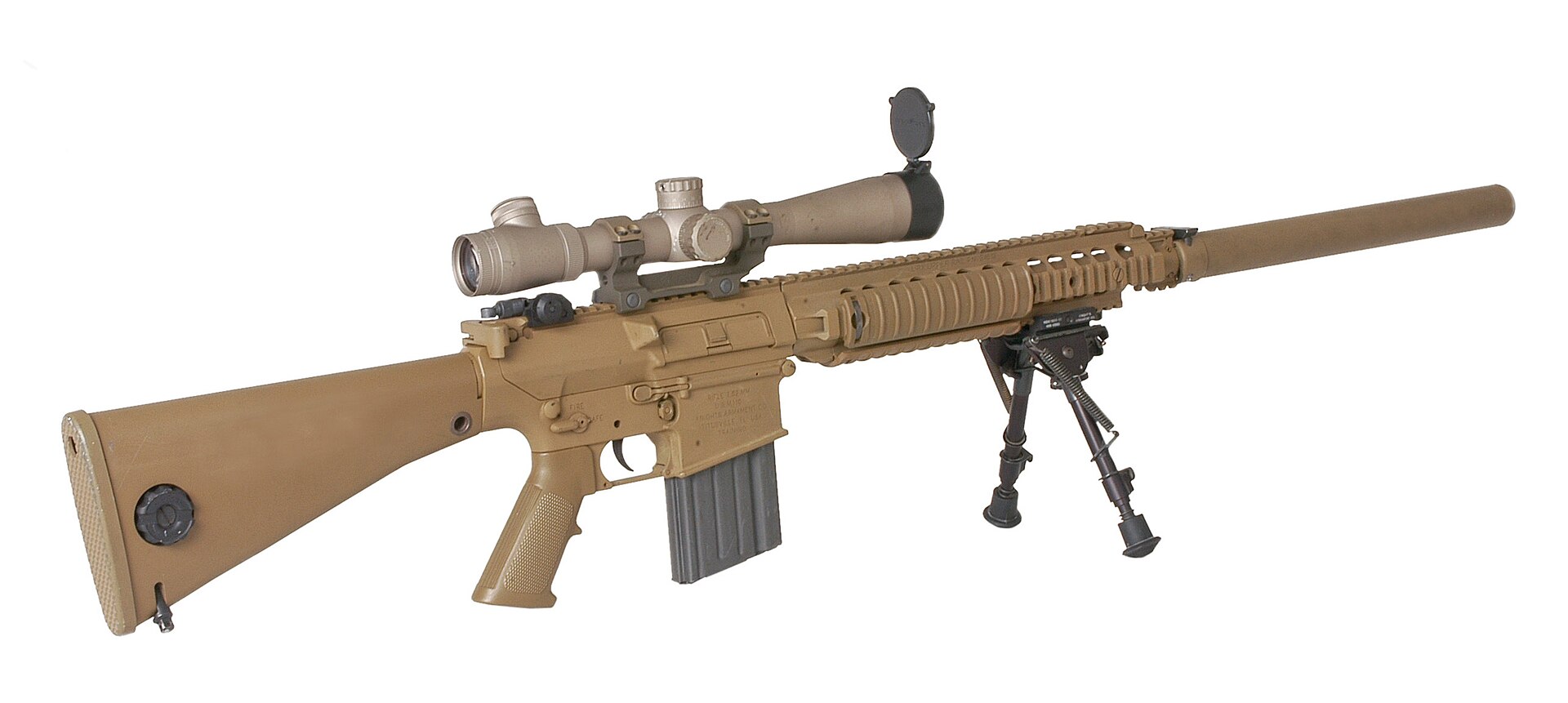
M110 Semi-Automatic Sniper System
The M110 Semi-Automatic Sniper System is the United States Army's self-loading 7.62mm sniper rifle, adopted in 2008 to give sniper teams… Continued…
-
M14 Rifle
The M14 was the United States' last wooden-stocked battle rifle: a select-fire development of the M1 Garand chambered for the new 7.62mm… Continued…
-
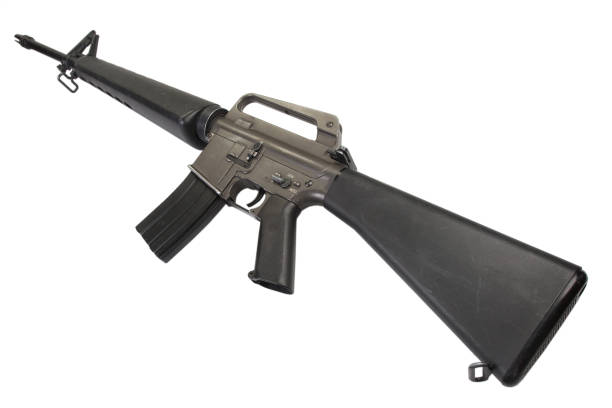
M16 Rifle
The M16 brought the assault rifle to the West: Eugene Stoner's AR-15 design in 5.56mm, built of aluminum forgings and polymer around a… Continued…
-
M18 Claymore Mine
The M18A1 Claymore is an American directional anti-personnel mine. Its curved plastic case holds a layer of C-4 explosive behind about 700… Continued…
-
M1903 Springfield
The M1903 Springfield was the United States' service rifle from 1903 until the M1 Garand replaced it in the late 1930s, and a sniper's and… Continued…
-
M1911 Pistol
The M1911 is John Browning's masterpiece: a short-recoil, single-action semi-automatic in .45 ACP that served as the standard American… Continued…
-
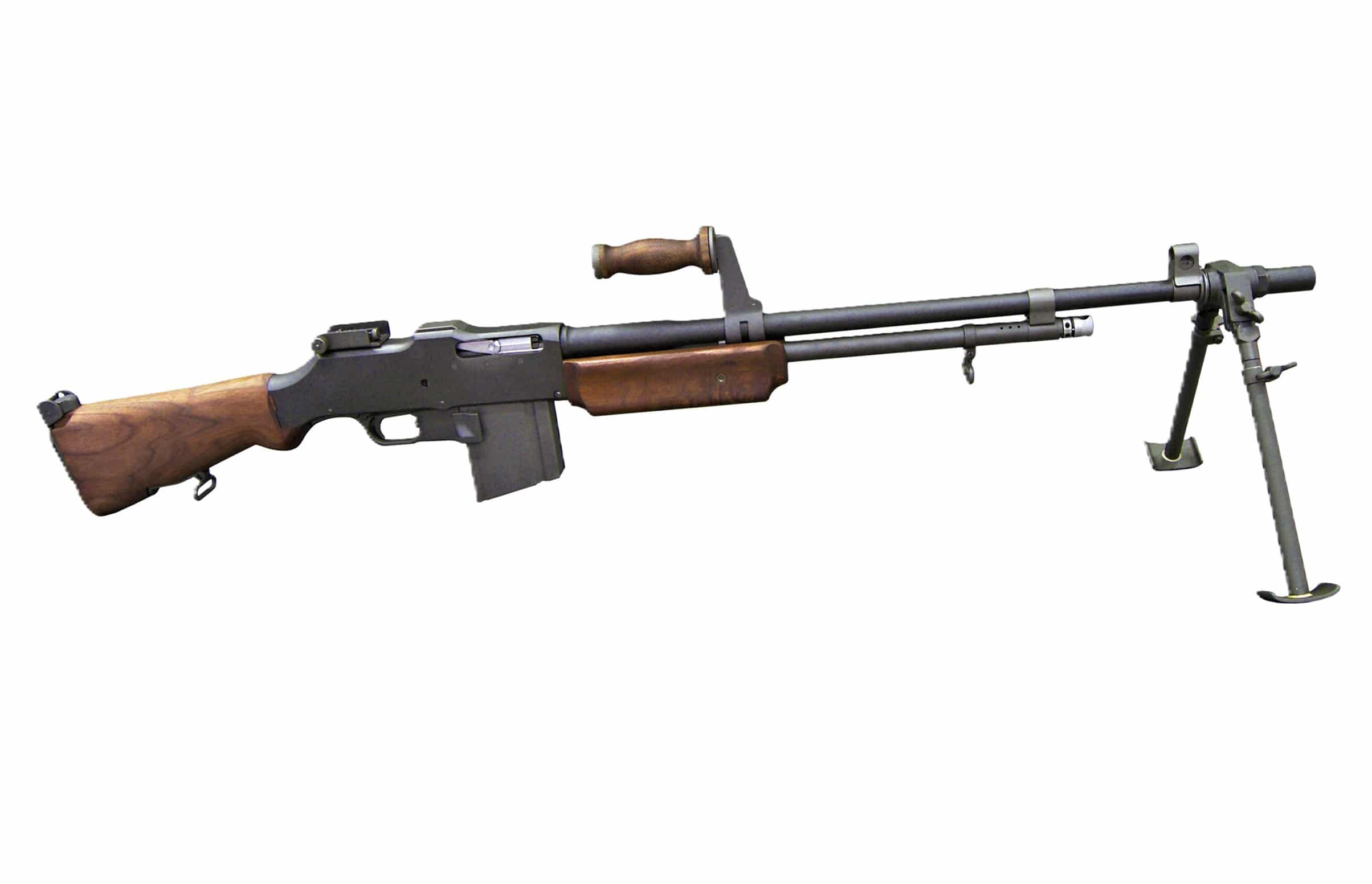
M1918 BAR
The Browning Automatic Rifle was John Moses Browning's shoulder-fired automatic weapon, adopted by the United States Army in 1918 and the… Continued…
-
M1919 Browning Machine Gun
The M1919 Browning is John Browning's water-cooled M1917 machine gun made air-cooled: a short-recoil, belt-fed .30-06 weapon that armed… Continued…
-
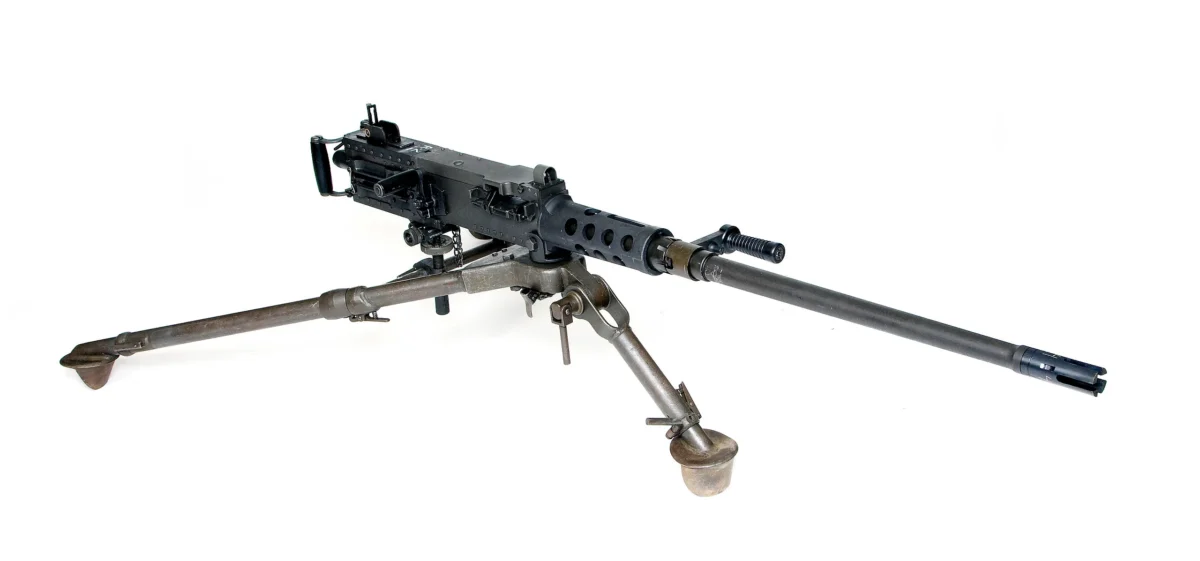
M2 Browning Machine Gun
The M2 is the American heavy machine gun of .50 caliber, designed by John Browning at the end of the First World War and adopted in its… Continued…
-
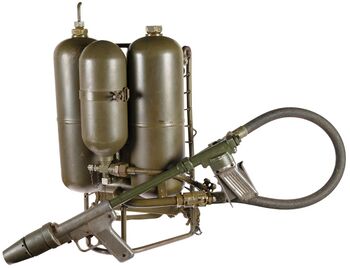
M2 Flamethrower
The M2 was the American portable flamethrower of the late Second World War and the Korean War. It was a backpack with two fuel tanks and a… Continued…
-
M203 Grenade Launcher
The M203 is a single-shot 40 mm grenade launcher that clips under the barrel of an M16 rifle or M4 carbine. Developed by the AAI… Continued…
-
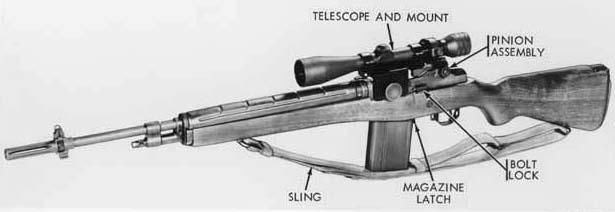
M21 Sniper Weapon System
The M21 Sniper Weapon System was the United States Army's sniper rifle from 1969 to 1988: a National Match M14 selected for accuracy… Continued…
-
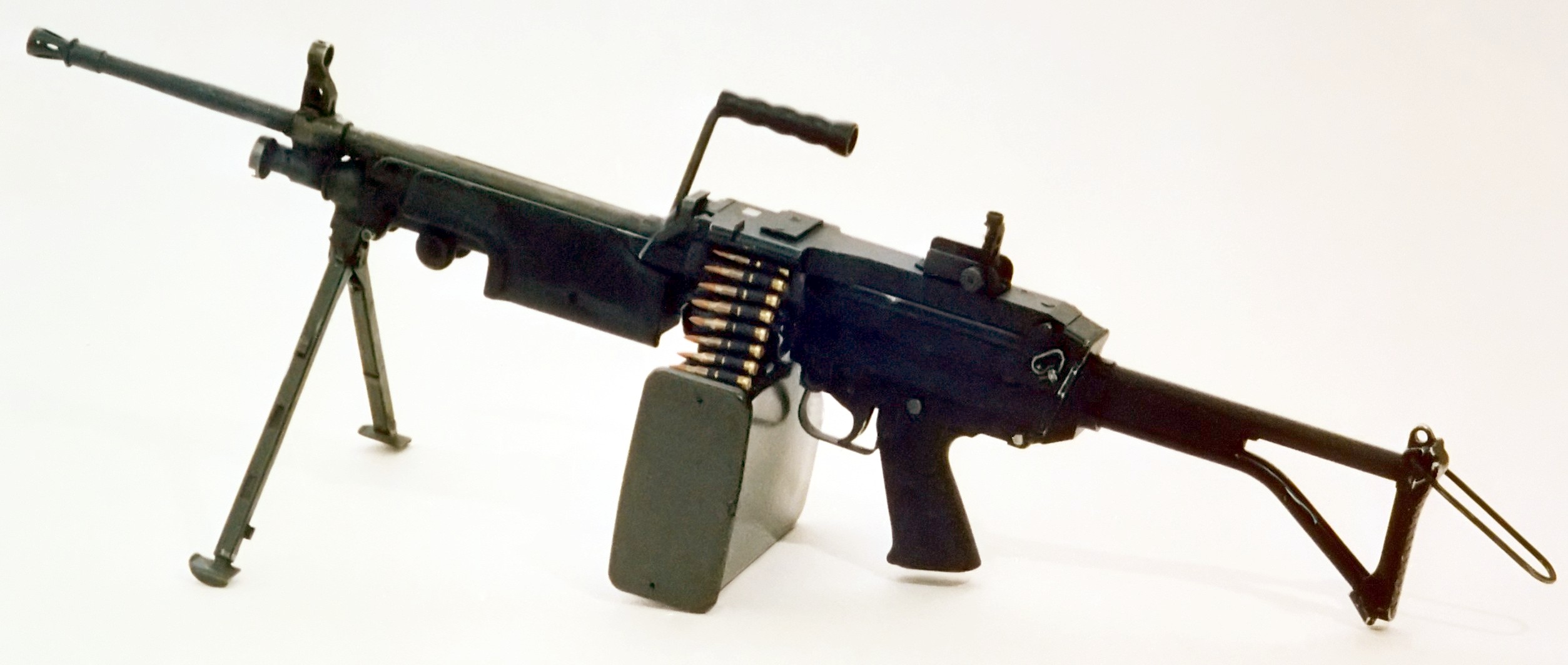
M249 Squad Automatic Weapon
The M249 Squad Automatic Weapon is the American version of the Belgian FN Minimi: a gas-operated, belt-fed 5.56mm light machine gun light… Continued…
-
M26 Grenade
The M26 was the standard American fragmentation hand grenade of the Vietnam War. Adopted in the early 1950s to replace the cast-iron Mk 2… Continued…
-
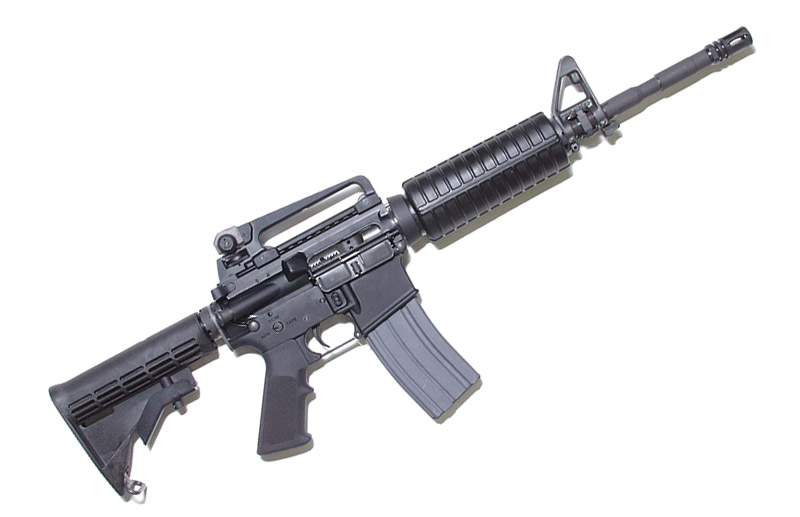
M4 Carbine
The M4 carbine is a shortened, lighter version of the M16 rifle, made by Colt and adopted by the US Army in 1994. It has a 14.5-inch… Continued…
-
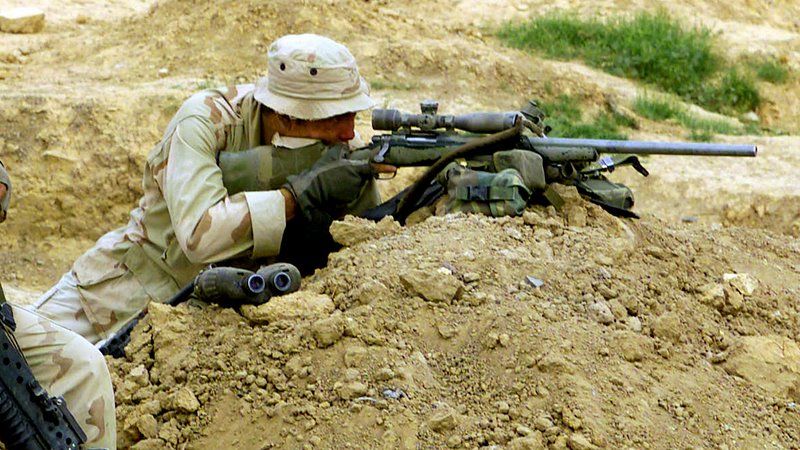
M40 Rifle
The M40 is the bolt-action sniper rifle of the US Marine Corps, adopted in 1966 and in service in successive versions until the 2010s. The… Continued…
-
M60 Machine Gun
The M60 was the United States' first general-purpose machine gun: a belt-fed 7.62mm weapon light enough for one soldier to carry on the… Continued…
-
M67 Grenade
The M67 is the standard fragmentation hand grenade of the United States armed forces. Adopted in the late 1960s, it is a smooth steel… Continued…
-
M72 LAW
The M72 LAW is an American 66 mm anti-tank rocket in a disposable, telescoping launch tube. Adopted by the US Army and Marine Corps in… Continued…
-
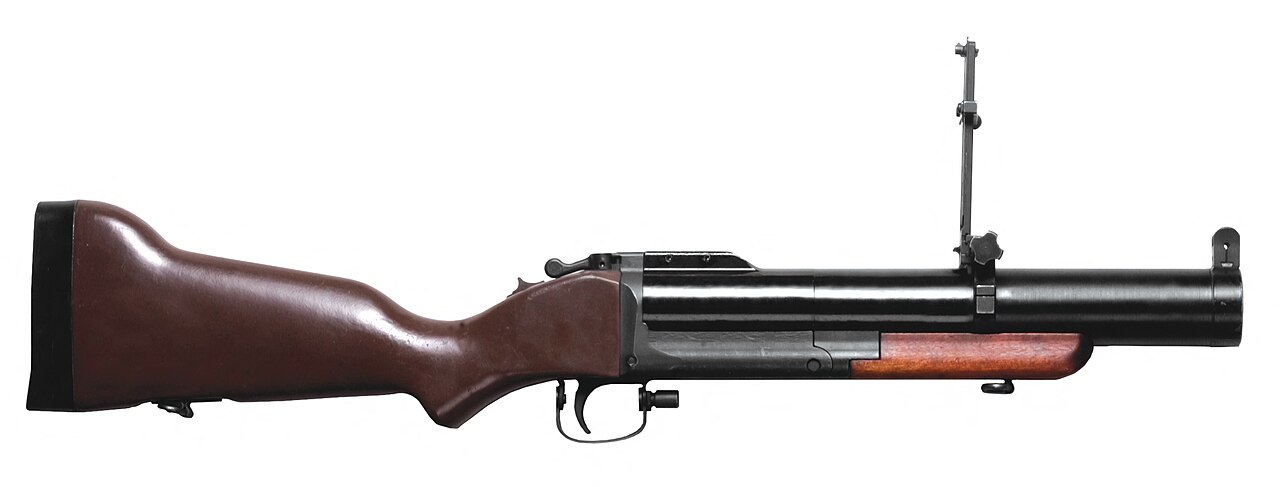
M79 Grenade Launcher
The M79 is a single-shot, break-open, shoulder-fired grenade launcher that fires a 40x46mm low-velocity grenade to about 400 meters… Continued…
-
Marine Raider Stiletto
The Marine Raider stiletto is the U.S. Marine Corps' copy of the British Fairbairn-Sykes fighting knife: a slim double-edged dagger… Continued…
-
Mark 13 Torpedo
The Mark 13 was the standard aerial torpedo of the United States Navy in the Second World War, carried by the TBD Devastator and TBF… Continued…
-
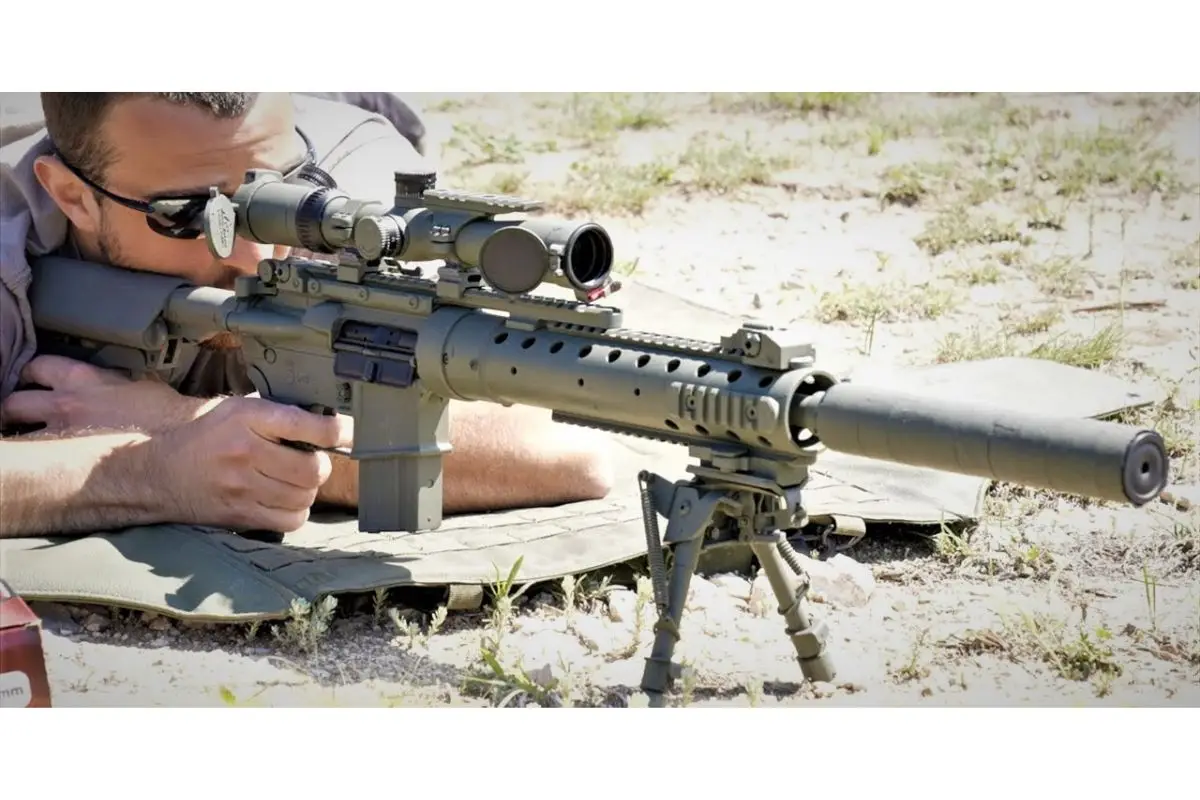
Mk 12 Special Purpose Rifle
The Mk 12 Special Purpose Rifle (SPR) was a precision rifle built on the M16/AR-15 pattern for US special operations forces. Developed in… Continued…
-
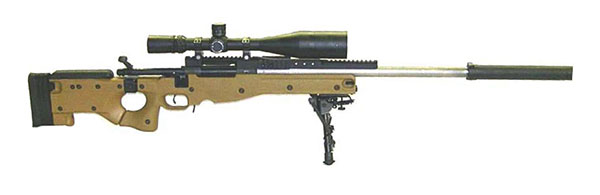
Mk 13 Rifle
The Mk 13 is an American bolt-action sniper rifle chambered for .300 Winchester Magnum, built by the Naval Surface Warfare Center at Crane… Continued…
-
Mk 2 Fragmentation Grenade
The Mk 2 was the standard American fragmentation hand grenade from the end of the First World War into the Vietnam War. Its cast-iron body… Continued…
-
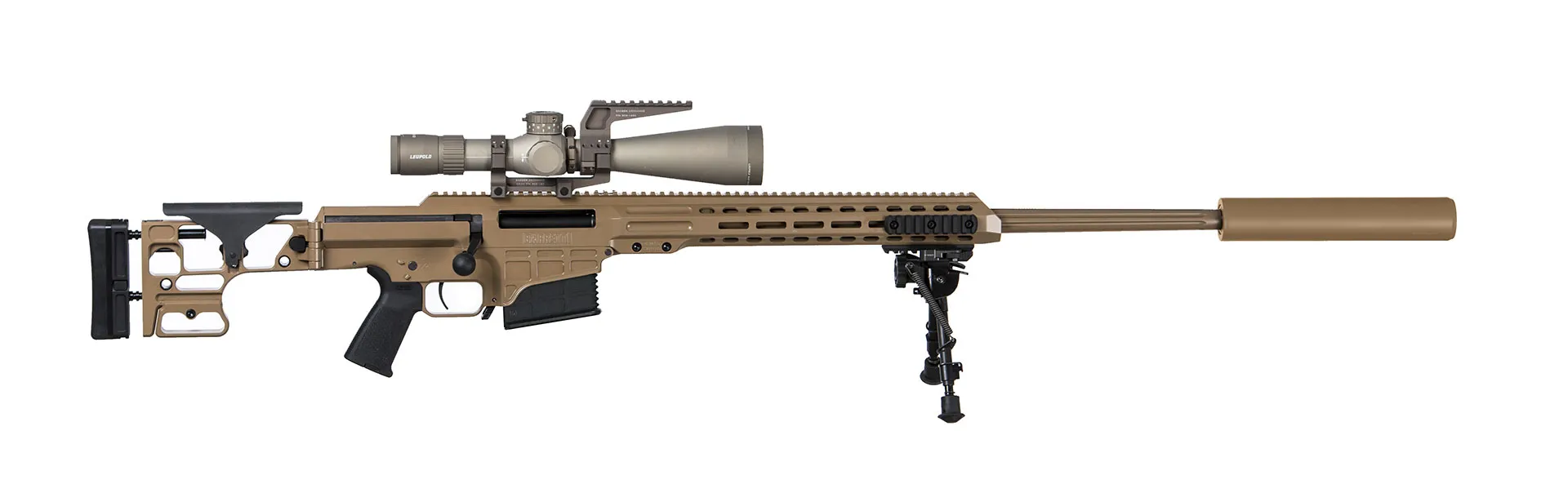
Mk 22 Advanced Sniper Rifle
The Mk22 Advanced Sniper Rifle is a multi-caliber bolt-action sniper rifle based on the Barrett MRAD, chosen by US Special Operations… Continued…
-
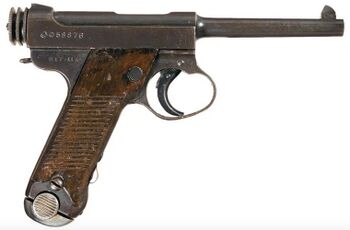
Nambu Type 14
The Nambu Type 14 was the standard service pistol of Japan in the Second World War. Designed by Kijirō Nambu's team and adopted in 1925… Continued…
-
PASGT Helmet
The PASGT helmet was the standard combat helmet of the United States armed forces from the early 1980s until the mid-2000s. Its name stands… Continued…
-
PPSh-41
The PPSh-41 was the Soviet Union's war-winning submachine gun: a stamped-steel design by Georgy Shpagin firing the 7.62x25 Tokarev… Continued…
-
Plate Carrier
A plate carrier is a piece of body armor equipment: a load-bearing vest built to hold hard ballistic plates over the chest and back, the… Continued…
-
RPD Machine Gun
The RPD was the Soviet Union's first light machine gun for the 7.62x39 mm intermediate cartridge. Designed by Vasily Degtyaryov in 1944 and… Continued…
-
RPG-2
The RPG-2 was the first Soviet shoulder-fired anti-tank grenade launcher to be issued in large numbers. Adopted in 1949, it was a plain 40… Continued…
-
Remington 870
The Remington 870 is a pump-action shotgun made by Remington Arms since 1950. With a steel receiver machined from a solid block and twin… Continued…
-
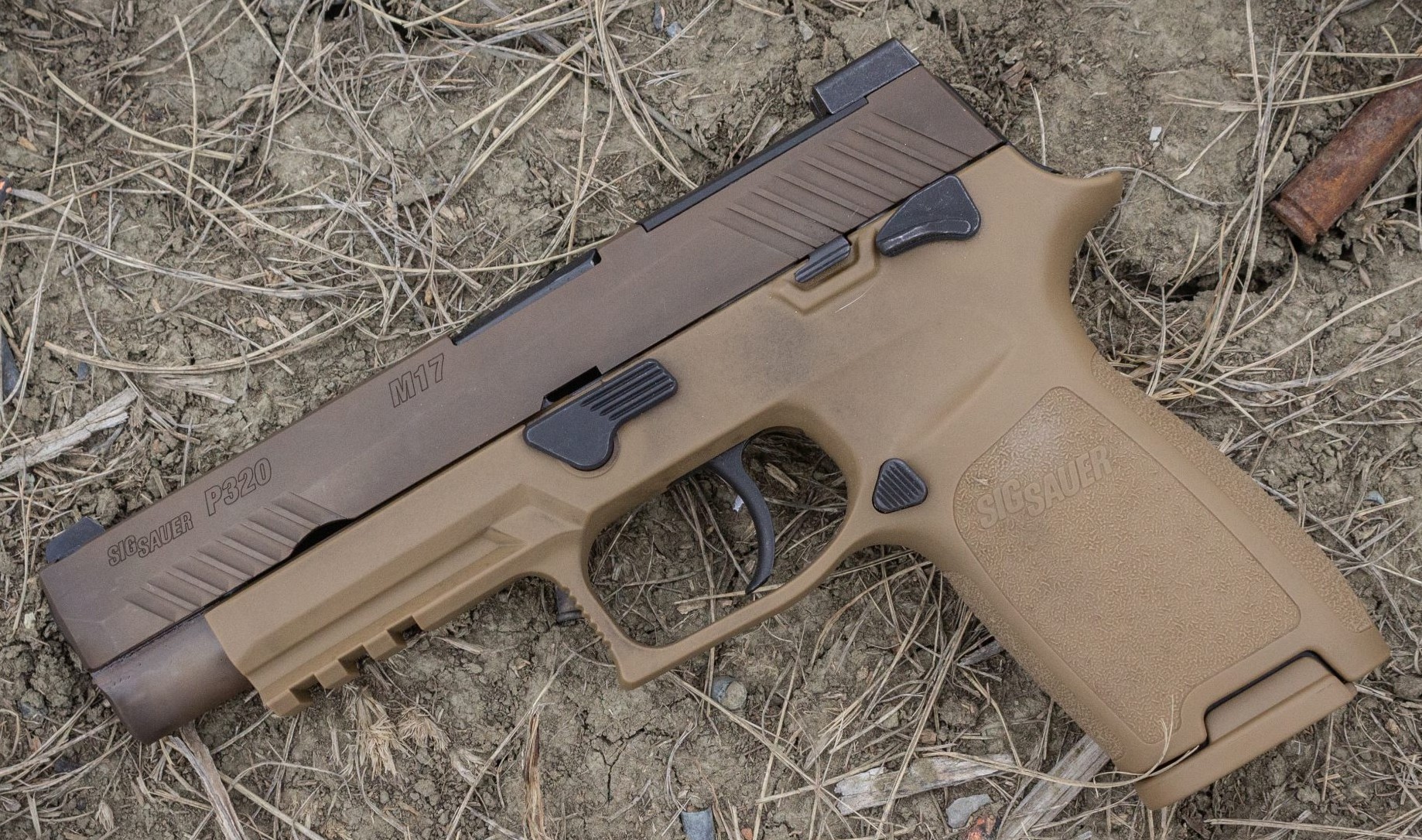
SIG Sauer M17
The M17 and its compact sibling the M18 are the service pistols of the United States armed forces, variants of the SIG Sauer P320 selected… Continued…
-
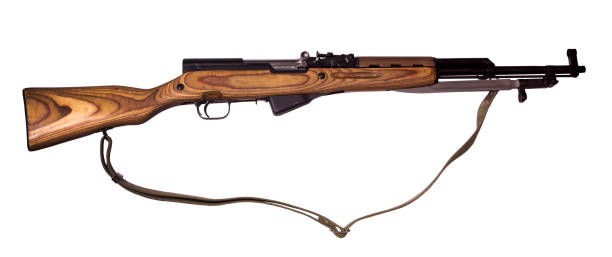
SKS
The SKS is Sergei Simonov's semi-automatic carbine for the Soviet 7.62x39mm intermediate cartridge, adopted in 1949 and made obsolete in… Continued…
-
Satchel Charge
A satchel charge is a bag of explosive blocks, with a carrying strap and a fuse, that a soldier throws or places against a bunker, pillbox… Continued…
-
Thompson Submachine Gun
The Thompson was America's first submachine gun: a .45 ACP automatic designed as a trench broom for a war that ended before it shipped.… Continued…
-
Type 89 Grenade Discharger
The Type 89 grenade discharger was a light 50mm mortar used by the Imperial Japanese Army from 1929 through the Second World War. It could… Continued…
-
Type 91 Torpedo
The Type 91 was the aerial torpedo of the Imperial Japanese Navy in the Second World War. Adopted in 1931, it was smaller and faster than… Continued…
-
Type 92 Heavy Machine Gun
The Type 92 was the standard heavy machine gun of the Imperial Japanese Army from the early 1930s to 1945. An air-cooled, gas-operated gun… Continued…
-
Type 96 Light Machine Gun
The Type 96 was the standard light machine gun of the Imperial Japanese Army in the early years of the Second World War. Designed by Kijirō… Continued…
-
Type 99 Rifle
The Type 99 was the last bolt-action rifle of the Imperial Japanese Army: a 7.7mm development of the 6.5mm Type 38 Arisaka adopted in 1939… Continued…
-
Winchester Model 1897
The Winchester Model 1897 is a pump-action shotgun designed by John Moses Browning and made by Winchester from 1897 to 1957. An improved… Continued…