Battle of Chosin Reservoir
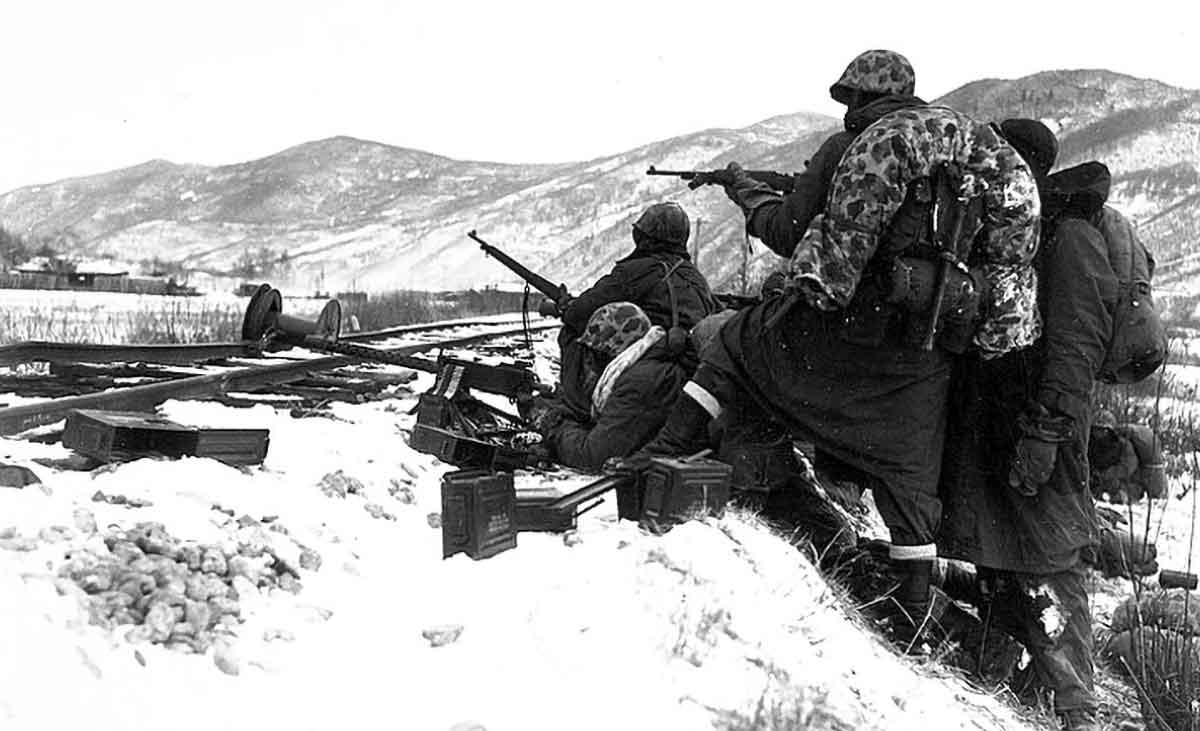
The Battle of Chosin Reservoir was fought in the mountains of northeast Korea from late November to mid-December 1950. Chinese armies, entering the war in force, surrounded the US 1st Marine Division and US Army units around the frozen reservoir in temperatures far below freezing. The Marines and soldiers fought their way some 70 miles to the coast at Hungnam, bringing out their wounded and most of their equipment. Both sides suffered terribly from combat and cold, and the Chinese attackers lost heavily.
Also known as Chosin Reservoir Campaign, Changjin Lake, Battle of Changjin Lake, Chosin, Frozen Chosin, Yudam-ni, Hagaru-ri, Koto-ri, Toktong Pass, Task Force Faith, Chosin Few
Background
After the Inchon landing in September 1950, United Nations forces drove the North Korean army back across the 38th parallel and pushed north toward the Yalu River and the border with China. In the northeast, the US X Corps under Major General Edward Almond advanced into the mountains. Its 1st Marine Division, commanded by Major General Oliver P. Smith, moved up a single narrow road from the port of Hungnam to the Chosin (Changjin) Reservoir. Smith distrusted the pace of the advance and the scattered positions it created, and he built up supply dumps and an airstrip at Hagaru-ri at the southern end of the reservoir. Unknown to the UN command, China's 9th Army Group under Song Shilun had moved into the hills with around 120,000 men, though estimates vary. The Chinese had already struck once in late October and then withdrawn. Winter arrived early, and by late November temperatures fell to about minus 30 °C at night.
The Battle
On the night of 27 November the Chinese attacked everywhere at once. The 5th and 7th Marines at Yudam-ni, west of the reservoir, were hit by several divisions but held their ridges. On the east shore, a US Army regimental combat team of the 7th Infantry Division, later called Task Force Faith, was surrounded. After four days of attacks it tried to break out on 1 December and was destroyed; its commander, Lieutenant Colonel Don Faith, was killed, and only about a third of its men reached safety, many across the ice. At Toktong Pass, Fox Company of the 7th Marines under Captain William Barber held the road for five days and nights. A relief column including British Royal Marines of 41 Commando, Task Force Drysdale, fought through to Hagaru-ri on 29 November at heavy cost. The Marines at Yudam-ni broke out on 1 December and reached Hagaru-ri on 4 December. While they fought, Air Force and Marine transports used the rough Hagaru-ri airstrip to fly out more than 4,000 wounded and frostbitten men. On 6 December the whole force began to move south, through Koto-ri to the Funchilin Pass, where the Chinese had blown a bridge over a sheer drop. Air Force C-119 transports dropped steel bridge sections, the engineers rebuilt the span, and the column crossed on 9 December. By 11 December the last units reached the Hungnam perimeter, and the division embarked over the following days.
Weapons
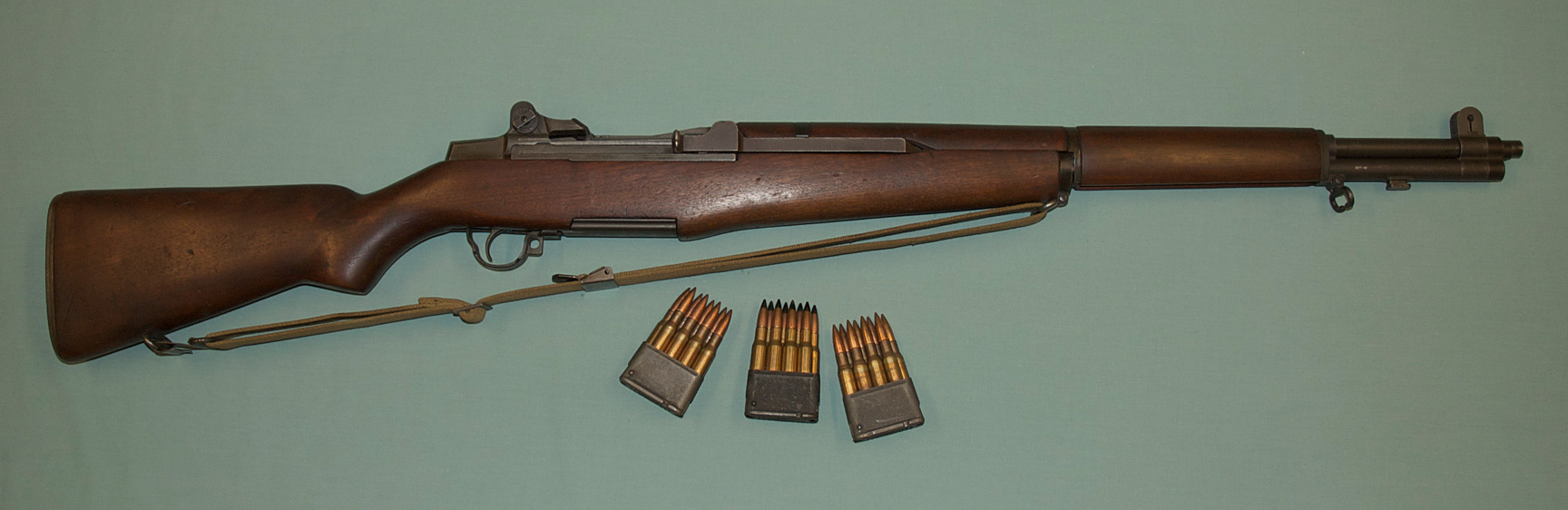
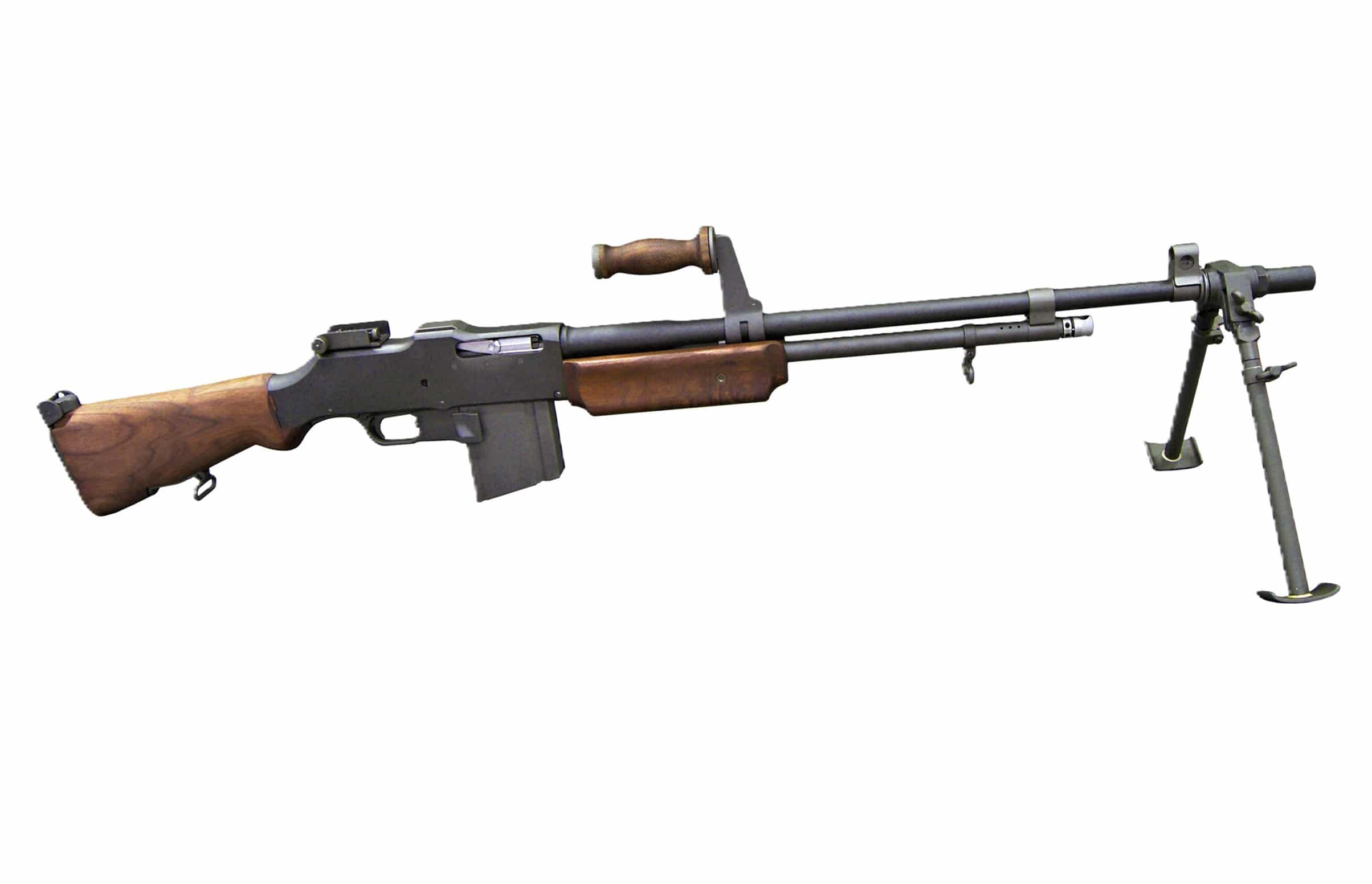
The Marines were armed mainly with World War II weapons. The M1 Garand generally kept working once men wiped away the oil that thickened in the cold. The M1 Carbine was much less trusted, since its light springs and action often failed to cycle, and many men felt its bullet failed to stop Chinese soldiers in thick quilted uniforms. Each fire team had an M1918 BAR, and the M1919 Browning Machine Gun and the heavy M2 Browning Machine Gun held the perimeters at night. Both sides threw grenades by the thousand, including the American Mk 2 Fragmentation Grenade, and grenades and mortar rounds sometimes failed in the cold. The Chinese had little artillery or radio equipment and fought with a mix of Japanese, Nationalist and captured American weapons, among them the Thompson Submachine Gun, alongside Soviet-pattern arms such as the PPSh-41. Marine Corsairs and other aircraft gave close support whenever the weather allowed.
Aftermath
The 1st Marine Division suffered roughly 4,400 battle casualties and more than 7,000 non-battle casualties, mostly frostbite; total UN losses are usually put at about 17,000. Chinese losses were far higher, perhaps 40,000 to 60,000 killed, wounded and frozen, though figures remain disputed. The 9th Army Group was out of action for months. X Corps and some 98,000 Korean civilians were evacuated from Hungnam by 24 December. The survivors became known as the Chosin Few, and the battle remains central to the history of the Korean War.
Weapons used
-
M1 Garand
The Marines' standard rifle kept working in the extreme cold once men cleaned off the oil that congealed in its action. Continued…
-
M1 Carbine
Widely carried by officers, NCOs and support troops, the carbine often failed in the cold and many men thought it lacked stopping power. Continued…
-
M1918 BAR
Each Marine fire team was built around a Browning Automatic Rifle, which gave the rifle squads their automatic firepower. Continued…
-
M1919 Browning Machine Gun
Air-cooled .30-caliber Brownings anchored the night perimeters at Yudam-ni, Hagaru-ri and Toktong Pass. Continued…
-
Mk 2 Fragmentation Grenade
Grenades were used in huge numbers on both sides in the close night fighting on the ridges. Continued…
-
Thompson Submachine Gun
Many Chinese soldiers carried Thompsons captured from Nationalist forces in the Chinese Civil War. Continued…
-
PPSh-41
Soviet-pattern submachine guns armed some Chinese units, whose tactics relied on short-range firepower at night. Continued…
Sources
Appleman, Roy E. Escaping the Trap: The US Army X Corps in Northeast Korea, 1950. Texas A&M University Press, 1990.
Montross, Lynn, and Nicholas A. Canzona. U.S. Marine Operations in Korea, 1950-1953, Volume III: The Chosin Reservoir Campaign. Historical Branch, G-3, Headquarters U.S. Marine Corps, 1957.
Russ, Martin. Breakout: The Chosin Reservoir Campaign, Korea 1950. Fromm International, 1999.
Hammel, Eric. Chosin: Heroic Ordeal of the Korean War. Vanguard Press, 1981.
Suggest an edit · account required · reviewed before publishing · how it works