Historical Context
Korean War
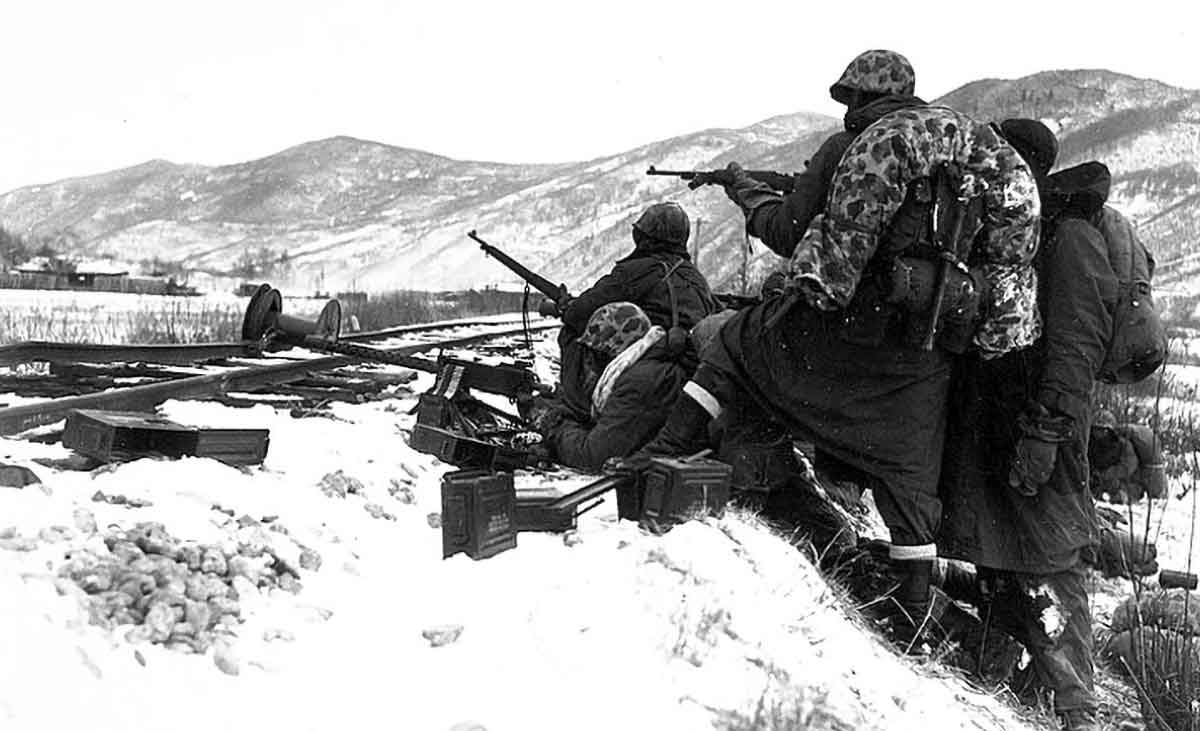
The first major proxy conflict of the Cold War, fought on the Korean Peninsula. Both sides fielded World War II-era small arms including the M1 Garand, Mosin-Nagant, and Soviet PPSh-41 alongside early jet aircraft, establishing a pattern of superpower-backed regional warfare.
1950 – 1953
Overview
The Korean War was fought between UN forces (primarily American, South Korean, and allied nations) and Communist forces (North Korean and Chinese People's Volunteer Army, with Soviet support). It began with a North Korean invasion across the 38th Parallel on 25 June 1950 and ended in armistice on 27 July 1953 — with the border essentially restored to its pre-war position. It was a conflict of enormous intensity fought primarily with WWII-era weapons, but with the first jet-vs-jet air combat and early use of helicopters for medical evacuation.
Small Arms
Both sides used weapons that were essentially unchanged from WWII:
UN Forces
- M1 Garand — The standard American rifle; 8-round semi-automatic; reliable in Korea's extreme cold
- M1 Carbine — Lighter semi-automatic; issued to support troops; had reliability problems in extreme cold with its operating spring
- BAR (M1918A2) — The squad automatic weapon; .30-06; 20-round magazine
- M1919A6 Browning — Light version of the M1919 machine gun; bipod-mounted
- M2 .50 caliber — Heavy machine gun; vehicle-mounted and in fixed positions
- M3 "Grease Gun" — .45 ACP submachine gun; simple and reliable
- M20 "Super Bazooka" — 3.5-inch rocket launcher; developed after the 2.36-inch bazooka proved unable to penetrate the North Korean T-34 tank
Communist Forces
- Mosin-Nagant M91/30 — Standard North Korean and Chinese infantry rifle; bolt-action
- PPSh-41 — Soviet 7.62mm submachine gun; 71-round drum; widely issued to Chinese forces; entire Chinese units armed exclusively with PPSh-41s at close range
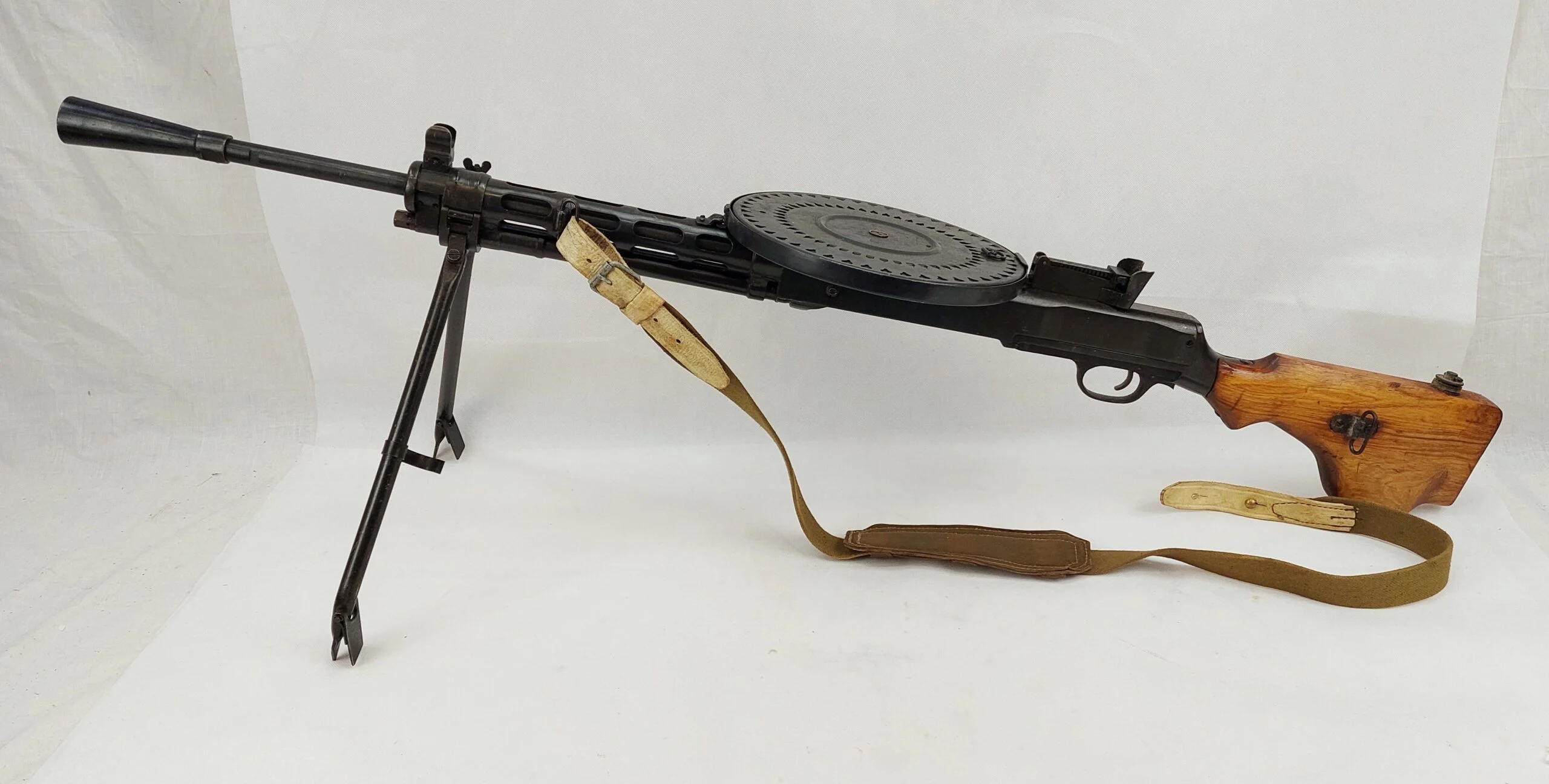
- DP-27 — Soviet light machine gun; pan magazine
- T-34/85 — Soviet tank supplied to North Korea; at the war's start, it was technically superior to anything US forces in Korea had; the M20 Super Bazooka was rushed into production to counter it
Artillery
Artillery was arguably the dominant weapon of the Korean War, particularly in the static trench warfare of 1951–1953:
- M101 105mm howitzer — Standard US light field piece
- M114 155mm howitzer — Medium artillery; critical in defensive fighting
- M1 8-inch howitzer — Heavy artillery for counter-battery and fortification reduction
- Soviet 122mm and 152mm howitzers — Chinese/North Korean heavy artillery
Aviation: First Jet Combat
Korea saw the first sustained combat between jet aircraft:
- F-86 Sabre (US) vs. MiG-15 (Soviet/Chinese/North Korean) — "MiG Alley" in northwest Korea; roughly equal performance; American pilot training proved superior; 10:1 kill ratio claimed by US (disputed)
- F-80 Shooting Star, F-84 Thunderjet — Ground attack; close air support
- B-29 Superfortress — Strategic bombing; vulnerable to MiG-15s; escorts became essential
Helicopters
The Korean War was the first conflict where helicopters were used systematically for medical evacuation (MEDEVAC). The Sikorsky H-13 Sioux (immortalized in MAS*H) and larger H-19 transported wounded from frontlines to MASH units, dramatically improving survival rates.
This article is a stub. Contributions covering specific battles, weapons, and operations are welcome.
Battles & Operations
Weapons
-
Bazooka
The bazooka was the American 2.36-inch shoulder-fired rocket launcher of the Second World War, built as the M1, M1A1 and M9. Introduced in… Continued…
-
Bofors 40 mm Gun
The Bofors 40 mm gun is a light anti-aircraft gun designed by the Swedish firm AB Bofors in the early 1930s. It fired a two-pound explosive… Continued…
-
Bren
The Bren was the light machine gun of the British and Commonwealth armies from 1938 until the 1990s: a Czech design from Brno… Continued…
-
Degtyaryov DP-27
The DP-27 was the standard light machine gun of the Soviet Army from the late 1920s through the Second World War. Designed by Vasily… Continued…
-
Flak Jacket
The flak jacket is the fragmentation-protective vest of the mid-twentieth century: first the steel-plated flak suits of American bomber… Continued…
-
Ithaca 37
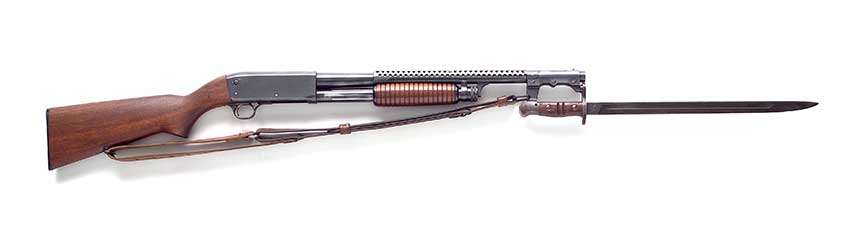
The Ithaca 37 is an American pump-action shotgun made by the Ithaca Gun Company of Ithaca, New York, from 1937. Based on a John Browning… Continued…
-
KA-BAR Knife
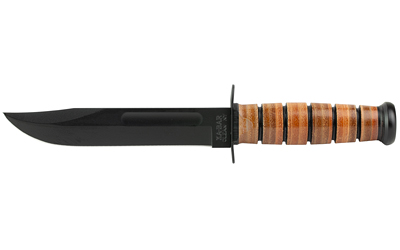
The KA-BAR is the fighting and utility knife of the United States Marine Corps: a seven-inch clip-point blade of carbon steel with a blood… Continued…
-
Katyusha Rocket Launcher
The Katyusha was a Soviet multiple rocket launcher of the Second World War. Its best-known form, the BM-13, carried rails for sixteen 132mm… Continued…
-
M1 Carbine
The M1 Carbine was the most-produced American small arm of the Second World War: a five-pound, semi-automatic .30-caliber carbine designed… Continued…
-
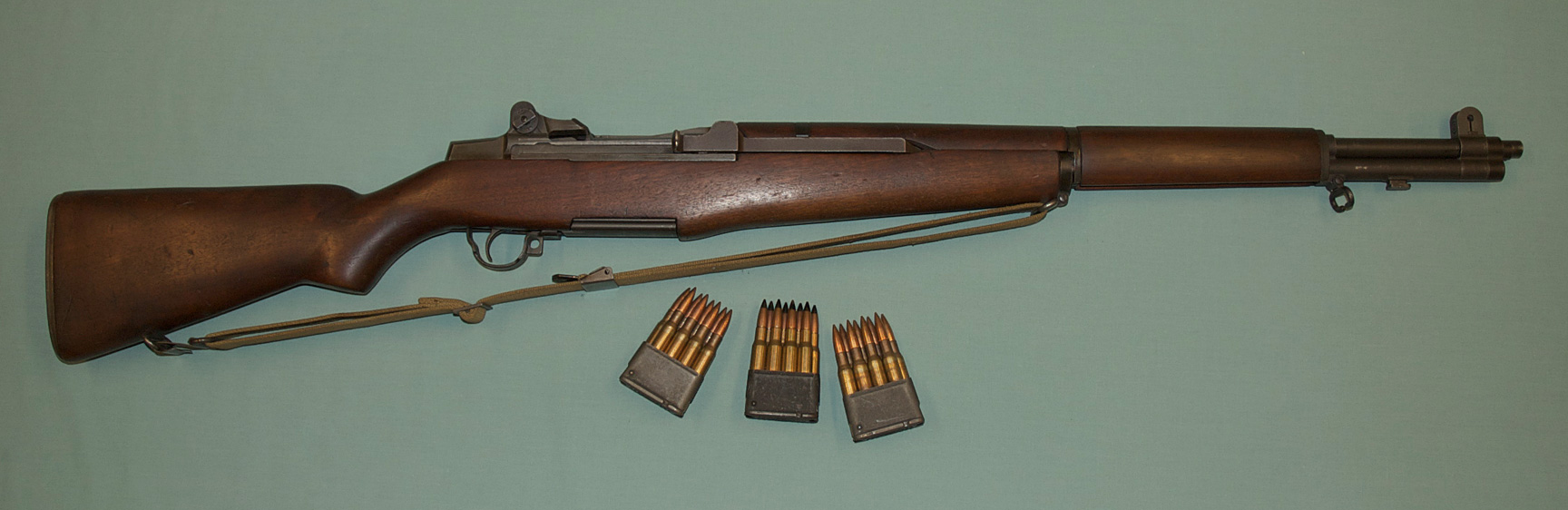
M1 Garand
The M1 Garand was the first semi-automatic rifle adopted as the standard arm of any major power, giving the American infantryman of the… Continued…
-
M1 Helmet
The M1 helmet was the steel combat helmet of the United States armed forces from 1941 until the mid 1980s, worn through the Second World… Continued…
-
M1903 Springfield
The M1903 Springfield was the United States' service rifle from 1903 until the M1 Garand replaced it in the late 1930s, and a sniper's and… Continued…
-
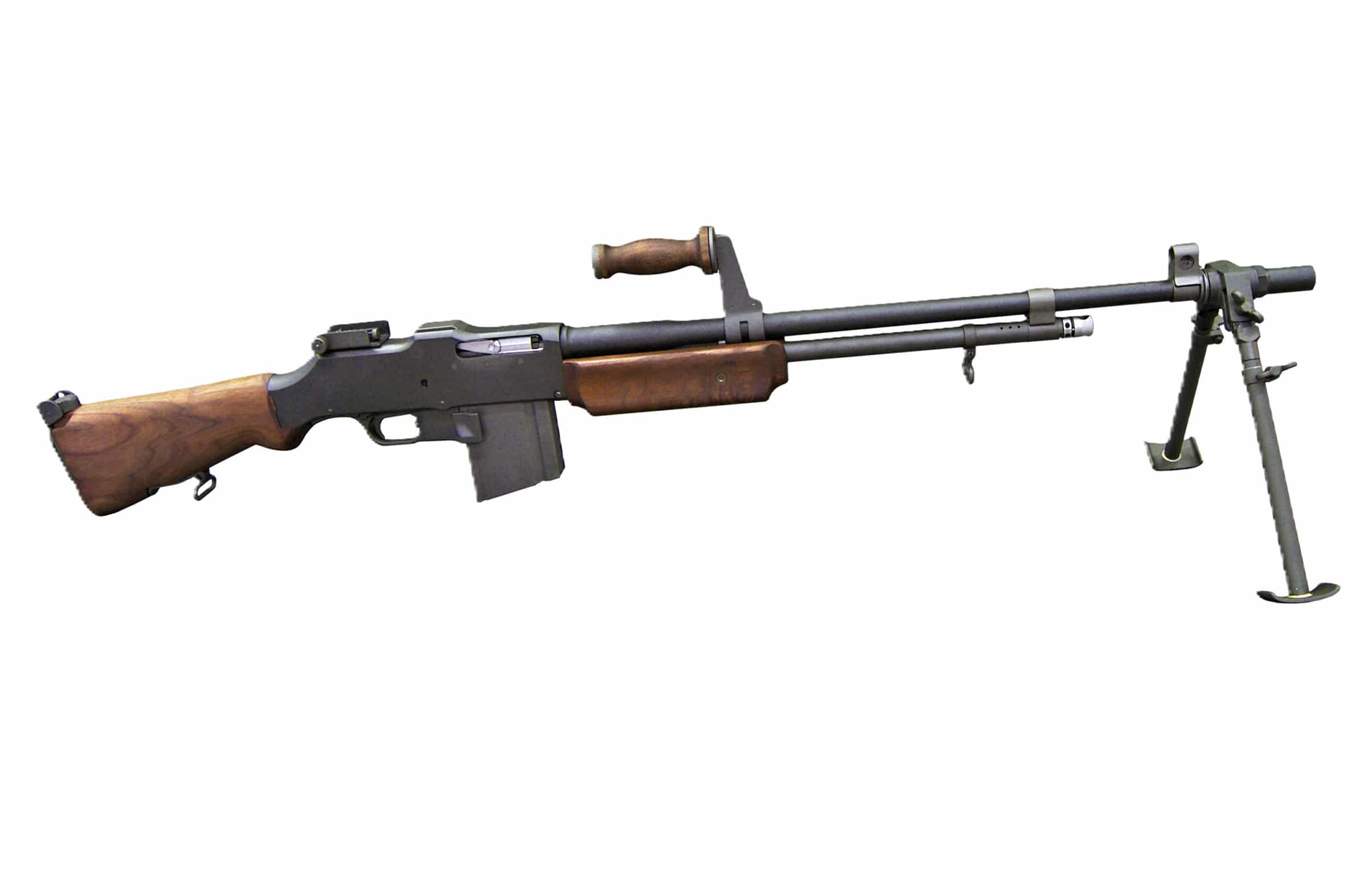
M1918 BAR
The Browning Automatic Rifle was John Moses Browning's shoulder-fired automatic weapon, adopted by the United States Army in 1918 and the… Continued…
-
M1919 Browning Machine Gun
The M1919 Browning is John Browning's water-cooled M1917 machine gun made air-cooled: a short-recoil, belt-fed .30-06 weapon that armed… Continued…
-
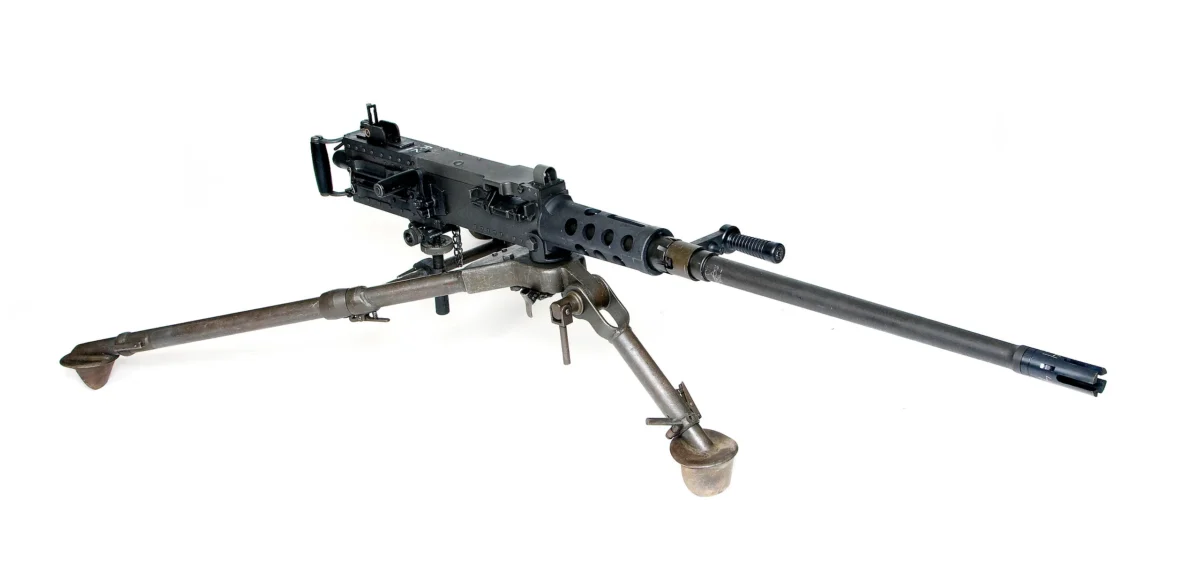
M2 Browning Machine Gun
The M2 is the American heavy machine gun of .50 caliber, designed by John Browning at the end of the First World War and adopted in its… Continued…
-
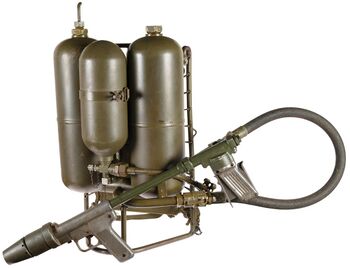
M2 Flamethrower
The M2 was the American portable flamethrower of the late Second World War and the Korean War. It was a backpack with two fuel tanks and a… Continued…
-
M26 Grenade
The M26 was the standard American fragmentation hand grenade of the Vietnam War. Adopted in the early 1950s to replace the cast-iron Mk 2… Continued…
-
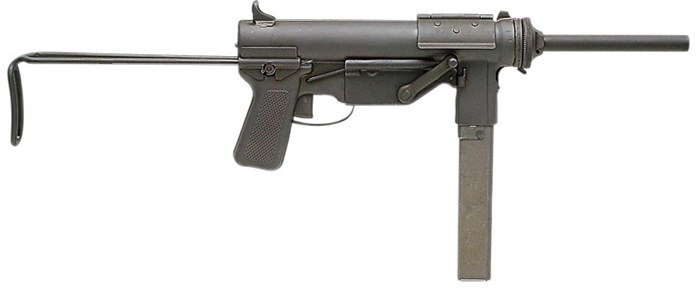
M3 Grease Gun
The M3 'Grease Gun' was America's Sten: a .45 caliber submachine gun of stamped steel and welded seams, designed in 1942 to replace the… Continued…
-
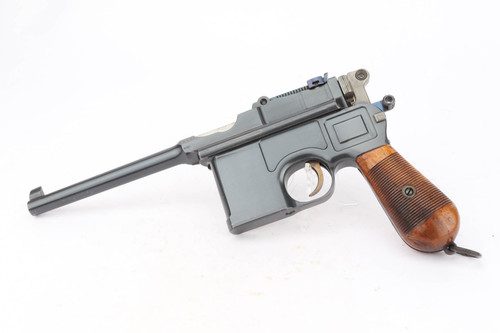
Mauser C96
The Mauser C96 is a German semi-automatic pistol that entered service in 1896, designed by the Feederle brothers at Mauser's Oberndorf… Continued…
-
Mk 2 Fragmentation Grenade
The Mk 2 was the standard American fragmentation hand grenade from the end of the First World War into the Vietnam War. Its cast-iron body… Continued…
-
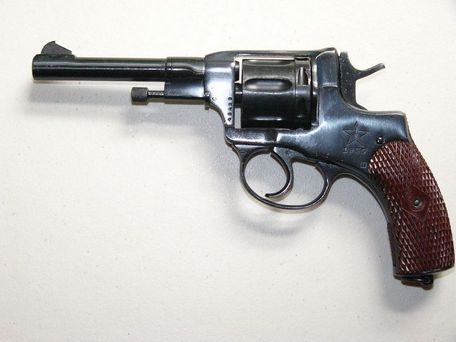
Nagant M1895 Pistol
The Nagant M1895 is the seven-shot Belgian-designed service revolver of Imperial Russia and the Soviet Union, unique among military… Continued…
-
PPS-43
The PPS-43 is a Soviet submachine gun introduced in 1942, designed by Alexei Sudayev and first built in besieged Leningrad. Made almost… Continued…
-
PPSh-41
The PPSh-41 was the Soviet Union's war-winning submachine gun: a stamped-steel design by Georgy Shpagin firing the 7.62x25 Tokarev… Continued…
-
PTRD-41
The PTRD-41 was a Soviet single-shot anti-tank rifle designed by Vasily Degtyaryov in a few weeks in the summer of 1941 and adopted that… Continued…
-
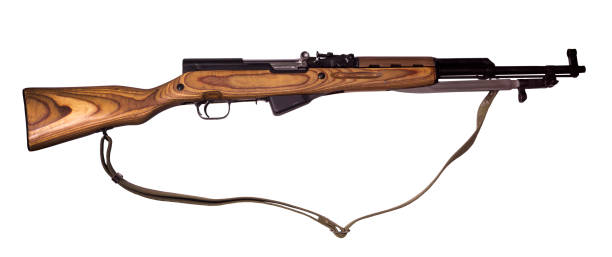
SKS
The SKS is Sergei Simonov's semi-automatic carbine for the Soviet 7.62x39mm intermediate cartridge, adopted in 1949 and made obsolete in… Continued…
-
Satchel Charge
A satchel charge is a bag of explosive blocks, with a carrying strap and a fuse, that a soldier throws or places against a bunker, pillbox… Continued…
-
Thompson Submachine Gun
The Thompson was America's first submachine gun: a .45 ACP automatic designed as a trench broom for a war that ended before it shipped.… Continued…
-
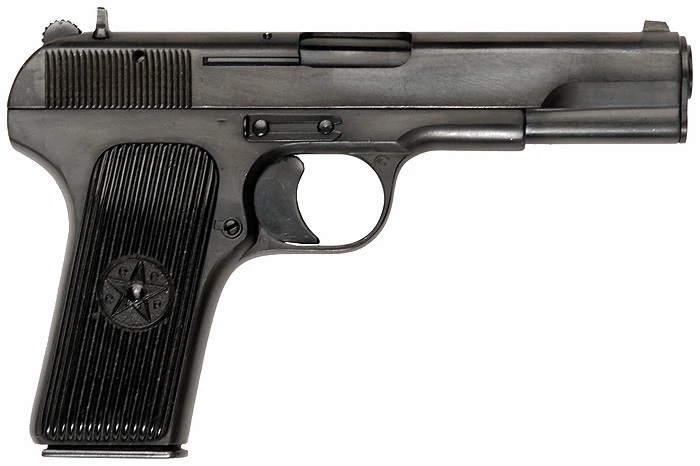
Tokarev TT-33 Pistol
The Tokarev TT-33 was the service pistol of the Red Army from the 1930s until the Makarov replaced it in the 1950s: Fedor Tokarev's… Continued…
-
Type 92 Heavy Machine Gun
The Type 92 was the standard heavy machine gun of the Imperial Japanese Army from the early 1930s to 1945. An air-cooled, gas-operated gun… Continued…
-
Type 99 Rifle
The Type 99 was the last bolt-action rifle of the Imperial Japanese Army: a 7.7mm development of the 6.5mm Type 38 Arisaka adopted in 1939… Continued…
-
Winchester Model 1897
The Winchester Model 1897 is a pump-action shotgun designed by John Moses Browning and made by Winchester from 1897 to 1957. An improved… Continued…
-
ZiS-3
The ZiS-3 was the standard Soviet 76.2mm divisional gun of the Second World War, officially the 76 mm divisional gun model 1942. Designed… Continued…