Historical Context
Vietnam War
A prolonged guerrilla conflict that fundamentally shaped modern infantry doctrine. The AK-47 versus M16 rivalry defined the war's small arms, while helicopter gunships, napalm, claymore mines, and the M79 grenade launcher characterized American tactics against Viet Cong and North Vietnamese Army forces.
1955 – 1975
Overview
The Vietnam War was a prolonged conflict between North Vietnam (backed by the Soviet Union and China) and South Vietnam (backed by the United States and other allies). American military involvement escalated significantly from 1965. The war is significant in weapons history for the AK-47/M16 rivalry, the maturation of helicopter warfare, the extensive use of air power, and the development of specialized counter-insurgency weapons.
The Small Arms Rivalry
AK-47 / AKM
The AK-47 (and its modernized AKM variant) was the primary weapon of North Vietnamese Army (NVA) regulars and Viet Cong (VC) forces:
- 7.62×39mm intermediate cartridge
- 30-round detachable magazine
- Gas-operated rotating bolt
- Reliability — Functioned in mud, water, and jungle humidity with minimal maintenance; this was a decisive advantage in Vietnam's environment
- Rate of fire — 600 rounds/minute automatic
- Range — Effective to ~300 meters
M16 / XM16E1
The M16 replaced the M14 as the US standard infantry rifle, beginning in 1965:
- 5.56×45mm (.223 Remington) cartridge
- 20-round magazine (later 30-round)
- Direct impingement gas system
- Early problems — The initial XM16E1 issued in Vietnam had serious reliability problems: chrome-lining was omitted from barrels to save cost, a slower-burning powder than specified was used, and soldiers were initially told the rifle was "self-cleaning"; the result was catastrophic fouling and jamming in combat
- Resolution — Chrome-lined barrels, the improved M16A1 with forward assist, and proper cleaning kits largely resolved reliability issues by 1967–68
- Advantages — Lighter than the AK; flatter trajectory; lighter ammunition (soldiers could carry more rounds)
Other Small Arms
- M60 machine gun — 7.62mm GPMG; the standard US squad/platoon machine gun; called "The Pig"; reliable but heavy
- M79 grenade launcher — Single-shot 40mm break-action; called "the thumper"; gave individual soldiers indirect fire capability at 150–400 meters
- M72 LAW — Light Anti-Tank Weapon; single-shot disposable 66mm rocket; replaced the bazooka
- Claymore mine (M18A1) — Directional fragmentation mine; 700 steel balls in a convex face; devastating in ambushes; command-detonated
Helicopter Warfare
Vietnam was the first war where helicopter gunships played a decisive tactical role:
- UH-1 "Huey" (Bell UH-1 Iroquois) — The iconic Vietnam helicopter; used for troop transport, medical evacuation, and as a gunship platform
- AH-1 Cobra — The first purpose-built attack helicopter; entered service 1967; armed with 20mm cannon, rockets, and TOW missiles in later variants
- OH-6 Cayuse / OH-58 Kiowa — Observation helicopters; scouts for gunship teams
Air Power
The United States conducted one of the most intensive air campaigns in history:
- B-52 Stratofortress — Strategic bomber used in tactical close air support role (Arc Light missions); a single cell of three B-52s could carpet-bomb a 1×3 km area
- F-105 Thunderchief — Primary strike aircraft against North Vietnam; heavy losses to SAMs and MiGs
- F-4 Phantom II — The primary US fighter; initially carried no gun (missiles only); MiG combat demonstrated the need for guns; the M61 Vulcan cannon pod was added
- A-1 Skyraider — Propeller-driven WWII-era attack aircraft; proved highly effective at close air support due to slow speed and high payload
- Napalm — Incendiary gel (jellied gasoline); widely used for area denial and jungle clearing
Counter-Insurgency Weapons
- CAR-15 — Shortened M16 variant; used by special forces for jungle close-quarters
- Stoner 63 — Modular weapons system; used by Navy SEALs
- Night vision devices — First-generation starlight scopes began appearing in Vietnam; transformed night operations
This article is a stub. Contributions covering specific battles, weapons, and operations are welcome.
Battles & Operations
-
Battle of Ia Drang (14-18 November 1965)
The Battle of Ia Drang, fought from 14 to 18 November 1965 in the Central Highlands of South Vietnam, was the first major battle between… Continued…
-
Battle of Huế (31 January - 2 March 1968)
The Battle of Huế, fought from 31 January to 2 March 1968, was the longest and bloodiest battle of the Tet Offensive. North Vietnamese and… Continued…
-
Battle of Khe Sanh (21 January - 9 July 1968)
The Battle of Khe Sanh was a 77-day North Vietnamese siege of a US Marine Corps combat base near the Laotian border and the Demilitarized… Continued…
Weapons
-
AK-47
The AK-47 is the most produced firearm in human history: Mikhail Kalashnikov's gas-operated assault rifle in 7.62x39mm, built around loose… Continued…
-
Bofors 40 mm Gun
The Bofors 40 mm gun is a light anti-aircraft gun designed by the Swedish firm AB Bofors in the early 1930s. It fired a two-pound explosive… Continued…
-
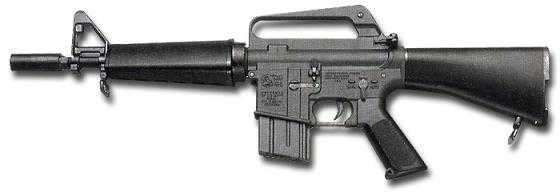
CAR-15
CAR-15 was Colt's name, from the mid-1960s, for a family of weapons built on the AR-15 and M16 rifle, and soldiers came to use it for the… Continued…
-
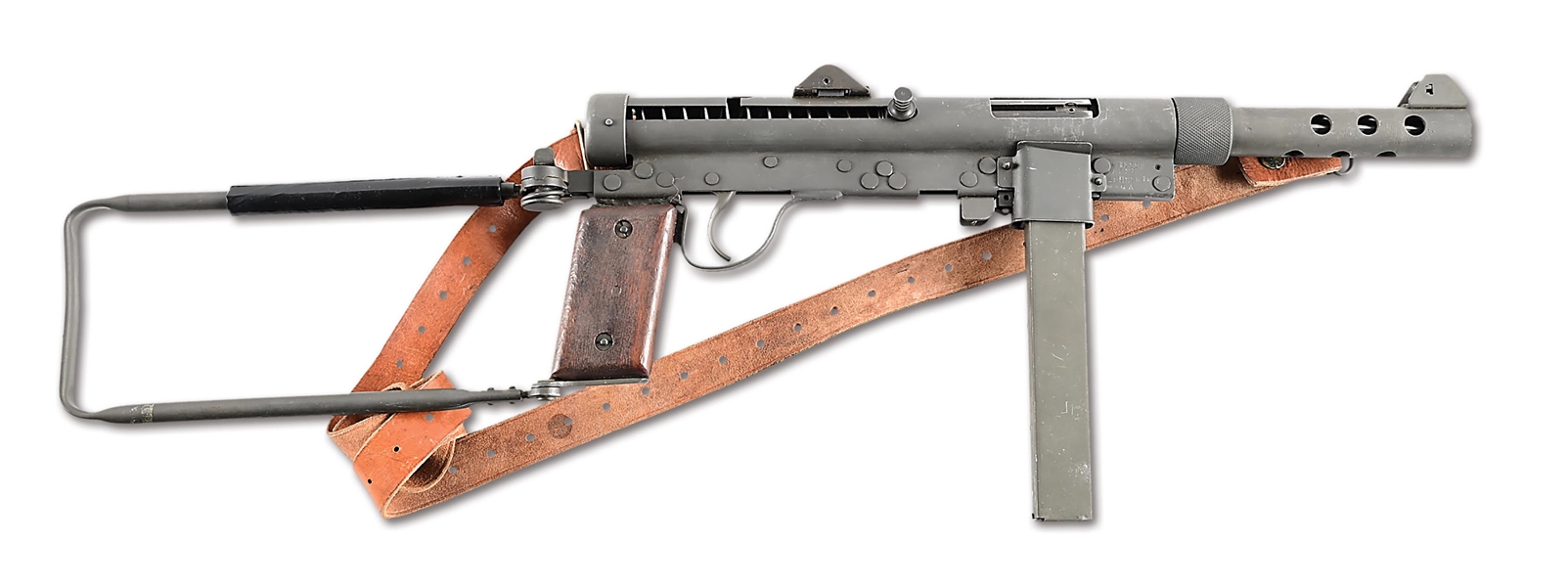
Carl Gustaf m/45
The Carl Gustaf m/45 is a Swedish 9mm submachine gun adopted in 1945 and made at the Carl Gustafs Stads Gevärsfaktori in Eskilstuna.… Continued…
-
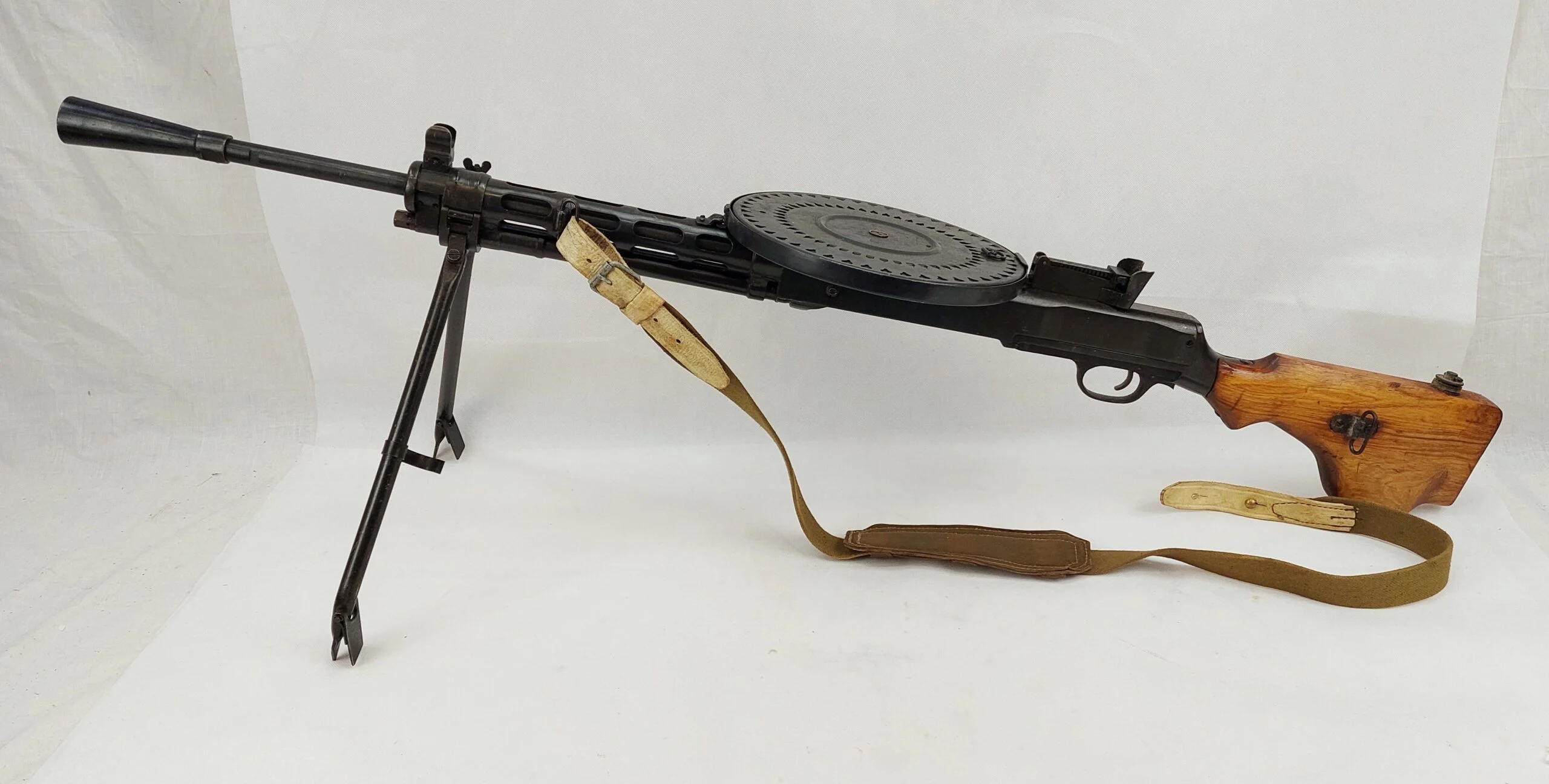
Degtyaryov DP-27
The DP-27 was the standard light machine gun of the Soviet Army from the late 1920s through the Second World War. Designed by Vasily… Continued…
-
Flak Jacket
The flak jacket is the fragmentation-protective vest of the mid-twentieth century: first the steel-plated flak suits of American bomber… Continued…
-
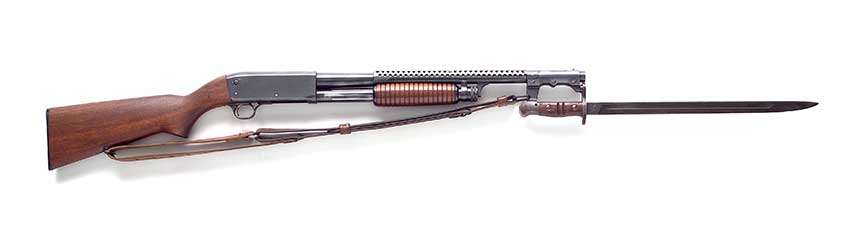
Ithaca 37
The Ithaca 37 is an American pump-action shotgun made by the Ithaca Gun Company of Ithaca, New York, from 1937. Based on a John Browning… Continued…
-
K-50M
The K-50M is a North Vietnamese submachine gun of the late 1950s and 1960s: a rebuilt Chinese Type 50, itself a copy of the Soviet PPSh-41.… Continued…
-
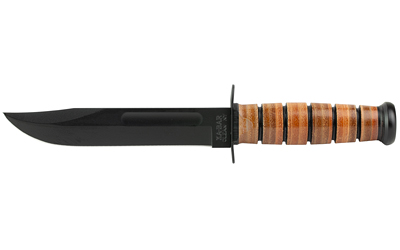
KA-BAR Knife
The KA-BAR is the fighting and utility knife of the United States Marine Corps: a seven-inch clip-point blade of carbon steel with a blood… Continued…
-
M1 Carbine
The M1 Carbine was the most-produced American small arm of the Second World War: a five-pound, semi-automatic .30-caliber carbine designed… Continued…
-
M1 Helmet
The M1 helmet was the steel combat helmet of the United States armed forces from 1941 until the mid 1980s, worn through the Second World… Continued…
-
M14 Rifle
The M14 was the United States' last wooden-stocked battle rifle: a select-fire development of the M1 Garand chambered for the new 7.62mm… Continued…
-
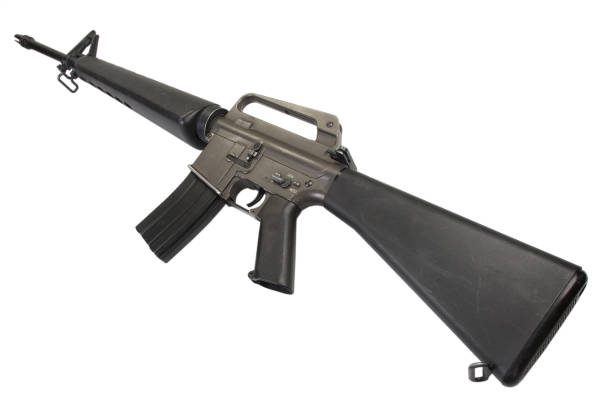
M16 Rifle
The M16 brought the assault rifle to the West: Eugene Stoner's AR-15 design in 5.56mm, built of aluminum forgings and polymer around a… Continued…
-
M18 Claymore Mine
The M18A1 Claymore is an American directional anti-personnel mine. Its curved plastic case holds a layer of C-4 explosive behind about 700… Continued…
-
M1903 Springfield
The M1903 Springfield was the United States' service rifle from 1903 until the M1 Garand replaced it in the late 1930s, and a sniper's and… Continued…
-
M1919 Browning Machine Gun
The M1919 Browning is John Browning's water-cooled M1917 machine gun made air-cooled: a short-recoil, belt-fed .30-06 weapon that armed… Continued…
-
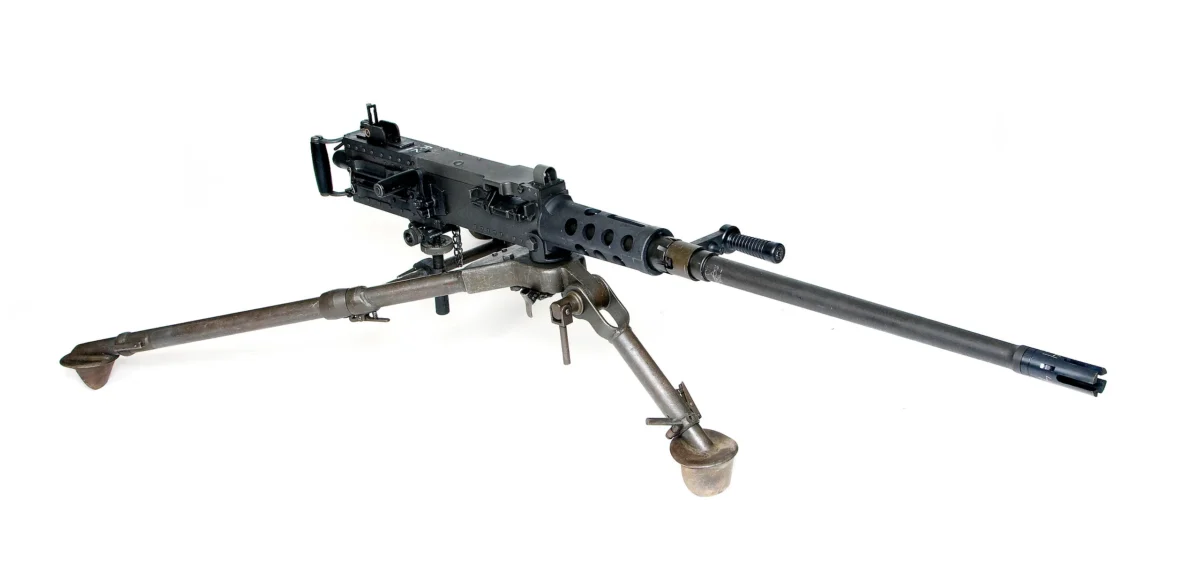
M2 Browning Machine Gun
The M2 is the American heavy machine gun of .50 caliber, designed by John Browning at the end of the First World War and adopted in its… Continued…
-
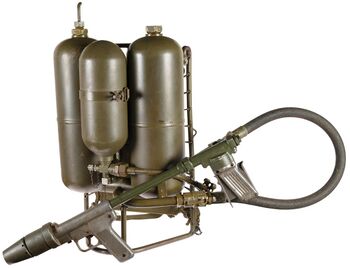
M2 Flamethrower
The M2 was the American portable flamethrower of the late Second World War and the Korean War. It was a backpack with two fuel tanks and a… Continued…
-
M203 Grenade Launcher
The M203 is a single-shot 40 mm grenade launcher that clips under the barrel of an M16 rifle or M4 carbine. Developed by the AAI… Continued…
-
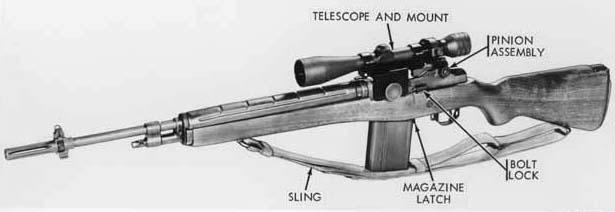
M21 Sniper Weapon System
The M21 Sniper Weapon System was the United States Army's sniper rifle from 1969 to 1988: a National Match M14 selected for accuracy… Continued…
-
M26 Grenade
The M26 was the standard American fragmentation hand grenade of the Vietnam War. Adopted in the early 1950s to replace the cast-iron Mk 2… Continued…
-
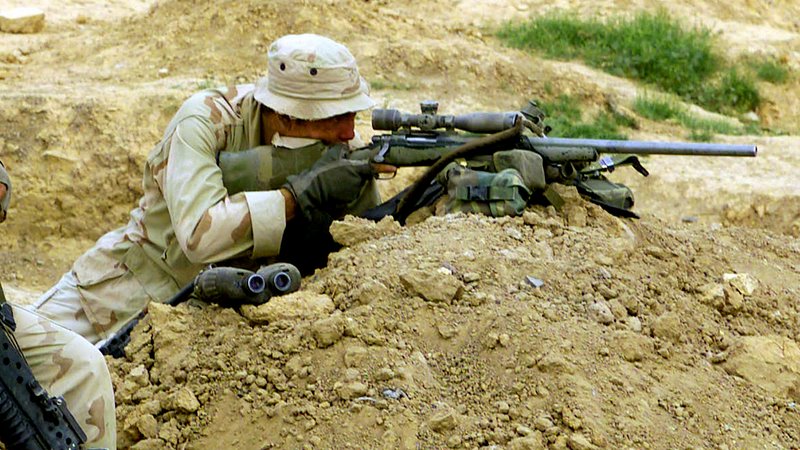
M40 Rifle
The M40 is the bolt-action sniper rifle of the US Marine Corps, adopted in 1966 and in service in successive versions until the 2010s. The… Continued…
-
M60 Machine Gun
The M60 was the United States' first general-purpose machine gun: a belt-fed 7.62mm weapon light enough for one soldier to carry on the… Continued…
-
M67 Grenade
The M67 is the standard fragmentation hand grenade of the United States armed forces. Adopted in the late 1960s, it is a smooth steel… Continued…
-
M72 LAW
The M72 LAW is an American 66 mm anti-tank rocket in a disposable, telescoping launch tube. Adopted by the US Army and Marine Corps in… Continued…
-
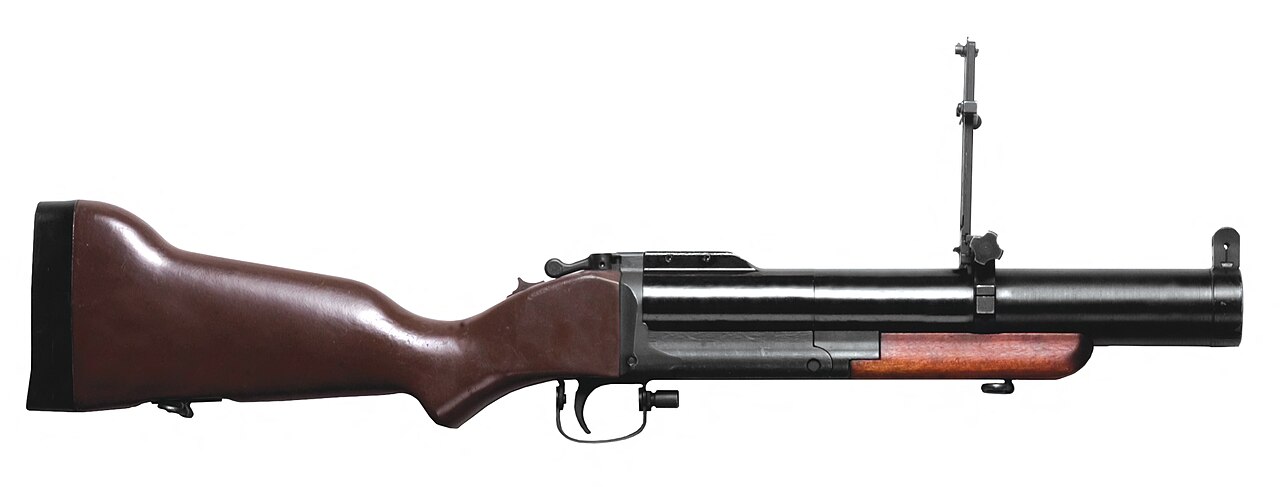
M79 Grenade Launcher
The M79 is a single-shot, break-open, shoulder-fired grenade launcher that fires a 40x46mm low-velocity grenade to about 400 meters… Continued…
-
MAC-10
The MAC-10, properly the Ingram M10, is a very compact submachine gun designed by the American engineer Gordon Ingram in the 1960s and made… Continued…
-
Mk 2 Fragmentation Grenade
The Mk 2 was the standard American fragmentation hand grenade from the end of the First World War into the Vietnam War. Its cast-iron body… Continued…
-
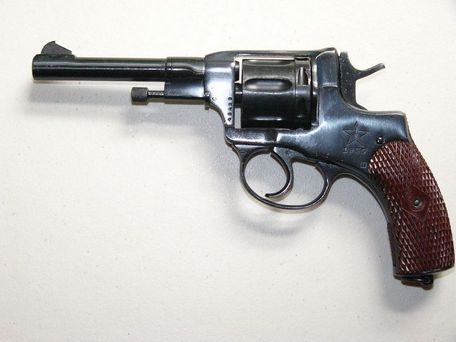
Nagant M1895 Pistol
The Nagant M1895 is the seven-shot Belgian-designed service revolver of Imperial Russia and the Soviet Union, unique among military… Continued…
-
RPD Machine Gun
The RPD was the Soviet Union's first light machine gun for the 7.62x39 mm intermediate cartridge. Designed by Vasily Degtyaryov in 1944 and… Continued…
-
RPG-2
The RPG-2 was the first Soviet shoulder-fired anti-tank grenade launcher to be issued in large numbers. Adopted in 1949, it was a plain 40… Continued…
-
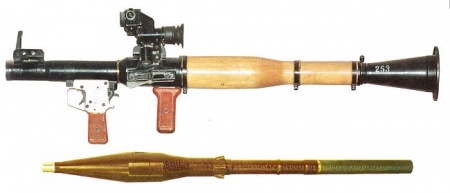
RPG-7
The RPG-7 is a Soviet shoulder-fired, reusable anti-tank grenade launcher adopted in 1961 and the most widely used weapon of its kind in… Continued…
-
Remington 870
The Remington 870 is a pump-action shotgun made by Remington Arms since 1950. With a steel receiver machined from a solid block and twin… Continued…
-
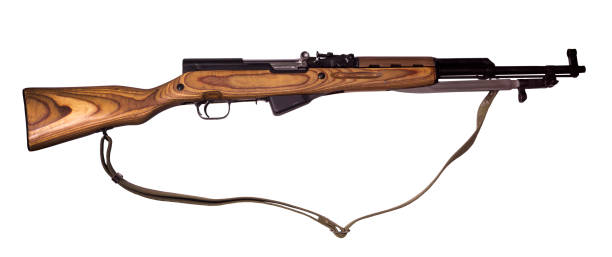
SKS
The SKS is Sergei Simonov's semi-automatic carbine for the Soviet 7.62x39mm intermediate cartridge, adopted in 1949 and made obsolete in… Continued…
-
SVD Rifle
The SVD Rifle, or Dragunov, is a Soviet semi-automatic sniper rifle designed by Yevgeny Dragunov and adopted in 1963. It fires the old… Continued…
-
Satchel Charge
A satchel charge is a bag of explosive blocks, with a carrying strap and a fuse, that a soldier throws or places against a bunker, pillbox… Continued…
-
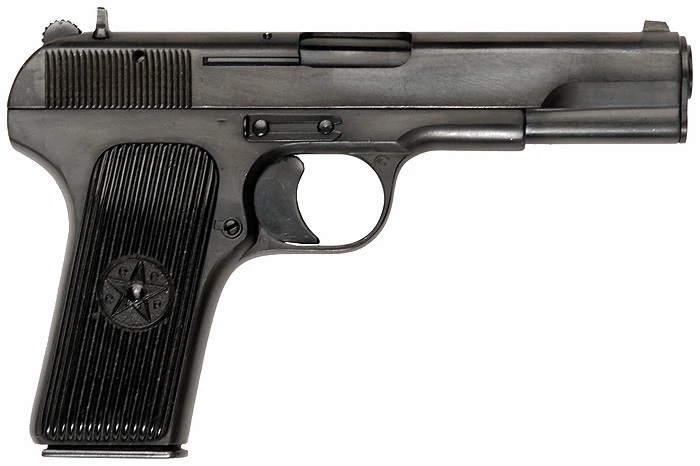
Tokarev TT-33 Pistol
The Tokarev TT-33 was the service pistol of the Red Army from the 1930s until the Makarov replaced it in the 1950s: Fedor Tokarev's… Continued…