Battle of Ia Drang
The Battle of Ia Drang, fought from 14 to 18 November 1965 in the Central Highlands of South Vietnam, was the first major battle between the United States Army and regular North Vietnamese troops. At Landing Zone X-Ray a helicopter-borne battalion of the 1st Cavalry Division held off repeated attacks with the help of massive artillery and air support. At Landing Zone Albany a second battalion was ambushed on the march and lost heavily. Both sides drew lessons that shaped the rest of the war.
Also known as Ia Drang, Ia Drang Valley, Battle of the Ia Drang Valley, LZ X-Ray, Landing Zone X-Ray, LZ Albany, Landing Zone Albany, Pleiku Campaign, Chu Pong, Trận Ia Đrăng, Tran Ia Drang, We Were Soldiers, We Were Soldiers Once and Young
Background
In 1965 the United States sent large ground forces to South Vietnam. Among them was the 1st Cavalry Division (Airmobile), a new kind of formation that moved its infantry by helicopter. It set up its base at An Khe in the Central Highlands in September. In October, North Vietnamese regiments of the People's Army of Vietnam besieged the Special Forces camp at Plei Me, south of Pleiku. When the siege was broken, they withdrew west toward the Chu Pong massif, a mountain mass on the Cambodian border above the valley of the Ia Drang river. General William Westmoreland ordered the 1st Cavalry Division to find and attack them.
The Battle
On the morning of 14 November 1965, Lieutenant Colonel Harold G. Moore's 1st Battalion, 7th Cavalry, about 450 men, began landing by UH-1 Huey helicopter in a clearing at the foot of Chu Pong, code-named Landing Zone X-Ray. Only sixteen helicopters were available, so the battalion arrived a part at a time. A prisoner taken within minutes said that there were North Vietnamese battalions on the mountain above. By early afternoon the Americans were under attack by troops of the 66th and 33rd Regiments. One platoon of Bravo Company, led by Second Lieutenant Henry Herrick, pushed too far forward and was cut off. Herrick was killed, and the survivors held out under Sergeant Ernie Savage for more than a day until they were relieved.
Moore formed a perimeter round the landing zone. Helicopter crews kept flying in ammunition and reinforcements and carrying out the wounded under fire. At first light on 15 November the North Vietnamese attacked the southern side of the perimeter, held by Charlie Company, and came close to breaking through. The air controller sent the code words Broken Arrow, calling every available aircraft to the aid of an American unit in danger of being overrun. One aircraft dropped napalm inside the perimeter. Artillery firing from Landing Zone Falcon, a few kilometers away, put a wall of shells close around the position. That afternoon B-52 bombers struck the Chu Pong massif, one of the first uses of the heavy bomber in direct support of ground troops. Reinforcements from the 2nd Battalion, 7th Cavalry, and the 2nd Battalion, 5th Cavalry, reached X-Ray, and further attacks before dawn on 16 November were beaten off. Moore's battalion was flown out that day.
On 17 November the two remaining battalions left X-Ray on foot. The 2nd Battalion, 7th Cavalry, under Lieutenant Colonel Robert McDade, marched toward a clearing called Landing Zone Albany. Early in the afternoon, as the head of the column reached the clearing, North Vietnamese troops, including a battalion of the 66th Regiment, attacked it along its length in tall grass and forest. The column broke into small groups fighting at arm's length, and air and artillery support could not be used until the positions were sorted out. Fighting went on through the night. The survivors were relieved on 18 November.
Weapons
The American cavalrymen carried the XM16E1, the early form of the M16 Rifle. Moore praised it after the battle, and his report helped the decision to arm all US troops in Vietnam with it. Squads also had the M79 Grenade Launcher, the M60 Machine Gun, the M26 Grenade and the M72 LAW. Second Lieutenant Walter Marm used a LAW and grenades to destroy a machine-gun position and was awarded the Medal of Honor.
The North Vietnamese were well-armed regulars with the AK-47, the SKS, the RPD Machine Gun, heavier machine guns, mortars and the RPG-2. What they could not match was American supporting fire: 105 mm howitzers that fired thousands of rounds, rocket-firing helicopters and waves of strike aircraft.
Aftermath
American losses at X-Ray were 79 killed and 121 wounded. At Albany about 155 were killed and more than 120 wounded in a single afternoon and night, the heaviest loss suffered by an American battalion in one day of the war up to that time. North Vietnamese losses are uncertain. The Americans counted 634 dead at X-Ray and several hundred at Albany and estimated many more; Vietnamese accounts give lower figures.
Both sides claimed success. Westmoreland saw in X-Ray proof that airmobility and firepower could win a war of attrition. The North Vietnamese concluded that they could fight the Americans by closing to very short range, where artillery and aircraft could not be used without hitting friendly troops, and by choosing when to fight and when to withdraw across the border. The battle is part of the wider story of the Vietnam War.
On Screen
We Were Soldiers (2002), written and directed by Randall Wallace, is based on We Were Soldiers Once... and Young, the 1992 book by Moore and the reporter Joseph Galloway, who was at X-Ray. Mel Gibson plays Moore, Barry Pepper plays Galloway, Sam Elliott plays Sergeant Major Basil Plumley and Greg Kinnear the helicopter pilot Bruce Crandall. Much of what it shows is on record: the piecemeal landing, Herrick's cut-off platoon, the Broken Arrow call and the misdirected napalm. The film covers only Landing Zone X-Ray. It leaves out the ambush at Albany, to which the book gives six chapters. Its ending is invented: there was no final American bayonet charge up the mountain and no helicopter attack on the North Vietnamese command post. The North Vietnamese broke off the fight and withdrew.
Weapons used
-
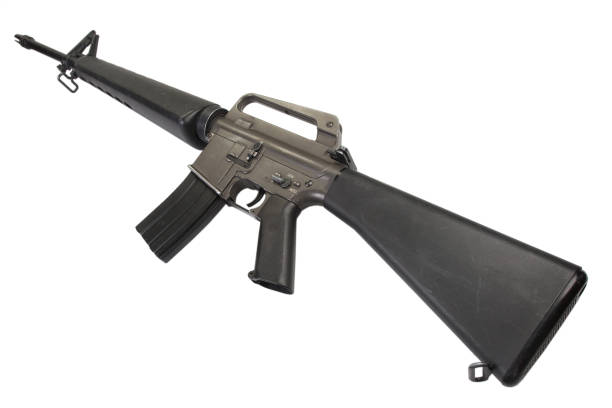
M16 RifleFor sale
The 1st Cavalry Division's troopers carried the new XM16E1, and its performance at LZ X-Ray helped persuade the Army to issue the M16… Continued…
-
AK-47
North Vietnamese regulars carried the AK-47 and its Chinese copy, giving them automatic fire equal to that of the Americans at close range. Continued…
-
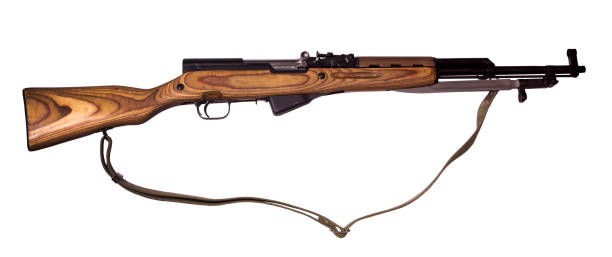
SKS
The SKS carbine armed many North Vietnamese riflemen alongside the AK-47. Continued…
-
M26 Grenade
American fragmentation grenades were thrown at a few meters' range when North Vietnamese infantry reached the foxhole line. Continued…
-
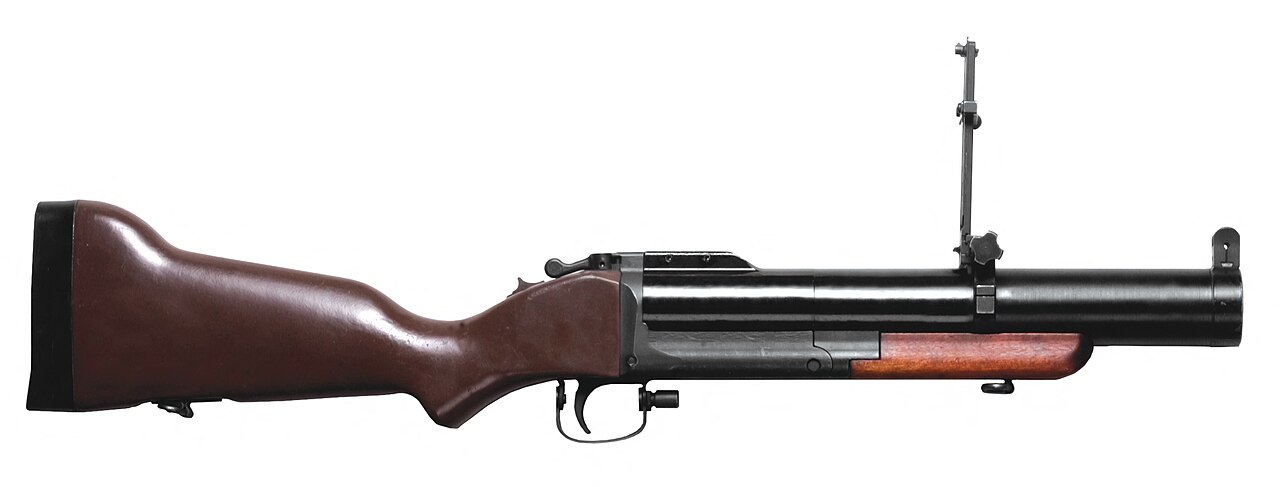
M79 Grenade Launcher
Each American rifle squad's grenadiers fired 40 mm rounds into attacks coming through the elephant grass. Continued…
-
M72 LAW
Second Lieutenant Walter Marm fired a LAW at a dug-in machine-gun position before charging it, an action that earned the Medal of Honor. Continued…
-
M60 Machine Gun
M60 teams anchored the American perimeter, and several fought to the last around the cut-off platoon and on the Charlie Company line. Continued…
-
RPD Machine Gun
The belt-fed RPD was the North Vietnamese squad machine gun and was carried forward in the assaults. Continued…
Sources
Moore, Harold G., and Joseph L. Galloway. We Were Soldiers Once... and Young: Ia Drang, the Battle That Changed the War in Vietnam. Random House, 1992.
Carland, John M. Combat Operations: Stemming the Tide, May 1965 to October 1966. Center of Military History, United States Army, 2000.
Coleman, J. D. Pleiku: The Dawn of Helicopter Warfare in Vietnam. St. Martin's Press, 1988.
Stanton, Shelby L. Anatomy of a Division: The 1st Cav in Vietnam. Presidio Press, 1987.
Suggest an edit · account required · reviewed before publishing · how it works