Battle of Arnhem
The Battle of Arnhem, fought from 17 to 26 September 1944, was the final and failed stage of Operation Market Garden, the Allied attempt to cross the Rhine through the Netherlands. The British 1st Airborne Division landed west of Arnhem to seize its road bridge. One battalion held the northern end for more than three days, but German forces, including two SS panzer divisions, cut off the rest. Ground forces never arrived, and fewer than a quarter of the division escaped.
Also known as Arnhem 1944, Operation Market Garden, Market Garden, A Bridge Too Far, Slag om Arnhem, Schlacht um Arnheim, Arnhem bridge, John Frost Bridge, Battle of Oosterbeek, Oosterbeek perimeter, Operation Berlin, Bridge Too Far battle
Background
After the breakout from Normandy in August 1944, Allied armies crossed France and Belgium in a few weeks, and many commanders thought Germany was close to collapse. Field Marshal Bernard Montgomery proposed a bold stroke to keep the advance going. In Operation Market, three airborne divisions would seize the bridges over the canals and rivers of the southern Netherlands. In Operation Garden, the British XXX Corps under Lieutenant-General Brian Horrocks would drive about 100 km up a single road across those bridges, cross the Rhine at Arnhem and turn the northern end of Germany's frontier defenses.
The American 101st Airborne Division was to take the bridges near Eindhoven and the 82nd those at Grave and Nijmegen. The farthest bridge, at Arnhem, went to the British 1st Airborne Division under Major-General Roy Urquhart, with the Polish 1st Independent Parachute Brigade under Major-General Stanisław Sosabowski to follow. Fear of anti-aircraft fire led planners to put the British landing zones 10 km or more west of the town. There were too few aircraft to carry the division in one lift, so it would arrive over three days. The II SS Panzer Corps, with the 9th and 10th SS Panzer Divisions, was refitting north and east of Arnhem. Intelligence warnings about German armor in the area were not acted on. Both divisions were badly understrength, but they could react quickly.
The Battle
The first lift landed in good order on the afternoon of Sunday 17 September. Three parachute battalions set off for Arnhem on separate routes. German battle groups, quickly organized, blocked two of them in the woods and suburbs. Only Lieutenant-Colonel John Frost's 2nd Parachute Battalion, following the road beside the river, reached the road bridge that evening. With other small parties, Frost had about 740 men at the northern end. They could not take the southern end.
On the morning of 18 September the reconnaissance battalion of the 9th SS Panzer Division tried to rush the bridge from the south and was shot to pieces. After that the Germans attacked methodically, with infantry, tanks, mortars and artillery, destroying the houses round the bridge one by one. Attempts by the rest of the division to break through to Frost failed in the streets of western Arnhem on 19 September with very heavy losses. Many of the division's radios did not work properly, and Urquhart himself was cut off from his headquarters for a day and a half. Frost was wounded on 20 September. The last resistance at the bridge ended early on 21 September, when the survivors had almost no ammunition left.
The rest of the division formed a perimeter round the Hartenstein Hotel in Oosterbeek, with its back to the Rhine. Most supply drops fell into German hands. The Polish brigade, delayed by weather, dropped south of the river at Driel on 21 September but had few boats to cross with. XXX Corps, slowed by blown bridges, German counter-attacks on the road and the fight for Nijmegen, reached the south bank of the Rhine too late and too weak to force a crossing. On the night of 25 to 26 September the survivors were ferried back across the river in Operation Berlin.
Weapons
Airborne troops could bring only what gliders and parachutes could carry. The British infantry had the Lee-Enfield Rifle, the Sten Gun, the Bren and the Mills Bomb, with the Vickers Machine Gun, mortars and light 75 mm howitzers in support. Against armor they had 6-pounder and a few 17-pounder anti-tank guns and the hand-held PIAT. When the PIAT bombs ran out at the bridge, German tanks and assault guns could close in.
German infantry carried the Karabiner 98k, the MP40 and the MG 42, and used the Panzerfaust against buildings. Their decisive advantage lay in mortars, artillery, self-propelled guns and tanks, including Tiger tanks brought in during the battle.
Aftermath
About 10,000 men of the 1st Airborne Division and the Glider Pilot Regiment had landed north of the Rhine. Roughly 2,400, including some Poles, came back across the river. About 1,500 had been killed and more than 6,000 were taken prisoner, many of them wounded; figures vary between sources. German losses in the Arnhem area are less certain and probably amounted to several thousand killed and wounded. Five Victoria Crosses were awarded for the battle, four of them posthumously.
The Germans evacuated the civilian population of Arnhem, and the town was looted. The failure left the northern Netherlands under occupation through the Hunger Winter of 1944 to 1945. Arnhem was not liberated until April 1945. The rebuilt road bridge was later named after John Frost. The battle is part of the wider story of World War II.
On Screen
A Bridge Too Far (1977), directed by Richard Attenborough from Cornelius Ryan's 1974 book, covers the whole of Operation Market Garden, with Arnhem as its climax. Anthony Hopkins plays John Frost, Sean Connery plays Urquhart, Gene Hackman plays Sosabowski and Dirk Bogarde plays Lieutenant-General Frederick Browning. The film follows the real sequence of events closely, and several veterans, Frost among them, served as advisers. The bridge scenes were shot at Deventer, because Arnhem's surroundings had changed too much. The German tanks are post-war Leopards dressed to look like wartime vehicles. Some characters are renamed or composite: the umbrella-carrying Major Carlyle is based on Major Digby Tatham-Warter, who in reality survived the battle and escaped. The portrayal of Browning as dismissive of intelligence warnings was disputed by his family and by some veterans.
Weapons used
-
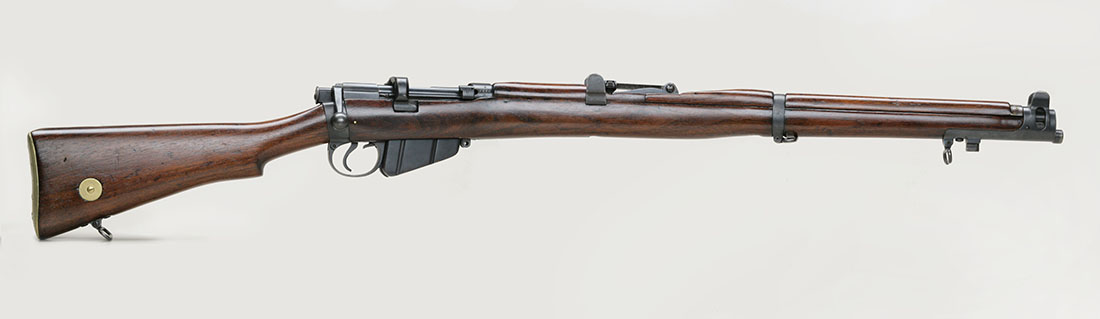
Lee-Enfield Rifle
The No. 4 Lee-Enfield was the rifle of the British airborne infantry at the bridge and in Oosterbeek. Continued…
-
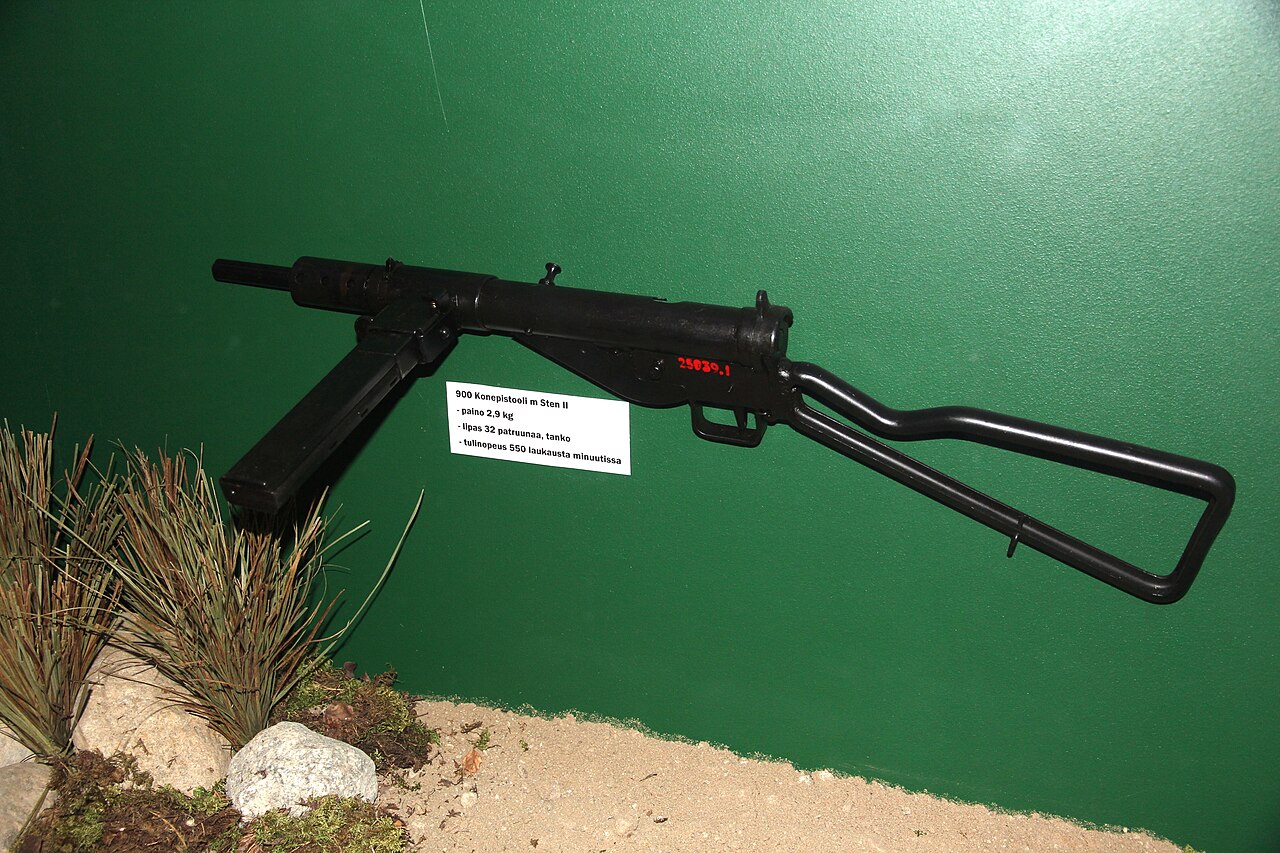
Sten Gun
Paratroopers and glider troops carried the Sten for the close fighting among houses and gardens. Continued…
-
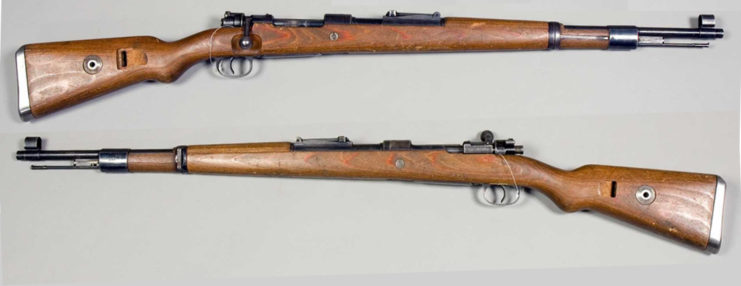
Karabiner 98k
The Karabiner 98k was the standard rifle of the SS and army battle groups that sealed off the landings. Continued…
-
MP40
German infantry used the MP40 in the street fighting around the bridge. Continued…
-
Bren
The Bren gun was the British airborne section's light machine gun throughout the battle. Continued…
-
PIAT
The PIAT was the airborne troops' main hand-held defense against German armor until the bombs ran out. Continued…
-
Panzerfaust
German troops used the Panzerfaust against British-held houses as well as vehicles. Continued…
-
MG 42
MG 42 machine guns covered the roads into Arnhem and pinned down the battalions trying to reach the bridge. Continued…
Sources
Middlebrook, Martin. Arnhem 1944: The Airborne Battle. Viking, 1994.
Ryan, Cornelius. A Bridge Too Far. Simon & Schuster, 1974.
Kershaw, Robert J. It Never Snows in September: The German View of Market-Garden and the Battle of Arnhem, September 1944. Crowood Press, 1990.
Beevor, Antony. Arnhem: The Battle for the Bridges, 1944. Viking, 2018.
Suggest an edit · account required · reviewed before publishing · how it works