Origin
Germany
German states and the unified Germany produced some of the most technically advanced weapons in history. The Dreyse needle gun, Mauser rifle, Luger pistol, MG 08 and MG 42 machine guns, MP 40 submachine gun, and Tiger tank are among Germany's most influential military designs.
Overview
Germany (including the German states before unification in 1871) has an extraordinary weapons heritage. German swordsmiths and gunsmiths were leaders of their craft from the medieval period; the city of Solingen became the "City of Blades" producing swords, knives, and razors of European renown. German firearms manufacturers — Mauser, Walther, Heckler & Koch, Carl Zeiss for optics — have shaped weapon design globally.
Medieval and Renaissance
- Solingen swords — Solingen craftsmen produced longswords, sabers, and military blades for markets across Europe from the 14th century onward
- Zweihänder — The massive two-handed sword of Landsknecht mercenaries; used by elite Doppelsöldner to break pike formations
- Fechtbücher — German fencing masters (Joachim Meyer, Hans Talhoffer) produced systematic manuals documenting longsword, dagger, and wrestling techniques
- Wheellock — Invented in Germany c. 1500; the first self-contained ignition system; expensive but weather-independent
19th Century
- Dreyse needle gun (M1841) — The world's first bolt-action military rifle; paper cartridge; gave Prussia decisive advantages at Königgrätz (1866)
- Mauser M1871 — First Mauser bolt-action; subsequent Mauser designs (M1893, M1898 Gewehr 98) became the global standard for military bolt-actions
- Krupp steel artillery — Breech-loading Krupp guns destroyed French fortifications in 1870 and set the standard for European artillery
WWI
- Gewehr 98 — Standard German infantry rifle; Mauser action; 5-round internal magazine
- MG 08 — Water-cooled heavy machine gun; on a sled mount; the defensive backbone of the Western Front
- Luger P08 — Iconic 9mm semi-automatic pistol; toggle-link action
- Stielhandgranate (stick grenade) — Distinctive handle-mounted grenade; longer throwing arm; widespread use
- MP 18 — First practical submachine gun; 9mm; 32-round drum
WWII
- Karabiner 98k — Refined Mauser bolt-action; the standard German infantry rifle
- MP 40 — 9mm folding-stock SMG; the iconic German WWII weapon
- MG 42 — 1,200 rounds/minute; the fastest-firing standard MG of the war; its "buzz saw" sound was immediately recognizable
- StG 44 — The world's first assault rifle; 7.92×33mm Kurz; directly inspired the AK-47
- Panzerfaust — Disposable anti-tank launcher; cheap, effective; produced in millions
- Tiger I / Panther — Heavily armored tanks with powerful guns; technically superior but produced in insufficient numbers
Post-War
- G3 Rifle — Heckler & Koch; 7.62mm NATO; West German standard rifle; widely exported
- HK MP5 — 9mm SMG; the world's most widely used police and special forces SMG
- G36 Rifle — HK; 5.56mm assault rifle; replaced G3 in Bundeswehr
- HK416 — Gas-piston AR variant; used by US special forces, French Army, Norwegian military
This article is a stub.
Battles & Operations
-
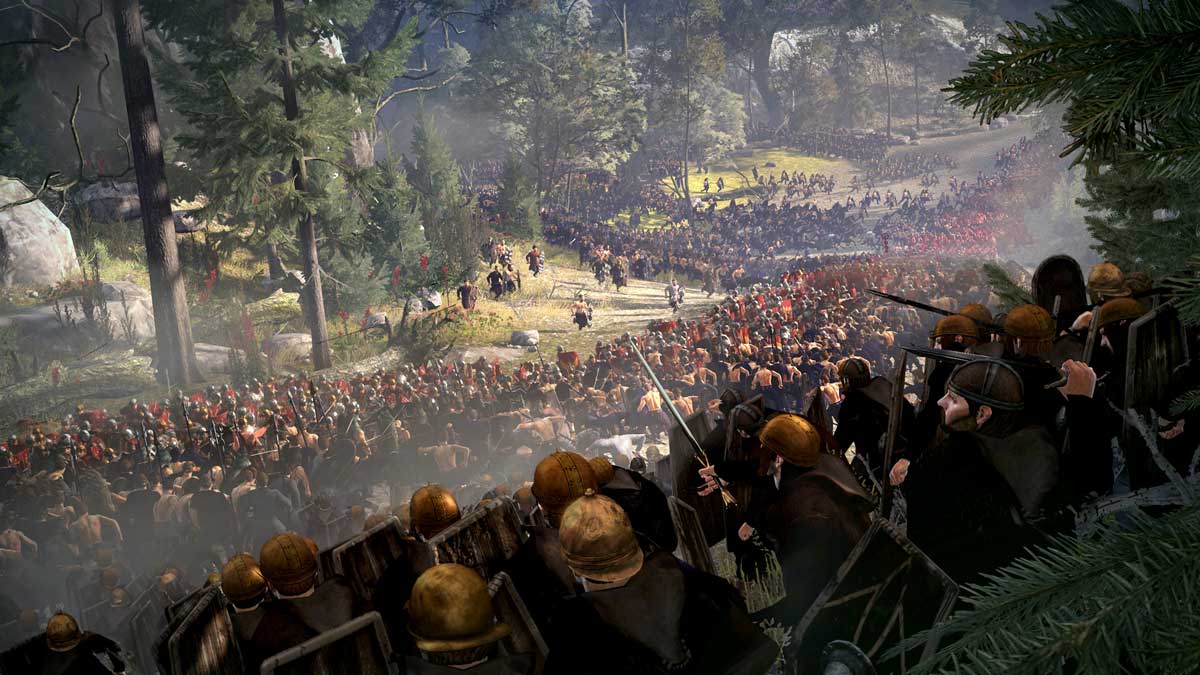
Battle of Teutoburg Forest (September 9 AD)
The Battle of the Teutoburg Forest was the destruction of three Roman legions — the XVII, XVIII and XIX — with their auxiliaries by an… Continued…
-
Battles of Saratoga (19 September and 7 October 1777)
The Battles of Saratoga were two battles fought in upstate New York in the autumn of 1777. A British army under General John Burgoyne had… Continued…
-
Battle of Guilford Court House (15 March 1781)
The Battle of Guilford Court House was fought on 15 March 1781 in what is now Greensboro, North Carolina. About 1,900 British and German… Continued…
-
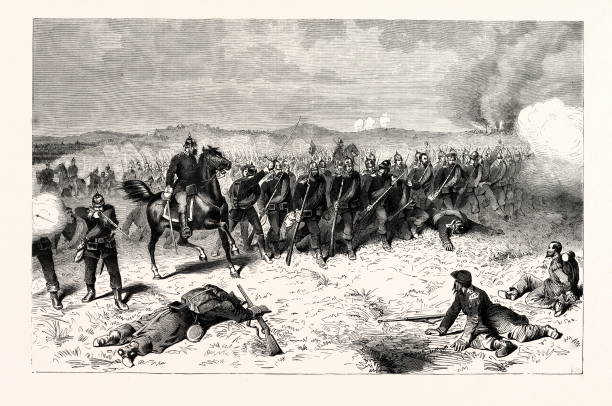
Battle of Sedan (1 September 1870)
The Battle of Sedan, fought on 1 September 1870 near the French fortress town of Sedan on the Meuse, was the decisive battle of the… Continued…
-
First Battle of the Marne (5-12 September 1914)
The First Battle of the Marne was fought east of Paris from 5 to 12 September 1914. After a month of German advances through Belgium and… Continued…
-
Battle of the Somme (1 July - 18 November 1916)
The Battle of the Somme was a joint British and French offensive against the German lines in northern France, fought from 1 July to 18… Continued…
-
Meuse-Argonne Offensive (26 September - 11 November 1918)
The Meuse-Argonne Offensive, fought from 26 September to 11 November 1918, was the main American battle of the First World War and part of… Continued…
-
Battle of Britain (10 July - 31 October 1940)
The Battle of Britain, fought over southern England and the Channel from July to October 1940, was the first major campaign fought entirely… Continued…
-
Battle of Stalingrad (23 August 1942 - 2 February 1943)
The Battle of Stalingrad, fought from the late summer of 1942 to February 1943 in and around the Soviet city on the Volga, was the turning… Continued…
-
Battle of Kursk (5 July - 23 August 1943)
The Battle of Kursk, fought from 5 July to 23 August 1943 in western Russia and eastern Ukraine, was the last major German offensive on the… Continued…
-
Battle of Arnhem (17-26 September 1944)
The Battle of Arnhem, fought from 17 to 26 September 1944, was the final and failed stage of Operation Market Garden, the Allied attempt to… Continued…
-
Normandy Landings (6 June 1944)
The Normandy Landings of 6 June 1944, D-Day, were the largest seaborne invasion in history and the start of the Allied liberation of… Continued…
-
Siege of Bastogne (20-27 December 1944)
The Siege of Bastogne, from 20 to 27 December 1944, was the best-known episode of the Battle of the Bulge. The US 101st Airborne Division… Continued…
Weapons
-
8.8 cm Flak
The 8.8 cm Flak was the German family of heavy anti-aircraft guns known to Allied soldiers simply as the 88. The Flak 18 of 1933 and the… Continued…
-
Cuirassier Armor
Cuirassier armor was the three-quarter plate armor worn by heavy cavalry in Europe from the late sixteenth century to the middle of the… Continued…
-
Dreyse Needle Gun
The Dreyse needle gun was the first bolt-action breech-loading rifle adopted in large numbers by a major army. Designed by Johann Nikolaus… Continued…
-
Frankish Francisca
The francisca is the throwing axe of the early Franks, the Germanic people who overran Roman Gaul in the fifth century and gave France its… Continued…
-
Frankish Winged Spear
The Frankish winged spear was a spear whose iron head carried two small projections, called wings or lugs, on the socket just below the… Continued…
-
G3 Rifle
The Heckler & Koch G3 is a select-fire 7.62x51 mm NATO battle rifle adopted by West Germany in 1959 and kept as its standard rifle until… Continued…
-
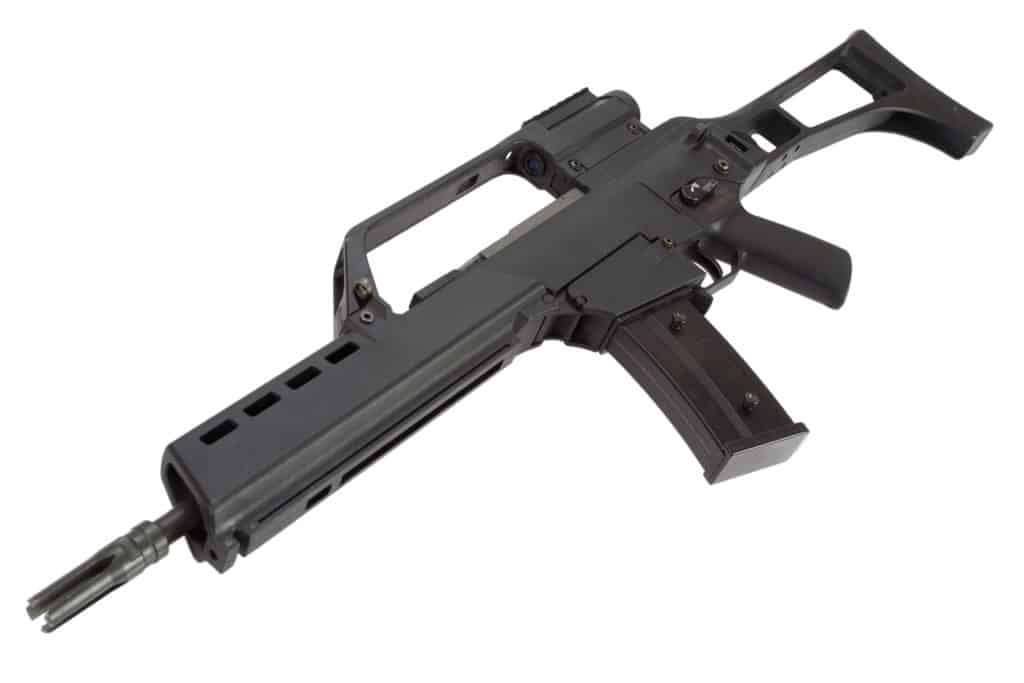
G36 Rifle
The Heckler & Koch G36 is a 5.56x45 mm NATO assault rifle adopted by the German Bundeswehr in 1997 to replace the G3. It uses a… Continued…
-
Gothic Plate Armor
Gothic armor is the name collectors give to the full plate harnesses made in the German lands of the Holy Roman Empire from roughly 1460 to… Continued…
-
HK MP5
The Heckler & Koch MP5 is the submachine gun by which every other has been judged since the 1970s. It shrank the roller-delayed blowback… Continued…
-
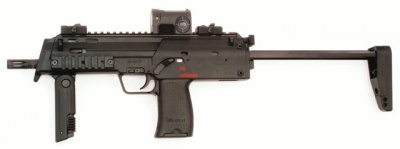
HK MP7
The Heckler & Koch MP7 is a personal defense weapon: a machine pistol the size of a large handgun that fires a small, very fast 4.6x30mm… Continued…
-
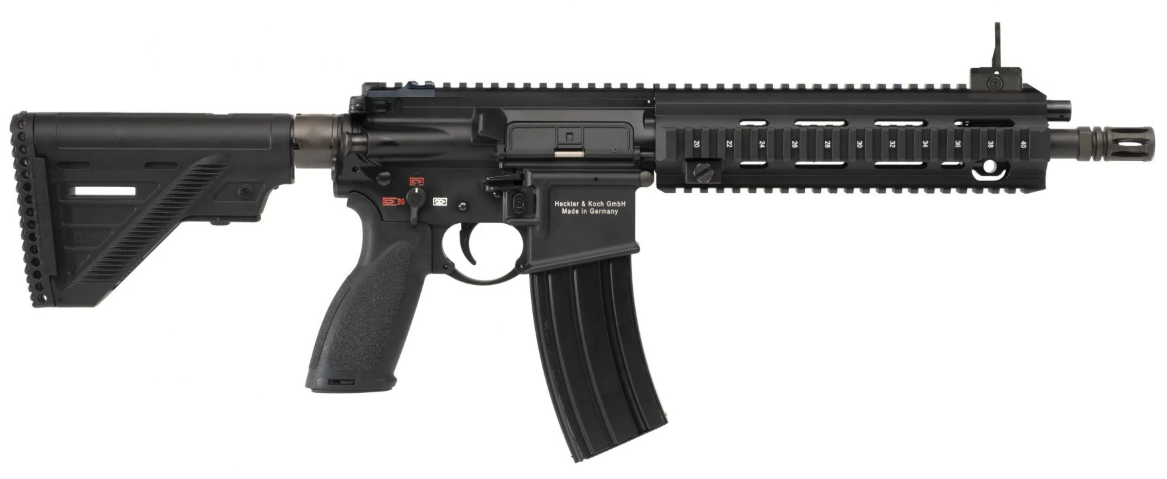
HK416
The Heckler & Koch HK416 is a 5.56mm assault rifle and carbine that keeps the ergonomics, magazines and accessories of the American M4 but… Continued…
-
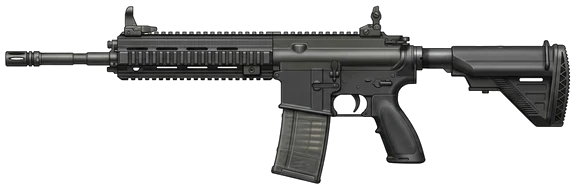
HK417
The HK417 is a 7.62x51mm NATO battle rifle made by Heckler & Koch of Germany. It is the larger-caliber partner of the HK416 and uses the… Continued…
-
Jäger Rifle
The Jäger rifle was the short, heavy-barreled flintlock hunting rifle of the German lands, carried in war by the light troops called Jäger… Continued…
-
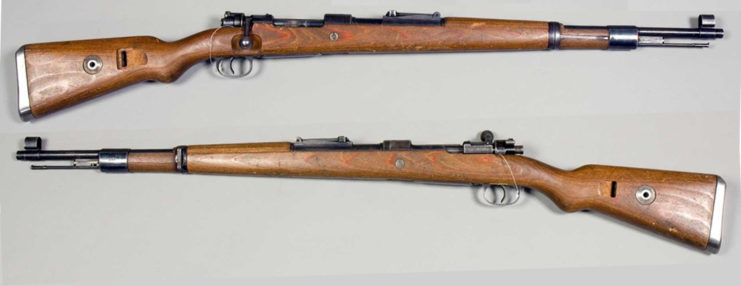
Karabiner 98k
The Karabiner 98k was the standard rifle of the German armed forces in the Second World War. Adopted in 1935, it was a shortened version of… Continued…
-
Landsknecht Zweihänder
The zweihänder was the great two-handed sword of the German Landsknecht mercenaries: up to 1.8 meters of steel with side rings, parrying… Continued…
-
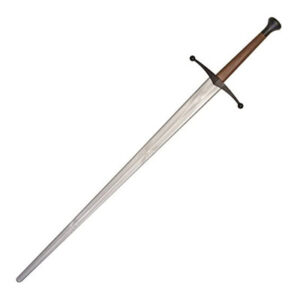
Longsword
The longsword is the two-handed knightly sword of the late Middle Ages and Renaissance: a straight, double-edged blade of roughly 33 to 43… Continued…
-
Luger P08
The Luger P08 is the toggle-locked semi-automatic pistol of the German military through both World Wars, and for many the most recognizable… Continued…
-
MG 42
The MG 42 was the German general-purpose machine gun of the Second World War and the most influential machine gun of the twentieth century.… Continued…
-
MG FF Cannon
The MG FF was a 20 mm aircraft cannon used by the German Luftwaffe from the late 1930s. It was a licensed version of the Swiss Oerlikon FF… Continued…
-
MP 18
The MP 18 was the first practical submachine gun to go into service: a light automatic weapon firing pistol cartridges, designed by Hugo… Continued…
-
MP40
The MP40 was Germany's war-production submachine gun: 9mm Parabellum from an open bolt, a plain tube receiver of stampings and welds, no… Continued…
-
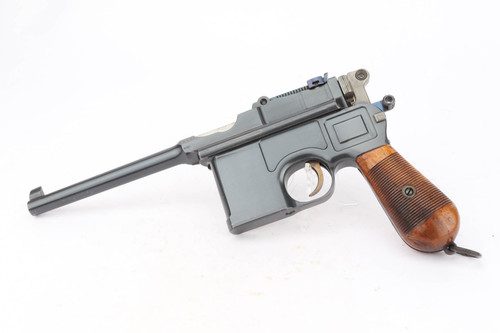
Mauser C96
The Mauser C96 is a German semi-automatic pistol that entered service in 1896, designed by the Feederle brothers at Mauser's Oberndorf… Continued…
-
Mauser Gewehr 98
The Gewehr 98 is the definitive Mauser: the 1898 pattern bolt-action whose controlled-round feed, dual front locking lugs, and massive claw… Continued…
-
Maxim Gun
The Maxim gun was the first true machine gun: a weapon that used the energy of each shot to load and fire the next, and would keep firing… Continued…
-
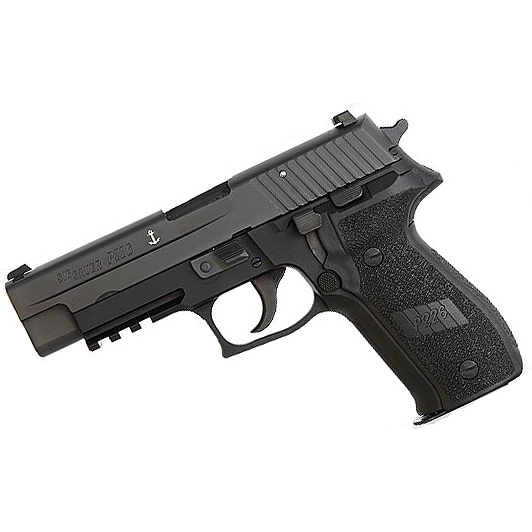
Mk 25
The Mk 25 is the United States Navy's designation for the SIG Sauer P226 as carried by the Navy SEALs: a standard P226 in 9mm with a… Continued…
-
Model 24 Stielhandgranate
The Model 24 Stielhandgranate was the standard German hand grenade of the Second World War, the 'potato masher' of Allied soldiers. It had… Continued…
-
Mondragón Rifle
The Mondragón rifle was the first semi-automatic rifle adopted as the standard service arm of any army. Designed by the Mexican general… Continued…
-
Panzerfaust
The Panzerfaust was a German single-shot, disposable anti-tank weapon of the Second World War. A simple steel tube launched a large… Continued…
-
Pappenheimer Rapier
The Pappenheimer is a type of rapier or heavy cut-and-thrust sword of about 1620-1650, recognized by the two large dished shells, usually… Continued…
-
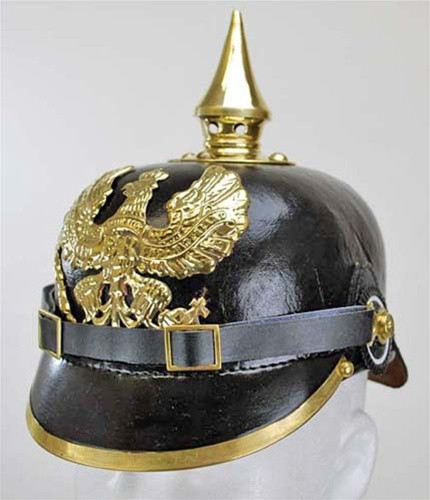
Pickelhaube
The Pickelhaube is the spiked leather helmet of the Prussian and Imperial German armies, adopted by King Frederick William IV in 1842 and… Continued…
-
SC 250 Bomb
The SC 250 was the standard German 250 kg general-purpose bomb of the Second World War. The letters stood for Sprengbombe Cylindrisch… Continued…
-
Schöningen Spear
The Schöningen spears are the oldest complete hunting weapons ever found: about ten wooden spears, most of spruce, excavated between 1994… Continued…
-
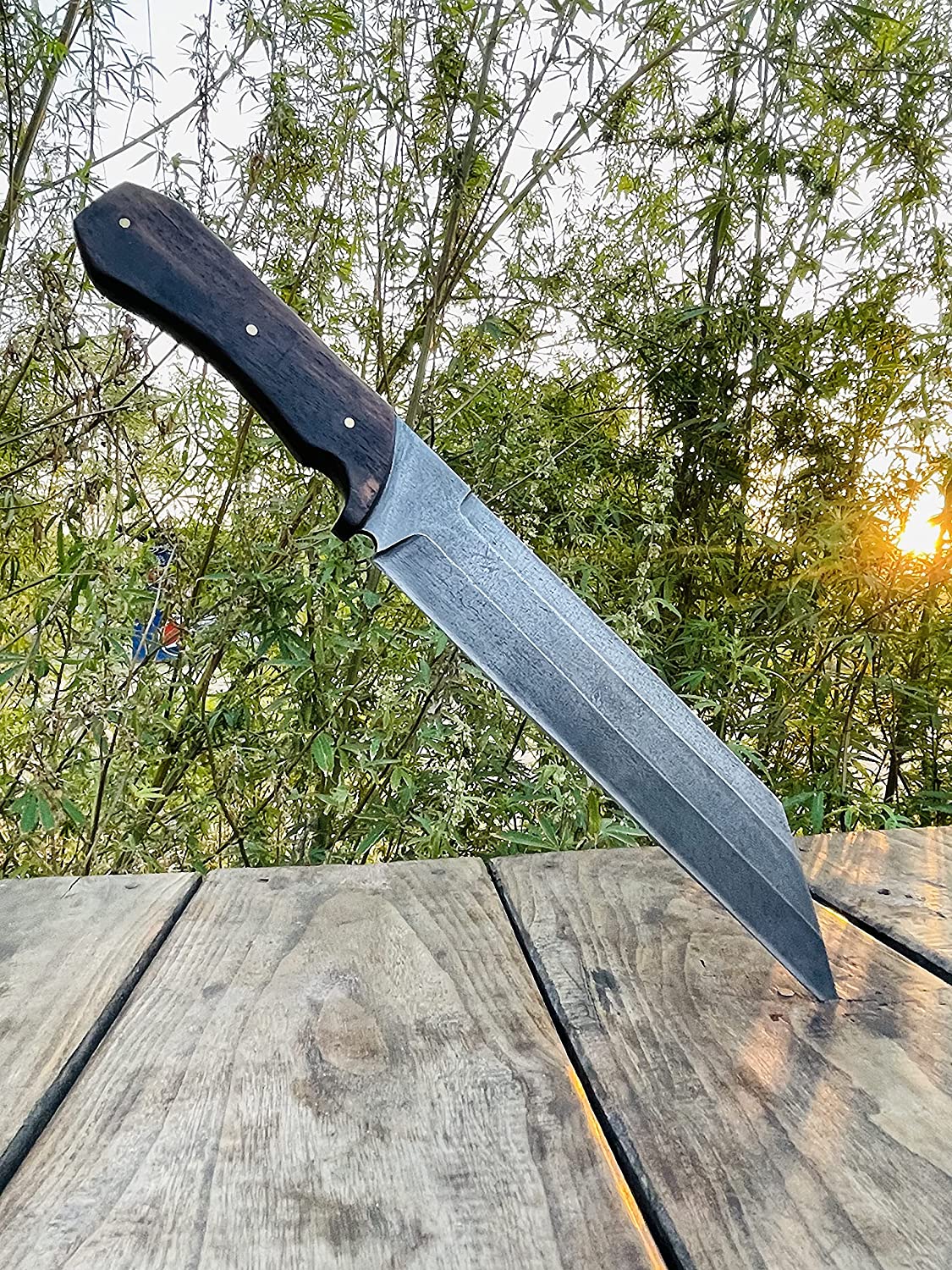
Seax
The seax is the single-edged knife of the early medieval Germanic peoples, carried from the fifth to the eleventh century by Franks… Continued…
-
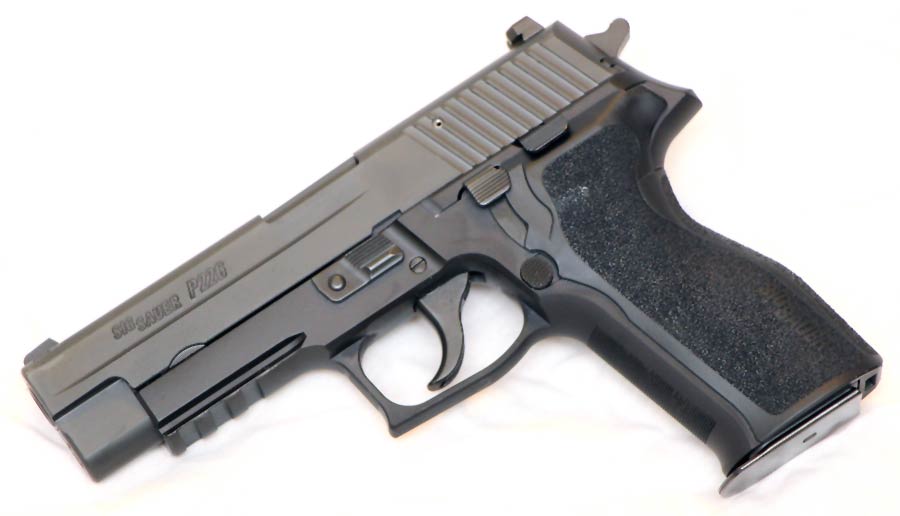
Sig Sauer P226
The SIG Sauer P226 is a full-size double-action service pistol introduced in 1984 for the United States Army's XM9 trials, which it lost to… Continued…
-
StG 44
The StG 44 — Sturmgewehr, 'storm rifle' — was the first true assault rifle: select-fire, stamped-steel, and chambered for the intermediate… Continued…
-
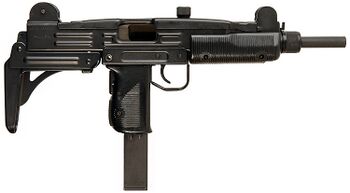
Uzi
The Uzi is a submachine gun designed in Israel by Major Uziel Gal around 1950 and made by Israel Military Industries. By placing the… Continued…
-
Wheellock Pistol
The wheellock was the first self-igniting firearm: a spring-driven steel wheel spun against pyrite to shower sparks into the pan, no… Continued…