Siege of Bastogne
The Siege of Bastogne, from 20 to 27 December 1944, was the best-known episode of the Battle of the Bulge. The US 101st Airborne Division and attached armored, tank destroyer and artillery units held the Belgian road junction of Bastogne while surrounded by German forces, short of ammunition, winter clothing and medical supplies. The acting commander, Brigadier General Anthony McAuliffe, answered a surrender demand with the single word 'Nuts'. Tanks of Patton's Third Army broke through on 26 December.
Also known as Bastogne 1944, Battle of Bastogne, Defense of Bastogne, Siege de Bastogne, Belagerung von Bastogne, Battle of the Bulge Bastogne, Nuts reply, Battered Bastards of Bastogne, Band of Brothers Bastogne, Battleground, Battle of Foy, Bois Jacques, Ardennes Offensive
Background
On 16 December 1944 Germany launched its last major offensive in the west through the Ardennes, aiming to cross the Meuse and reach Antwerp. The attack struck a thinly held American sector in fog and snow that grounded Allied aircraft. In the hilly, wooded Ardennes, movement depended on a few roads, and seven main roads met at the small Belgian town of Bastogne. The German Fifth Panzer Army under General Hasso von Manteuffel needed the town for its supply routes. Its XLVII Panzer Corps, with the 2nd Panzer Division, the Panzer Lehr Division and the 26th Volksgrenadier Division, was ordered to take it quickly or go round it.
The Allied reserve consisted of two airborne divisions resting near Reims after the fighting in the Netherlands. The 101st Airborne was sent to Bastogne by truck on 18 December. Its commander, Major General Maxwell Taylor, was in the United States, so the artillery commander, Brigadier General Anthony McAuliffe, led it. Many men left without winter clothing or full loads of ammunition. Combat Command B of the 10th Armored Division reached the town just ahead of them, and the 705th Tank Destroyer Battalion soon followed.
The Battle
Small armored teams and the first paratroopers fought delaying actions east and north of the town on 19 and 20 December. At Noville, a force of tanks and paratroopers held off the 2nd Panzer Division for most of two days before withdrawing. These fights, and others at Longvilly and Neffe, gave the 101st time to form a perimeter in the villages and woods round Bastogne. The division lost most of its medical company, captured west of the town on the night of 19 December. By 21 December the last road out had been cut. The German panzer divisions moved on west, leaving the 26th Volksgrenadier Division and attached armor to reduce the town.
On 22 December German officers came into the lines under a white flag with a written demand for surrender. McAuliffe's reply read: "To the German Commander: NUTS! The American Commander." The artillery was by then rationed to a few rounds a day. On 23 December the weather cleared, and transport aircraft began dropping supplies by parachute, while fighter-bombers attacked the German positions. German aircraft bombed the town on the night of 24 December. Before dawn on Christmas Day, tanks and infantry broke into the western side of the perimeter near Champs and Hemroulle. Tank destroyers, artillery, and paratroopers with bazookas destroyed the tanks that got through.
Meanwhile General George Patton's Third Army had turned north. Late in the afternoon of 26 December, tanks of the 4th Armored Division reached the perimeter at Assenois, and the siege was broken. On 27 December the corridor was secure enough for supply trucks to come in and ambulances to take out the wounded.
Weapons
The paratroopers and glider infantry fought from foxholes with the M1 Garand, the M1 Carbine, the Thompson Submachine Gun and the M1919 Browning Machine Gun. Against tanks they had the Bazooka and a few anti-tank guns. The defense depended heavily on the attached units: the Sherman tanks of the 10th Armored Division, the fast M18 tank destroyers of the 705th Battalion and several artillery battalions. One of these was the 969th Field Artillery Battalion, an African American unit with 155 mm howitzers.
German infantry carried the Karabiner 98k, the StG 44, the MG 42 and the Panzerfaust, and were supported by Panzer IV and Panther tanks, assault guns and artillery. Cold was an enemy to both sides. Trench foot and frostbite caused many American casualties.
Aftermath
The relief did not end the fighting. Both sides sent more divisions to Bastogne, and the battles round the town in the first two weeks of January 1945 were heavier than those of the siege. The 101st stayed in the line and took part in the attacks northwards on Foy and Noville in mid-January. The division recorded about 2,500 killed, wounded and missing between 19 December and 6 January, and the attached units several hundred more, though figures vary. German losses round Bastogne are not known precisely.
Holding the road junction slowed the German advance and tied down forces needed for the drive to the Meuse. The offensive was halted before the end of December, and the Bulge was eliminated by late January. The 101st was awarded the Presidential Unit Citation, the first time a whole division received it. The battle is part of the wider story of World War II.
On Screen
The HBO miniseries Band of Brothers (2001), based on Stephen Ambrose's book, follows Easy Company of the 506th Parachute Infantry in two episodes. "Bastogne", directed by David Leland, shows the siege through the medic Eugene Roe in the woods near Foy. "The Breaking Point", directed by David Frankel, covers the attack on Foy in January 1945, after the siege had been lifted. Damian Lewis plays Richard Winters. The cold, the shelling and the shortages are faithfully shown. Roe's meetings with the Belgian nurse Renée Lemaire, a real person killed in the bombing of 24 December, are dramatized, and the portrayal of Lieutenant Norman Dike at Foy has been disputed. Battleground (1949), directed by William Wellman, follows a fictional squad of the 327th Glider Infantry. It was shot mostly on studio sets and includes the "Nuts" reply.
Weapons used
-
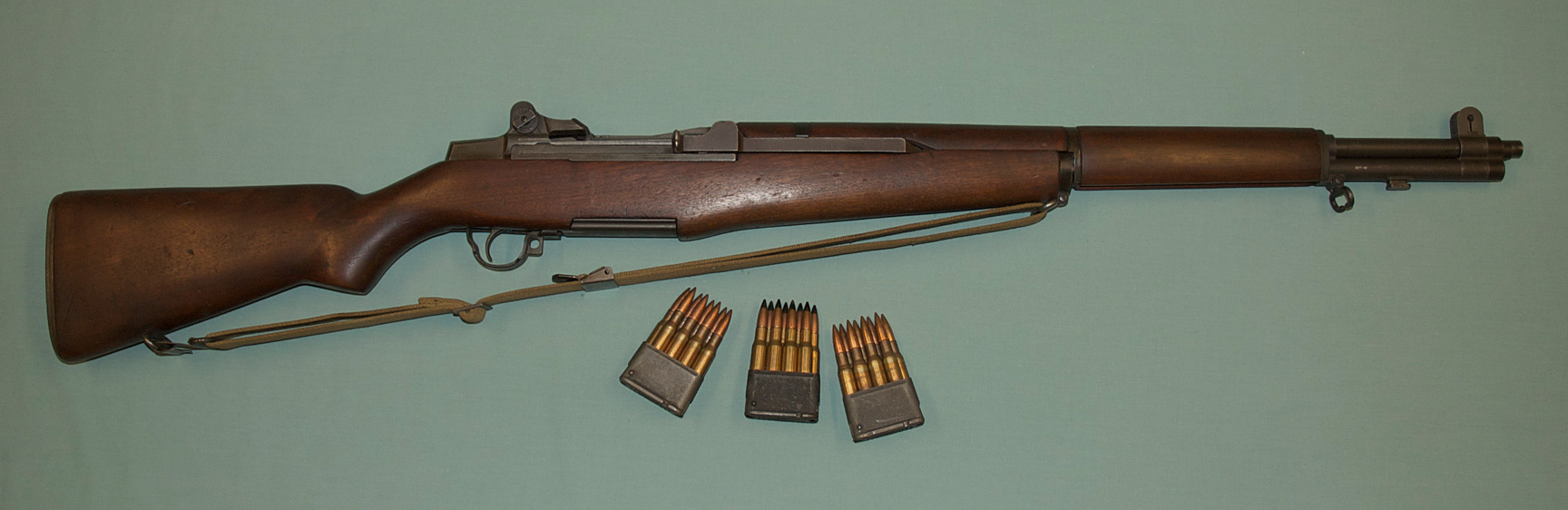
M1 Garand
The M1 Garand was the rifle of the paratroopers and glider infantry who held the perimeter. Continued…
-
M1 Carbine
Officers, gun crews and many airborne soldiers carried the light M1 Carbine. Continued…
-
Thompson Submachine Gun
Thompsons were carried by airborne leaders and armored crews for close-range fighting in woods and villages. Continued…
-
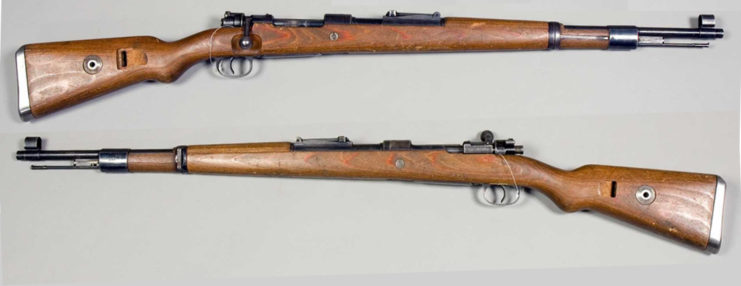
Karabiner 98k
The Karabiner 98k was the standard rifle of the German divisions surrounding the town. Continued…
-
StG 44
Volksgrenadier assault troops were among the German units issued the StG 44 assault rifle in numbers. Continued…
-
Bazooka
Bazooka teams engaged the German tanks that broke into the perimeter, notably on Christmas Day. Continued…
-
Panzerfaust
German infantry carried the Panzerfaust against the American tanks and tank destroyers inside the ring. Continued…
-
MG 42
MG 42 machine guns supported every German attack on the foxhole line. Continued…
Sources
Marshall, S. L. A. Bastogne: The Story of the First Eight Days. Infantry Journal Press, 1946.
Cole, Hugh M. The Ardennes: Battle of the Bulge. Office of the Chief of Military History, Department of the Army, 1965.
MacDonald, Charles B. A Time for Trumpets: The Untold Story of the Battle of the Bulge. William Morrow, 1985.
Ambrose, Stephen E. Band of Brothers: E Company, 506th Regiment, 101st Airborne from Normandy to Hitler's Eagle's Nest. Simon & Schuster, 1992.
Suggest an edit · account required · reviewed before publishing · how it works