Force
101st Airborne
The Screaming Eagles — from the Normandy drops and Bastogne to modern air assault.
Origins
The 101st Airborne Division was activated on 16 August 1942 at Camp Claiborne, Louisiana, as the U.S. Army raced to build a parachute force for World War II. Its first commander, Major General William C. Lee, often called the father of the American airborne, told his new soldiers that the division had "no history, but it has a rendezvous with destiny." The division's shoulder patch shows the head of a bald eagle, taken from Old Abe, the eagle mascot of a Wisconsin regiment in the Civil War, and from it came the nickname the Screaming Eagles.
Organization & Training
In the Second World War the division was built around parachute and glider infantry, chiefly the 502nd and 506th Parachute Infantry Regiments and the 327th Glider Infantry, with the 501st Parachute Infantry attached for the campaign in Europe. Every paratrooper was a volunteer, and each went through jump school at Fort Benning, Georgia, where five qualifying jumps earned the silver jump wings. The 506th trained at Camp Toccoa, Georgia, running again and again up nearby Currahee Mountain, whose name became the regiment's motto.
After the war the division was reactivated in 1956 at Fort Campbell, Kentucky, still its home. In 1968 it was converted to an airmobile division and in 1974 it became the Army's only air assault division, moving by helicopter rather than parachute.
Weapons & Equipment
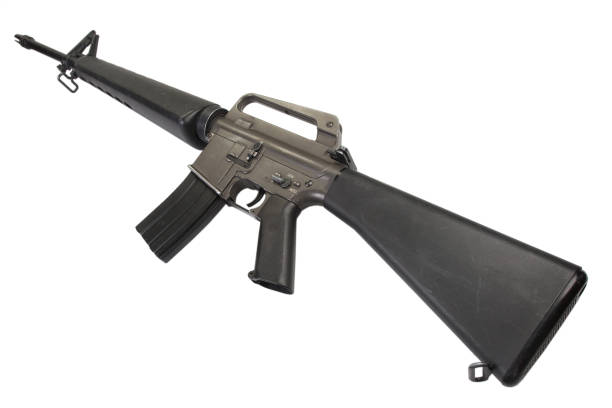
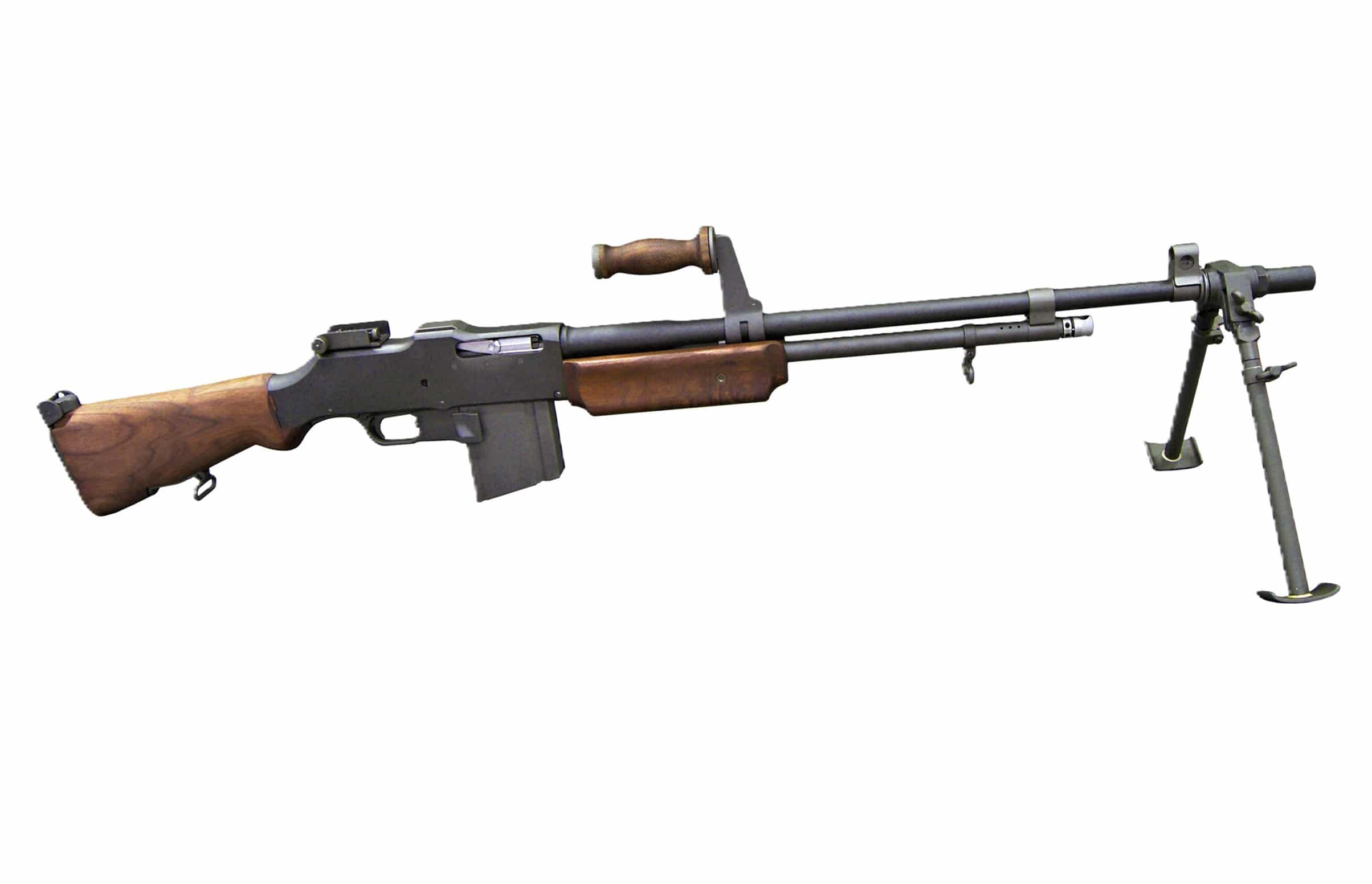
In 1944 riflemen carried the M1 Garand, and many officers and support troops the folding-stock version of the M1 Carbine, designed with airborne troops in mind. The Thompson Submachine Gun and the M1911 Pistol were widely carried, and squads relied on the M1918 BAR and the M1919 Browning Machine Gun for heavier fire. Paratroopers wore a version of the M1 Helmet with a stronger chinstrap for the jump. In Vietnam the division fought with the M16 Rifle, the M60 Machine Gun and the M79 Grenade Launcher. Today's Screaming Eagles carry the M4 carbine, the M249 Squad Automatic Weapon and the SIG Sauer M17, with snipers using weapons such as the M110 Semi-Automatic Sniper System.
Notable Actions
In the first hours of 6 June 1944 the division dropped by night over Normandy. Cloud and flak scattered the aircraft, but small, mixed groups fought their way to the causeways leading inland from Utah Beach, which helped the seaborne landings of the Normandy Landings succeed. The division then took the town of Carentan against German paratroopers of the Fallschirmjäger. In September 1944 it jumped into Holland for Operation Market Garden and held the long road north that its men called Hell's Highway.
Bastogne made it famous. In December 1944 the division was rushed by truck into the Ardennes to hold the road junction town against the German offensive known as the Battle of the Bulge. Surrounded, short of winter clothing and ammunition, and shelled for days, it refused a German demand to surrender on 22 December with the acting commander Brigadier General Anthony McAuliffe's one-word reply, "Nuts!" Tanks of Patton's Third Army broke through on 26 December, though the division has always said it did not need rescuing.
In Vietnam the 101st fought from 1965 to 1972, and in May 1969 took Hill 937, known as Hamburger Hill, at heavy cost. In the 1991 Gulf War it carried out a huge helicopter assault deep into Iraq as part of the coalition's great western sweep, and it later served repeated tours in Iraq and Afghanistan.
Legacy
Easy Company of the 506th, followed from training to the war's end in Stephen Ambrose's book Band of Brothers and the television series made from it, became the best-known rifle company of the war. The division's larger legacy is the idea it has carried since 1942: light infantry that arrives from the air, where the enemy least expects it.
Battles & Operations
-
Normandy Landings (6 June 1944)
The Normandy Landings of 6 June 1944, D-Day, were the largest seaborne invasion in history and the start of the Allied liberation of… Continued…
-
Siege of Bastogne (20-27 December 1944)
The Siege of Bastogne, from 20 to 27 December 1944, was the best-known episode of the Battle of the Bulge. The US 101st Airborne Division… Continued…
Weapons
-
Bangalore Torpedo
The Bangalore torpedo is a long explosive charge made of steel tubes that can be joined end to end, pushed under barbed wire or across a… Continued…
-
Bazooka
The bazooka was the American 2.36-inch shoulder-fired rocket launcher of the Second World War, built as the M1, M1A1 and M9. Introduced in… Continued…
-
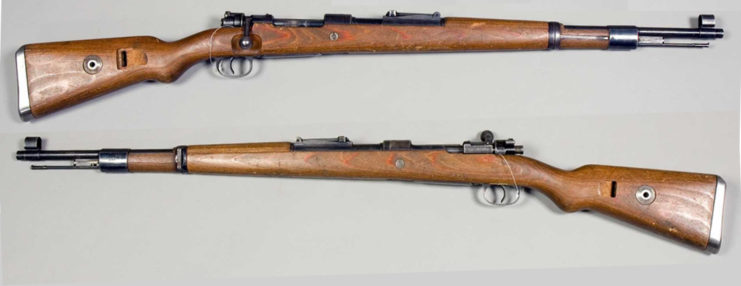
Karabiner 98k
The Karabiner 98k was the standard rifle of the German armed forces in the Second World War. Adopted in 1935, it was a shortened version of… Continued…
-
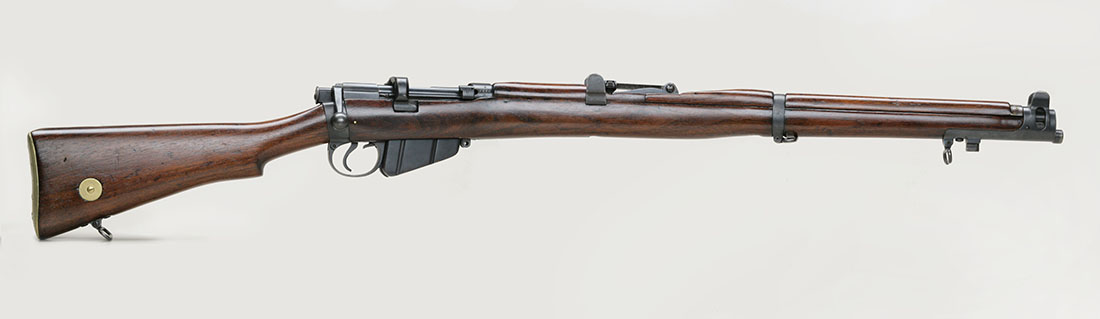
Lee-Enfield Rifle
The Lee-Enfield was the British Empire's rifle for over half a century: a bolt-action .303 whose rear-locking action and ten-round magazine… Continued…
-
M1 Carbine
The M1 Carbine was the most-produced American small arm of the Second World War: a five-pound, semi-automatic .30-caliber carbine designed… Continued…
-
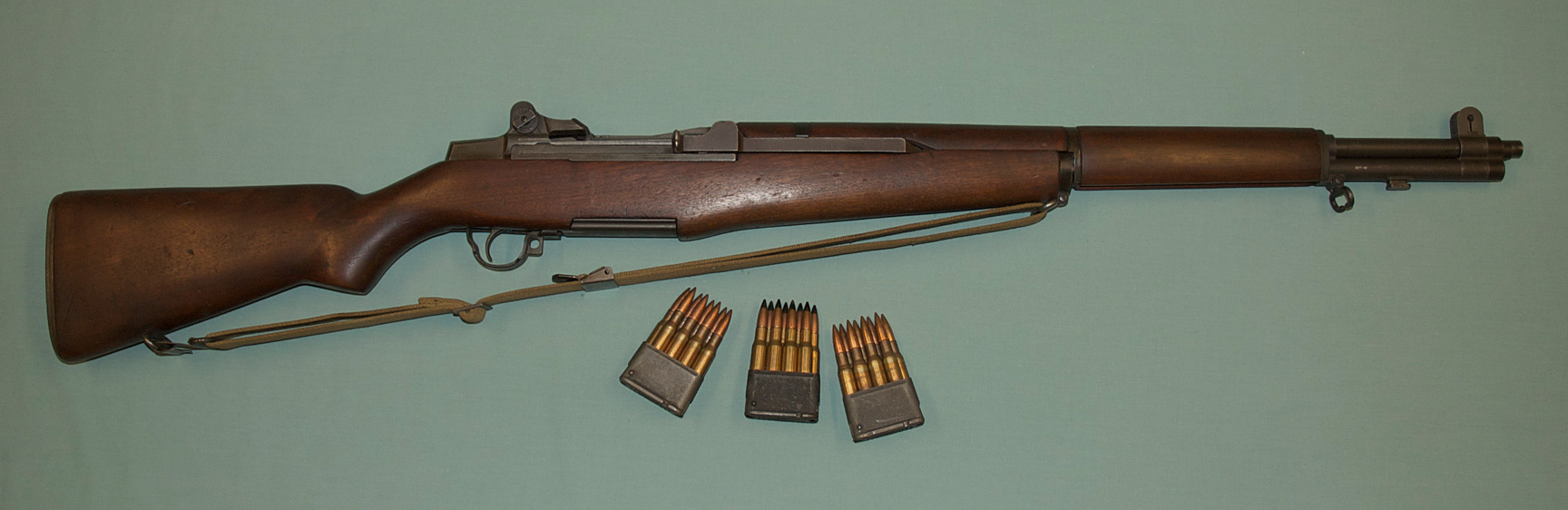
M1 Garand
The M1 Garand was the first semi-automatic rifle adopted as the standard arm of any major power, giving the American infantryman of the… Continued…
-
M1 Helmet
The M1 helmet was the steel combat helmet of the United States armed forces from 1941 until the mid 1980s, worn through the Second World… Continued…
-
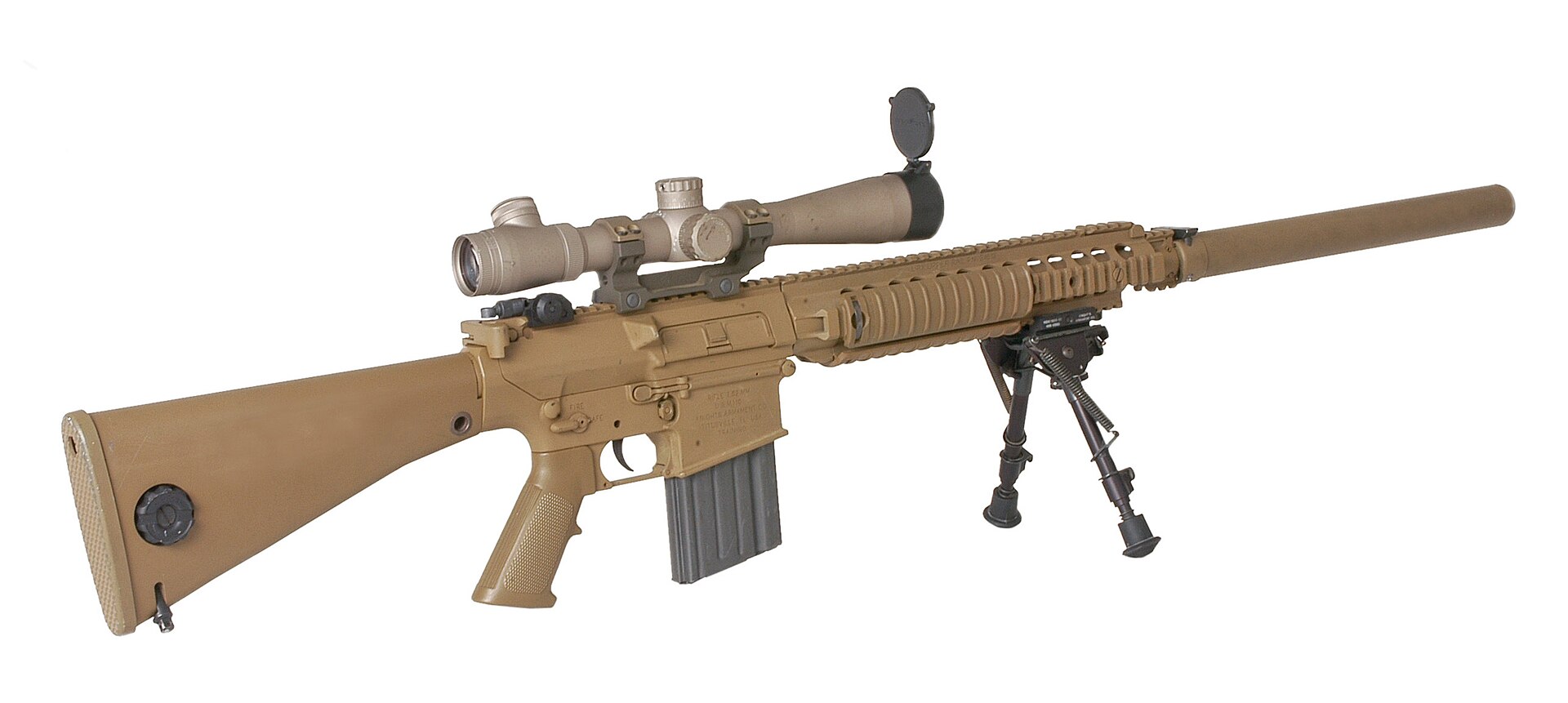
M110 Semi-Automatic Sniper System
The M110 Semi-Automatic Sniper System is the United States Army's self-loading 7.62mm sniper rifle, adopted in 2008 to give sniper teams… Continued…
-
M16 Rifle
The M16 brought the assault rifle to the West: Eugene Stoner's AR-15 design in 5.56mm, built of aluminum forgings and polymer around a… Continued…
-
M1903 Springfield
The M1903 Springfield was the United States' service rifle from 1903 until the M1 Garand replaced it in the late 1930s, and a sniper's and… Continued…
-
M1911 Pistol
The M1911 is John Browning's masterpiece: a short-recoil, single-action semi-automatic in .45 ACP that served as the standard American… Continued…
-
M1918 BAR
The Browning Automatic Rifle was John Moses Browning's shoulder-fired automatic weapon, adopted by the United States Army in 1918 and the… Continued…
-
M1919 Browning Machine Gun
The M1919 Browning is John Browning's water-cooled M1917 machine gun made air-cooled: a short-recoil, belt-fed .30-06 weapon that armed… Continued…
-
M21 Sniper Weapon System
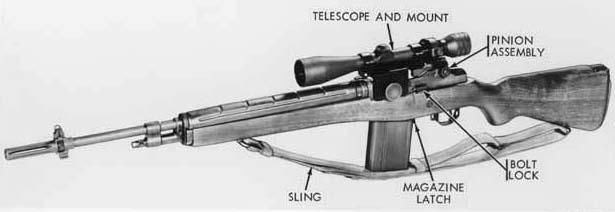
The M21 Sniper Weapon System was the United States Army's sniper rifle from 1969 to 1988: a National Match M14 selected for accuracy… Continued…
-
M24 Sniper Weapon System
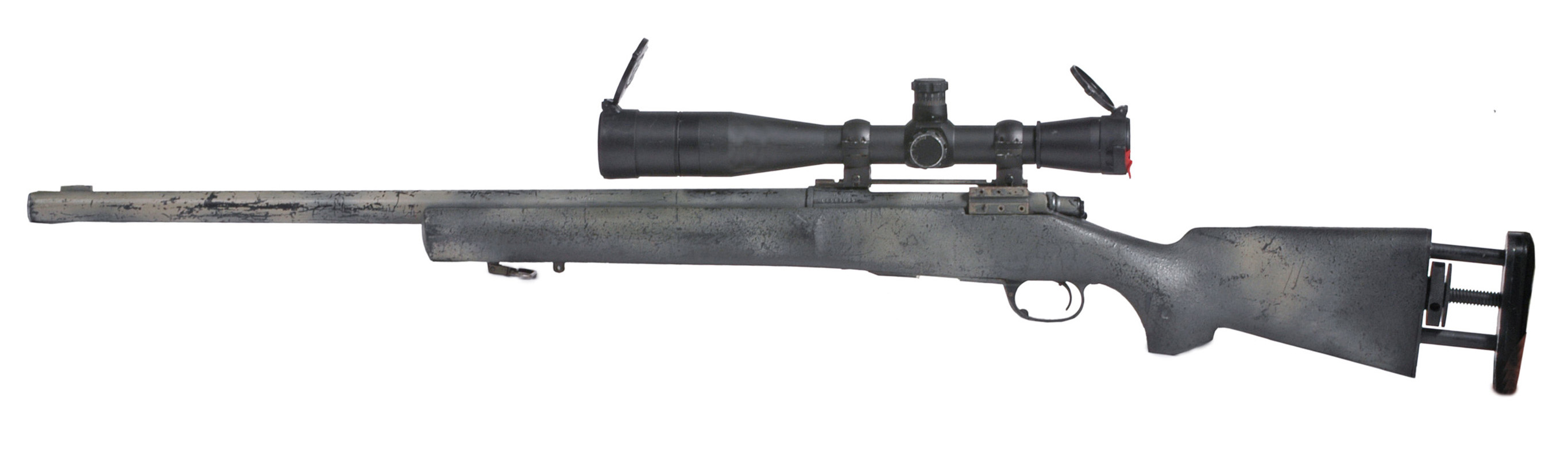
The M24 Sniper Weapon System was the United States Army's standard sniper rifle from 1988 until the 2010s: a Remington Model 700 long… Continued…
-
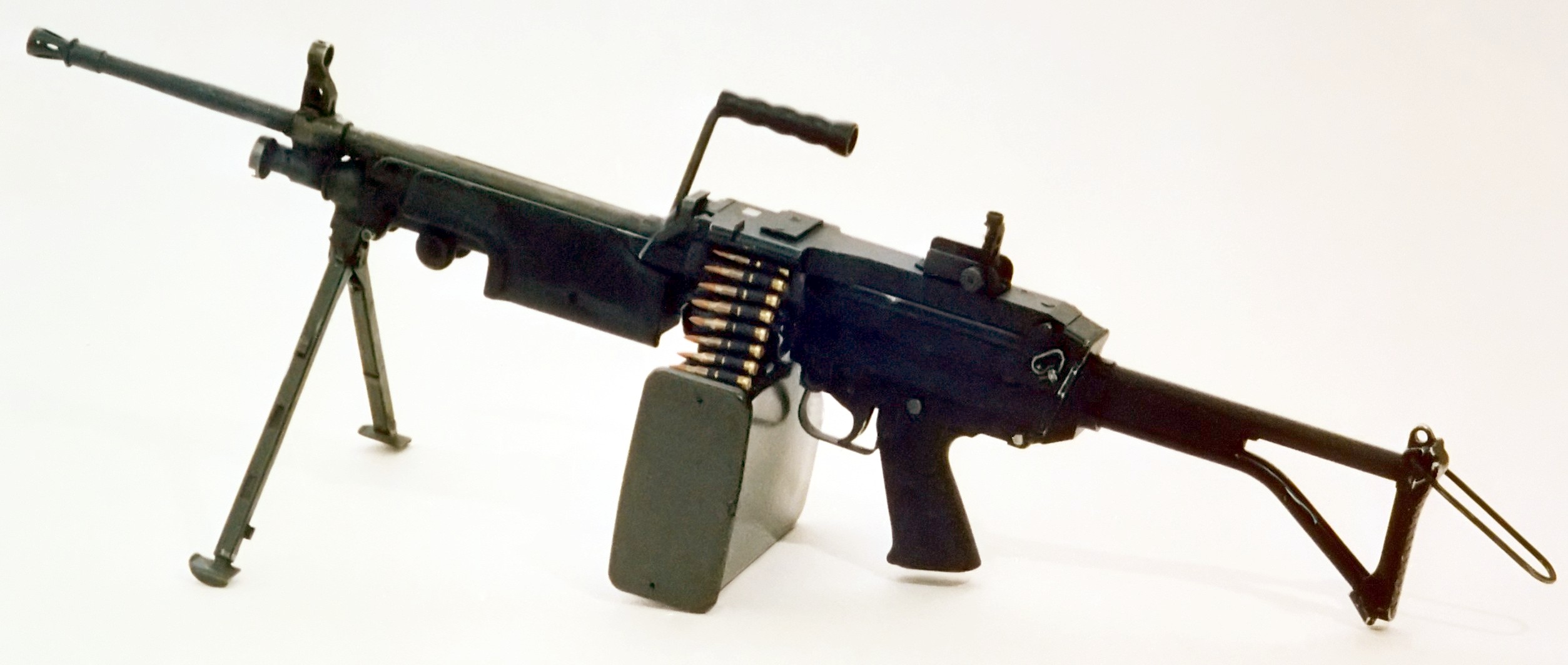
M249 Squad Automatic Weapon
The M249 Squad Automatic Weapon is the American version of the Belgian FN Minimi: a gas-operated, belt-fed 5.56mm light machine gun light… Continued…
-
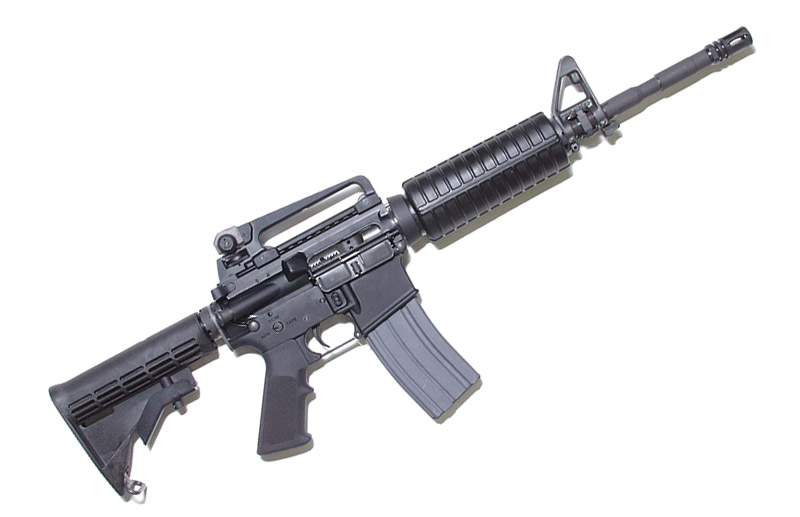
M4 Carbine
The M4 carbine is a shortened, lighter version of the M16 rifle, made by Colt and adopted by the US Army in 1994. It has a 14.5-inch… Continued…
-
M60 Machine Gun
The M60 was the United States' first general-purpose machine gun: a belt-fed 7.62mm weapon light enough for one soldier to carry on the… Continued…
-
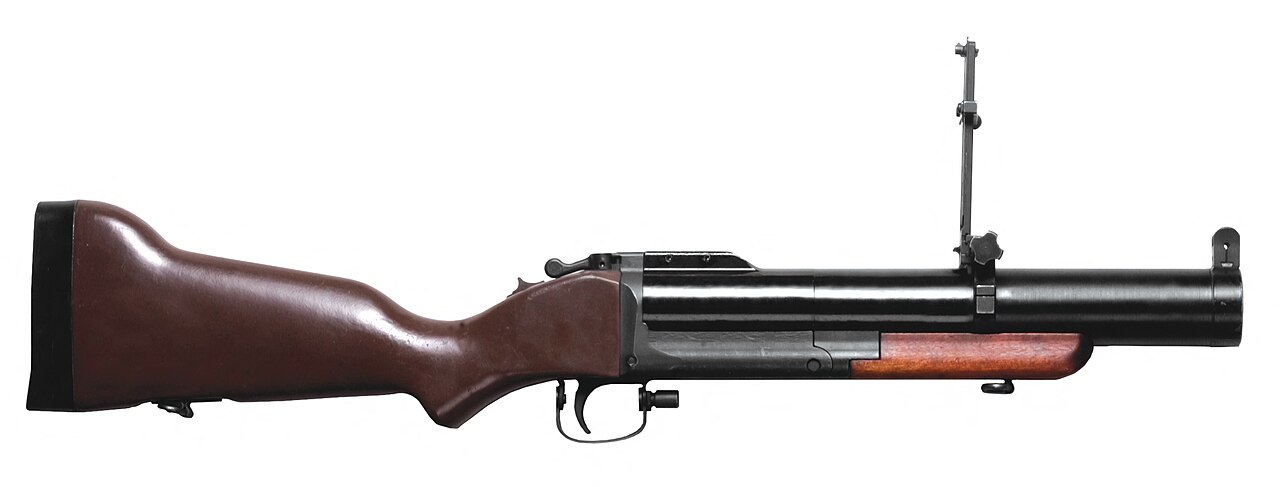
M79 Grenade Launcher
The M79 is a single-shot, break-open, shoulder-fired grenade launcher that fires a 40x46mm low-velocity grenade to about 400 meters… Continued…
-
MG 42
The MG 42 was the German general-purpose machine gun of the Second World War and the most influential machine gun of the twentieth century.… Continued…
-
PASGT Helmet
The PASGT helmet was the standard combat helmet of the United States armed forces from the early 1980s until the mid-2000s. Its name stands… Continued…
-
Panzerfaust
The Panzerfaust was a German single-shot, disposable anti-tank weapon of the Second World War. A simple steel tube launched a large… Continued…
-
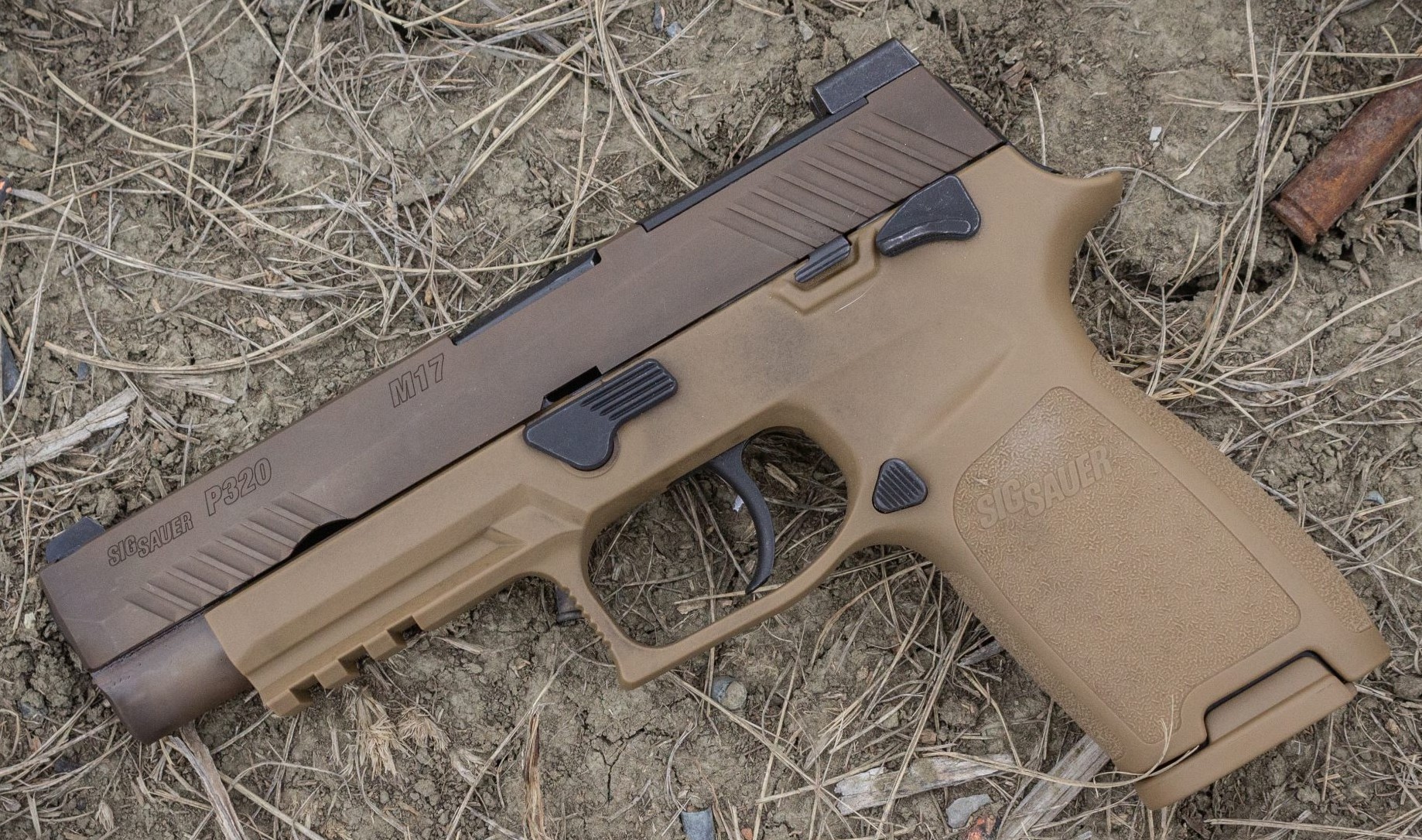
SIG Sauer M17
The M17 and its compact sibling the M18 are the service pistols of the United States armed forces, variants of the SIG Sauer P320 selected… Continued…
-
StG 44
The StG 44 — Sturmgewehr, 'storm rifle' — was the first true assault rifle: select-fire, stamped-steel, and chambered for the intermediate… Continued…
-
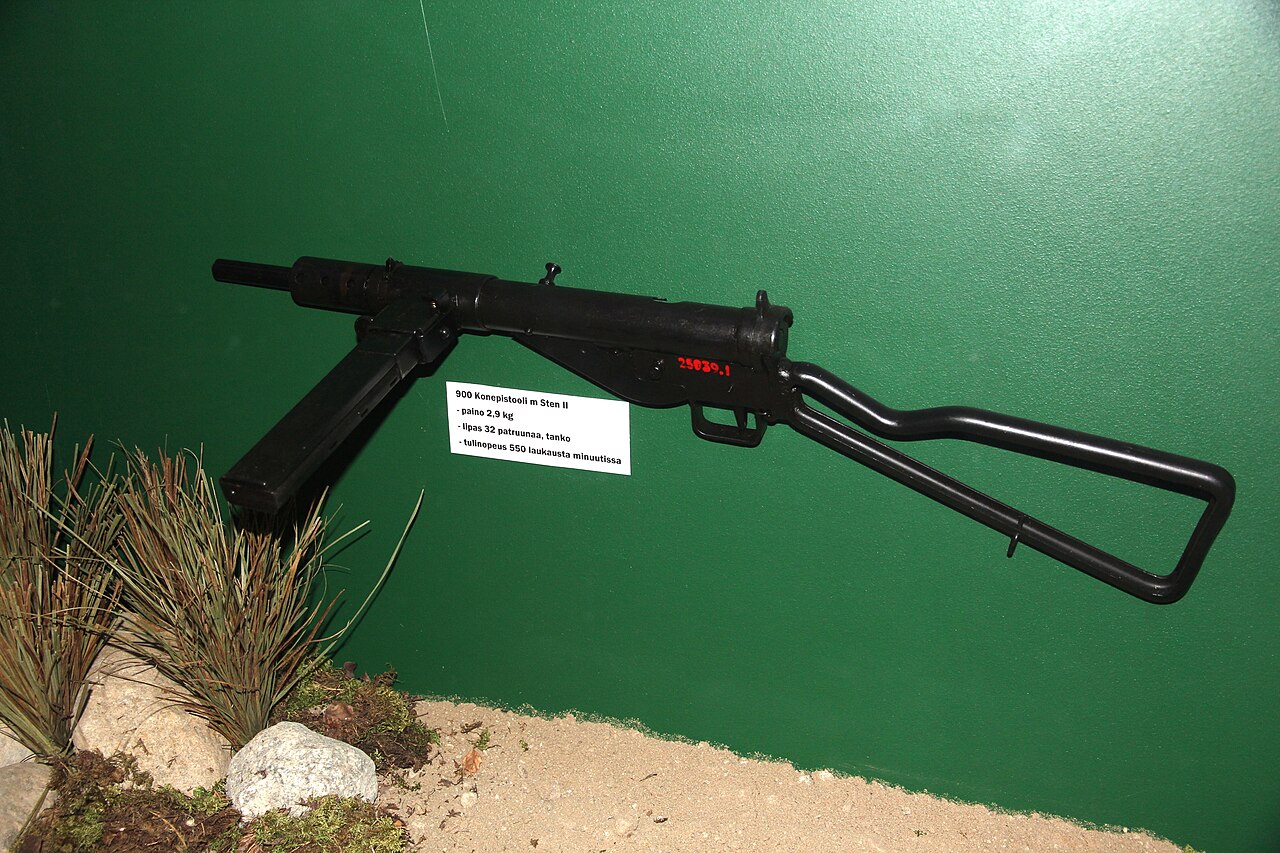
Sten Gun
The Sten was Britain's emergency submachine gun: a 9mm open-bolt weapon of stampings, tube, and spot welds that cost a few pounds and a few… Continued…
-
Thompson Submachine Gun
The Thompson was America's first submachine gun: a .45 ACP automatic designed as a trench broom for a war that ended before it shipped.… Continued…