Normandy Landings
The Normandy Landings of 6 June 1944, D-Day, were the largest seaborne invasion in history and the start of the Allied liberation of Western Europe. After midnight, American and British airborne divisions dropped behind the coast to secure the flanks. At dawn, after a heavy air and naval bombardment, American, British and Canadian troops landed on five beaches code-named Utah, Omaha, Gold, Juno and Sword. Omaha nearly failed under fire from the bluffs, but by nightfall about 156,000 Allied troops were ashore in France.
Also known as D-Day, Operation Neptune, Operation Overlord, Omaha Beach, Utah Beach, Gold Beach, Juno Beach, Sword Beach, Pointe du Hoc, Pegasus Bridge
Background
By 1944 the Allies had planned for two years to invade northern France, and General Dwight D. Eisenhower was made supreme commander of the operation, code-named Overlord, with its naval and landing phase called Neptune. The Germans expected the invasion at the Pas-de-Calais, the shortest crossing, and an Allied deception plan encouraged that belief. Instead the Allies chose the coast of Normandy between the Cotentin peninsula and the mouth of the Orne. Field Marshal Erwin Rommel had strengthened the Atlantic Wall there with bunkers, mines and beach obstacles, but many of the defending divisions were second-rate. Bad weather delayed the invasion by a day, and Eisenhower gave the order to go for 6 June after a forecast of a short break in the storm. Rommel had gone home to Germany for his wife's birthday.
The Battle
The airborne landings began soon after midnight. On the eastern flank the British 6th Airborne Division seized the bridges over the Caen Canal and the Orne, including Pegasus Bridge, taken by glider troops in a few minutes, and attacked the Merville Battery. On the western flank the American 82nd and 101st Airborne divisions jumped over the Cotentin. Cloud and anti-aircraft fire scattered them widely, but small groups fought their way to the causeways behind Utah Beach and confused the Germans. Among the enemy units they met in the following days was the 6th Fallschirmjäger Regiment near Carentan. At dawn the seaborne landings began. On Utah the US 4th Infantry Division came ashore south of its planned beach, against light defenses, and lost fewer than 200 men. On Omaha the 1st and 29th Infantry Divisions faced high bluffs held by the German 352nd Infantry Division, and many of their amphibious tanks sank on the way in. For hours the troops were pinned on the shingle, until small groups led by junior officers and sergeants worked their way up the draws and the bluffs. West of Omaha the 2nd Ranger Battalion of the US Army Rangers climbed the cliffs at Pointe du Hoc with ropes and ladders, found that the big guns had been moved inland, and destroyed them. The British landed on Gold and Sword and the Canadians on Juno, where specialist armored vehicles helped clear mines and obstacles. A German panzer counterattack reached the coast between Juno and Sword in the evening but was forced back.
Weapons
The American infantry fought with the M1 Garand, the M1918 BAR and the Thompson Submachine Gun, and many paratroopers carried the M1 Carbine. Engineers used the Bangalore Torpedo to breach the wire on Omaha. British and Canadian troops carried the Lee-Enfield Rifle and the Sten Gun. The defenders, including the Fallschirmjäger inland, used the Karabiner 98k and the MG 42.
Aftermath
Allied casualties on D-Day are usually estimated at about 10,000 killed, wounded and missing, of whom roughly 4,400 were killed. Omaha cost about 2,000 or more. None of the beachheads reached all its first-day objectives, and Caen held out until July, but the Germans could not throw the Allies back into the sea. Within a week the beaches were joined into a single front, and the breakout from Normandy at the end of July opened the way to Paris and Germany in the last year of World War II.
Weapons used
-
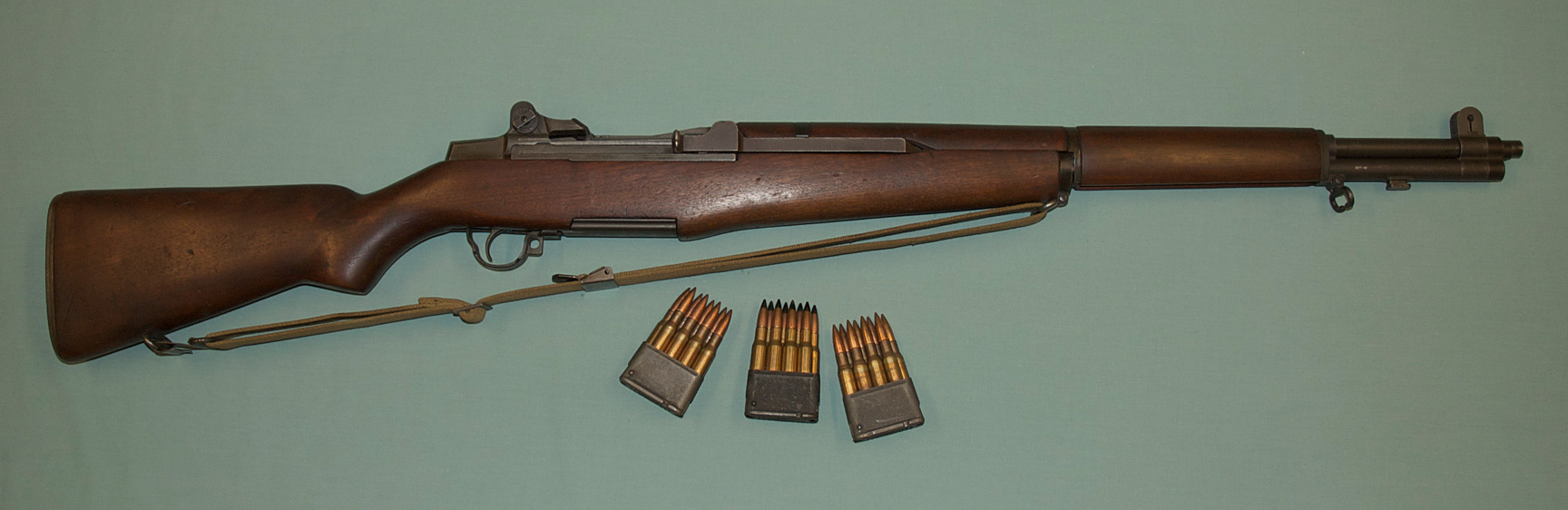
M1 Garand
The standard rifle of the American infantry and paratroopers who landed on Utah and Omaha and dropped behind them. Continued…
-
M1 Carbine
Carried by many paratroopers of the 101st and 82nd Airborne, including folding-stock versions made for airborne troops. Continued…
-
Thompson Submachine Gun
Carried by American paratroopers, Rangers and NCOs, and by British commandos. Continued…
-
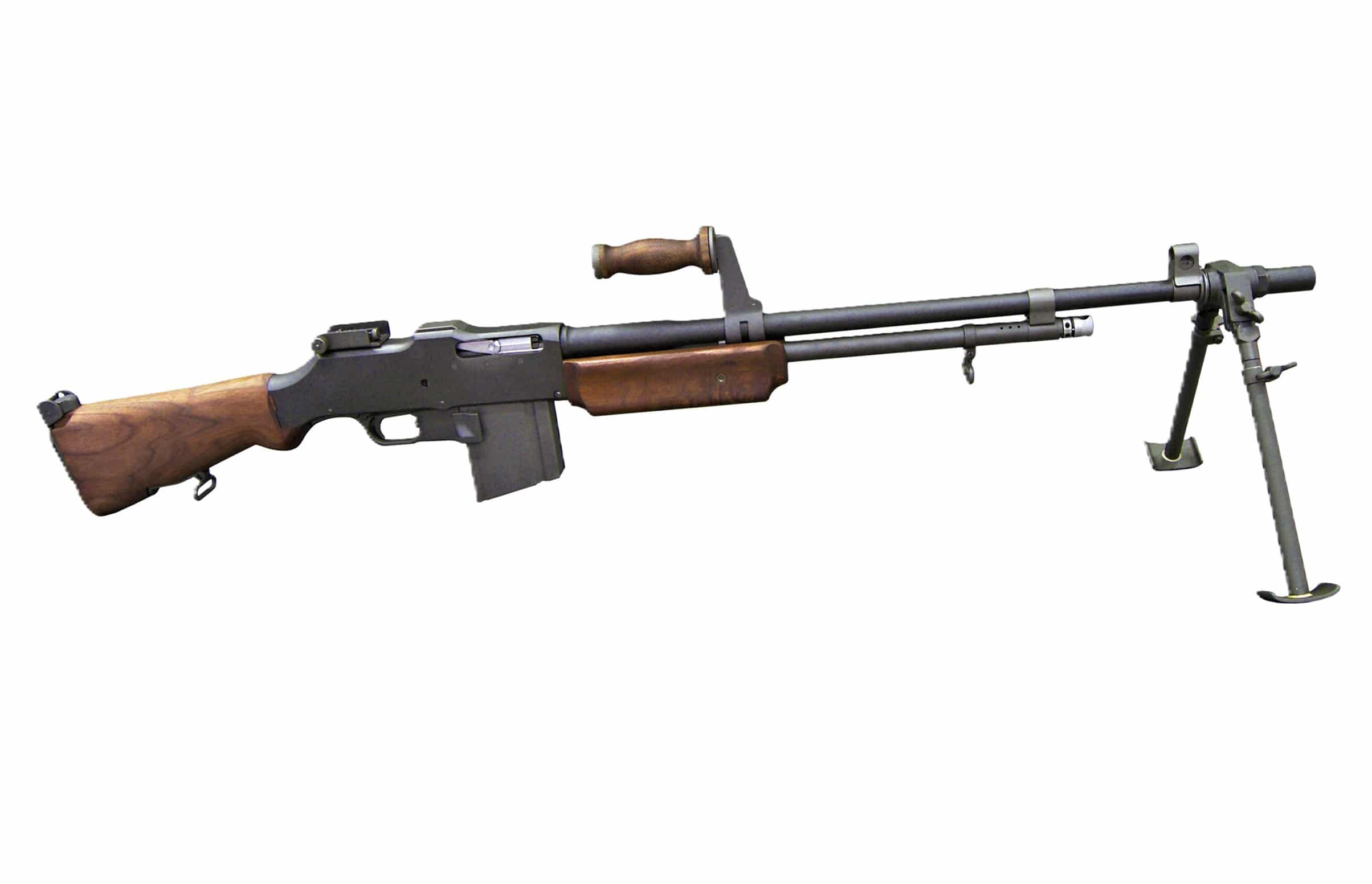
M1918 BAR
The automatic rifle of the American rifle squad on the beaches and in the hedgerows beyond them. Continued…
-
Bangalore Torpedo
American engineers and infantry, including the 5th Rangers, used Bangalore torpedoes to blow gaps in the wire at the top of Omaha Beach. Continued…
-
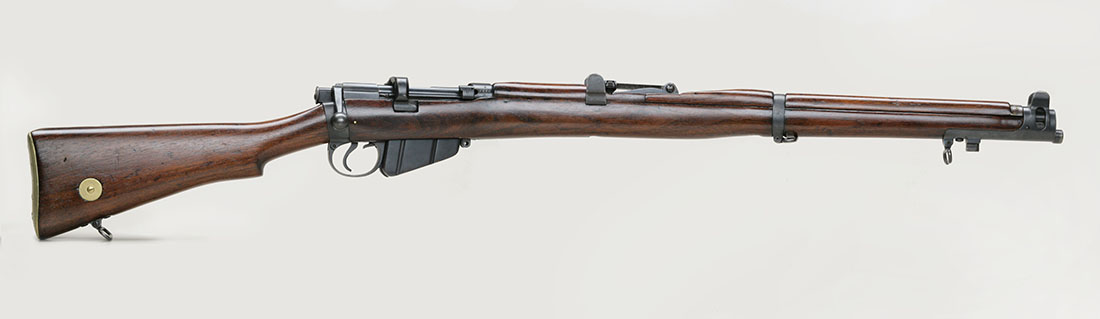
Lee-Enfield Rifle
The No. 4 Lee-Enfield was the rifle of the British and Canadian infantry on Gold, Juno and Sword. Continued…
-
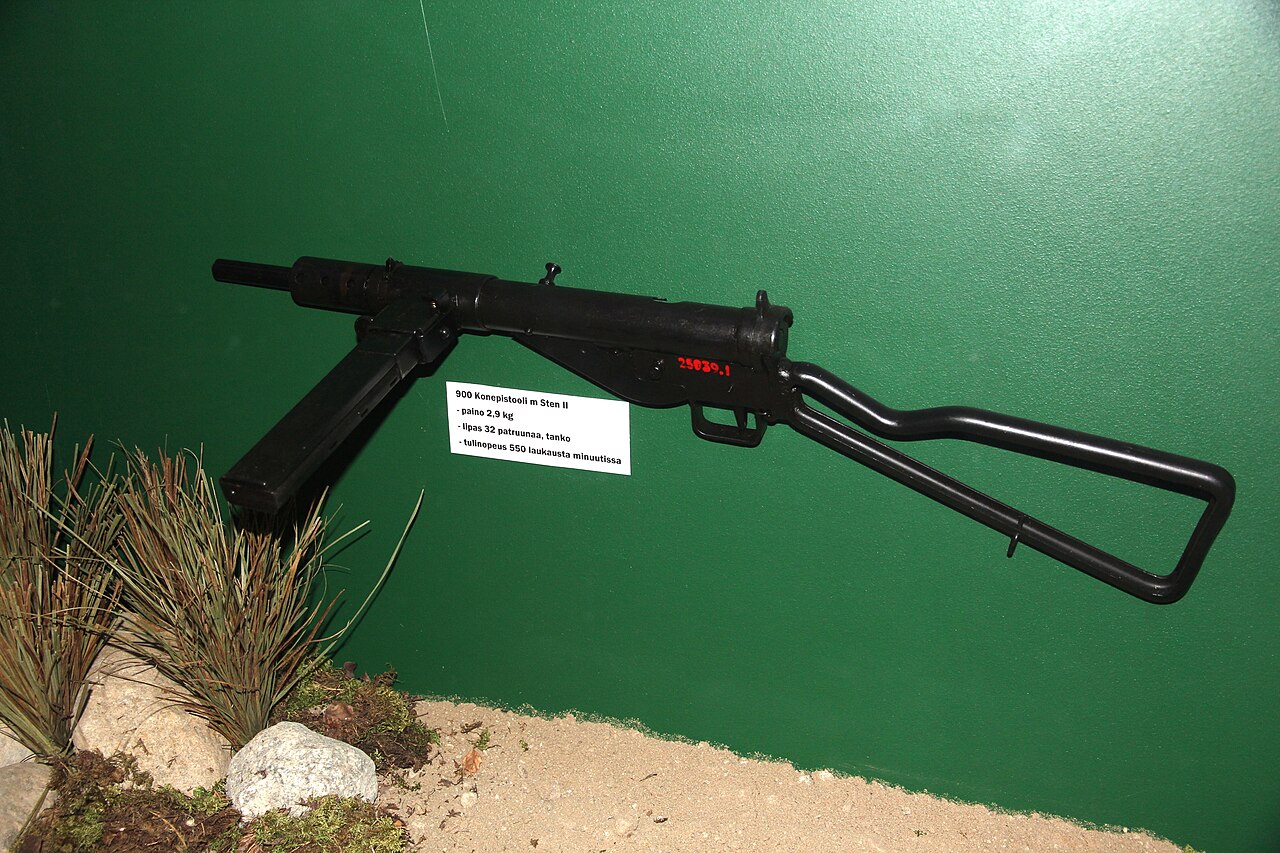
Sten Gun
British paratroopers of the 6th Airborne Division, including the men who took Pegasus Bridge, carried the Sten. Continued…
-
MG 42
The fast-firing German machine gun caused many of the casualties on Omaha Beach from positions on the bluffs. Continued…
-
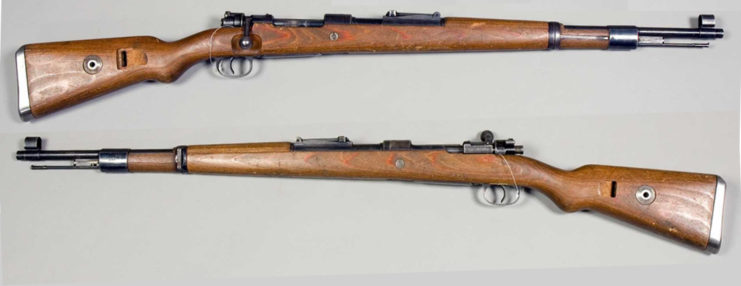
Karabiner 98k
The rifle of the German coastal divisions and of the Fallschirmjäger who fought the American paratroopers. Continued…
Sources
Harrison, Gordon A. Cross-Channel Attack. United States Army in World War II. Office of the Chief of Military History, 1951.
Ambrose, Stephen E. D-Day, June 6, 1944: The Climactic Battle of World War II. Simon & Schuster, 1994.
Beevor, Antony. D-Day: The Battle for Normandy. Viking, 2009.
Balkoski, Joseph. Omaha Beach: D-Day, June 6, 1944. Stackpole Books, 2004.
Suggest an edit · account required · reviewed before publishing · how it works