Origin
France
France was a dominant military power for centuries and a major influence on weapons development. The Charleville musket set the standard for Napoleonic infantry arms. France later developed the Chassepot and Lebel rifles, Mitrailleuse volley gun, and pioneered use of poison gas in WWI.
Overview
France has been a dominant military power for much of the past five centuries and a significant weapons innovator. French arms design influenced global military equipment repeatedly — the Charleville musket defined Napoleonic infantry, the Minié ball enabled the rifle revolution, the French 75 field gun was the most famous artillery piece of WWI, and France pioneered several aspects of early aviation and armored warfare.
Key Weapons by Era
Medieval
- French knights carried standard European arming swords, lances, and armor. French crossbowmen (Genoese mercenaries at Crécy) were devastated by English longbowmen.
Early Modern
- Charleville musket (Model 1717, refined 1777) — The standard French flintlock; .69 caliber; distributed in millions to French and allied armies; directly influenced the American Model 1795 Springfield
19th Century
- Minié ball (1849) — Invented by Claude-Étienne Minié; the conical expanding bullet that made the rifle practical for all infantry
- Chassepot rifle (1866) — Bolt-action; outperformed the Prussian Dreyse in the Franco-Prussian War (1870); rubber breech seal was innovative but degraded rapidly
- Lebel Model 1886 — The first smokeless powder military rifle; 8×50R Lebel cartridge; 8-round tubular magazine
- Mitrailleuse — An early volley gun (not a true machine gun) deployed in 1870; kept secret so long that French troops didn't know how to use it effectively
WWI
- French 75 (Canon de 75 modèle 1897) — The most famous field gun of the war; hydraulic recoil kept it on target between shots allowing 15 rounds/minute; icon of French military power
- Chauchat (CSRG) — Light machine gun; issued in enormous numbers; mechanically unreliable especially in the US .30-06 version
- Lebel and Berthier rifles — Primary French WWI infantry arms
- Renault FT tank — Revolutionary two-man tank with rotating turret; the template for all subsequent tank design
- Poison gas — France used tear gas (xylyl bromide) in 1914; both sides escalated through the war
WWII and Modern
- MAS-36 — Bolt-action rifle; simple, reliable; French service 1936–1978
- FAMAS — Bullpup 5.56mm assault rifle; French service 1978–present (being replaced by HK416)
This article is a stub.
Battles & Operations
-
Battle of Tours (October 732)
The Battle of Tours, also called the Battle of Poitiers, was fought in October 732, or possibly 733, between Tours and Poitiers in western… Continued…
-
Battle of Hastings (14 October 1066)
The Battle of Hastings, fought on 14 October 1066 on a ridge north of Hastings in Sussex, decided the Norman Conquest of England. King… Continued…
-
Battle of Crécy (26 August 1346)
The Battle of Crécy, fought on 26 August 1346 in Ponthieu in northern France, was the first great English victory of the Hundred Years War.… Continued…
-
Battle of Agincourt (25 October 1415)
The Battle of Agincourt was fought on 25 October 1415, St Crispin's Day, in northern France during the Hundred Years War. King Henry V's… Continued…
-
Battle of Fort Necessity (3 July 1754)
The Battle of Fort Necessity was fought on 3 July 1754 at the Great Meadows in south-western Pennsylvania. A French and Native force under… Continued…
-
Battle of the Monongahela (9 July 1755)
The Battle of the Monongahela, often called Braddock's Defeat, was fought on 9 July 1755 about ten miles from Fort Duquesne, near modern… Continued…
-
Siege of Fort William Henry (3-9 August 1757)
The Siege of Fort William Henry took place from 3 to 9 August 1757 at the southern end of Lake George in New York. A French army of about… Continued…
-
Siege of Yorktown (28 September - 19 October 1781)
The Siege of Yorktown, from 28 September to 19 October 1781, was the last major battle of the American Revolution. A combined American and… Continued…
-
Battle of Trafalgar (21 October 1805)
The Battle of Trafalgar was fought on 21 October 1805 off Cape Trafalgar in southern Spain. A British fleet of 27 ships of the line under… Continued…
-
Battle of Waterloo (18 June 1815)
The Battle of Waterloo, fought on Sunday 18 June 1815 near the village of Waterloo in present-day Belgium, ended the Napoleonic Wars.… Continued…
-
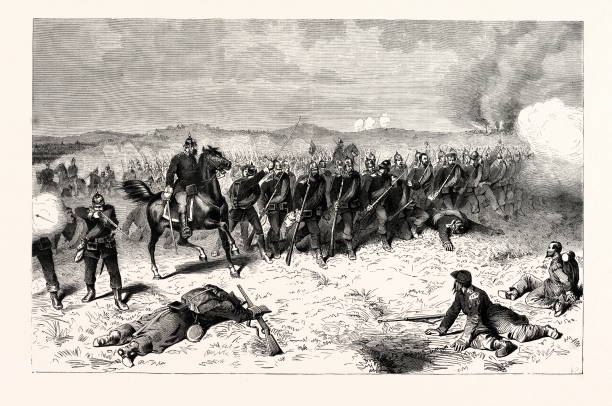
Battle of Sedan (1 September 1870)
The Battle of Sedan, fought on 1 September 1870 near the French fortress town of Sedan on the Meuse, was the decisive battle of the… Continued…
-
First Battle of the Marne (5-12 September 1914)
The First Battle of the Marne was fought east of Paris from 5 to 12 September 1914. After a month of German advances through Belgium and… Continued…
-
Battle of the Somme (1 July - 18 November 1916)
The Battle of the Somme was a joint British and French offensive against the German lines in northern France, fought from 1 July to 18… Continued…
-
Meuse-Argonne Offensive (26 September - 11 November 1918)
The Meuse-Argonne Offensive, fought from 26 September to 11 November 1918, was the main American battle of the First World War and part of… Continued…
-
Normandy Landings (6 June 1944)
The Normandy Landings of 6 June 1944, D-Day, were the largest seaborne invasion in history and the start of the Allied liberation of… Continued…
Weapons
-
An XI Light Cavalry Sabre
The An XI light cavalry saber was the regulation sword of Napoleon's hussars and chasseurs à cheval. Adopted in Year XI of the French… Continued…
-
Arbalest
The arbalest was the heavy crossbow of the late Middle Ages, with a bow of steel or thick composite so powerful it had to be drawn with a… Continued…
-
Arming Sword
The arming sword was the one-handed, double-edged sword of the medieval knight, carried from the eleventh to the fifteenth century with a… Continued…
-
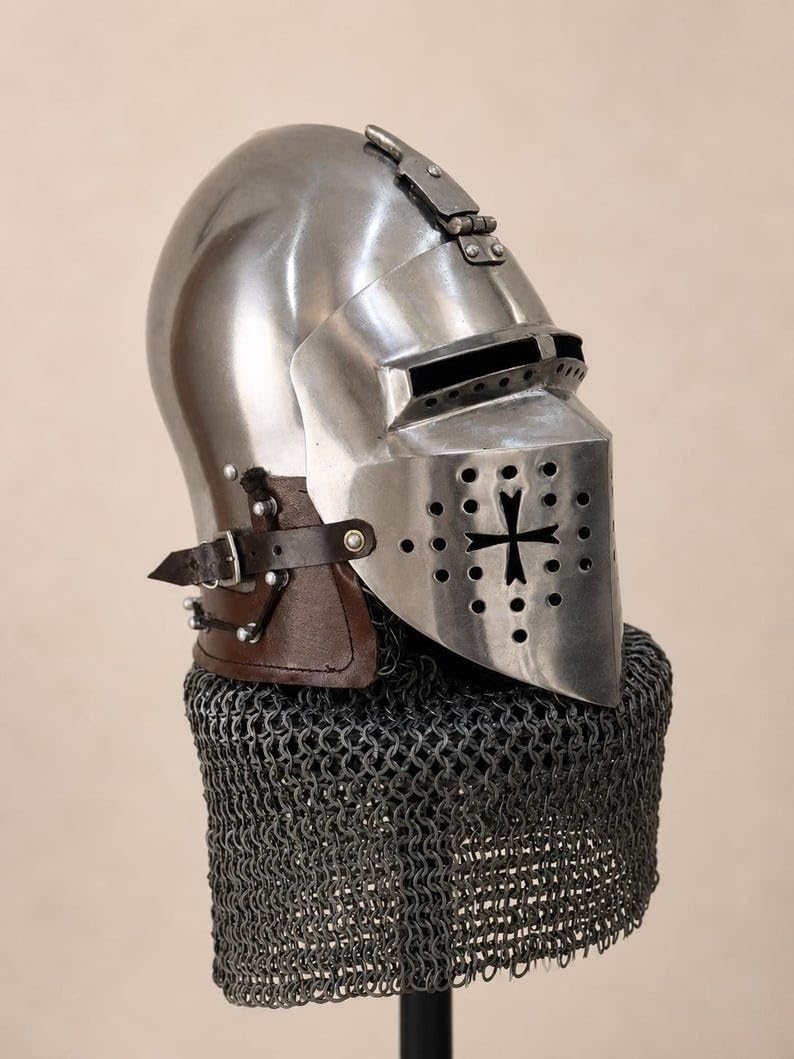
Bascinet
The bascinet was the most widely worn helmet of fourteenth-century Europe: an iron skull cap drawn up into a point, with a curtain of mail… Continued…
-
Boarding Pike
The boarding pike was a short spear carried on sailing warships to defend the ship against boarders and to arm boarding parties. It was… Continued…
-
Bombard
A bombard was a large, short-ranged cannon of the fourteenth to sixteenth centuries that fired heavy stone balls against castle and town… Continued…
-
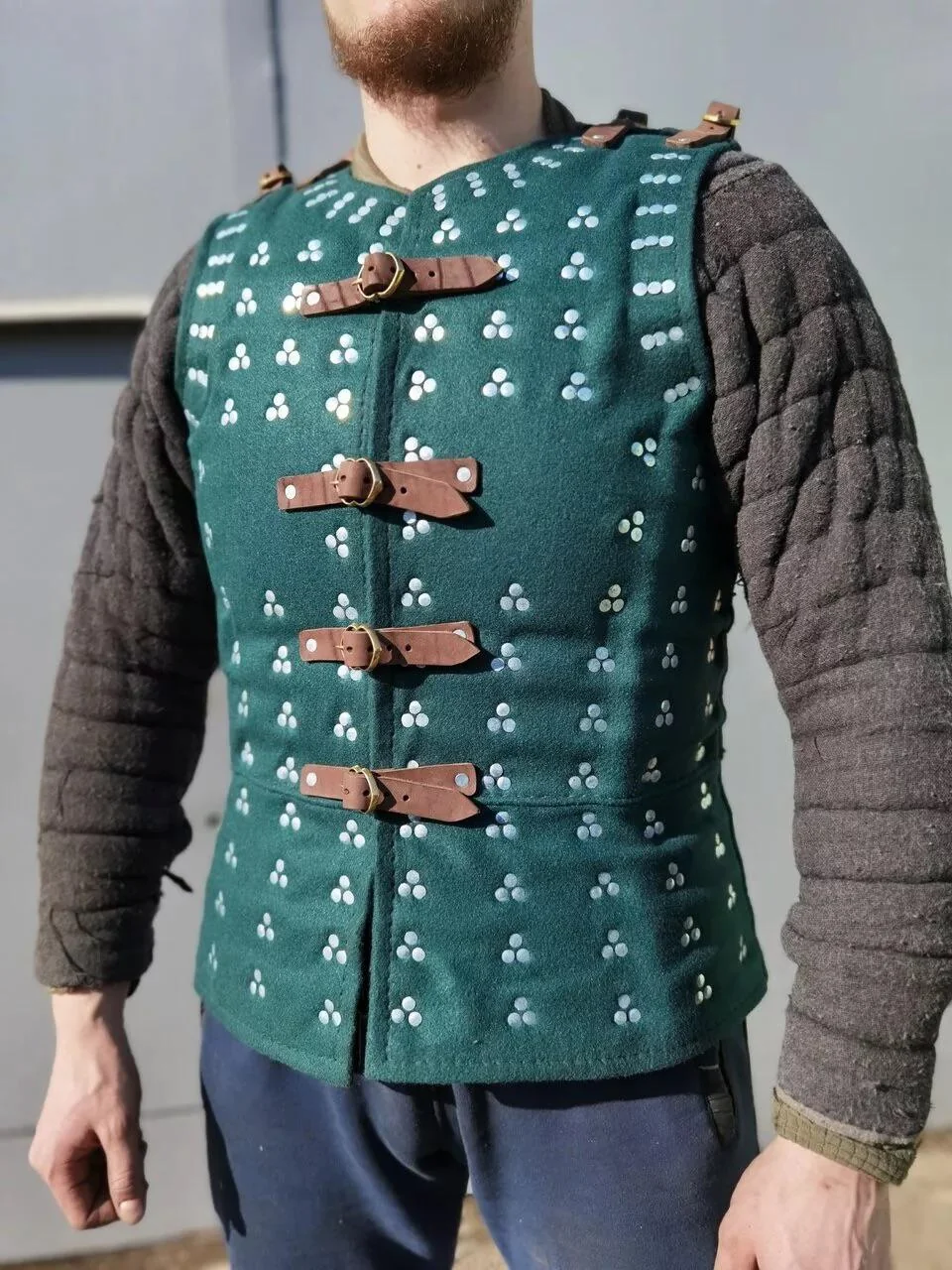
Brigandine
The brigandine was a body armor made of many small iron or steel plates riveted to the inside of a fabric or leather covering, so that only… Continued…
-
Charleville Musket
'Charleville' is the collector's name — taken from the great arsenal in the Ardennes — for the French service flintlock muskets of the… Continued…
-
Chassepot Rifle
The Chassepot was the French army's bolt-action breech-loading rifle of 1866, designed by Antoine Alphonse Chassepot. Like the Prussian… Continued…
-
Chauchat
The Chauchat, officially the Fusil Mitrailleur Modèle 1915 CSRG, was the French army's light automatic weapon of the First World War. It… Continued…
-
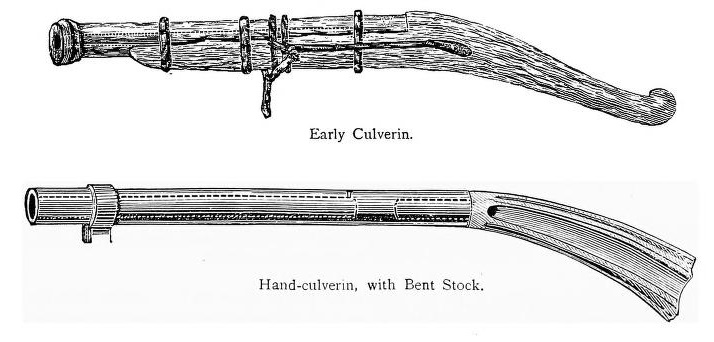
Culverin
The culverin was a long-barreled muzzle-loading gun of the sixteenth and seventeenth centuries. Compared with the heavier 'cannon' class it… Continued…
-
Estoc
The estoc was a sword made to defeat plate armor: a long, stiff blade with no real cutting edge, triangular, square or diamond in section… Continued…
-
FAMAS
The FAMAS is the French army's bullpup assault rifle, adopted in 1978 and in service for four decades. Made at the Saint-Étienne arms… Continued…
-
Falchion
The falchion was a single-edged medieval sword with a broad blade, heavier toward the point, that combined the chopping power of an axe… Continued…
-
Frankish Francisca
The francisca is the throwing axe of the early Franks, the Germanic people who overran Roman Gaul in the fifth century and gave France its… Continued…
-
Frankish Winged Spear
The Frankish winged spear was a spear whose iron head carried two small projections, called wings or lugs, on the socket just below the… Continued…
-
French 75
The French 75, the Canon de 75 modèle 1897, was the first modern quick-firing field gun. A hydraulic and air recoil system let the barrel… Continued…
-
Fusil de Chasse
The fusil de chasse was a light French flintlock hunting musket, made in large numbers at Tulle for the Ministry of Marine and shipped to… Continued…
-
Glaive
The glaive is a European pole arm made of a single-edged blade, shaped like a large knife or cleaver, mounted on a shaft of about six to… Continued…
-
Great Helm
The great helm was the fully enclosed, flat-topped or sugarloaf helmet of the high medieval knight, worn from around 1220 until the mid… Continued…
-
Hotchkiss M1914
The Hotchkiss M1914 was the standard heavy machine gun of the French army in the First World War. Made by the Hotchkiss company near Paris… Continued…
-
Kettle Hat
The kettle hat was an open-faced iron or steel helmet with a wide brim, known in French as the chapel de fer, the iron hat. It appeared in… Continued…
-
Knight's Lance
The knight's lance was the defining weapon of medieval European heavy cavalry: a long wooden shaft with an iron head, held tight under the… Continued…
-
Lebel Model 1886
The Lebel Model 1886 was the first military rifle to fire smokeless powder, and it made every other army's rifle obsolete overnight. Its… Continued…
-
Mail Hauberk
The mail hauberk was the principal body armor of European warriors for most of the Middle Ages: a long shirt of thousands of interlinked… Continued…
-
Minié Ball
The Minié ball is the conical, hollow-based lead bullet that made the rifled musket a practical infantry weapon. Developed by the French… Continued…
-
Napoleon 12-Pounder
The 12-pounder Napoleon was the most common field gun of the American Civil War: a bronze smoothbore gun-howitzer of 4.62-inch bore… Continued…
-
Norman Kite Shield
The kite shield is the long, round-topped, tapering shield carried by the Norman knights of the Bayeux Tapestry and by armored horsemen… Continued…
-
Plug Bayonet
The plug bayonet was the first bayonet: a dagger with a tapered handle that was pushed into the muzzle of a musket, turning the gun into a… Continued…
-
Poleaxe
The poleaxe was the knight's weapon for fighting on foot in full plate armor during the fifteenth century. About five to six feet long, it… Continued…
-
Reffye Mitrailleuse
The Reffye mitrailleuse was a French volley gun of the 1860s with 25 barrels in a single bronze-jacketed cluster. Loaded with a steel plate… Continued…
-
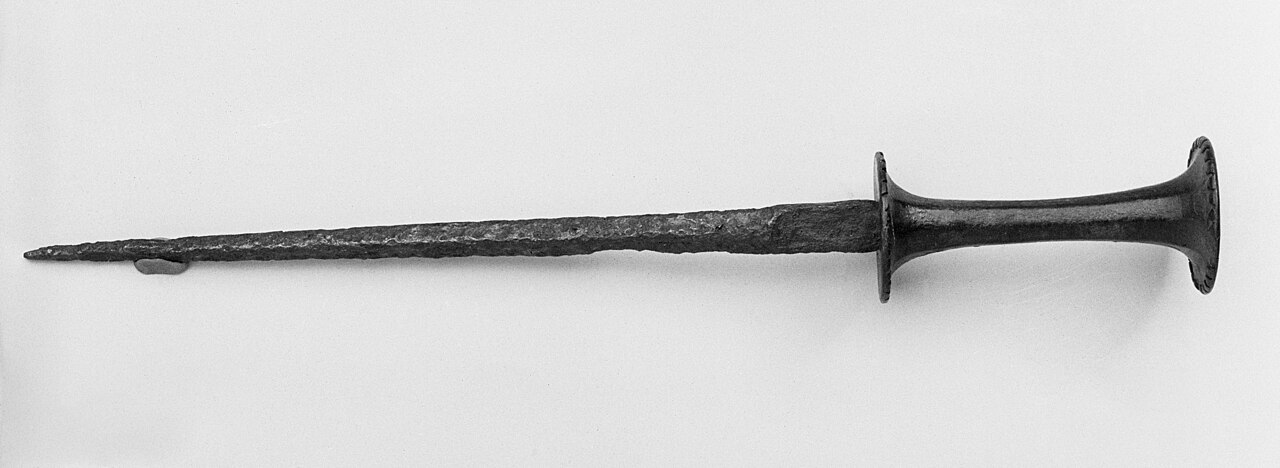
Rondel Dagger
The rondel dagger was the stiff, needle-pointed dagger of the late medieval knight, named for the disc-shaped guard and pommel that framed… Continued…
-
Ship of the Line
The ship of the line was the main battleship of the age of sail, a large wooden warship with two or three decks of heavy guns along its… Continued…
-
Siege Mortar
A siege mortar was a short, wide-mouthed cannon that fired at a high angle, so that its projectile rose over walls and earthworks and fell… Continued…
-
Smallsword
The smallsword was the gentleman's sword of the late seventeenth and eighteenth centuries: a light, short thrusting sword, usually with a… Continued…
-
Socket Bayonet
The socket bayonet is a blade fixed to the side of a metal tube that slides over the muzzle of a musket and locks in place. Unlike the… Continued…
-
Spontoon
The spontoon, or espontoon, was a short pike of about six to seven feet carried by infantry officers, and later by sergeants, in European… Continued…
-
Trebuchet
The counterweight trebuchet was the heaviest artillery of the Middle Ages: a great pivoting beam whose short arm carried a box of earth or… Continued…
-
War Hammer
The war hammer is the late medieval answer to plate armor: a steel head with a blunt, often toothed hammer face on one side and a stout… Continued…