Era
Medieval
European Middle Ages and equivalent periods globally.
c. 500 – 1500 CE
Overview
The Medieval Era covers roughly a thousand years of European and global military history between the fall of Rome and the beginning of the Renaissance. It was defined in Europe by feudalism, the mounted knight as the dominant military class, and an ongoing arms race between offensive weapons and defensive armor that drove both to their highest levels of pre-gunpowder development.
Outside Europe, the period saw the rise of the Mongol Empire, the height of Islamic military power, the development of the Japanese samurai tradition, and the mature military civilizations of Song-dynasty China — where gunpowder itself was invented.
The Knight and Plate Armor
The armored mounted warrior is the iconic figure of medieval warfare. Over centuries, armor evolved from chainmail (hauberk) to partial plate reinforcements to full Gothic and Milanese plate armor by the 15th century — covering every surface of the body in articulated steel.
This drove corresponding advances in weapons designed to defeat armor:
- War hammer and pollaxe — Crushing blows could dent and deform plate even when they couldn't penetrate it
- Rondel dagger — A stiff-bladed dagger designed to find gaps in armor at close range
- Estoc (tuck) — A rigid thrusting sword intended to penetrate chainmail and plate gaps
Key Weapon Types
Swords
The medieval sword evolved considerably across the era. Early medieval swords were broad, single-handed weapons optimized for cutting against lightly armored opponents. As armor improved, blades became longer, stiffer, and more pointed for thrusting.
- Viking sword — Pattern-welded blade, single-handed, broad fuller
- Norman sword — Cruciform hilt, wider pommel styles developing through the period
- Arming sword — The standard one-handed knightly sword of the High Medieval period
- Longsword — Two-handed or hand-and-a-half grip; versatile weapon suited to both cutting and thrusting; reached its peak in the 14th–15th centuries
- Falchion — Single-edged, cleaver-like sword; common infantry weapon
Pole Weapons
Pole weapons allowed infantry to engage and threaten cavalry — a critical tactical function.
- Spear and lance — The cavalry lance, couched under the arm, concentrated tremendous force at a single point
- Halberd — Combined axe blade, spear point, and hook on a long shaft; could unhorse a knight or hook armor
- Bill — English pole weapon derived from the agricultural billhook
- Glaive — Single-edged blade on a pole, common across Europe and Asia
- Pike — Long spear used in massed formations; foreshadowed the pike-and-shot era
Ranged Weapons
- English longbow — A 6-foot yew bow capable of penetrating chainmail at 200 yards; decisive at Crécy (1346) and Agincourt (1415)
- Crossbow — Mechanically cocked; required less training than the longbow and could penetrate heavy armor; banned by the Pope against Christians (ineffectively)
- Trebuchet — Counterweight siege engine capable of hurling 100+ kg stones hundreds of meters; the dominant siege weapon of the era
Impact Weapons
- Mace — A flanged steel head on a shaft; effective against armor through concussive force
- War hammer — Hardened pick on one side, hammer on the other; designed specifically to defeat plate armor
- Flail — Ball or spiked head on a chain; could wrap around a shield
Armor
Medieval armor progression:
- Padded gambeson — Quilted fabric; effective baseline protection worn under or alone
- Chainmail hauberk — Interlocked iron rings; excellent against cuts, poor against thrusts and impacts
- Coat of plates — Plates riveted inside a fabric or leather coat
- Transitional armor — Plate reinforcements added over chainmail (13th–14th century)
- Full plate armor — Complete articulated steel coverage (15th century); a skilled armorer's masterwork
Siege Warfare
Castle and fortification design evolved in direct response to siege weapons. The transition from timber motte-and-bailey to stone keeps to concentric castle designs tracks the escalating capability of siege engines. Key siege weapons included battering rams, siege towers, mining operations, and the trebuchet.
The End of the Era
Gunpowder weapons, already present in China centuries earlier, began appearing in European warfare in the early 14th century. By 1500, hand cannons, arquebuses, and artillery were sufficiently developed to begin rendering heavy plate armor obsolete, marking the transition to the Renaissance era.
This article is a stub. Contributions covering specific weapon types, regional traditions, battles, and armorsmiths are welcome.
Battles & Operations
-
Battle of Tours (October 732)
The Battle of Tours, also called the Battle of Poitiers, was fought in October 732, or possibly 733, between Tours and Poitiers in western… Continued…
-
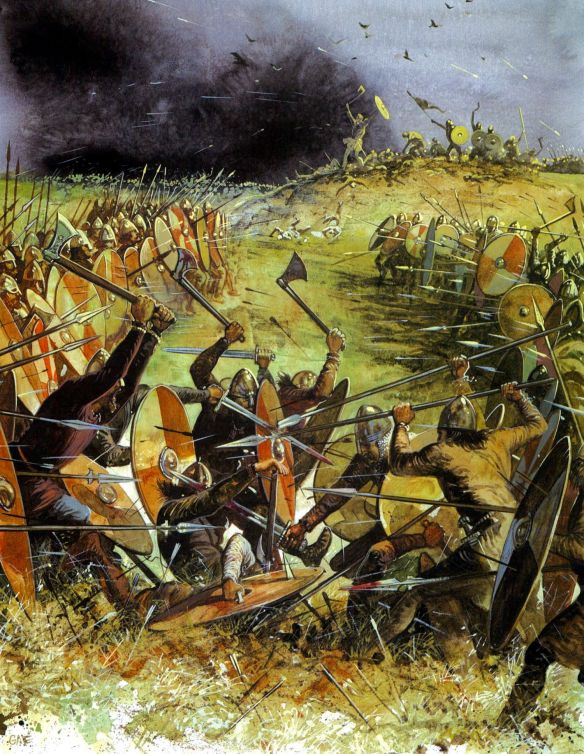
Battle of Maldon (10 August 991)
The Battle of Maldon, fought in August 991 on the Blackwater estuary near Maldon in Essex, pitted Byrhtnoth, ealdorman of Essex, and the… Continued…
-
Battle of Hastings (14 October 1066)
The Battle of Hastings, fought on 14 October 1066 on a ridge north of Hastings in Sussex, decided the Norman Conquest of England. King… Continued…
-
The Battle of Stamford Bridge (25 September 1066)
The Battle of Stamford Bridge was fought on 25 September 1066 near York between the English army of King Harold Godwinson and a Norwegian… Continued…
-
Battle of Hattin (3-4 July 1187)
The Battle of Hattin, fought on 3 and 4 July 1187 near Tiberias in Galilee, destroyed the field army of the crusader Kingdom of Jerusalem.… Continued…
-
Battle of Legnica (9 April 1241)
The Battle of Legnica was fought on 9 April 1241 near Legnica in Silesia, in what is now south-western Poland. A Mongol force, the northern… Continued…
-
Battle of Ain Jalut (3 September 1260)
The Battle of Ain Jalut, fought on 3 September 1260 in the Jezreel Valley of Galilee, was the first time a Mongol army was decisively… Continued…
-
Battle of Stirling Bridge (11 September 1297)
The Battle of Stirling Bridge was fought on 11 September 1297 beside the River Forth at Stirling. A Scottish army led by William Wallace… Continued…
-
Battle of Crécy (26 August 1346)
The Battle of Crécy, fought on 26 August 1346 in Ponthieu in northern France, was the first great English victory of the Hundred Years War.… Continued…
-
Battle of Agincourt (25 October 1415)
The Battle of Agincourt was fought on 25 October 1415, St Crispin's Day, in northern France during the Hundred Years War. King Henry V's… Continued…
-
Battle of Vítkov Hill (14 July 1420)
The Battle of Vítkov Hill was fought on 14 July 1420 on a ridge just east of Prague. A small Hussite garrison under Jan Žižka held a… Continued…
-
Fall of Constantinople (6 April - 29 May 1453)
The Fall of Constantinople was the capture of the Byzantine capital by the Ottoman sultan Mehmed II on 29 May 1453, after a siege of about… Continued…
-
Battle of Towton (29 March 1461)
The Battle of Towton was fought near the village of Towton in Yorkshire on Palm Sunday, 29 March 1461, during the Wars of the Roses. The… Continued…
Weapons
-
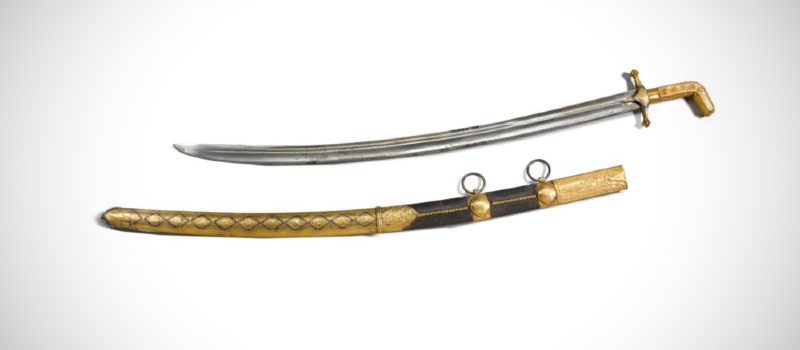
Arab Saif
The saif, from the Arabic word for sword, was the straight, double-edged sword carried by the Arab armies of the early Islamic conquests.… Continued…
-
Arbalest
The arbalest was the heavy crossbow of the late Middle Ages, with a bow of steel or thick composite so powerful it had to be drawn with a… Continued…
-
Arming Sword
The arming sword was the one-handed, double-edged sword of the medieval knight, carried from the eleventh to the fifteenth century with a… Continued…
-
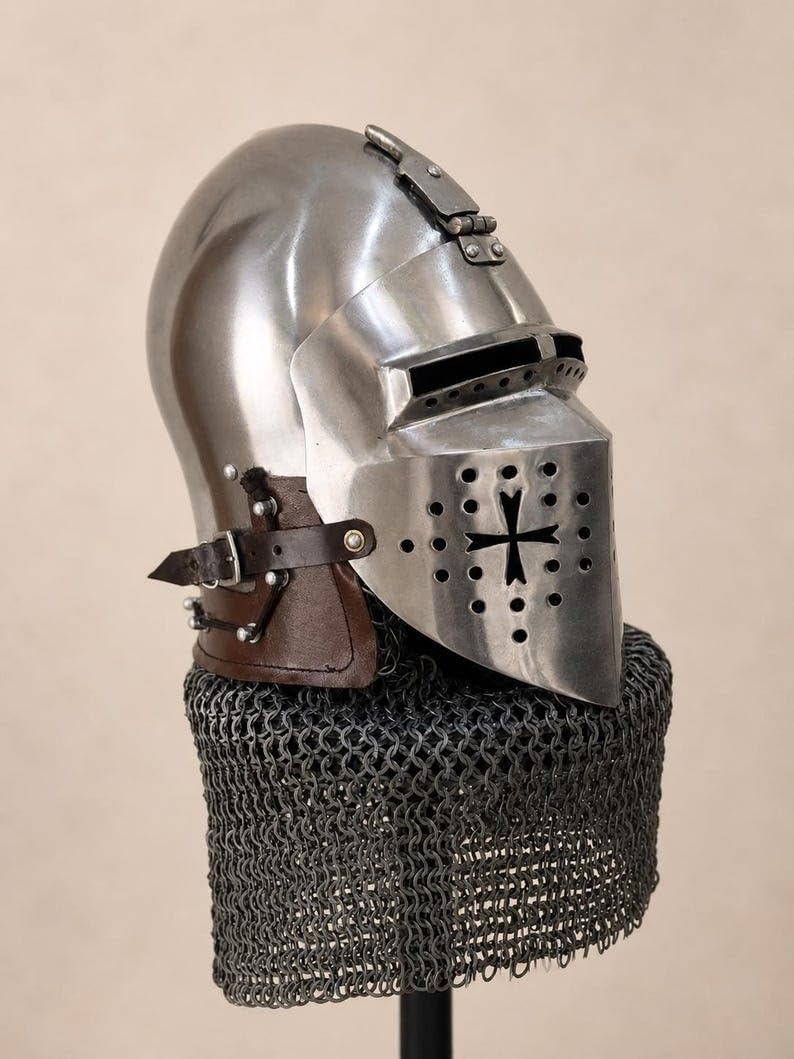
Bascinet
The bascinet was the most widely worn helmet of fourteenth-century Europe: an iron skull cap drawn up into a point, with a curtain of mail… Continued…
-
Bombard
A bombard was a large, short-ranged cannon of the fourteenth to sixteenth centuries that fired heavy stone balls against castle and town… Continued…
-
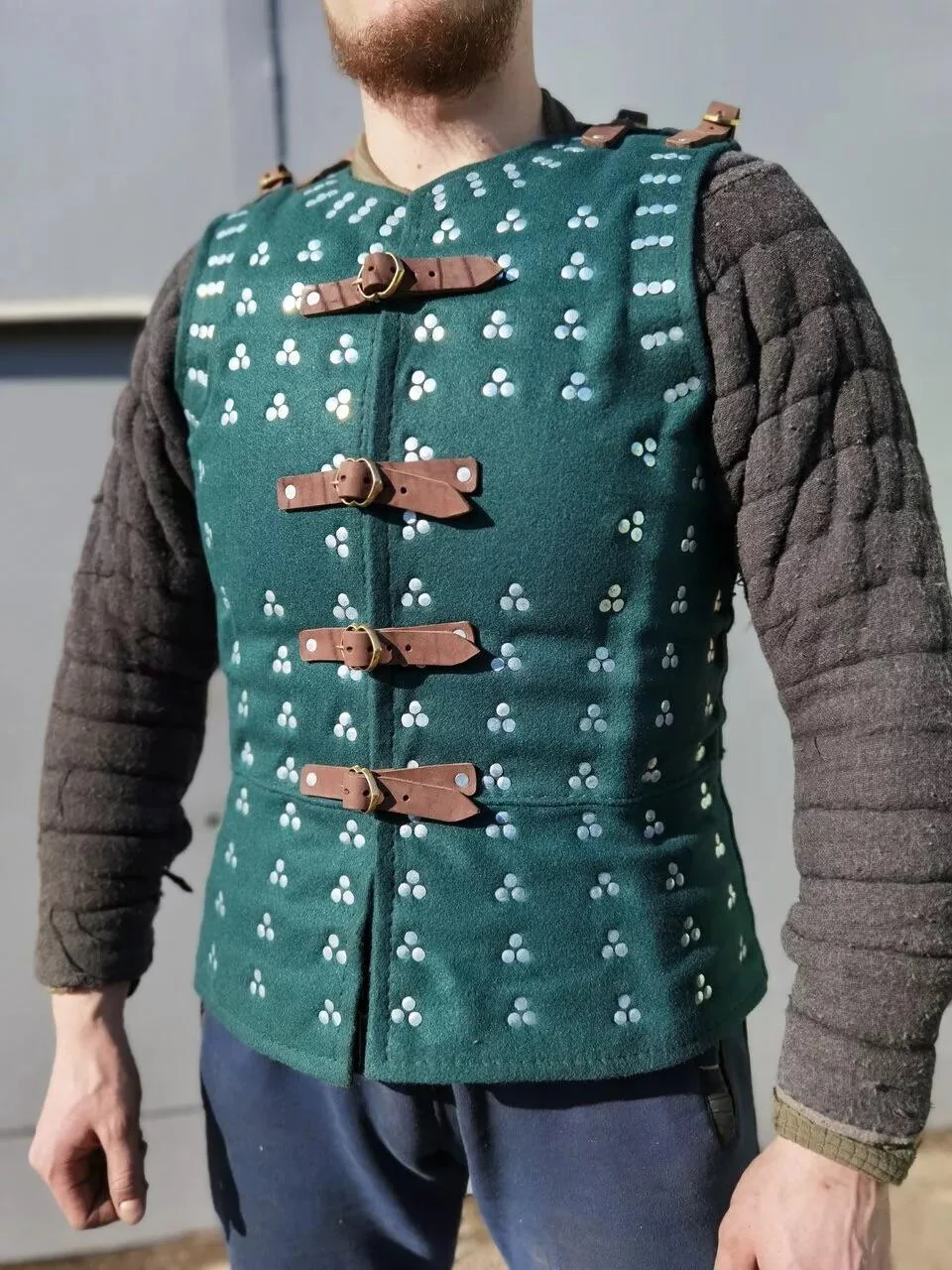
Brigandine
The brigandine was a body armor made of many small iron or steel plates riveted to the inside of a fabric or leather covering, so that only… Continued…
-
Byzantine Spathion
The spathion was the straight, double-edged long sword of the Eastern Roman, or Byzantine, army — the direct descendant of the late Roman… Continued…
-
Bō Staff
The bō is the Japanese and Okinawan fighting staff, most often the rokushakubō, a straight pole of hardwood six shaku (about 180 cm) long.… Continued…
-
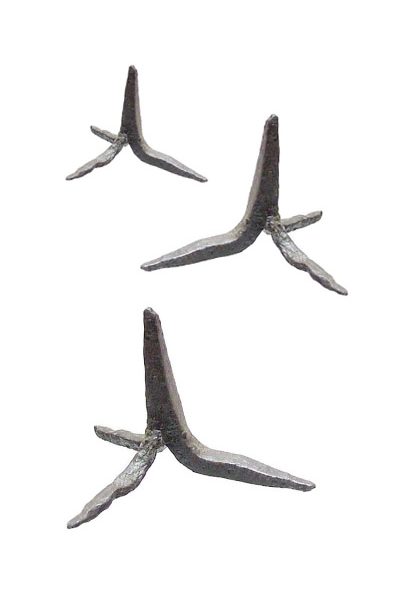
Caltrops
A caltrop is a small iron device of four spikes joined at the center so that however it lands, one spike always points up. Scattered on the… Continued…
-
Chimalli
The chimalli was the round shield of Aztec warriors and other peoples of central Mexico. War shields were usually made of woven cane or… Continued…
-
Chinese Dao
The dao — the single-edged Chinese saber — was the standard sidearm of Chinese soldiers for the better part of two thousand years, honored… Continued…
-
Chinese Ji
The ji is the Chinese halberd: a spear point combined with a side blade on a long shaft, able to thrust, hook and cut. It grew out of the… Continued…
-
Chinese Jian
The jian is the double-edged straight sword of China, in continuous use for more than two and a half thousand years. It began as a short… Continued…
-
Chu-ko-nu
The chu-ko-nu, or zhuge nu, is the Chinese repeating crossbow. A box magazine on top of the stock held a stack of bolts, and a single lever… Continued…
-
Crossbow
The crossbow put a bow on a stock, held its own draw, and released on a trigger — trading the archer's lifetime of training for a weapon… Continued…
-
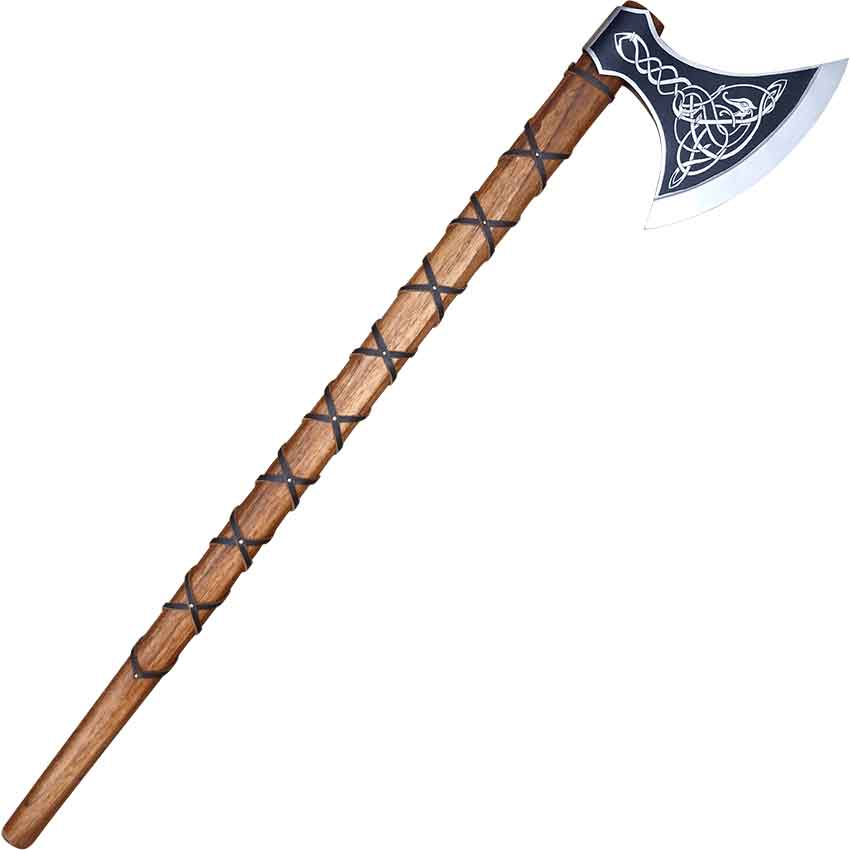
Dane Axe
The Dane axe is the great two-handed axe of the Viking Age and its aftermath: a thin, broad, crescent-edged head on a haft about a meter… Continued…
-
English Bill
The English bill was the characteristic pole arm of the English foot soldier from the fourteenth century to the late sixteenth: a hooked… Continued…
-
English Longbow
The English longbow was the great ranged weapon of the later Middle Ages: a self bow of yew, as tall as its archer or taller, drawing well… Continued…
-
Estoc
The estoc was a sword made to defeat plate armor: a long, stiff blade with no real cutting edge, triangular, square or diamond in section… Continued…
-
Falchion
The falchion was a single-edged medieval sword with a broad blade, heavier toward the point, that combined the chopping power of an axe… Continued…
-
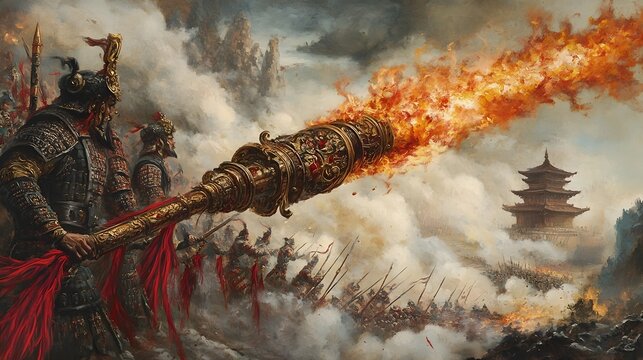
Fire Lance
The fire lance was the first gunpowder weapon to be held in the hand: a tube of bamboo or paper, packed with gunpowder and tied to a spear… Continued…
-
Fire Ship
A fire ship was a vessel filled with flammable material, set alight and sent drifting or sailing into an enemy fleet. Wooden ships with… Continued…
-
Frankish Francisca
The francisca is the throwing axe of the early Franks, the Germanic people who overran Roman Gaul in the fifth century and gave France its… Continued…
-
Frankish Winged Spear
The Frankish winged spear was a spear whose iron head carried two small projections, called wings or lugs, on the socket just below the… Continued…
-
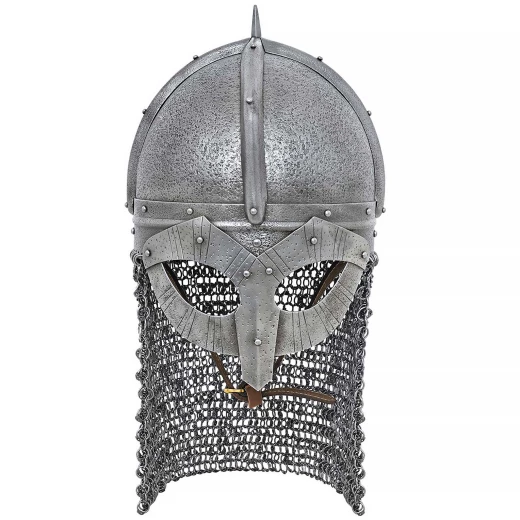
Gjermundbu Helmet
The Gjermundbu helmet is the only nearly complete helmet known from the Viking Age. It was found in 1943 in a tenth-century burial mound on… Continued…
-
Glaive
The glaive is a European pole arm made of a single-edged blade, shaped like a large knife or cleaver, mounted on a shaft of about six to… Continued…
-
Gothic Plate Armor
Gothic armor is the name collectors give to the full plate harnesses made in the German lands of the Holy Roman Empire from roughly 1460 to… Continued…
-
Great Helm
The great helm was the fully enclosed, flat-topped or sugarloaf helmet of the high medieval knight, worn from around 1220 until the mid… Continued…
-
Greek Fire
Greek fire was the Byzantine Empire's incendiary weapon: a liquid that burned fiercely, could not easily be put out, and was projected from… Continued…
-
Halberd
The halberd combined axe blade, thrusting spike, and back hook on a two-meter haft — a complete toolkit for infantry facing armored… Continued…
-
Hand Cannon
The hand cannon is the first true firearm: a small bronze or iron barrel on a pole or stock, loaded with powder and ball and touched off by… Continued…
-
Hussite Pavise
The Hussite pavise was a large rectangular shield used by the Hussite armies of Bohemia in the fifteenth century. Tall enough to cover a… Continued…
-
Ichcahuipilli
The ichcahuipilli was the quilted cotton armor of the Aztecs and other peoples of central Mexico. Made of layers of cotton packed between… Continued…
-
Jambiya
The jambiya is the curved, double-edged dagger of Arabia, worn at the front of the belt in a sheath with a sharply upturned tip. It is most… Continued…
-
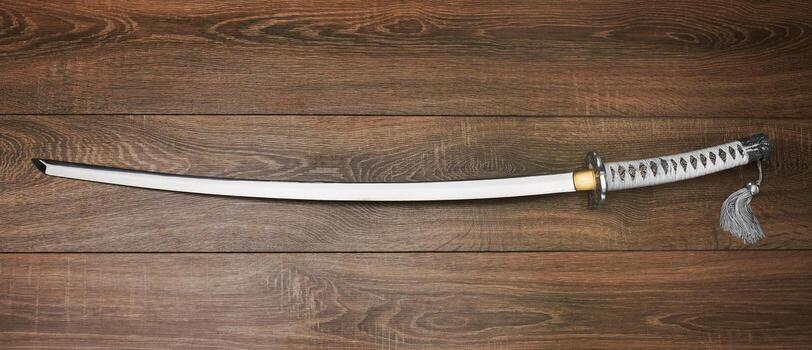
Katana
The katana is the curved, single-edged long sword of the samurai, worn edge-up through the sash and drawn in the same motion that cuts. Its… Continued…
-
Katar
The katar is the Indian push dagger: a short, broad, often triangular blade set at right angles to an H-shaped grip, so that the fighter… Continued…
-
Kettle Hat
The kettle hat was an open-faced iron or steel helmet with a wide brim, known in French as the chapel de fer, the iron hat. It appeared in… Continued…
-
Knight's Lance
The knight's lance was the defining weapon of medieval European heavy cavalry: a long wooden shaft with an iron head, held tight under the… Continued…
-
Langes Messer
The Langes Messer, German for long knife, was a single-edged sword used in the German lands and Central Europe from the fourteenth to the… Continued…
-
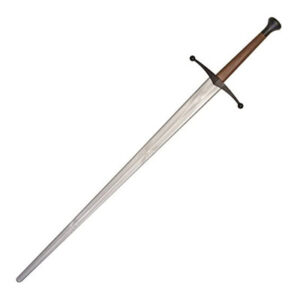
Longsword
The longsword is the two-handed knightly sword of the late Middle Ages and Renaissance: a straight, double-edged blade of roughly 33 to 43… Continued…
-
Mail Hauberk
The mail hauberk was the principal body armor of European warriors for most of the Middle Ages: a long shirt of thousands of interlinked… Continued…
-
Medieval Mace
The mace is concentrated impact: a weighted head of iron or bronze on a stout haft, built to transmit force THROUGH armor rather than cut… Continued…
-
Military Flail
The military flail was a two-handed weapon made from the farmer's threshing flail: a long wooden haft joined by a hinge or short chain to a… Continued…
-
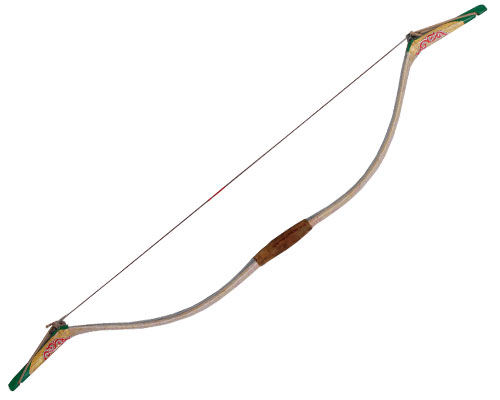
Mongol Composite Bow
The Mongol composite bow was the weapon that built the largest contiguous land empire in history: a short recurved bow of horn, wood, and… Continued…
-
Mongol Lamellar Armor
Mongol lamellar armor was the body armor of the heavier Mongol cavalry in the thirteenth and fourteenth centuries. It was built from… Continued…
-
Morning Star
The morning star is a spiked club: a wooden or iron shaft topped with a heavy ball or cylinder studded with steel spikes, used across… Continued…
-
Naginata
The naginata is a Japanese pole arm with a long, curved, single-edged blade on a wooden shaft, used from the Heian period onward. The… Continued…
-
Nodachi
The nodachi, or ōdachi, is an extra-long Japanese sword with a blade of three shaku (about 36 inches) or more, and often much longer. It… Continued…
-
Norman Kite Shield
The kite shield is the long, round-topped, tapering shield carried by the Norman knights of the Bayeux Tapestry and by armored horsemen… Continued…
-
Ottoman Composite Bow
The Ottoman composite bow was the short, strongly recurved bow of horn, wood and sinew used by Ottoman Turkish armies from the fourteenth… Continued…
-
Ottoman Kilij
The kilij is the curved saber of the Ottoman Turks, and the name — simply 'sword' in Turkish — covers a family of blades carried from the… Continued…
-
Persian Tabar
The tabar is the war axe of Persia and the wider Islamic world, from the Middle East to Mughal India. The name is Persian for axe, and the… Continued…
-
Pike
The pike is the longest infantry weapon ever carried in formation: an ash shaft of 16 to 22 feet tipped with a small steel head, used by… Continued…
-
Poleaxe
The poleaxe was the knight's weapon for fighting on foot in full plate armor during the fifteenth century. About five to six feet long, it… Continued…
-
Quarterstaff
The quarterstaff was the English fighting staff: a straight pole of hardwood, usually between six and nine feet long, sometimes tipped with… Continued…
-
Roman Spatha
The spatha was the long, straight, double-edged sword of the Roman Empire. First carried by auxiliary cavalry in the first century AD… Continued…
-
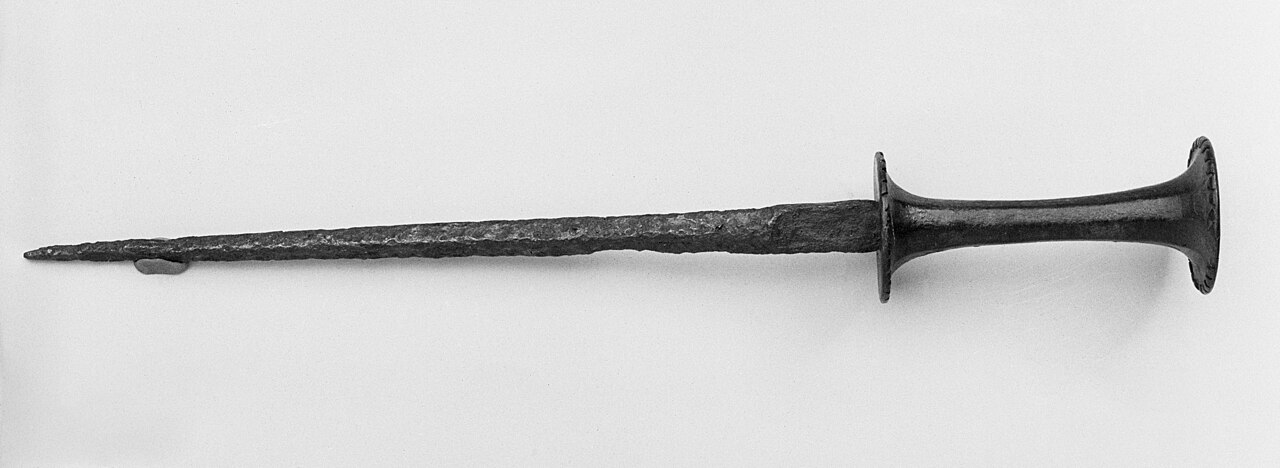
Rondel Dagger
The rondel dagger was the stiff, needle-pointed dagger of the late medieval knight, named for the disc-shaped guard and pommel that framed… Continued…
-
Schiltron Spear
The schiltron spear was the long infantry spear carried by Scottish foot soldiers in the Wars of Scottish Independence. Held in both hands… Continued…
-
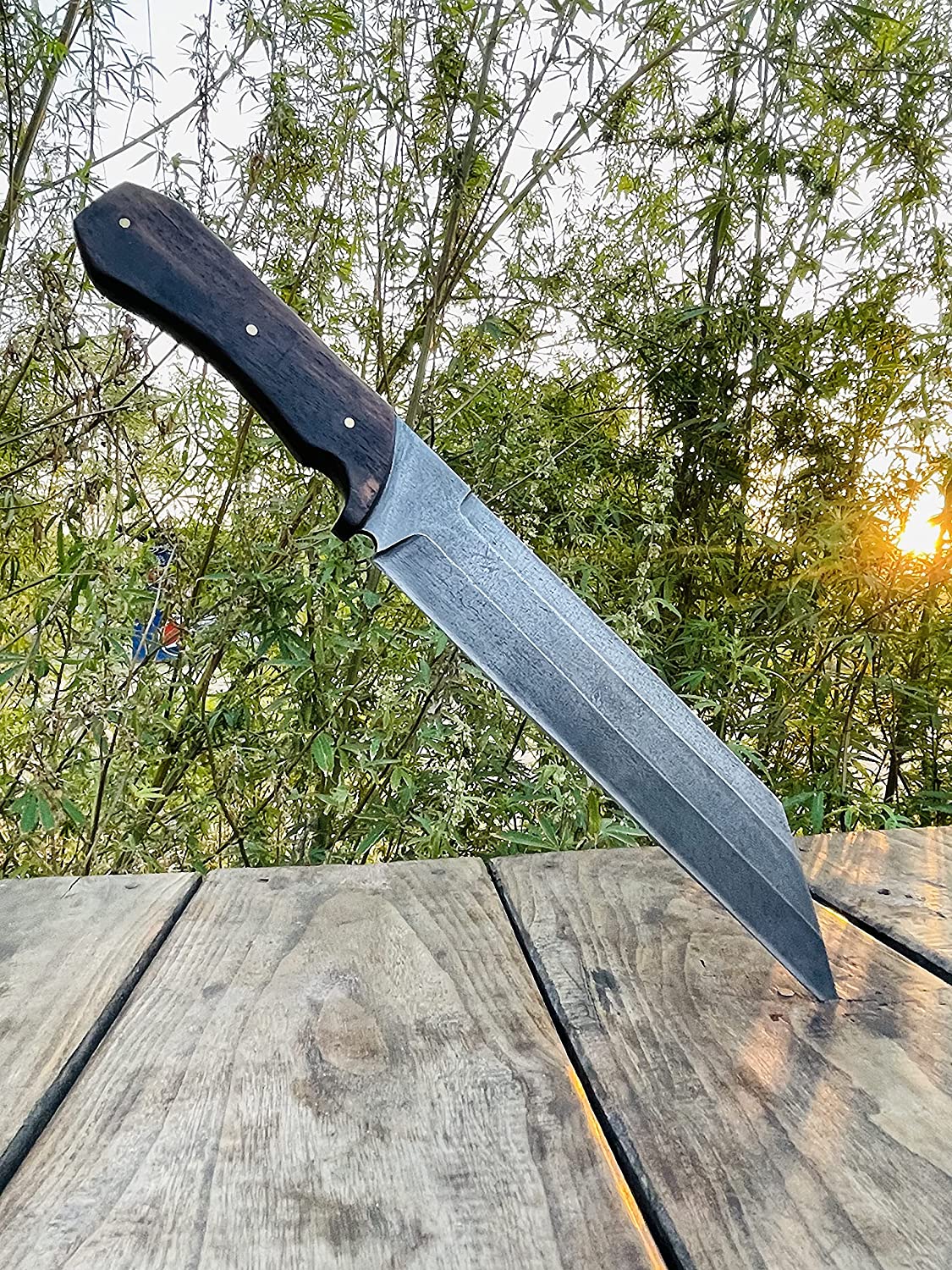
Seax
The seax is the single-edged knife of the early medieval Germanic peoples, carried from the fifth to the eleventh century by Franks… Continued…
-
Tanto
The tanto is the dagger of the samurai: a single- or double-edged Japanese blade under thirty centimeters, forged, hardened, and polished… Continued…
-
Trebuchet
The counterweight trebuchet was the heaviest artillery of the Middle Ages: a great pivoting beam whose short arm carried a box of earth or… Continued…
-
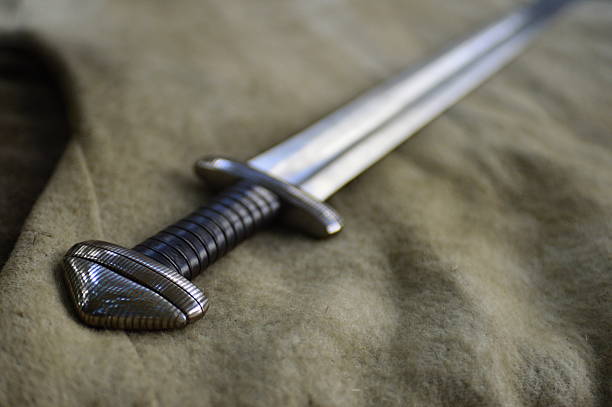
Ulfberht Sword
The Ulfberht swords are a group of about 170 early medieval sword blades inscribed with the name +VLFBERH+T, made between the ninth and… Continued…
-
Viking Battle Axe
The battle axe was the most distinctively Norse weapon of the Viking Age. From the one-handed bearded axe that doubled as a farm tool to… Continued…
-
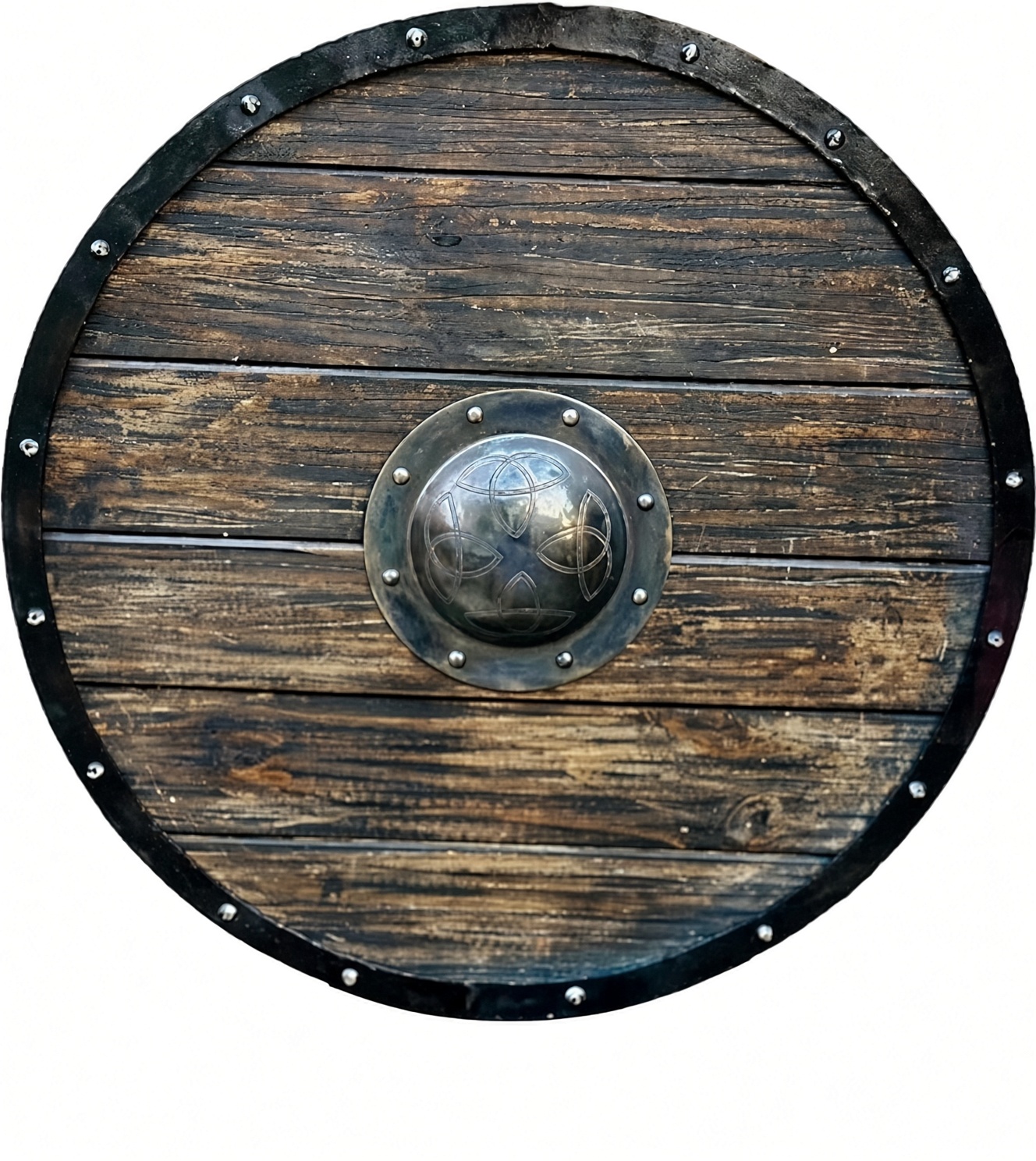
Viking Round Shield
The round shield was the main defense of the Viking warrior: a disc of wooden boards, usually about 80 to 95 centimeters across, with an… Continued…
-
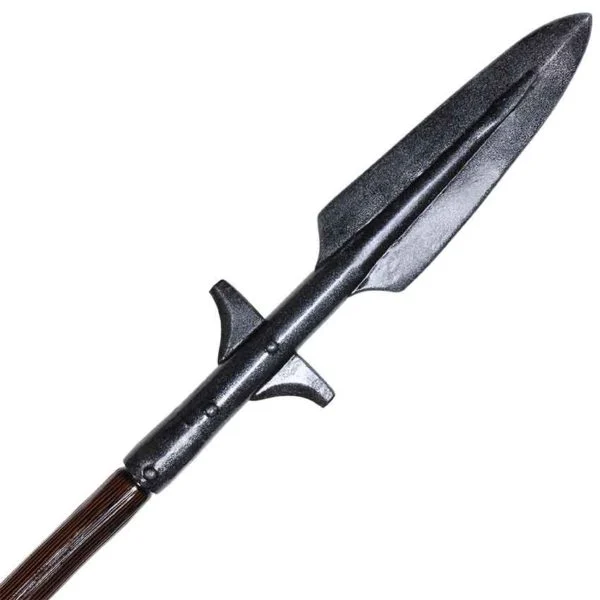
Viking Spear
The spear was the most common weapon of the Viking Age, carried by farmers and kings alike. It had an iron head, socketed onto an ash shaft… Continued…
-
War Hammer
The war hammer is the late medieval answer to plate armor: a steel head with a blunt, often toothed hammer face on one side and a stout… Continued…
-
Yari
The yari is the Japanese straight-bladed spear. It came into wide use in the fourteenth century and by the Sengoku period of the sixteenth… Continued…
-
Yumi
The yumi is the Japanese longbow, more than seven feet long and unusual among the world's bows because it is gripped well below the middle… Continued…