Battle of Tours
The Battle of Tours, also called the Battle of Poitiers, was fought in October 732, or possibly 733, between Tours and Poitiers in western France. A Frankish army under Charles Martel defeated a Muslim army from Spain led by Abd al-Rahman al-Ghafiqi, governor of al-Andalus, who was killed. The Franks held a dense line against repeated cavalry attacks, and the Muslims withdrew in the night. The victory made Charles the strongest ruler in Gaul. Its wider importance is debated: older writers saw it as saving Christian Europe, while many modern historians see it as the defeat of a large raid.
Also known as Battle of Poitiers (732), Battle of Tours-Poitiers, Poitiers 732, Balat al-Shuhada, Battle of the Pavement of the Martyrs, Battle of Moussais
Background
In 711 an army of Arabs and Berbers under Tariq ibn Ziyad crossed from North Africa into Spain and destroyed the Visigothic kingdom. Within a few years most of the peninsula had become al-Andalus, a province of the Umayyad Caliphate ruled from Damascus, and raiding forces crossed the Pyrenees into Gaul. They took Narbonne around 720 but were beaten outside Toulouse in 721 by Odo, duke of Aquitaine. To the north, the Frankish kingdom that would later become France was controlled by Charles Martel. As mayor of the palace he ruled in the name of the weak Merovingian kings, and he had spent the 720s fighting Saxons, Bavarians and rivals such as Odo. In 732 the governor of al-Andalus, Abd al-Rahman al-Ghafiqi, led a large expedition north. He defeated Odo near the Garonne, sacked Bordeaux and marched toward Tours and its rich abbey of Saint Martin. Odo fled north and asked Charles for help.
The Battle
The two armies met somewhere between Poitiers and Tours, probably near Moussais-la-Bataille north of Poitiers, though the exact site is unknown. The best sources are short. One is the Latin Chronicle of 754, written by a Christian living in Muslim Spain. Another is the Frankish Continuations of the Chronicle of Fredegar, written for Charles's family. Later Arabic accounts call it Balat al-Shuhada, the Pavement of the Martyrs. The date is usually given as October 732, but some historians read the chronology of the Chronicle of 754 differently and place the battle in 733. According to that chronicle the armies faced each other for about a week before the main fight. Charles's army, largely or entirely on foot, stood in a dense formation on ground of its choosing. The chronicler wrote that the northern men stood 'like a wall', 'like a belt of ice frozen together', and cut down the Arabs with their swords. The Muslim army, strong in cavalry, attacked again and again but could not break the line. Abd al-Rahman was killed. That night the Muslims withdrew, leaving their tents standing. At dawn the Franks, fearing a trap, found the camp empty. Neither army's size is known. Medieval claims of hundreds of thousands of Muslim dead are impossible, and modern estimates range from a few thousand to perhaps 20,000 or 30,000 men on each side.
Weapons
The chronicles say little about equipment. Graves, laws and later pictures show the spear and shield as the basic Frankish arms, and the Frankish Winged Spear was coming into wide use in this period. Many men also carried the Seax, a heavy single-edged knife, while richer warriors had long double-edged swords descended from the Roman Spatha and a Mail Hauberk. The throwing axe of earlier Frankish armies, the Frankish Francisca, had largely gone out of use by the 730s. The Arab and Berber horsemen fought with lances and the straight Arab Saif, and some carried bows.
Aftermath
Charles followed up in the 730s with campaigns into Burgundy and Provence, where he beat another Muslim force at the River Berre in 737, though he could not take Narbonne. His son Pippin captured it in 759. The victory greatly raised Charles's standing, and it helped his family, the Carolingians, take the Frankish crown in 751. His grandson was Charlemagne. The nickname Martel, 'the Hammer', appears in later sources. The battle's wider meaning is disputed. Edward Gibbon suggested that without it the Koran might have been taught at Oxford, and nineteenth-century writers counted it among the decisive battles of the world. Many modern historians see it instead as the defeat of a large raid. They argue that Muslim expansion into Gaul was checked as much by distance, by the great Berber revolt of 740 and by the civil wars that ended the Umayyad dynasty in 750, at the close of the Early Muslim Conquests. Others still see it as an important check.
Weapons used
-
Frankish Winged Spear
The spear and shield were the basic arms of the Frankish infantry who held their dense line against the Muslim cavalry. Continued…
-
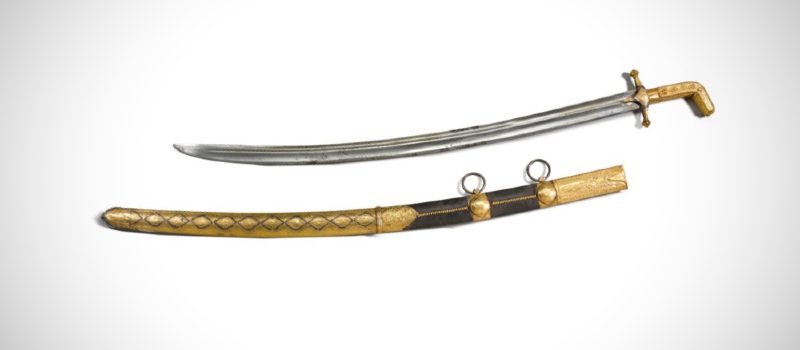
Arab Saif
The straight double-edged sword was the close-combat weapon of the Arab and Berber horsemen who attacked the Frankish line. Continued…
-
Roman Spatha
Wealthier Franks fought with long double-edged swords descended from the late Roman spatha, the swords the Chronicle of 754 says cut down… Continued…
-
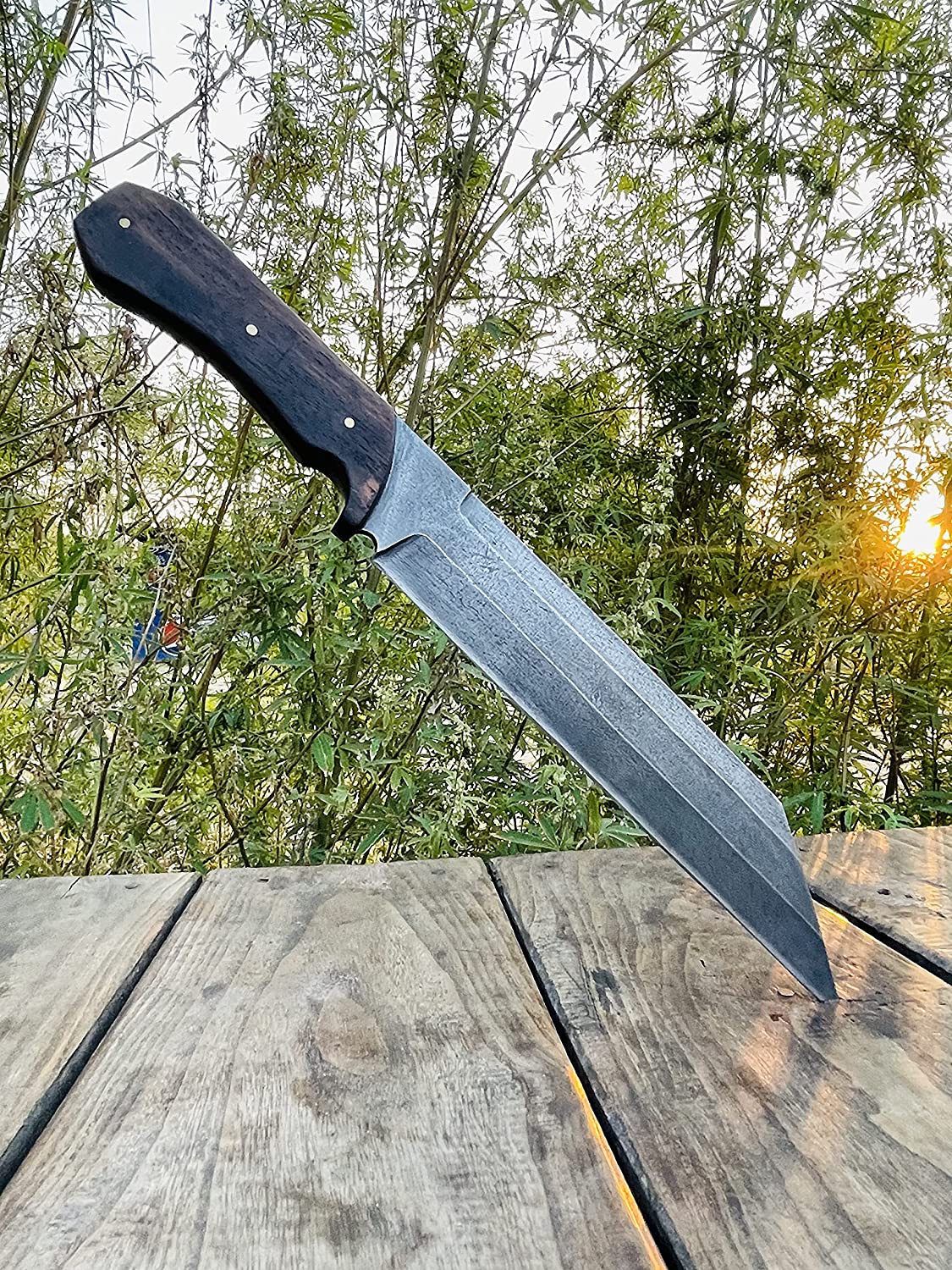
Seax
Many Frankish warriors carried the heavy single-edged seax as a sidearm for fighting at close quarters. Continued…
-
Mail Hauberk
Mail shirts protected Charles Martel's better-equipped retainers, though most of his men probably had little armor. Continued…
Sources
Fouracre, Paul. The Age of Charles Martel. Longman, 2000.
Collins, Roger. The Arab Conquest of Spain, 710-797. Basil Blackwell, 1989.
Bachrach, Bernard S. Early Carolingian Warfare: Prelude to Empire. University of Pennsylvania Press, 2001.
Kennedy, Hugh. The Great Arab Conquests: How the Spread of Islam Changed the World We Live In. Weidenfeld & Nicolson, 2007.
Suggest an edit · account required · reviewed before publishing · how it works