Historical Context
Early Muslim Conquests
The rapid expansion of the Islamic state out of Arabia after the death of the Prophet Muhammad in 632, under the first caliphs and the Umayyad dynasty. In little more than a century Arab armies conquered the Persian Empire, most of the Byzantine Near East, North Africa and Spain, reaching the Indus and the borders of China in the east and Gaul in the west.
632 – 750
Overview
When the Prophet Muhammad died in 632, most of the tribes of Arabia had joined the new Islamic state based at Medina. His successor, the first caliph Abu Bakr, first had to put down tribes that broke away, and then sent armies north into Iraq and Syria. The two great empires of the region, the Byzantine Empire and Sasanian Persia, had just fought a long, exhausting war with each other and had been weakened by plague. The Arabs defeated the Byzantines at the Yarmuk in 636 and took Syria and Palestine, including Jerusalem. They beat the Persians at Qadisiyya, in 636 or 637, took the Persian capital Ctesiphon and broke the last Persian field army at Nahavand in 642. Egypt fell between 640 and 642. Under the Umayyad caliphs, who ruled from Damascus from 661, the conquests went on. Arab armies twice threatened Constantinople, most seriously in the siege of 717 to 718, took Carthage in 698 and crossed into Spain in 711. In the east they reached Central Asia and the Indus valley. In the west, raids across the Pyrenees ended in defeat at the Battle of Tours in 732 or 733. In 750 the Abbasid revolution overthrew the Umayyads, and the age of rapid expansion was over.
Arms of the Conquests
The early Arab armies were not great masses of horse archers. Most of their fighting men were infantry armed with the spear, the bow and the straight, double-edged sword, the Arab Saif. Horses and camels gave them strategic mobility across the desert, and horsemen with lances were used for scouting, raiding and decisive charges. Armor was scarce at first, and mail shirts and helmets were valuable prizes, so much of the conquerors' equipment was captured from Byzantine and Persian armies or made in the workshops of conquered cities. As the empire grew, its armies took in Persian, Berber and Central Asian troops and their weapons, and they learned to use siege engines. The Byzantines' most effective answer at sea was Greek Fire, the incendiary weapon first used in the 670s, which helped save Constantinople in 717 and 718. In Gaul the Arab and Berber cavalry met the Frankish infantry with their shields and the Frankish Winged Spear.
Why They Succeeded
Historians point to several causes. The two old empires were exhausted by war, and many of their subjects had little loyalty to them. The Arab armies were well led, by generals such as Khalid ibn al-Walid and Amr ibn al-As, united by a new faith and motivated by the promise of reward. Their terms for conquered peoples were often lenient: communities that surrendered kept their religion and property in return for a tax, which made many cities willing to open their gates.
Legacy
The conquests created one of the largest empires in history, stretching from Spain to Central Asia. Arabic became the language of government and learning across that area, and Islam gradually became the religion of most of its people. Spain remained under Muslim rule in part until 1492, and the frontier with the Christian world, from the Pyrenees to Anatolia, shaped warfare for centuries to come.
Battles & Operations
Weapons
-
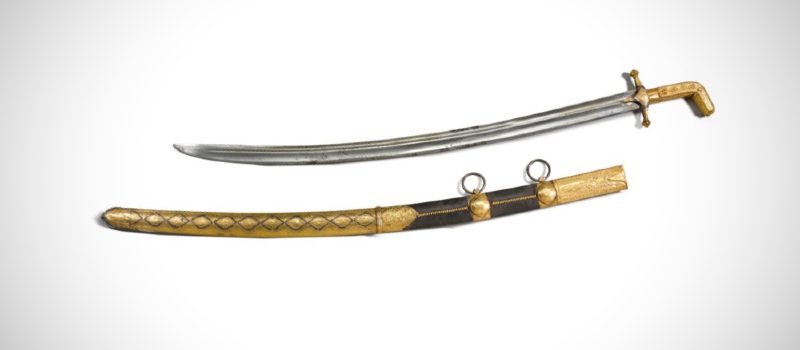
Arab Saif
The saif, from the Arabic word for sword, was the straight, double-edged sword carried by the Arab armies of the early Islamic conquests.… Continued…
-
Frankish Winged Spear
The Frankish winged spear was a spear whose iron head carried two small projections, called wings or lugs, on the socket just below the… Continued…
-
Mail Hauberk
The mail hauberk was the principal body armor of European warriors for most of the Middle Ages: a long shirt of thousands of interlinked… Continued…
-
Roman Spatha
The spatha was the long, straight, double-edged sword of the Roman Empire. First carried by auxiliary cavalry in the first century AD… Continued…
-
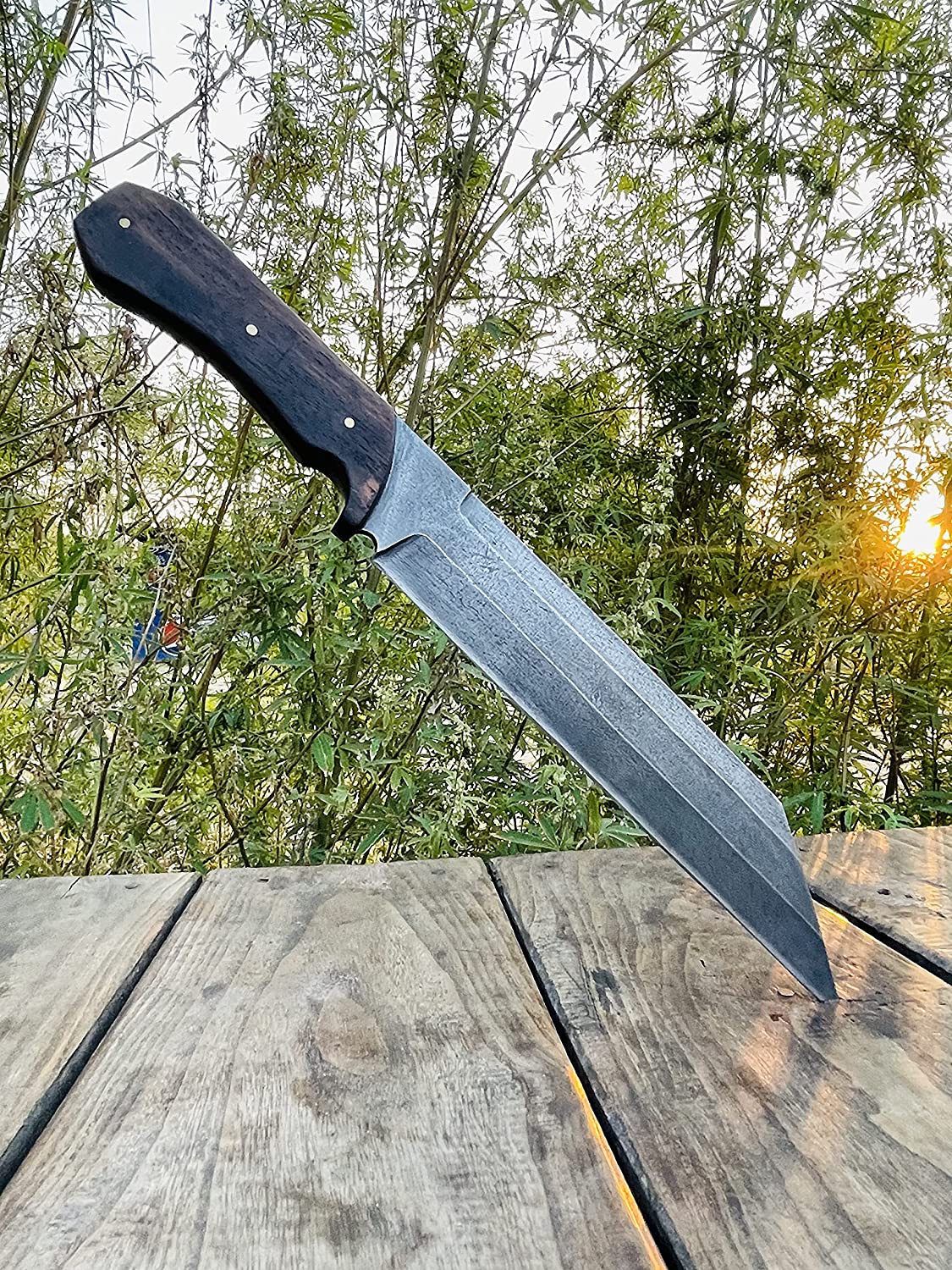
Seax
The seax is the single-edged knife of the early medieval Germanic peoples, carried from the fifth to the eleventh century by Franks… Continued…