Battle of Hastings
The Battle of Hastings, fought on 14 October 1066 on a ridge north of Hastings in Sussex, decided the Norman Conquest of England. King Harold Godwinson, three weeks after destroying a Norwegian invasion at Stamford Bridge, held the high ground with an infantry shield wall of housecarls and levies against the combined arms of Duke William of Normandy: archers, heavy infantry and mounted knights. After a day of assaults and feigned retreats, Harold was killed and his army broke. William was crowned king of England on Christmas Day.
Also known as Hastings, Battle of Senlac Hill, Senlac, Norman Conquest
Background
Edward the Confessor died childless on 5 January 1066, and the English nobility crowned Harold Godwinson, Earl of Wessex, the next day. Two rivals claimed the throne. Harald Hardrada, king of Norway, landed in Yorkshire in September and was killed with most of his army by Harold at Stamford Bridge on 25 September. Duke William of Normandy, who said that Edward had promised him the crown and that Harold had sworn to support him, had gathered a fleet and an army of Normans, Bretons, Flemings and Frenchmen, and landed unopposed at Pevensey on 28 September. Harold marched south at speed, gathered what forces he could, and on the morning of 14 October took position on a ridge across the London road, about seven miles from Hastings, where the town of Battle now stands.
The Battle
Both armies probably numbered between five and eight thousand men, although estimates vary widely. Harold's men fought on foot, as English armies did: the housecarls, his professional household troops, and the thegns formed a dense shield wall along the crest, with the less well-equipped levies of the fyrd behind and on the flanks. William drew up in three divisions — Bretons on the left, Normans in the center, French and Flemings on the right — each with archers in front, heavy infantry behind, and mounted knights in the rear. The battle opened about nine in the morning. Arrows and infantry attacks up the slope made little impression, and when the Breton wing gave way and a rumor spread that William had been killed, he rode along the line with his helmet pushed back to show his face and rallied his men. Parts of the English line pursued the Bretons down the hill and were cut off and destroyed. The Normans later repeated the effect deliberately, according to their chroniclers, with feigned retreats that drew more of the English out of the wall. Through the afternoon the combination of archery and cavalry charges wore the line down. Late in the day Harold was killed — the Bayeux Tapestry is the source of the famous but uncertain story of an arrow in the eye — along with his brothers Gyrth and Leofwine, and the remaining English broke and fled at dusk.
Weapons
The English fought with the Dane Axe, spears, swords and the Seax behind round and kite-shaped shields, and the housecarls wore the Mail Hauberk and conical helmets. The Normans shared the same armor and the Norman Kite Shield, but added what the English lacked: large numbers of archers, some crossbowmen, and armored cavalry fighting with the lance and sword. Hastings is often cited as the battle that proved combined arms against a static infantry line.
Aftermath
William spent the next weeks securing Dover, Canterbury and the approaches to London, and the English leaders submitted to him at Berkhamsted. He was crowned in Westminster Abbey on Christmas Day 1066. Revolts continued until 1071, and the Harrying of the North was brutal, but the Conquest replaced the English aristocracy with a Norman one, transformed the English language, church and law, and bound England to France for four centuries. William founded Battle Abbey on the site, with its high altar where Harold fell.
Weapons used
-
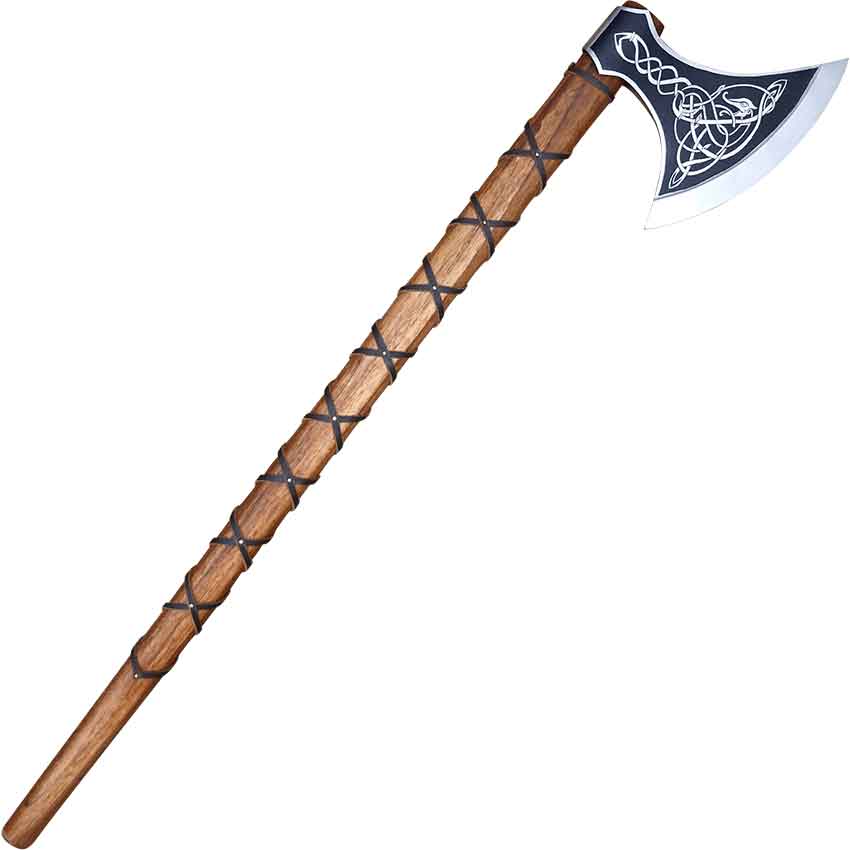
Dane Axe
The long two-handed axe of King Harold's housecarls, swung from the front of the English shield wall. Continued…
-
Norman Kite Shield
Carried by the Norman cavalry and infantry, as the Bayeux Tapestry shows on nearly every Norman figure. Continued…
-
Mail Hauberk
Worn by the professional warriors of both armies: the Norman knights and Harold's housecarls. Continued…
-
Knight's Lance
Norman horsemen used the lance both couched and overarm, thrown or thrust against the English line. Continued…
-
Crossbow
The Norman chronicler William of Poitiers mentions crossbowmen among Duke William's missile troops. Continued…
-
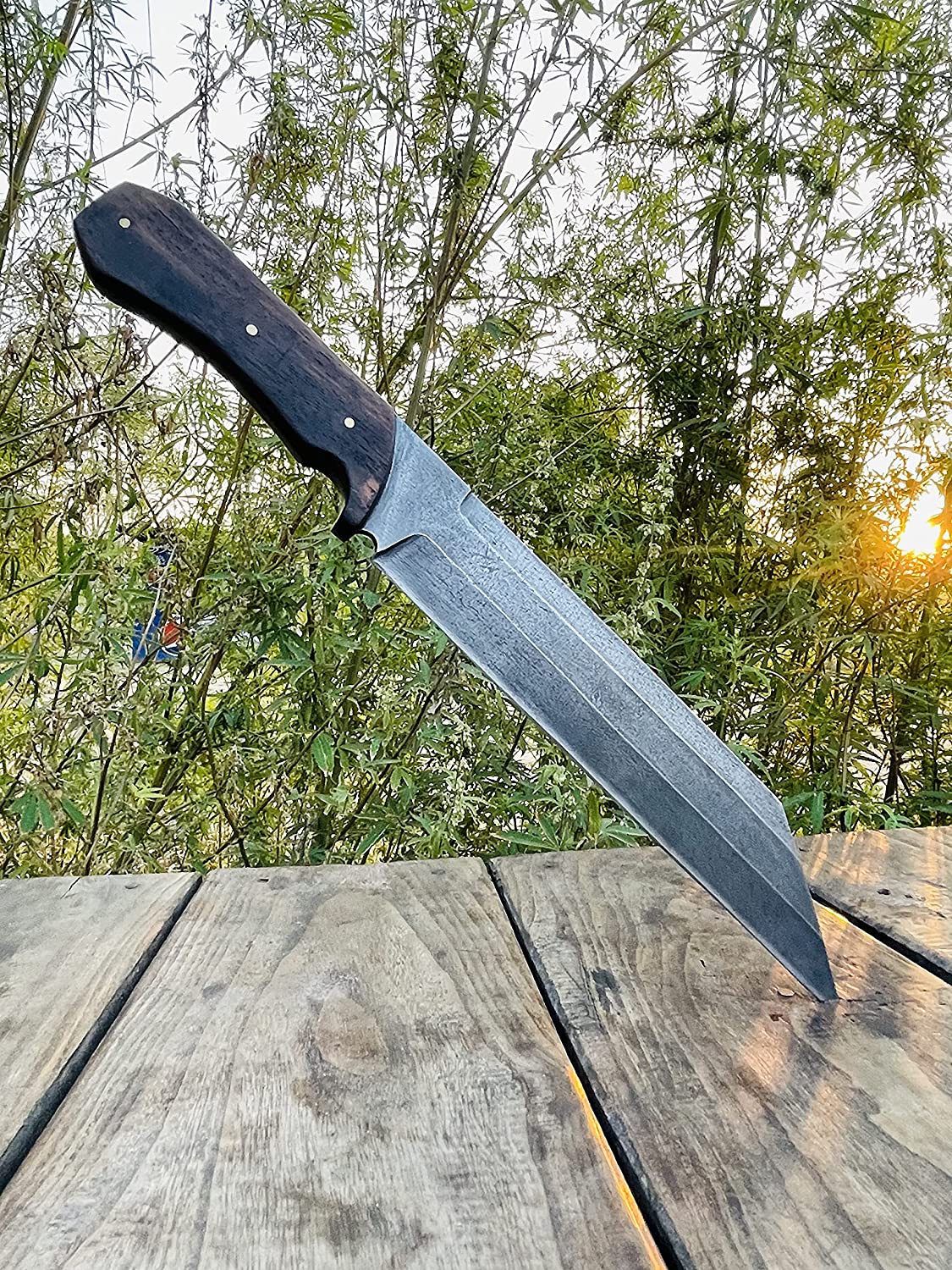
Seax
The single-edged knife carried by Anglo-Saxon warriors of every rank. Continued…
Sources
Lawson, M. K. The Battle of Hastings 1066. Tempus, 2002.
Morillo, Stephen, ed. The Battle of Hastings: Sources and Interpretations. Boydell Press, 1996.
William of Poitiers. Gesta Guillelmi, ed. and trans. R. H. C. Davis and M. Chibnall. Oxford University Press, 1998.
The Bayeux Tapestry (Bayeux, Musée de la Tapisserie).
Suggest an edit · account required · reviewed before publishing · how it works