Origin
England
England developed some of the most influential weapons in medieval and early modern history. The English longbow was a decisive battlefield weapon, while English gunmakers and craftsmen contributed to the development of the flintlock mechanism and later precision rifling.
Overview
England (distinct from Britain/United Kingdom as a political entity pre-1707) has one of the most significant medieval weapon histories, centered on the English longbow and later the development of firearms in the Tudor period. English military influence expanded globally through colonial enterprise from the 16th century onward.
The English Longbow
The English longbow — a self bow of yew, elm, or ash, typically 6 feet tall — is arguably England's most historically significant weapon. Key facts:
- Draw weight — 100–180 lbs; modern reproductions of the Mary Rose longbows (1545) demonstrate 150–160 lb draw weights
- Range — Aimed shots to 200 yards; long-range volley fire to 300+ yards
- Rate of fire — 10–12 arrows per minute from trained archers
- Penetration — Could penetrate mail at battle range; less effective against later plate armor
English law mandated longbow practice on Sundays for able-bodied men, producing a large trained pool of archers. This policy created the armies that fought at Crécy (1346), Poitiers (1356), and Agincourt (1415).
Medieval Weapons
- Bill — The English infantry pole weapon; a heavy hook-blade on a 6-foot staff; used alongside archers
- Arming sword — Standard knightly weapon; one-handed cut-and-thrust
- Longsword — Two-handed; used by knights fighting on foot
Firearms
- Henry VIII era — Early adoption of arquebuses and artillery; the Tower of London served as the primary arsenal
- Brown Bess — See British entry; English manufacture was central
- Enfield — The Royal Small Arms Factory at Enfield Lock produced the Pattern 1853 Enfield and later Lee-Enfield rifles
This article is a stub.
Battles & Operations
-
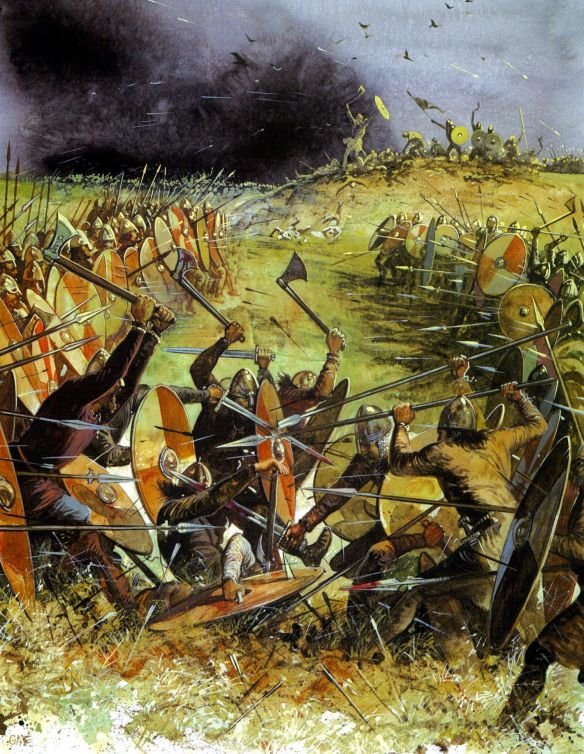
Battle of Maldon (10 August 991)
The Battle of Maldon, fought in August 991 on the Blackwater estuary near Maldon in Essex, pitted Byrhtnoth, ealdorman of Essex, and the… Continued…
-
Battle of Hastings (14 October 1066)
The Battle of Hastings, fought on 14 October 1066 on a ridge north of Hastings in Sussex, decided the Norman Conquest of England. King… Continued…
-
The Battle of Stamford Bridge (25 September 1066)
The Battle of Stamford Bridge was fought on 25 September 1066 near York between the English army of King Harold Godwinson and a Norwegian… Continued…
-
Battle of Stirling Bridge (11 September 1297)
The Battle of Stirling Bridge was fought on 11 September 1297 beside the River Forth at Stirling. A Scottish army led by William Wallace… Continued…
-
Battle of Crécy (26 August 1346)
The Battle of Crécy, fought on 26 August 1346 in Ponthieu in northern France, was the first great English victory of the Hundred Years War.… Continued…
-
Battle of Agincourt (25 October 1415)
The Battle of Agincourt was fought on 25 October 1415, St Crispin's Day, in northern France during the Hundred Years War. King Henry V's… Continued…
-
Battle of Towton (29 March 1461)
The Battle of Towton was fought near the village of Towton in Yorkshire on Palm Sunday, 29 March 1461, during the Wars of the Roses. The… Continued…
-
Spanish Armada (29 July - 8 August 1588)
The Spanish Armada was the fleet of about 130 ships that Philip II of Spain sent against England in 1588. It was meant to sail up the… Continued…
-
Battle of Naseby (14 June 1645)
The Battle of Naseby, fought in Northamptonshire on 14 June 1645, was the decisive battle of the First English Civil War. Parliament's New… Continued…
Weapons
-
Arming Sword
The arming sword was the one-handed, double-edged sword of the medieval knight, carried from the eleventh to the fifteenth century with a… Continued…
-
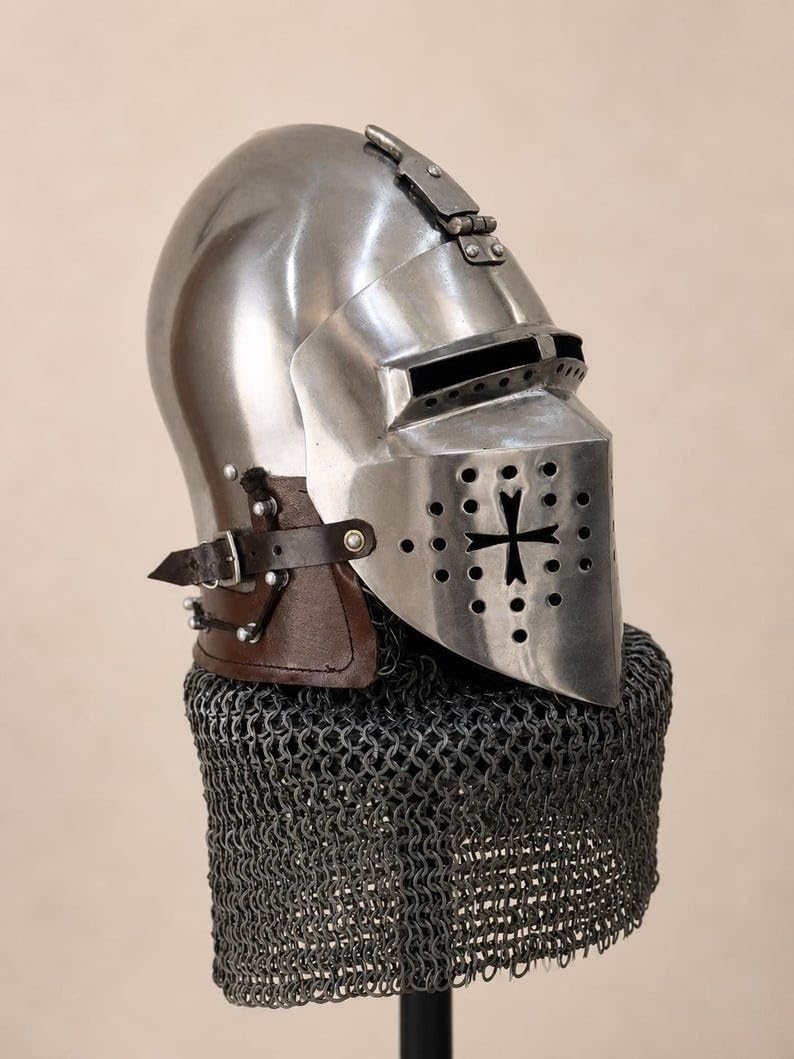
Bascinet
The bascinet was the most widely worn helmet of fourteenth-century Europe: an iron skull cap drawn up into a point, with a curtain of mail… Continued…
-
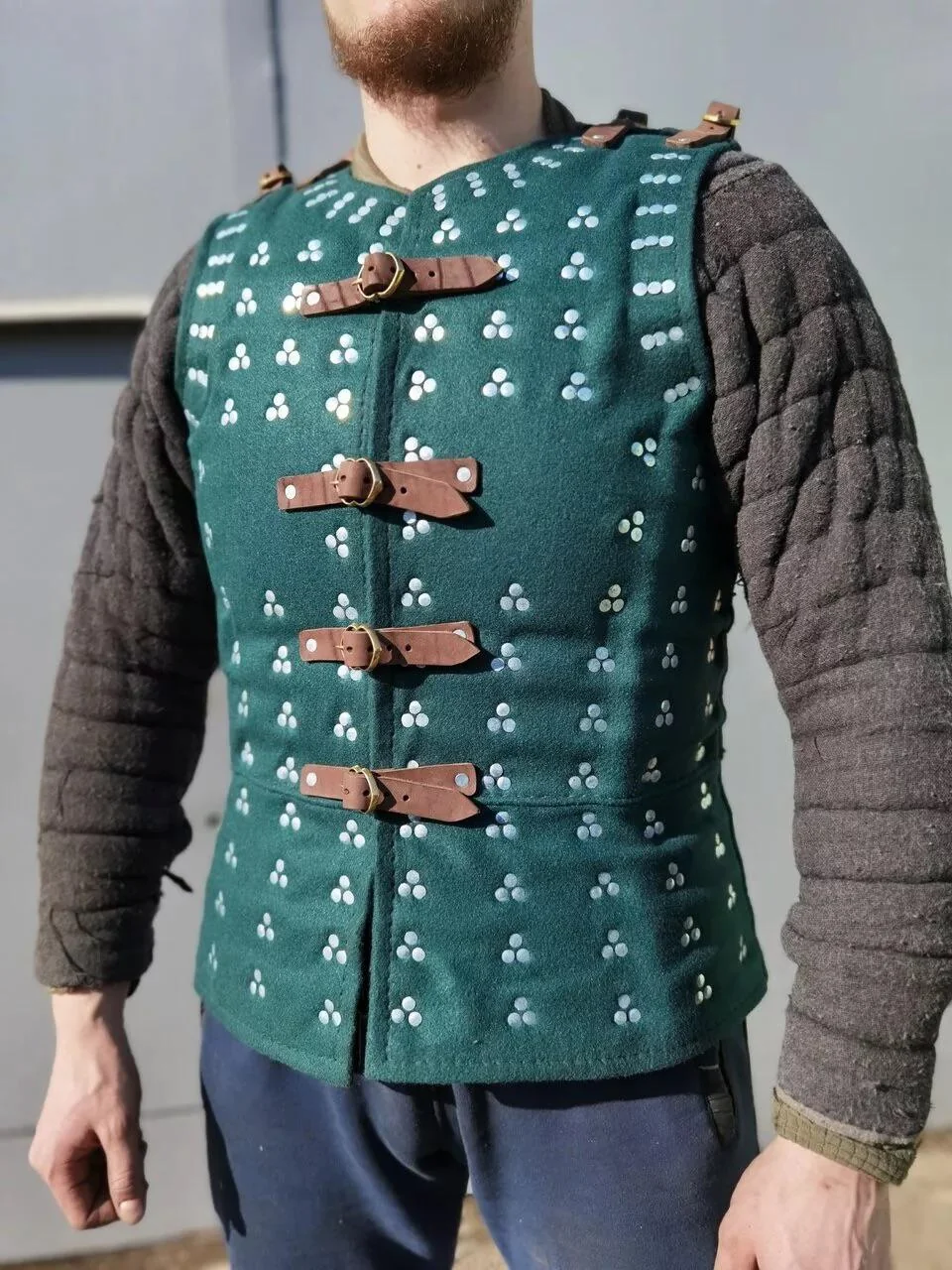
Brigandine
The brigandine was a body armor made of many small iron or steel plates riveted to the inside of a fabric or leather covering, so that only… Continued…
-
Cuirassier Armor
Cuirassier armor was the three-quarter plate armor worn by heavy cavalry in Europe from the late sixteenth century to the middle of the… Continued…
-
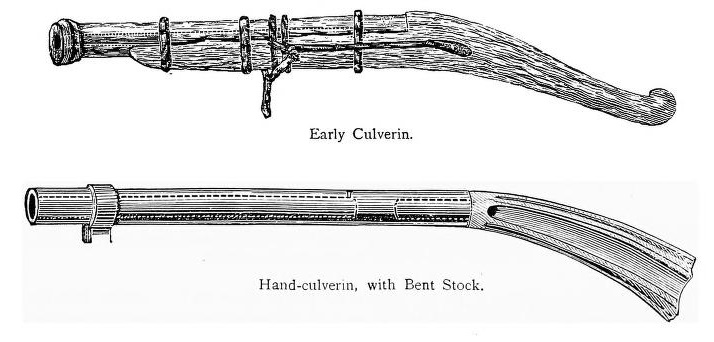
Culverin
The culverin was a long-barreled muzzle-loading gun of the sixteenth and seventeenth centuries. Compared with the heavier 'cannon' class it… Continued…
-
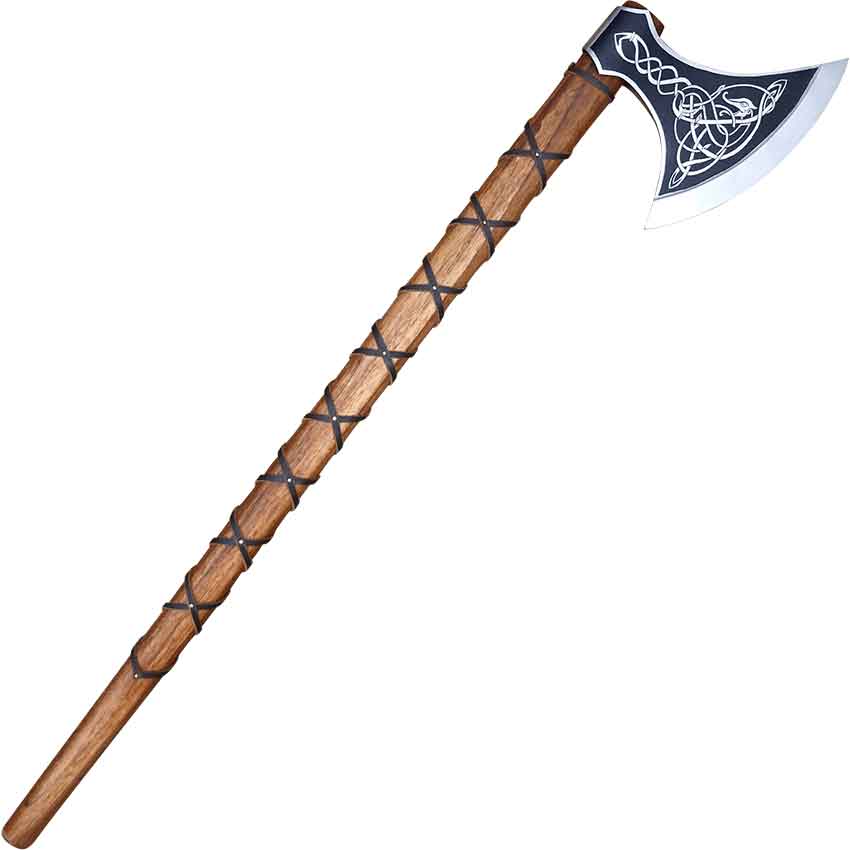
Dane Axe
The Dane axe is the great two-handed axe of the Viking Age and its aftermath: a thin, broad, crescent-edged head on a haft about a meter… Continued…
-
English Bill
The English bill was the characteristic pole arm of the English foot soldier from the fourteenth century to the late sixteenth: a hooked… Continued…
-
English Longbow
The English longbow was the great ranged weapon of the later Middle Ages: a self bow of yew, as tall as its archer or taller, drawing well… Continued…
-
Estoc
The estoc was a sword made to defeat plate armor: a long, stiff blade with no real cutting edge, triangular, square or diamond in section… Continued…
-
Falchion
The falchion was a single-edged medieval sword with a broad blade, heavier toward the point, that combined the chopping power of an axe… Continued…
-
Fire Ship
A fire ship was a vessel filled with flammable material, set alight and sent drifting or sailing into an enemy fleet. Wooden ships with… Continued…
-
Galleon
The galleon was the large ocean-going sailing ship of the sixteenth and early seventeenth centuries, used both as a warship and as an armed… Continued…
-
Great Helm
The great helm was the fully enclosed, flat-topped or sugarloaf helmet of the high medieval knight, worn from around 1220 until the mid… Continued…
-
Kettle Hat
The kettle hat was an open-faced iron or steel helmet with a wide brim, known in French as the chapel de fer, the iron hat. It appeared in… Continued…
-
Knight's Lance
The knight's lance was the defining weapon of medieval European heavy cavalry: a long wooden shaft with an iron head, held tight under the… Continued…
-
Lobster-Pot Helmet
The lobster-pot helmet was the standard helmet of European light-armored cavalry in the seventeenth century. Known in German as the… Continued…
-
Mail Hauberk
The mail hauberk was the principal body armor of European warriors for most of the Middle Ages: a long shirt of thousands of interlinked… Continued…
-
Norman Kite Shield
The kite shield is the long, round-topped, tapering shield carried by the Norman knights of the Bayeux Tapestry and by armored horsemen… Continued…
-
Pike
The pike is the longest infantry weapon ever carried in formation: an ash shaft of 16 to 22 feet tipped with a small steel head, used by… Continued…
-
Plug Bayonet
The plug bayonet was the first bayonet: a dagger with a tapered handle that was pushed into the muzzle of a musket, turning the gun into a… Continued…
-
Poleaxe
The poleaxe was the knight's weapon for fighting on foot in full plate armor during the fifteenth century. About five to six feet long, it… Continued…
-
Quarterstaff
The quarterstaff was the English fighting staff: a straight pole of hardwood, usually between six and nine feet long, sometimes tipped with… Continued…
-
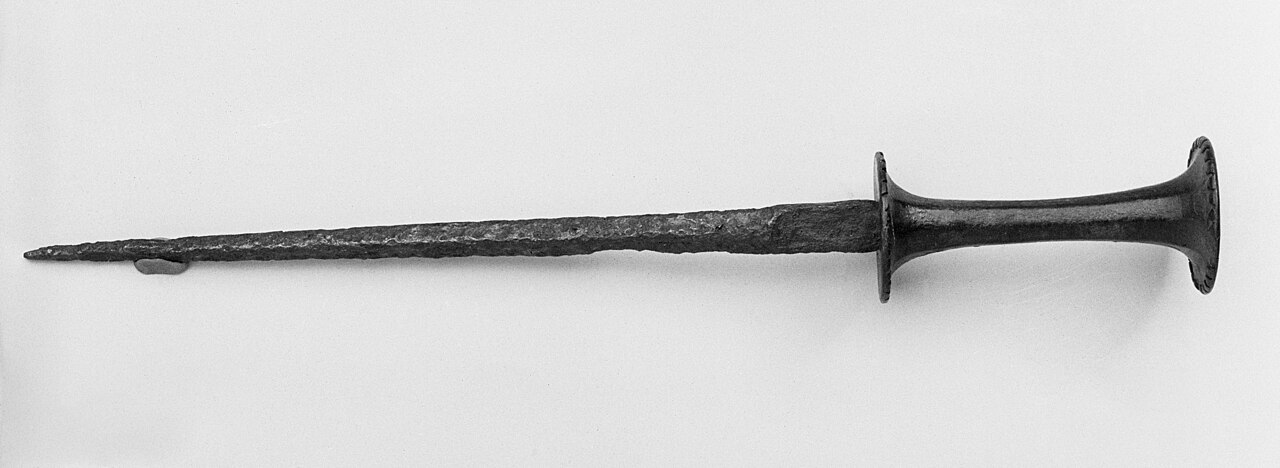
Rondel Dagger
The rondel dagger was the stiff, needle-pointed dagger of the late medieval knight, named for the disc-shaped guard and pommel that framed… Continued…
-
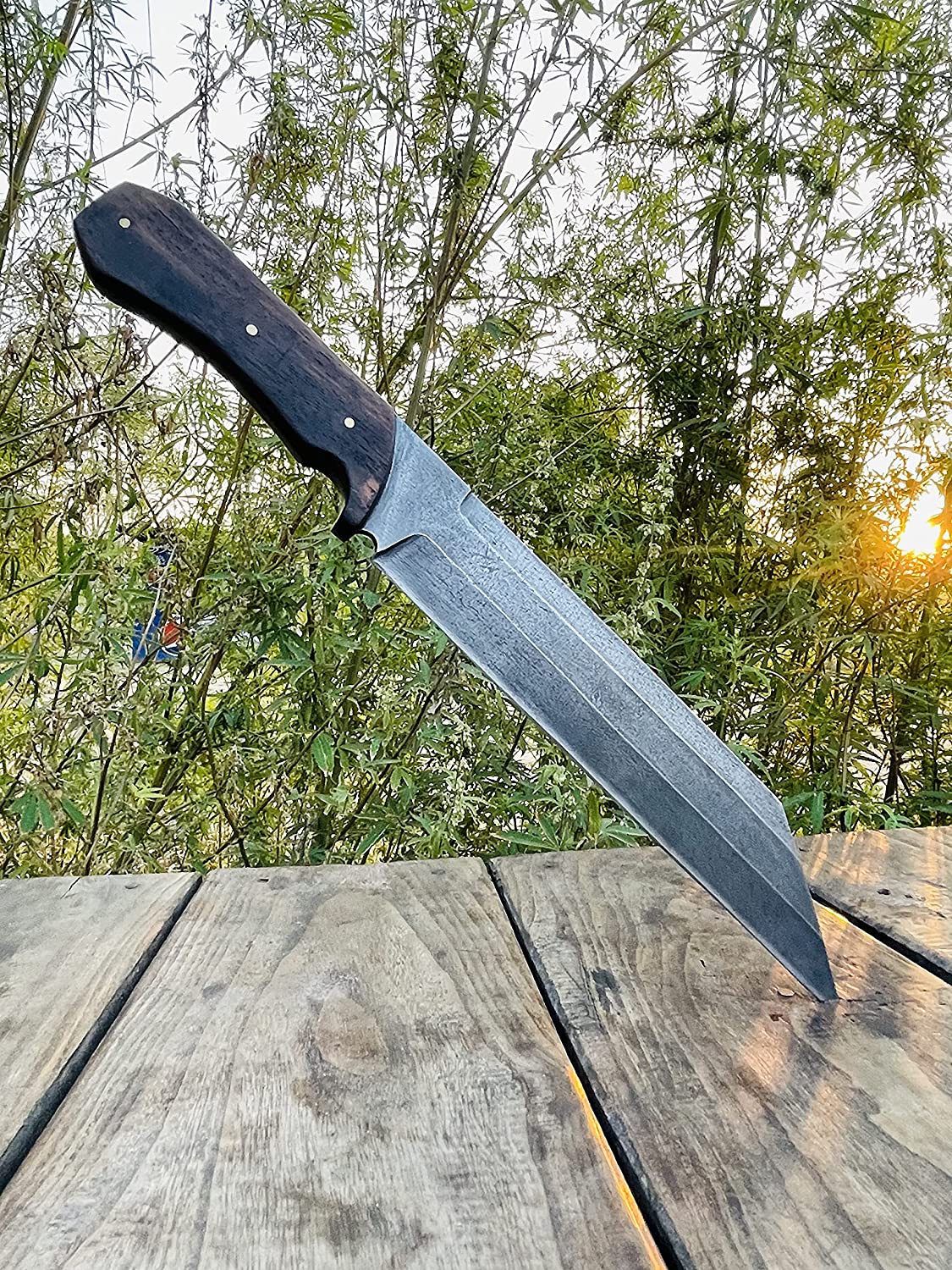
Seax
The seax is the single-edged knife of the early medieval Germanic peoples, carried from the fifth to the eleventh century by Franks… Continued…
-
Smallsword
The smallsword was the gentleman's sword of the late seventeenth and eighteenth centuries: a light, short thrusting sword, usually with a… Continued…
-
Trebuchet
The counterweight trebuchet was the heaviest artillery of the Middle Ages: a great pivoting beam whose short arm carried a box of earth or… Continued…
-
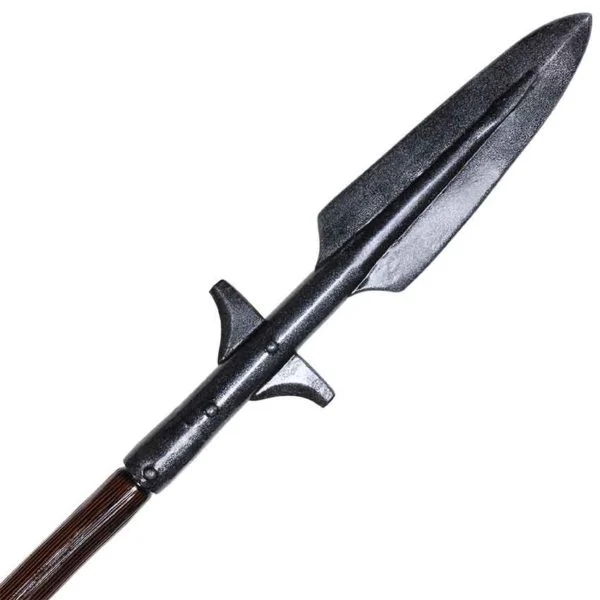
Viking Spear
The spear was the most common weapon of the Viking Age, carried by farmers and kings alike. It had an iron head, socketed onto an ash shaft… Continued…
-
War Hammer
The war hammer is the late medieval answer to plate armor: a steel head with a blunt, often toothed hammer face on one side and a stout… Continued…