Battle of Towton
The Battle of Towton was fought near the village of Towton in Yorkshire on Palm Sunday, 29 March 1461, during the Wars of the Roses. The Yorkist army of the young Edward IV defeated the Lancastrian army of Henry VI in a long battle fought partly in a snowstorm. It is often called the largest and bloodiest battle ever fought on English soil, though the traditional death toll of 28,000 is doubted. The victory secured Edward's throne.
Also known as Towton, Battle of Towton 1461, Palm Sunday Field, Towton Moor, Battle of Palm Sunday, Bloody Meadow
Background
The Wars of the Roses were a series of civil wars between the royal houses of Lancaster and York for the crown of England. Fighting began at St Albans in 1455. In October 1460 an agreement called the Act of Accord made Richard, Duke of York, heir to the weak Lancastrian king Henry VI, but Henry's queen, Margaret of Anjou, refused to accept the disinheritance of her son. Her supporters killed York at Wakefield on 30 December 1460. His eldest son Edward, Earl of March, defeated a Lancastrian army at Mortimer's Cross in February 1461, but a few days later Richard Neville, Earl of Warwick, was beaten at the second battle of St Albans, and the Lancastrians recovered King Henry. London shut its gates to the queen's army, which withdrew north. Edward entered the city and was proclaimed king on 4 March 1461. He then marched north to destroy the Lancastrian army. On 28 March the Lancastrians fought a sharp action at Ferrybridge on the River Aire, in which their commander there, Lord Clifford, was killed.
The Battle
The Lancastrian army, commanded by Henry Beaufort, Duke of Somerset, drew up on a plateau between the villages of Towton and Saxton, south of Tadcaster. Henry VI stayed at York. Edward's army, with Warwick and his uncle William Neville, Lord Fauconberg, faced them from the south, while a contingent under John Mowbray, Duke of Norfolk, was still on the march. The size of the armies is uncertain. Contemporary figures are much too high, but the two sides together probably numbered several tens of thousands, among the largest armies ever raised in England. Fighting began on the morning of 29 March, Palm Sunday, with snow blowing into the faces of the Lancastrians. According to later chroniclers, Fauconberg's archers loosed a volley and then stepped back, and the Lancastrian arrows shot blindly into the wind fell short. Stung by Yorkist arrows, the Lancastrians advanced and the armies met in a hand-to-hand struggle that lasted for several hours. In the afternoon Norfolk's men arrived on the Yorkist right. The Lancastrian line gave way, and the retreat became a rout. Many were cut down or drowned trying to cross the flooded Cock Beck behind them, in a field still called the Bloody Meadow, and the killing continued toward Tadcaster.
Weapons
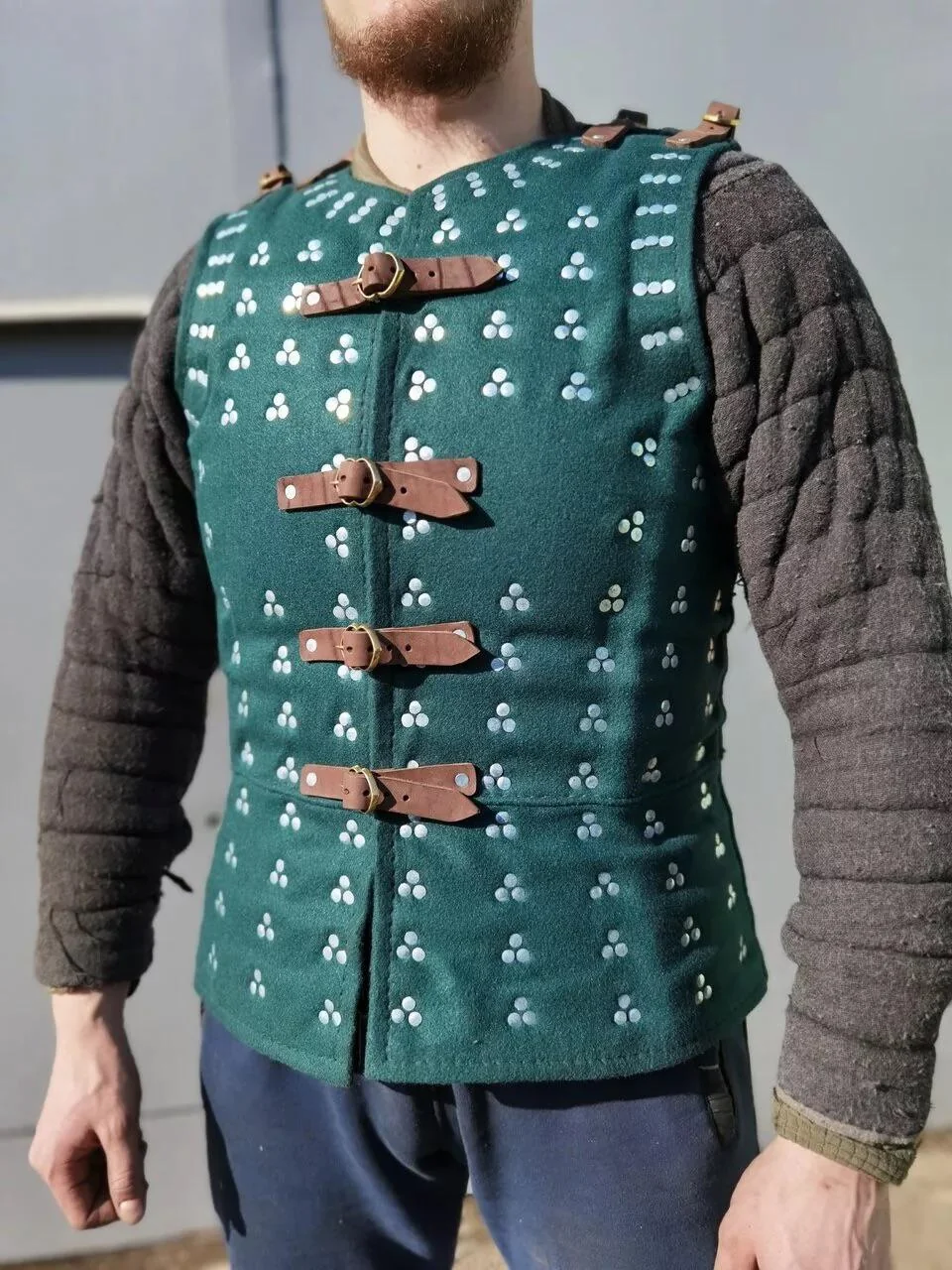
The opening phase was an archery duel with the English Longbow, and archers made up a large part of both armies. In the long mêlée that followed, the common soldiers fought mainly with the English Bill, while nobles and men-at-arms fought on foot in plate armor with the Poleaxe, the War Hammer and the Arming Sword. Less wealthy soldiers wore the Brigandine or padded jacks with sallet helmets. Surveys of the battlefield have found many arrowheads, and reportedly fragments of early handguns related to the Hand Cannon, which suggests a few firearms were present. In 1996 a mass grave containing the remains of at least 37 men was found at Towton Hall. Most of the skulls show several wounds from blades, points and blunt weapons, and the pattern suggests that many men had lost their helmets before they were killed.
Aftermath
The heralds' count reported by contemporaries, about 28,000 dead, is traditional but probably inflated, and many modern historians suggest a lower figure, perhaps around 10,000 or fewer. Even so, the losses were very heavy. The Earl of Northumberland, Lord Dacre and Andrew Trollope were among the Lancastrian dead. Henry VI, Margaret and their son fled to Scotland. Edward was crowned Edward IV on 28 June 1461, although Lancastrian resistance in Northumberland continued until 1464 and Henry briefly regained the throne in 1470-1471. The Towton skeletons have become one of the most important sources for the study of medieval battle injuries.
Weapons used
-
English Longbow
Both armies relied on massed archers, and the opening arrow duel in a snowstorm forced the Lancastrians to attack. Continued…
-
English Bill
The bill was the main weapon of the common foot soldiers who fought the long hand-to-hand struggle that followed. Continued…
-
Poleaxe
Dismounted men-at-arms fought on foot with poleaxes, and skulls from the Towton grave show wounds from heavy hafted weapons. Continued…
-
Brigandine
Archers and billmen who could afford it wore the brigandine or a padded jack as their main body armor. Continued…
-
War Hammer
Hammers and other blunt weapons were used against armored men, and crushing injuries appear on the skeletons from the battlefield. Continued…
-
Arming Sword
Men-at-arms and many soldiers carried a sword as a sidearm for the close mêlée. Continued…
-
Hand Cannon
Early handguns were present in small numbers in the armies of the 1460s, and battlefield surveys have reportedly found fragments of them. Continued…
Sources
Boardman, Andrew W. The Battle of Towton. Sutton Publishing, 1994.
Fiorato, Veronica, Anthea Boylston, and Christopher Knüsel, eds. Blood Red Roses: The Archaeology of a Mass Grave from the Battle of Towton AD 1461. Oxbow Books, 2000.
Gravett, Christopher. Towton 1461: England's Bloodiest Battle. Osprey Publishing, 2003.
Goodman, Anthony. The Wars of the Roses: Military Activity and English Society, 1452-97. Routledge & Kegan Paul, 1981.
Suggest an edit · account required · reviewed before publishing · how it works