Era
Early Modern
Matchlock and flintlock era; pike and shot warfare.
c. 1500 – 1700 CE
Overview
The Early Modern Era completed the firearms revolution begun in the Renaissance. By 1700, the musket and bayonet had replaced the pike-and-shot formation, cavalry had transitioned from shock lancers to pistol-armed harquebusiers, and artillery had become the decisive arm on most European battlefields.
This was the era of religious wars, rising nation-states, and the development of professional standing armies that replaced medieval feudal levies and Renaissance mercenary companies.
The Flintlock Revolution
The flintlock mechanism, developed in France around 1610–1630, superseded the matchlock and wheel lock as the dominant ignition system for firearms. Its advantages:
- No slow-burning match required (critical in rain and darkness)
- More reliable ignition
- Faster lock time than the wheel lock
- Simpler and cheaper to manufacture and maintain
The flintlock musket became the standard infantry weapon across Europe and remained so for nearly two centuries.
Key Weapons
Muskets
- Matchlock musket — Still common in the early part of this era; required a lit match at all times
- Wheel lock — Spring-powered sparking mechanism; expensive, used primarily by cavalry and wealthy infantry
- Flintlock musket — The dominant infantry arm from roughly 1650 onward; smoothbore, firing a lead ball
- Doglock — A transitional English flintlock pattern common in the mid-17th century
The Bayonet
The bayonet solved the fundamental problem of the pike-and-shot system: musketeers were defenseless against cavalry while reloading. Two forms appeared:
- Plug bayonet — A blade with a tapered handle inserted directly into the musket's muzzle; the musket could not be fired with it fitted
- Ring/socket bayonet — A blade on a ring or socket that fit around the barrel without blocking the muzzle; invented around 1680 and rapidly adopted; made the pike obsolete by 1700
Cavalry Arms
- Pistol — Wheel lock and then flintlock cavalry pistols became standard; cavalry tactics shifted from the lance charge to the caracole (riding up, firing, and withdrawing to reload)
- Carbine — A shorter, lighter musket for mounted use
- Saber — Curved cutting sword; cavalry retained edged weapons for melee when pistols were exhausted
- Cuirassier armor — Heavy cavalry retained breastplate and backplate well into this era; the distinctive bullet-proof breastplate, often dented by a test shot to verify its quality
Artillery
Field artillery became more mobile and standardized in this period. The Swedish reforms of Gustavus Adolphus (reigned 1611–1632) introduced lighter regimental guns that could accompany infantry, increasing the firepower available to field commanders.
Tactical Developments
The Thirty Years War (1618–1648)
One of the most destructive conflicts of the era, the Thirty Years War tested and accelerated weapons development across Europe. Swedish, Spanish, French, and Imperial forces all fielded variations of the pike-and-shot system, while Gustavus Adolphus's reforms — lighter muskets, combined arms integration, mobile artillery — gave Sweden a decisive tactical edge.
English Civil War (1642–1651)
The English Civil War was one of the last conflicts where pikemen and musketeers served in roughly equal numbers. By its end, the ratio had shifted heavily toward musketeers, and the bayonet's development would shortly make the pike redundant.
Armor's Decline
Full plate armor became impractical as firearms became ubiquitous. By 1650, most infantry wore no metal armor at all — at most a steel helmet (morion or pot helmet) and perhaps a breastplate for the front rank. Cavalry retained the cuirass (breastplate and backplate) but abandoned leg and arm armor. The buff coat — thick leather resistant to sword cuts — became standard cavalry wear.
This article is a stub. Contributions covering specific weapons, battles, and national armies are welcome.
Battles & Operations
-
Battle of Breitenfeld (17 September 1631 (7 September Old Style))
The Battle of Breitenfeld, fought north of Leipzig on 17 September 1631, was the first great victory of Gustavus Adolphus of Sweden in the… Continued…
-
Battle of Naseby (14 June 1645)
The Battle of Naseby, fought in Northamptonshire on 14 June 1645, was the decisive battle of the First English Civil War. Parliament's New… Continued…
-
Battle of Vienna (12 September 1683)
The Battle of Vienna, fought on 12 September 1683, ended the second Ottoman siege of the Habsburg capital. The Grand Vizier Kara Mustafa… Continued…
-
Battle of Culloden (16 April 1746)
The Battle of Culloden, fought on Drummossie Moor near Inverness on 16 April 1746, ended the last Jacobite rising. A British government… Continued…
-
Battle of Fort Necessity (3 July 1754)
The Battle of Fort Necessity was fought on 3 July 1754 at the Great Meadows in south-western Pennsylvania. A French and Native force under… Continued…
-
Battle of the Monongahela (9 July 1755)
The Battle of the Monongahela, often called Braddock's Defeat, was fought on 9 July 1755 about ten miles from Fort Duquesne, near modern… Continued…
-
Siege of Fort William Henry (3-9 August 1757)
The Siege of Fort William Henry took place from 3 to 9 August 1757 at the southern end of Lake George in New York. A French army of about… Continued…
-
Battles of Saratoga (19 September and 7 October 1777)
The Battles of Saratoga were two battles fought in upstate New York in the autumn of 1777. A British army under General John Burgoyne had… Continued…
-
Battle of Camden (16 August 1780)
The Battle of Camden, fought on 16 August 1780 a few miles north of Camden, South Carolina, was one of the worst American defeats of the… Continued…
-
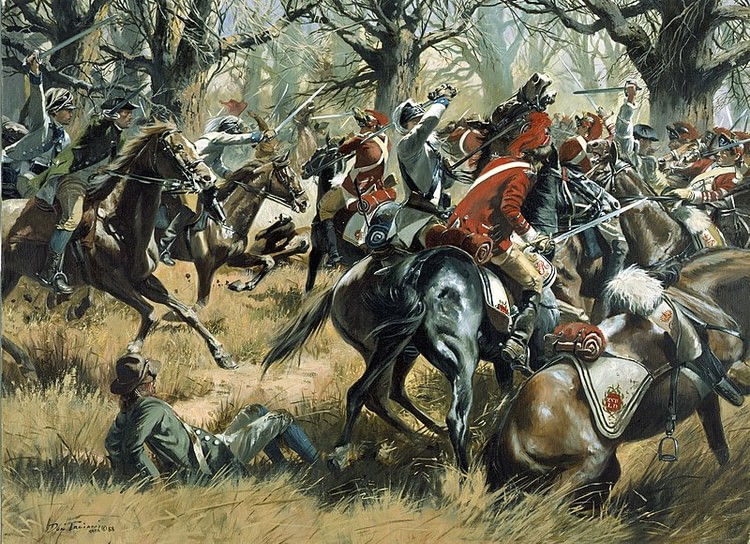
Battle of Cowpens (17 January 1781)
The Battle of Cowpens, fought on 17 January 1781 at a frontier pasture near the North Carolina border of South Carolina, was one of the… Continued…
-
Battle of Guilford Court House (15 March 1781)
The Battle of Guilford Court House was fought on 15 March 1781 in what is now Greensboro, North Carolina. About 1,900 British and German… Continued…
-
Siege of Yorktown (28 September - 19 October 1781)
The Siege of Yorktown, from 28 September to 19 October 1781, was the last major battle of the American Revolution. A combined American and… Continued…
Weapons
-
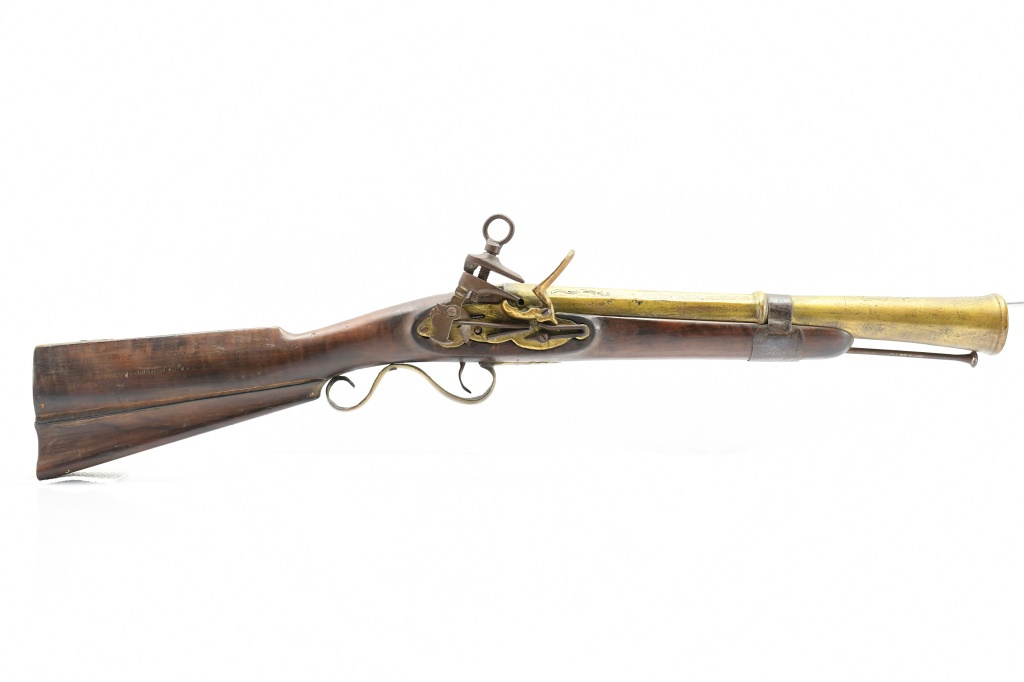
Blunderbuss
The blunderbuss was a short, large-bore, muzzle-loading gun with a flared muzzle, built to fire a handful of shot at very close range. From… Continued…
-
Boarding Axe
The boarding axe was the short-handled naval axe of the age of sail, with a cutting blade on one side and a spike on the other. It was a… Continued…
-
Brown Bess Musket
Brown Bess is the affectionate name for the British Land Pattern flintlock musket, the longest-serving firearm in British history. A .75… Continued…
-
Bō Staff
The bō is the Japanese and Okinawan fighting staff, most often the rokushakubō, a straight pole of hardwood six shaku (about 180 cm) long.… Continued…
-
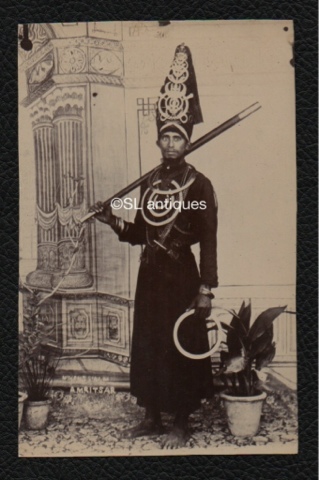
Chakram
The chakram is the flat steel throwing ring of the Indian subcontinent, a sharpened hoop flung edge-first at an enemy. Best known as the… Continued…
-
Charleville Musket
'Charleville' is the collector's name — taken from the great arsenal in the Ardennes — for the French service flintlock muskets of the… Continued…
-
Chinese Dao
The dao — the single-edged Chinese saber — was the standard sidearm of Chinese soldiers for the better part of two thousand years, honored… Continued…
-
Chu-ko-nu
The chu-ko-nu, or zhuge nu, is the Chinese repeating crossbow. A box magazine on top of the stock held a stack of bolts, and a single lever… Continued…
-
Cuirassier Armor
Cuirassier armor was the three-quarter plate armor worn by heavy cavalry in Europe from the late sixteenth century to the middle of the… Continued…
-
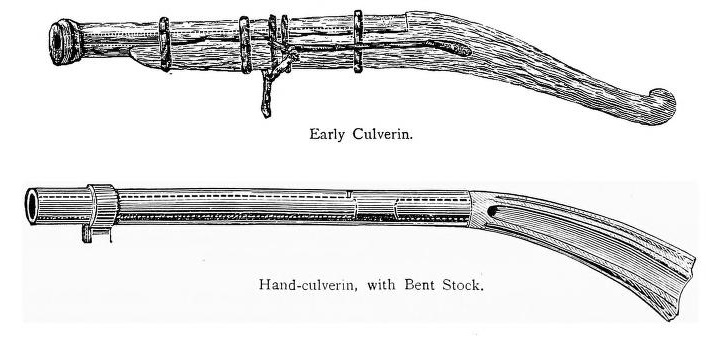
Culverin
The culverin was a long-barreled muzzle-loading gun of the sixteenth and seventeenth centuries. Compared with the heavier 'cannon' class it… Continued…
-
Ferguson Rifle
The Ferguson rifle was a breech-loading flintlock rifle designed by Captain Patrick Ferguson of the British Army and patented in 1776. A… Continued…
-
Fire Ship
A fire ship was a vessel filled with flammable material, set alight and sent drifting or sailing into an enemy fleet. Wooden ships with… Continued…
-
Fusil de Chasse
The fusil de chasse was a light French flintlock hunting musket, made in large numbers at Tulle for the Ministry of Marine and shipped to… Continued…
-
Galleon
The galleon was the large ocean-going sailing ship of the sixteenth and early seventeenth centuries, used both as a warship and as an armed… Continued…
-
Grasshopper Cannon
The grasshopper was a light British 3-pounder field gun of the later eighteenth century, a short bronze barrel on a small carriage that… Continued…
-
Gunstock War Club
The gunstock war club is a Native American hand weapon made from a flat piece of hardwood shaped like the stock of a musket, often with a… Continued…
-
Highland Dirk
The Highland dirk is the long, single-edged dagger of the Scottish Highlands, known in Gaelic as the biodag. It developed from the medieval… Continued…
-
Indian Talwar
The talwar is the classic curved saber of the Indian subcontinent, the weapon of Mughal, Rajput, Maratha, and Sikh horsemen from the… Continued…
-
Infantry Hanger
The infantry hanger was the short, slightly curved sword carried by private soldiers and grenadiers of the British foot for much of the… Continued…
-
Jambiya
The jambiya is the curved, double-edged dagger of Arabia, worn at the front of the belt in a sheath with a sharply upturned tip. It is most… Continued…
-
Janissary Tüfek
The tüfek, the Turkish word for a gun, was the long-barreled musket carried by the Janissaries, the elite infantry of the Ottoman Empire.… Continued…
-
Jäger Rifle
The Jäger rifle was the short, heavy-barreled flintlock hunting rifle of the German lands, carried in war by the light troops called Jäger… Continued…
-
Karambit
The karambit is the claw-shaped knife of the Malay world: a small, sharply curved blade from Sumatra and the surrounding archipelago, held… Continued…
-
Katar
The katar is the Indian push dagger: a short, broad, often triangular blade set at right angles to an H-shaped grip, so that the fighter… Continued…
-
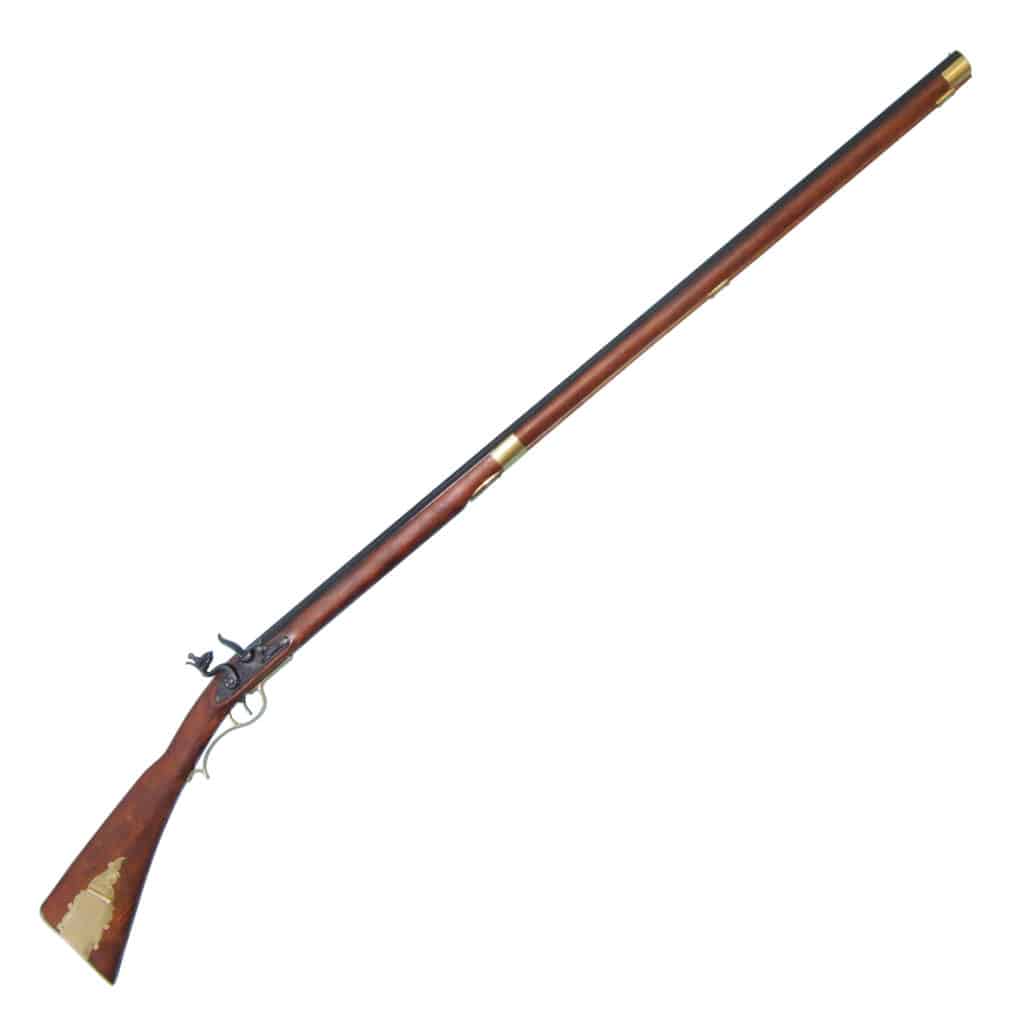
Kentucky Long Rifle
The Kentucky long rifle was the long-barreled, small-caliber flintlock rifle developed by German gunsmiths in Pennsylvania in the… Continued…
-
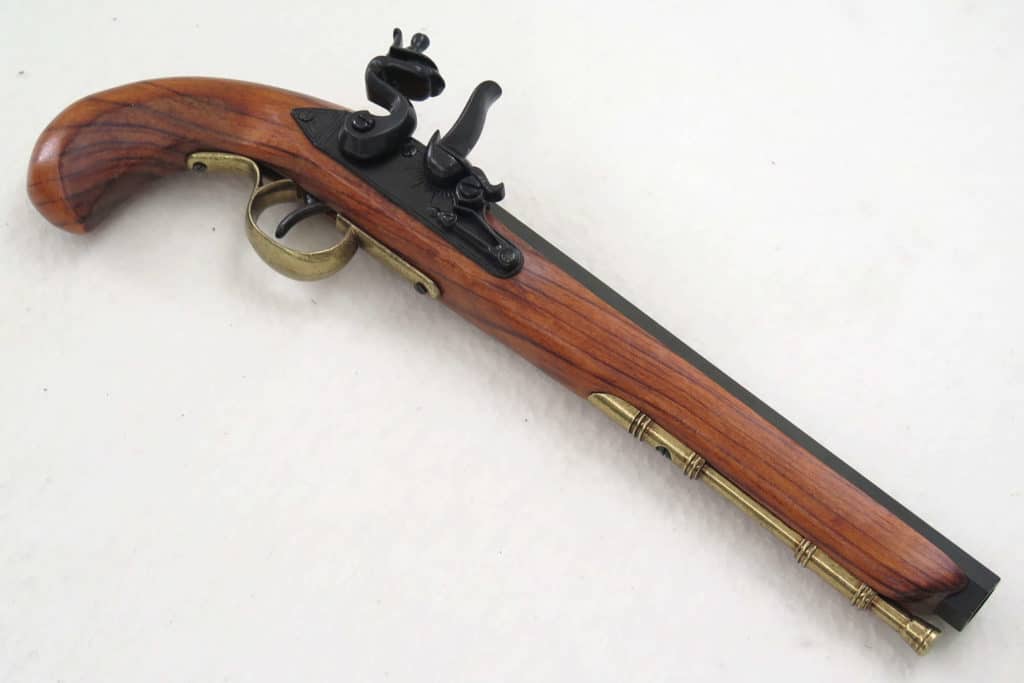
Kentucky Pistol
The Kentucky pistol is the handgun counterpart of the Kentucky long rifle: a single-shot flintlock pistol made by the same Pennsylvania and… Continued…
-
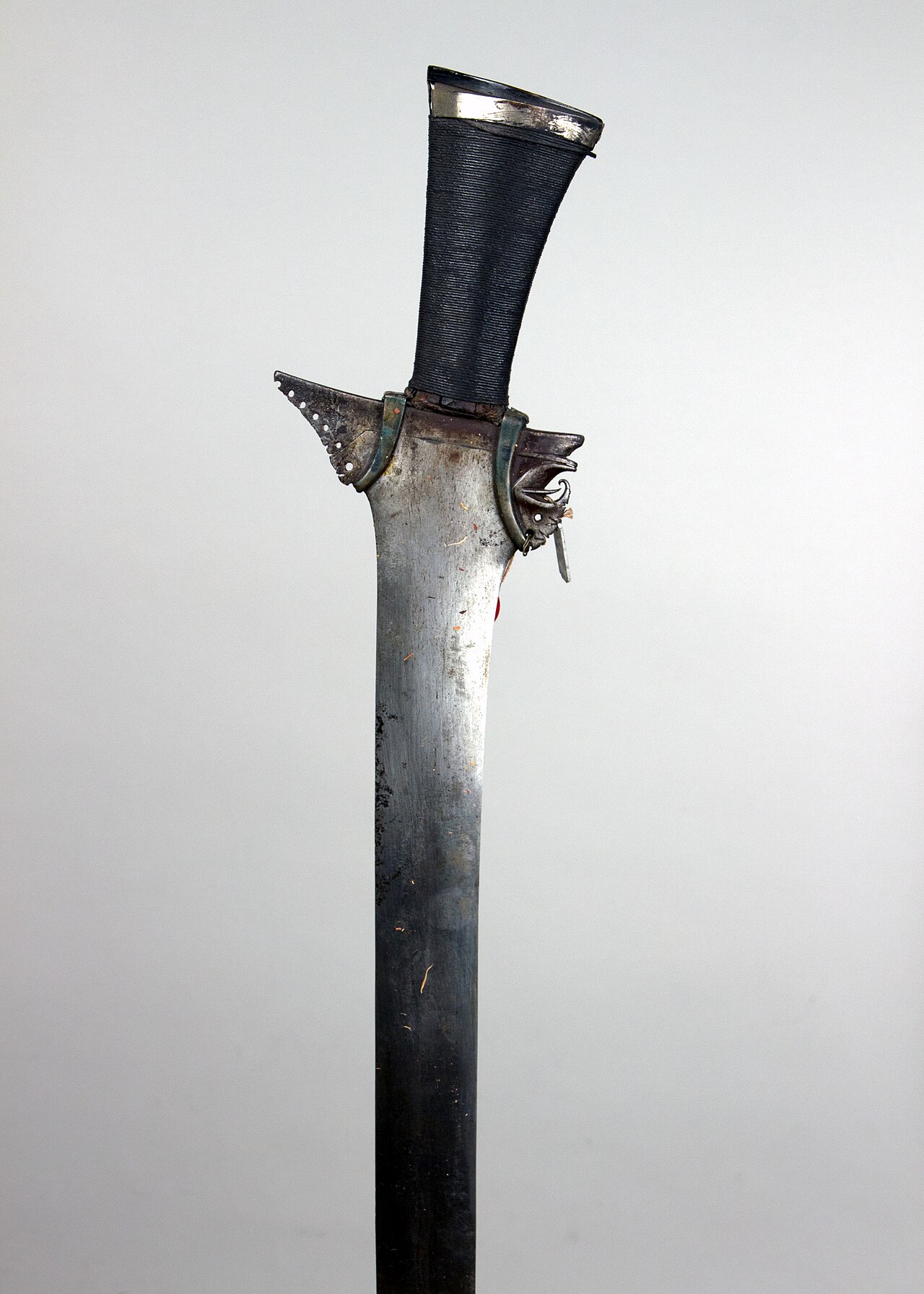
Keris
The keris is the asymmetrical dagger of the Malay world, at once a fighting weapon, a badge of rank, and a sacred heirloom. Recognizable by… Continued…
-
Light Dragoon Pistol
The Light Dragoon pistol was the British Army's flintlock cavalry pistol of the later eighteenth century. Introduced around 1759 for the… Continued…
-
Lobster-Pot Helmet
The lobster-pot helmet was the standard helmet of European light-armored cavalry in the seventeenth century. Known in German as the… Continued…
-
Lochaber Axe
The Lochaber axe is a Scottish polearm with a long, narrow, cleaver-like blade fixed to a wooden shaft, often with a hook at the top of the… Continued…
-
Morion Helmet
The morion is the open steel helmet with a tall comb and a brim swept up to points at front and back that armed pikemen and arquebusiers… Continued…
-
Ottoman Composite Bow
The Ottoman composite bow was the short, strongly recurved bow of horn, wood and sinew used by Ottoman Turkish armies from the fourteenth… Continued…
-
Ottoman Kilij
The kilij is the curved saber of the Ottoman Turks, and the name — simply 'sword' in Turkish — covers a family of blades carried from the… Continued…
-
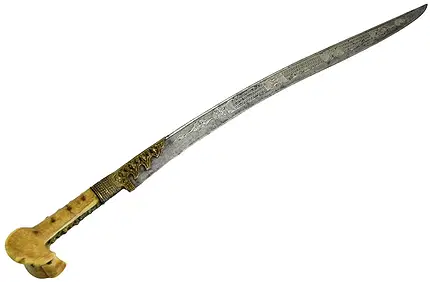
Ottoman Yatagan
The yatagan is the signature short sword of the Ottoman world: a single-edged blade curving forward like the kopis and kukri family, a hilt… Continued…
-
Pappenheimer Rapier
The Pappenheimer is a type of rapier or heavy cut-and-thrust sword of about 1620-1650, recognized by the two large dished shells, usually… Continued…
-
Persian Shamshir
The shamshir is Persia's deeply curved saber — the blade whose silhouette gave Europe the word 'scimitar.' Perfected under the Safavids, it… Continued…
-
Persian Tabar
The tabar is the war axe of Persia and the wider Islamic world, from the Middle East to Mughal India. The name is Persian for axe, and the… Continued…
-
Pike
The pike is the longest infantry weapon ever carried in formation: an ash shaft of 16 to 22 feet tipped with a small steel head, used by… Continued…
-
Plug Bayonet
The plug bayonet was the first bayonet: a dagger with a tapered handle that was pushed into the muzzle of a musket, turning the gun into a… Continued…
-
Polish Nadziak
The nadziak was the war hammer of the Polish-Lithuanian cavalry from the sixteenth to the eighteenth century. Its head combined a long… Continued…
-
Polish Szabla
The szabla is the curved saber of the Polish-Lithuanian Commonwealth, carried by the Polish nobility and cavalry from the sixteenth to the… Continued…
-
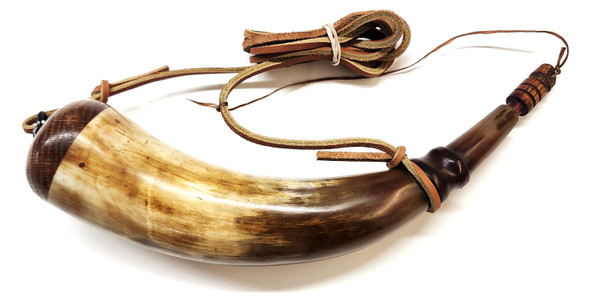
Powder Horn
The powder horn is the container, made from a hollowed cow or ox horn, in which a shooter carried gunpowder for loading a muzzleloading… Continued…
-
Pyeonjeon
The pyeonjeon is a short Korean arrow, often called aegisal, or baby arrow, shot from an ordinary bow through a split wooden guide called a… Continued…
-
Quarterstaff
The quarterstaff was the English fighting staff: a straight pole of hardwood, usually between six and nine feet long, sometimes tipped with… Continued…
-
Scottish Claymore
Claymore — Gaelic claidheamh-mòr, 'great sword' — names the two-handed sword of the Highland clans of the fifteenth to seventeenth… Continued…
-
Sea Service Pistol
The Sea Service pistol was the Royal Navy's standard sidearm through the age of sail: a heavy, plain, single-shot flintlock with a brass… Continued…
-
Ship of the Line
The ship of the line was the main battleship of the age of sail, a large wooden warship with two or three decks of heavy guns along its… Continued…
-
Shotel
The shotel is the Ethiopian sword with a deeply curved, sickle-shaped blade, sharpened on both edges. Its curve was designed to reach… Continued…
-
Siege Mortar
A siege mortar was a short, wide-mouthed cannon that fired at a high angle, so that its projectile rose over walls and earthworks and fell… Continued…
-
Smallsword
The smallsword was the gentleman's sword of the late seventeenth and eighteenth centuries: a light, short thrusting sword, usually with a… Continued…
-
Socket Bayonet
The socket bayonet is a blade fixed to the side of a metal tube that slides over the muzzle of a musket and locks in place. Unlike the… Continued…
-
Spontoon
The spontoon, or espontoon, was a short pike of about six to seven feet carried by infantry officers, and later by sergeants, in European… Continued…
-
Swedish Regimental Gun
The Swedish regimental gun was a light bronze cannon, usually a three-pounder, attached to each infantry regiment of Gustavus Adolphus's… Continued…
-
Swivel Gun
The swivel gun was a small cannon mounted on a forked iron yoke that pivoted in a socket on a ship's rail, fighting top or boat bow, so… Continued…
-
Tanegashima
Tanegashima is the Japanese name for the matchlock arquebus, taken from the island of Tanegashima where, by the traditional account… Continued…
-
Targe
The targe is the round shield of the Scottish Highlands, used from the late Middle Ages until the Jacobite Rising of 1745. Made of two… Continued…
-
Tomahawk
The tomahawk is the light axe of the North American frontier: an Algonquian name, a Native American weapon concept, and a European-forged… Continued…
-
Venetian Galleass
The galleass was a large, heavily gunned warship of the sixteenth-century Mediterranean, built by Venice from its great merchant galleys.… Continued…
-
Winged Hussar Lance
The kopia was the lance of the Polish-Lithuanian winged hussars, the heavy cavalry that dominated Eastern European battlefields for more… Continued…
-
Yari
The yari is the Japanese straight-bladed spear. It came into wide use in the fourteenth century and by the Sengoku period of the sixteenth… Continued…