Kentucky Pistol
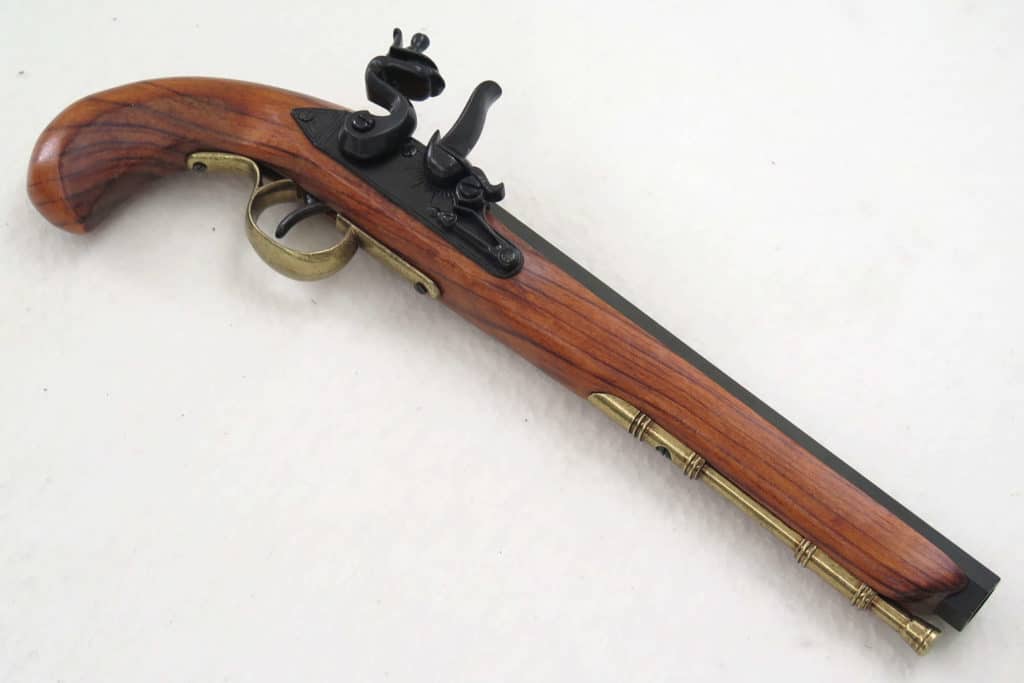
The Kentucky pistol is the handgun counterpart of the Kentucky long rifle: a single-shot flintlock pistol made by the same Pennsylvania and backcountry gunsmiths in the second half of the eighteenth century and the early nineteenth, with the same slender curly-maple stock, brass furniture and fine inlay work. Carried by officers, frontiersmen and travelers rather than issued to troops, it was made in small numbers by individual craftsmen, and surviving originals are among the most prized of early American arms. The name, like that of the rifle, came later.
Also known as Kentucky pistol, Pennsylvania pistol, American flintlock pistol, long rifle pistol
Origins
The gunsmiths of southeastern Pennsylvania — German and Swiss immigrants working in Lancaster, Reading, Bethlehem and the towns around them — developed the long, slender rifle that became the Kentucky Long Rifle in the middle of the eighteenth century. The same shops made pistols. A customer who could afford a fine rifle often wanted a handgun to match, and the makers applied the rifle's style to it: a full-length stock of figured maple, brass or silver mounts, and a lock that was frequently imported from England. Pistols were never made in the numbers that rifles were. Each was built to order by an individual craftsman, and many were made in pairs. The name "Kentucky pistol" was applied long afterward, following the popular name for the rifle, which itself came from the fame of Kentucky frontiersmen in the early nineteenth century rather than from where the guns were made.
Design & Construction
A Kentucky pistol is a single-shot muzzleloader, originally flintlock, with a barrel of about nine or ten inches and an overall length of fourteen to sixteen inches. Barrels are octagonal or octagon-to-round, and while many are smoothbore, some were rifled like the long rifles they accompanied. Calibers run from about .40 to .54. The stock follows the rifle's lines in miniature: a slim wrist, a flared butt often capped with brass, a brass trigger guard and ramrod pipes, and in the better examples carved relief and inlays of silver or brass wire. Locks came from English makers or were built in the shop, and many surviving pistols were later converted from flintlock to percussion ignition in the 1830s and 1840s. No two are exactly alike, and collectors attribute them to individual makers and schools by their architecture and decoration.
Combat Use
The Kentucky pistol was a personal arm, not an issued one. During the American Revolution the Continental Army's standard handguns were imported French and British military pistols and a small number of American-made copies; privately made pistols in the Kentucky style were carried by officers who bought their own arms, and by riflemen and frontier militia. After the war they went west with travelers, traders and settlers into Kentucky, Tennessee and Ohio, as a sidearm for defense at close range where the long rifle was too slow to bring to bear. Their use faded in the 1830s and 1840s as percussion pistols and then revolvers such as the Colt 1851 Navy Revolver made the single-shot handgun obsolete.
Legacy
Original Kentucky pistols are rare — far rarer than the rifles — and fine, attributable examples command high prices. Their style lived on through the muzzleloading revival of the twentieth century, when the Kentucky pistol became one of the most popular reproductions and a favorite first project for home gunsmiths. Modern build-it-yourself kits reproduce its lines in percussion or flintlock form for target shooting and reenactment. Like the originals, modern black-powder reproductions are not firearms under federal law, although several states regulate them.
Sources
Dyke, Samuel E. Thoughts on the American Flintlock Pistol. George Shumway, 1974.
Neumann, George C. Battle Weapons of the American Revolution. Scurlock Publishing, 1998.
Flayderman, Norm. Flayderman's Guide to Antique American Firearms and Their Values. Gun Digest Books (9th ed.), 2007.
Suggest an edit · account required · reviewed before publishing · how it works