Weapon Type
Pistols & Revolvers
Short-barreled handguns.
Firearms — Subcategory
Overview
A pistol is a short-barreled firearm designed for one-handed operation. Revolvers are pistols with a rotating cylinder containing multiple chambers. The handgun's compact size makes it ideal for cavalry (a pistol can be used from horseback), officers (who need a weapon that doesn't impede command functions), and anyone requiring a concealable firearm. The pistol's limited range and accuracy compared to a long arm has always been the trade-off for its size and convenience.
Early Pistols (1500s–1700s)
Wheel Lock Pistol
The wheel lock mechanism (c. 1510) made the first practical pistol possible — no slow-match required, so a loaded pistol could be holstered and drawn ready:
- Heavy; expensive; primarily a cavalry and wealthy civilian weapon
- German Reiters carried two or more horse pistols; the caracole tactic had cavalry ride up, fire pistols, and retire to reload
Flintlock Pistol
The flintlock made pistols cheaper and more reliable:
- Horse pistol — Large; .69–.75 caliber; carried in saddle holsters; pair of pistols was standard cavalry equipment
- Pocket pistol — Small; .40–.50 caliber; concealable; for personal protection
- Dueling pistol — Finely made matched pairs; carefully regulated trigger; accurate sights; the tools of formal dueling from the 18th century
The Pepperbox
The pepperbox — multiple barrels rotating around a central axis — was an early multi-shot solution before the revolver:
- 4–6 barrels; each could be fired in turn
- Bulky and heavy; replaced by the revolver
The Revolver (1836–1900s)
The revolver solved the multi-shot problem with an elegant rotating cylinder:
Colt Single-Action Revolver Family
Samuel Colt's Patterson Colt (1836) introduced the practical revolver:
- Rotating cylinder aligned each chamber with the barrel in turn
- Colt Walker (1847) — Massive .44 caliber; 9-inch barrel; the most powerful production revolver of the black powder era
- Colt Army Model 1860 — The most common Union revolver in the Civil War; .44 caliber; 8-inch barrel
- Colt Single Action Army ("Peacemaker," 1873) — The iconic Western revolver; .45 Colt; adopted by the US Army; associated with the frontier era
- Required cocking the hammer manually before each shot (single-action)
Double-Action Revolvers
- Colt Model 1877 — First practical DA Colt; trigger both cocked and fired the hammer
- Smith & Wesson Model 3 — Top-break design; ejected all cartridges simultaneously for fast reloading; used by many armies
- British Webley — Top-break revolver; .455 caliber; standard British military revolver through WWI
Semi-Automatic Pistols (1890s–present)
The self-loading pistol uses the energy of firing to eject the spent case and chamber the next round:
- Borchardt C-93 (1893) — First practical semi-automatic pistol; toggle-lock action; led directly to the Luger
- Mauser C96 "Broomhandle" (1896) — 10-round internal magazine; wooden holster doubles as shoulder stock; used through WWII
- Luger P08 (1908) — German military pistol; 9mm Parabellum (a cartridge Luger designed); iconic
- Colt M1911 (1911) — John Browning's masterpiece; .45 ACP; tilting-barrel short-recoil operation; US military pistol for 74 years; still in production
- Walther P38 (1938) — German WWII pistol; first DA/SA semi-automatic widely adopted
- Beretta M9 (1985) — Replaced the M1911 as US military pistol; 9mm; 15-round magazine
- Glock 17 (1982) — Polymer frame; "safe action" trigger; simple; reliable; dominates law enforcement worldwide
This article is a stub. Contributions covering specific pistol models, makers, and historical context are welcome.
-
Beretta M9
The Beretta M9 is the 9 mm semi-automatic pistol adopted by the United States armed forces in 1985 to replace the .45 caliber M1911A1. It… Continued…
-
Browning Hi-Power
The Browning Hi-Power is a 9x19mm semi-automatic pistol begun by John Browning in the 1920s and completed after his death by Dieudonne… Continued…
-
Colt 1851 Navy Revolver
The Colt 1851 Navy is the revolver that made Samuel Colt's fortune and the revolver of the American frontier and Civil War: a .36-caliber… Continued…
-
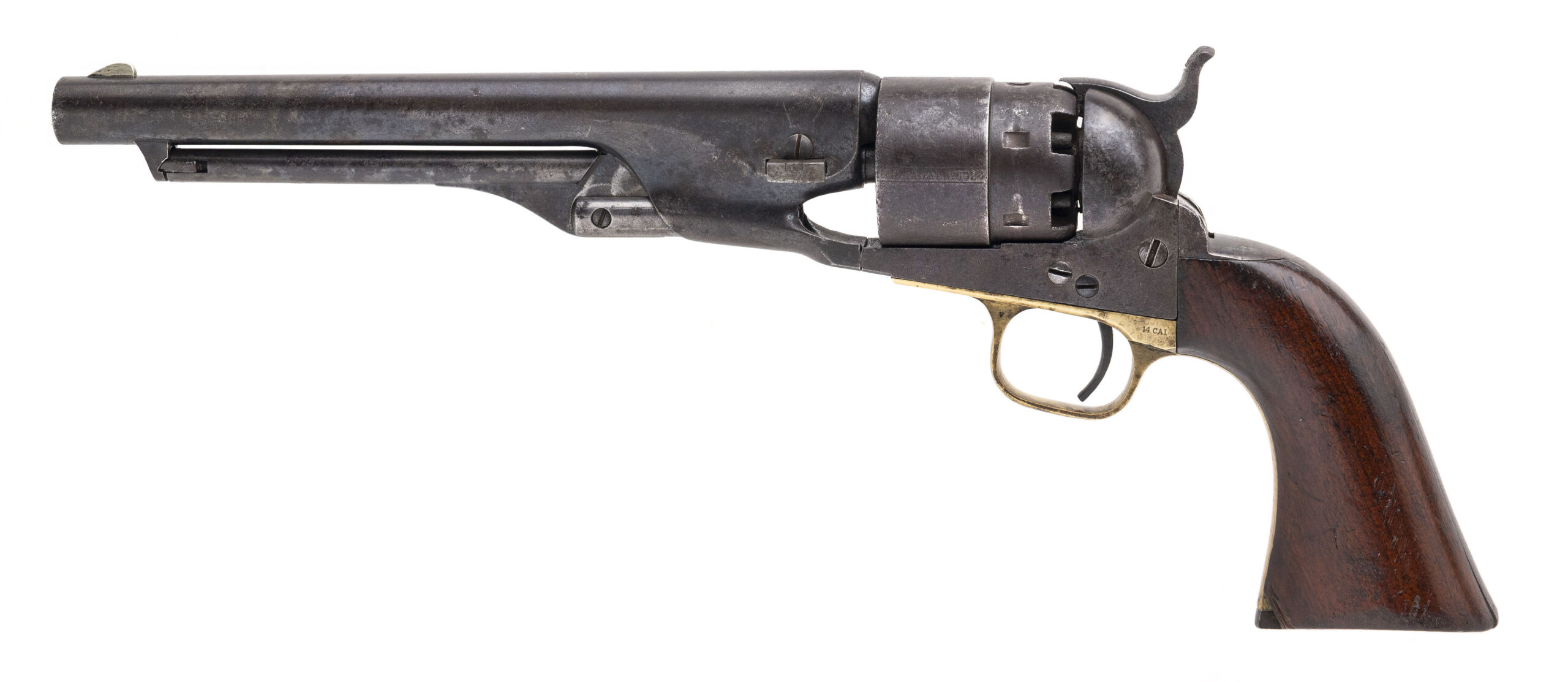
Colt 1860 Army
The Colt 1860 Army was the principal revolver of the Union cavalry in the American Civil War: a six-shot .44 caliber percussion revolver… Continued…
-
Colt Single Action Army
The Colt Single Action Army of 1873 — the Peacemaker — is the revolver of the American West. Adopted by the U.S. Army in .45 Colt and sold… Continued…
-
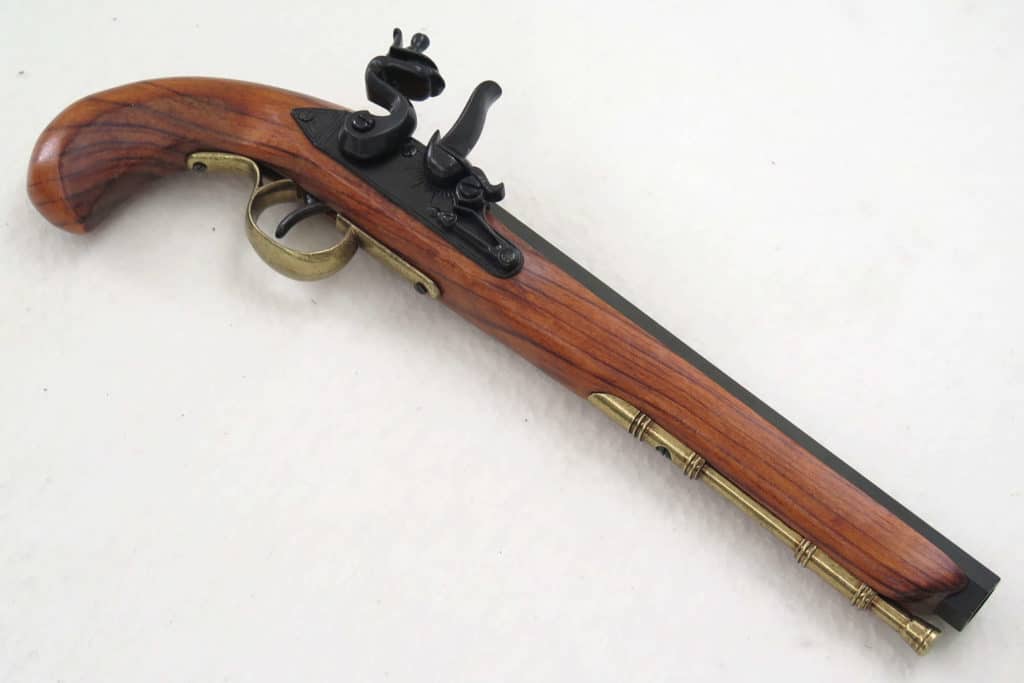
Kentucky Pistol
The Kentucky pistol is the handgun counterpart of the Kentucky long rifle: a single-shot flintlock pistol made by the same Pennsylvania and… Continued…
-
Light Dragoon Pistol
The Light Dragoon pistol was the British Army's flintlock cavalry pistol of the later eighteenth century. Introduced around 1759 for the… Continued…
-
Luger P08
The Luger P08 is the toggle-locked semi-automatic pistol of the German military through both World Wars, and for many the most recognizable… Continued…
-
M1911 Pistol
The M1911 is John Browning's masterpiece: a short-recoil, single-action semi-automatic in .45 ACP that served as the standard American… Continued…
-
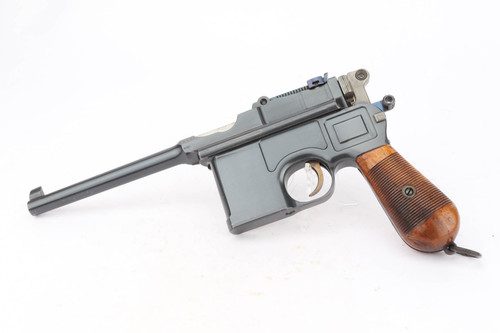
Mauser C96
The Mauser C96 is a German semi-automatic pistol that entered service in 1896, designed by the Feederle brothers at Mauser's Oberndorf… Continued…
-
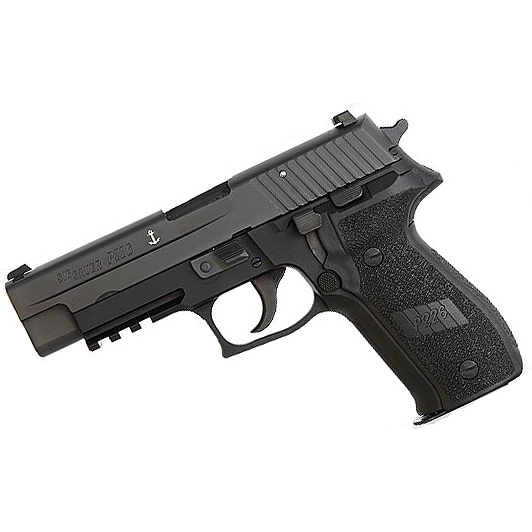
Mk 25
The Mk 25 is the United States Navy's designation for the SIG Sauer P226 as carried by the Navy SEALs: a standard P226 in 9mm with a… Continued…
-
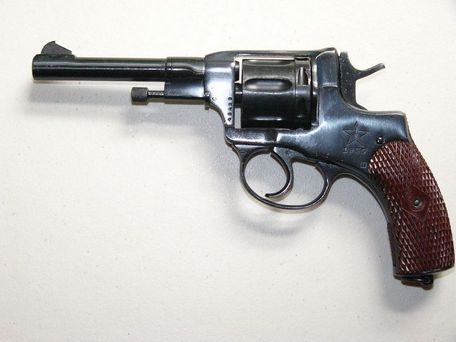
Nagant M1895 Pistol
The Nagant M1895 is the seven-shot Belgian-designed service revolver of Imperial Russia and the Soviet Union, unique among military… Continued…
-
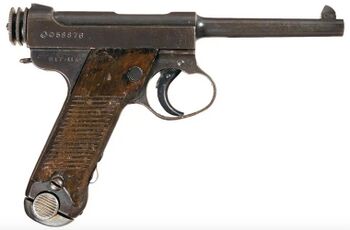
Nambu Type 14
The Nambu Type 14 was the standard service pistol of Japan in the Second World War. Designed by Kijirō Nambu's team and adopted in 1925… Continued…
-
Remington 1858 New Model Army
The Remington New Model Army was the second great Union revolver of the American Civil War: a six-shot .44 caliber percussion revolver… Continued…
-
Remington Model 1875
The Remington Model 1875 was Remington's answer to the Colt Peacemaker: a big single-action Army revolver in .44 and .45 calibers, built on… Continued…
-
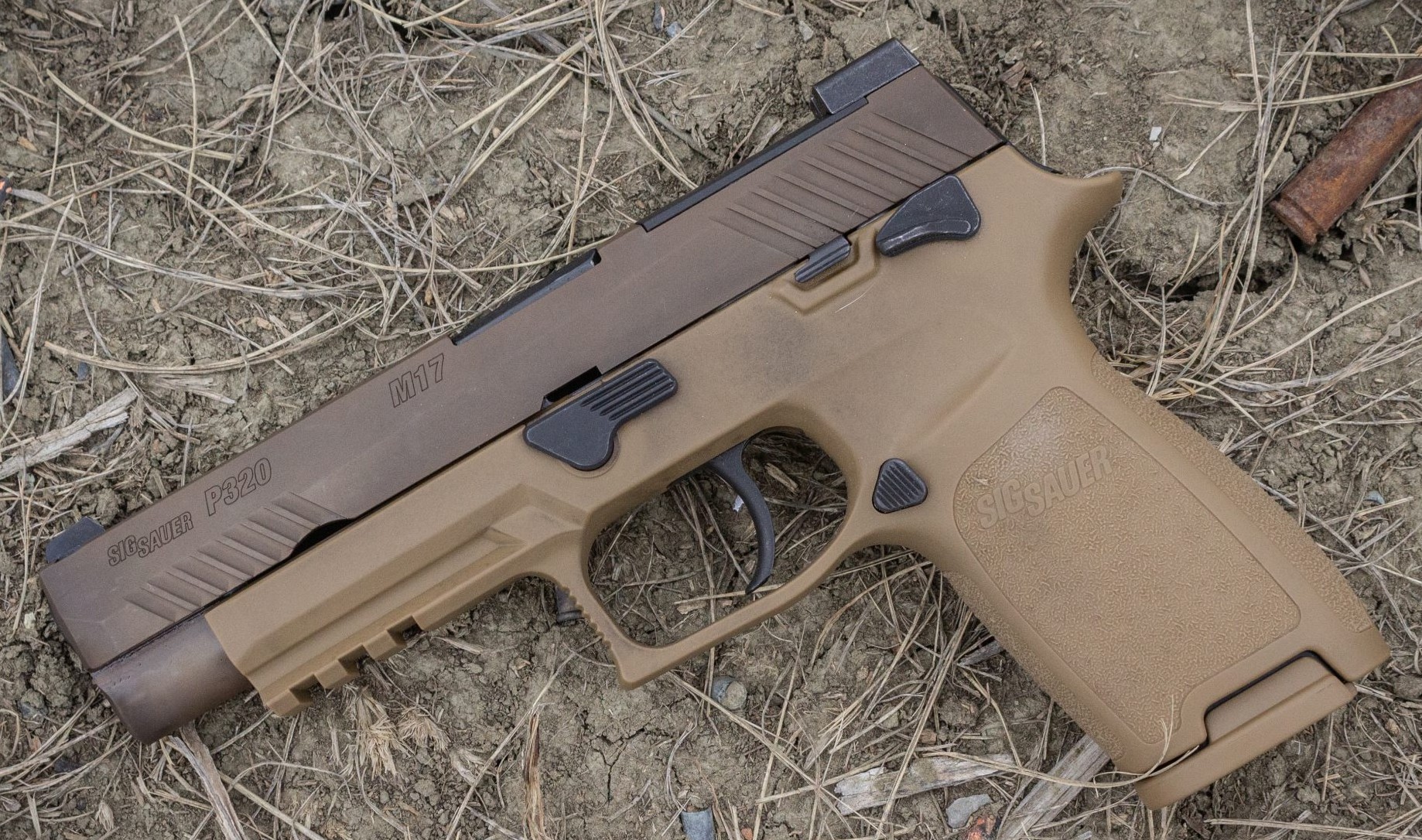
SIG Sauer M17
The M17 and its compact sibling the M18 are the service pistols of the United States armed forces, variants of the SIG Sauer P320 selected… Continued…
-
Sea Service Pistol
The Sea Service pistol was the Royal Navy's standard sidearm through the age of sail: a heavy, plain, single-shot flintlock with a brass… Continued…
-
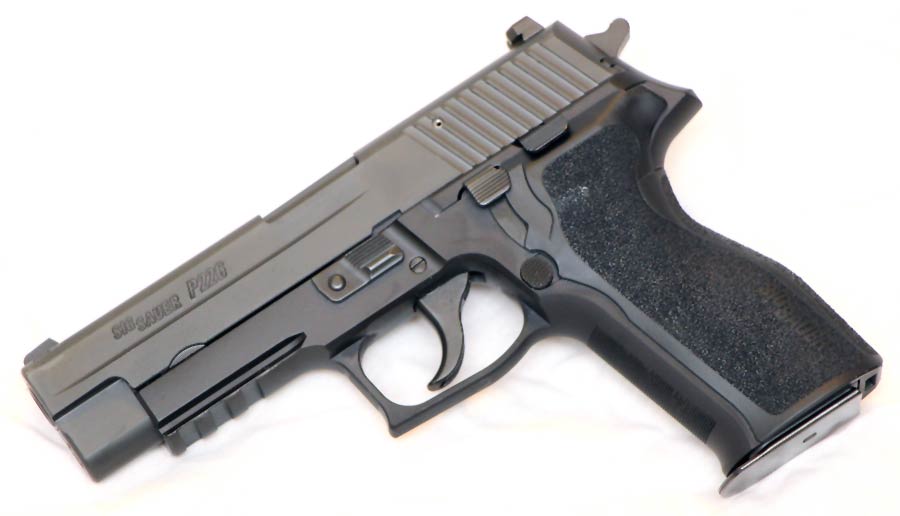
Sig Sauer P226
The SIG Sauer P226 is a full-size double-action service pistol introduced in 1984 for the United States Army's XM9 trials, which it lost to… Continued…
-
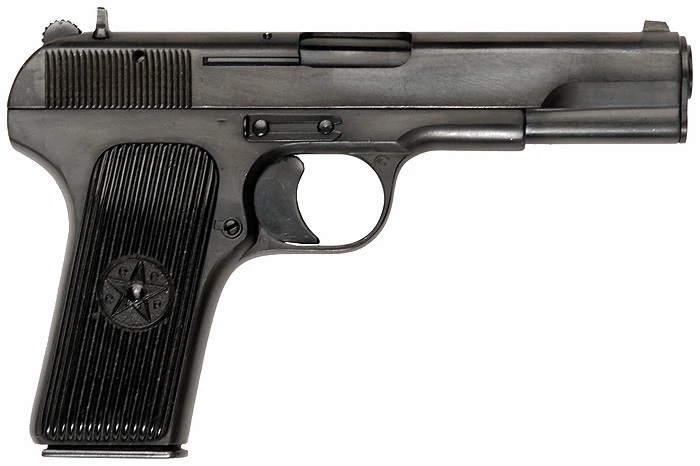
Tokarev TT-33 Pistol
The Tokarev TT-33 was the service pistol of the Red Army from the 1930s until the Makarov replaced it in the 1950s: Fedor Tokarev's… Continued…
-
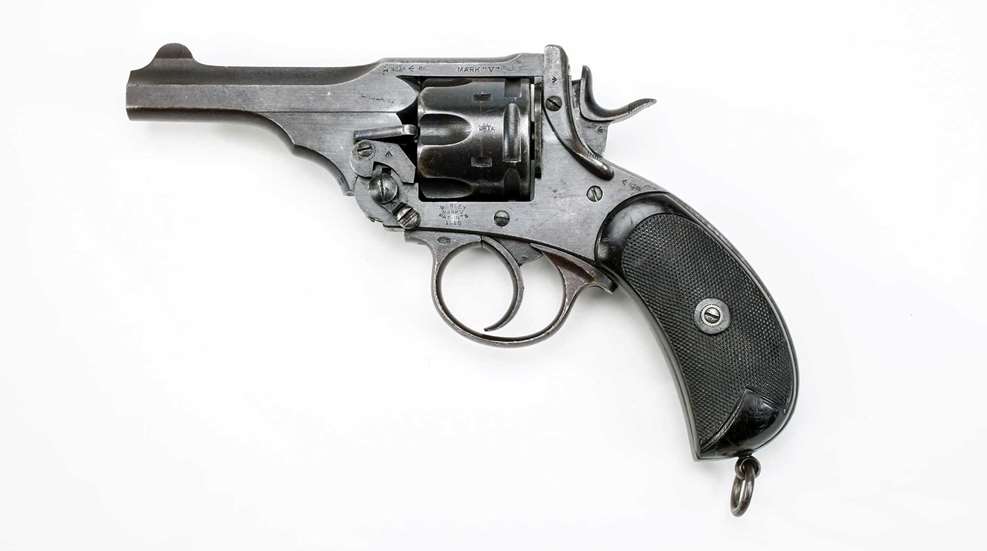
Webley Revolver
The Webley revolver was the British service sidearm from 1887 until after the Second World War. A top-break revolver made by Webley & Scott… Continued…
-
Wheellock Pistol
The wheellock was the first self-igniting firearm: a spring-driven steel wheel spun against pyrite to shower sparks into the pan, no… Continued…