Origin
Colonial America
Colonial American militias developed a distinctive fighting culture blending European military tradition with frontier necessity. The Pennsylvania rifle — long-barreled, rifled, accurate — became a symbol of American warfare and influenced military rifle development globally.
Overview
Colonial America (roughly 1607–1776) developed a distinct weapons culture shaped by European heritage, frontier conditions, the constant threat of conflict with Native American peoples, and periodic wars between European colonial powers fought on American soil. The period culminated in the American Revolutionary War (1775–1783).
Primary Weapons
Muskets
European-pattern flintlock muskets were the standard military arm:
- Brown Bess (Land Pattern Musket) — The standard British military musket; .75 caliber; used by British regulars and many colonial militia
- French Charleville musket — Used by French forces and supplied to Continental Army after France entered the war in 1778
- Dutch and other European imports — Colonial militias used a wide variety of imported muskets
The Pennsylvania Rifle (Kentucky Rifle)
The most distinctive American firearm of the era, developed by German and Swiss immigrant gunsmiths in Pennsylvania in the early 1700s.
- Long barrel — 40–48 inches; gave excellent accuracy at 200+ yards
- Small caliber — Typically .40–.50 caliber vs. .75 for the Brown Bess; used less lead and powder
- Rifled bore — Accurate far beyond the smoothbore musket's effective range
- Slow to reload — Patched ball had to be hammered into the rifling; not practical for volley fire
The Pennsylvania rifle gave American frontier fighters and Continental Army riflemen a significant accuracy advantage over British smoothbore muskets, particularly effective in ambushes and skirmish fighting.
Edged Weapons
- Tomahawk — Adopted from Native American peoples; a hatchet used as both a thrown and hand-to-hand weapon; standard frontier equipment
- Hunting knife — Universal frontier tool and weapon
- Bayonet — Standard issue for military muskets; plug bayonets gave way to socket bayonets through the period
- Officer's sword — Smallswords and sabers carried by officers
Artillery
Colonial and Continental forces used a mix of captured British artillery and French-supplied guns. Henry Knox's famous transport of cannon from Fort Ticonderoga to Boston (1775–76) gave Washington the artillery needed to force the British evacuation.
This article is a stub. Contributions covering specific weapons, battles, and the Revolutionary War are welcome.
Battles & Operations
-
Battle of Fort Necessity (3 July 1754)
The Battle of Fort Necessity was fought on 3 July 1754 at the Great Meadows in south-western Pennsylvania. A French and Native force under… Continued…
-
Battle of the Monongahela (9 July 1755)
The Battle of the Monongahela, often called Braddock's Defeat, was fought on 9 July 1755 about ten miles from Fort Duquesne, near modern… Continued…
-
Siege of Fort William Henry (3-9 August 1757)
The Siege of Fort William Henry took place from 3 to 9 August 1757 at the southern end of Lake George in New York. A French army of about… Continued…
-
Battles of Saratoga (19 September and 7 October 1777)
The Battles of Saratoga were two battles fought in upstate New York in the autumn of 1777. A British army under General John Burgoyne had… Continued…
-
Battle of Camden (16 August 1780)
The Battle of Camden, fought on 16 August 1780 a few miles north of Camden, South Carolina, was one of the worst American defeats of the… Continued…
-
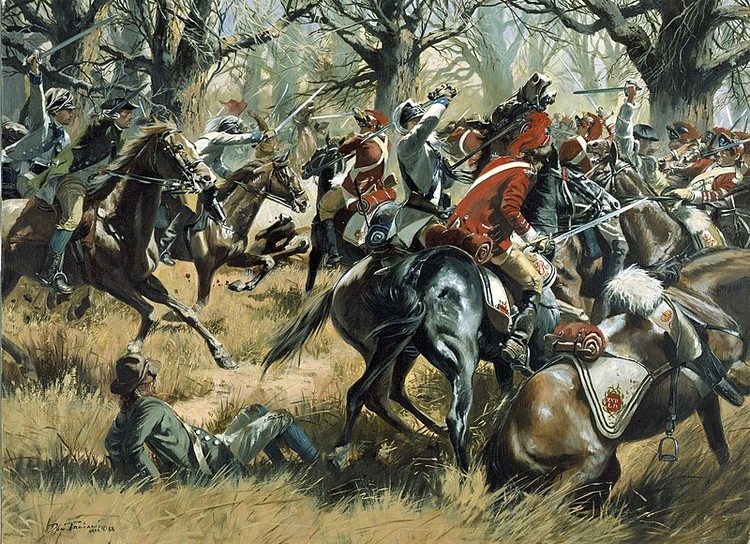
Battle of Cowpens (17 January 1781)
The Battle of Cowpens, fought on 17 January 1781 at a frontier pasture near the North Carolina border of South Carolina, was one of the… Continued…
-
Battle of Guilford Court House (15 March 1781)
The Battle of Guilford Court House was fought on 15 March 1781 in what is now Greensboro, North Carolina. About 1,900 British and German… Continued…
-
Siege of Yorktown (28 September - 19 October 1781)
The Siege of Yorktown, from 28 September to 19 October 1781, was the last major battle of the American Revolution. A combined American and… Continued…
Weapons
-
Grasshopper Cannon
The grasshopper was a light British 3-pounder field gun of the later eighteenth century, a short bronze barrel on a small carriage that… Continued…
-
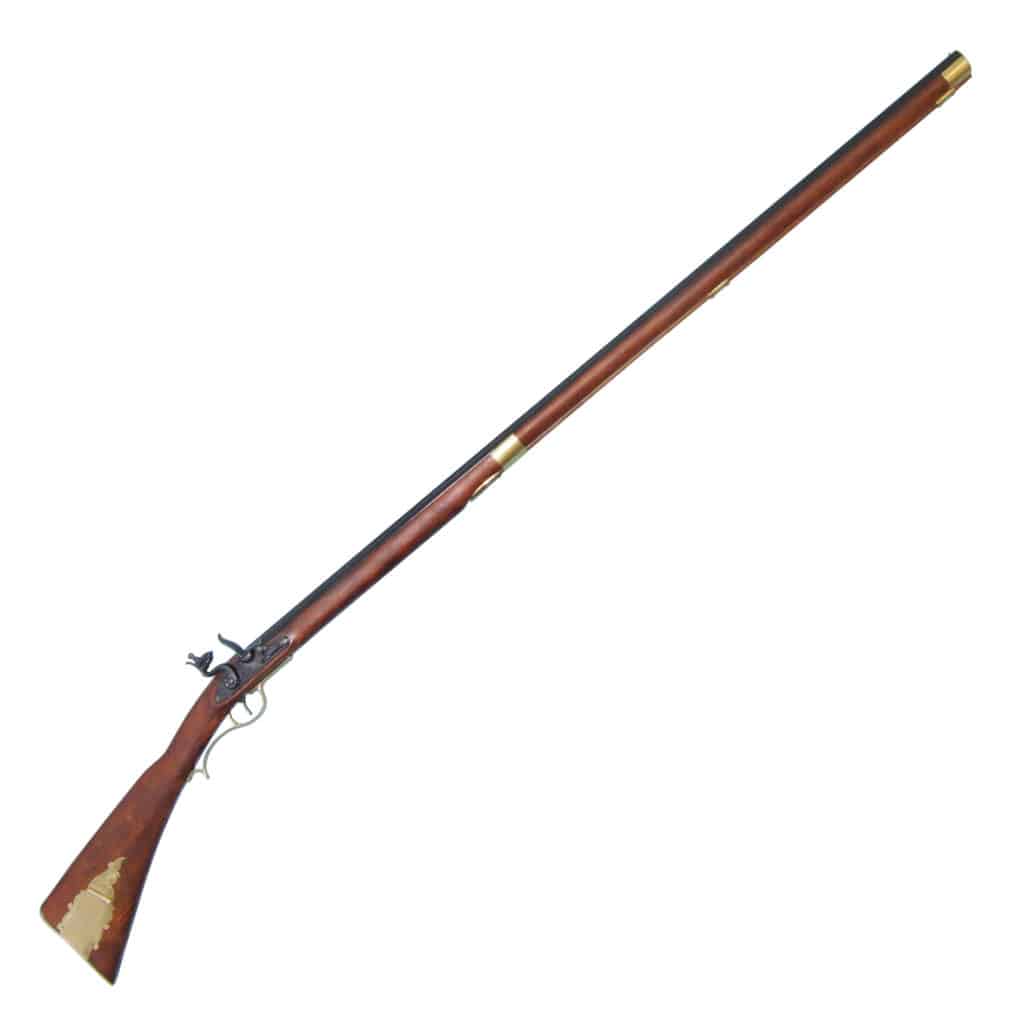
Kentucky Long Rifle
The Kentucky long rifle was the long-barreled, small-caliber flintlock rifle developed by German gunsmiths in Pennsylvania in the… Continued…
-
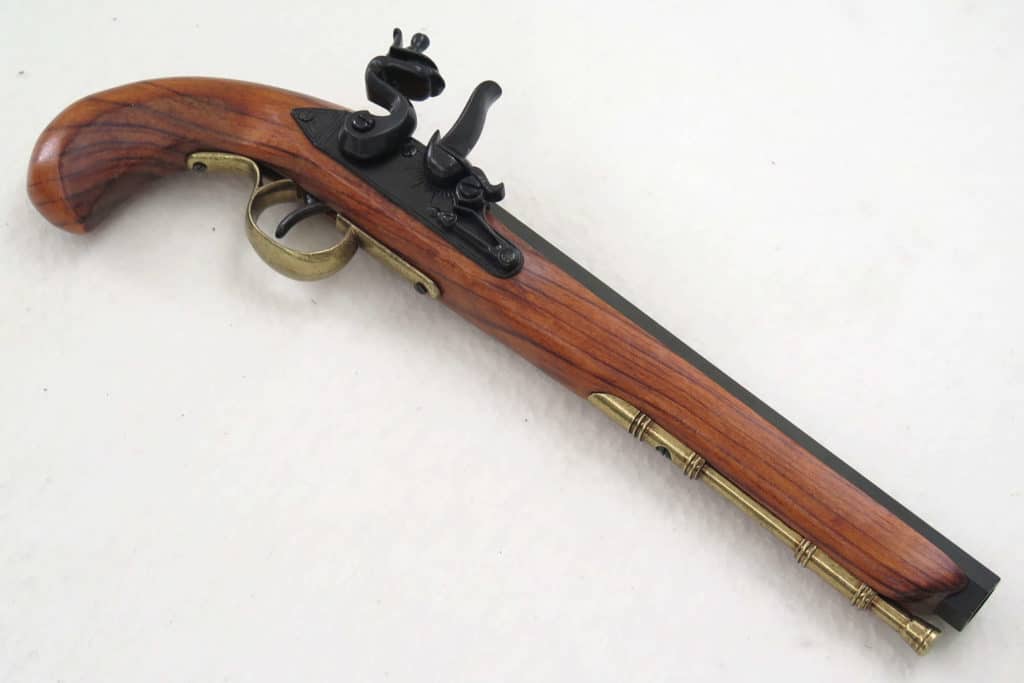
Kentucky Pistol
The Kentucky pistol is the handgun counterpart of the Kentucky long rifle: a single-shot flintlock pistol made by the same Pennsylvania and… Continued…
-
Light Dragoon Pistol
The Light Dragoon pistol was the British Army's flintlock cavalry pistol of the later eighteenth century. Introduced around 1759 for the… Continued…
-
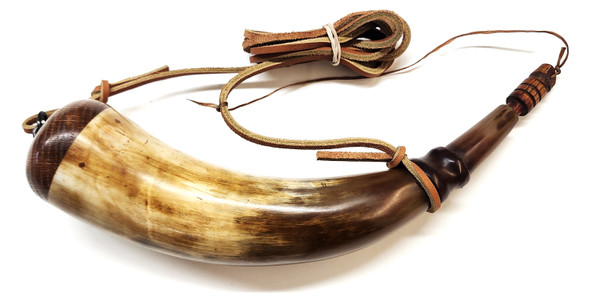
Powder Horn
The powder horn is the container, made from a hollowed cow or ox horn, in which a shooter carried gunpowder for loading a muzzleloading… Continued…
-
Socket Bayonet
The socket bayonet is a blade fixed to the side of a metal tube that slides over the muzzle of a musket and locks in place. Unlike the… Continued…
-
Spontoon
The spontoon, or espontoon, was a short pike of about six to seven feet carried by infantry officers, and later by sergeants, in European… Continued…
-
Tomahawk
The tomahawk is the light axe of the North American frontier: an Algonquian name, a Native American weapon concept, and a European-forged… Continued…