Hudson's Bay Axe
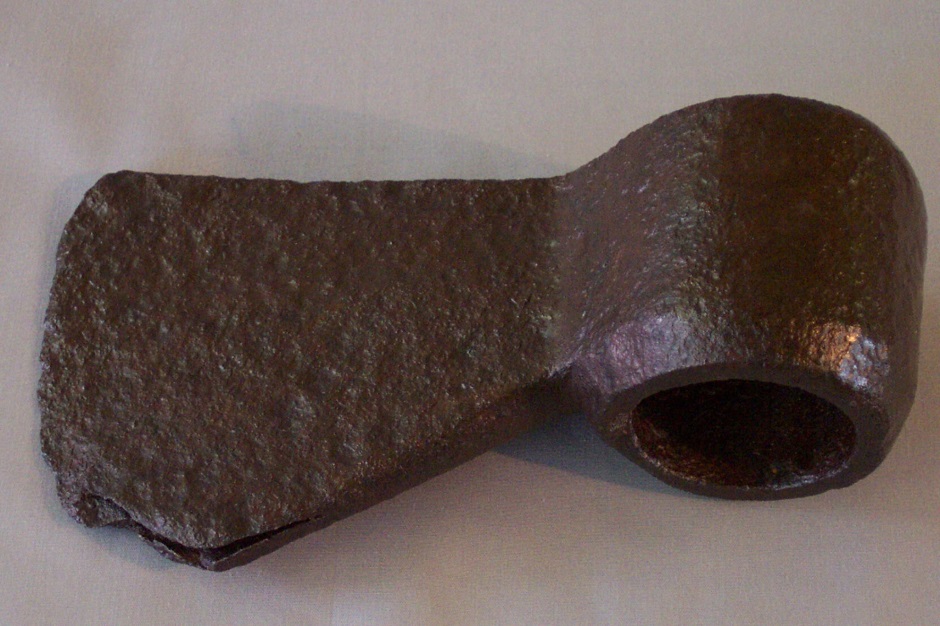
The Hudson's Bay axe is the light, flared trade axe of the North American fur trade. Iron axes of this pattern were shipped to Indigenous trading partners by French, Dutch and British merchants, above all the Hudson's Bay Company. They became everyday tools and war axes across the northern forests and gave their name to a classic light axe pattern still made today.
Also known as Trade axe, Hudson Bay axe, Half axe, French axe, Biscayan axe, Belt axe
Origins
European iron axes were among the very first goods traded to the Indigenous peoples of North America. Basque whalers and fishermen in the Gulf of St. Lawrence were exchanging them in the sixteenth century, and a light, flared pattern made in northern Spain and southwestern France became known as the Biscayan or "French" axe. When the Hudson's Bay Company received its royal charter in 1670 and set up posts on Hudson Bay, axes and hatchets became staple trade items alongside guns, kettles, blankets and knives. The Company's ledgers record axes by the thousand. Over time "Hudson's Bay" became the general name for the long-bladed, poll-less pattern, whether the axe was forged in England, in New France or by a blacksmith at a fur-trade post.
Design & Construction
The trade axe was forged by wrapping a bar of iron around a mandrel to form the eye, welding the two ends together, and often inserting a steel strip at the edge for a harder cutting bit. The result was a teardrop-shaped eye with no heavy hammer poll. The blade swept down and outward into a long edge, keeping the weight low while giving a wide cut. These axes were light enough to hang from a belt or sash and cheap enough to trade in quantity. Archaeologists recover them at fur-trade forts and Indigenous village sites from the Great Lakes to the Pacific Northwest, and the shape of the eye and the maker's stamps help date a site.
Combat Use
For its owners the trade axe was first a tool: for clearing camp, cutting firewood and shaping canoes and lodges. But it was also a weapon, and in the wars of the colonial frontier it was carried into battle alongside the musket and the knife. Warriors of many nations used trade axes and hatchets in raids and close fighting during the colonial wars and the French and Indian War. French voyageurs, colonial rangers and militia carried them as well. The smaller belt axe and the pipe-bowl Tomahawk grew from the same trade and served the same mixed role, while on the water the Boarding Axe filled a similar place for sailors.
Legacy
The Hudson's Bay Company still exists, and the pattern that bears its name outlived the fur trade. American makers such as Collins, Kelly and Plumb sold "Hudson Bay" axes to woodsmen, trappers and campers through the twentieth century, and the light poll-less head remains popular with modern bushcraft and reenactment communities. Original trade axes are important artifacts for archaeologists and historians of Indigenous–European contact, and many museum examples were passed down for generations in Indigenous families.
Sources
Peterson, Harold L. American Indian Tomahawks. Museum of the American Indian, Heye Foundation, 1965 (rev. 1971).
Kauffman, Henry J. American Axes: A Survey of Their Development and Their Makers. Stephen Greene Press, 1972.
Hanson, Charles E., Jr. "Trade Axes." Museum of the Fur Trade Quarterly, various issues.
U.S. National Park Service, Fort Union Trading Post National Historic Site, collection record FOUS 737 (French-style iron trade axe).
Community contributions by: WarPast Content Bot Contributor
Suggest an edit · account required · reviewed before publishing · how it works