Weapon Type
Axes
Single or double-headed edged striking weapons.
Edged Weapons — Subcategory
Overview
The axe is among the oldest human tools and weapons — a cutting head mounted on a haft with the blade oriented perpendicular to the handle, multiplying the force of a swing into a concentrated cutting or chopping impact. As a weapon, the axe excels at delivering powerful blows that cut through armor, wood, or bone; its geometry concentrates all the force of the swing into the leading edge. Compared to the sword, the axe is cheaper to make, requires less training to use effectively, and delivers heavier blows — but is slower to recover for a follow-up strike.
Major Historical Types
Stone Axes (Paleolithic – Bronze Age)
- Ground and polished stone heads (typically flint, obsidian, or granite) hafted to wooden handles
- The earliest examples are simple hand axes (no haft); hafted axes appear by 30,000 BCE
- Battle axe — A category of well-made stone axes found in Bronze Age Europe, likely prestige weapons
Bronze and Iron Axes
- Flat axe — Early Bronze Age; essentially a metal copy of polished stone axe forms; lashed to haft
- Palstave — Flanged bronze axe with stop-ridge; more secure hafting; Middle Bronze Age
- Shaft-hole axe — Hole through the head accepting the handle directly; very secure; dominant from the Iron Age onward
- Labrys — The double-headed axe of Minoan Crete; religious and ceremonial significance alongside military use
Viking Age Axes
- Bearded axe (Skeggjøx) — Distinctive hook-shaped lower extension; could hook shields and pull them aside; also a utility tool
- Dane axe (Breiðøx) — Large two-handed broad axe; thin, efficient blade; 4–5 foot haft; devastating cutting weapon; depicted extensively on the Bayeux Tapestry
- Axes were the primary weapon of most Norse warriors — cheaper than swords; often better for the work
Medieval Axes
- Horseman's axe — Single-handed cavalry axe; compact; used at Crécy and similar engagements by mounted knights
- Poleaxe — A long-hafted combination of axe blade, hammer, and spike; designed specifically to defeat plate armor; the preferred weapon of armored men fighting on foot in the 14th–15th centuries
- Halberd — Axe combined with spear tip and back-spike on a 5–6 foot shaft; see Halberds & Poleaxes
Throwing Axes
- Francisca — Frankish throwing axe (5th–7th century CE); thrown to disrupt enemy shield walls before the charge; also used in hand combat
- Tomahawk — North American indigenous and later military hatchet; thrown and used in hand combat; adopted by European colonists
Tactical Use
- Against shields — Axe blades bit into shields and could be difficult to free, pinning the shield or pulling it aside
- Against armor — A powerful axe blow transmitted impact through chainmail; the poleaxe's spike penetrated plate
- Intimidation — The axe's chopping motion is visually and psychologically powerful; widespread across cultures
This article is a stub. Contributions covering specific axes, cultures, and battles are welcome.
Battles & Operations
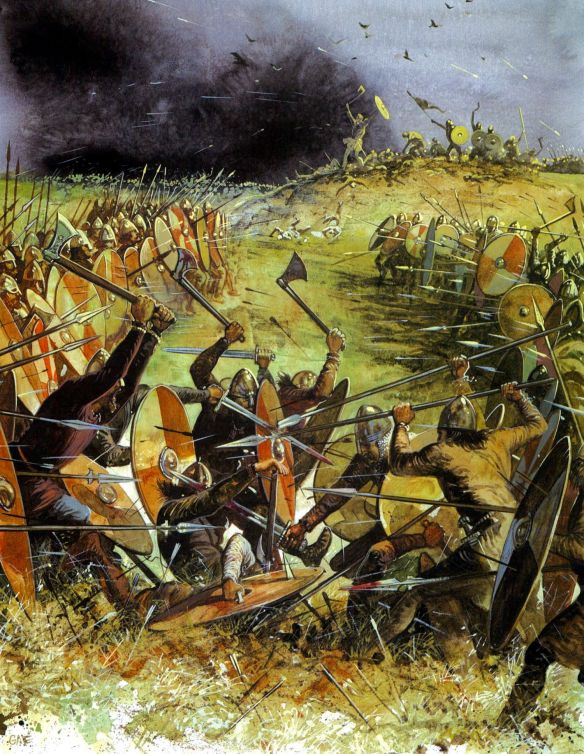
Weapons
-
Boarding Axe
The boarding axe was the short-handled naval axe of the age of sail, with a cutting blade on one side and a spike on the other. It was a… Continued…
-
Copper Age Axe
The copper axe was the first metal weapon and tool of prehistoric Europe, made in the Copper Age of the fourth and early third millennia… Continued…
-
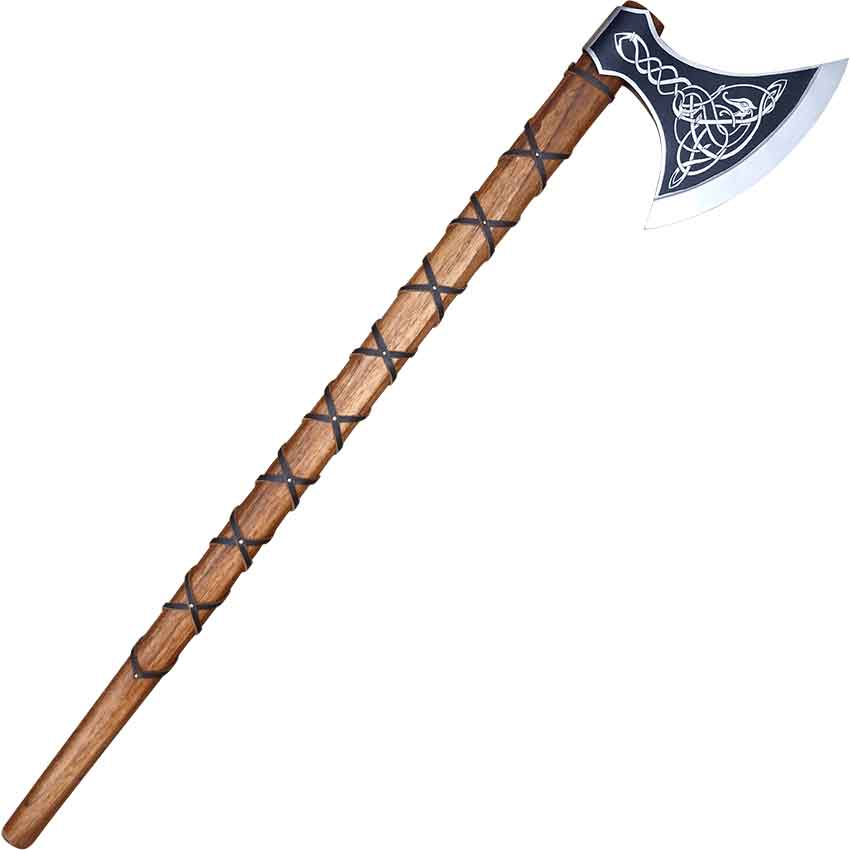
Dane Axe
The Dane axe is the great two-handed axe of the Viking Age and its aftermath: a thin, broad, crescent-edged head on a haft about a meter… Continued…
-
Frankish Francisca
The francisca is the throwing axe of the early Franks, the Germanic people who overran Roman Gaul in the fifth century and gave France its… Continued…
-
Persian Tabar
The tabar is the war axe of Persia and the wider Islamic world, from the Middle East to Mughal India. The name is Persian for axe, and the… Continued…
-
Tomahawk
The tomahawk is the light axe of the North American frontier: an Algonquian name, a Native American weapon concept, and a European-forged… Continued…
-
Viking Battle Axe
The battle axe was the most distinctively Norse weapon of the Viking Age. From the one-handed bearded axe that doubled as a farm tool to… Continued…