Battle of Maldon
The Battle of Maldon, fought in August 991 on the Blackwater estuary near Maldon in Essex, pitted Byrhtnoth, ealdorman of Essex, and the local fyrd against a large Viking fleet. The raiders were camped on Northey Island, reached only by a tidal causeway. Byrhtnoth let them cross to the mainland to fight on open ground, and he was killed and his army beaten. The fight is remembered through an Old English poem about the loyal retainers who died beside their lord. England then paid the first great Danegeld, 10,000 pounds of silver.
Also known as Maldon, Battle of Maldon 991, The Battle of Maldon, Byrhtnoth's last stand
Background
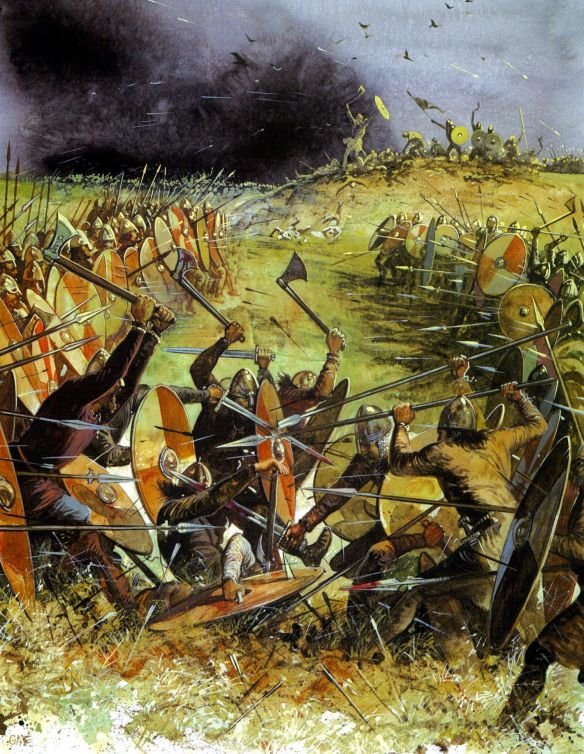
The Battle of Maldon was fought between Vikings and Anglo-Saxons in 991 near the River Blackwater in Essex, England. After a generation of peace under King Edgar, Viking raids on England began again in the 980s, in the troubled reign of Æthelred the Unready. In the summer of 991 a fleet of some ninety-three ships, which one version of the Anglo-Saxon Chronicle links to Olaf Tryggvason, later king of Norway, raided Folkestone, Sandwich and Ipswich, then entered the Blackwater estuary and camped on Northey Island, just downstream from the town of Maldon. The island was joined to the mainland only by a narrow causeway that the tide covered twice a day. Byrhtnoth, ealdorman of Essex, an old and unusually tall warrior with long white hair, gathered his household retainers and the local fyrd, the levy of free men, and took position on the mainland shore opposite. The traditional date of the battle is 10 or 11 August.
The Battle
What we know of the fight comes mostly from an Old English poem, The Battle of Maldon, which survives only as a fragment. According to the poem, a Viking herald called across the water demanding tribute in exchange for peace, and Byrhtnoth answered that the English would pay in spears and old swords. When the tide went out, three of his men — Wulfstan, Ælfhere and Maccus — held the causeway so that the raiders could not force it. The Vikings then asked to be allowed across to fight on fair ground, and Byrhtnoth, "for his ofermōde" — his pride, or overconfidence — gave them room. The two armies met in shield walls. Spears were thrown and arrows shot, and Byrhtnoth was wounded by a spear, killed the man who threw it, and was cut down fighting. Then a man named Godric fled on Byrhtnoth's own horse, and many of the English, thinking their lord was running, broke with him. The rest of the retainers stayed and fought to the end around their lord's body. The old retainer Byrhtwold speaks the poem's best-known lines: "Mind must be the harder, heart the keener, courage the greater, as our strength lessens."
Weapons
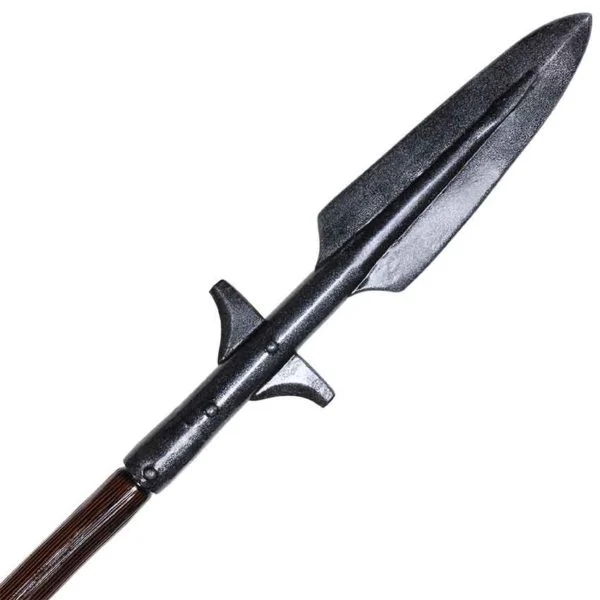
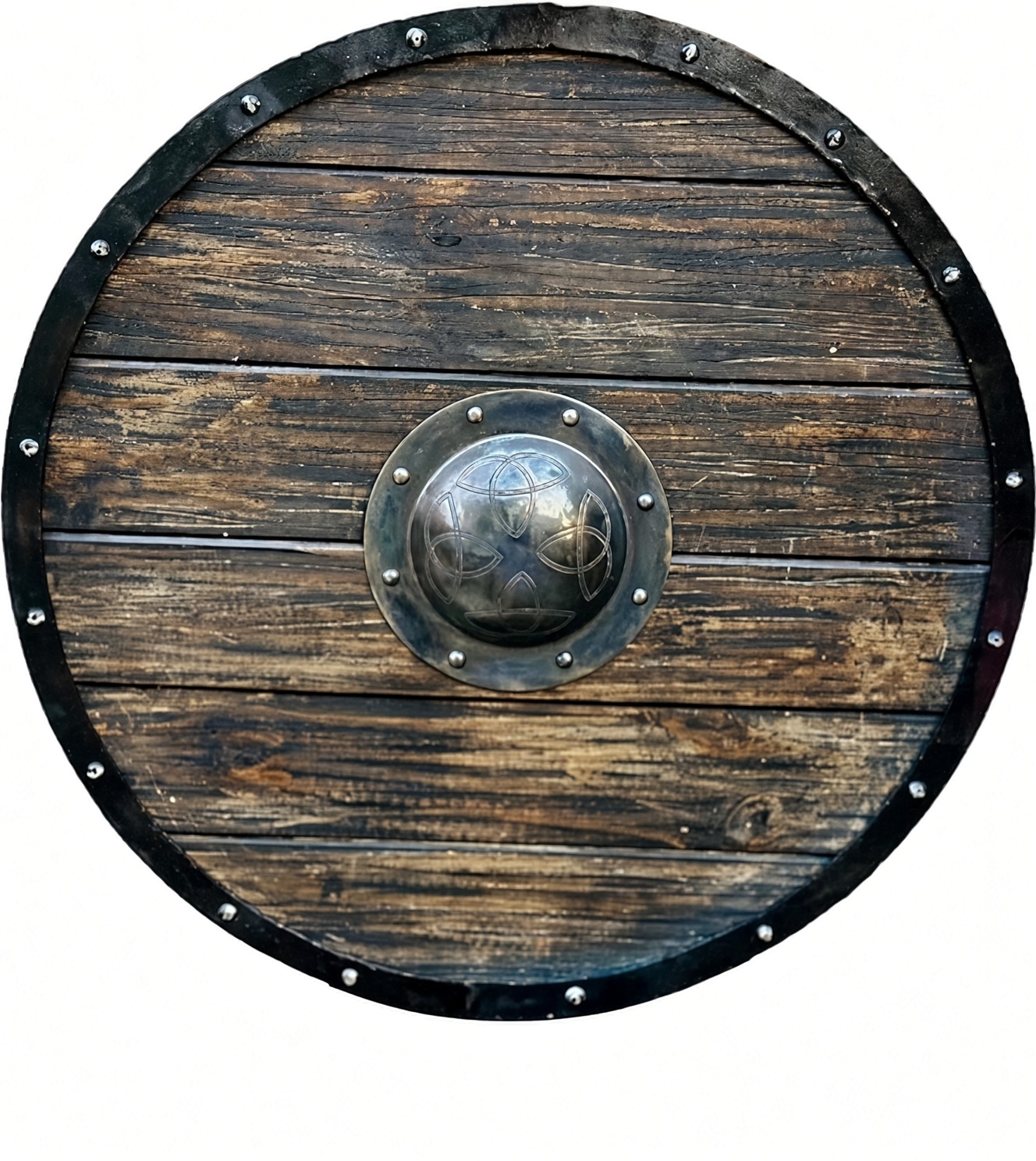
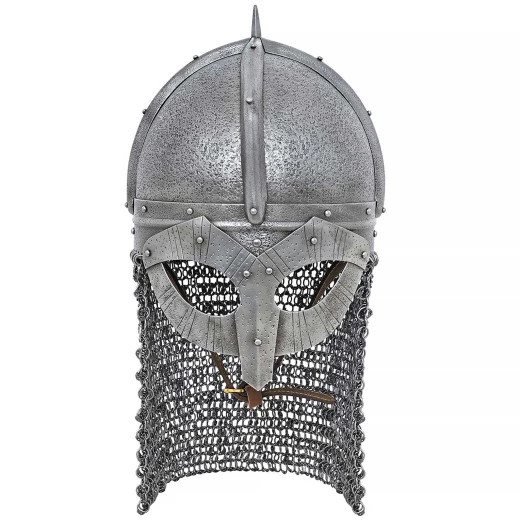
Maldon was an infantry fight between shield walls, and the equipment on both sides was much the same. The Viking Spear and its Anglo-Saxon counterpart were the main weapons, used for thrusting and throwing. Warriors carried the Viking Round Shield and its English equivalent. The wealthier men wore the Mail Hauberk and an iron helmet like the Gjermundbu Helmet, and they carried swords. The Seax and the Viking Battle Axe were common, and the poem also mentions bows. The poem says that Byrhtnoth's sword was gold-hilted.
Aftermath
The battle was a clear Viking victory. On the advice of Archbishop Sigeric, Æthelred's council paid the raiders 10,000 pounds of silver to leave, the first of the great Danegeld payments that grew to 48,000 pounds by 1012, and that encouraged more raids until the Danish king Cnut took the English throne in 1016. Byrhtnoth's body was buried at Ely Abbey, without the head, which the Vikings had taken. The poem's manuscript burned in the Cotton Library fire of 1731; its 325 lines survive only because a transcript had been made shortly before. Its picture of loyalty to a fallen lord has made Maldon one of the best-known battles of the Viking Age. J. R. R. Tolkien wrote a verse play about its aftermath, and a statue of Byrhtnoth now stands on the Maldon waterfront.
Weapons used
-
Viking Spear
The main weapon on both sides. The poem describes spears thrown across the water and Byrhtnoth wounded by a spear before he killed his… Continued…
-
Viking Round Shield
Both armies fought in a shield wall; the poem calls the English line a 'wall of war-boards'. Continued…
-
Mail Hauberk
The byrnie worn by Byrhtnoth and his household retainers, and by the better-equipped raiders. Continued…
-
Gjermundbu Helmet
The only near-complete helmet from the Viking Age, buried in Norway a few decades before Maldon; it shows what a well-armed raider could… Continued…
-
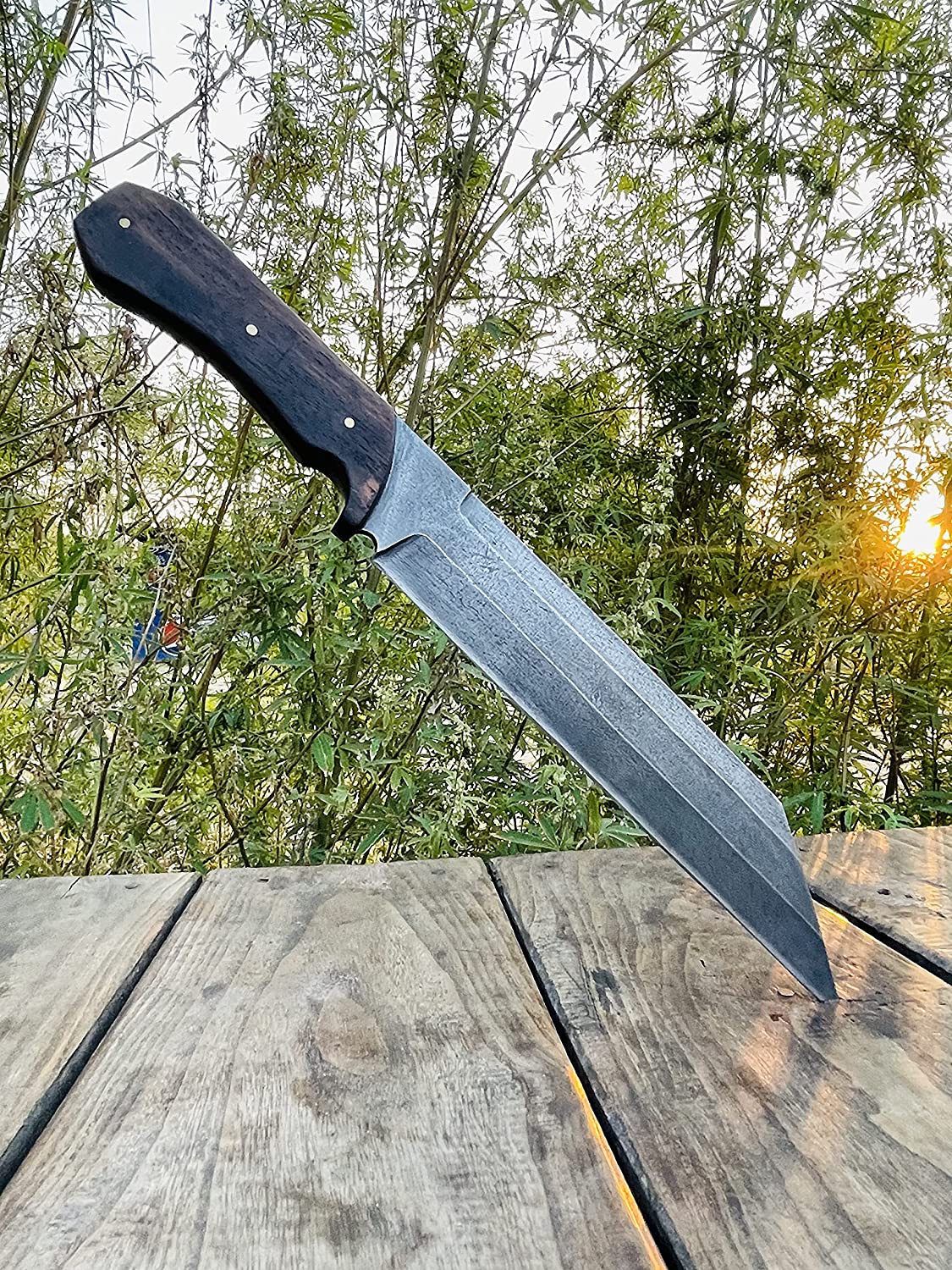
Seax
The single-edged knife carried by Anglo-Saxon warriors of every rank. Continued…
-
Viking Battle AxeFor sale
Carried by many of the raiders alongside spear and shield. Continued…
Sources
Scragg, Donald, ed. The Battle of Maldon, AD 991. Basil Blackwell, 1991.
Cooper, Janet, ed. The Battle of Maldon: Fiction and Fact. Hambledon Press, 1993.
Swanton, Michael, trans. and ed. The Anglo-Saxon Chronicles. Phoenix Press, 2000.
Griffith, Paddy. The Viking Art of War. Greenhill Books, 1995.
Suggest an edit · account required · reviewed before publishing · how it works