Historical Context
Viking Age
Scandinavian seafarers raided and settled across Europe from the late 8th to 11th centuries. Vikings were renowned for their axes, round shields, helmets, and pattern-welded swords, as well as longships that enabled rapid coastal assaults deep into river systems.
793 – 1066
Overview
The Viking Age is traditionally dated from the raid on Lindisfarne monastery (793) to the Norman Conquest of England (1066), though Norse expansion continued beyond both dates. The period is defined by the longship — which made Norse expansion possible — and the weapons carried by Norse warriors, who ranged from Scandinavia across the North Atlantic, down the rivers of Russia to Constantinople, and across the Mediterranean.
The Viking Sword
The Viking sword is one of the most significant weapons of the early medieval world:
Construction
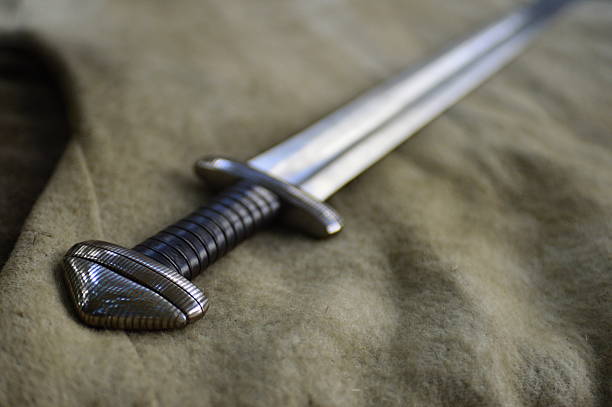
- Pattern welding — Early Viking swords (8th–9th century) used pattern-welded (often misleadingly called "Damascus") blades: multiple rods of iron and steel twisted and forge-welded together, then ground flat; produced a distinctive pattern and combined hard steel edge with a tougher body
- Later monosteel blades — Improved steel production in the 10th–11th centuries allowed high-quality single-steel blades; Frankish (Rhineland) smiths, particularly those marking blades ULFBERHT (+VLFBERHT+), produced blades with crucible steel — far superior steel imported from Asia via trade routes; genuine Ulfberht blades were among the finest swords in the world
Form
- Double-edged — 70–80 cm blade; suited to cutting from horseback or on foot
- Fuller — A groove running most of the blade's length; reduces weight without reducing strength; often mistakenly called a "blood groove"
- Lobed pommel — The distinctive Viking pommel; five or three lobes; iron or bronze; counterbalances the blade
Cost
A good sword was extremely expensive — equivalent to the value of multiple cattle. Many warriors carried axes instead, with swords owned only by chieftains and successful raiders.
The Axe
The Viking axe is in many ways more historically significant than the sword:
Bearded Axe (Skeggjøx)
- The bearded axe — with a hook-shaped lower extension (the "beard") — is the most distinctive Norse weapon
- The beard could hook an opponent's shield, pulling it aside for a follow-up strike
- Also used as a tool; the same axe felled trees and split heads
- Head weight: 450–680g; not as heavy as commonly depicted
Dane Axe (Breiðøx)
- The Dane axe — a large two-handed axe with a broad, thin blade on a 4–5 foot haft — was a specialist infantry weapon
- Devastating cutting weapon; the thin blade was highly efficient
- Famously depicted on the Bayeux Tapestry, carried by English (including Norse-descended) troops at Hastings
The Spear
The spear was likely the most common Norse weapon — cheaper than a sword, requiring less skill, and equally lethal:
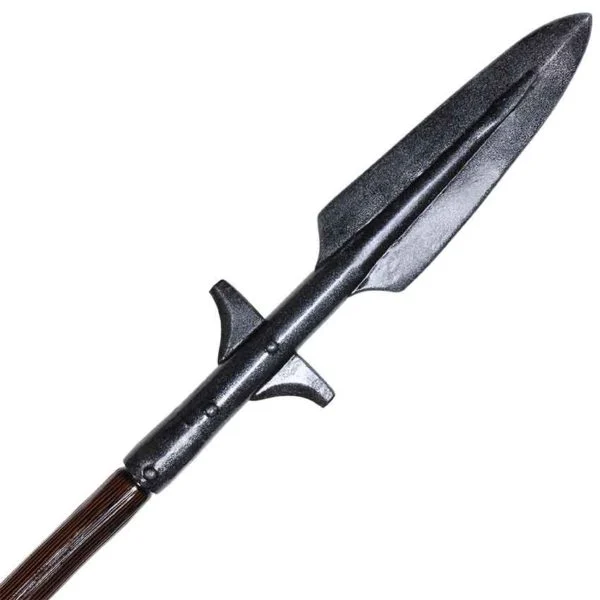
- Leaf-shaped blade — Iron spearhead; 20–40 cm blade; on a 5–7 foot ash shaft
- Lugs/wings — Some Norse spearheads had side projections (wings) to prevent deep penetration and to catch opponent's weapons
- Thrown and thrusted — Vikings used spears both as throwing weapons and as close-combat thrusting weapons
- Gungnir — Odin's spear was the supreme symbol of Norse warrior culture; the spear could be thrown over an enemy force to dedicate them to Odin before battle
Ranged Weapons
- Bow — Used in battle and hunting; often composite horn and wood; significant at sea where archers could fire from longship to longship
- Sling — Simple and effective
Shield
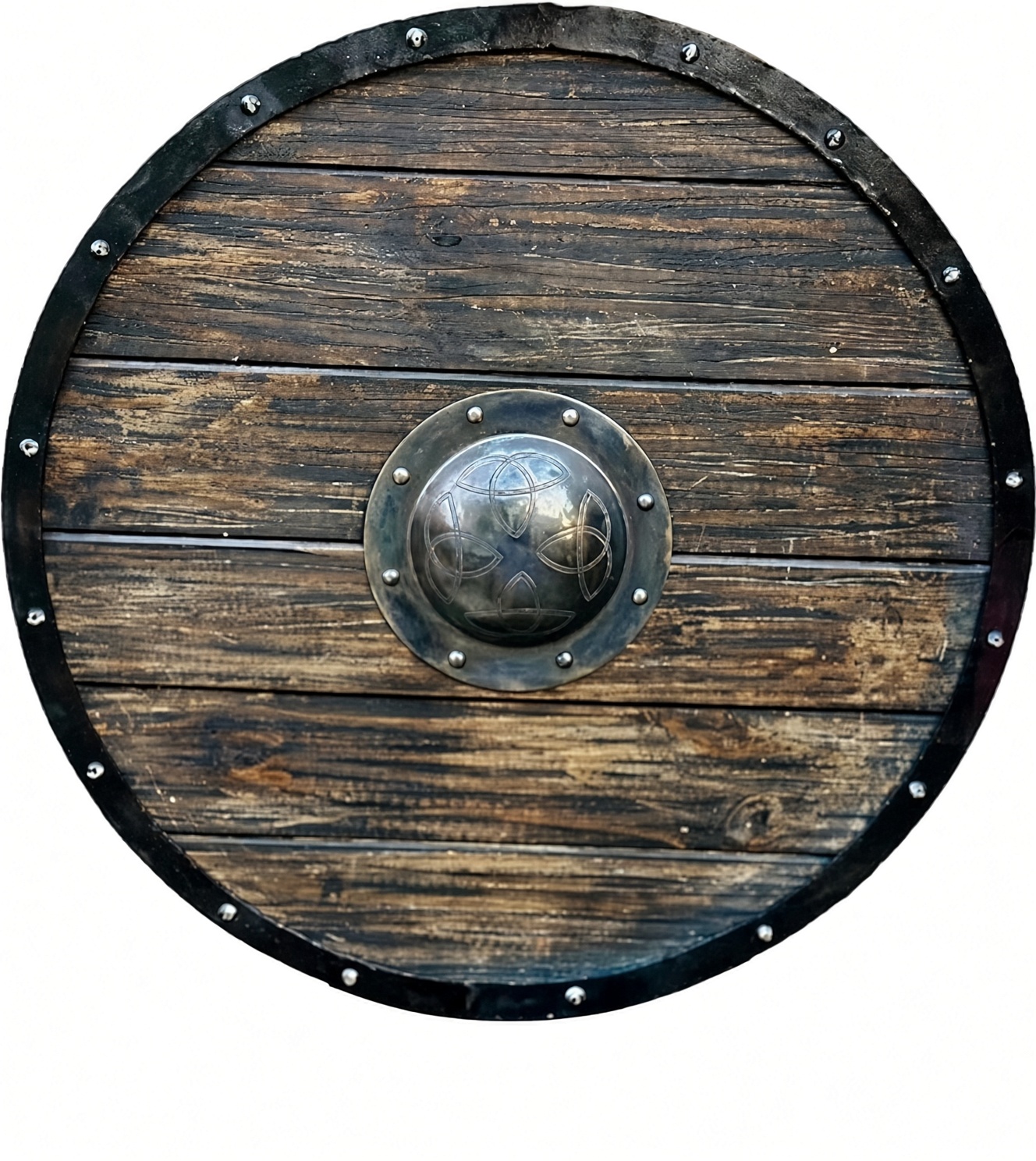
The Norse round shield is one of the most distinctive pieces of Viking equipment:
- Diameter: 75–90 cm
- Construction: Wooden planks (lime, fir, or poplar) with an iron boss at center covering the grip
- Shield wall (skjaldborg) — Overlapping shields formed the primary Norse defensive formation; shields were held together to create a continuous wall
- Shield rim binding — Rawhide or iron rim reinforcement
Armor
Norse armor was expensive and therefore rare:
- Chainmail byrnie — The standard armor of wealthy warriors; hauberks extending to mid-thigh with half sleeves; a complete byrnie was extremely valuable
- Padded gambeson (aketon) — The armor of ordinary warriors; thick quilted linen or wool; reduced impact and provided some protection
- Helmet — Iron spectacle helmets (NOT horned — horned helmets are a 19th-century myth); the Gjermundbu helmet is the only complete Viking-age helmet found
- Hardened leather — Likely used but leaves no archaeological record
Ships as Weapons Platforms
The longship (drakkar) was the Viking's primary weapons system:
- Drew only 50–100 cm of water; could beach directly; accessed rivers closed to deeper ships
- Held 60–100 warriors in fighting trim
- Oar-powered and sailed; could sustain 10+ knots under sail
- Attacks relied on speed and surprise; longships left before defenders could respond
This article is a stub. Contributions covering specific battles, warriors, and regional Norse traditions are welcome.
Battles & Operations
-
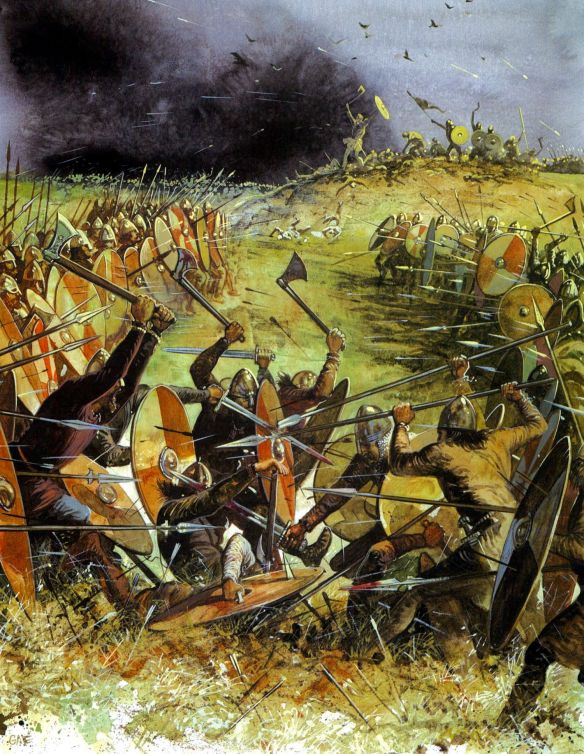
Battle of Maldon (10 August 991)
The Battle of Maldon, fought in August 991 on the Blackwater estuary near Maldon in Essex, pitted Byrhtnoth, ealdorman of Essex, and the… Continued…
-
The Battle of Stamford Bridge (25 September 1066)
The Battle of Stamford Bridge was fought on 25 September 1066 near York between the English army of King Harold Godwinson and a Norwegian… Continued…
Weapons
-
Byzantine Spathion
The spathion was the straight, double-edged long sword of the Eastern Roman, or Byzantine, army — the direct descendant of the late Roman… Continued…
-
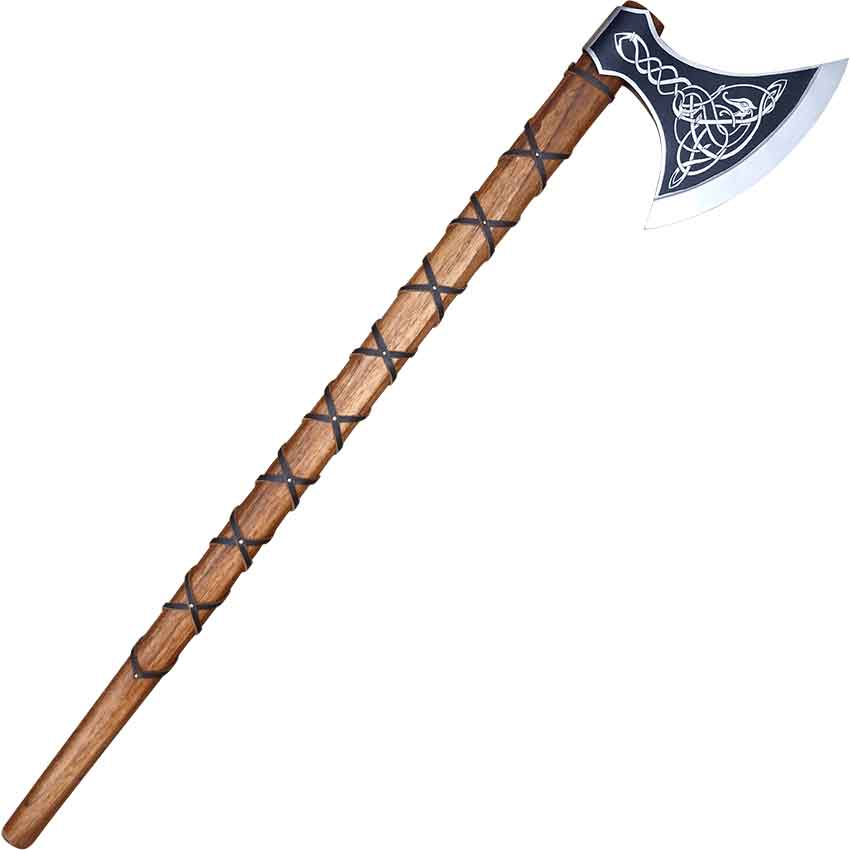
Dane Axe
The Dane axe is the great two-handed axe of the Viking Age and its aftermath: a thin, broad, crescent-edged head on a haft about a meter… Continued…
-
Frankish Winged Spear
The Frankish winged spear was a spear whose iron head carried two small projections, called wings or lugs, on the socket just below the… Continued…
-
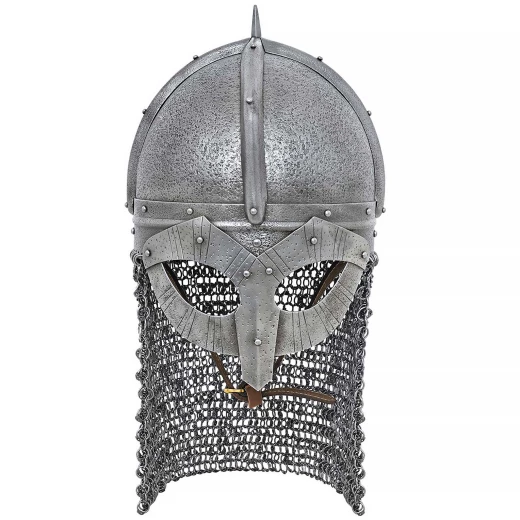
Gjermundbu Helmet
The Gjermundbu helmet is the only nearly complete helmet known from the Viking Age. It was found in 1943 in a tenth-century burial mound on… Continued…
-
Mail Hauberk
The mail hauberk was the principal body armor of European warriors for most of the Middle Ages: a long shirt of thousands of interlinked… Continued…
-
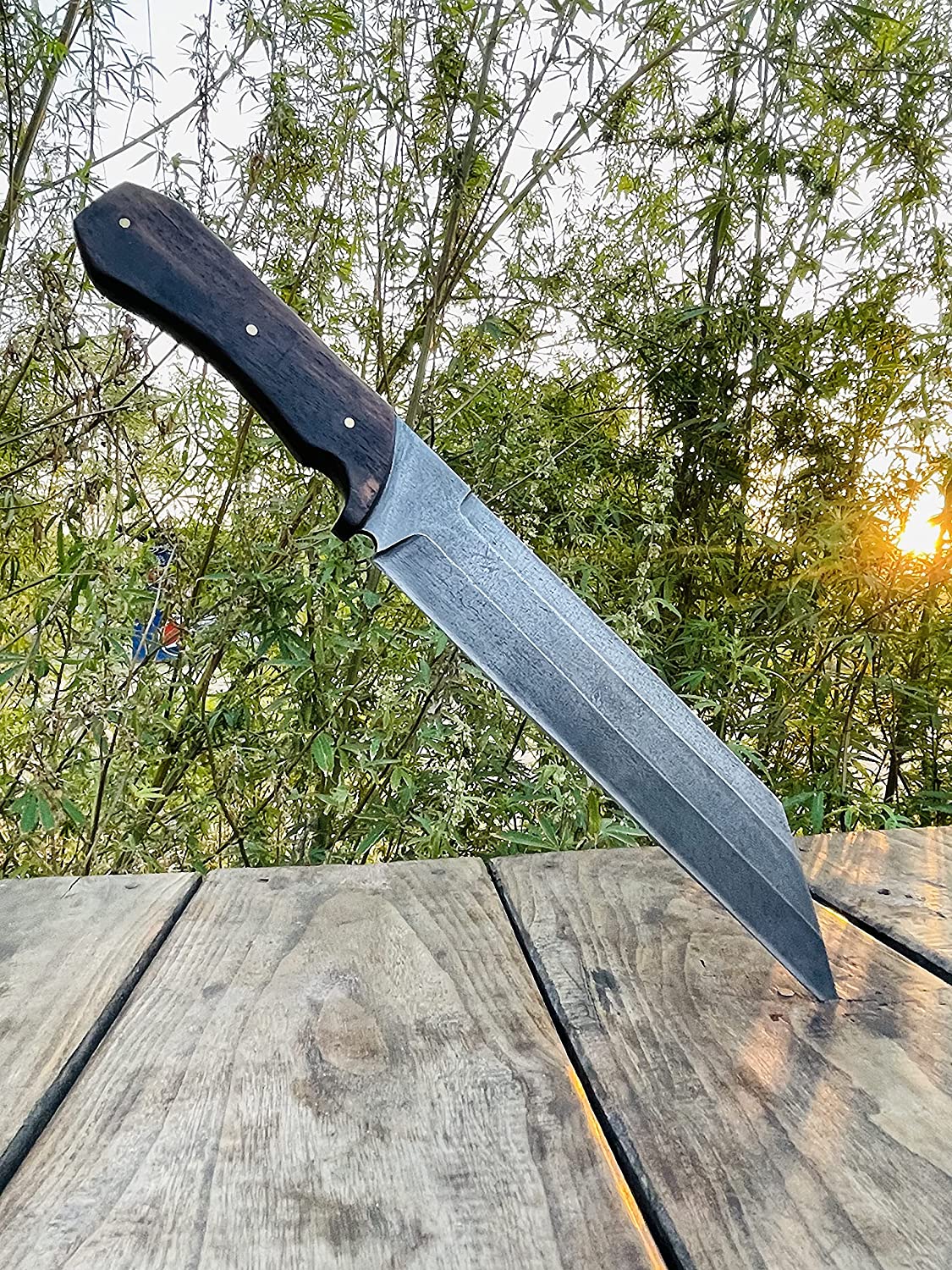
Seax
The seax is the single-edged knife of the early medieval Germanic peoples, carried from the fifth to the eleventh century by Franks… Continued…
-
Ulfberht Sword
The Ulfberht swords are a group of about 170 early medieval sword blades inscribed with the name +VLFBERH+T, made between the ninth and… Continued…
-
Viking Battle Axe
The battle axe was the most distinctively Norse weapon of the Viking Age. From the one-handed bearded axe that doubled as a farm tool to… Continued…
-
Viking Round Shield
The round shield was the main defense of the Viking warrior: a disc of wooden boards, usually about 80 to 95 centimeters across, with an… Continued…
-
Viking Spear
The spear was the most common weapon of the Viking Age, carried by farmers and kings alike. It had an iron head, socketed onto an ash shaft… Continued…