Origin
Native American
Native American peoples developed diverse weapon traditions suited to their environments. Plains tribes used bows, war clubs, lances, and tomahawks from horseback after Spanish horses spread north. Eastern woodland tribes used bows, war clubs, and knives in forest warfare.
Overview
"Native American" encompasses hundreds of distinct cultures across North America, each with weapons traditions adapted to their environment, prey, and enemies. It is not a single military tradition but many. The arrival of Europeans brought firearms and horses — both of which Native peoples adopted rapidly and used with great skill — dramatically transforming indigenous warfare.
Pre-Contact Weapons
Bow and Arrow
The most important Native American weapon across most of North America. Regional variations were significant:
- Plains short bow — Compact, powerful composite or sinew-backed bows suited to use on horseback
- Eastern woodland bow — Longer selfbows of ash or osage orange; effective in forest environments
- Northwest Coast bow — Often longer; used in combination with marine hunting
Spear and Lance
Used across all regions; the introduction of horses on the Plains made the lance a primary cavalry weapon in the 18th–19th centuries.
Tomahawk
Originally a stone-headed weapon; the iron and steel tomahawk obtained through trade with Europeans became ubiquitous. A thrown or hand-held weapon; could also serve as a tool.
War Club
Regional forms varied widely — stone-headed clubs, ball-headed clubs, gunstock clubs (shaped like a musket stock with a blade). The gunstock club was a post-contact adaptation.
Knife
Knives of flint, obsidian, or copper predated contact; iron and steel trade knives became standard quickly.
Post-Contact Firearms Adoption
Native peoples obtained European firearms through trade, capture, and purchase remarkably quickly. By the late 17th century many eastern woodland peoples were well-armed with muskets. Plains peoples obtained horses from Spanish colonial herds by the early 18th century, creating the horse-and-bow (later horse-and-rifle) culture of the 19th-century West.
- Flintlock trade muskets — "Northwest trade guns" were purpose-made light muskets traded by French, British, and American companies
- Winchester and Henry repeating rifles — Plains warriors who obtained these had a significant firepower advantage over soldiers still armed with single-shot Springfields
- Colt revolvers — Widely traded and captured
This article is a stub. Contributions covering specific peoples, regions, and weapons are welcome.
Battles & Operations
-
Battle of Fort Necessity (3 July 1754)
The Battle of Fort Necessity was fought on 3 July 1754 at the Great Meadows in south-western Pennsylvania. A French and Native force under… Continued…
-
Battle of the Monongahela (9 July 1755)
The Battle of the Monongahela, often called Braddock's Defeat, was fought on 9 July 1755 about ten miles from Fort Duquesne, near modern… Continued…
-
Siege of Fort William Henry (3-9 August 1757)
The Siege of Fort William Henry took place from 3 to 9 August 1757 at the southern end of Lake George in New York. A French army of about… Continued…
-
Battle of the Little Bighorn (25-26 June 1876)
The Battle of the Little Bighorn was fought on 25 and 26 June 1876 beside the Little Bighorn River in Montana Territory. Lakota, Northern… Continued…
Weapons
-
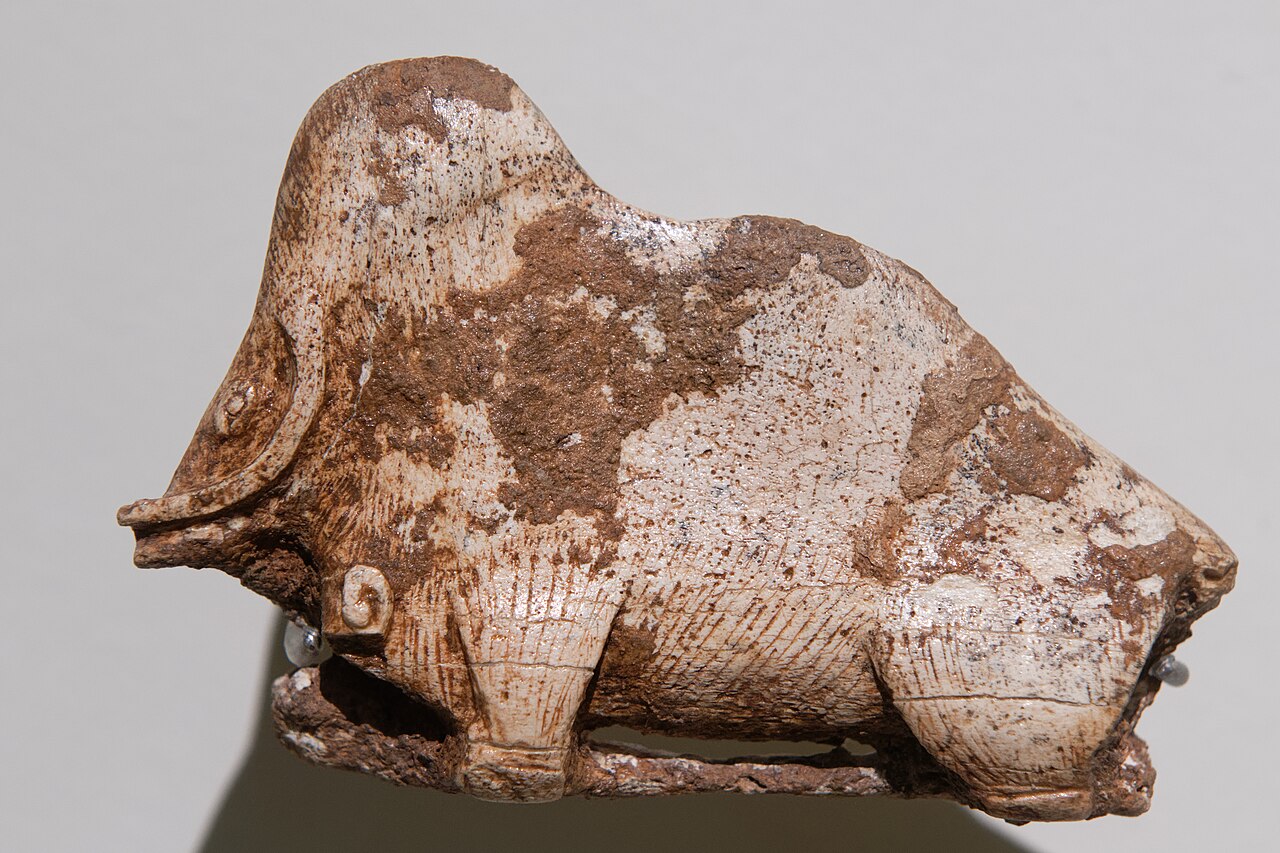
Atlatl
The atlatl is a hand-held lever that launches a long dart far faster than an arm alone can throw it. One of humanity's oldest mechanical… Continued…
-
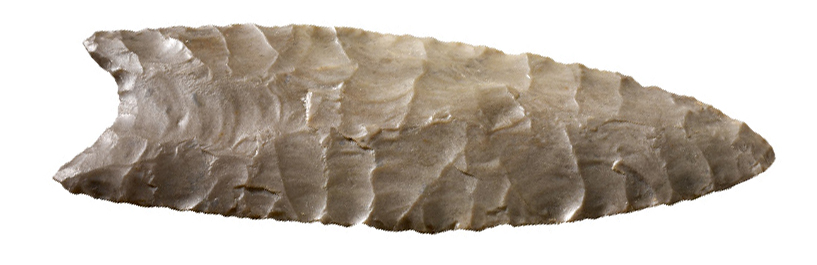
Clovis Point
The Clovis point is the signature stone weapon of the first widespread culture in North America, produced for a few centuries around 13,000… Continued…
-
Fusil de Chasse
The fusil de chasse was a light French flintlock hunting musket, made in large numbers at Tulle for the Ministry of Marine and shipped to… Continued…
-
Gunstock War Club
The gunstock war club is a Native American hand weapon made from a flat piece of hardwood shaped like the stock of a musket, often with a… Continued…
-
Tomahawk
The tomahawk is the light axe of the North American frontier: an Algonquian name, a Native American weapon concept, and a European-forged… Continued…