Battles of Saratoga
The Battles of Saratoga were two battles fought in upstate New York in the autumn of 1777. A British army under General John Burgoyne had invaded from Canada to take the Hudson valley. It was stopped by the American army of Horatio Gates at Freeman's Farm on 19 September, then defeated at Bemis Heights on 7 October. Surrounded near Saratoga, Burgoyne surrendered his whole army on 17 October. The victory persuaded France to enter the war as an ally of the United States, and it is often called the turning point of the Revolution.
Also known as Saratoga, Battle of Saratoga, Battle of Freeman's Farm, Battle of Bemis Heights, First Saratoga, Second Saratoga, Saratoga campaign
Background
In 1777 the British planned to cut New England off from the other rebel colonies by taking control of Lake Champlain and the Hudson River. General John Burgoyne marched south from Canada in June with about 7,000 to 8,000 men: British regulars, German troops from Brunswick and Hesse-Hanau, Canadians, Loyalists and Native American allies. He took Fort Ticonderoga without a fight in early July. After that, things went wrong. The march through the forest was slow, the killing of a young woman, Jane McCrea, by Burgoyne's Native allies drove many local men into the militia, and a German raiding force was destroyed at Bennington in August. A second British column coming east along the Mohawk River turned back at Fort Stanwix. General William Howe, instead of coming north to meet Burgoyne, took his army to attack Philadelphia. Burgoyne crossed to the west bank of the Hudson in mid-September and pressed on toward Albany. Waiting for him on Bemis Heights, behind earthworks laid out by the Polish engineer Tadeusz Kościuszko, was the American Northern Army under Horatio Gates.
The Battle
On 19 September Burgoyne advanced in three columns to try to turn the American left. Gates would have stayed behind his works, but Benedict Arnold, commanding the left wing, pushed for an attack. Daniel Morgan's riflemen and Henry Dearborn's light infantry met the British center in the clearing of a farm owned by John Freeman. For hours the fighting swung back and forth across the field, and the British gun crews in the clearing were cut down by rifle fire. Late in the day German troops under General Riedesel came up from the river and saved the British line. Burgoyne held the field, but he had lost about 600 men to the Americans' roughly 300. He dug in and waited for help from New York, which never came. By October the American army had grown to perhaps twice his size, and his men were short of food. On 7 October Burgoyne sent out about 1,500 men with artillery to probe the American left. The Americans attacked them at once. Morgan struck one flank and Enoch Poor's brigade the other, and General Simon Fraser, Burgoyne's best field commander, was mortally wounded; tradition credits one of Morgan's riflemen with the shot. Arnold, who had been removed from command after quarreling with Gates, rode onto the field anyway, led an attack that stormed a German redoubt, and was badly wounded in the leg.
Weapons
This was a war of the smoothbore musket and the bayonet. Burgoyne's regulars carried the Brown Bess Musket and the Socket Bayonet, and many Continentals now had the French Charleville Musket. Morgan's men carried the Kentucky Long Rifle, which was accurate far beyond musket range but slow to load and took no bayonet. Burgoyne's artillery included light guns like the Grasshopper Cannon.
Aftermath
Burgoyne retreated to Saratoga, where he was surrounded. He agreed terms, called a convention, and on 17 October 1777 his army of nearly 6,000 men laid down its arms. Congress later refused to honor the terms, and most of the men stayed prisoners until the war ended. The news reached Paris in December, and in February 1778 France signed a treaty of alliance with the United States, bringing money, troops and a navy into the American Revolution. Morgan went on to win the Battle of Cowpens in 1781. Arnold, embittered, turned traitor in 1780.
Weapons used
-
Brown Bess Musket
The musket of Burgoyne's British regulars, who fought in the woods and clearings around Freeman's Farm. Continued…
-
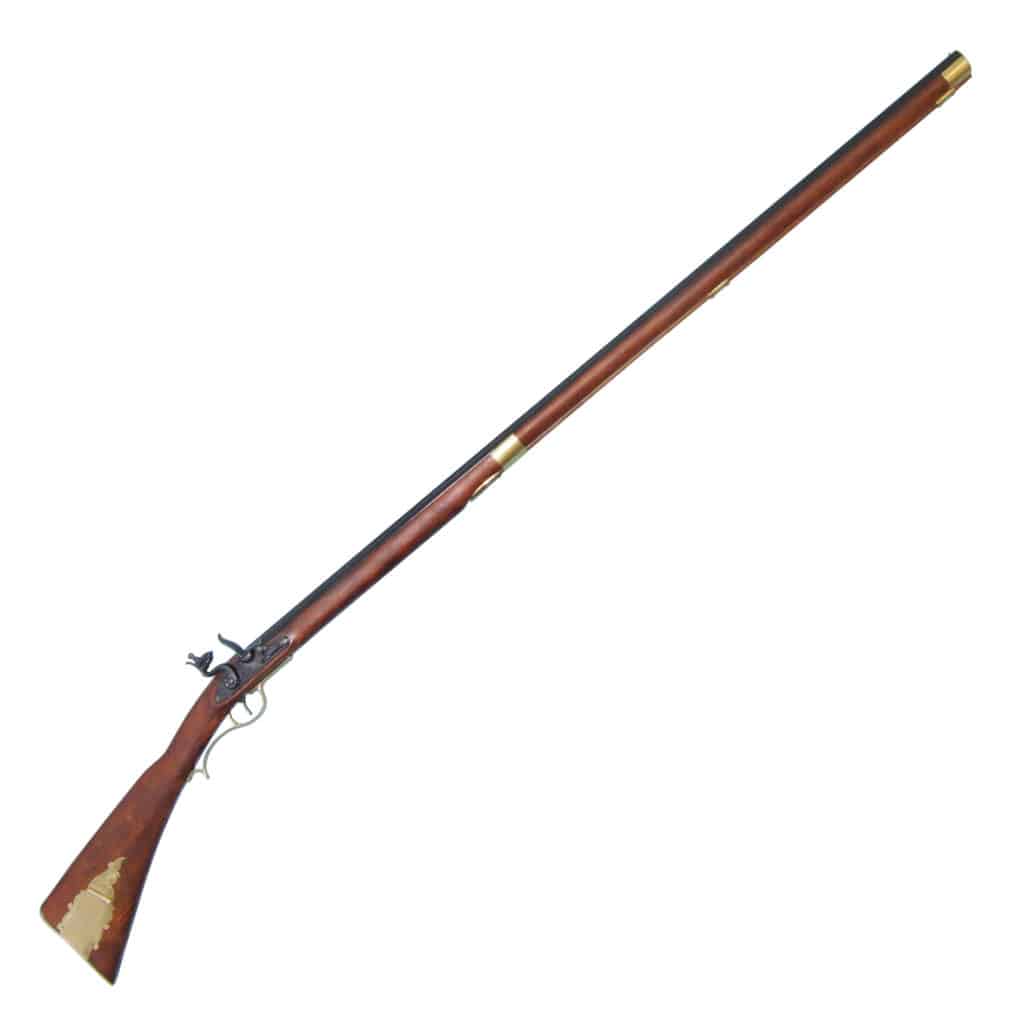
Kentucky Long RifleFor sale
Daniel Morgan's riflemen used it to pick off British officers and gunners from cover in both battles. Continued…
-
Charleville Musket
French muskets shipped secretly in 1777 armed many of the Continental regiments in Gates's army. Continued…
-
Socket Bayonet
British and German infantry used the bayonet charge to drive back the Americans; Morgan's riflemen had no bayonets and needed light… Continued…
-
Grasshopper Cannon
Burgoyne's artillery train included light 3-pounders, and guns in the Freeman's Farm clearing changed hands several times. Continued…
-
TomahawkFor sale
Carried by Burgoyne's Native American allies, and by many American riflemen and militia as a tool and weapon. Continued…
-
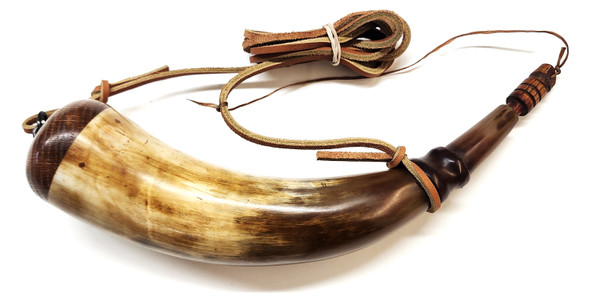
Powder Horn
The riflemen loaded from powder horns rather than paper cartridges, one reason their weapons were slow to reload. Continued…
Sources
Ketchum, Richard M. Saratoga: Turning Point of America's Revolutionary War. Henry Holt, 1997.
Luzader, John F. Saratoga: A Military History of the Decisive Campaign of the American Revolution. Savas Beatie, 2008.
Mintz, Max M. The Generals of Saratoga: John Burgoyne and Horatio Gates. Yale University Press, 1990.
Suggest an edit · account required · reviewed before publishing · how it works