Weapon Type
Firearms
Gunpowder-propelled projectile weapons.
Category Overview
Overview
Firearms use the rapid combustion of a propellant charge to propel a projectile at high velocity. Developed from Chinese gunpowder inventions and refined by European armorers from the 14th century onward, firearms progressively displaced every previous weapon type and have dominated land, sea, and air warfare for four centuries.
Development Timeline
| Era | Mechanism | Key Weapons | |-----|-----------|-------------| | 1300s–1400s | Hand cannon, matchlock | Arquebus, early musket | | 1500s–1600s | Matchlock, wheel lock | Musket, pistol | | 1600s–1700s | Flintlock | Brown Bess, Charleville, dueling pistol | | 1800s | Percussion cap, cartridge | Colt revolver, Springfield, Minié ball | | 1860s–1890s | Metallic cartridge, bolt action | Winchester, Mauser, Remington | | 1900s | Semi-auto, full-auto | Browning, Luger, Thompson, M1 Garand | | 1940s onward | Intermediate cartridge | AK-47, M16, assault rifle era |
Major Subcategories
- Muskets — Flintlock and percussion smoothbore long arms; the dominant military firearm 1600–1860. See: Muskets.
- Rifles — Rifled long arms; accurate to 300+ meters; the dominant infantry weapon from the American Civil War onward. See: Rifles.
- Pistols & Revolvers — Short-barreled handguns; cavalry, officer, and concealed-carry weapons. See: Pistols & Revolvers.
- Carbines — Shorter rifles for cavalry and vehicle crews. See: Carbines.
- Shotguns — Smoothbore long arms firing multiple pellets; close-range; trench warfare and police use. See: Shotguns.
- Submachine Guns — Short-barreled, pistol-caliber automatic weapons; close-quarters warfare. See: Submachine Guns.
- Machine Guns — Automatic weapons firing rifle caliber ammunition; the defining weapon of WWI and WWII. See: Machine Guns.
This article is a stub. Contributions covering specific firearms, mechanisms, and historical development are welcome.
-
AK-47
The AK-47 is the most produced firearm in human history: Mikhail Kalashnikov's gas-operated assault rifle in 7.62x39mm, built around loose… Continued…
-
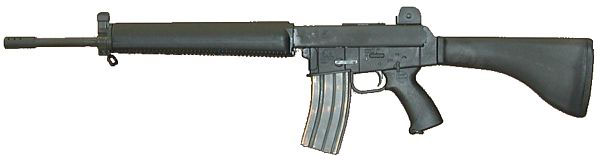
Armalite AR-18
The Armalite AR-18 is a 5.56mm select-fire rifle designed in 1963 by Arthur Miller and George Sullivan at Armalite in Costa Mesa… Continued…
-
Arquebus
The arquebus was the first practical infantry firearm, a matchlock long gun light enough to be fired from the shoulder or chest without a… Continued…
-
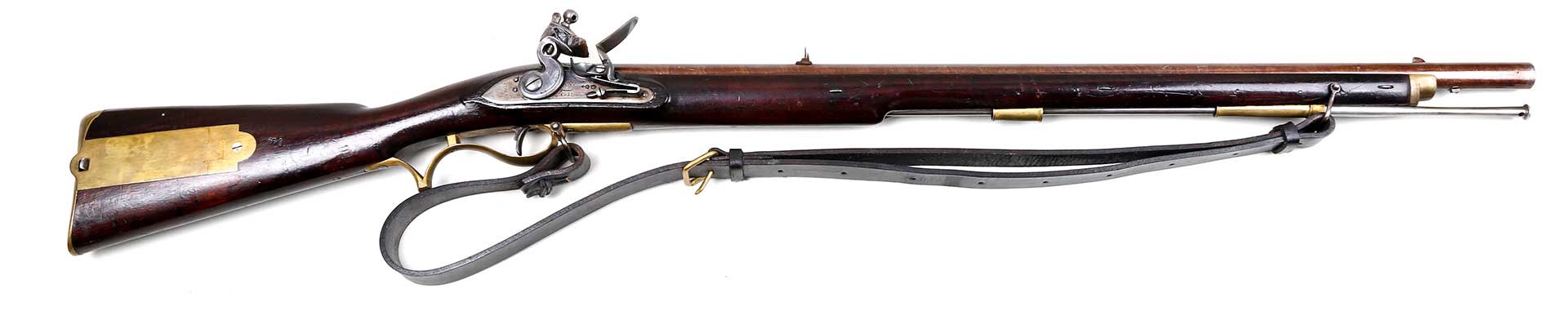
Baker Rifle
The Baker rifle was the first rifle officially adopted by the British Army, the weapon of the green-jacketed 95th Rifles and the rifle… Continued…
-
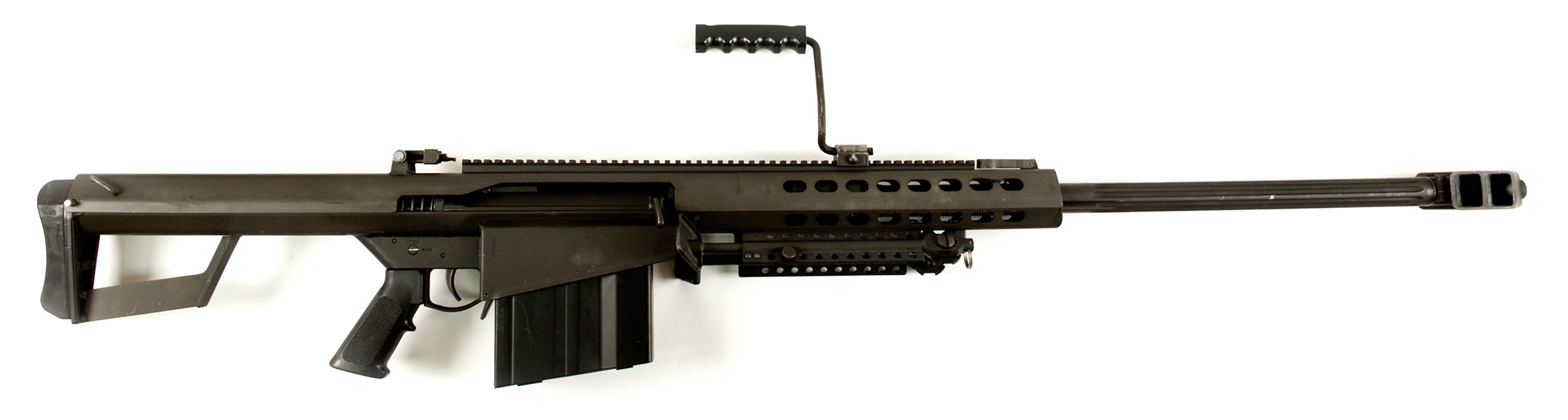
Barrett M82
The Barrett M82 is a semi-automatic rifle chambered for the .50 BMG machine-gun cartridge, designed by Ronnie Barrett in Tennessee in the… Continued…
-
Bazooka
The bazooka was the American 2.36-inch shoulder-fired rocket launcher of the Second World War, built as the M1, M1A1 and M9. Introduced in… Continued…
-
Beretta BM59 Rifle
The Beretta BM59 is the Italian answer to the same question the M14 answered in America: how to turn the M1 Garand into a select-fire… Continued…
-
Beretta M9
The Beretta M9 is the 9 mm semi-automatic pistol adopted by the United States armed forces in 1985 to replace the .45 caliber M1911A1. It… Continued…
-
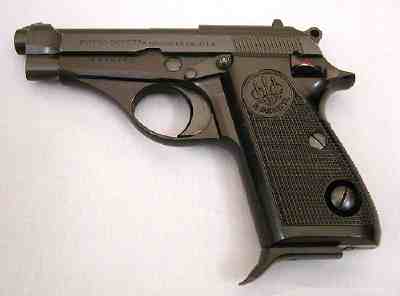
Beretta Model 70 (and Variants)
The Beretta Model 70 (also known as the Puma, among several other, less common, marketing names) and variants are a series of classic 20th… Continued…
-
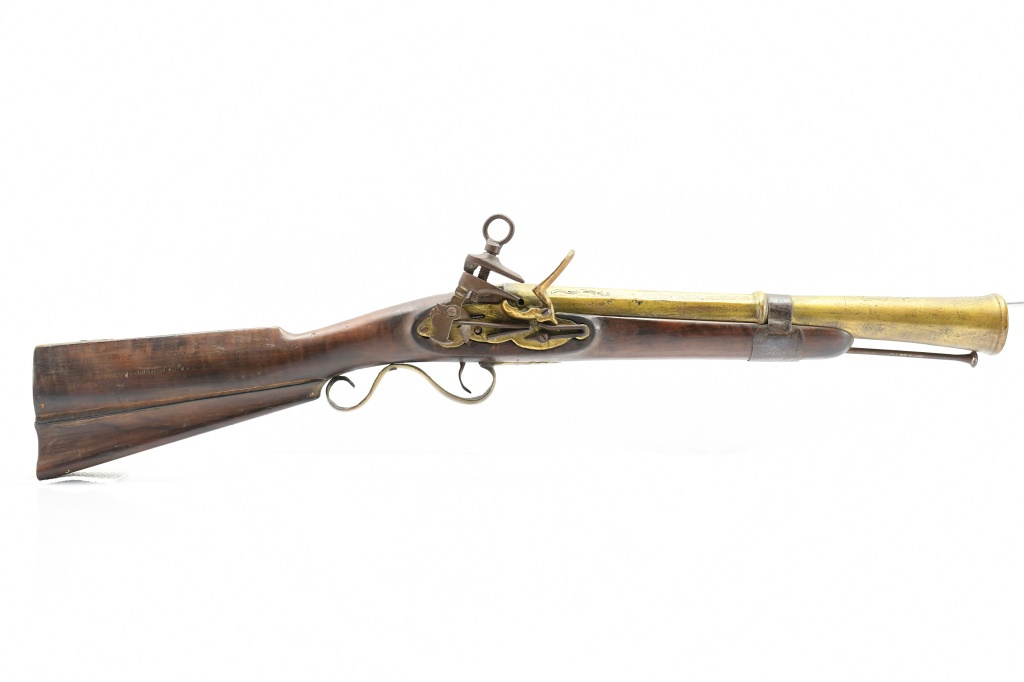
Blunderbuss
The blunderbuss was a short, large-bore, muzzle-loading gun with a flared muzzle, built to fire a handful of shot at very close range. From… Continued…
-
Bombard
A bombard was a large, short-ranged cannon of the fourteenth to sixteenth centuries that fired heavy stone balls against castle and town… Continued…
-
Bren
The Bren was the light machine gun of the British and Commonwealth armies from 1938 until the 1990s: a Czech design from Brno… Continued…
-
Brown Bess Musket
Brown Bess is the affectionate name for the British Land Pattern flintlock musket, the longest-serving firearm in British history. A .75… Continued…
-
Browning Hi-Power
The Browning Hi-Power is a 9x19mm semi-automatic pistol begun by John Browning in the 1920s and completed after his death by Dieudonne… Continued…
-
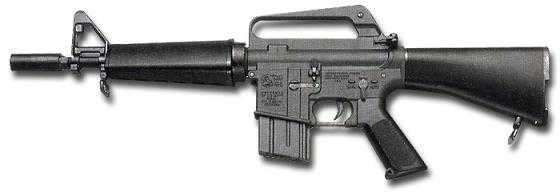
CAR-15
CAR-15 was Colt's name, from the mid-1960s, for a family of weapons built on the AR-15 and M16 rifle, and soldiers came to use it for the… Continued…
-
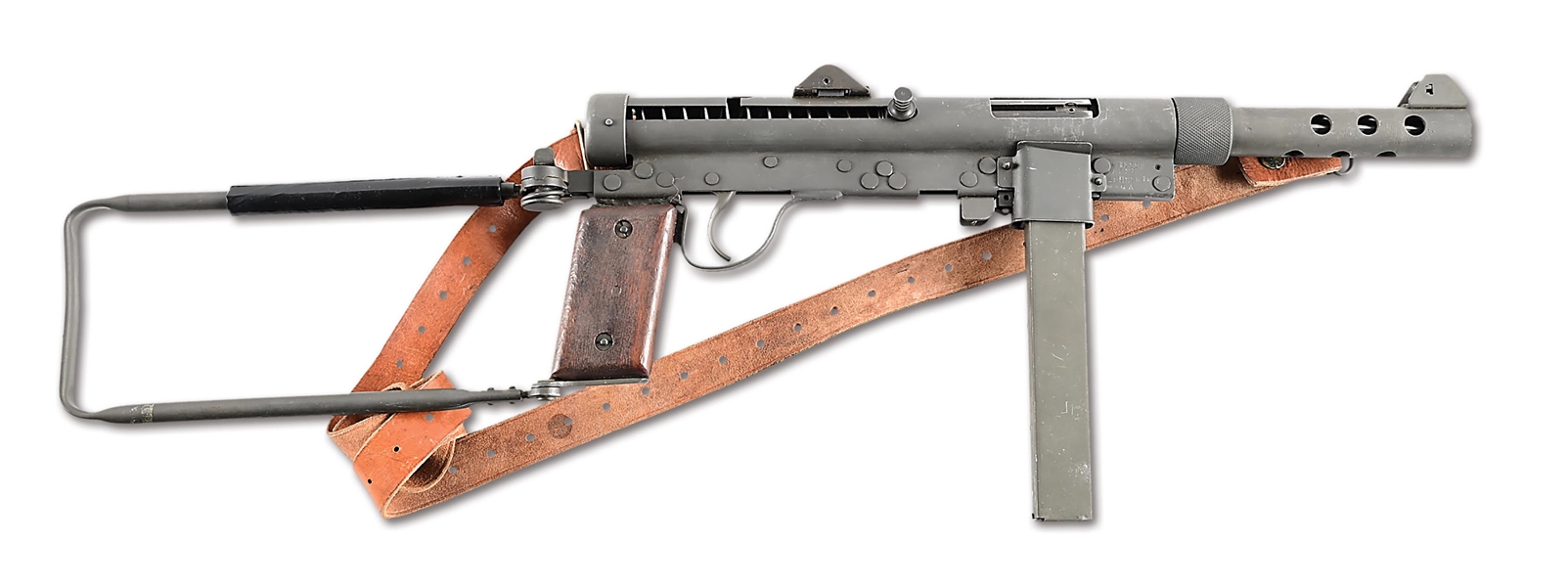
Carl Gustaf m/45
The Carl Gustaf m/45 is a Swedish 9mm submachine gun adopted in 1945 and made at the Carl Gustafs Stads Gevärsfaktori in Eskilstuna.… Continued…
-
Charleville Musket
'Charleville' is the collector's name — taken from the great arsenal in the Ardennes — for the French service flintlock muskets of the… Continued…
-
Chassepot Rifle
The Chassepot was the French army's bolt-action breech-loading rifle of 1866, designed by Antoine Alphonse Chassepot. Like the Prussian… Continued…
-
Chauchat
The Chauchat, officially the Fusil Mitrailleur Modèle 1915 CSRG, was the French army's light automatic weapon of the First World War. It… Continued…
-
Colt 1851 Navy Revolver
The Colt 1851 Navy is the revolver that made Samuel Colt's fortune and the revolver of the American frontier and Civil War: a .36-caliber… Continued…
-
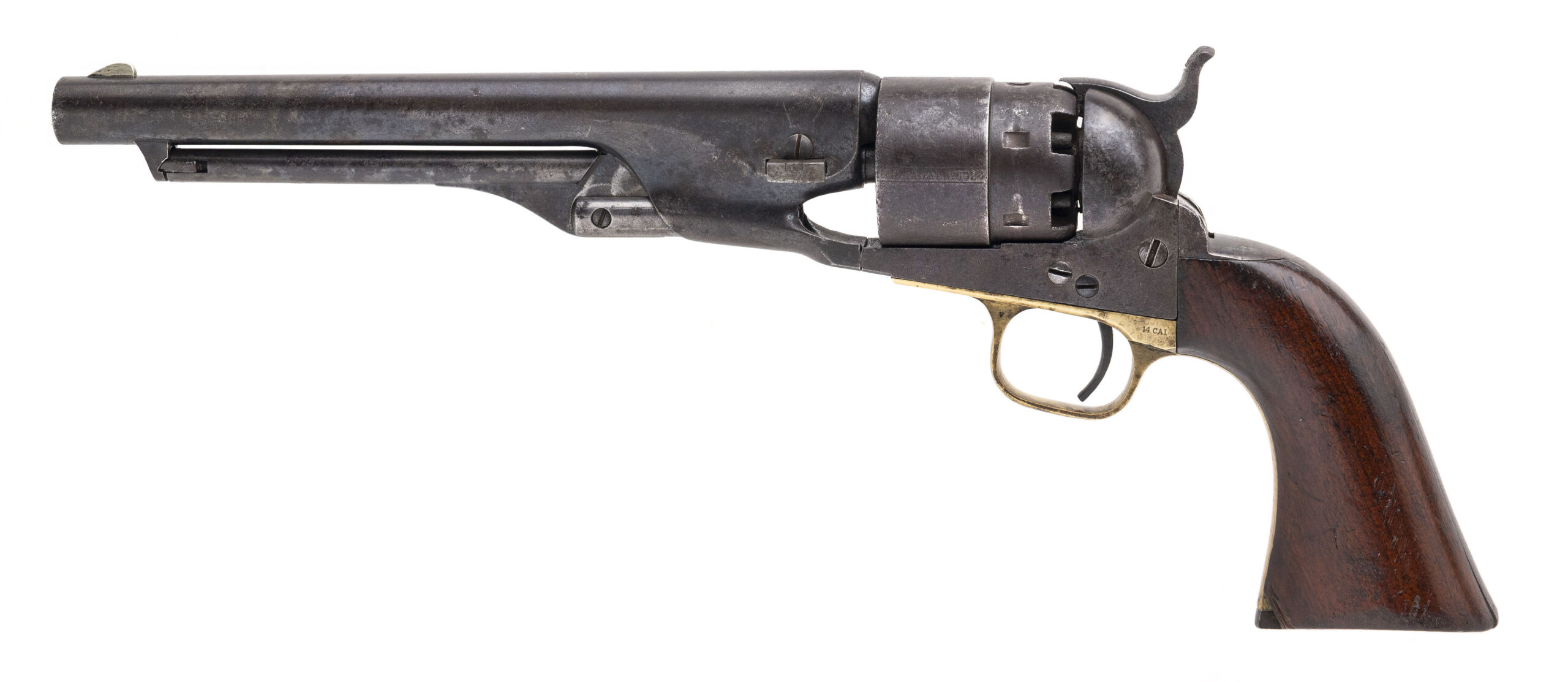
Colt 1860 Army
The Colt 1860 Army was the principal revolver of the Union cavalry in the American Civil War: a six-shot .44 caliber percussion revolver… Continued…
-
Colt Single Action Army
The Colt Single Action Army of 1873 — the Peacemaker — is the revolver of the American West. Adopted by the U.S. Army in .45 Colt and sold… Continued…
-
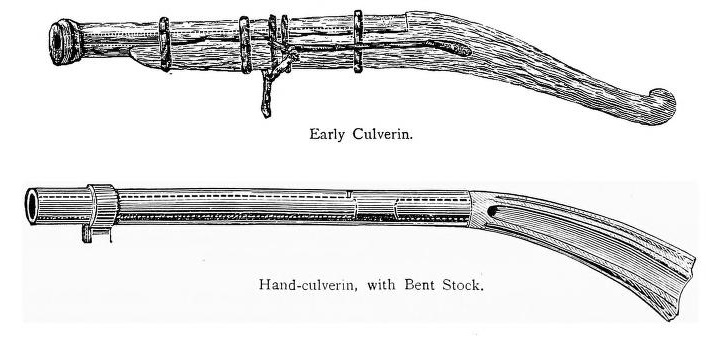
Culverin
The culverin was a long-barreled muzzle-loading gun of the sixteenth and seventeenth centuries. Compared with the heavier 'cannon' class it… Continued…
-
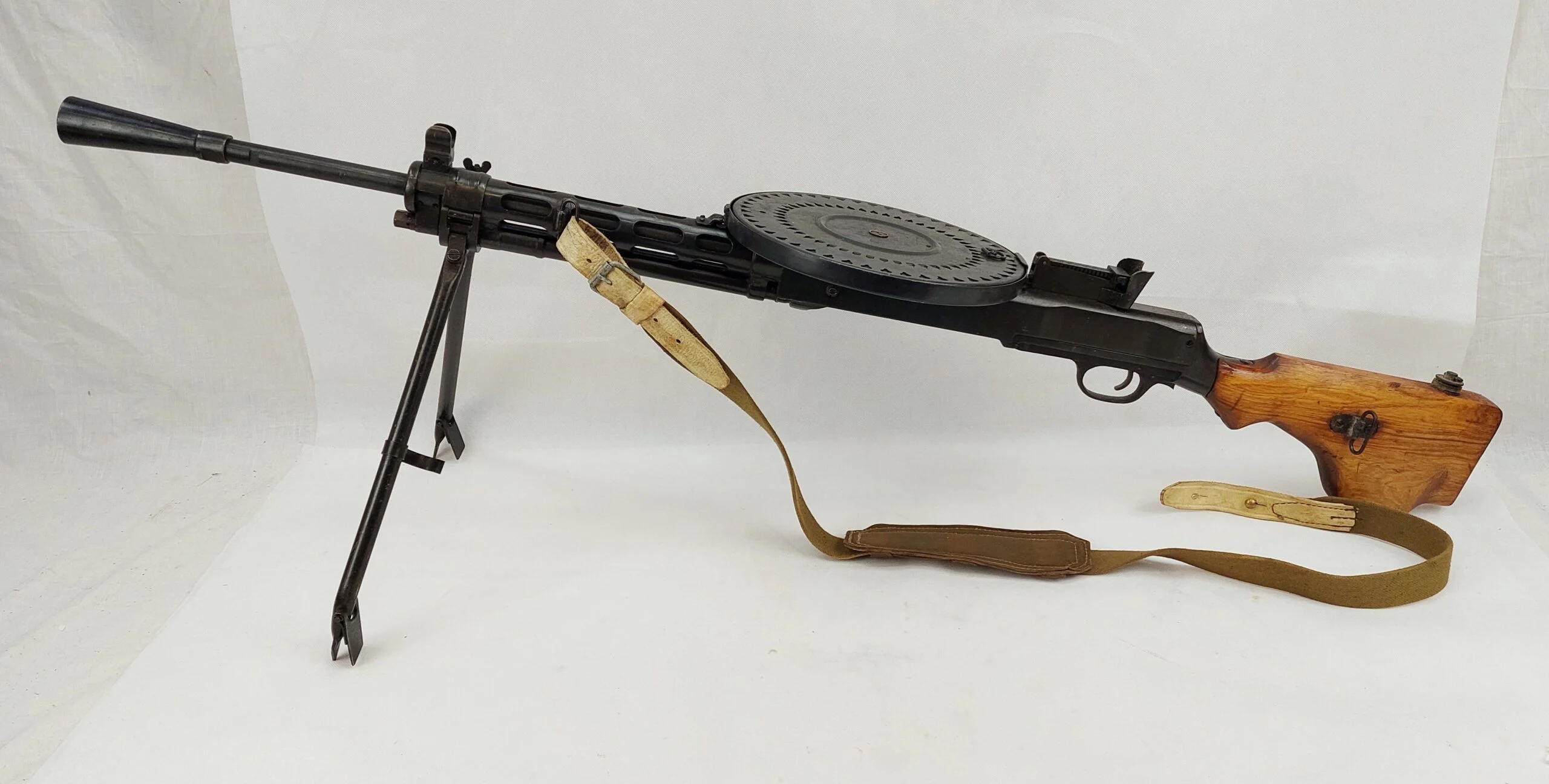
Degtyaryov DP-27
The DP-27 was the standard light machine gun of the Soviet Army from the late 1920s through the Second World War. Designed by Vasily… Continued…
-
Dreyse Needle Gun
The Dreyse needle gun was the first bolt-action breech-loading rifle adopted in large numbers by a major army. Designed by Johann Nikolaus… Continued…
-
FAMAS
The FAMAS is the French army's bullpup assault rifle, adopted in 1978 and in service for four decades. Made at the Saint-Étienne arms… Continued…
-
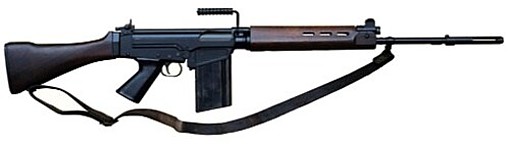
FN FAL
The FN FAL — Fusil Automatique Léger, or light automatic rifle — was the most widely adopted battle rifle of the Cold War. Designed by… Continued…
-
FN MAG
The FN MAG is a Belgian general-purpose machine gun designed by Ernest Vervier at Fabrique Nationale and introduced in 1958. It fires… Continued…
-
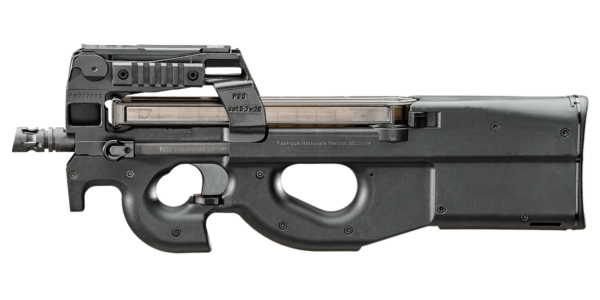
FN P90
The FN P90 is a Belgian personal defense weapon designed by FN Herstal in the late 1980s to give drivers, gunners and other rear-echelon… Continued…
-
FN SCAR
The FN SCAR is a modular rifle made by FN Herstal of Belgium for US Special Operations Command, which chose it in 2004. It came in two main… Continued…
-
Ferguson Rifle
The Ferguson rifle was a breech-loading flintlock rifle designed by Captain Patrick Ferguson of the British Army and patented in 1776. A… Continued…
-
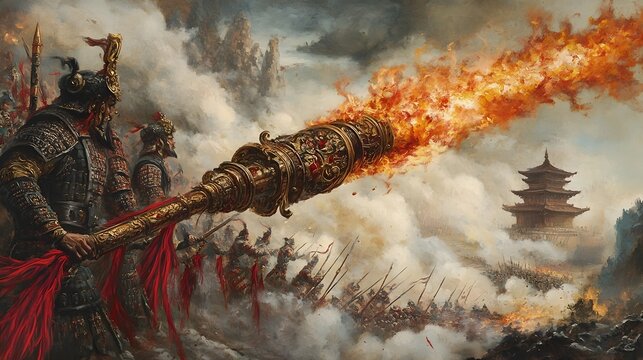
Fire Lance
The fire lance was the first gunpowder weapon to be held in the hand: a tube of bamboo or paper, packed with gunpowder and tied to a spear… Continued…
-
Franchi SPAS-12
The Franchi SPAS-12 is a dual-mode Italian combat shotgun produced from 1979 to 2000 that can be switched between gas-operated… Continued…
-
Fusil de Chasse
The fusil de chasse was a light French flintlock hunting musket, made in large numbers at Tulle for the Ministry of Marine and shipped to… Continued…
-
G3 Rifle
The Heckler & Koch G3 is a select-fire 7.62x51 mm NATO battle rifle adopted by West Germany in 1959 and kept as its standard rifle until… Continued…
-
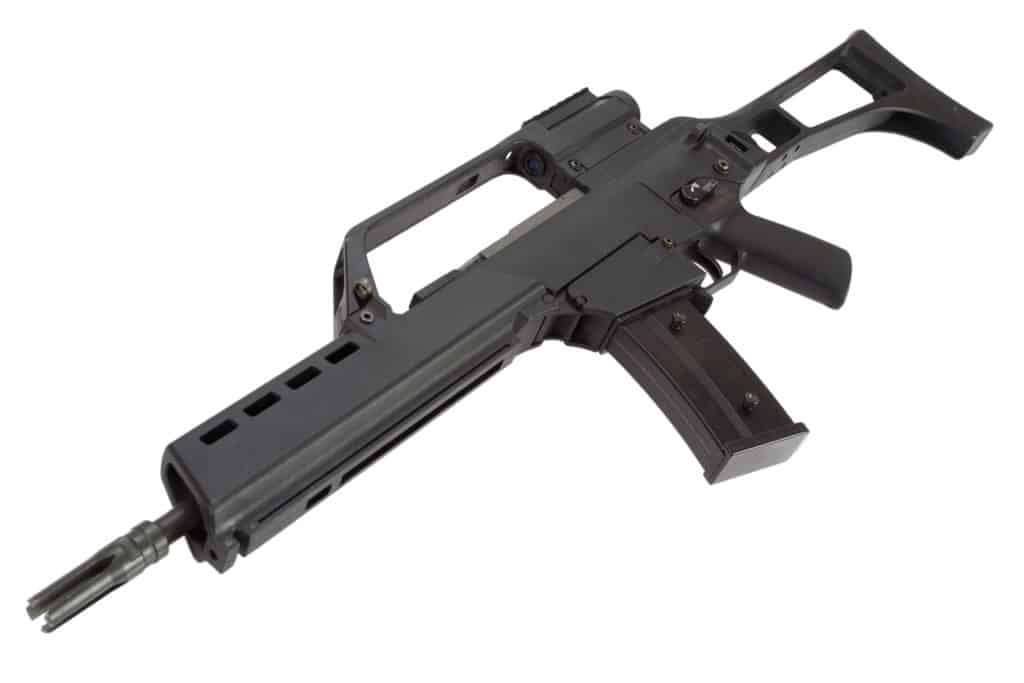
G36 Rifle
The Heckler & Koch G36 is a 5.56x45 mm NATO assault rifle adopted by the German Bundeswehr in 1997 to replace the G3. It uses a… Continued…
-
Gatling gun
The Gatling gun was the first practical machine gun, a hand-cranked weapon with six to ten barrels rotating around a central shaft, each… Continued…
-
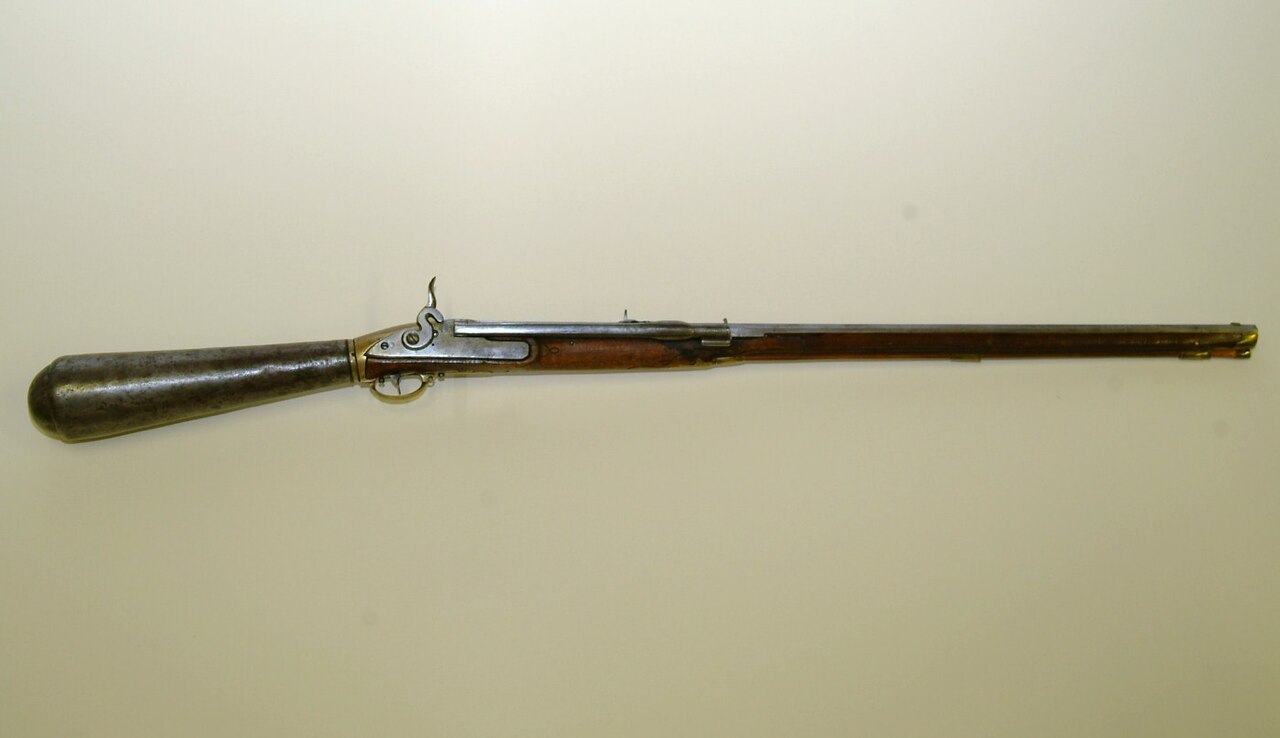
Girardoni Air Rifle
The Girardoni air rifle was a repeating rifle issued to the Austrian army from 1780 that fired lead balls with compressed air rather than… Continued…
-
Grasshopper Cannon
The grasshopper was a light British 3-pounder field gun of the later eighteenth century, a short bronze barrel on a small carriage that… Continued…
-
HK MP5
The Heckler & Koch MP5 is the submachine gun by which every other has been judged since the 1970s. It shrank the roller-delayed blowback… Continued…
-
HK MP7
The Heckler & Koch MP7 is a personal defense weapon: a machine pistol the size of a large handgun that fires a small, very fast 4.6x30mm… Continued…
-
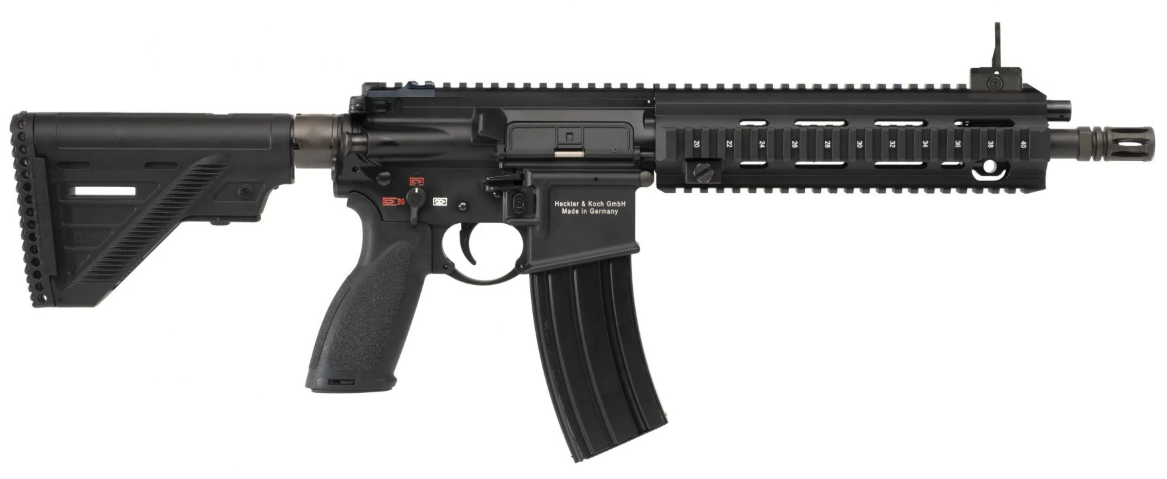
HK416
The Heckler & Koch HK416 is a 5.56mm assault rifle and carbine that keeps the ergonomics, magazines and accessories of the American M4 but… Continued…
-
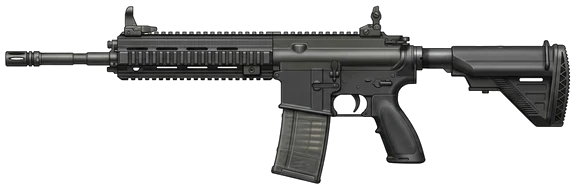
HK417
The HK417 is a 7.62x51mm NATO battle rifle made by Heckler & Koch of Germany. It is the larger-caliber partner of the HK416 and uses the… Continued…
-
Hand Cannon
The hand cannon is the first true firearm: a small bronze or iron barrel on a pole or stock, loaded with powder and ball and touched off by… Continued…
-
Hawken Rifle
The Hawken rifle was the heavy half-stocked 'plains rifle' made in St. Louis by the brothers Jacob and Samuel Hawken from the 1820s, and… Continued…
-
Hotchkiss M1914
The Hotchkiss M1914 was the standard heavy machine gun of the French army in the First World War. Made by the Hotchkiss company near Paris… Continued…
-
IWI Galil
The Galil is an Israeli assault rifle developed in the late 1960s by Yisrael Galili and Yaacov Lior of Israel Military Industries. It is… Continued…
-
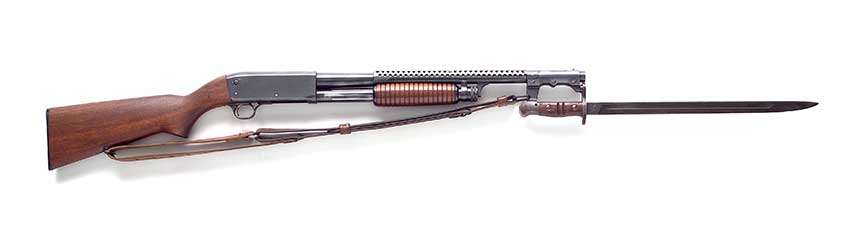
Ithaca 37
The Ithaca 37 is an American pump-action shotgun made by the Ithaca Gun Company of Ithaca, New York, from 1937. Based on a John Browning… Continued…
-
Janissary Tüfek
The tüfek, the Turkish word for a gun, was the long-barreled musket carried by the Janissaries, the elite infantry of the Ottoman Empire.… Continued…
-
Jäger Rifle
The Jäger rifle was the short, heavy-barreled flintlock hunting rifle of the German lands, carried in war by the light troops called Jäger… Continued…
-
K-50M
The K-50M is a North Vietnamese submachine gun of the late 1950s and 1960s: a rebuilt Chinese Type 50, itself a copy of the Soviet PPSh-41.… Continued…
-
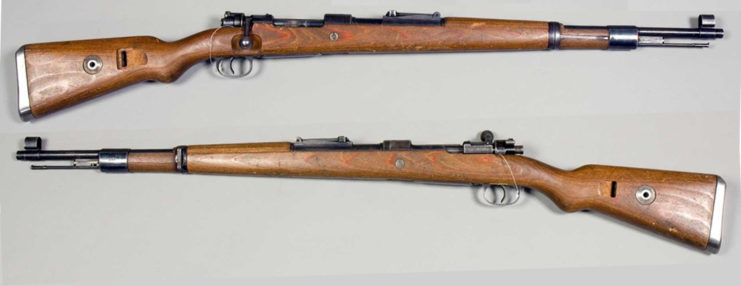
Karabiner 98k
The Karabiner 98k was the standard rifle of the German armed forces in the Second World War. Adopted in 1935, it was a shortened version of… Continued…
-
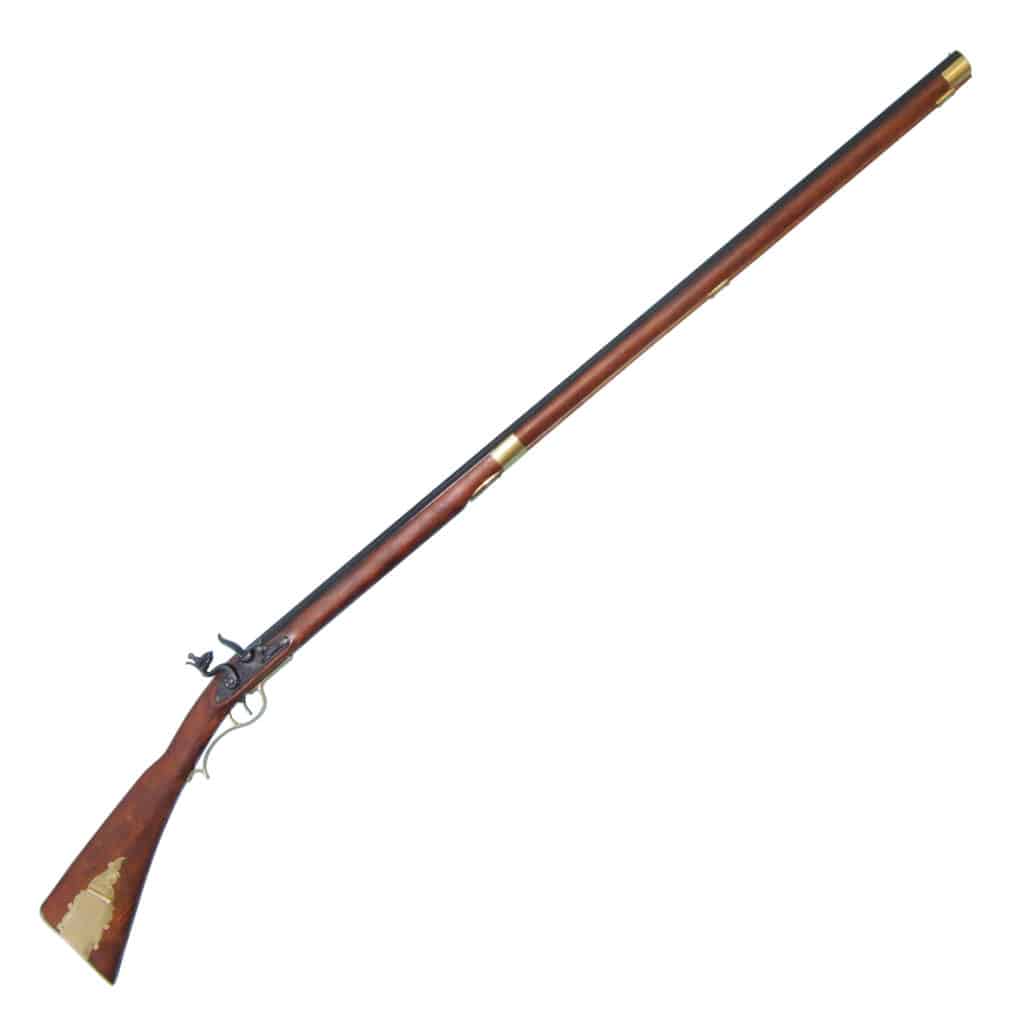
Kentucky Long Rifle
The Kentucky long rifle was the long-barreled, small-caliber flintlock rifle developed by German gunsmiths in Pennsylvania in the… Continued…
-
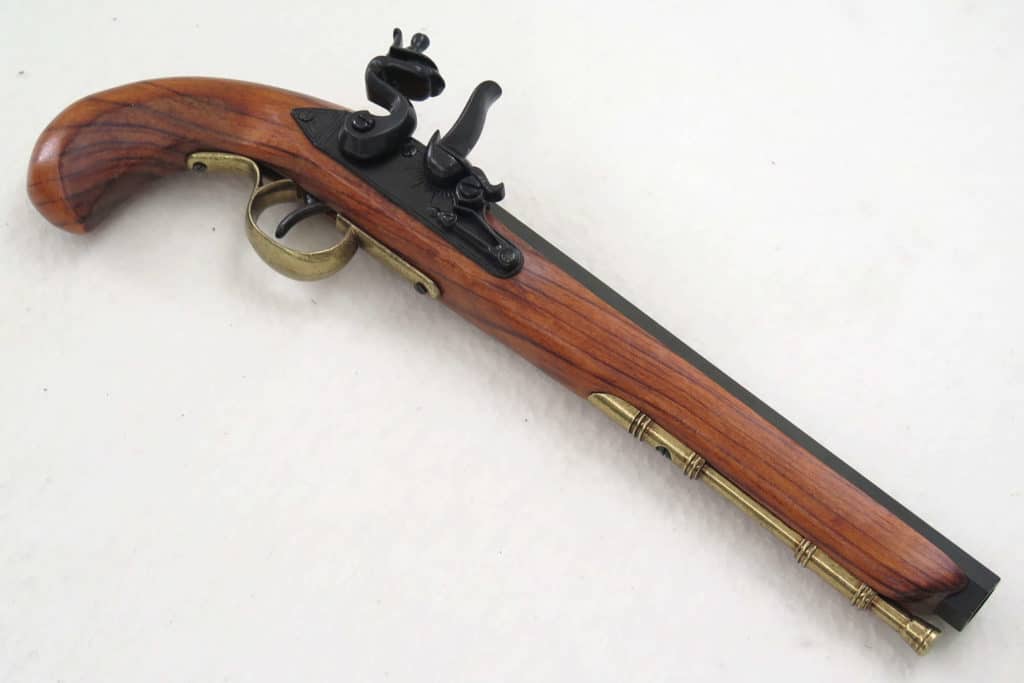
Kentucky Pistol
The Kentucky pistol is the handgun counterpart of the Kentucky long rifle: a single-shot flintlock pistol made by the same Pennsylvania and… Continued…
-
Krag-Jørgensen
The Krag-Jørgensen is a bolt-action rifle designed in Norway by Ole Krag and Erik Jørgensen and adopted by Denmark in 1889, the United… Continued…
-
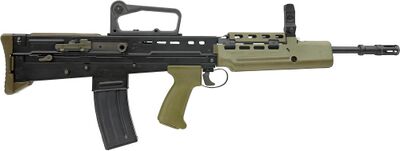
L85A1
The L85A1 is the British Army's 5.56mm bullpup rifle, the individual weapon of the SA80 family. Adopted in 1985 to replace the L1A1… Continued…
-
Lahti L-39
The Lahti L-39 is a Finnish 20mm anti-tank rifle designed by Aimo Lahti and used during the Second World War. Firing the powerful 20x138mmB… Continued…
-
Lebel Model 1886
The Lebel Model 1886 was the first military rifle to fire smokeless powder, and it made every other army's rifle obsolete overnight. Its… Continued…
-
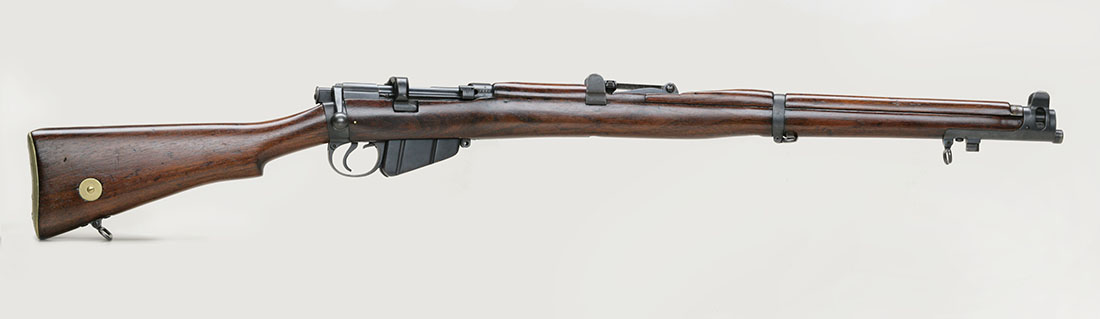
Lee-Enfield Rifle
The Lee-Enfield was the British Empire's rifle for over half a century: a bolt-action .303 whose rear-locking action and ten-round magazine… Continued…
-
Lewis Gun
The Lewis gun was the British Empire's light machine gun of the First World War: an air-cooled, gas-operated gun with a distinctive fat… Continued…
-
Light Dragoon Pistol
The Light Dragoon pistol was the British Army's flintlock cavalry pistol of the later eighteenth century. Introduced around 1759 for the… Continued…
-
Luger P08
The Luger P08 is the toggle-locked semi-automatic pistol of the German military through both World Wars, and for many the most recognizable… Continued…
-
M1 Carbine
The M1 Carbine was the most-produced American small arm of the Second World War: a five-pound, semi-automatic .30-caliber carbine designed… Continued…
-
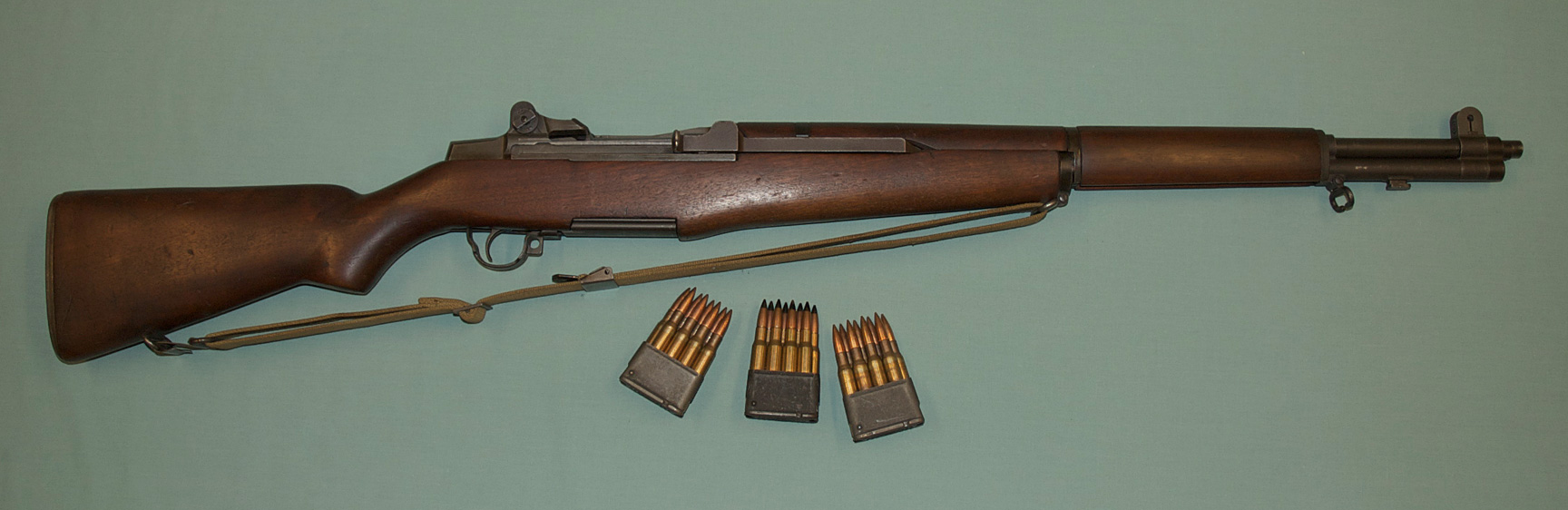
M1 Garand
The M1 Garand was the first semi-automatic rifle adopted as the standard arm of any major power, giving the American infantryman of the… Continued…
-
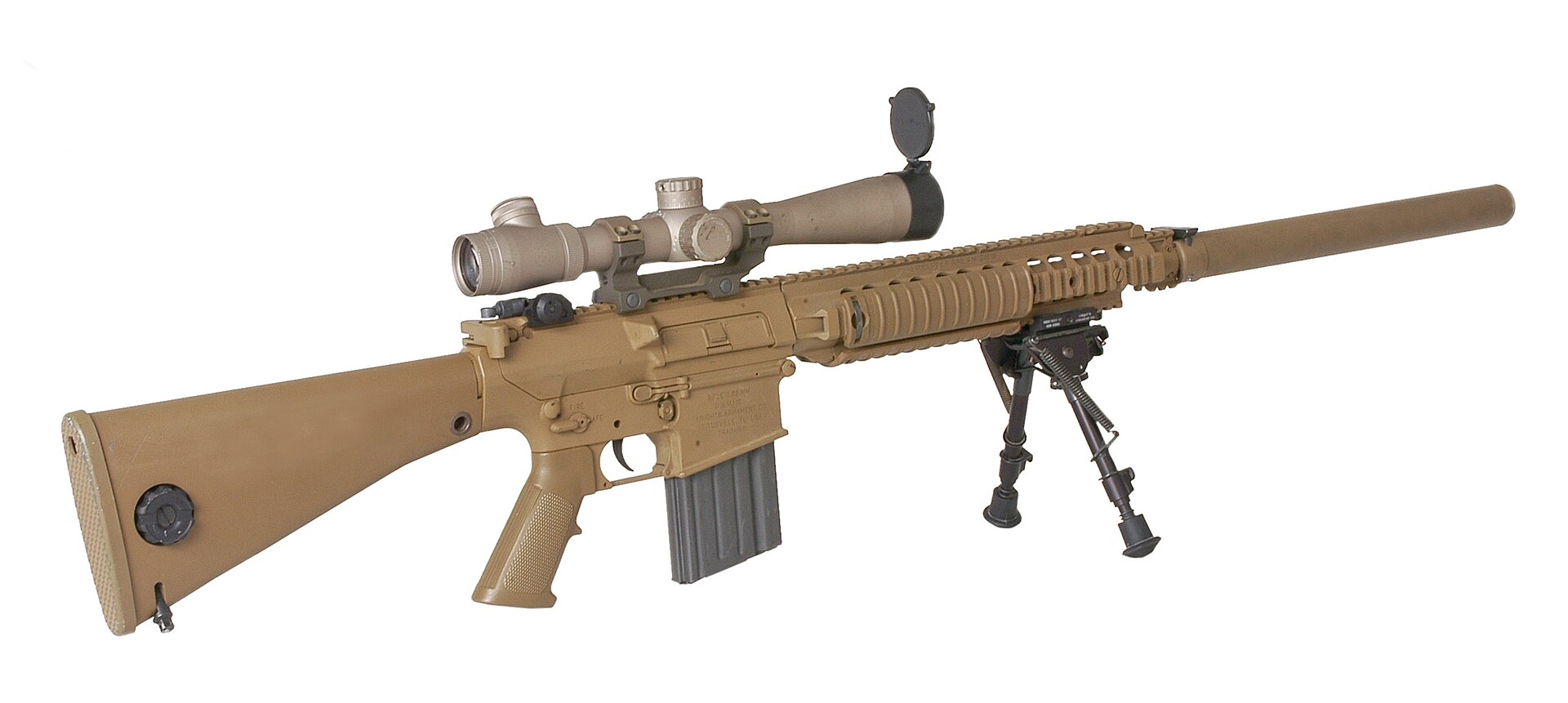
M110 Semi-Automatic Sniper System
The M110 Semi-Automatic Sniper System is the United States Army's self-loading 7.62mm sniper rifle, adopted in 2008 to give sniper teams… Continued…
-
M14 Rifle
The M14 was the United States' last wooden-stocked battle rifle: a select-fire development of the M1 Garand chambered for the new 7.62mm… Continued…
-
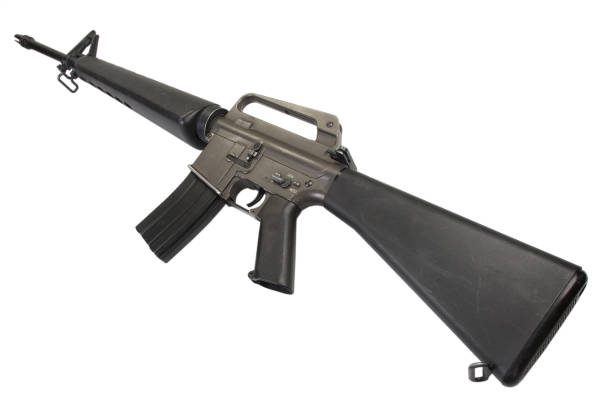
M16 Rifle
The M16 brought the assault rifle to the West: Eugene Stoner's AR-15 design in 5.56mm, built of aluminum forgings and polymer around a… Continued…
-
M1865 Spencer Rifle
The Spencer was the first repeating rifle adopted in large numbers by any army. Invented by Christopher Spencer in 1860, it held seven… Continued…
-
M1903 Springfield
The M1903 Springfield was the United States' service rifle from 1903 until the M1 Garand replaced it in the late 1930s, and a sniper's and… Continued…
-
M1911 Pistol
The M1911 is John Browning's masterpiece: a short-recoil, single-action semi-automatic in .45 ACP that served as the standard American… Continued…
-
M1917 Enfield
The M1917 Enfield, officially the United States Rifle, cal .30, Model of 1917, was the bolt-action rifle carried by most American soldiers… Continued…
-
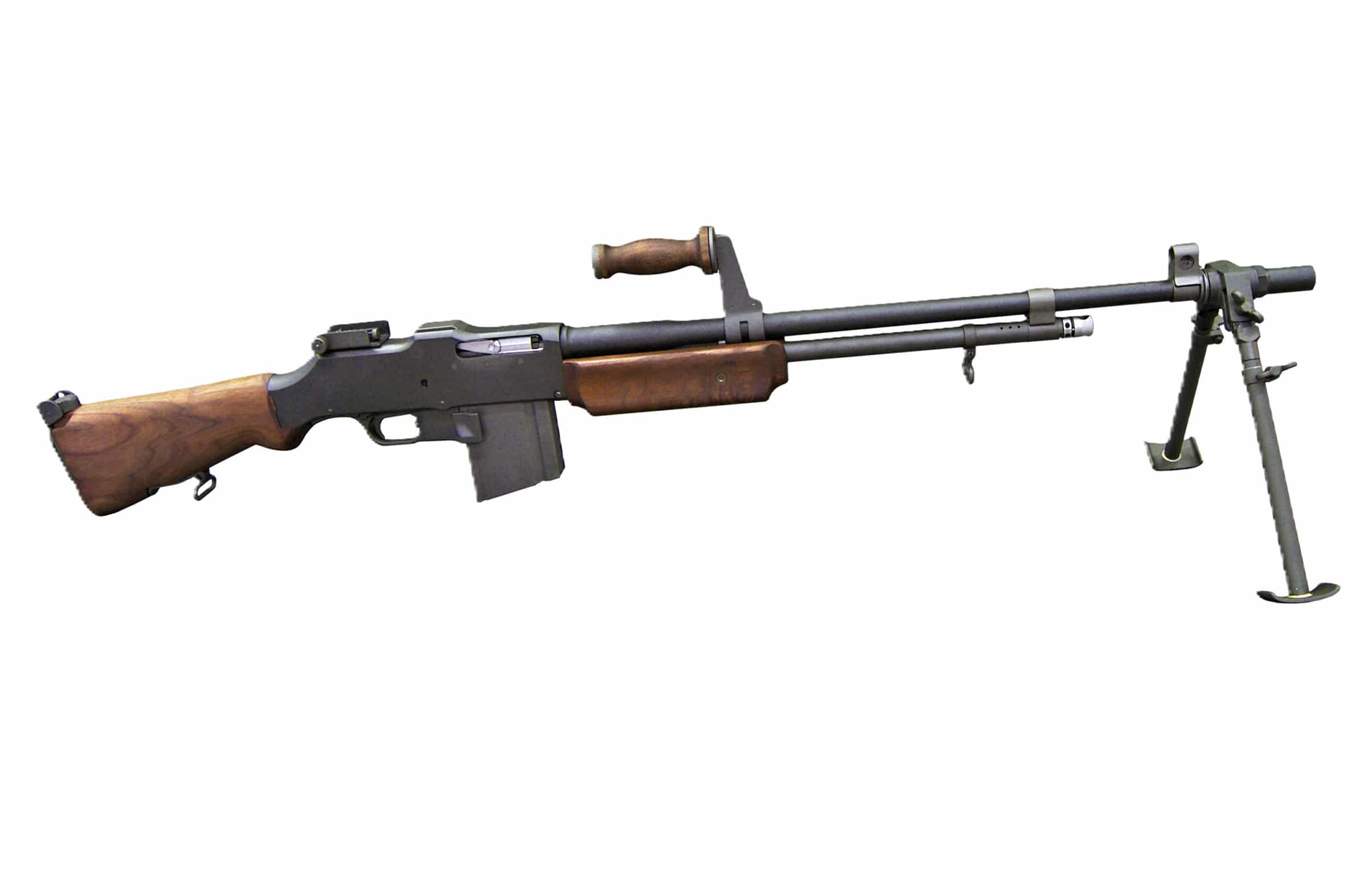
M1918 BAR
The Browning Automatic Rifle was John Moses Browning's shoulder-fired automatic weapon, adopted by the United States Army in 1918 and the… Continued…
-
M1919 Browning Machine Gun
The M1919 Browning is John Browning's water-cooled M1917 machine gun made air-cooled: a short-recoil, belt-fed .30-06 weapon that armed… Continued…
-
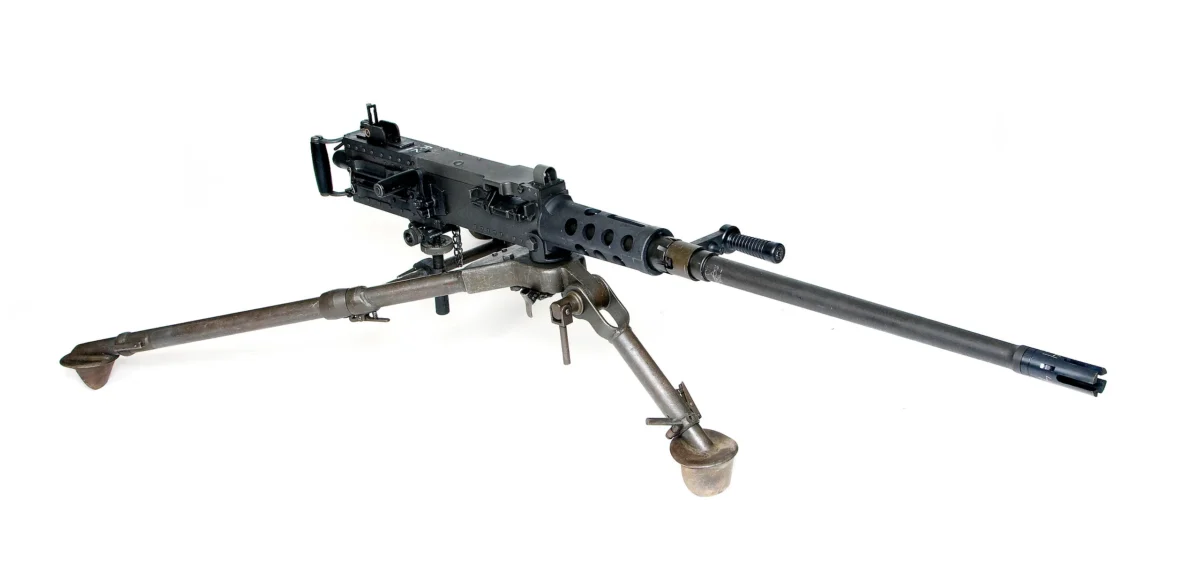
M2 Browning Machine Gun
The M2 is the American heavy machine gun of .50 caliber, designed by John Browning at the end of the First World War and adopted in its… Continued…
-
M2010 Enhanced Sniper Rifle
The M2010 Enhanced Sniper Rifle is a US Army bolt-action sniper rifle in .300 Winchester Magnum, made by rebuilding existing M24 rifles… Continued…
-
M203 Grenade Launcher
The M203 is a single-shot 40 mm grenade launcher that clips under the barrel of an M16 rifle or M4 carbine. Developed by the AAI… Continued…
-
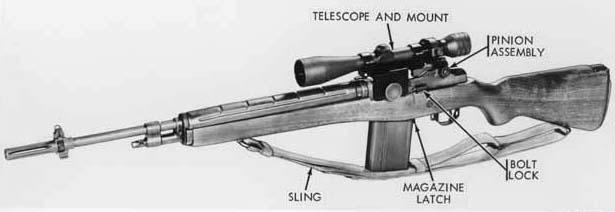
M21 Sniper Weapon System
The M21 Sniper Weapon System was the United States Army's sniper rifle from 1969 to 1988: a National Match M14 selected for accuracy… Continued…
-
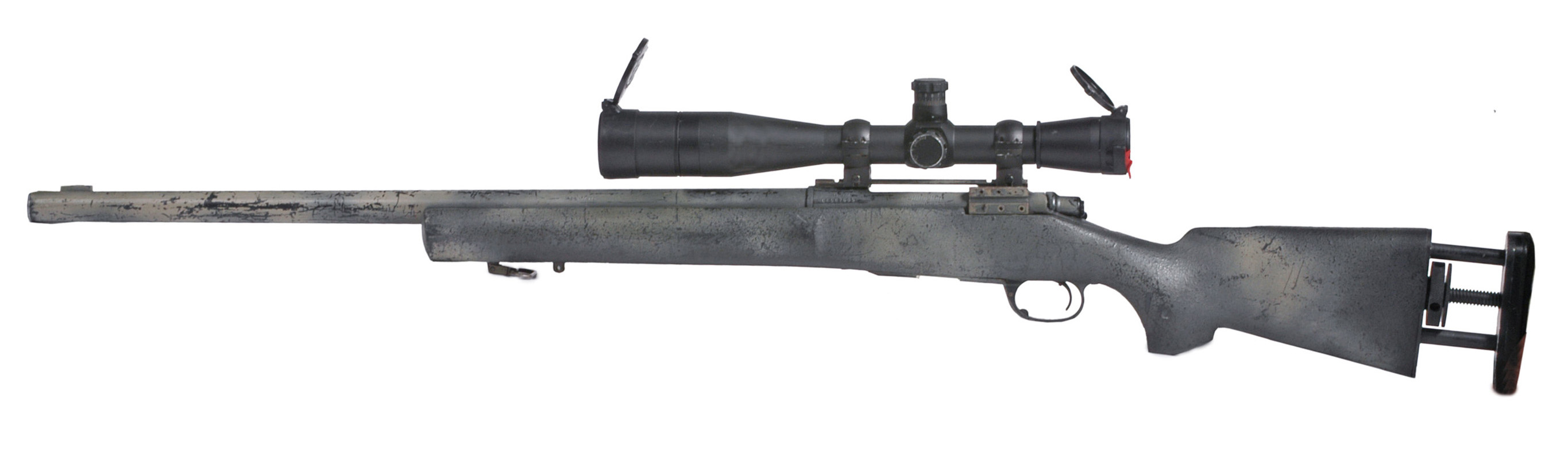
M24 Sniper Weapon System
The M24 Sniper Weapon System was the United States Army's standard sniper rifle from 1988 until the 2010s: a Remington Model 700 long… Continued…
-
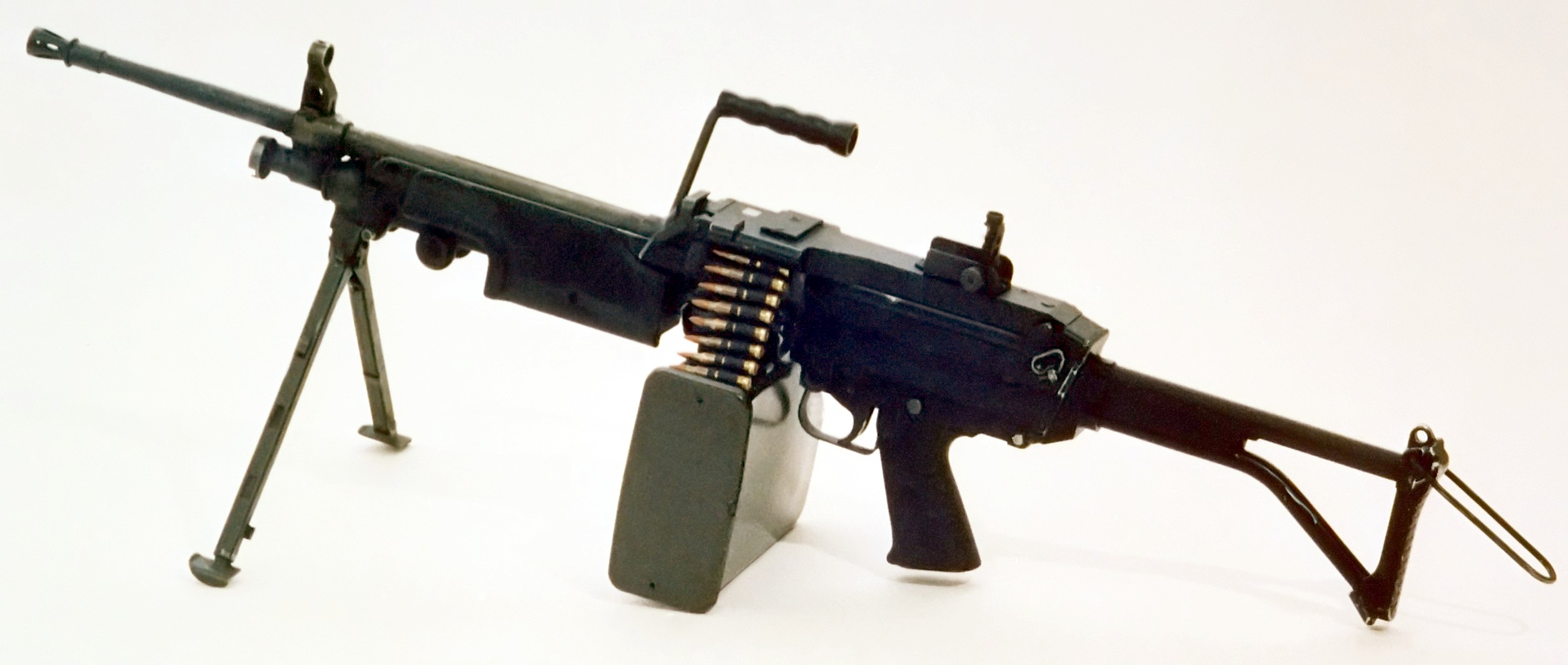
M249 Squad Automatic Weapon
The M249 Squad Automatic Weapon is the American version of the Belgian FN Minimi: a gas-operated, belt-fed 5.56mm light machine gun light… Continued…
-
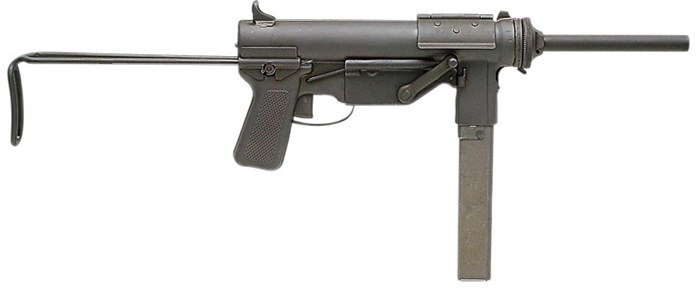
M3 Grease Gun
The M3 'Grease Gun' was America's Sten: a .45 caliber submachine gun of stamped steel and welded seams, designed in 1942 to replace the… Continued…
-
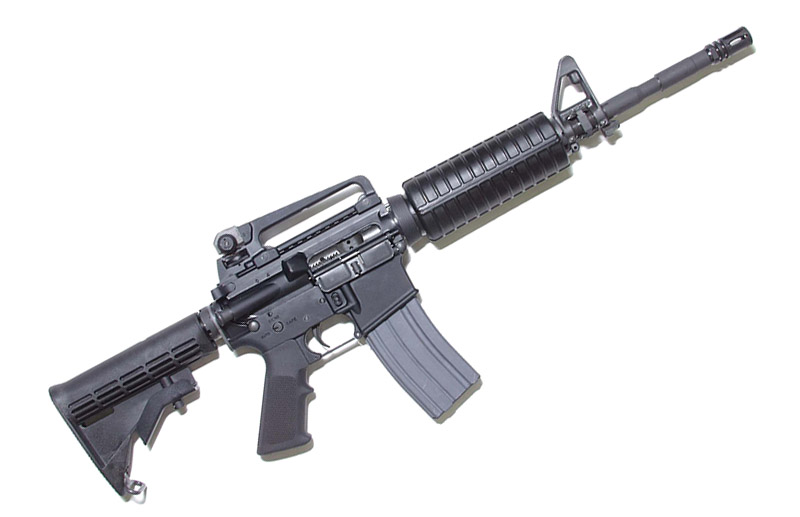
M4 Carbine
The M4 carbine is a shortened, lighter version of the M16 rifle, made by Colt and adopted by the US Army in 1994. It has a 14.5-inch… Continued…
-
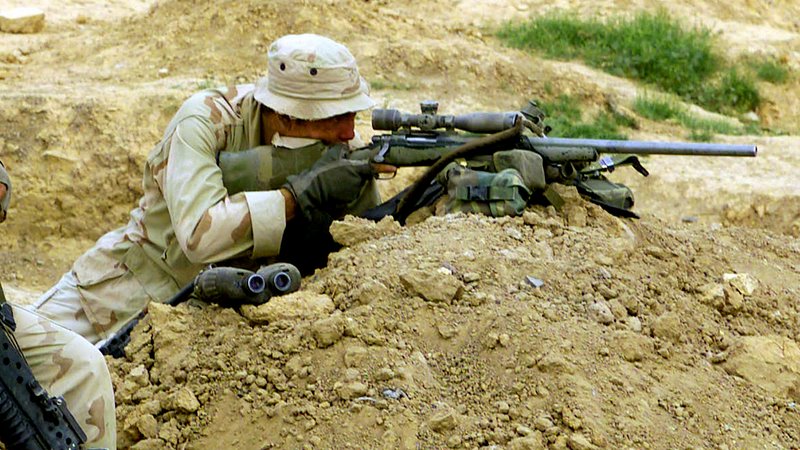
M40 Rifle
The M40 is the bolt-action sniper rifle of the US Marine Corps, adopted in 1966 and in service in successive versions until the 2010s. The… Continued…
-
M60 Machine Gun
The M60 was the United States' first general-purpose machine gun: a belt-fed 7.62mm weapon light enough for one soldier to carry on the… Continued…
-
M72 LAW
The M72 LAW is an American 66 mm anti-tank rocket in a disposable, telescoping launch tube. Adopted by the US Army and Marine Corps in… Continued…
-
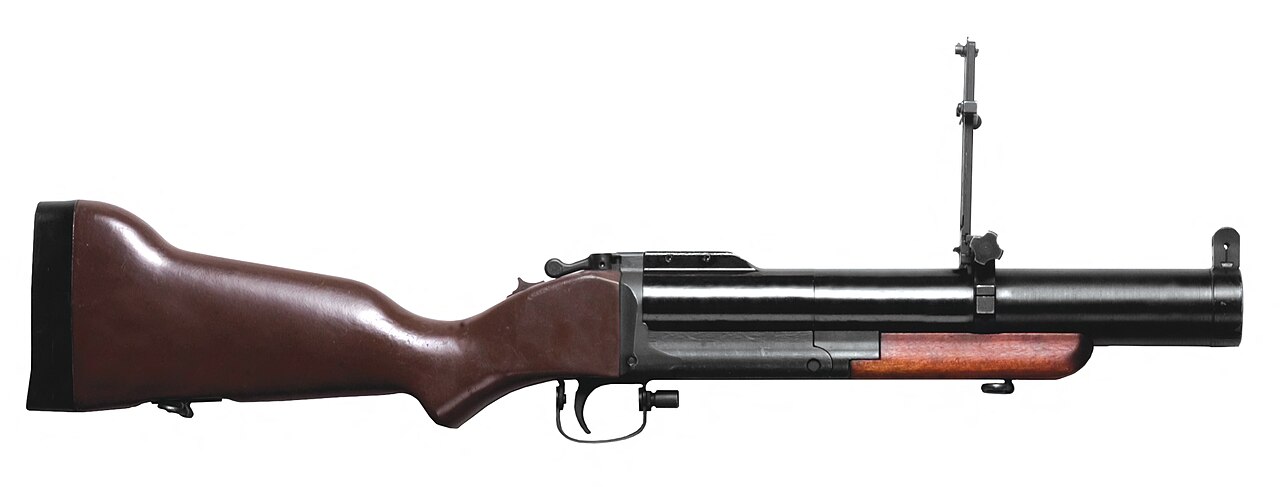
M79 Grenade Launcher
The M79 is a single-shot, break-open, shoulder-fired grenade launcher that fires a 40x46mm low-velocity grenade to about 400 meters… Continued…
-
MAC-10
The MAC-10, properly the Ingram M10, is a very compact submachine gun designed by the American engineer Gordon Ingram in the 1960s and made… Continued…
-
MG 42
The MG 42 was the German general-purpose machine gun of the Second World War and the most influential machine gun of the twentieth century.… Continued…
-
MG FF Cannon
The MG FF was a 20 mm aircraft cannon used by the German Luftwaffe from the late 1930s. It was a licensed version of the Swiss Oerlikon FF… Continued…
-
MP 18
The MP 18 was the first practical submachine gun to go into service: a light automatic weapon firing pistol cartridges, designed by Hugo… Continued…
-
MP40
The MP40 was Germany's war-production submachine gun: 9mm Parabellum from an open bolt, a plain tube receiver of stampings and welds, no… Continued…
-
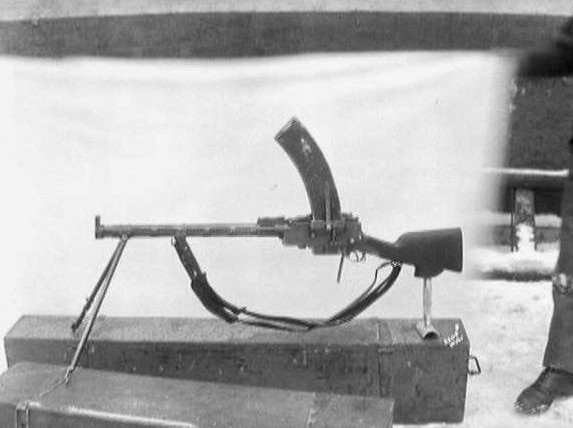
Madsen Machine Gun
The Madsen was a Danish light machine gun and the first weapon of its kind to be mass-produced, entering service in 1902. Light enough for… Continued…
-
Martini-Henry Rifle
The Martini-Henry was Britain's first purpose-built breechloading service rifle: a falling-block single-shot in .577/450, dropping its… Continued…
-
Matchlock Musket
The matchlock was the first firearm a soldier could aim and fire without taking his eyes off the enemy: a serpentine lever lowered a… Continued…
-
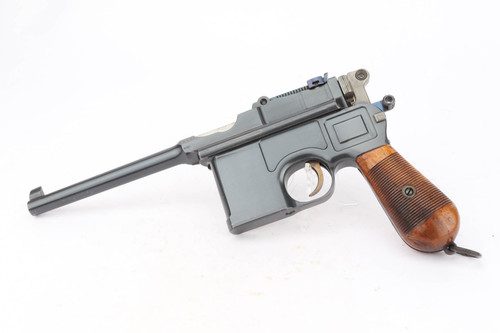
Mauser C96
The Mauser C96 is a German semi-automatic pistol that entered service in 1896, designed by the Feederle brothers at Mauser's Oberndorf… Continued…
-
Mauser Gewehr 98
The Gewehr 98 is the definitive Mauser: the 1898 pattern bolt-action whose controlled-round feed, dual front locking lugs, and massive claw… Continued…
-
Maxim Gun
The Maxim gun was the first true machine gun: a weapon that used the energy of each shot to load and fire the next, and would keep firing… Continued…
-
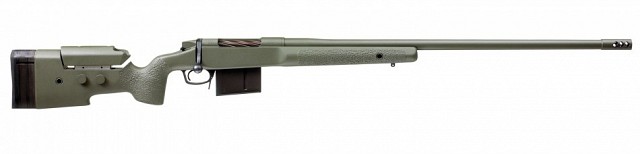
McMillan TAC-338
The McMillan TAC-338 is a bolt action sniper rifle built by McMillan Firearms of Phoenix, Arizona, and chambered for the powerful .338… Continued…
-
Minié Ball
The Minié ball is the conical, hollow-based lead bullet that made the rifled musket a practical infantry weapon. Developed by the French… Continued…
-
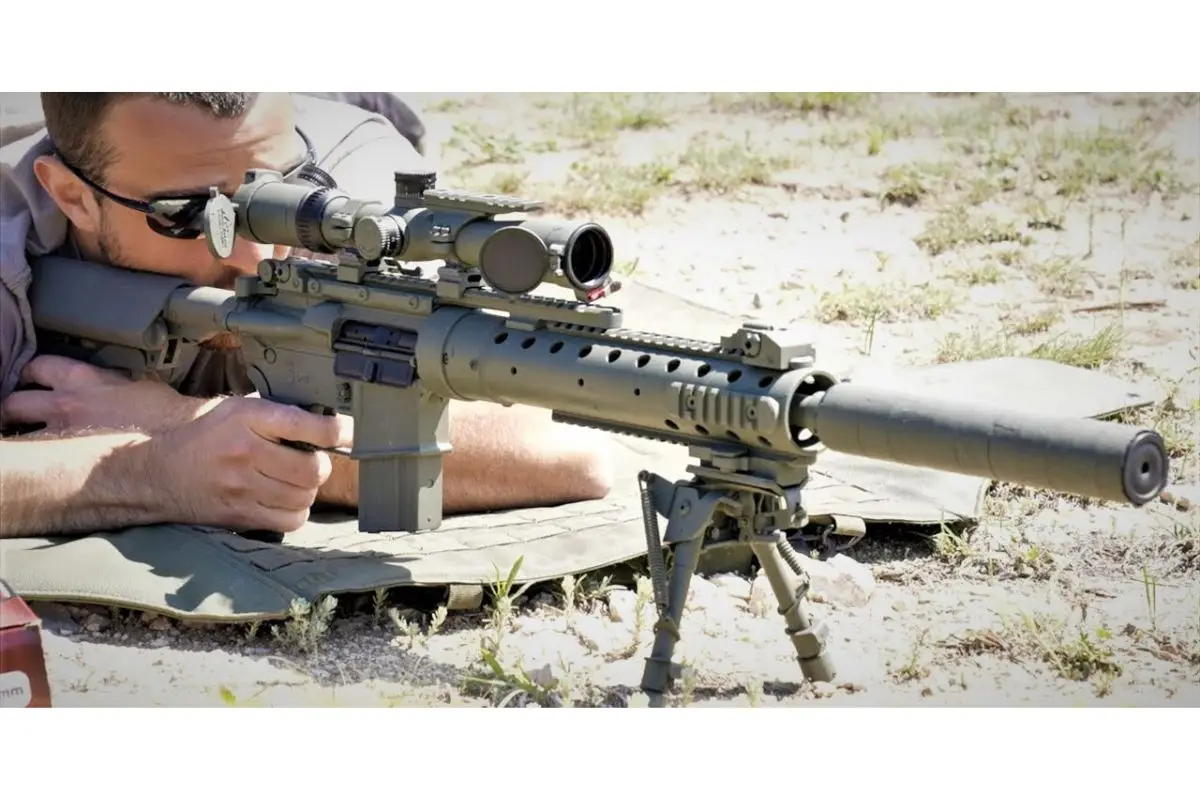
Mk 12 Special Purpose Rifle
The Mk 12 Special Purpose Rifle (SPR) was a precision rifle built on the M16/AR-15 pattern for US special operations forces. Developed in… Continued…
-
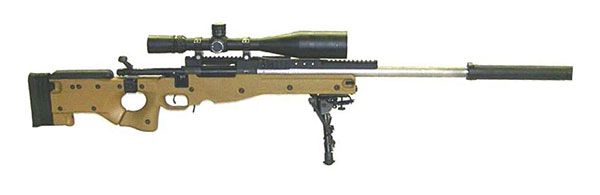
Mk 13 Rifle
The Mk 13 is an American bolt-action sniper rifle chambered for .300 Winchester Magnum, built by the Naval Surface Warfare Center at Crane… Continued…
-
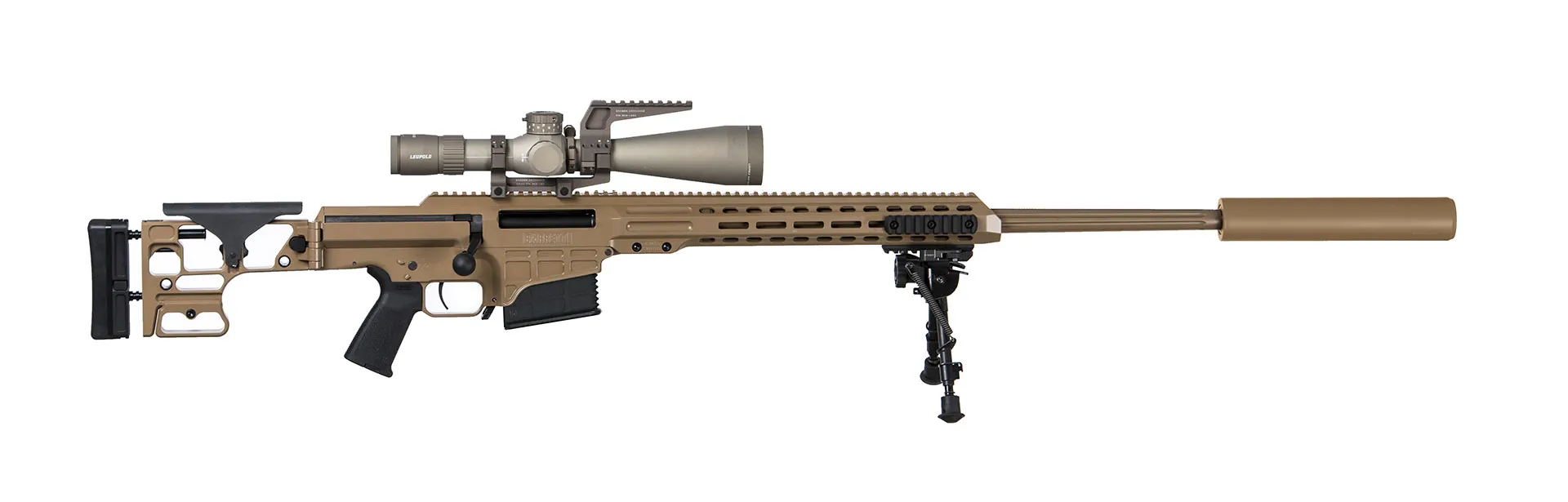
Mk 22 Advanced Sniper Rifle
The Mk22 Advanced Sniper Rifle is a multi-caliber bolt-action sniper rifle based on the Barrett MRAD, chosen by US Special Operations… Continued…
-
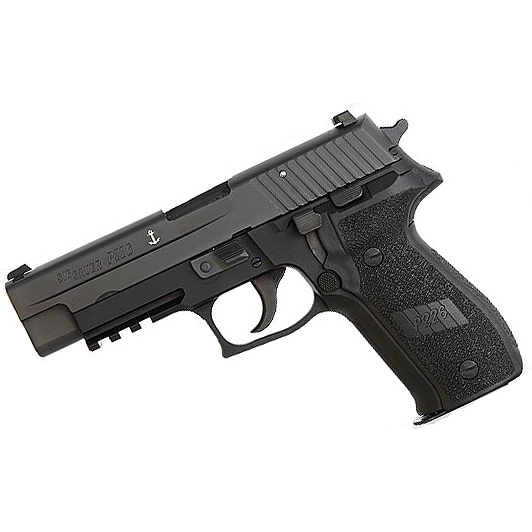
Mk 25
The Mk 25 is the United States Navy's designation for the SIG Sauer P226 as carried by the Navy SEALs: a standard P226 in 9mm with a… Continued…
-
Model 1845 musket
The Model 1845 was the standard infantry musket of the Russian army in the Crimean War. A 7-line (17.8 mm) smoothbore fired by a percussion… Continued…
-
Mondragón Rifle
The Mondragón rifle was the first semi-automatic rifle adopted as the standard service arm of any army. Designed by the Mexican general… Continued…
-
Mosin Nagant 1891/30 Sniper Rifle
The Mosin-Nagant 1891/30 Sniper Rifle is the sniper version of the standard Soviet infantry rifle of the Second World War. Rifles chosen… Continued…
-

Mosin-Nagant M/28-30
The Mosin-Nagant M/28-30 was a Finnish rifle made in the 1930s for the Suojeluskunta, the Civil Guard, a volunteer home-defense force. It… Continued…
-
Mosin-Nagant M1891
The Mosin-Nagant was Russia's service rifle for over sixty years: a five-shot bolt action in the powerful rimmed 7.62x54R cartridge… Continued…
-
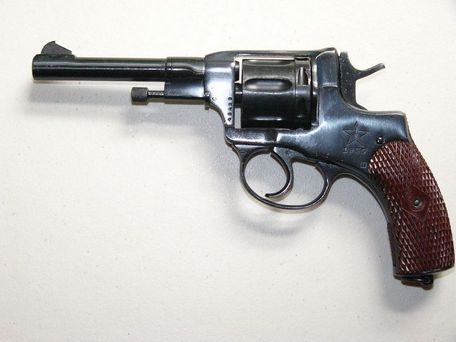
Nagant M1895 Pistol
The Nagant M1895 is the seven-shot Belgian-designed service revolver of Imperial Russia and the Soviet Union, unique among military… Continued…
-
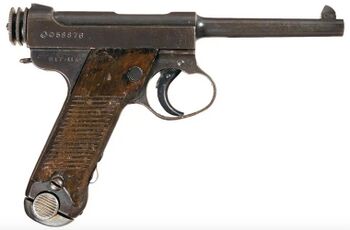
Nambu Type 14
The Nambu Type 14 was the standard service pistol of Japan in the Second World War. Designed by Kijirō Nambu's team and adopted in 1925… Continued…
-
Napoleon 12-Pounder
The 12-pounder Napoleon was the most common field gun of the American Civil War: a bronze smoothbore gun-howitzer of 4.62-inch bore… Continued…
-
PIAT
The PIAT (Projector, Infantry, Anti-Tank) was the British and Commonwealth infantry's hand-held anti-tank weapon from 1943 to the early… Continued…
-
PK Machine Gun
The PK is a Soviet belt-fed general-purpose machine gun designed by Mikhail Kalashnikov's team and adopted in 1961. It fires the old rimmed… Continued…
-
PPS-43
The PPS-43 is a Soviet submachine gun introduced in 1942, designed by Alexei Sudayev and first built in besieged Leningrad. Made almost… Continued…
-
PPSh-41
The PPSh-41 was the Soviet Union's war-winning submachine gun: a stamped-steel design by Georgy Shpagin firing the 7.62x25 Tokarev… Continued…
-
PTRD-41
The PTRD-41 was a Soviet single-shot anti-tank rifle designed by Vasily Degtyaryov in a few weeks in the summer of 1941 and adopted that… Continued…
-
Panzerfaust
The Panzerfaust was a German single-shot, disposable anti-tank weapon of the Second World War. A simple steel tube launched a large… Continued…
-
Pattern 1853 Enfield
The Pattern 1853 Enfield was the British Army's .577 caliber percussion rifle-musket, adopted in 1853 and made at the Royal Small Arms… Continued…
-
RPD Machine Gun
The RPD was the Soviet Union's first light machine gun for the 7.62x39 mm intermediate cartridge. Designed by Vasily Degtyaryov in 1944 and… Continued…
-
RPG-2
The RPG-2 was the first Soviet shoulder-fired anti-tank grenade launcher to be issued in large numbers. Adopted in 1949, it was a plain 40… Continued…
-
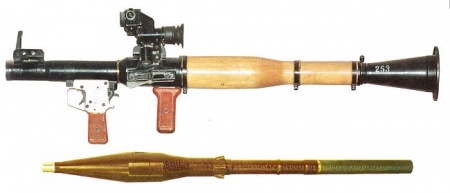
RPG-7
The RPG-7 is a Soviet shoulder-fired, reusable anti-tank grenade launcher adopted in 1961 and the most widely used weapon of its kind in… Continued…
-
Reffye Mitrailleuse
The Reffye mitrailleuse was a French volley gun of the 1860s with 25 barrels in a single bronze-jacketed cluster. Loaded with a steel plate… Continued…
-
Remington 1858 New Model Army
The Remington New Model Army was the second great Union revolver of the American Civil War: a six-shot .44 caliber percussion revolver… Continued…
-
Remington 870
The Remington 870 is a pump-action shotgun made by Remington Arms since 1950. With a steel receiver machined from a solid block and twin… Continued…
-
Remington Model 1875
The Remington Model 1875 was Remington's answer to the Colt Peacemaker: a big single-action Army revolver in .44 and .45 calibers, built on… Continued…
-
Remington Rolling Block
The Remington rolling block was a single-shot breech-loading rifle made by E. Remington and Sons of Ilion, New York, from the mid-1860s.… Continued…
-
SIG MCX
The SIG MCX is a family of gas-piston rifles and carbines introduced by SIG Sauer in 2015. It keeps the controls, ergonomics and magazines… Continued…
-
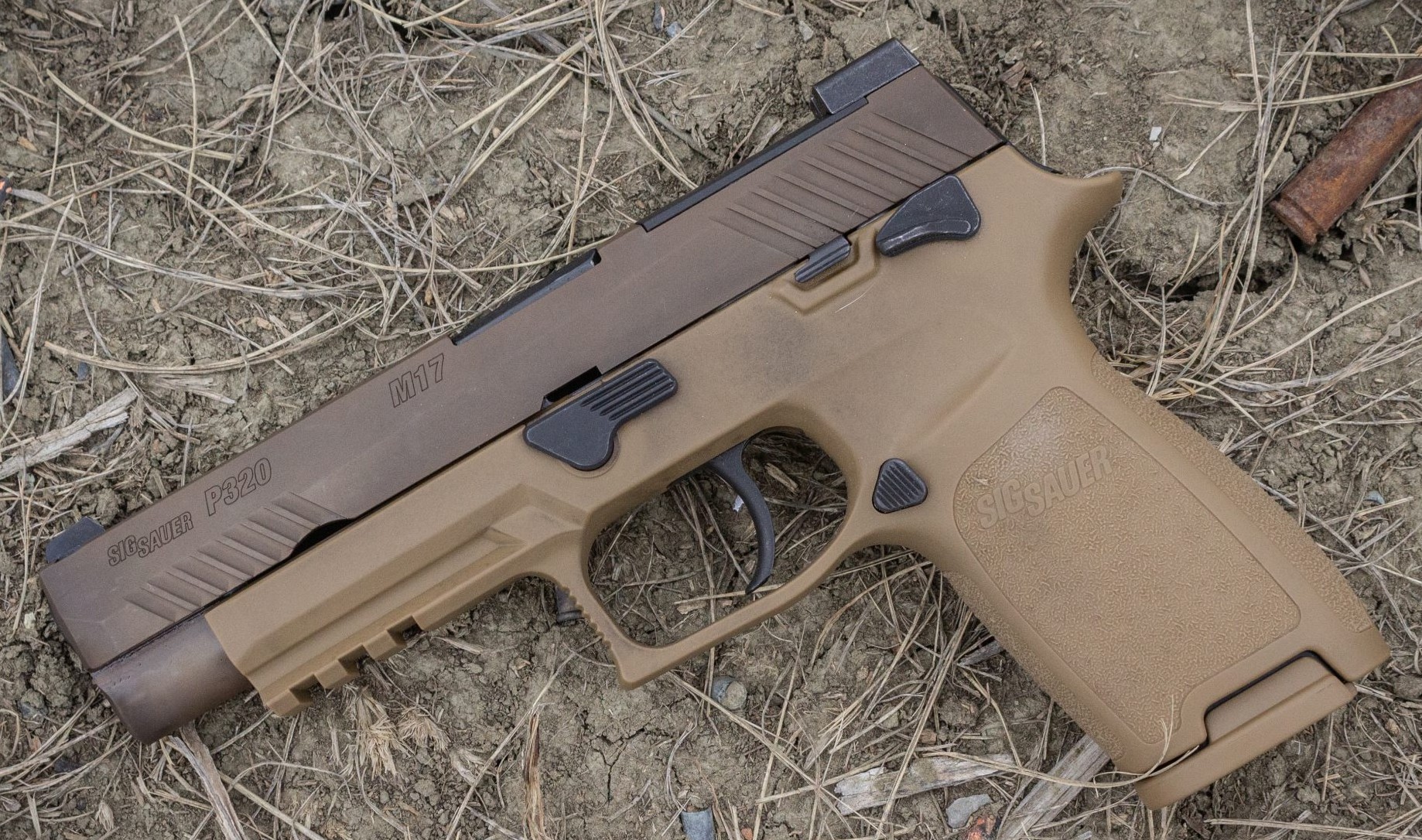
SIG Sauer M17
The M17 and its compact sibling the M18 are the service pistols of the United States armed forces, variants of the SIG Sauer P320 selected… Continued…
-
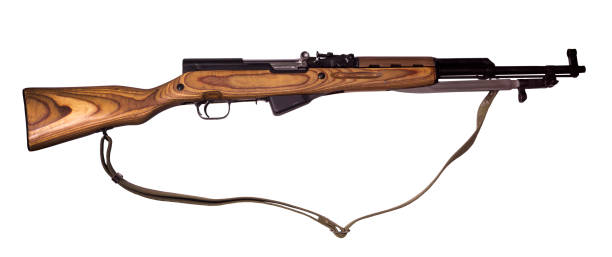
SKS
The SKS is Sergei Simonov's semi-automatic carbine for the Soviet 7.62x39mm intermediate cartridge, adopted in 1949 and made obsolete in… Continued…
-
SVD Rifle
The SVD Rifle, or Dragunov, is a Soviet semi-automatic sniper rifle designed by Yevgeny Dragunov and adopted in 1963. It fires the old… Continued…
-
SVT-40 Rifle
The SVT-40 was the Soviet Union's semi-automatic infantry rifle of the Second World War: Fedor Tokarev's gas-operated, tilting-bolt design… Continued…
-
Schwarzlose Machine Gun
The Schwarzlose was the standard heavy machine gun of the Austro-Hungarian army in the First World War. Designed by the German engineer… Continued…
-
Sea Service Pistol
The Sea Service pistol was the Royal Navy's standard sidearm through the age of sail: a heavy, plain, single-shot flintlock with a brass… Continued…
-
Sharps Rifle
The Sharps was the finest breech-loading rifle of the American Civil War and the buffalo hunter's gun of the plains that followed.… Continued…
-
Siege Mortar
A siege mortar was a short, wide-mouthed cannon that fired at a high angle, so that its projectile rose over walls and earthworks and fell… Continued…
-
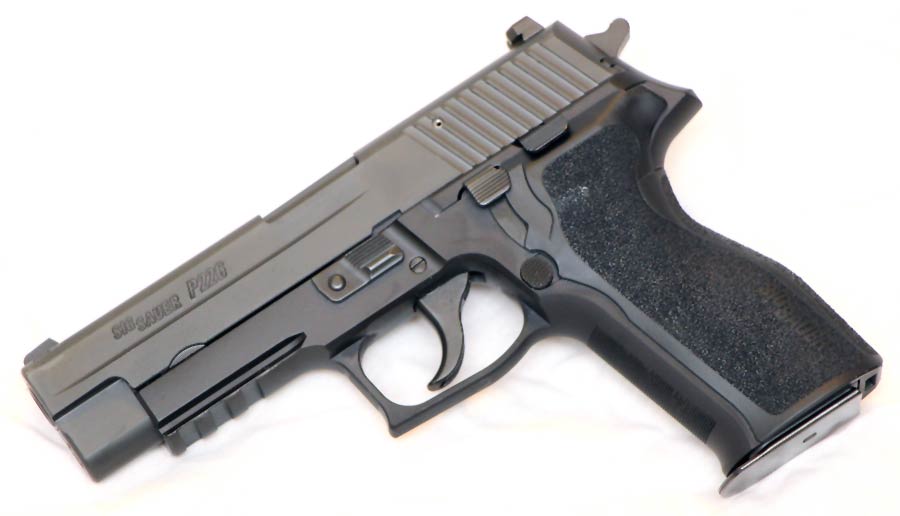
Sig Sauer P226
The SIG Sauer P226 is a full-size double-action service pistol introduced in 1984 for the United States Army's XM9 trials, which it lost to… Continued…
-
Snider-Enfield
The Snider-Enfield was the British Army's first general-issue breech-loading rifle, adopted in 1866. It was made by fitting a side-hinged… Continued…
-
Springfield Model 1842
The Springfield Model 1842 was the United States Army's first regulation percussion musket and the last of its .69 caliber smoothbores.… Continued…
-
Springfield Model 1861
The Springfield Model 1861 was the standard infantry arm of the Union in the Civil War: a .58 caliber single-shot muzzleloading… Continued…
-
Springfield Model 1873
The Springfield Model 1873, known as the Trapdoor Springfield, was the standard rifle and carbine of the United States Army from 1873 until… Continued…
-
StG 44
The StG 44 — Sturmgewehr, 'storm rifle' — was the first true assault rifle: select-fire, stamped-steel, and chambered for the intermediate… Continued…
-
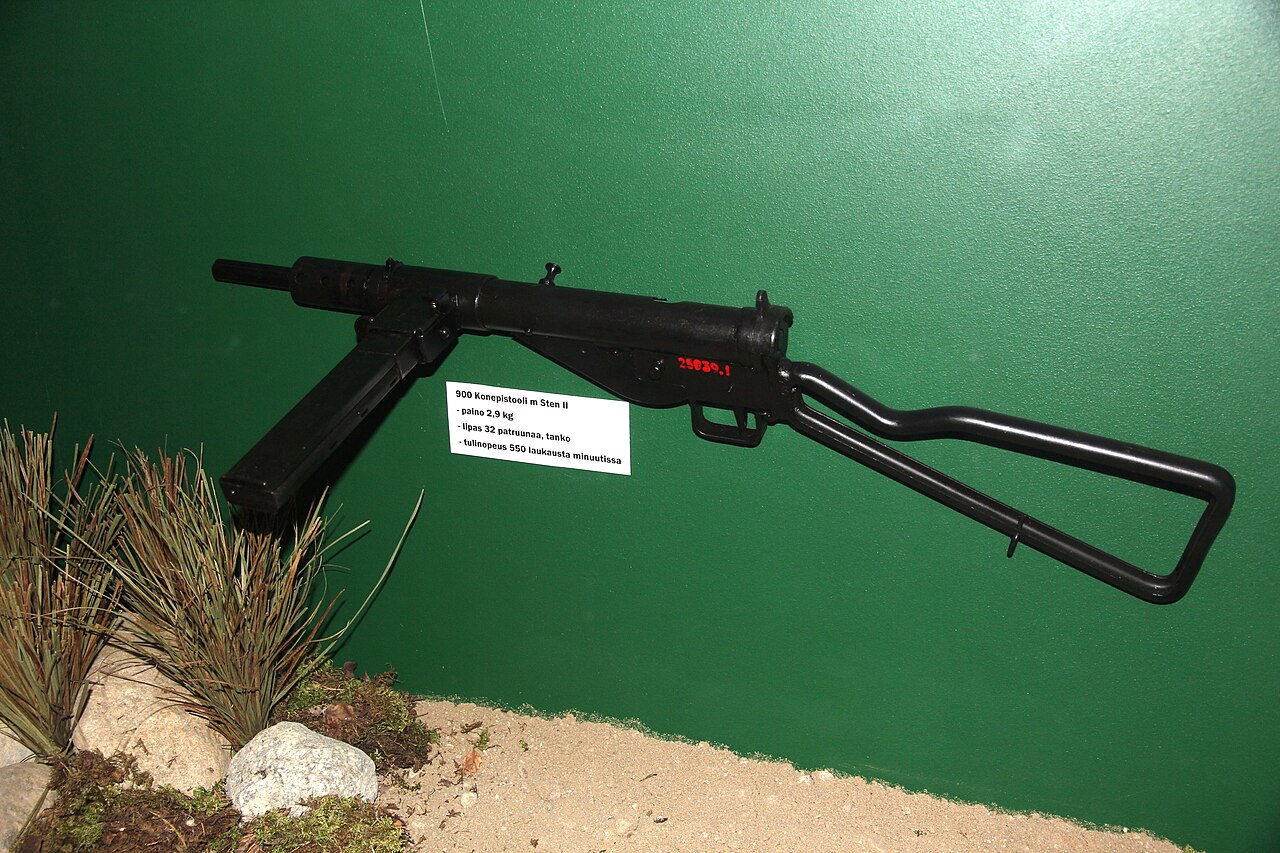
Sten Gun
The Sten was Britain's emergency submachine gun: a 9mm open-bolt weapon of stampings, tube, and spot welds that cost a few pounds and a few… Continued…
-
Sterling Submachine Gun
The Sterling is the 9mm submachine gun that replaced the Sten in British service. George Patchett designed it at Sterling Armaments in… Continued…
-
Steyr-Mannlicher M1895
The Steyr-Mannlicher M1895 was the service rifle of the Austro-Hungarian army through the First World War. Designed by Ferdinand… Continued…
-
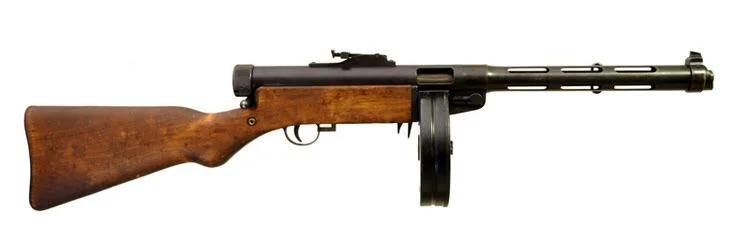
Suomi KP/-31
The Suomi KP/-31 was the Finnish Army's submachine gun in the Second World War. Designed by Aimo Lahti and made by the Tikkakoski company… Continued…
-
Swivel Gun
The swivel gun was a small cannon mounted on a forked iron yoke that pivoted in a socket on a ship's rail, fighting top or boat bow, so… Continued…
-
Tanegashima
Tanegashima is the Japanese name for the matchlock arquebus, taken from the island of Tanegashima where, by the traditional account… Continued…
-
Thompson Submachine Gun
The Thompson was America's first submachine gun: a .45 ACP automatic designed as a trench broom for a war that ended before it shipped.… Continued…
-
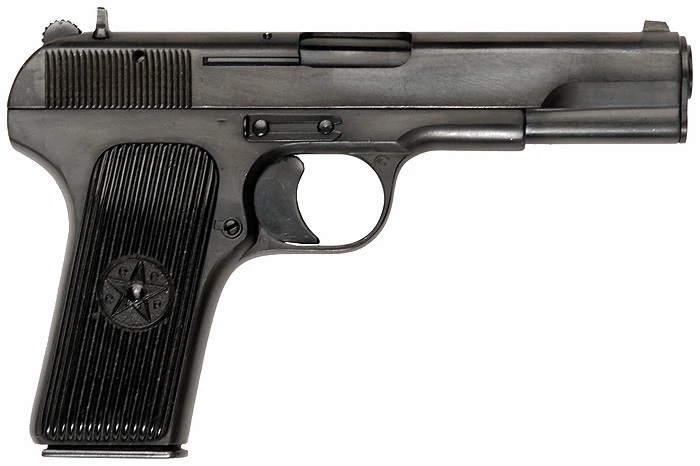
Tokarev TT-33 Pistol
The Tokarev TT-33 was the service pistol of the Red Army from the 1930s until the Makarov replaced it in the 1950s: Fedor Tokarev's… Continued…
-
Type 89 Grenade Discharger
The Type 89 grenade discharger was a light 50mm mortar used by the Imperial Japanese Army from 1929 through the Second World War. It could… Continued…
-
Type 92 Heavy Machine Gun
The Type 92 was the standard heavy machine gun of the Imperial Japanese Army from the early 1930s to 1945. An air-cooled, gas-operated gun… Continued…
-
Type 96 Light Machine Gun
The Type 96 was the standard light machine gun of the Imperial Japanese Army in the early years of the Second World War. Designed by Kijirō… Continued…
-
Type 99 Rifle
The Type 99 was the last bolt-action rifle of the Imperial Japanese Army: a 7.7mm development of the 6.5mm Type 38 Arisaka adopted in 1939… Continued…
-
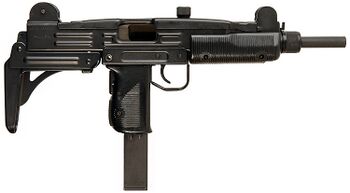
Uzi
The Uzi is a submachine gun designed in Israel by Major Uziel Gal around 1950 and made by Israel Military Industries. By placing the… Continued…
-
Vetterli Rifle
The Vetterli rifle was the Italian army's first bolt-action rifle for metallic cartridges, adopted in 1870 and based on a design by the… Continued…
-
Vickers Machine Gun
The Vickers was the British Army's medium machine gun for more than fifty years. Adopted in 1912, it was a lighter, improved version of the… Continued…
-
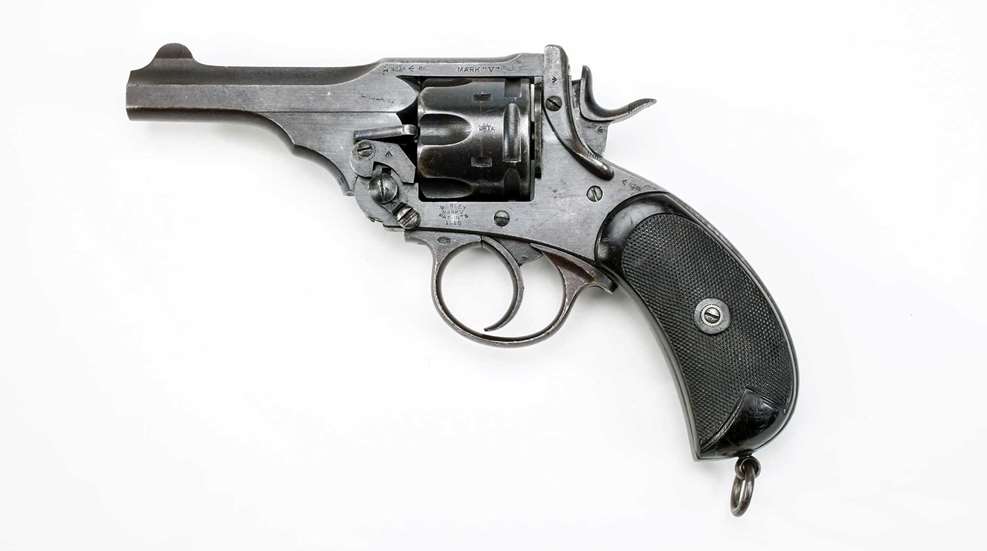
Webley Revolver
The Webley revolver was the British service sidearm from 1887 until after the Second World War. A top-break revolver made by Webley & Scott… Continued…
-
Wheellock Pistol
The wheellock was the first self-igniting firearm: a spring-driven steel wheel spun against pyrite to shower sparks into the pan, no… Continued…
-
Winchester Model 1866
The Winchester Model 1866 — the Yellow Boy, for its gleaming brass receiver — was the first rifle to carry the Winchester name: the Civil… Continued…
-
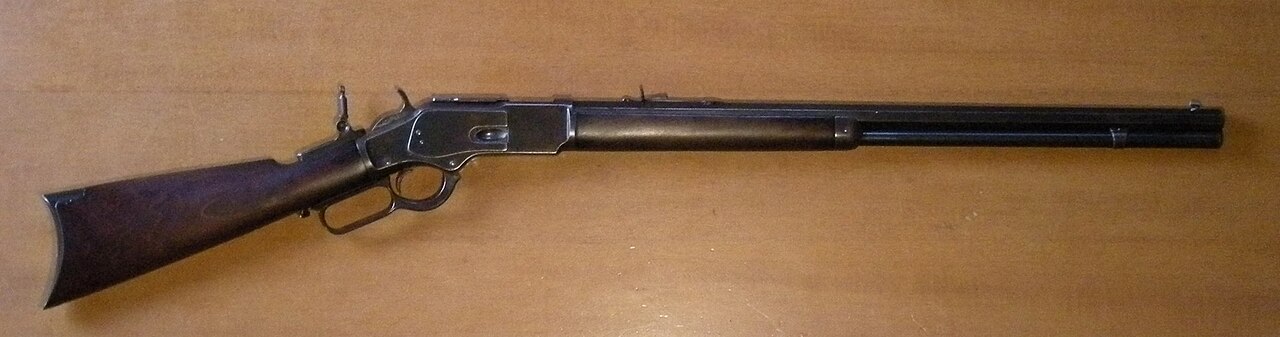
Winchester Model 1873
The Winchester Model 1873 is the archetypal lever-action of the American West: an iron-then-steel-framed repeater feeding centerfire .44-40… Continued…
-
Winchester Model 1892
The Winchester Model 1892 was John Browning's compact masterpiece of the lever-action line: the pistol-caliber Winchester rebuilt around… Continued…
-
Winchester Model 1897
The Winchester Model 1897 is a pump-action shotgun designed by John Moses Browning and made by Winchester from 1897 to 1957. An improved… Continued…