Battle of Ain Jalut
The Battle of Ain Jalut, fought on 3 September 1260 in the Jezreel Valley of Galilee, was the first time a Mongol army was decisively defeated in open battle in the Middle East. After the Mongols under Hulagu had sacked Baghdad and taken Aleppo and Damascus, most of their army withdrew, leaving the general Kitbuqa in Syria. The Mamluk sultan of Egypt, Qutuz, with the commander Baybars, marched north, drew Kitbuqa into a feigned retreat and ambush, and destroyed his army. The Mongol advance into Egypt was stopped for good.
Also known as Ain Jalut, 'Ayn Jalut, Battle of Goliath's Spring, Ein Harod
Background
In 1256 the Mongol prince Hulagu, brother of the Great Khan Möngke, led a great army west into Persia. He destroyed the Assassins, sacked Baghdad in 1258 and killed the last Abbasid caliph, and in early 1260 took Aleppo and Damascus. Hulagu sent envoys to Cairo demanding the submission of Egypt, then ruled by the Mamluks — slave soldiers, mostly Kipchak Turks bought on the steppe, who had seized power there ten years earlier. The Mamluk sultan Qutuz executed the envoys. News then reached Hulagu that Möngke had died in 1259, and he withdrew the bulk of his army toward Azerbaijan to watch the succession, leaving his general Kitbuqa, a Nestorian Christian, in Syria with perhaps 10,000 to 20,000 men.
The Battle
Qutuz marched north in the summer of 1260 with an army that may have been somewhat larger than Kitbuqa's. The crusader barons of Acre, who feared the Mongols more than the Mamluks, let him pass through their territory and buy supplies. The armies met on 3 September at 'Ayn Jalut, the Spring of Goliath, in the Jezreel Valley below Mount Gilboa. According to the Mamluk sources, Qutuz hid the main body of his army in the hills, and the vanguard under Baybars engaged the Mongols and then withdrew, drawing Kitbuqa's army into the valley after it. The Mamluks then attacked from their positions. A Mongol charge broke the Mamluk left, and Qutuz is said to have thrown off his helmet and rallied his men in person with the cry "O Islam!" The Mamluk counterattack surrounded the Mongols; Kitbuqa was killed or captured and executed, and the fugitives were pursued and cut down. Some Arabic sources mention that the Mamluks used hand-held incendiary weapons to frighten the Mongol horses; their nature is debated.
Weapons
Ain Jalut was fought between two armies of the same kind. The Mongols and the Mamluks were both horse archers armed with the composite bow, like the Mongol Composite Bow, backed by armored cavalry with lance, sword and Medieval Mace. The Mamluks, trained from youth in the barracks of Cairo in archery, lance work and horsemanship, were among the best-trained cavalry in the world, and they matched the Mongols at their own tactics — including the feigned retreat that had won the Mongols so many battles.
Aftermath
Ain Jalut ended the Mongol threat to Egypt and to the holy cities of Arabia, and it made the Mamluk Sultanate the leading power of the Muslim world. Within weeks Baybars murdered Qutuz and became sultan; he won further victories over the Mongols and went on to destroy most of the remaining crusader states. The Ilkhanate that Hulagu founded in Persia fought the Mamluks for Syria for sixty years without ever conquering it. The legend that Ain Jalut was the Mongols' first defeat anywhere is not true, but it was the first that halted their expansion in a region for good.
Weapons used
-
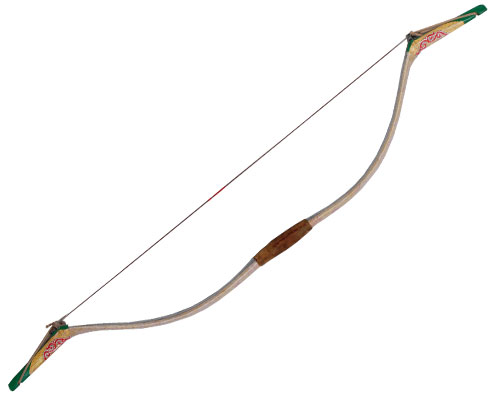
Mongol Composite Bow
The weapon of both armies: the Mongols and the Mamluks, many of them Kipchak Turks from the same steppe, were horse archers trained from… Continued…
-
Medieval Mace
Mamluk heavy cavalry carried the mace as a close-combat sidearm alongside lance and sword. Continued…
-
Mail Hauberk
Worn by the better-armored Mamluk horsemen and by Mongol heavy cavalry, often with lamellar over it. Continued…
Sources
Amitai-Preiss, Reuven. Mongols and Mamluks: The Mamluk-Ilkhanid War, 1260-1281. Cambridge University Press, 1995.
Morgan, David. The Mongols. Blackwell, 1986.
Jackson, Peter. The Mongols and the West, 1221-1410. Pearson Longman, 2005.
Suggest an edit · account required · reviewed before publishing · how it works