Battle of Legnica
The Battle of Legnica was fought on 9 April 1241 near Legnica in Silesia, in what is now south-western Poland. A Mongol force, the northern wing of the great invasion of Hungary, destroyed the army of Duke Henry II the Pious of Silesia, who was killed. The battle came two days before the main Mongol victory at Mohi in Hungary. It became one of the best-known defeats in Polish history, although much of the traditional account comes from a chronicle written two centuries later.
Also known as Battle of Liegnitz, Battle of Wahlstatt, Bitwa pod Legnicą, Legnickie Pole, Battle of Legnickie Pole, Liegnitz 1241, Wahlstatt 1241
Background
In 1236 the Mongol Empire launched a great western campaign under Batu, a grandson of Chinggis Khan, with the veteran general Subutai. By 1240 the Mongols had crushed the Volga Bulgars and the principalities of Rus and sacked Kiev. Their next target was Hungary, whose king, Béla IV, had given refuge to the Cuman nomads the Mongols regarded as their subjects. While the main army advanced into Hungary, a smaller force entered Poland to protect its northern flank and prevent the Polish dukes from helping Béla. This force was led by Baidar and Kadan, grandsons of Chinggis Khan, and possibly by Orda, although sources differ on who commanded. Its size is unknown; modern estimates range from a few thousand to around ten thousand men.
Poland was then divided among several dukes. The Mongols defeated the forces of Lesser Poland at Chmielnik in March 1241 and burned Kraków later that month. They then moved into Silesia and reached Wrocław, whose citizens burned the town themselves while the castle held out. Duke Henry II the Pious of Silesia, the most powerful of the Polish princes, gathered an army near Legnica. It included Silesian knights, men from Greater Poland, the forces of Duke Mieszko of Opole, and contingents from the military orders. King Wenceslaus I of Bohemia was marching to join him but was still some distance away.
The Battle
On 9 April Henry advanced from Legnica to meet the Mongols on open ground south-east of the town, later known as Legnickie Pole or Wahlstatt. Most of what is known in detail comes from the chronicler Jan Długosz, who wrote in the fifteenth century and whose account is dramatic and not always reliable. He describes the Christian army in several divisions, one of them made up of miners from Złotoryja, and claims that part of the army fled after a rider shouted in Polish for a retreat. Historians treat such details with caution.
The general course of events is clearer. The Polish and Silesian horse attacked, and the Mongol vanguard gave way. The knights pursued and became separated from the rest of their army, which was a standard Mongol trap. Horse archers struck them from the flanks with arrows, and the Mongol heavy cavalry then charged. Długosz also mentions a smoke screen that hid the Mongol movements. The Christian army broke, and Duke Henry was killed while trying to escape. According to tradition the Mongols cut off his head and paraded it on a spear before the walls of Legnica castle, which did not surrender.
Weapons
The Mongol army relied on the Mongol Composite Bow, shot from horseback by light cavalry, and on heavier cavalry protected by Mongol Lamellar Armor and armed with lances, sabers and maces. The Christian knights fought in the Western manner with the Knight's Lance and the Arming Sword, protected by the Mail Hauberk and, among the better equipped, the Great Helm. Their mounted charge was powerful, but the Mongols were skilled at avoiding it and punishing a pursuit.
Aftermath
Losses are not reliably known, but Henry's army was largely destroyed and many Silesian nobles died with him. A letter attributed to Ponce d'Aubon, master of the Knights Templar in France, reported to King Louis IX that the order had lost brothers and several hundred men in the fighting in Poland, which is the main evidence for a Templar presence. Rather than meet the Bohemian army, the Mongols turned south through Moravia to join Batu, who had crushed the Hungarians at Mohi on 11 April. The Mongols withdrew from Central Europe in 1242, probably because of the death of the Great Khan Ögedei and the politics of succession. Henry's death left Silesia divided among his sons, weakening it for generations. Legnica remains a central event in Polish memory of the Mongol Invasions.
Weapons used
-
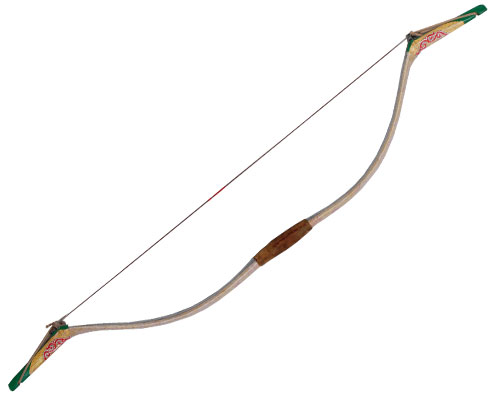
Mongol Composite Bow
Mongol horse archers wore down and disordered the Silesian and Polish army with arrows before the decisive charge. Continued…
-
Mongol Lamellar Armor
The heavier Mongol cavalry who delivered the final attack wore lamellar armor of iron or hardened leather. Continued…
-
Knight's Lance
Duke Henry's knights charged with the couched lance, and their pursuit of a feigned Mongol retreat led to disaster. Continued…
-
Mail Hauberk
Most of the Silesian, Polish and military-order knights were protected by mail hauberks. Continued…
-
Great Helm
The enclosed great helm was the characteristic helmet of well-equipped Western knights in 1241. Continued…
-
Arming Sword
The single-handed knightly sword was the usual side arm of the Christian horsemen. Continued…
Sources
Jackson, Peter. The Mongols and the West, 1221-1410. Pearson Longman, 2005.
Chambers, James. The Devil's Horsemen: The Mongol Invasion of Europe. Weidenfeld & Nicolson, 1979.
Długosz, Jan. The Annals of Jan Długosz. Translated by Maurice Michael. IM Publications, 1997.
May, Timothy. The Mongol Art of War: Chinggis Khan and the Mongol Military System. Westholme, 2007.
Suggest an edit · account required · reviewed before publishing · how it works