Force
US Army Rangers
Elite American light infantry tracing their lineage to Rogers' Rangers, reborn at Pointe du Hoc and leading the way since.
Origins
American Rangers trace their name to the colonial frontier, and above all to Rogers' Rangers of the French and Indian War, who scouted and raided for the British under Major Robert Rogers. Rogers wrote 28 "Rules of Ranging" in 1757. The shorter "Standing Orders" printed in the modern Ranger Handbook are a later version, popularized by Kenneth Roberts' 1936 novel Northwest Passage. The modern lineage began in June 1942, when Major William O. Darby formed the 1st Ranger Battalion in Northern Ireland from volunteers, on the British Commando model, to give the United States Army a raiding and spearhead force.
Organization & Training
Darby's first Rangers trained at the British Commando depot at Achnacarry in Scotland, and about fifty of them went on the Dieppe raid in August 1942. Six Ranger battalions served in the World War II years, each about 500 men in six small companies, lighter than ordinary infantry and built for speed. Rangers were disbanded after each war and raised again for the next. The Ranger School, opened at Fort Benning, Georgia, in the early 1950s, trains leaders from across the Army, and its tab is one of the Army's hardest badges to earn. That is separate from the 75th Ranger Regiment itself, which has its own selection course. The regiment today has three Ranger battalions plus support and special troops units.
Weapons & Equipment
In the Second World War Rangers carried the standard infantry arms, with extra firepower for their size. Riflemen had the M1 Garand and M1 Carbine, raiding parties favored the Thompson Submachine Gun, and each squad had a M1918 BAR. Officers carried the M1911 Pistol. At Pointe du Hoc the climbers used rocket-fired grapnels and ropes, and on Omaha Beach Bangalore torpedoes blew gaps in the wire. In later decades Rangers moved to the M16 Rifle, the M60 Machine Gun and then the M249, with the M24 Sniper Weapon System for their snipers.
Notable Actions
The Second World War made the legend: Arzew in North Africa in 1942, Gela in Sicily in 1943, and the Cisterna disaster at Anzio in January 1944, where the 1st and 3rd Battalions were surrounded and nearly all captured or killed. On D-Day, during the Normandy Landings, about 225 men of the 2nd Battalion scaled the cliffs of Pointe du Hoc under fire. The big guns had been moved inland, but Rangers found and wrecked them, then held on for two days. On Omaha Beach the 5th Battalion pushed off the sand, and by tradition Brigadier General Norman Cota's words to them became the motto "Rangers lead the way!" In the Pacific, the 6th Battalion, with Alamo Scouts and Filipino guerrillas, raided the Cabanatuan prison camp in January 1945 and freed more than 500 prisoners.
Ranger companies fought in Korea and Vietnam. In 1974 the Army formed permanent Ranger battalions, later the 75th Ranger Regiment. They parachuted onto airfields in Grenada in 1983 and Panama in 1989, fought alongside Delta Force in Mogadishu in 1993, and served repeated tours in Afghanistan and Iraq.
Legacy
From Grenada through two decades of war after 2001, the regiment has been one of the most heavily used units in the Army. Its Ranger Creed and motto are widely known, and the cliffs of Pointe du Hoc remain its most famous battlefield.
Battles & Operations
-
Normandy Landings (6 June 1944)
The Normandy Landings of 6 June 1944, D-Day, were the largest seaborne invasion in history and the start of the Allied liberation of… Continued…
-
Battle of Mogadishu (3-4 October 1993)
The Battle of Mogadishu was fought on 3 and 4 October 1993 in the Somali capital between the American special operations force Task Force… Continued…
Weapons
-
AK-47
The AK-47 is the most produced firearm in human history: Mikhail Kalashnikov's gas-operated assault rifle in 7.62x39mm, built around loose… Continued…
-
Bangalore Torpedo
The Bangalore torpedo is a long explosive charge made of steel tubes that can be joined end to end, pushed under barbed wire or across a… Continued…
-
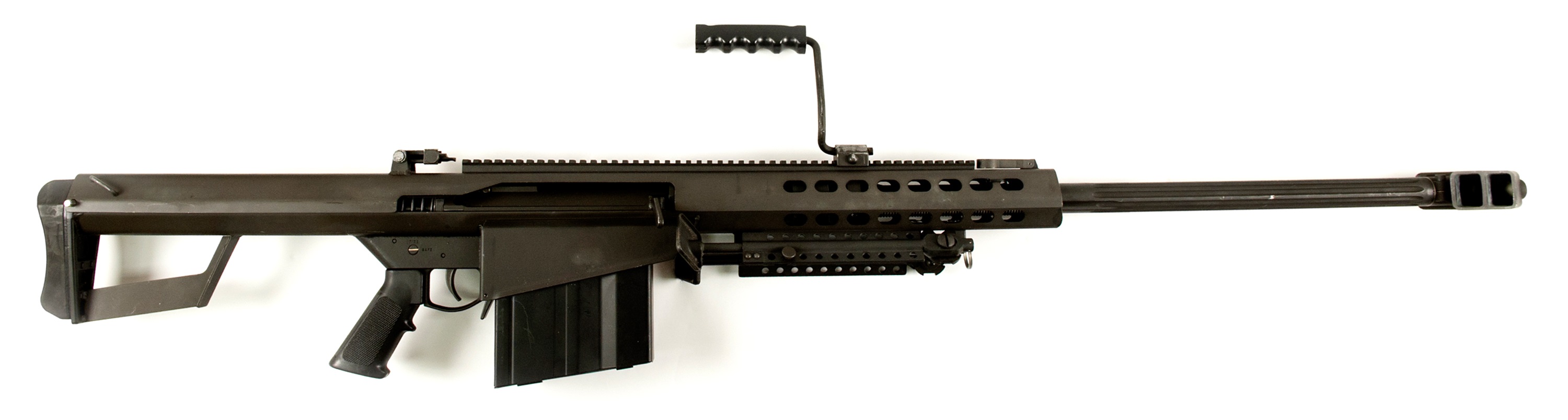
Barrett M82
The Barrett M82 is a semi-automatic rifle chambered for the .50 BMG machine-gun cartridge, designed by Ronnie Barrett in Tennessee in the… Continued…
-
Beretta M9
The Beretta M9 is the 9 mm semi-automatic pistol adopted by the United States armed forces in 1985 to replace the .45 caliber M1911A1. It… Continued…
-
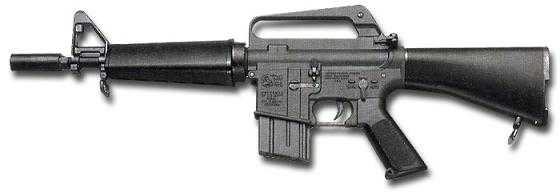
CAR-15
CAR-15 was Colt's name, from the mid-1960s, for a family of weapons built on the AR-15 and M16 rifle, and soldiers came to use it for the… Continued…
-
FN SCAR
The FN SCAR is a modular rifle made by FN Herstal of Belgium for US Special Operations Command, which chose it in 2004. It came in two main… Continued…
-
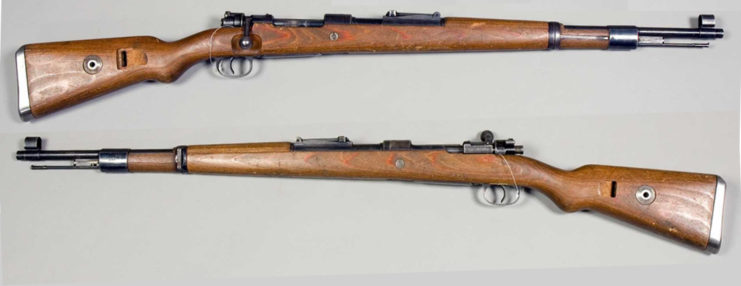
Karabiner 98k
The Karabiner 98k was the standard rifle of the German armed forces in the Second World War. Adopted in 1935, it was a shortened version of… Continued…
-
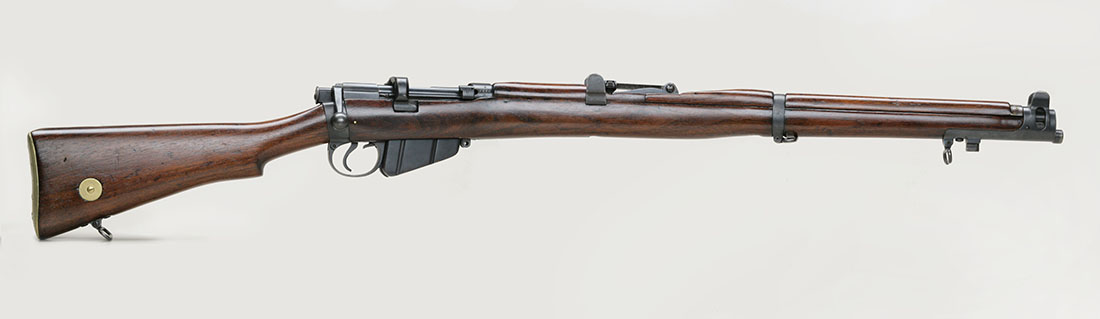
Lee-Enfield Rifle
The Lee-Enfield was the British Empire's rifle for over half a century: a bolt-action .303 whose rear-locking action and ten-round magazine… Continued…
-
M1 Carbine
The M1 Carbine was the most-produced American small arm of the Second World War: a five-pound, semi-automatic .30-caliber carbine designed… Continued…
-
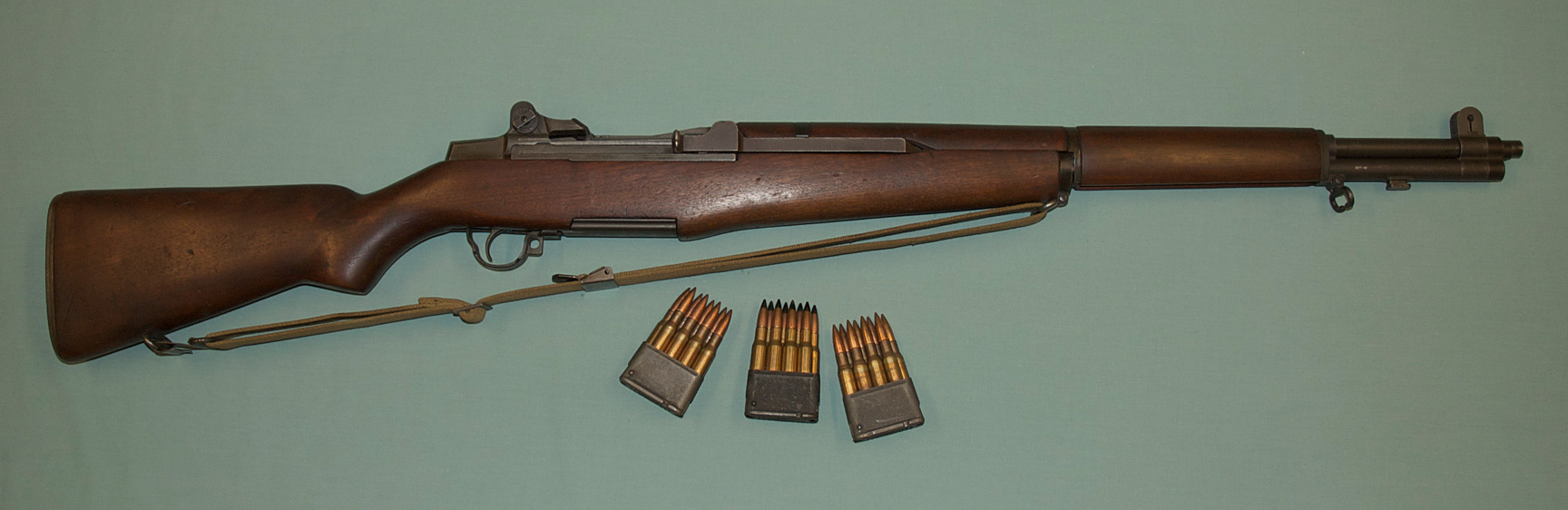
M1 Garand
The M1 Garand was the first semi-automatic rifle adopted as the standard arm of any major power, giving the American infantryman of the… Continued…
-
M1 Helmet
The M1 helmet was the steel combat helmet of the United States armed forces from 1941 until the mid 1980s, worn through the Second World… Continued…
-
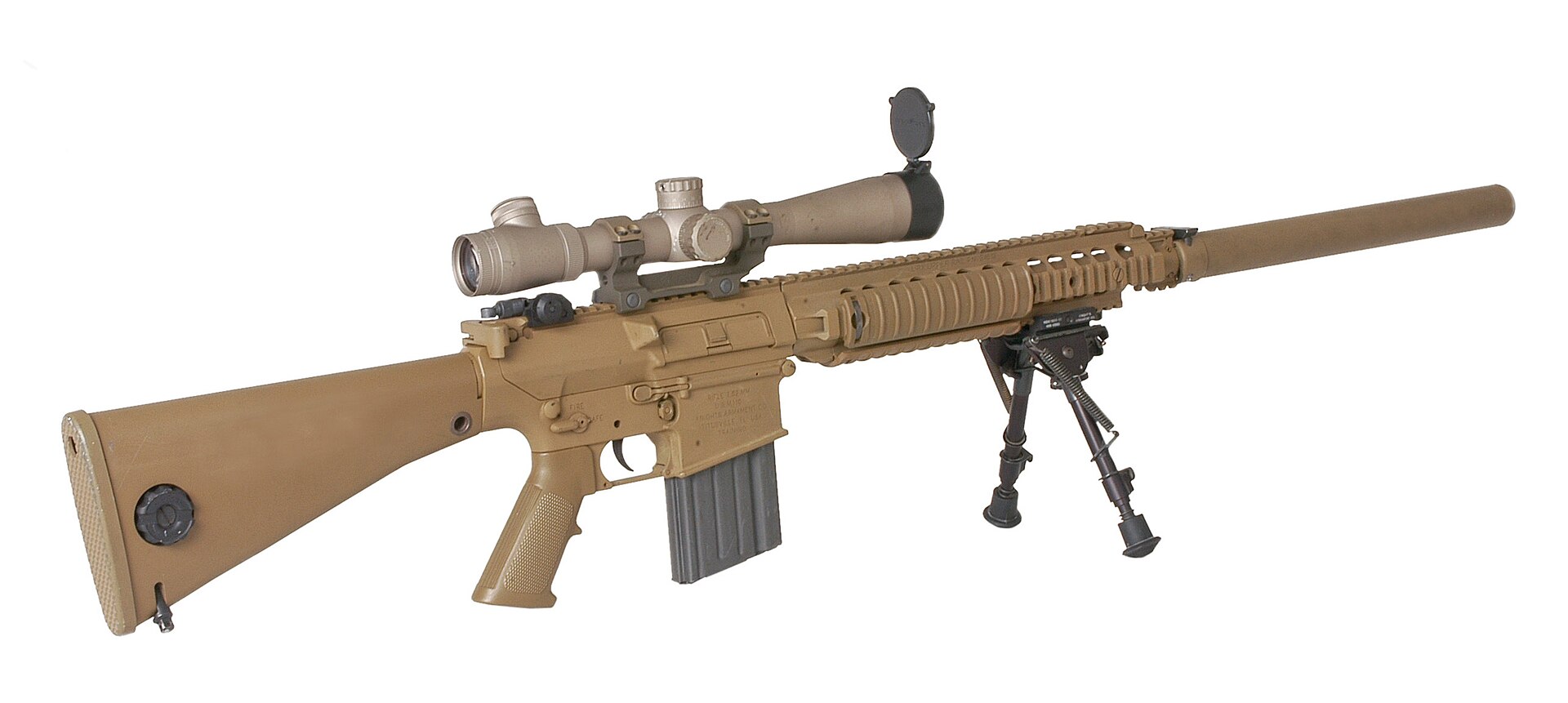
M110 Semi-Automatic Sniper System
The M110 Semi-Automatic Sniper System is the United States Army's self-loading 7.62mm sniper rifle, adopted in 2008 to give sniper teams… Continued…
-
M14 Rifle
The M14 was the United States' last wooden-stocked battle rifle: a select-fire development of the M1 Garand chambered for the new 7.62mm… Continued…
-
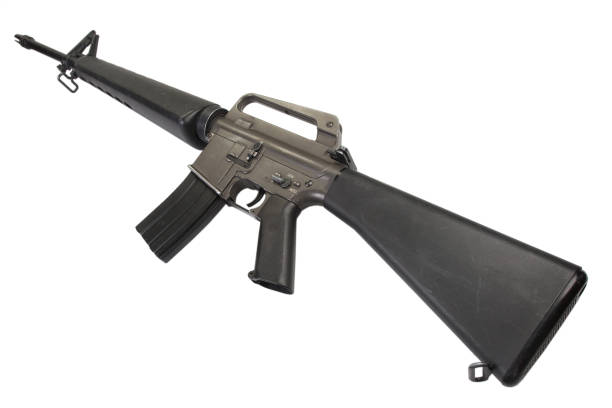
M16 Rifle
The M16 brought the assault rifle to the West: Eugene Stoner's AR-15 design in 5.56mm, built of aluminum forgings and polymer around a… Continued…
-
M1903 Springfield
The M1903 Springfield was the United States' service rifle from 1903 until the M1 Garand replaced it in the late 1930s, and a sniper's and… Continued…
-
M1911 Pistol
The M1911 is John Browning's masterpiece: a short-recoil, single-action semi-automatic in .45 ACP that served as the standard American… Continued…
-
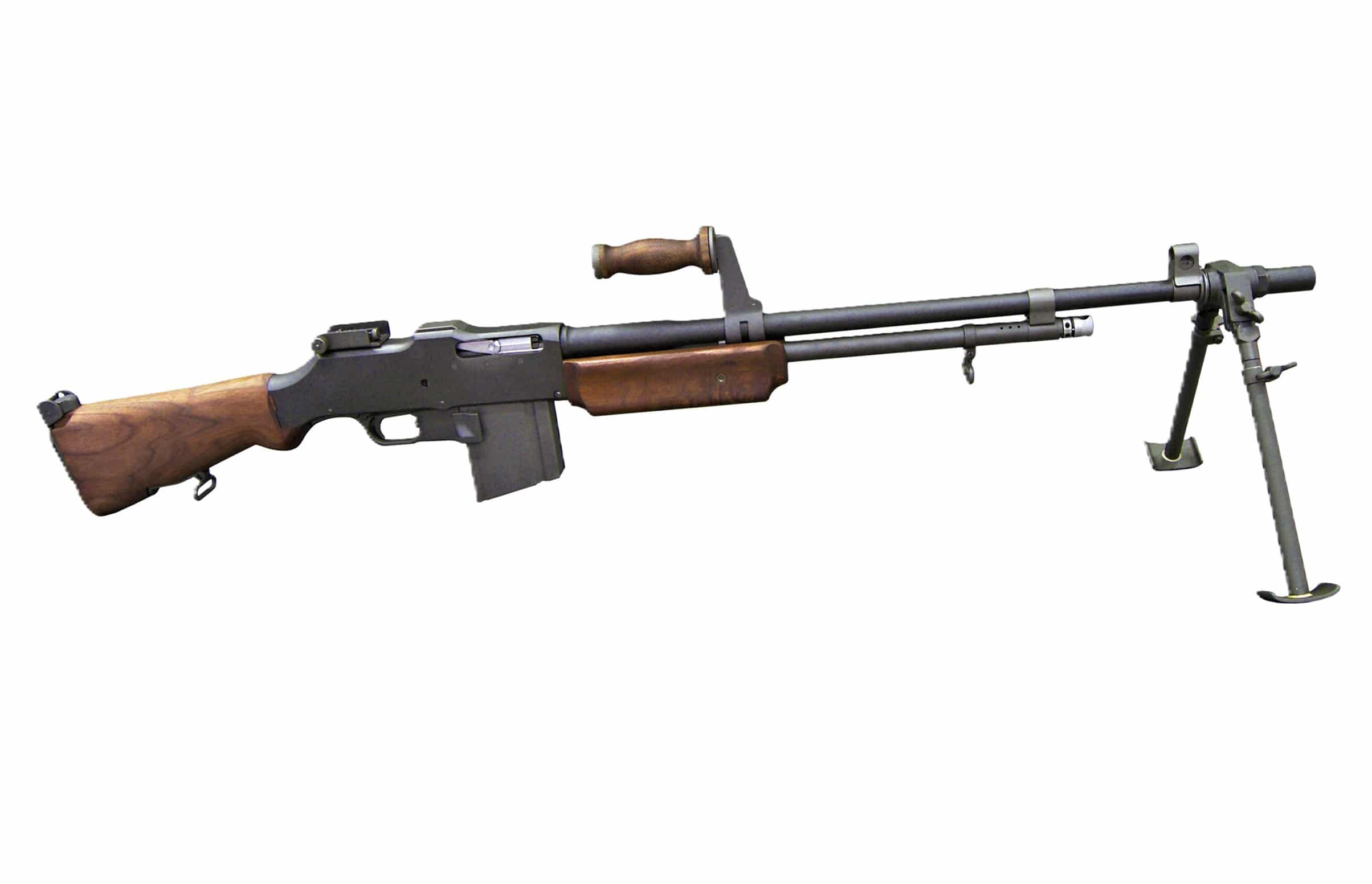
M1918 BAR
The Browning Automatic Rifle was John Moses Browning's shoulder-fired automatic weapon, adopted by the United States Army in 1918 and the… Continued…
-
M1919 Browning Machine Gun
The M1919 Browning is John Browning's water-cooled M1917 machine gun made air-cooled: a short-recoil, belt-fed .30-06 weapon that armed… Continued…
-
M203 Grenade Launcher
The M203 is a single-shot 40 mm grenade launcher that clips under the barrel of an M16 rifle or M4 carbine. Developed by the AAI… Continued…
-
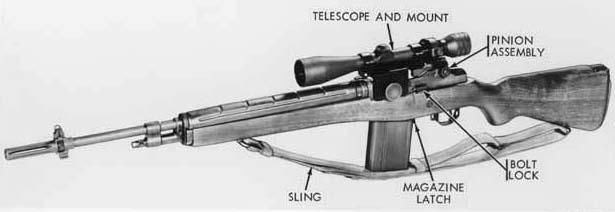
M21 Sniper Weapon System
The M21 Sniper Weapon System was the United States Army's sniper rifle from 1969 to 1988: a National Match M14 selected for accuracy… Continued…
-
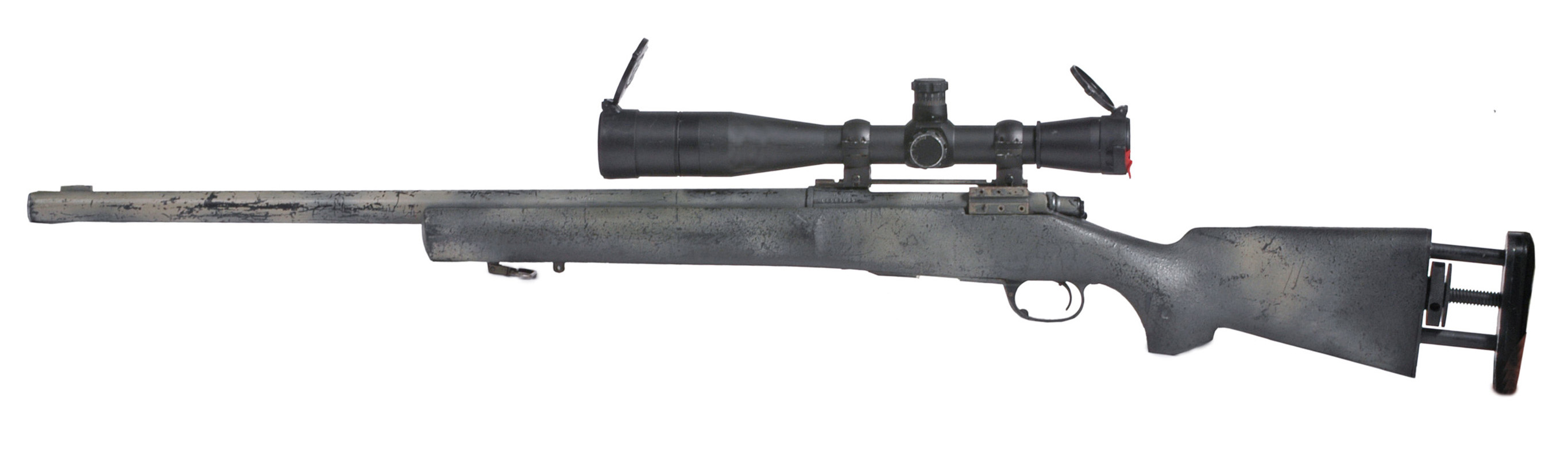
M24 Sniper Weapon System
The M24 Sniper Weapon System was the United States Army's standard sniper rifle from 1988 until the 2010s: a Remington Model 700 long… Continued…
-
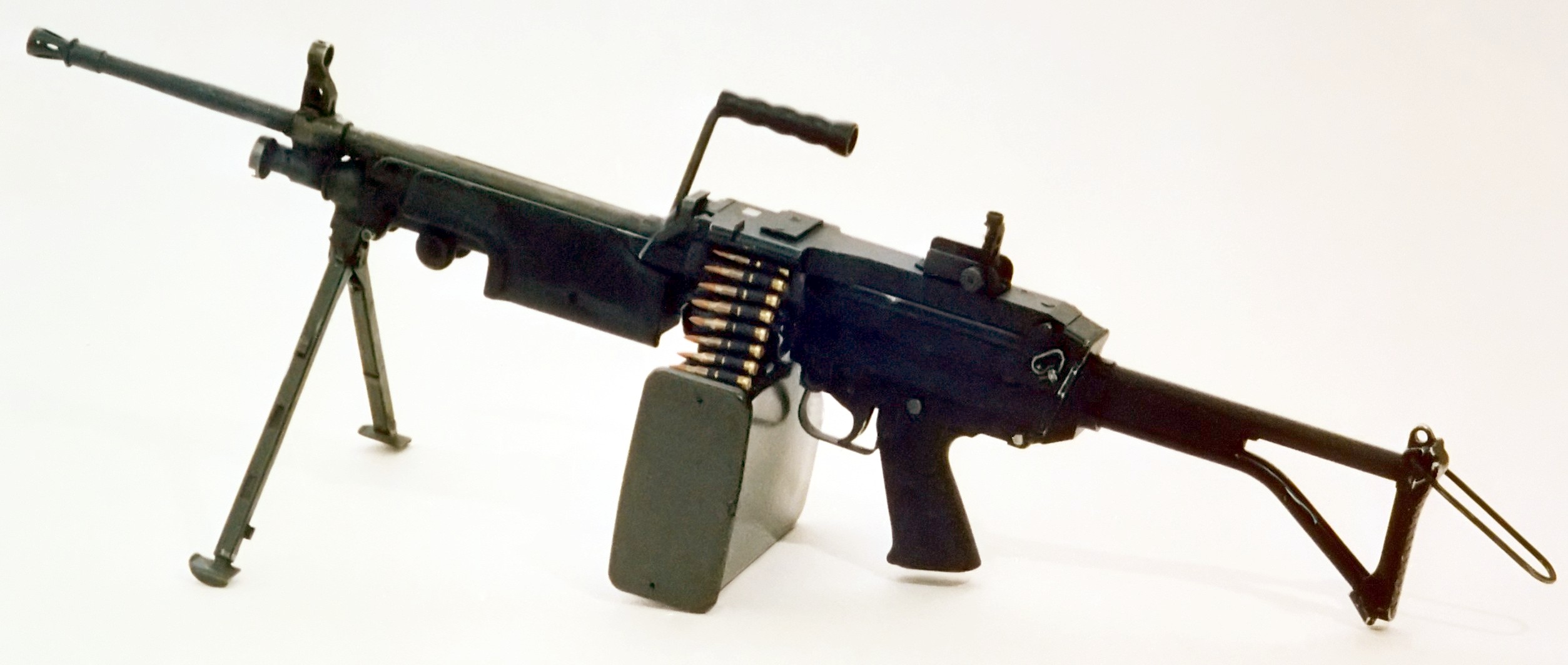
M249 Squad Automatic Weapon
The M249 Squad Automatic Weapon is the American version of the Belgian FN Minimi: a gas-operated, belt-fed 5.56mm light machine gun light… Continued…
-
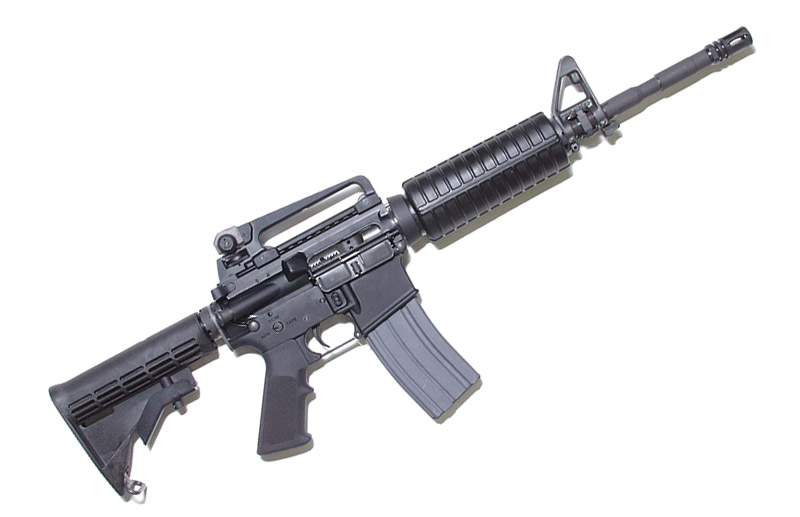
M4 Carbine
The M4 carbine is a shortened, lighter version of the M16 rifle, made by Colt and adopted by the US Army in 1994. It has a 14.5-inch… Continued…
-
M60 Machine Gun
The M60 was the United States' first general-purpose machine gun: a belt-fed 7.62mm weapon light enough for one soldier to carry on the… Continued…
-
M67 Grenade
The M67 is the standard fragmentation hand grenade of the United States armed forces. Adopted in the late 1960s, it is a smooth steel… Continued…
-
MG 42
The MG 42 was the German general-purpose machine gun of the Second World War and the most influential machine gun of the twentieth century.… Continued…
-
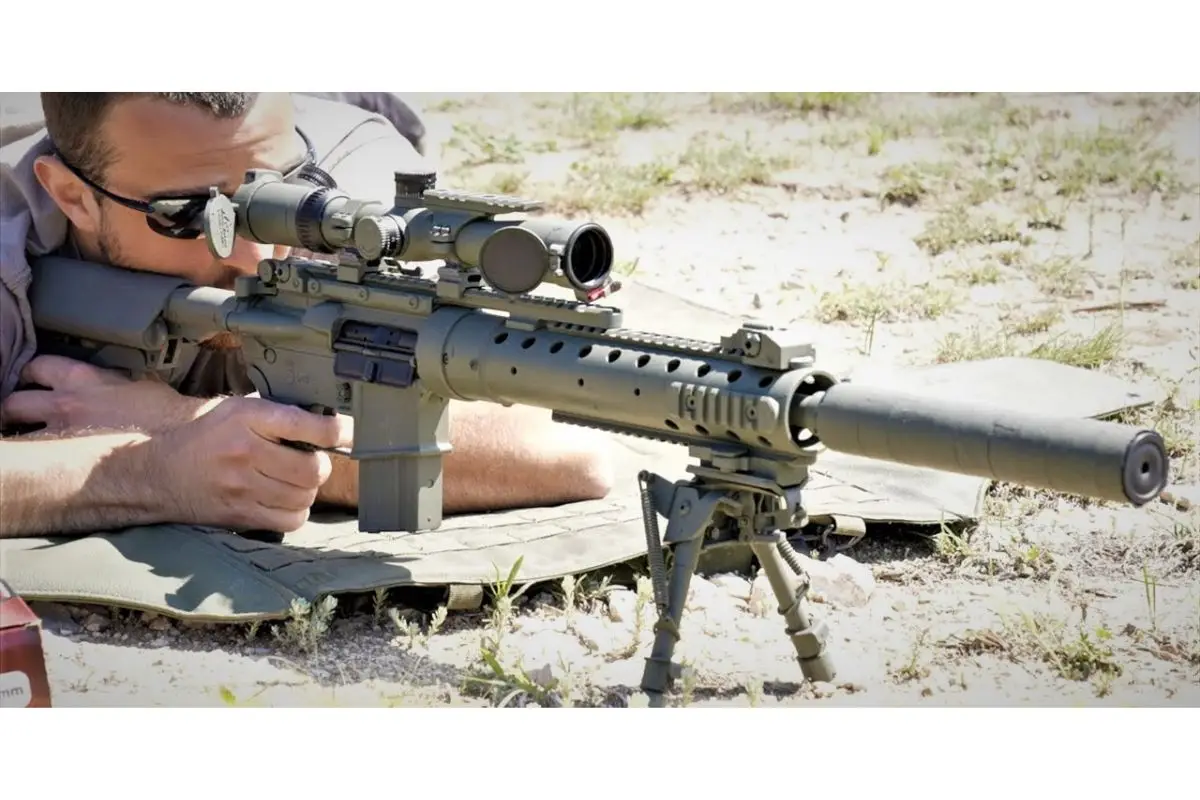
Mk 12 Special Purpose Rifle
The Mk 12 Special Purpose Rifle (SPR) was a precision rifle built on the M16/AR-15 pattern for US special operations forces. Developed in… Continued…
-
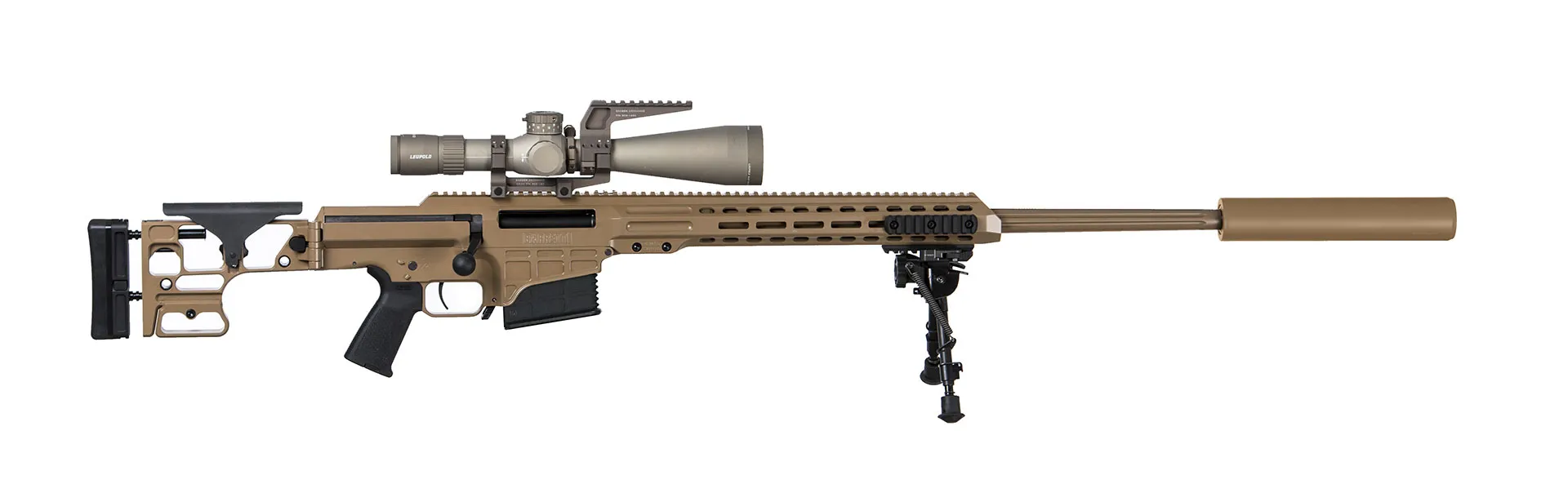
Mk 22 Advanced Sniper Rifle
The Mk22 Advanced Sniper Rifle is a multi-caliber bolt-action sniper rifle based on the Barrett MRAD, chosen by US Special Operations… Continued…
-
PASGT Helmet
The PASGT helmet was the standard combat helmet of the United States armed forces from the early 1980s until the mid-2000s. Its name stands… Continued…
-
Plate Carrier
A plate carrier is a piece of body armor equipment: a load-bearing vest built to hold hard ballistic plates over the chest and back, the… Continued…
-
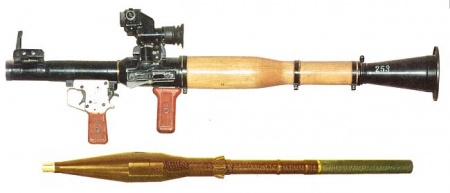
RPG-7
The RPG-7 is a Soviet shoulder-fired, reusable anti-tank grenade launcher adopted in 1961 and the most widely used weapon of its kind in… Continued…
-
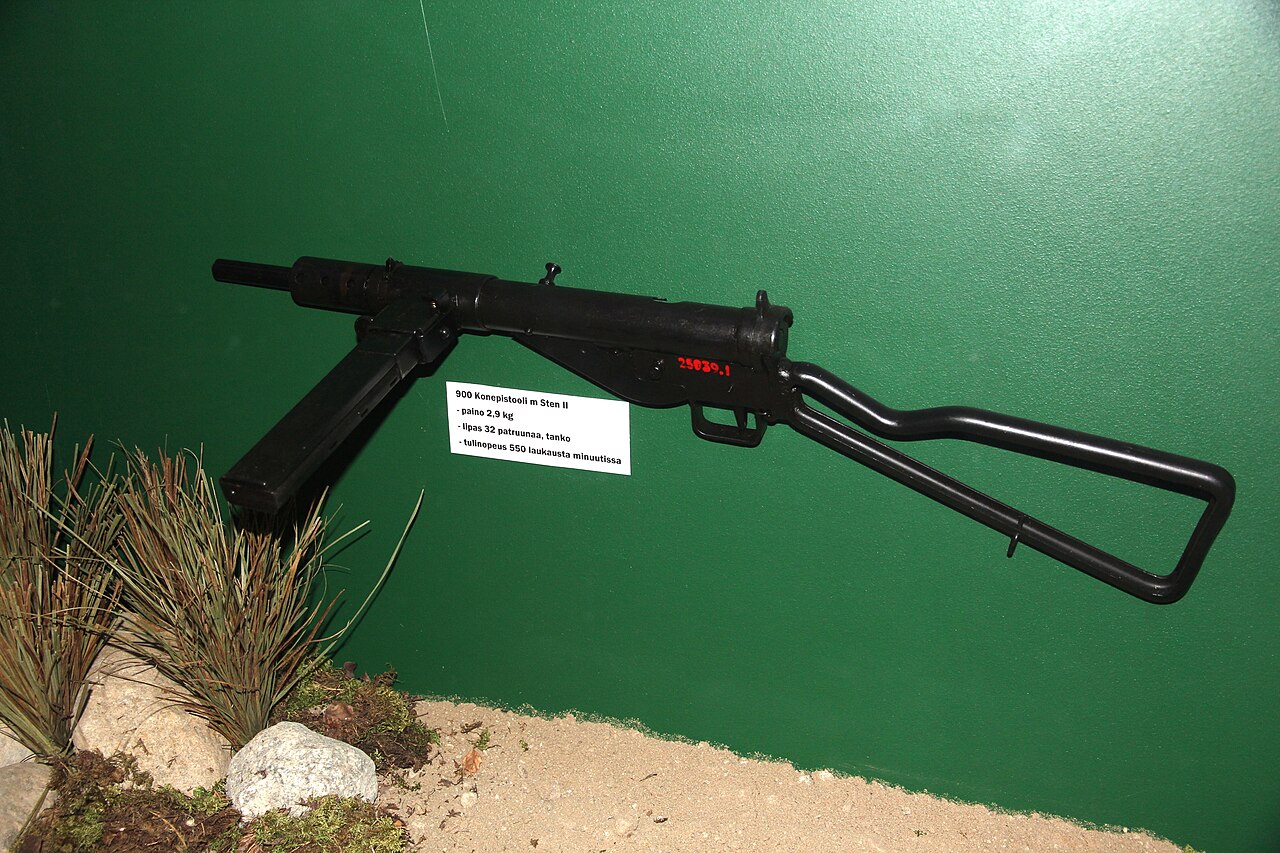
Sten Gun
The Sten was Britain's emergency submachine gun: a 9mm open-bolt weapon of stampings, tube, and spot welds that cost a few pounds and a few… Continued…
-
Thompson Submachine Gun
The Thompson was America's first submachine gun: a .45 ACP automatic designed as a trench broom for a war that ended before it shipped.… Continued…