Battle of Mogadishu
The Battle of Mogadishu was fought on 3 and 4 October 1993 in the Somali capital between the American special operations force Task Force Ranger and the militia of Mohamed Farrah Aidid. A raid to seize two of Aidid's lieutenants succeeded, but two Black Hawk helicopters were shot down and the raiders were surrounded overnight. Eighteen Americans and several hundred Somalis were killed. The battle led the United States to withdraw from Somalia and shaped its policy on intervention for years.
Also known as Black Hawk Down, Black Hawk Down battle, Battle of the Black Sea, Day of the Rangers, Maalintii Rangers, Operation Gothic Serpent, Task Force Ranger, Mogadishu 1993, First Battle of Mogadishu, Mogadishu Mile, Black Hawk Down incident
Background
Somalia fell into civil war after the overthrow of President Siad Barre in January 1991, and the famine that followed killed several hundred thousand people. A force led by the United States landed in December 1992 to protect relief supplies, and in May 1993 handed over to a United Nations mission, UNOSOM II, with a wider mandate to disarm the factions. Mohamed Farrah Aidid, whose Somali National Alliance held southern Mogadishu, saw the mission as a threat. On 5 June 1993 his militia killed 24 Pakistani peacekeepers, and the Security Council called for the arrest of those responsible.
In late August Washington sent Task Force Ranger, about 440 men under Major General William F. Garrison, to capture Aidid and his chief lieutenants. It combined a squadron of Delta Force, a company of the 75th Ranger Regiment from the US Army Rangers, the helicopters of the 160th Special Operations Aviation Regiment, and a few Navy SEALs and Air Force special tactics men. It carried out six missions in the city before October.
The Battle
On the afternoon of Sunday 3 October, informants reported that two of Aidid's senior aides, Omar Salad Elmi and Mohamed Hassan Awale, were meeting in a building near the Olympic Hotel, close to the Bakara Market in the heart of Aidid's territory. About 160 men took part in the raid. At about 3:40 pm Delta operators landed from small MH-6 helicopters and stormed the building, while Rangers slid down ropes from MH-60 Black Hawks to block the four corners of the block. One Ranger missed the rope and was badly hurt in the fall. The assault force took 24 prisoners, including both targets, and a ground convoy arrived to carry them out.
By then militiamen and armed civilians were converging on the area. At about 4:20 pm a rocket-propelled grenade brought down the Black Hawk with the call sign Super Six One, flown by Chief Warrant Officer Cliff Wolcott, a few blocks from the target. Both pilots were killed. Rangers and Delta operators moved on foot to the wreck. About twenty minutes later a second Black Hawk, Super Six Four, flown by Chief Warrant Officer Michael Durant, was hit and crashed farther to the south. No ground force could reach it. Two Delta snipers, Master Sergeant Gary Gordon and Sergeant First Class Randall Shughart, asked to be put down beside it and defended the injured crew until they were overrun and killed. Durant was taken prisoner. The vehicle convoy, searching for the crash sites through roadblocks and ambushes, returned to base with the prisoners and many casualties.
About 100 Americans held buildings around the first crash site through the night, supported by AH-6 helicopter gunships. A relief column from the 10th Mountain Division, with Malaysian armored personnel carriers and Pakistani tanks, fought its way in and reached them at about 2 am on 4 October. Once Wolcott's body had been freed from the wreckage the force pulled out after dawn. There was not room in the vehicles for everyone, and some men had to move out on foot behind them, a run later called the Mogadishu Mile. The force regrouped at a stadium held by Pakistani troops.
Weapons
Most Rangers carried the M16 Rifle in its M16A2 form, some with the M203 Grenade Launcher beneath the barrel, and their squads also had the M249 Squad Automatic Weapon and the heavier M60 Machine Gun. Delta operators favored short carbines of the CAR-15 family and the M1911 Pistol, while the regulation Army sidearm was the Beretta M9. Shughart fought at the second crash site with an M14 Rifle. Rangers wore the Kevlar PASGT Helmet; many Delta men wore lighter plastic helmets that gave no ballistic protection. The American hand grenade was the M67 Grenade.
The Somali fighters were armed mainly with the AK-47 and the RPG-7. The RPG was designed to attack armor, but fired in numbers at low-flying helicopters it brought down two Black Hawks and damaged others.
Aftermath
Eighteen American soldiers were killed in the battle and more than 70 wounded. Another, a Delta sergeant, was killed by a mortar round at the airfield on 6 October. At least one Malaysian soldier died, and several Malaysians and Pakistanis were wounded. Somali losses are not known. Estimates range from about 300 to more than 1,000 dead, fighters and civilians together, with many more wounded. Crowds dragged American dead through the streets, and the pictures were shown around the world. Durant was released after eleven days.
On 7 October President Bill Clinton announced that American forces would leave Somalia by 31 March 1994, and the hunt for Aidid was dropped. Defense Secretary Les Aspin, who had turned down a request for tanks and armored vehicles in September, announced his resignation in December. Gordon and Shughart received the Medal of Honor posthumously, the first awarded since the Vietnam War.
On Screen
Black Hawk Down (2001), directed by Ridley Scott from Mark Bowden's 1999 book, covers the raid from the afternoon launch to the run out of the city the next morning. Josh Hartnett plays Staff Sergeant Matt Eversmann, Sam Shepard plays Garrison, Tom Sizemore plays Lieutenant Colonel Danny McKnight, Jason Isaacs plays Captain Mike Steele and Ron Eldard plays Durant. The order of events, the two crashes and the stand of Gordon and Shughart follow the record closely. The film reduces about a hundred named participants to a few dozen, so some figures are composites or renamed: Eric Bana's "Hoot" combines more than one Delta operator, and Ewan McGregor's "Grimes" is a real Ranger under another name. The names written on the Rangers' helmets were added so that viewers could tell the men apart. The part played by Malaysian and Pakistani troops in the rescue is much reduced.
Weapons used
-
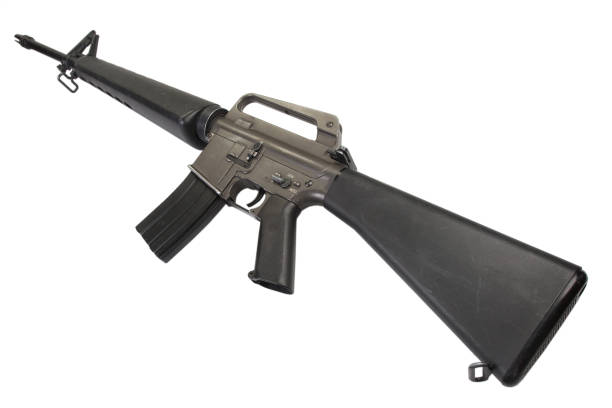
M16 RifleFor sale
The M16A2 was the rifle of the Rangers and of the 10th Mountain Division infantry who relieved them. Continued…
-
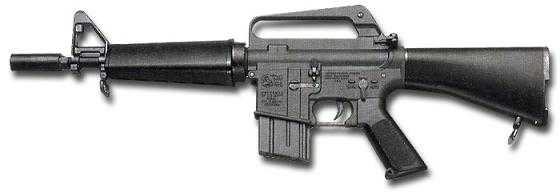
CAR-15
Delta operators carried short carbines of the CAR-15 family in the assault on the target building and at both crash sites. Continued…
-
AK-47
Kalashnikov rifles were the main weapon of Aidid's militia and of the armed civilians who joined the fighting. Continued…
-
M14 Rifle
Delta sniper Randall Shughart defended the second crash site with an M14. Continued…
-
Beretta M9
The 9 mm M9 was the regulation sidearm of the Rangers and the relieving infantry. Continued…
-
PASGT Helmet
Rangers fought in the Kevlar PASGT helmet under a desert cover, while many Delta operators wore light plastic helmets. Continued…
-
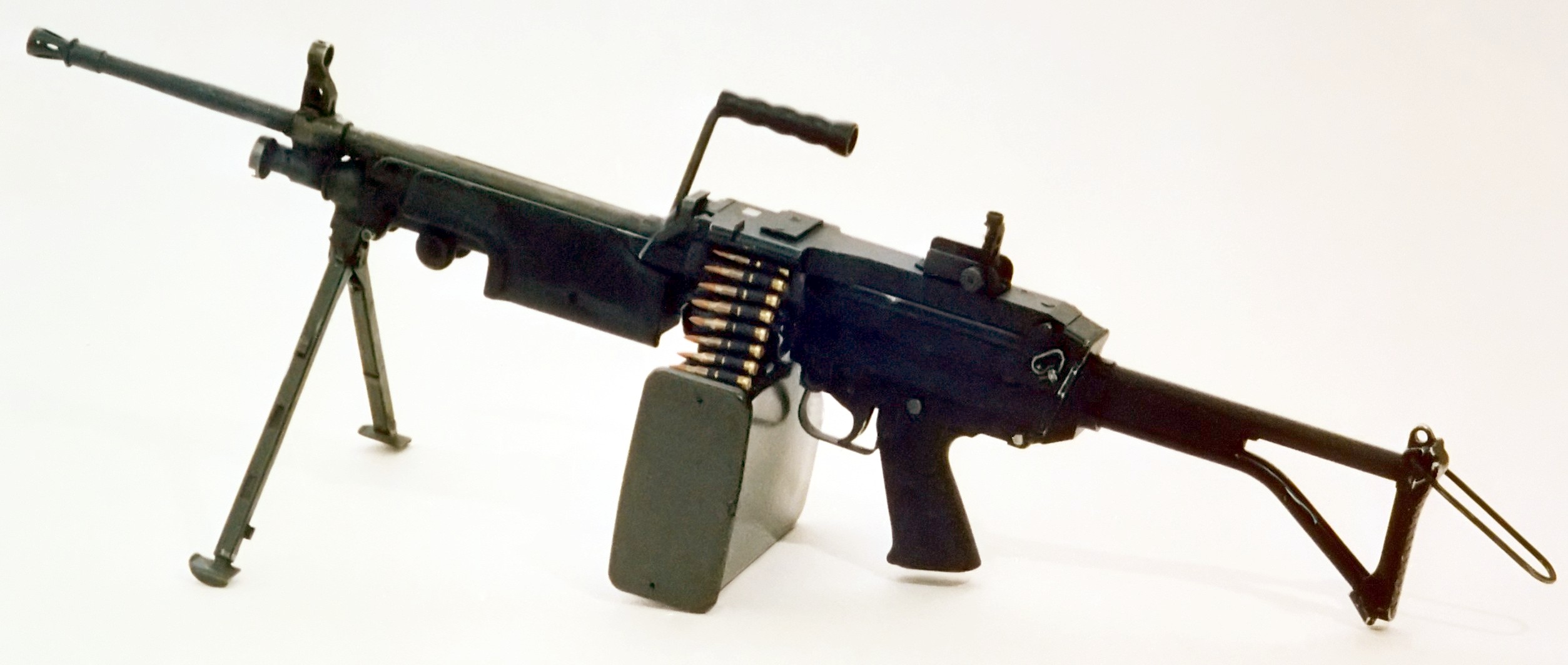
M249 Squad Automatic Weapon
The M249 gave each Ranger blocking position a belt-fed light machine gun. Continued…
-
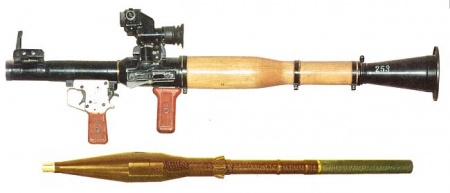
RPG-7
Rocket-propelled grenades fired at low-flying helicopters brought down two Black Hawks and turned the raid into a battle. Continued…
Sources
Bowden, Mark. Black Hawk Down: A Story of Modern War. Atlantic Monthly Press, 1999.
Stewart, Richard W. The United States Army in Somalia, 1992-1994. U.S. Army Center of Military History, 2002.
Eversmann, Matt, and Dan Schilling, eds. The Battle of Mogadishu: Firsthand Accounts from the Men of Task Force Ranger. Presidio Press, 2004.
Durant, Michael J., with Steven Hartov. In the Company of Heroes. G. P. Putnam's Sons, 2003.
Suggest an edit · account required · reviewed before publishing · how it works