Force
Delta Force
The Army's tier-one counter-terrorism unit, formally 1st SFOD-D.
Origins
1st Special Forces Operational Detachment-Delta, known as Delta Force, was created in 1977 by Colonel Charlie Beckwith. Beckwith was a Green Berets officer who had served with the British SAS on an exchange posting in the early 1960s. He spent more than a decade arguing that the United States needed the same thing: a small, rigorously selected unit for counterterrorism, hostage rescue and other dangerous missions. A wave of terrorist hijackings and hostage-taking in the 1970s helped him win the argument, and the unit was formally set up at Fort Bragg, North Carolina, in November 1977.
Organization & Training
The SAS stamp is clear. Delta is organized in squadrons made up of small troops, and its selection course is built on long solo marches across rough country with heavy loads, against time standards the candidates are never told. The candidate is judged alone and is not told how well he is doing. Those who finish face interviews and psychological tests before a long operator training course in shooting, close-quarter battle, explosives and other skills. Most recruits come from the Army's special forces and US Army Rangers. The Army rarely comments on the unit, and it has used cover names such as Combat Applications Group.
Weapons & Equipment
Delta's operators have great freedom to choose and modify their weapons. For many years they were known for carrying customized versions of the M1911 Pistol, long after the rest of the Army had moved to 9mm. Short carbines based on the M16 were their standard long guns until the unit asked Heckler & Koch to develop a more reliable piston-driven version, which became the HK416. Its snipers have used rifles such as the M24 Sniper Weapon System, and in Mogadishu in 1993 Sergeant First Class Randy Shughart carried an M14 Rifle.
Notable Actions
The founding trauma was Operation Eagle Claw, the attempt to rescue American hostages held in Tehran in April 1980. The mission was aborted at a desert landing site called Desert One after helicopters broke down, and eight servicemen died when a helicopter hit a transport aircraft. The failure remade American special operations. It led to the Joint Special Operations Command, a dedicated special operations aviation unit that became the 160th Special Operations Aviation Regiment, and the funding and rehearsal culture the mission had lacked.
Delta then fought in Grenada in 1983 and in Panama in 1989, where it rescued an American held in a Panama City prison. In the 1991 Gulf War it hunted Scud missile launchers in western Iraq alongside the SAS. In Mogadishu in October 1993, during a raid with the Rangers that turned into a long battle, two Delta snipers, Master Sergeant Gary Gordon and Sergeant First Class Randy Shughart, asked to be put down to protect the crew of a downed helicopter. Both were killed and received the Medal of Honor after their deaths. During the Global War on Terror Delta took part in the hunt for Osama bin Laden at Tora Bora in 2001, the capture of Saddam Hussein in 2003 and years of night raids in Iraq and Afghanistan. In 2019 it carried out the raid in Syria in which the Islamic State leader Abu Bakr al-Baghdadi died.
Legacy
Delta has become one of the best-known units in the world while officially saying almost nothing about itself. Films and books, including Mark Bowden's Black Hawk Down, have made it famous. Its selection philosophy, with the individual judged alone and the standard never announced, remains Beckwith's SAS inheritance.
Battles & Operations
Weapons
-
AK-47
The AK-47 is the most produced firearm in human history: Mikhail Kalashnikov's gas-operated assault rifle in 7.62x39mm, built around loose… Continued…
-
Beretta M9
The Beretta M9 is the 9 mm semi-automatic pistol adopted by the United States armed forces in 1985 to replace the .45 caliber M1911A1. It… Continued…
-
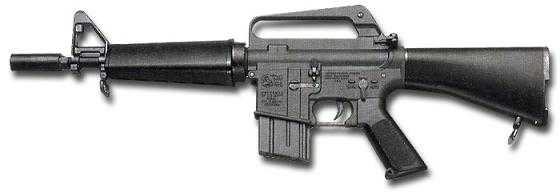
CAR-15
CAR-15 was Colt's name, from the mid-1960s, for a family of weapons built on the AR-15 and M16 rifle, and soldiers came to use it for the… Continued…
-
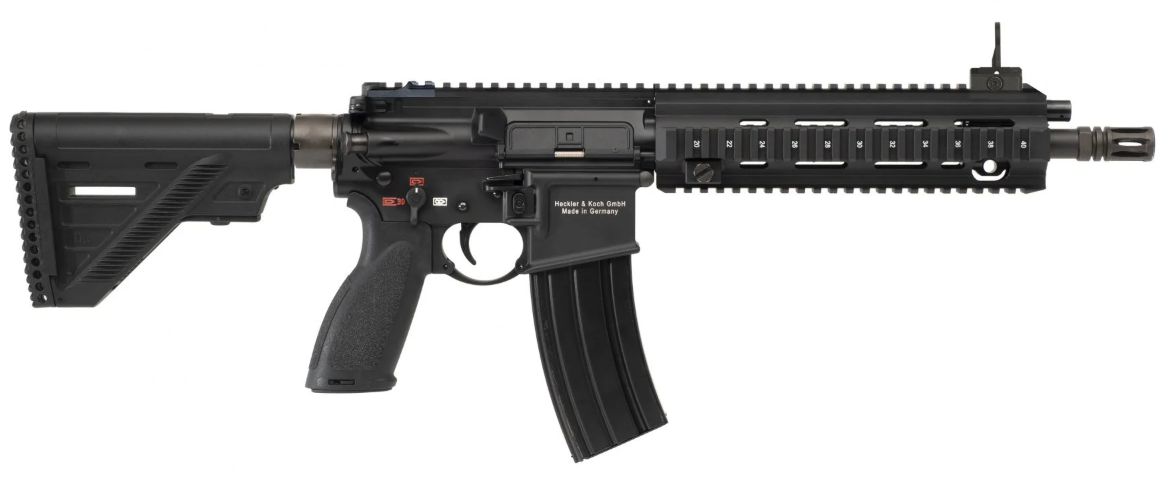
HK416
The Heckler & Koch HK416 is a 5.56mm assault rifle and carbine that keeps the ergonomics, magazines and accessories of the American M4 but… Continued…
-
M14 Rifle
The M14 was the United States' last wooden-stocked battle rifle: a select-fire development of the M1 Garand chambered for the new 7.62mm… Continued…
-
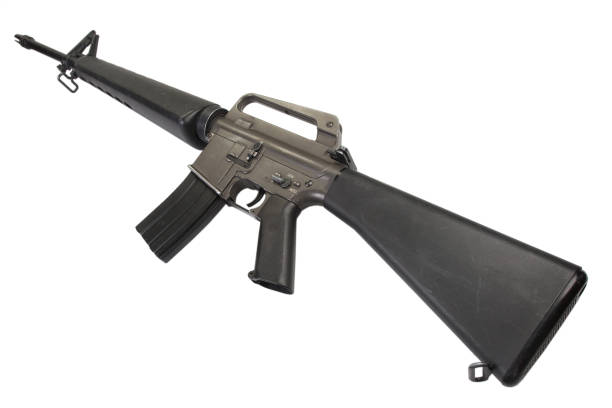
M16 Rifle
The M16 brought the assault rifle to the West: Eugene Stoner's AR-15 design in 5.56mm, built of aluminum forgings and polymer around a… Continued…
-
M1911 Pistol
The M1911 is John Browning's masterpiece: a short-recoil, single-action semi-automatic in .45 ACP that served as the standard American… Continued…
-
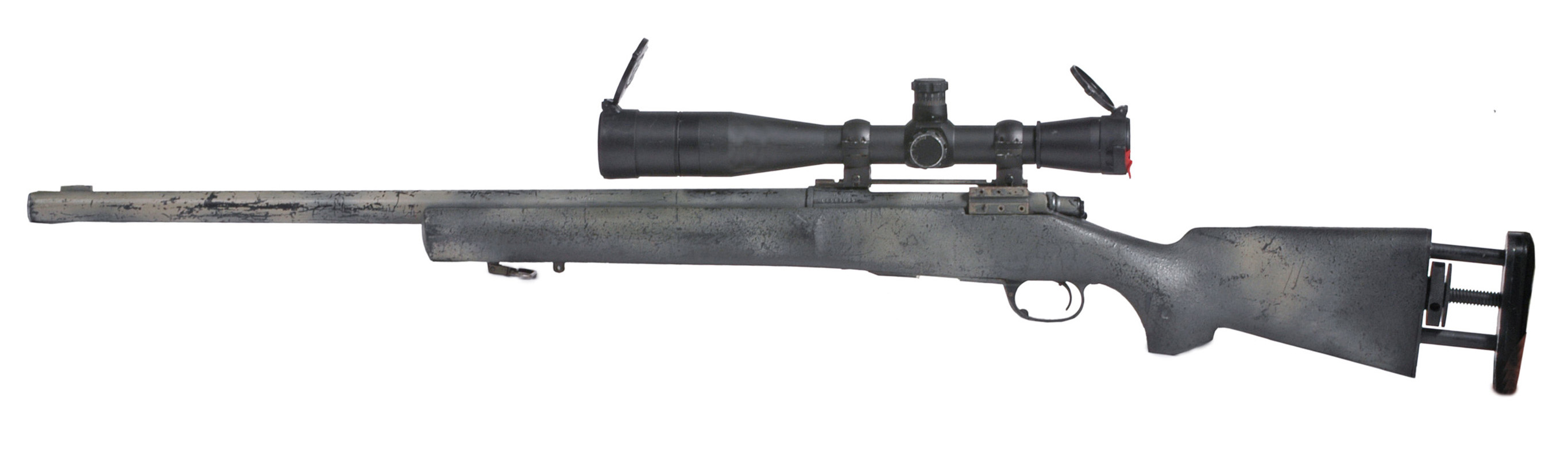
M24 Sniper Weapon System
The M24 Sniper Weapon System was the United States Army's standard sniper rifle from 1988 until the 2010s: a Remington Model 700 long… Continued…
-
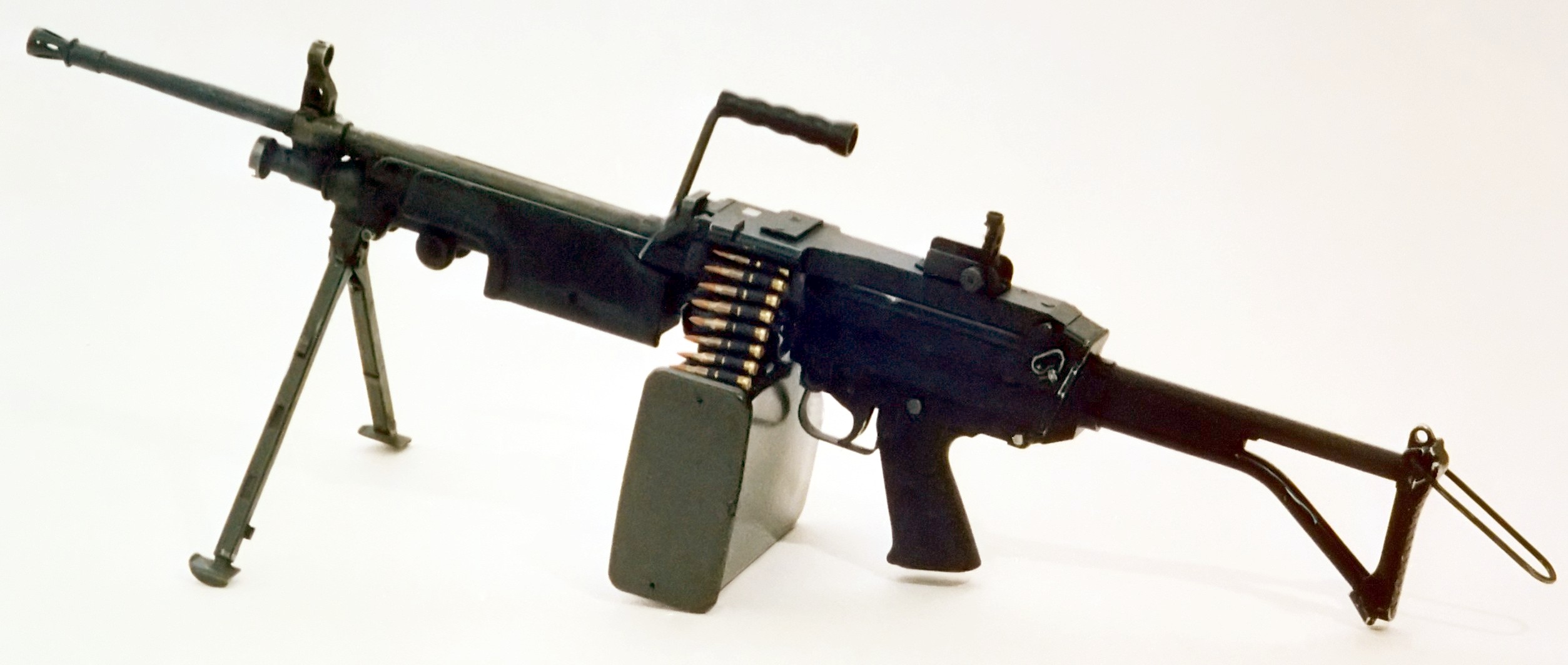
M249 Squad Automatic Weapon
The M249 Squad Automatic Weapon is the American version of the Belgian FN Minimi: a gas-operated, belt-fed 5.56mm light machine gun light… Continued…
-
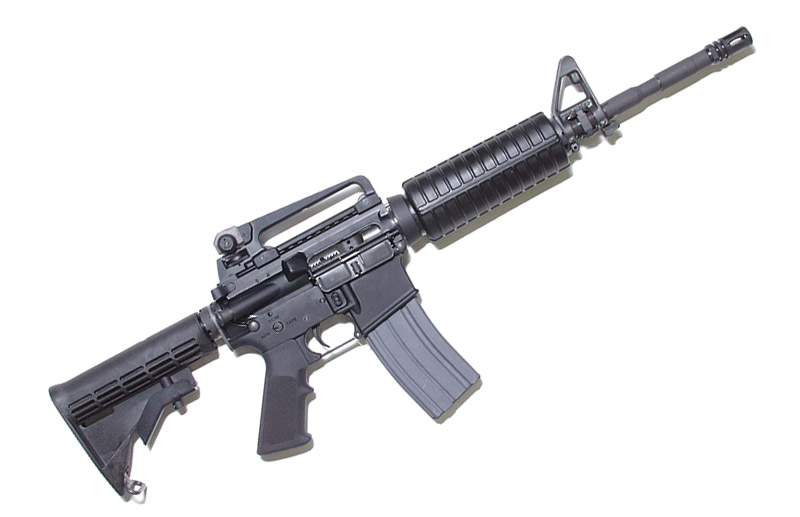
M4 Carbine
The M4 carbine is a shortened, lighter version of the M16 rifle, made by Colt and adopted by the US Army in 1994. It has a 14.5-inch… Continued…
-
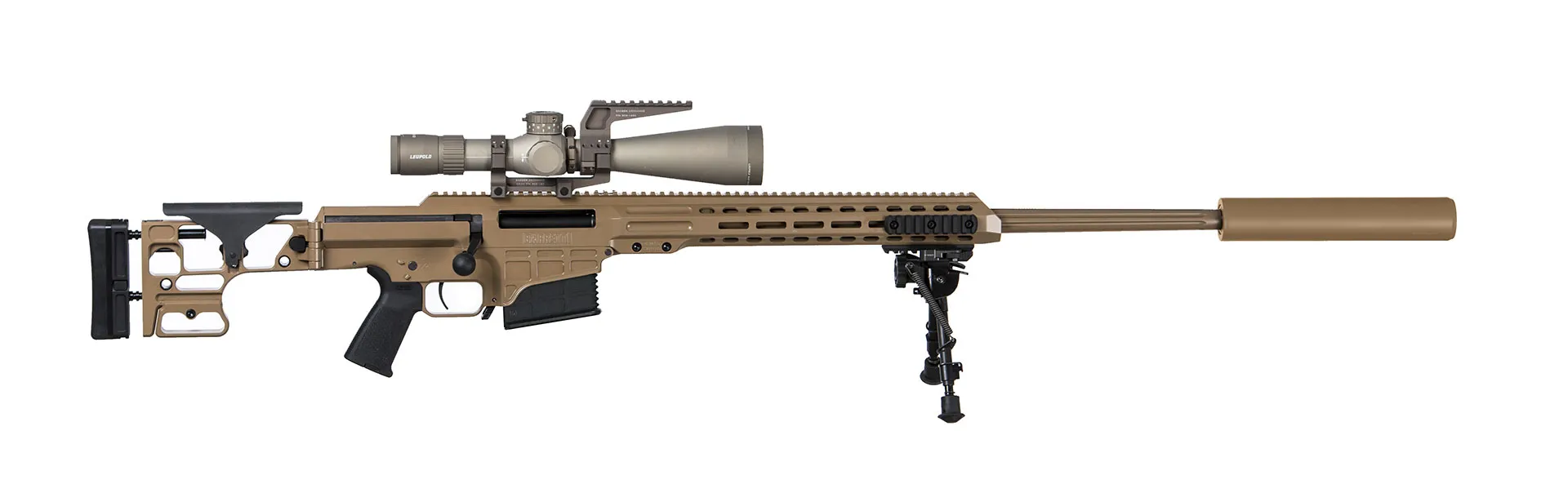
Mk 22 Advanced Sniper Rifle
The Mk22 Advanced Sniper Rifle is a multi-caliber bolt-action sniper rifle based on the Barrett MRAD, chosen by US Special Operations… Continued…
-
PASGT Helmet
The PASGT helmet was the standard combat helmet of the United States armed forces from the early 1980s until the mid-2000s. Its name stands… Continued…
-
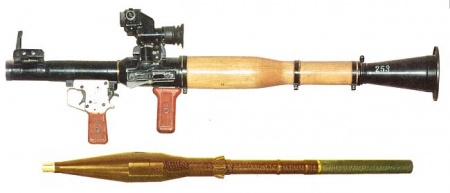
RPG-7
The RPG-7 is a Soviet shoulder-fired, reusable anti-tank grenade launcher adopted in 1961 and the most widely used weapon of its kind in… Continued…