Force
Green Berets
US Army Special Forces — unconventional warfare specialists who train, advise, and fight alongside partner forces worldwide.
Origins
U.S. Army Special Forces, the Green Berets, were founded in 1952 by veterans of the Office of Strategic Services (OSS) to make its World War II mission permanent. During that war, small OSS teams had parachuted into occupied Europe and Asia to organize and lead resistance fighters. Colonel Aaron Bank, one of those veterans, commanded the first unit, the 10th Special Forces Group, formed at Fort Bragg, North Carolina, in June 1952. Its planned task was to raise guerrilla armies behind Soviet lines if war came in Europe.
Organization & Training
The signature unit is the twelve-man Operational Detachment Alpha, or A-Team. It is built from paired specialists in weapons, engineering, medicine, communications and intelligence, led by a captain and a warrant officer. The pairs mean a team can split in two, and each man is cross-trained so that the team can keep working if members are lost. The design has one purpose: a single team should be able to recruit, train and lead a battalion-sized force of local fighters. Candidates go through a long selection and qualification course, and most learn a foreign language for the region their group covers.
The beret was defiance before it was uniform. Men wore it unofficially for years until President John F. Kennedy, the force's great patron, authorized it in 1961 and later called it a symbol of excellence. The motto, "De Oppresso Liber," is usually translated "to free the oppressed."
Weapons & Equipment
Green Berets are trained to use almost any weapon, including those of their allies and enemies, because they may have to teach local fighters with whatever is on hand. In Vietnam, teams and the local troops they led carried the M1 Carbine, the M16 Rifle, the M1911 Pistol, the M79 Grenade Launcher and the M60 Machine Gun. Cross-border reconnaissance teams often chose the Swedish Carl Gustaf m/45 submachine gun because it could not be traced to the United States. Special Forces snipers later used the M21 Sniper Weapon System and the M24 Sniper Weapon System. Just as important are the radios, medical kits and demolition gear that let a small team work far from support.
Notable Actions
The Vietnam War was the crucible. Under the Civilian Irregular Defense Group (CIDG) program, Special Forces organized Montagnard tribesmen and other minorities into militias based in fortified border camps. At Nam Dong in July 1964, Captain Roger Donlon's camp held off a night attack, and he received the first Medal of Honor of the war. In February 1968, during the Battle of Khe Sanh, North Vietnamese troops with tanks overran the nearby camp at Lang Vei. Green Berets also formed much of MACV-SOG, the secret unit that ran reconnaissance missions into Laos and Cambodia; it was among the most decorated and costly special operations units in American history.
Over time the mission list grew to include training foreign armies, raids and counterterrorism. The founding idea was proven again in late 2001. A few hundred Green Berets, some riding horses beside the Northern Alliance and calling in American airpower by radio, helped topple the Taliban government of Afghanistan in a matter of weeks.
Legacy
Special Forces remain the U.S. Army's main tool for working "by, with and through" local partners, and they have served in dozens of countries since 1952. Their model of a small, highly trained team multiplying its strength through local allies has been copied by many armies. Other American special units, including Delta Force, drew their first members largely from Special Forces ranks.
-
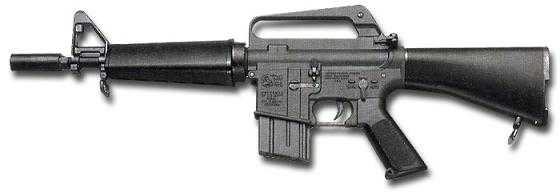
CAR-15
CAR-15 was Colt's name, from the mid-1960s, for a family of weapons built on the AR-15 and M16 rifle, and soldiers came to use it for the… Continued…
-
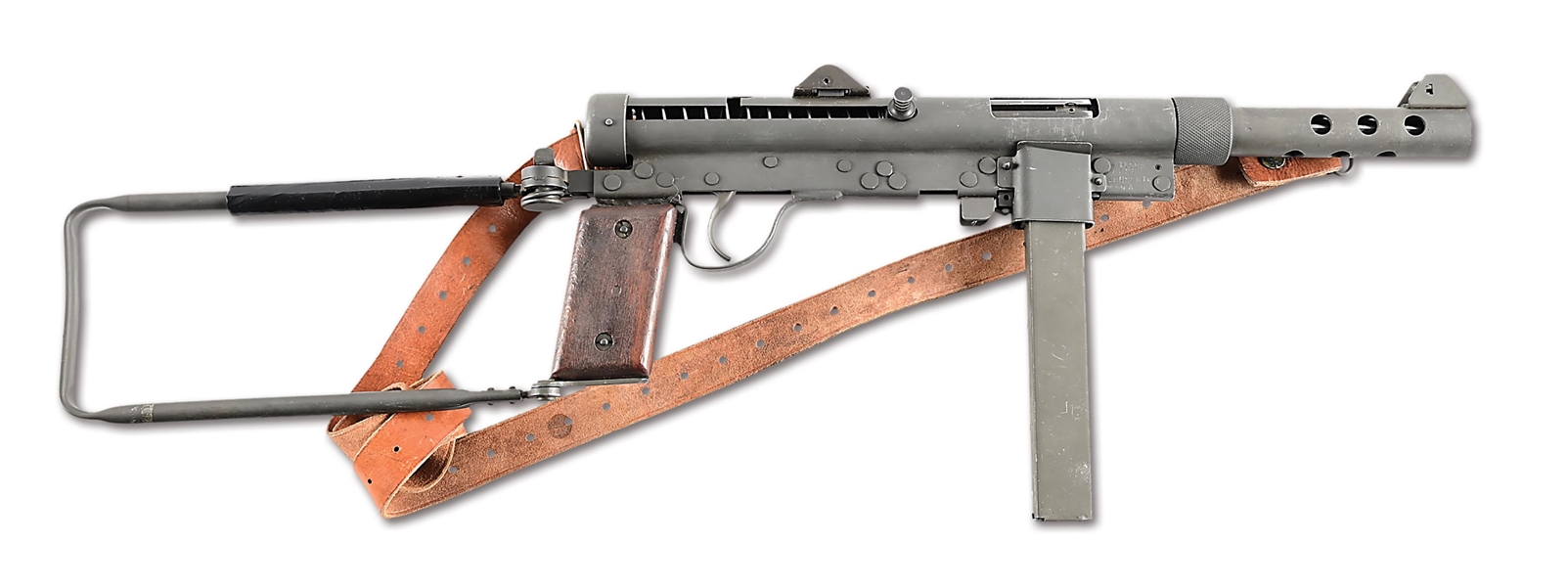
Carl Gustaf m/45
The Carl Gustaf m/45 is a Swedish 9mm submachine gun adopted in 1945 and made at the Carl Gustafs Stads Gevärsfaktori in Eskilstuna.… Continued…
-
M1 Carbine
The M1 Carbine was the most-produced American small arm of the Second World War: a five-pound, semi-automatic .30-caliber carbine designed… Continued…
-
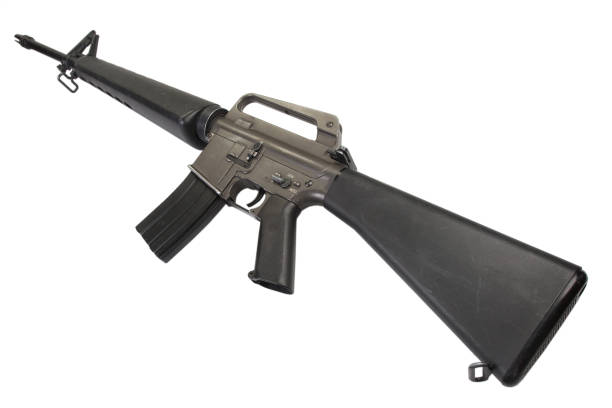
M16 Rifle
The M16 brought the assault rifle to the West: Eugene Stoner's AR-15 design in 5.56mm, built of aluminum forgings and polymer around a… Continued…
-
M18 Claymore Mine
The M18A1 Claymore is an American directional anti-personnel mine. Its curved plastic case holds a layer of C-4 explosive behind about 700… Continued…
-
M1911 Pistol
The M1911 is John Browning's masterpiece: a short-recoil, single-action semi-automatic in .45 ACP that served as the standard American… Continued…
-
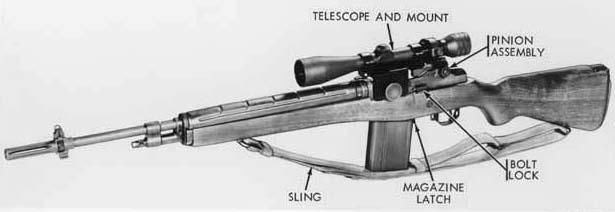
M21 Sniper Weapon System
The M21 Sniper Weapon System was the United States Army's sniper rifle from 1969 to 1988: a National Match M14 selected for accuracy… Continued…
-
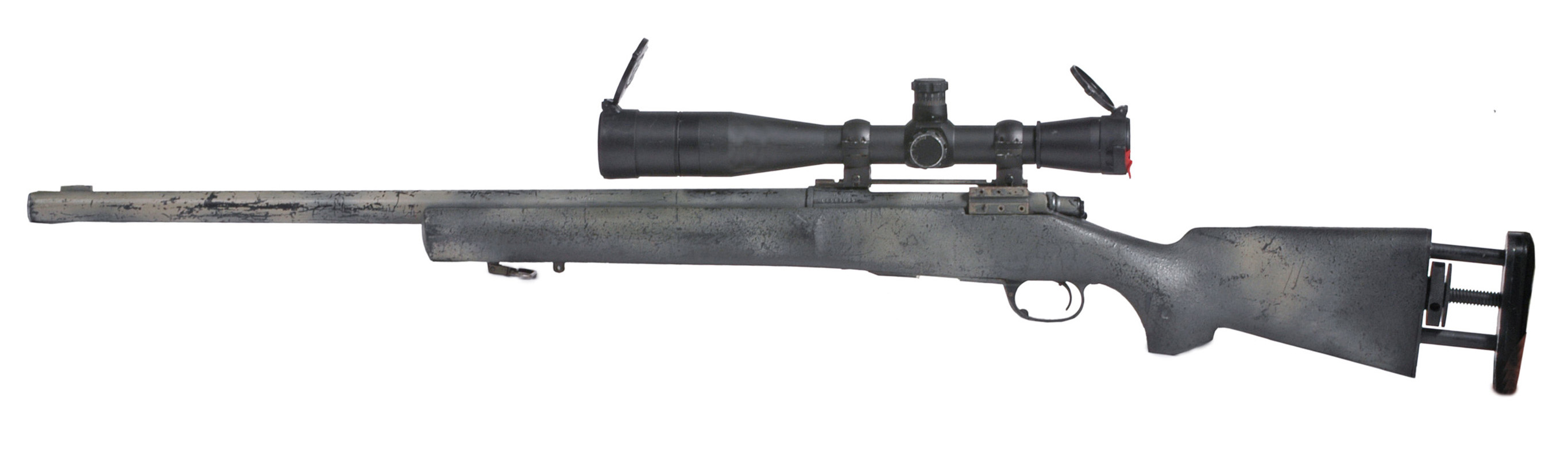
M24 Sniper Weapon System
The M24 Sniper Weapon System was the United States Army's standard sniper rifle from 1988 until the 2010s: a Remington Model 700 long… Continued…
-
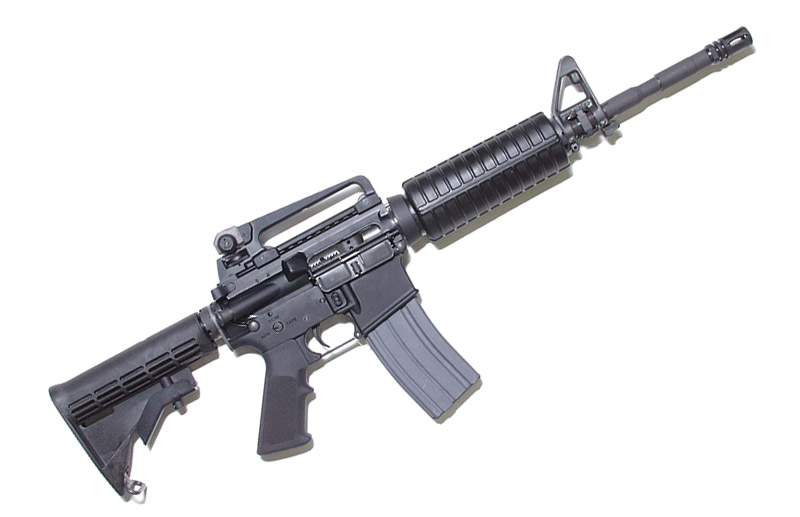
M4 Carbine
The M4 carbine is a shortened, lighter version of the M16 rifle, made by Colt and adopted by the US Army in 1994. It has a 14.5-inch… Continued…
-
M60 Machine Gun
The M60 was the United States' first general-purpose machine gun: a belt-fed 7.62mm weapon light enough for one soldier to carry on the… Continued…
-
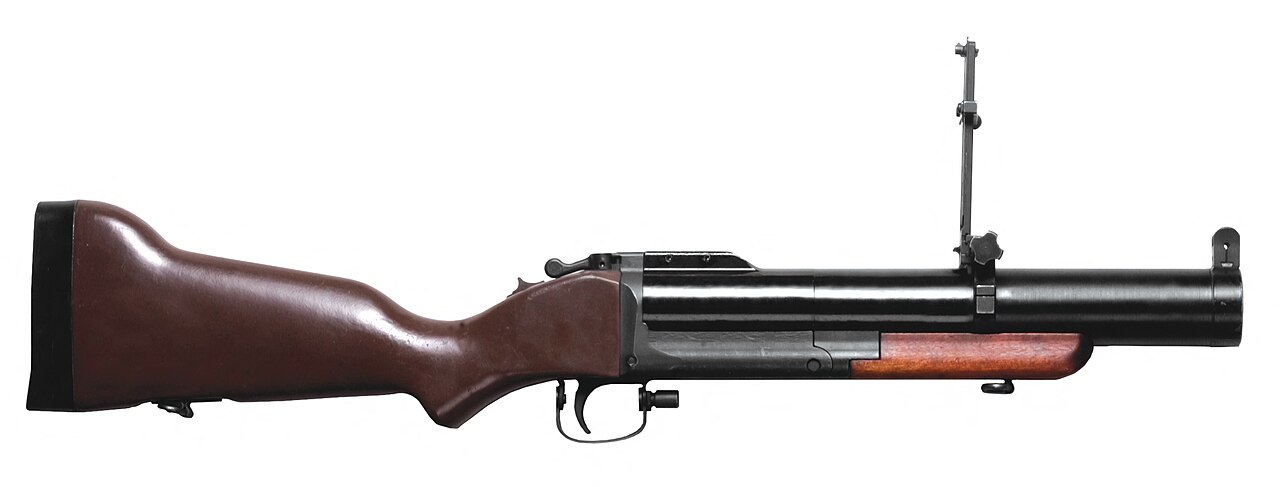
M79 Grenade Launcher
The M79 is a single-shot, break-open, shoulder-fired grenade launcher that fires a 40x46mm low-velocity grenade to about 400 meters… Continued…
-
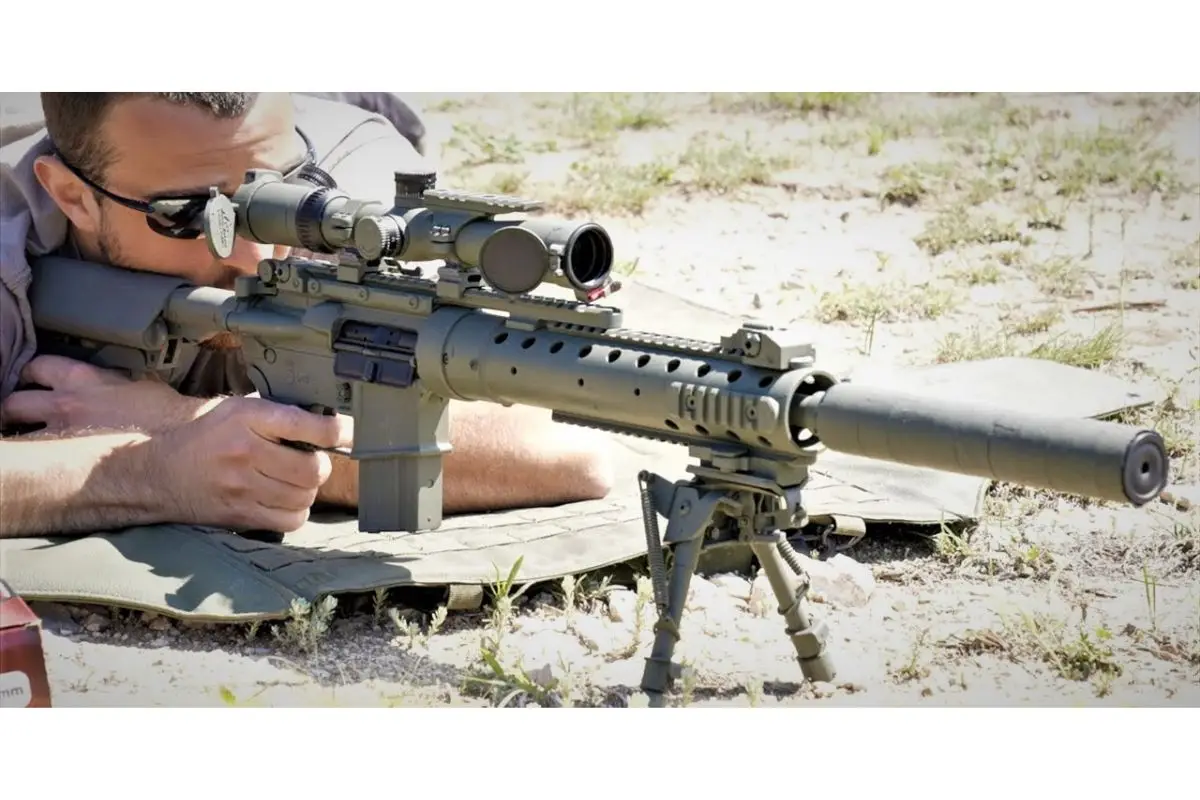
Mk 12 Special Purpose Rifle
The Mk 12 Special Purpose Rifle (SPR) was a precision rifle built on the M16/AR-15 pattern for US special operations forces. Developed in… Continued…
-
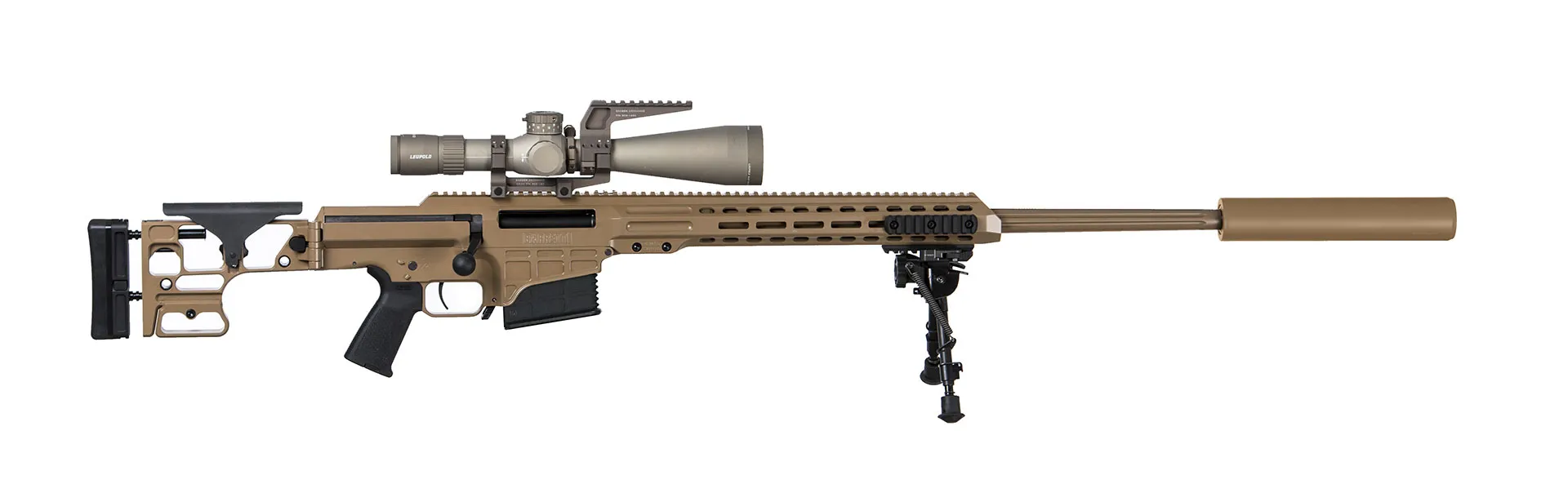
Mk 22 Advanced Sniper Rifle
The Mk22 Advanced Sniper Rifle is a multi-caliber bolt-action sniper rifle based on the Barrett MRAD, chosen by US Special Operations… Continued…