Origin
Netherlands
The Netherlands built a powerful maritime empire in the 17th century. Dutch gunsmiths contributed to flintlock development, and the Dutch East India Company (VOC) maintained one of the largest private military forces of its era, armed with European muskets and cannon.
Overview
The Dutch Republic (1581–1795) was one of the dominant world powers of the 17th century, built on maritime trade protected by a powerful navy. Dutch military reformers — particularly Maurice of Nassau — were also significant innovators in infantry tactics, introducing systematic drilling and countermarch firing techniques that spread across European armies.
Maurice of Nassau's Military Reforms
Prince Maurice of Nassau (1567–1625) conducted some of the most important military reforms of the early modern period:
- Standardized weapons and drill procedures
- Introduced the countermarch — a rotating volley fire system where front-rank musketeers fired, then marched to the rear to reload while the next rank fired
- Reduced pike length and increased the proportion of musketeers
- Emphasized earthwork field fortifications
These reforms were copied across Europe and became the basis of 17th-century infantry tactics.
Naval Weapons
Dutch warships carried standard European naval cannon. The Dutch East India Company (VOC) maintained one of the largest private navies in history, armed with cannon for both trade protection and colonial coercion. Dutch naval gunnery techniques were among the best of the era.
Firearms Development
Dutch gunsmiths contributed to the refinement of the flintlock mechanism in the early 17th century. The snaphaunce (a transitional flintlock type) may have Dutch origins in its name if not its mechanism.
Modern Era
The Netherlands is a NATO member using standard alliance weapons. The Dutch firm Nederlandsche Wapenfabriek (NWM) and associated companies have been involved in ammunition production. Special forces use the HK416 and other modern platforms.
This article is a stub.
Battles & Operations
-
Battle of Waterloo (18 June 1815)
The Battle of Waterloo, fought on Sunday 18 June 1815 near the village of Waterloo in present-day Belgium, ended the Napoleonic Wars.… Continued…
-
Battle of Arnhem (17-26 September 1944)
The Battle of Arnhem, fought from 17 to 26 September 1944, was the final and failed stage of Operation Market Garden, the Allied attempt to… Continued…
Weapons
-
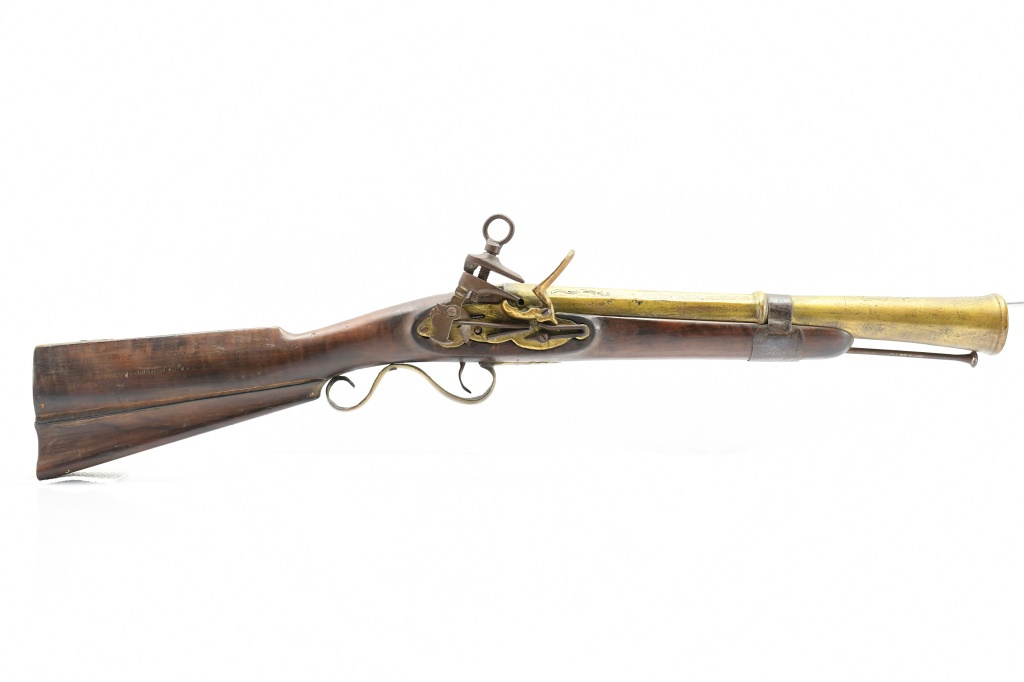
Blunderbuss
The blunderbuss was a short, large-bore, muzzle-loading gun with a flared muzzle, built to fire a handful of shot at very close range. From… Continued…
-
Fire Ship
A fire ship was a vessel filled with flammable material, set alight and sent drifting or sailing into an enemy fleet. Wooden ships with… Continued…
-
Galleon
The galleon was the large ocean-going sailing ship of the sixteenth and early seventeenth centuries, used both as a warship and as an armed… Continued…
-
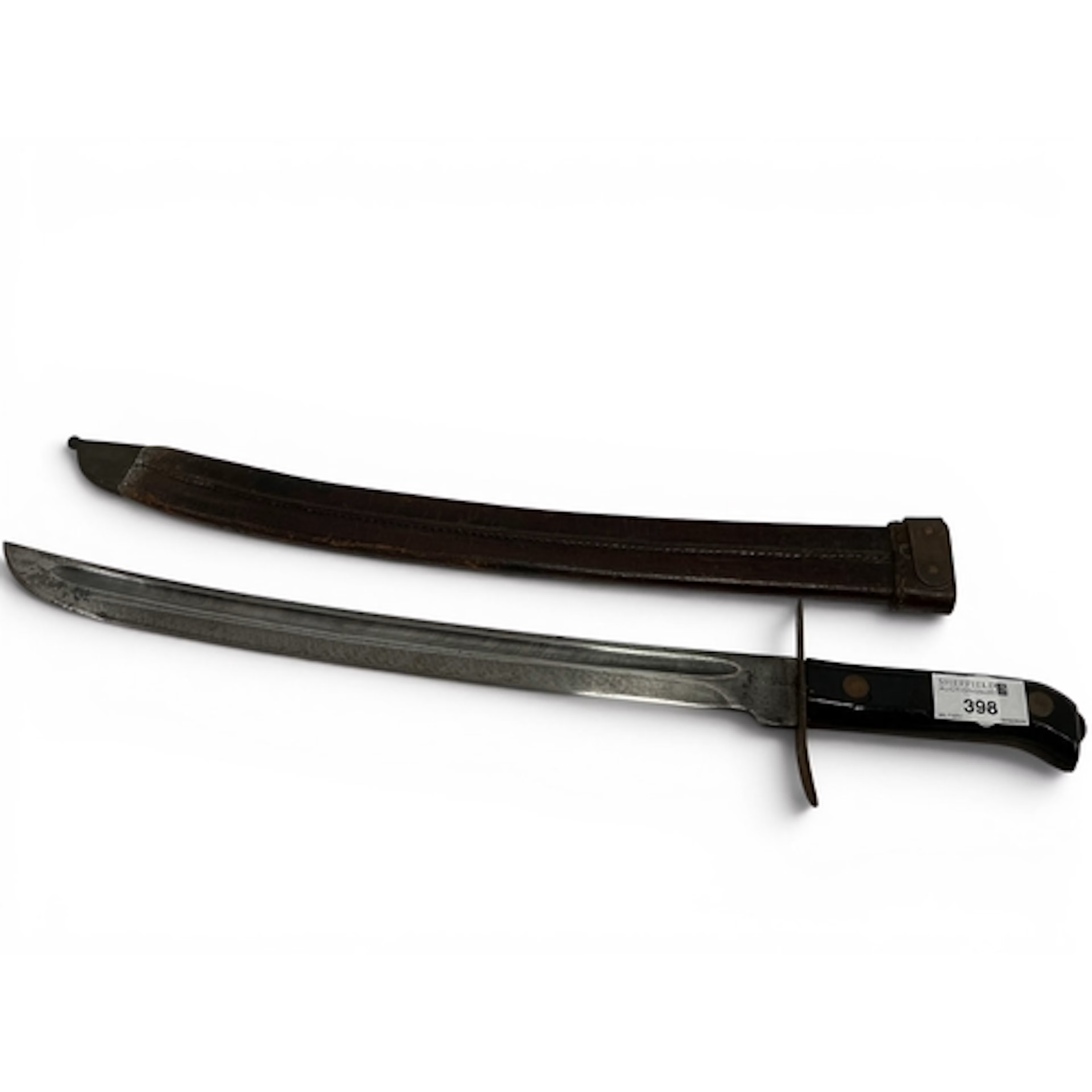
Klewang
The klewang is a single-edged short sword from the Indonesian archipelago, and the name of the Dutch military weapon developed from it.… Continued…
-
Schwarzlose Machine Gun
The Schwarzlose was the standard heavy machine gun of the Austro-Hungarian army in the First World War. Designed by the German engineer… Continued…
-
Ship of the Line
The ship of the line was the main battleship of the age of sail, a large wooden warship with two or three decks of heavy guns along its… Continued…
-
Siege Mortar
A siege mortar was a short, wide-mouthed cannon that fired at a high angle, so that its projectile rose over walls and earthworks and fell… Continued…