Battle of Corregidor
The Battle of Corregidor, 16 to 26 February 1945, recaptured the island fortress at the mouth of Manila Bay that American and Filipino troops had surrendered to Japan in May 1942. The 503rd Parachute Regimental Combat Team jumped onto the small plateau of Topside while a battalion of the 34th Infantry landed by sea. They fought a Japanese garrison of about 5,000, most of them naval troops, far larger than expected, through ten days of cave fighting and suicide demolitions. Nearly the whole garrison died. General MacArthur returned to the island on 2 March.
Also known as Corregidor, Recapture of Corregidor, Battle of Corregidor 1945, The Rock, Fort Mills
Background
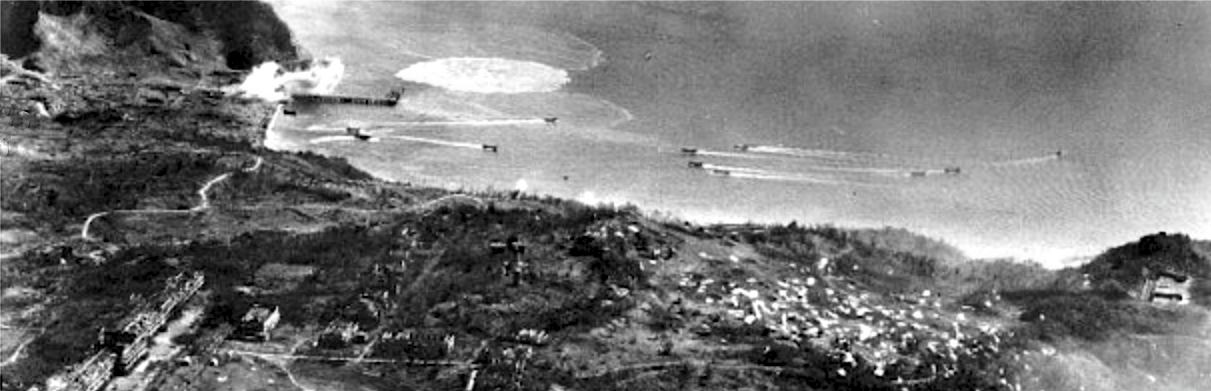
The Battle of Corregidor took place 16-26 February 1945, with the forces of the United States taking the island back from the Japanese defenders. Corregidor is a tadpole-shaped island of rock about four miles long at the mouth of Manila Bay in the Philippines. Its high western plateau, Topside, rises some 500 feet above the sea, and it narrows east to a low waist, Bottomside, and the long tunnel under Malinta Hill. As Fort Mills it was the key to the defense of Manila Bay, and in 1942 it became the last American stronghold in the Philippines. General Douglas MacArthur left it by PT boat in March 1942 with the promise "I shall return". After Bataan fell in April, the Japanese shelled the island without pause, landed on the night of 5 May, and Lieutenant General Jonathan Wainwright surrendered the next day, with some 11,000 American and Filipino troops. By February 1945 MacArthur's forces had landed on Luzon and were fighting in Manila, and Corregidor had to be taken before Manila Bay could be used.
The Battle
The assault force, called Rock Force, was commanded by Colonel George M. Jones. It was made up of his 503rd Parachute Regimental Combat Team and the 3rd Battalion, 34th Infantry. American intelligence counted about 850 defenders. In fact there were around 5,000, most of them naval troops under Captain Akira Itagaki, dug into the island's tunnels, caves and old gun batteries. At 8:30 on the morning of 16 February, after days of bombing and naval gunfire, C-47s began dropping paratroopers onto two tiny drop zones on Topside, the old parade ground and the golf course. Many men were injured landing among the ruins, trees and cliff edges, but the Japanese were taken by surprise, and Itagaki was killed at his observation post in the first hours. At 10:30 the infantry battalion landed on San José beach at Bottomside and seized Malinta Hill. For the next ten days the Americans cleared the island cave by cave with rifles, grenades, flamethrowers, demolition charges and the point-blank fire of destroyers offshore, while the defenders made night banzai charges and blew up their own ammunition stores. On the night of 21 February the Japanese inside Malinta Tunnel set off explosives that shook the whole hill and killed many of their own men. On 26 February the defenders detonated an underground magazine at Monkey Point, killing or wounding some 200 Americans and throwing debris far out into the bay. Organized resistance ended that day.
Weapons
The paratroopers and infantry of Rock Force fought with the M1 Garand, the folding-stock M1 Carbine, the M1918 BAR, the Thompson Submachine Gun and the M1919 Browning Machine Gun, supported by pack howitzers dropped with them. The M2 Flamethrower and satchel charges were the essential tools for the caves. The Japanese defenders were armed with the Type 99 Rifle and the older Type 38, the Type 96 Light Machine Gun, the Type 89 Grenade Discharger and heavier machine guns and naval guns sited in the cliffs.
Aftermath
Japanese dead on Corregidor numbered about 4,500, and only about twenty men were taken prisoner. Several hundred more are thought to have died sealed in the tunnels or swimming for the mainland. American losses were about 1,000 killed, wounded and injured in the landings, including more than 200 dead. On 2 March 1945 MacArthur returned to the island by PT boat, and Colonel Jones greeted him with "Sir, I present you Fortress Corregidor", as the American flag was raised again on the old flagpole on Topside. The 503rd became known as "The Rock Regiment". Corregidor is now a memorial to the defenders of 1942 and the men of 1945, with the Pacific War Memorial on Topside and the ruins of its barracks and batteries kept as they were left. See also World War II.
Weapons used
-
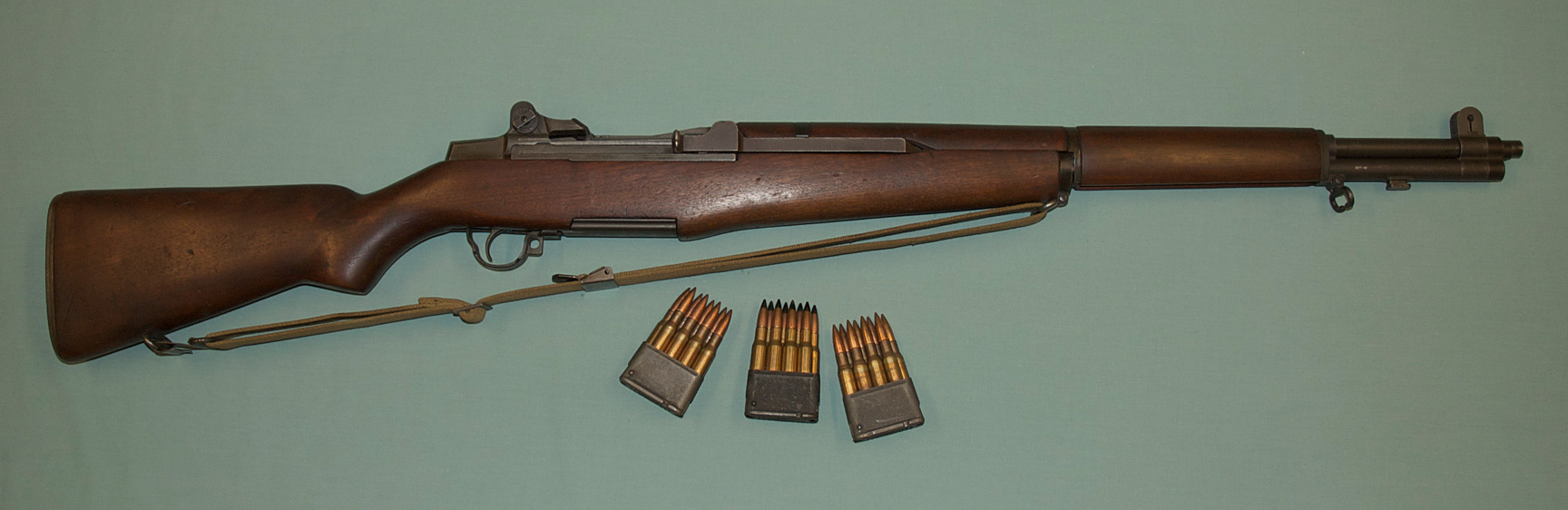
M1 Garand
The standard rifle of the 503rd Parachute Infantry and the 34th Infantry; the M1 Garand was a match for any rifle the Japanese garrison… Continued…
-
M1 Carbine
Many paratroopers jumped with the M1A1 folding-stock carbine, light enough to carry into a drop zone full of obstacles. Continued…
-
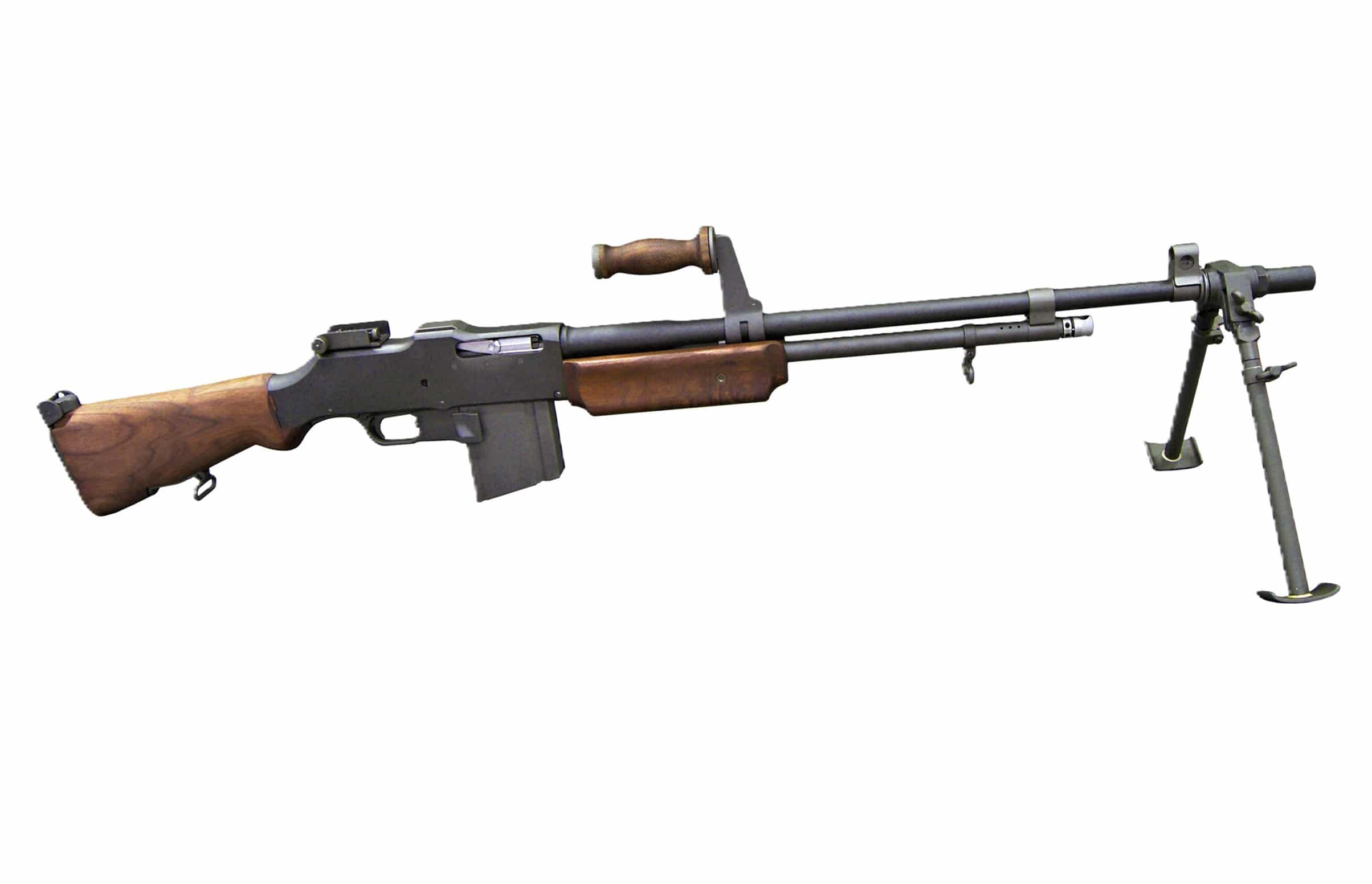
M1918 BAR
The fire support of each rifle squad in the fighting across Topside and Malinta Hill. Continued…
-
Thompson Submachine Gun
Used in the close fighting around the ruined barracks, gun batteries and tunnel entrances. Continued…
-
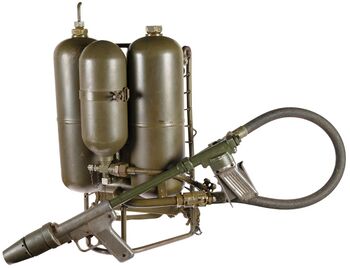
M2 Flamethrower
Used with demolition charges to clear the tunnels and caves that the defenders fought from. Continued…
-
M1919 Browning Machine Gun
The American machine gun used to hold the Topside perimeter against night attacks. Continued…
-
Type 99 Rifle
The rifle of the Japanese defenders, most of them naval troops, alongside the older Type 38. Continued…
-
Type 96 Light Machine Gun
The standard Japanese light machine gun, sited in caves and pillboxes overlooking the landing beaches and drop zones. Continued…
-
Type 89 Grenade Discharger
The Japanese 'knee mortar' dropped grenades and 50mm shells on the Americans from the cover of the ravines. Continued…
Sources
Smith, Robert Ross. Triumph in the Philippines. United States Army in World War II. Office of the Chief of Military History, 1963.
Flanagan, Edward M., Jr. Corregidor: The Rock Force Assault, 1945. Presidio Press, 1988.
Belote, James H., and William M. Belote. Corregidor: The Saga of a Fortress. Harper & Row, 1967.
Devlin, Gerard M. Back to Corregidor: America Retakes the Rock. St. Martin's Press, 1992.
Suggest an edit · account required · reviewed before publishing · how it works