Battle of Shiroyama
The Battle of Shiroyama, fought at Kagoshima on 24 September 1877, was the last action of the Satsuma Rebellion. Saigō Takamori and a few hundred surviving followers, almost out of ammunition, were surrounded on a hill above the city by about 30,000 troops of the Imperial Japanese Army under Yamagata Aritomo. A night bombardment and a dawn assault destroyed them, and Saigō died on the hillside. The battle ended the last armed samurai rising against the Meiji government.
Also known as Shiroyama 1877, Shiroyama no tatakai, Battle of Shiroyama Hill, Siege of Shiroyama, Last stand of the samurai, Saigo Takamori's last stand, Fall of Kagoshima 1877, The Last Samurai, Last Samurai battle
Background
Saigō Takamori of Satsuma had been one of the chief leaders of the Meiji Restoration of 1868, which overthrew the Tokugawa shogunate. In 1873 he resigned from the government after it rejected his policy toward Korea, and he went home to Kagoshima in southern Kyushu. There his supporters set up private schools that trained thousands of young former Samurai in military skills. The new government in Tokyo was meanwhile dismantling the samurai class. It created a conscript army in 1873, and in 1876 it banned the wearing of swords and ended the samurai's hereditary stipends.
In January 1877 the government tried to remove arms and powder from the Kagoshima arsenals. Students from the private schools raided the stores, and Saigō reluctantly put himself at the head of a rising. He marched north in February with well over 10,000 men and laid siege to Kumamoto Castle. The conscript garrison held out, a relief army fought its way through at Tabaruzaka in March, and the siege was broken in April. The rebels then retreated across Kyushu for four months. In August Saigō escaped from an encirclement at Mount Enodake with a few hundred men and made his way back to Kagoshima, which he reached on 1 September. He took up a position on Shiroyama, the hill above the city, at whose foot the old castle stood.
The Battle
Saigō's force is usually put at between 300 and 500 men. They had few modern rifles left and very little ammunition. General Yamagata Aritomo brought up about 30,000 troops, and warships under Admiral Kawamura Sumiyoshi lay in the bay. Yamagata was determined that Saigō should not slip away again. For some three weeks his men dug a ring of ditches, earthworks and bamboo obstacles around the hill, while guns on land and at sea shelled the rebel positions. The rebels sheltered in dugouts and small caves in the hillside.
Yamagata, who had once been Saigō's colleague, sent a letter urging him to end the fighting. No reply came. In the early hours of 24 September the imperial artillery fired a heavy bombardment, and before dawn the infantry advanced up the hill from several sides. The defenders fought with what firearms they had and then with swords. Saigō was badly wounded by bullets in the hip or thigh. According to the usual account his follower Beppu Shinsuke then cut off his head at his request, to spare him capture. Whether Saigō first performed ritual suicide is uncertain, and the evidence suggests he was too badly hurt to do so. The remaining officers, among them Kirino Toshiaki and Murata Shinpachi, charged downhill and were shot down. The fighting was over within a few hours of sunrise. Almost all of the defenders were killed.
Weapons
The battle is often described as swords against modern guns, but that was the result of the campaign, not its starting point. The Satsuma army had gone to war with rifles and artillery of its own, chiefly muzzle-loaders such as the Pattern 1853 Enfield, with some breech-loaders. It lost its arsenal and its means of making ammunition early on, and by September it had almost nothing left to fire. The Katana was what remained. Earlier in the campaign some rebels are reported to have used old matchlocks of the Tanegashima type.
The government infantry carried the Snider-Enfield breech-loader and were backed by modern field and mountain guns and by naval gunfire. The army also had the Gatling gun in this war. Popular accounts place Gatlings in the final assault, though the detailed evidence for this is thin.
Aftermath
The rebellion was the largest and last of the samurai risings against the Meiji state. The government had put about 60,000 men or more into the field and lost roughly 6,000 killed and some 9,000 to 10,000 wounded. Rebel losses were at least as heavy, though estimates vary. The cost of the war strained the finances of Japan for years. The victory proved that an army of conscripted commoners with modern weapons could defeat the old warrior class, and no later rising challenged the government by force. Saigō remained widely admired. The emperor pardoned him posthumously in 1889, and a bronze statue of him was unveiled in Ueno Park in Tokyo in 1898.
On Screen
The Last Samurai (2003), directed by Edward Zwick, ends with a battle loosely based on Shiroyama. Tom Cruise plays Nathan Algren, an American officer hired to train the new army, and Ken Watanabe plays the rebel leader Katsumoto. Both are fictional. Katsumoto is loosely modeled on Saigō Takamori, and the film does not name the battle or the Satsuma Rebellion. It is right that a conscript army with modern weapons destroyed the last samurai rising, and that its leader died on the field. It departs from the record in showing the rebels refusing firearms and fighting only with swords and bows. The real Satsuma army used rifles and artillery until its ammunition ran out. The final battle is staged as a charge across open ground, not the assault on a besieged hill. The foreign advisers to Japan's army in these years were mainly French and later German, not American.
Weapons used
-
Snider-Enfield
The Snider breech-loader was the standard rifle of the government conscripts who ringed the hill and made the final assault. Continued…
-
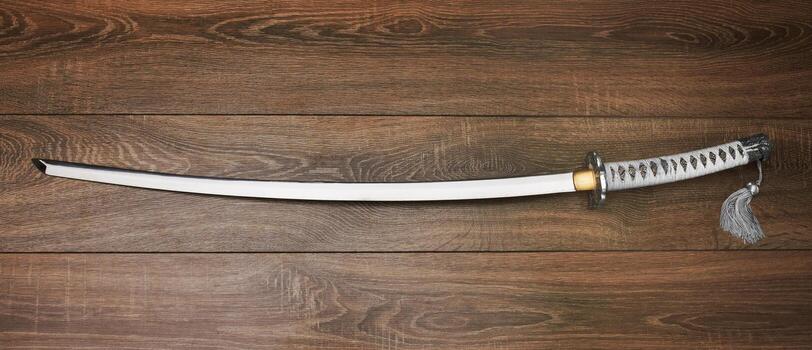
Katana
With their ammunition almost gone, Saigō's last followers met the assault and made their final charge with swords. Continued…
-
Pattern 1853 EnfieldFor sale
Enfield muzzle-loaders were among the main firearms of the Satsuma army during the rebellion, though few rounds were left by September. Continued…
-
Tanegashima
As modern rifles and cartridges ran short during the campaign, some rebel units reportedly fell back on old matchlocks. Continued…
-
Gatling gun
The Imperial Japanese Army had Gatling guns in the 1877 campaign; their part in the final assault is often stated but poorly documented. Continued…
Sources
Ravina, Mark. The Last Samurai: The Life and Battles of Saigo Takamori. John Wiley & Sons, 2004.
Mounsey, Augustus H. The Satsuma Rebellion: An Episode of Modern Japanese History. John Murray, 1879.
Drea, Edward J. Japan's Imperial Army: Its Rise and Fall, 1853-1945. University Press of Kansas, 2009.
Morris, Ivan. The Nobility of Failure: Tragic Heroes in the History of Japan. Holt, Rinehart and Winston, 1975.
Suggest an edit · account required · reviewed before publishing · how it works