Weapon Type
Swords
Single or double-edged long blades.
Edged Weapons — Subcategory
Overview
The sword is a bladed weapon with a handle and a blade longer than 30 cm, designed primarily for hand-to-hand combat. It is the most culturally resonant weapon in human history — the defining symbol of the warrior in European, Japanese, Chinese, Middle Eastern, and South Asian traditions — and one of the most technically demanding weapons to manufacture and use effectively.
Swords are covered extensively across multiple subcategories. This article provides the overview and context; for specific types see the linked subcategories.
Sword Geometry: Cut vs. Thrust
Sword design reflects a fundamental trade-off between cutting and thrusting:
- Cut-optimized — Curved or wide blade; sharp along the full edge; geometry adds momentum to the swing; examples: saber, scimitar, falchion
- Thrust-optimized — Narrow, stiff blade; acute point; rigid for driving into gaps; examples: rapier, estoc, smallsword
- Dual-purpose — Moderate taper; acute point; cutting edge; examples: arming sword, longsword, gladius
Major Sword Families (see subcategories)
| Type | Key Features | Era / Culture | |------|-------------|---------------| | Short Swords | 30–60 cm; gladius, xiphos | Ancient | | Longswords | 85–115 cm; hand-and-a-half; slashing and thrusting | Medieval (1200–1500) | | Broadswords | Wide double-edged; basket hilt | 17th–18th century | | Sabers & Cutlasses | Curved; single edge; cavalry | 16th–19th century | | Rapiers | Long, narrow; thrusting; dueling | 16th–17th century | | Falchions | Single-edged; forward curve; infantry | Medieval | | Katana & Japanese | Differential hardened; curved; single edge | Feudal Japan |
Manufacture
The sword was the most technically demanding edged weapon to produce:
- Required high-quality steel (controlled carbon content)
- Required skilled smithing: forging, differential hardening, tempering
- Required skilled grinding and polishing
- Required skilled fitting: handle, guard, pommel
- A high-quality sword was expensive — comparable to a horse or small farm
Decline
The sword's military utility declined as:
- Firearms became reliable and affordable (1600s–1700s)
- The cavalry saber survived longest — used through WWI
- The bayonet replaced the sidearm function
- Modern armies no longer issue swords; they remain ceremonial items
This article is a stub. For specific sword types, see the subcategory articles. Contributions are welcome.
Battles & Operations
-
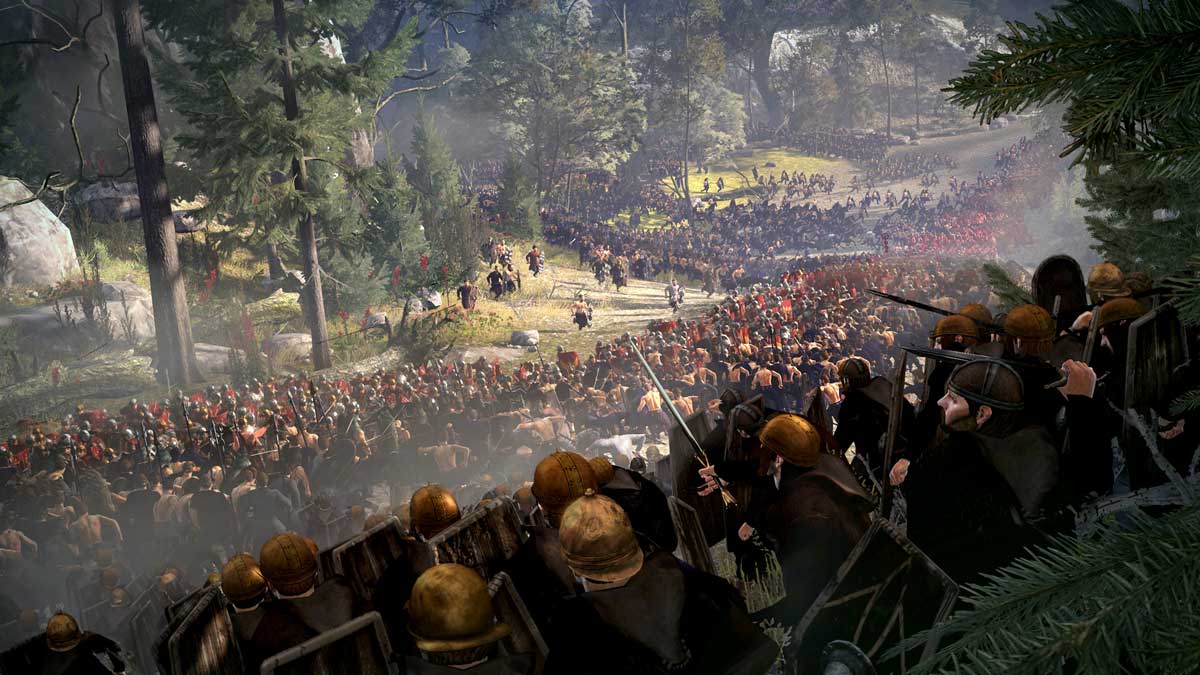
Battle of Teutoburg Forest (September 9 AD)
The Battle of the Teutoburg Forest was the destruction of three Roman legions — the XVII, XVIII and XIX — with their auxiliaries by an… Continued…
-
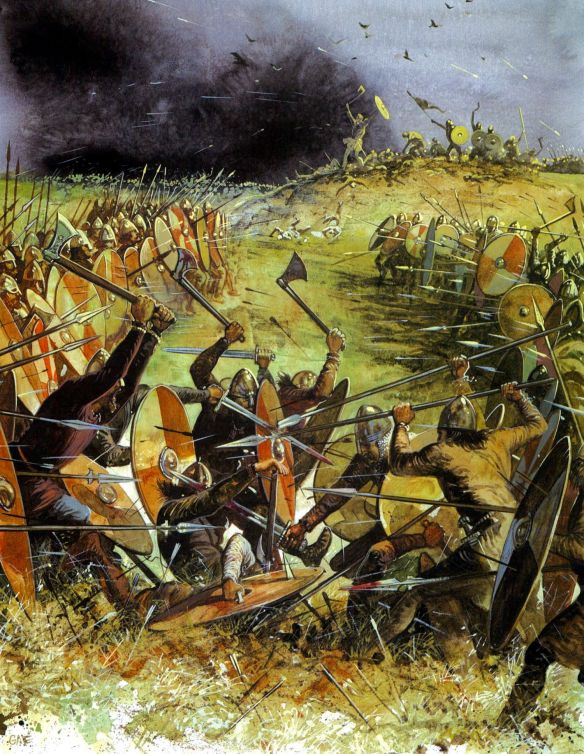
Battle of Maldon (10 August 991)
The Battle of Maldon, fought in August 991 on the Blackwater estuary near Maldon in Essex, pitted Byrhtnoth, ealdorman of Essex, and the… Continued…
-
Battle of Waterloo (18 June 1815)
The Battle of Waterloo, fought on Sunday 18 June 1815 near the village of Waterloo in present-day Belgium, ended the Napoleonic Wars.… Continued…
Weapons
-
1796 Heavy Cavalry Sword
The Pattern 1796 Heavy Cavalry Sword was the regulation sword of the British heavy cavalry from 1796 until 1821, including at Waterloo.… Continued…
-
1796 Light Cavalry Sabre
The Pattern 1796 Light Cavalry Sabre was the sword of Britain's light dragoons and hussars through the Napoleonic Wars, designed by John… Continued…
-
An XI Light Cavalry Sabre
The An XI light cavalry saber was the regulation sword of Napoleon's hussars and chasseurs à cheval. Adopted in Year XI of the French… Continued…
-
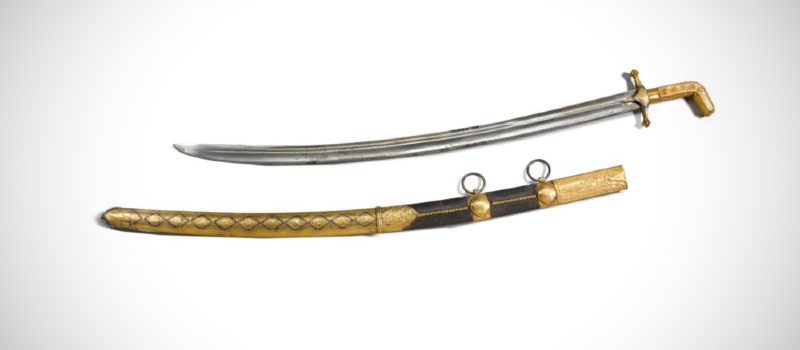
Arab Saif
The saif, from the Arabic word for sword, was the straight, double-edged sword carried by the Arab armies of the early Islamic conquests.… Continued…
-
Arming Sword
The arming sword was the one-handed, double-edged sword of the medieval knight, carried from the eleventh to the fifteenth century with a… Continued…
-
Boarding Cutlass
The cutlass was the sailor's sword of the Age of Sail: short, broad-bladed, and basket-guarded, built for the crowded chaos of a boarding… Continued…
-
Byzantine Spathion
The spathion was the straight, double-edged long sword of the Eastern Roman, or Byzantine, army — the direct descendant of the late Roman… Continued…
-
Celtic La Tène Sword
The La Tène sword was the iron sword of the Celtic peoples of Europe from about 450 BC until the Roman conquest, named after an… Continued…
-
Chinese Dao
The dao — the single-edged Chinese saber — was the standard sidearm of Chinese soldiers for the better part of two thousand years, honored… Continued…
-
Chinese Jian
The jian is the double-edged straight sword of China, in continuous use for more than two and a half thousand years. It began as a short… Continued…
-
Cossack Shashka
The shashka is the guardless saber of the Caucasus and the Cossacks — a slightly curved, single-edged blade carried edge-up in the scabbard… Continued…
-
Egyptian Khopesh
The khopesh is the curved sickle-sword of Bronze Age Egypt, its blade sweeping into a crescent with the cutting edge on the OUTSIDE of the… Continued…
-
Estoc
The estoc was a sword made to defeat plate armor: a long, stiff blade with no real cutting edge, triangular, square or diamond in section… Continued…
-
Falchion
The falchion was a single-edged medieval sword with a broad blade, heavier toward the point, that combined the chopping power of an axe… Continued…
-
Greek Kopis
The kopis was the forward-curved, single-edged chopping sword of classical Greece. Its blade is concave near the hilt and swells toward the… Continued…
-
Greek Xiphos
The xiphos was the sidearm of the Greek hoplite: a double-edged, leaf-bladed short sword drawn when the spear — always the primary weapon … Continued…
-
Iberian Falcata
The falcata is the curved, single-edged sword of the Iberians of pre-Roman Spain, used from about the fifth to the first century BC. Its… Continued…
-
Indian Talwar
The talwar is the classic curved saber of the Indian subcontinent, the weapon of Mughal, Rajput, Maratha, and Sikh horsemen from the… Continued…
-
Infantry Hanger
The infantry hanger was the short, slightly curved sword carried by private soldiers and grenadiers of the British foot for much of the… Continued…
-
Kai Gunto
The kai gunto, 'navy military sword', was the sword of officers of the Imperial Japanese Navy from the late 1930s through the Second World… Continued…
-
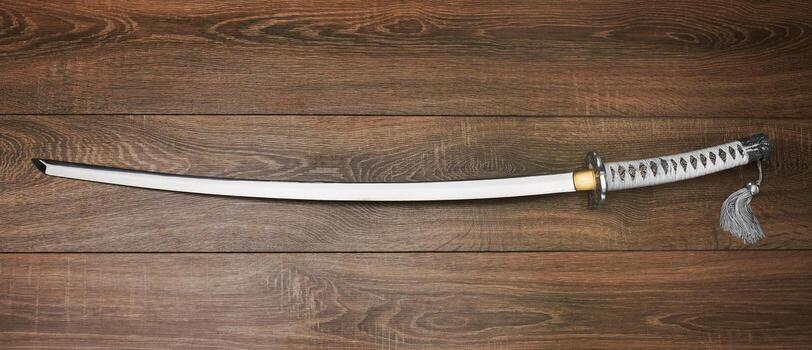
Katana
The katana is the curved, single-edged long sword of the samurai, worn edge-up through the sash and drawn in the same motion that cuts. Its… Continued…
-
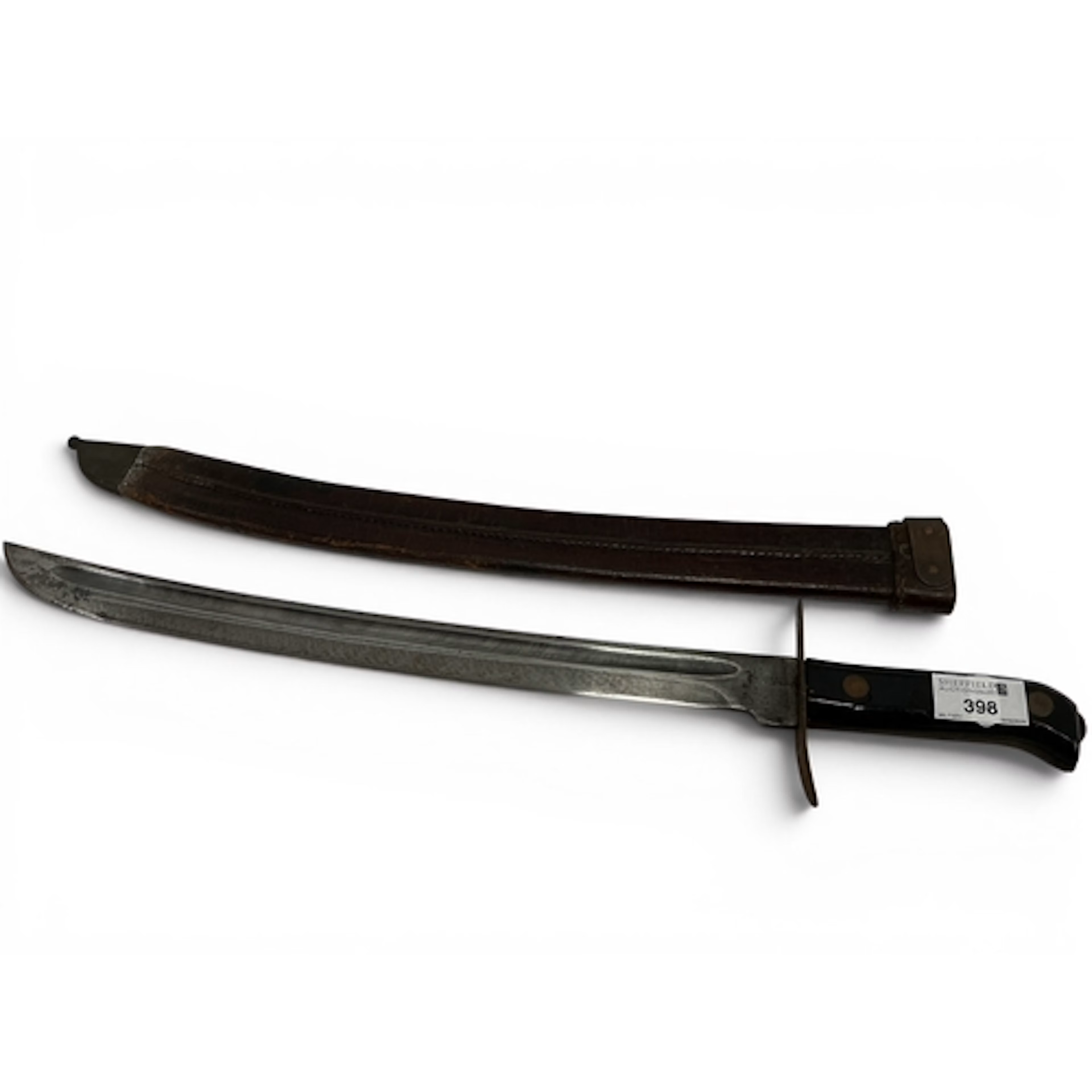
Klewang
The klewang is a single-edged short sword from the Indonesian archipelago, and the name of the Dutch military weapon developed from it.… Continued…
-
Landsknecht Zweihänder
The zweihänder was the great two-handed sword of the German Landsknecht mercenaries: up to 1.8 meters of steel with side rings, parrying… Continued…
-
Langes Messer
The Langes Messer, German for long knife, was a single-edged sword used in the German lands and Central Europe from the fourteenth to the… Continued…
-
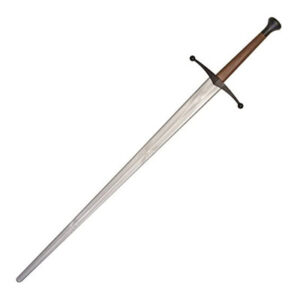
Longsword
The longsword is the two-handed knightly sword of the late Middle Ages and Renaissance: a straight, double-edged blade of roughly 33 to 43… Continued…
-
Model 1850 Foot Officer's Sword
The Model 1850 Foot Officer's Sword was the regulation sword of company-grade infantry officers of the United States Army from 1850 until… Continued…
-
Model 1860 Light Cavalry Saber
The Model 1860 Light Cavalry Saber was the standard edged weapon of the Union horseman: a curved, single-edged blade of about 35 inches in… Continued…
-
Naue II Sword
The Naue II sword is the most widespread sword type of the European Late Bronze Age: a leaf-shaped bronze blade cast in one piece with a… Continued…
-
Nodachi
The nodachi, or ōdachi, is an extra-long Japanese sword with a blade of three shaku (about 36 inches) or more, and often much longer. It… Continued…
-
Ottoman Kilij
The kilij is the curved saber of the Ottoman Turks, and the name — simply 'sword' in Turkish — covers a family of blades carried from the… Continued…
-
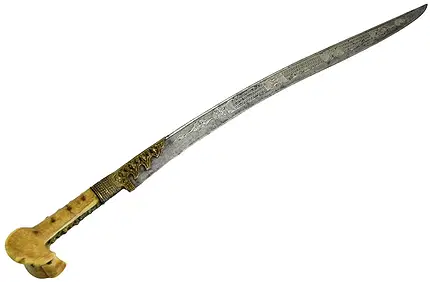
Ottoman Yatagan
The yatagan is the signature short sword of the Ottoman world: a single-edged blade curving forward like the kopis and kukri family, a hilt… Continued…
-
Pappenheimer Rapier
The Pappenheimer is a type of rapier or heavy cut-and-thrust sword of about 1620-1650, recognized by the two large dished shells, usually… Continued…
-
Persian Akinakes
The akinakes is the straight, double-edged short sword of the Achaemenid Persian Empire, borrowed from the Scythian horsemen of the steppe… Continued…
-
Persian Shamshir
The shamshir is Persia's deeply curved saber — the blade whose silhouette gave Europe the word 'scimitar.' Perfected under the Safavids, it… Continued…
-
Polish Szabla
The szabla is the curved saber of the Polish-Lithuanian Commonwealth, carried by the Polish nobility and cavalry from the sixteenth to the… Continued…
-
Roman Gladius
The gladius was the short sword of the Roman legionary and the weapon that conquered the Mediterranean world. Adopted from Iberian patterns… Continued…
-
Roman Spatha
The spatha was the long, straight, double-edged sword of the Roman Empire. First carried by auxiliary cavalry in the first century AD… Continued…
-
Scottish Claymore
Claymore — Gaelic claidheamh-mòr, 'great sword' — names the two-handed sword of the Highland clans of the fifteenth to seventeenth… Continued…
-
Shotel
The shotel is the Ethiopian sword with a deeply curved, sickle-shaped blade, sharpened on both edges. Its curve was designed to reach… Continued…
-
Smallsword
The smallsword was the gentleman's sword of the late seventeenth and eighteenth centuries: a light, short thrusting sword, usually with a… Continued…
-
Swept-Hilt Rapier
The swept-hilt rapier was the civilian sword of the late Renaissance: a long, narrow thrusting blade defended by a basket of gracefully… Continued…
-
Tanto
The tanto is the dagger of the samurai: a single- or double-edged Japanese blade under thirty centimeters, forged, hardened, and polished… Continued…
-
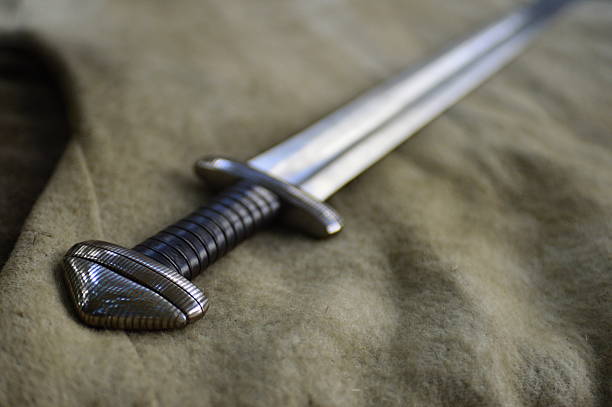
Ulfberht Sword
The Ulfberht swords are a group of about 170 early medieval sword blades inscribed with the name +VLFBERH+T, made between the ninth and… Continued…